
Bridging Gender Digital Divide is Critical to Achieve Women’s Autonomy, Substantive Equality in region

Black Immigrant Daily News

The content originally appeared on: Caribbean News Service

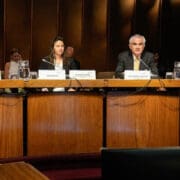
Women’s Affairs Ministers and other government authorities, along with representatives of the United Nations, international organizations and civil society, called today for bridging the gender digital divide in Latin America and the Caribbean to achieve women’s autonomy and substantive equality in a scenario of multiple crises that require bold and transformative solutions.

They did so during the 64th Meeting of the Presiding Officers of the Regional Conference on Women, which is being held virtually this Wednesday, February 8 and Thursday, February 9, 2023.

The gathering is focused on examining the actions planned for implementing the Buenos Aires Commitment, approved last November at the XV Regional Conference on Women in Latin America and the Caribbean, and on carrying out a Special Regional Consultation Session prior to the 67th session of the Commission on the Status of Women (CSW), which has the main theme this year of “Innovation and technological change, and education in the digital age for achieving gender equality and the empowerment of all women and girls.”

The meeting was inaugurated by Jos? Manuel Salazar-Xirinachs, Executive Secretary of the Economic Commission for Latin America and the Caribbean (ECLAC); Mar?a-Noel Vaeza, Regional Director for the Americas and the Caribbean of the United Nations Entity for Gender Equality and the Empowerment of Women (UN Women); Ayel?n Mazzina, Minister for Women, Gender and Diversity of Argentina, in her capacity as Chair of the Presiding Officers of the Regional Conference on Women; and Mar?a del Carmen Squeff, Ambassador and Permanent Representative of Argentina to the United Nations and Vice-Chair designate of the Latin American and Caribbean States Group on the Bureau for the 67th session of the Commission on the Status of Women (CSW67).

In his remarks, Jos? Manuel Salazar-Xirinachs applauded the recent creation of new mechanisms for women’s advancement in the region, particularly the new Ministry of Women in Brazil, the Ministry of Women’s Affairs and Human Rights in Ecuador and the Ministry of Equality in Colombia. “This progress undoubtedly contributes to strengthening the region’s institutional framework and gender architecture and to promoting gender equality policies and the rights and autonomy of women in all their diversity,” he said.

“In light of the development crisis and the palpable gender inequality that persists in our region, we need bold solutions. Some of these solutions are in the Buenos Aires Commitment,” ECLAC’s highest authority emphasized, warning that “there is a gender digital divide that leaves women and girls out of strategic areas of education, technological innovation and labor market insertion.”

The secondary education completion rate of women is 6.1 percentage points higher than that of men in Latin America and the Caribbean. However, achievements such as these obscure unequal gender patterns by subject area. In higher education, gender gaps become evident in the fields of science, technology, engineering and mathematics (STEM).

In the majority of the region’s countries, the proportion of women graduates of STEM studies does not exceed 40%. The most critical fields are engineering, industry and construction (with female participation of 30.8% in higher education enrollment in 2019) and Information and Communication Technologies (ICTs), with women’s participation of 18% in higher education enrollment that same year.

In addition, it is estimated that 4 out of every 10 women in Latin America and the Caribbean have no connection and/or cannot afford effective connectivity (access to the Internet, availability of devices and basic skills for their use).

In the Buenos Aires Commitment, Jos? Manuel Salazar-Xirinachs recalled, the governments committed themselves to “promoting intersectoral public policies that include affirmative action to foster women’s and girls’ participation, continuation and completion of education in the spheres of science, technology, engineering and mathematics.”

Meanwhile, Mar?a-Noel Vaeza of UN Women emphasized that “the CSW67 offers an extraordinary opportunity to shape a future in which technology would contribute to transforming social norms, amplifying women’s voices, ending online harassment, impeding the perpetuation of algorithmic prejudices, strengthening women’s economic autonomy and equitably distributing the benefits of digitalization in order to achieve the Sustainable Development Goals (SDGs). It is up to us to ensure that the digital revolution contributes to women enjoying full political, economic and social equality, and to prevent it from widening preexisting gender gaps or generating new inequalities.”

Minister Ayel?n Mazzina affirmed that “the gender and diversity agenda is a priority issue for Argentina” and called for addressing digital inequalities. “We have to distribute care to create more training and labor market insertion opportunities for women and diverse identities, so more women can work in dynamic sectors, such as science and technology. It is necessary to break with the stereotypes that make girls believe they’re not good at learning math or hard sciences. We have to strengthen the foundations of a more egalitarian society and get gender-based violence out of homes, out of politics, out of Twitter and all digital spaces,” she declared.

Ambassador Mar?a del Carmen Squeff agreed that “ICTs offer a vast quantity of benefits, as we were able to appreciate during the COVID-19 pandemic, but it is also a space in which gender inequalities are reproduced and amplified.” “Our countries have extensive experience in defending women’s rights on the international stage, which have been enshrined in the various documents adopted at the regional conferences on women in Latin America and the Caribbean,” the representative highlighted, expressing the Argentine mission’s full willingness to collaborate and ensure that the CSW67 be successful for the region.

On the first day of this meeting, Ana G?ezmes, Director of ECLAC’s Division for Gender Affairs, and Cecilia Alemany, UN Women’s Deputy Regional Director for the Americas and the Caribbean and ad interim Representative in Argentina, presented the reference document entitled Gender equality and women’s and girls’ autonomy in the digital era: contributions of education and digital transformation in Latin America and the Caribbean, prepared by ECLAC, UN Women, and the United Nations Educational, Scientific and Cultural Organization (UNESCO).

According to this report, in order to advance towards women’s autonomy in the digital era, it is necessary to incorporate the gender perspective into the transformation of the productive matrix and the digital transformation of dynamic sectors of the economy. It is also necessary to design comprehensive universal care systems that promote greater digital inclusion of women; reduce digital gender gaps to enhance the autonomy and participation of women; and promote digital trust and security for women and girls.

It also urges for promoting the transformation of education for an inclusive recovery and to improve the situation of girls and women, especially in STEM areas; guaranteeing digital labor rights for women; and strengthening governance and multisectoral alliances and reaffirming social pacts to ensure compliance with the SDGs. Furthermore, it is essential to produce information to make the situation of women in all their diversity visible in the context of innovation and digital transformation processes.

The 64th Meeting of the Presiding Officers of the Regional Conference on Women is organized by ECLAC, as the Conference’s Secretariat, in coordination with UN Women. Participating in the gathering are delegates from the 15 countries that make up the Presiding Officers (Argentina, Barbados, Bolivia, Chile, Colombia, Costa Rica, Cuba, the Dominican Republic, Ecuador, Honduras, Mexico, Peru, Saint Vincent and the Grenadines, Uruguay and Venezuela), along with other Member States and associate members of ECLAC and representatives of the United Nations System, intergovernmental organizations and civil society.

Donate At Caribbean News Service, we do not charge for our content and we want to keep it that way. We are seeking support from individuals and organisations so we can continue our work & develop CNS further.


NewsAmericasNow.com

CDB and World Bank Agree to Closer Collaboration on Caribbean Development

Black Immigrant Daily News

The content originally appeared on: Caribbean News Service
Lilia Burunciuc, World Bank’s Country Director for the Caribbean, left, and Isaac Solomon, the Caribbean Development Bank’s Vice President, Operations, joined forces to lead a segment of the joint working session which the two institutions held on February 2 and 3 in Kingston, Jamaica.

The Caribbean Development Bank (CDB) and the World Bank charted a path for closer collaboration to drive the Caribbean’s development agenda during a joint working session held on February 2 and 3 in Kingston, Jamaica.

Multi-sectoral teams from the institutions examined avenues for deeper cooperation to enhance development outcomes for Caribbean countries. The areas reviewed included Sustainable Development, Infrastructure, Energy, Human Development, Private Sector Engagement, and Regional Cooperation. The discussions covered areas of current focus, active projects and initiatives, as well as lessons learned, and best practices.

The two-day session concluded with agreements on next steps to adequately meet the development needs of Caribbean countries. Identified areas of emphasis include tourism, renewable energy, digitization, capacity building and education.

“Having solidified links between the CDB and World Bank teams, I’m sure of our mutual commitment to roll our sleeves up and continue working toward the best outcomes possible for the people of the Caribbean. Desired economic and social advancements are most effectively accomplished through the power of partnerships”, said Lilia Burunciuc, World Bank’s Country Director for the Caribbean.

Isaac Solomon, CDB Vice President, Operations said “The Caribbean’s needs are extensive and the key to covering more ground is collaboration and cooperation between institutions that are facilitating the region’s sustainable development agenda. We will see better results from alignment and having had the discussions we will now take action to move on from here.”

CDB and the World Bank have enjoyed a longstanding partnership with their most recent collaborations centred on bolstering public procurement in the Caribbean. Joint initiatives have included the establishment of a procurement training centre, the conducting of joint procurement assessments and a coordinated and on-going procurement reform program across CDB’s Borrowing Member Countries in the Organisation of Eastern Caribbean States.

Donate At Caribbean News Service, we do not charge for our content and we want to keep it that way. We are seeking support from individuals and organisations so we can continue our work & develop CNS further.


NewsAmericasNow.com

Judge could take months to decide case of Castro-era Cuban debt

Black Immigrant Daily News

The content originally appeared on: Caribbean News Service

Can the Cuban government be sued for unpaid debts from the early 1980s – debts so old they are denominated in a currency that no longer exists?

That’s the question before a judge at the UK High Court after a seven-day trial marked by chaotic protests, a bribery accusation and remote testimony from an imprisoned Cuban banker.

The trial ended last week, but it could be months before the judge, Sara Cockerill, renders judgement in the case of CRF vs Banco Nacional de Cuba & Cuba. Her decision is central to whether Cuba may finally be forced to pay back billions of dollars in unpaid debts.

The trial is seen as a test case. CRF1, formerly known as the Cuba Recovery Fund, owns more than $1 billion in face value of European bank loans extended to Cuba in the late 1970s and early 1980s, when Fidel Castro still ruled the island. Cuba defaulted on the debt in 1986.

CRF1, which began accumulating the position in 2009, is suing Cuba and its former central bank over only two of the loans they own for more than $70 million dollars. If CRF wins on this small slice of Cuba’s total outstanding commercial debt, which is estimated at $7 billion, it could lead to further lawsuits from other debt holders, with claims against Cuba rising into the billions.

While the most dramatic testimony has focused on an accusation of bribery, much of the trial has focused on the arcana of Cuban and English law.

Were there enough signatures from Cuban bank officials on the paperwork when the loans in question were “reassigned” or transferred to CRF? Was the paperwork stamped with a dry-pressure seal or a wet-ink stamp and did they use the correct blue security paper? At one point the barrister for CRF cited a British property case regarding the lease of a fried fish shop.

The question before the judge is of whether the fund has the right to sue Cuba. Still, experts said she could issue a summary judgement in which she rules not only on jurisdiction but also on substance, meaning not just whether CRF can sue, but also whether Cuba must pay.

Throughout the trial, representatives of the fund have repeatedly stated that they did not want to sue Cuba but did so only as a “last resort” after the government ignored their requests to negotiate for 10 years.

“Even at this late date, in a case where we expect to prevail, CRF is willing to settle,” David Charters, chairman of CRF, said at the conclusion of the trial.

During testimony, CRF representatives said they made more than one offer to the Cuban government that would not drain the island’s current cash flow and would help improve its economy. They described offers of long-duration non-coupon bonds and debt for equity swaps, neither of which would force Cuba to come up with cash in the near term, or even the long term, depending on the deal.

The Cubans have argued that it was always CRF’s intention to sue and has described them as a vulture fund taking advantage of an impoverished country.

No matter how the judge rules, the Cuban government will still owe the money. And they will not be able to borrow on the international capital markets until they have settled all their past debts. Cuba hasn’t been able to borrow in the markets since 1986, when the country defaulted. Since then, Cuba has survived on the largesse of other countries such as the former Soviet Union and, more recently, Venezuela and China.

Cuba is not a member of the IMF or the World Bank, institutions that would typically be involved in helping an impoverished country restructure its debts and reemerge into the international financial system.

The Cuban government did not respond to requests for comment. — CNBC

Donate At Caribbean News Service, we do not charge for our content and we want to keep it that way. We are seeking support from individuals and organisations so we can continue our work & develop CNS further.


NewsAmericasNow.com

UK supports training on risks of chemical weapons

Black Immigrant Daily News

The content originally appeared on: Caribbean News Service

Representatives from around the Caribbean came together at the Barbados Fire Academy in Arch Hall, St Thomas, Barbados in late January.

They attended a training workshop funded by the UK and delivered for the Organisation for the Prohibition of Chemical Weapons (OPCW).

The workshop’s objective was the strengthening of the region to build risk assessment and response capabilities against the threat of attacks using chemical weapons.

Officials from The Bahamas, Barbados, Dominica, Dominican Republic, Grenada, Jamaica, St Kitts & Nevis, Saint Lucia and Trinidad & Tobago were given expert advice and tuition on the OPCW’s Online Self-Assessment Tool.

This software was specially developed from experience in the Caribbean. It helps countries to assess and enhance their risk and response capabilities against the threat of use of chemical weapons or misuse of toxic chemicals.

Clive Rowland from the Ministry of Defence said: ‘The UK is especially pleased to financially support this important capacity building event and we are proud to play our part in the development of OPCW’s Online Self Assessment Tool which is the focus of this workshop.’

The workshop was supported by the Environmental Protection Department of Barbados’ Ministry of Environment & National Beautification, Green and Blue Economy.

Donate At Caribbean News Service, we do not charge for our content and we want to keep it that way. We are seeking support from individuals and organisations so we can continue our work & develop CNS further.


NewsAmericasNow.com
ICAO forecasts complete and sustainable recovery and growth of air passenger demand in 2023

Black Immigrant Daily News

The content originally appeared on: Caribbean News Service

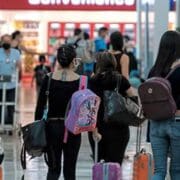
Using advanced big data analytics, ICAO forecasts that air passenger demand in 2023 will rapidly recover to pre-pandemic levels on most routes by the first quarter and that growth of around 3% on 2019 figures will be achieved by year end.

“Assuring the safe, secure, and sustainable recovery of air services will be key to restoring aviation’s ability to act as a catalyst for sustainable development at the local, national and global levels, and will consequently be vital to countries’ recovery from the broader impacts of the COVID-19 pandemic,” remarked ICAO Council President Salvatore Sciacchitano.

“The air passenger forecasts ICAO is announcing today build on the strong momentum toward recovery in 2022, as previously assessed by ICAO statistical analysis,” remarked ICAO Secretary General Juan Carlos Salazar. “Through ICAO, governments have reached agreements on goals toward zero accident fatalities by 2030 and zero carbon emissions by 2050 goals, and these will continue to play key roles in both guiding continued progress and in prioritizing ICAO’s implementation support initiatives.”

The number of air passengers carried in 2022 increased by an estimated 47% compared to 2021, while revenue passenger kilometres (RPK’s) increased by around 70% over the same period, due mainly to the rapid recovery of most international routes. In terms of airlines’ annual passenger revenues, keeping yield and exchange rates at 2019 levels, ICAO observed growth of an estimated 50% from 2021 to 2022.

In line with earlier ICAO predictions, the strong recovery in air passenger demand has resulted in 2022 passenger numbers reaching an estimated 74% of pre-pandemic levels, while passenger revenues are estimated to have reached around 68% of 2019 levels. The number of passenger aircraft in service in 2022 mirrors the overall traffic recovery, with current estimates suggesting 75% of pre-pandemic levels.

In 2022, aircraft orders and deliveries by major manufacturers Airbus and Boeing grew by 53% for orders and 20% for deliveries, compared to the previous year. The number of orders in 2022 exceeded that seen since 2019, indicating the recovery of aircraft demand.

Current estimates for air cargo in 2022 reflect 2021 levels, while still showing marginal growth compared to the pre-pandemic level. The pace of growth for air cargo is however expected to be lower in 2023, given the slowing global economic growth, although long-term air cargo growth remains in line with previously estimated trend indicating strong long term growth.

Looking further ahead, airlines are expected to return to operating profitability in the last quarter of 2023, after three consecutive years of losses. Air passenger demand in 2024 is expected to be stronger, at around 4% higher than 2019. In terms of Compound Annual Growth Rate (CAGR), this translates to a growth of 0.7% over the 2019-2024 period.

This forecast recovery and growth for the world of civil aviation comes with the caveat that risks affecting international air transport do not escalate from current levels.

Donate At Caribbean News Service, we do not charge for our content and we want to keep it that way. We are seeking support from individuals and organisations so we can continue our work & develop CNS further.


NewsAmericasNow.com

Barbados PM wants ships ready to respond in Caribbean

Black Immigrant Daily News

The content originally appeared on: Caribbean News Service

Prime Minister Mia Mottley has called for two emergency ships to be stationed in the Caribbean to provide rapid response to countries in the aftermath of a disaster.

She urged the Caribbean Community (CARICOM) on Monday to work with the international community to have those ships pre-positioned in the north and the south of the region.

“We need a recovery ship. Islands don’t have the benefit of road networks to deliver quickly and in some instances, [airport] runways will be destroyed in disasters,” Mottley said as she addressed the live-streamed regional launch of the United Nations Early Warnings for All Initiative (EW4ALL) for the Caribbean.

“There are ships that flow and go around the world; some are hospital ships but we need more than a hospital ship because we need a ship to provide fresh water immediately after a disaster,” she added, insisting this was particularly critical to prevent cholera outbreaks.

The Barbadian leader also reiterated the need for small island developing states to be able to access funding at cheaper interest rates, especially in light of the growing debt they have taken on to deal with the impacts of climate change.

“We also need to recognise that having arbitrary numbers for debt sustainability in the context of small islands developing states does not work. We’ve been doing coastal preparation since the 80s. Part of our debt is, in fact, to prevent the worst to our coastal environment. For every dollar of prevention, you save seven dollars in recovery expenditure, we know that. But when you are then told that your debt-to-GDP does not admit of you spending enough money to renew a school infrastructure that is more than 150, 200, 250 years in some instances, how then do you provide the support systems for people to be relocated both pre- and in many instances, post-disaster?

“We do not have the capacity genuinely to withstand serious hurricanes in this region that are Category Three and upwards, and if the international community does not understand that, then they do not understand our circumstances,” Mottley contended.

Underlining the importance of early warning systems, the Prime Minister stressed the need for verification and validation procedures to reduce the spread of fake news before, during and after disasters.

United Nations Deputy Secretary-General Amina Mohammed noted that early warning systems can cut damage by as much as 30 per cent and save numerous lives.

“Every person in the Caribbean and small island developing states and the world must be protected by an effective multi-hazard early warning system,” she said, adding that this was “a right that every person on earth should enjoy”.

The UN official noted that with climate change and other disasters expected to increase, an initial investment of US$3.1 billion is required to address gaps across the four key pillars of early warning systems – understanding disaster risk, monitoring and forecasting, communication and preparedness, and response capacity.

Meanwhile, CARICOM Secretary General Dr Carla Barnett said inclusive and streamlined approaches to implementing early warning products are required at all levels so that local communities, youth and all other vulnerable groups may contribute valuable input to the development of systems that guard their own safety.

“Above all, we must continue on a path where early warning is seen by all users as underpinned by principles of authority, credibility and salience,” she said.

Burnett lamented that meteorological services in the region have constantly battled “stubborn disregard for warnings and fake information which undermine credible efforts and engender public displeasure when a disaster does not occur as it was predicted”. “This is detrimental to the goal. We learnt during our most recent global health crisis that rampant misinformation can be so debilitating that it can become its own crisis,” the top CARICOM cautioned. — Barbados TODAY

Donate At Caribbean News Service, we do not charge for our content and we want to keep it that way. We are seeking support from individuals and organisations so we can continue our work & develop CNS further.


NewsAmericasNow.com

CDB backs UWI as Caribbean Digital Transformation Epicenter

Black Immigrant Daily News

The content originally appeared on: Caribbean News Service

The University of the West Indies must become, and will become the digital transformation epicenter of The Caribbean. That is where we’re going.”

This declaration from Vice-Chancellor of The UWI, Professor Sir Hilary Beckles was made during the project launch ceremony for The UWI-CDB Digital Transformation Programme held on Monday, February 6 at the University’s Regional Headquarters in Jamaica.

The UWI is advancing its digital transformation as part of Phase II of its Triple A Strategic Plan: The Revenue Revolution, which focuses on the conversion of the University’s reputational value into much-needed revenue through the strategic use of digital technologies.

Vice-Chancellor Beckles explained, that the programme, led by Professor of Digital Transformation, Policy, and Governance Lloyd Waller, is more than digital technologies. “Rather it is the impact that the mobilisation of those technologies will have on The UWI’s core business–teaching, learning, research, efficient administration and efficiency that facilitates doing more at a lower cost, generating savings in the process, also generating revenue,” he said.

Continuing its longstanding relationship with the University, the Caribbean Development Bank (CDB) has come on board as the official partner for The UWI’s Digital Transformation Programme. Speaking at Monday’s launch ceremony, Vice-President of Operations at the CDB, Isaac Solomon, noted that through its support of the programme, the Bank is keen to strengthen decades of mutually beneficial collaboration with The UWI, as it seeks to maintain a leadership role in higher education for the benefit of the region.

“For us at CDB, advancing the digital transformation of UWI is critical for operational effectiveness, increased access to programmes, expansion of services, and continued competitiveness in the existing COVID-19 period and beyond,” said Solomon.

The CDB Vice-President highlighted several factors which, he stated underscored the necessity and relevance of the digital transformation project.

“Increasing enrolment across The UWI also requires optimising online learning opportunities, as the shift to digital education delivery leverages technology to reduce the economic cost of tertiary education at The UWI for students in borrowing member countries. In addition, digital transformation is central to expanding the internationalisation of UWI programmes–a key strategic goal to diversify the university’s revenue base. The UWI Digital Transformation Project is therefore timely and necessary as it provides the University with the opportunity to push towards the institutional transformation needed to expand its reach as a global university and enhance the UWI brand as an institution of excellence in the Caribbean. The project is also designed to encourage innovative teaching and learning, particularly for more vulnerable and marginalised communities within our regional space,” he stated.

Vice-Chancellor Beckles also emphasized, “We are not just a university planning its own trajectory. We are ensuring that The UWI remains among the best universities in the world, which is where we are located right now, and serving the people of this region. The UWI way has always been to articulate and integrate the interests of the institution with the interests of the region.”

He noted that over decades The UWI had built up a team of ICT technologists and thinkers that is unparalleled in this region. “We are confident as a university in the intellectual and technical capacity of our ICT team. It is that team, currently led by University Chief Information Officer, Brigitte Collins, that’s enabled us to survive and soar above the impact of COVID-19. So we are underway with this digital transformation programme and we are able to do this with confidence because we have the internal capacity to do so, and also because we have a reliable and trustworthy strategic partner in the CDB.”

Donate At Caribbean News Service, we do not charge for our content and we want to keep it that way. We are seeking support from individuals and organisations so we can continue our work & develop CNS further.


NewsAmericasNow.com

Haitian PM installs transition council to prepare for long-awaited elections

Black Immigrant Daily News

The content originally appeared on: Caribbean News Service
Haitian National police officers deploy tear gas during a protest demanding the resignation of Haiti’s Prime Minister Ariel Henry after weeks of shortages in Port-au-Prince, Haiti, October 17, 2022. REUTERS/Ricardo Arduengo

Haitian Prime Minister Ariel Henry on Monday formally installed a transition council whose job will be to prepare for long-overdue elections in the Caribbean country, amid a humanitarian crisis driven by violence from armed gangs.

Haiti, which has been without any elected representatives since early January, last held a presidential vote in 2016.

“This is the beginning of the end of dysfunction in our democratic institutions,” Henry said in a speech, adding that the High Transition Council (HCT) unanimously backed his request for an international force to help police restore order.

Henry took power in July 2021 days after the assassination of President Jovenel Moise. He has pledged to leave office by Feb. 7, 2024, after postponing elections indefinitely in the wake of a devastating earthquake that affected the Southern Peninsula, along with gang violence.

The transition council, composed of three members representing Haiti’s political, business and civil sectors, is expected to develop an ambitious road map for the next elections and choose members of a provisional electoral council as well as a committee to revise the country’s constitution.

Its members are: Mirlande Manigat, a former presidential candidate; Laurent Saint-Cyr, president of Haiti’s Chamber of Commerce; and Pastor Calixte Fleuridor, from the country’s Protestant Federation.

Manigat, a lawyer who ran for the presidency in 2010 and is the widow of former President Leslie Manigat, asked international allies to remember their commitment “to help law enforcement in the fight against social malevolence.”

The installment comes ahead of a visit from the U.N. High Commissioner for Human Rights, Volker Turk, who is scheduled to arrive in Haiti on Wednesday.

Hundreds have been killed and tens of thousands displaced amid bloody turf battles between gangs who have expanded their territory in Haiti since Moise’s assassination.

Henry requested the help of an “international force” in October, but the request is still being discussed at the United Nations, where no country has offered to lead such a force.

Donate At Caribbean News Service, we do not charge for our content and we want to keep it that way. We are seeking support from individuals and organisations so we can continue our work & develop CNS further.


NewsAmericasNow.com
Grenada PM to Share Stage with International Technology Experts at Grenada ICT Week

Black Immigrant Daily News

The content originally appeared on: Caribbean News Service

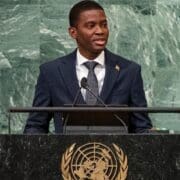
Dickon Mitchell, Prime Minister of Grenada, will be joined by a lineup of international technology experts when he delivers the feature address at the opening of the Grenada ICT Week at the Grenada Trade Centre this month.

The highly anticipated event, which will be held from Monday 27th February to Friday 3rd March, is being organized by the Grenada Chamber of Commerce in collaboration with the Grenada National Telecommunications Regulatory Commission (NTRC), the Caribbean Network Operators Group (CaribNOG) and the American Registry for Internet Numbers (ARIN).

“The event will provide a platform for Grenadians to engage with experts from the regional and international tech industry to discuss how we can better leverage technology to create employment and accelerate economic growth,” said Prime Minister Mitchell. “The initiative aligns well with my government’s social and economic development agenda. I am honored to share the stage with renowned technology experts.”

Grenada ICT Week is a highly anticipated event that will bring some of the top minds in the regional Internet scene to Grenada. It is being held in conjunction with the twenty-fifth regional meeting of CaribNOG.

The event will also feature presentations by Bevil Wooding, Director of Caribbean Affairs at ARIN and one of the region’s leading technology innovators.

“Grenada ICT Week is a significant event for Grenada as well as the Caribbean. It will provide a valuable opportunity for companies operating in the ICT sector to network and exchange knowledge, experiences and best practices. This in turn promotes business growth and development in the region.”

Rodney Taylor, Secretary General of the Caribbean Telecommunications Union; David Huberman, Regional Technical Engagement Manager for North America and Europe, Internet Corporation for Assigned Names and Numbers (ICANN); and Stephen Lee, CEO of Arkitechs Inc. and co-founder of CaribNOG, are also listed to speak at the event.

“We are honored to host our twenty-fifth CaribNOG regional meeting as part of the Grenada ICT Week and are delighted the Grenadian government will be supporting our Youth Forum, which provides career guidance and hands-on training for students and young ICT professionals.”

Event co-organizer Kennie John, CEO of the Antillean Group, underscored the importance of event to Grenada.

“I am thrilled to be a part of the Grenada ICT Week and to engage with the Grenadian community. This event is part of a larger initiative to ensure that Grenada has the human resource capacity as well as the technology infrastructure necessary to build a successful and sustainable digital economy. I am confident that it will be a great success,” said John.

Donate At Caribbean News Service, we do not charge for our content and we want to keep it that way. We are seeking support from individuals and organisations so we can continue our work & develop CNS further.


NewsAmericasNow.com

OECS Commission sends condolences to Government and People of T?rkiye in aftermath of devastating Earthquake

Black Immigrant Daily News

The content originally appeared on: Caribbean News Service

The Commission of the Organisation of Eastern Caribbean States (OECS) has the sad duty to convey deepest regrets to the Government and people of the Republic of T?rkiye, on the tragic loss of life, the human suffering, and the damage to physical infrastructure resulting from the devastating earthquake which occurred in the province of Gaziantep on Monday February 6, 2023.

The Commission is further distressed by the high death toll and the very graphic evidence of the devastation caused by this deadly disaster.

The people of the OECS region share the pain and suffering of the bereaved families and all others affected by this catastrophe, and join their Governments in extending to the Government and people of the Republic of T?rkiye, deepest condolences in this difficult period.

Donate At Caribbean News Service, we do not charge for our content and we want to keep it that way. We are seeking support from individuals and organisations so we can continue our work & develop CNS further.


NewsAmericasNow.com