The world is not ready for the next pandemic, warns the IFRC

Black Immigrant Daily News

The content originally appeared on: Caribbean News Service
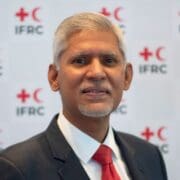
Jagan Chapagain.

No earthquake, drought or hurricane in recorded history has claimed more lives than the COVID-19 pandemic, according to the world’s largest disaster response network, the International Federation of Red Cross and Red Crescent Societies (IFRC).

The shocking death toll–estimated at more than 6.5 million people–has inspired the humanitarian organization to take a deep dive into how countries can prepare for the next global health emergency.

Two groundbreaking reports released by the IFRC network today, the World Disasters Report and the Everyone Counts Report, offer insights into successes and challenges over the past three years–and make recommendations for how leaders can mitigate tragedies of this magnitude in the future.

Ariel Kestens, IFRC Head of Delegation for the English and Dutch-speaking Caribbean, says:

“The COVID-19 pandemic has taught us many lessons, chief among them is that being prepared is crucial to any disaster. Many countries around the world and within this region were not ready for COVID-19. The effects of the pandemic, exacerbated by the many climate-related disasters in the region, have shown us that true preparedness means being ready for multiple simultaneous hazards.”

Jagan Chapagain, IFRC’s Secretary General, remarks:

“The COVID-19 pandemic should be a wake-up call for the global community to prepare now for the next health crisis. Our recommendations to world leaders center around building trust, tackling inequality, and leveraging local actors and communities to perform lifesaving work. The next pandemic could be just around the corner; if the experience of COVID-19 won’t quicken our steps toward preparedness, what will?”

The IFRC network across the world reached more than 1.1 billion people over the past three years to help keep them safe from the virus. During that time, a theme that emerged repeatedly was the importance of trust. When people trusted safety messages, they were willing to comply with public health measures that sometimes separated them from their loved ones in order to slow the spread of the disease and save lives. Similarly, it was only possible to vaccinate millions of people in record time when most of them trusted that the vaccines were safe and effective.

Those responding to crises cannot wait until the next time to build trust. It must be cultivated through genuinely two-way communication, proximity, and consistent support over time.

In the course of their work, Red Cross and Red Crescent teams documented how the COVID-19 pandemic both thrived on and exacerbated inequalities. Poor sanitation, overcrowding, lack of access to health and social services, and malnutrition create conditions for diseases to spread faster and further. The world must address inequitable health and socio-economic vulnerabilities far in advance of the next crisis.

In its Everyone Counts report–which surveyed National Red Cross and Red Crescent Societies from nearly every country in the world–the IFRC found that teams were able to quickly respond to the pandemic because they were already present in communities and many of them had engaged in preparedness efforts, had prior experience responding to epidemics, and were strong auxiliaries to their local authorities.

“Community-based organizations are an integral part of pandemic preparedness and response. Local actors and communities, as frontline responders, have distinct but equally important roles to play in all phases of disease outbreak management. Their local knowledge needs to be leveraged for greater trust, access, and resilience,” states Mr. Chapagain.

“It has been a brutal three years, but we are releasing this research and making recommendations in an act of hope: The global community can learn lessons and do justice to this tragedy by being better prepared for future health emergencies.”

The World Disasters Report offers six essential actions to prepare more effectively for future public health emergencies. The Everyone Counts Report highlights the need for accurate and relevant data in pandemic preparedness and response. Both are available to practitioners, leaders, and the public.

According to WHO, 43% of all COVID-19 related deaths worldwide have occurred in the Americas, with the Latin America and Caribbean region having the highest number of deaths per million inhabitants on average: 3,000 deaths per million.

Since the onset of the pandemic, the IFRC network in the Caribbean has conducted several activities in response to the pandemic including risk communication, community engagement, health and hygiene promotion, water and sanitation, and food and cash assistance. Local Red Cross teams will continue to work as auxiliaries to the authorities, promoting equitable access to vaccines and activities to build vaccine confidence, socio-economic recovery efforts for the most vulnerable, and placing communities at the center of its actions through locally led humanitarian support.

Donate At Caribbean News Service, we do not charge for our content and we want to keep it that way. We are seeking support from individuals and organisations so we can continue our work & develop CNS further.


NewsAmericasNow.com

CCJ orders bank to repay customer money transferred from its account without authorisation

Black Immigrant Daily News

The content originally appeared on: Caribbean News Service

The Caribbean Court of Justice (CCJ) on Tuesday ordered the Belize-based Caye International Bank Limited to repay more than US$170,000 to the Panama-based Rosemore International Corporation after dismissing an appeal by the bank.

The five-member CCJ panel of judges in a ruling read out by Justice Andrew Burgess, held that Caye Bank breached its care of duty to Rosemore and that it ought to have contacted the company given the red flags that had been raised during the transaction.

Rosemore, a customer of Caye Bank, had successfully sued the bank in the High Court of Belize to recover money deducted from its account without its authorisation or consent.

Caye Bank, is an international bank, operating in Belize and providing online funds transfer services to its customers. Rosemore, is a company registered in Panama, and was one of Caye Bank’s online banking customers in accordance with a Depository Agreement and an Indemnity Agreement between the two.

Caye Bank offered Rosemore, as it did for all its customers, the use of its secure online banking portal to conduct online transactions and gave it two sets of unique credentials to access the online banking portal known only to Rosemore.

The dispute arose over the sum of US$175,000 which Caye Bank transferred on April 23, 2015 from Rosemore’s account into an account located in Canada.

At the time when the funds were transferred, Caye Bank believed that the transfer was on the instruction of Rosemore. In fact, the instruction was sent via a compromised email account, to which the fraudster had gained access and he sent a message that appeared to be a legitimate request from Rosemore.

When Rosemore discovered the fraud, it notified Caye Bank, but the bank refused liability for the transaction, claiming it had properly processed the transaction.

On March 30, 2016, Rosemore sued Caye Bank and the fraudster claiming damages for breach by Caye Bank of the express and implied terms of the Depository Agreement and in the alternative, damages for negligence by Caye Bank, its agents and/or servants.

The fraudster took no steps in the proceeding and a default judgment was entered against him.

However, the claim continued against Caye Bank and the High Court gave judgment for Rosemore, holding that Caye Bank had breached its express and implied duties to Rosemore to exercise reasonable skill and care. Caye Bank appealed to the Court of Appeal, which upheld the judgment of the High Court.

On February15 last year, Caye Bank appealed the decision of the Court of Appeal to the CCJ, which reviewed the verification clause of the Depository Agreement and found that there was no evidence that Caye Bank did not properly follow the verification and identification process contemplated by that clause.

Nevertheless, the CCJ decided that Caye Bank was subject to ‘the Quincecare duty’, an implied term which imposed a negative duty to refrain from executing a customer’s order if the bank was ‘put on inquiry’ that its customer may be subject to a fraud; and a positive duty to do something more than simply not comply with a payment instruction.

The CCJ found that Caye Bank was put on inquiry as there were several red flags including the substantial amount requested to be transferred was suspicious given that the history of the account showed that there had been only one insubstantial withdrawal in the amount of US$1,915.76 in 2012.

In addition, the CCJ found that the request came from an address which was not the domain address on record for Rosemore; and there were observable differences between the signature on the wire transfer request form and the authorised signature.

“Given the red flags a senior official from Caye Bank ought to have contacted Rosemore to verify the transaction, which was not done. The Court, therefore, held that Caye Bank breached its Quincecare duty to Rosemore,” the CCJ said, ordering Caye International Bank Ltd also to pay costs.

Donate At Caribbean News Service, we do not charge for our content and we want to keep it that way. We are seeking support from individuals and organisations so we can continue our work & develop CNS further.


NewsAmericasNow.com
Prosecution in Suriname wants ex-president Desi Bouterse jailed for 1982 killings

Black Immigrant Daily News

The content originally appeared on: Caribbean News Service

The Public Prosecution Service in Suriname Tuesday demanded that former president and military strongman, Desi Bouterse, be jailed for 20 years for complicity in the murder of 15 men on December 8, 1982.

Acting Attorney General, Carmen Rasam, said that Bouterse must be held responsible for the murders and that enough evidence had been provided during the trial.

Bouterse had been sentenced to 20 years in jail for his involvement in the murders of political opponents by his then-military government.

In August 2021, the Court Martial of Suriname upheld the 2019 military court ruling of a 20-year jail term on Bouterse following a trial that had been going on for several years.

In 2017, Bouterse along with 23 co-defendants had appeared in the Military Court after the Court of Justice had earlier rejected a motion to stop the trial.

The former military officers and civilians had been charged with the December 8, 1982, murders of the 15 men that included journalists, military officers, union leaders, lawyers, businessmen, and university lecturers.

The prosecution had alleged that the men were arrested on the nights of December 7 and 8 and transferred to Fort Zeelandia, the then headquarters of the Surinamese National Army.

They said the men were tortured and summarily executed.

Earlier this month, attorney Irvin Kanhai, who is also representing Iwan Dijksteel, Stephanus Dendoe, Benny Brondenstein and Ernst Geffery, challenged the objectivity of the military judge, Colonel Dennis Kamperveen, claiming that one of the victims, Andr? Kamperveen and the judge, have a common grandfather.

The men are challenging their 10-year jail term.

But, the Public Prosecution Service argued that it had no need to hear witnesses during the appeal process, reiterating its call for Bouterse, 77, who led Suriname during the 1980s as head of a military government and de facto leader, to be arrested and given his unconditional prison sentence.

Bouterse took office as president in 2010, following a democratic election and was elected for another term in 2015.

During the trial by the court-martial, the military judge said that Bouterse had acted as God and decided about life and death.

But, Bouterse had argued during the trial that he was not present at the fort when the men were shot.

Before the start of the hearing on Tuesday, Bouterse said that he is not concerned about the matter, telling reporters he had “other things” on his mind that is giving him a headache, including the current situation in the country.

Donate At Caribbean News Service, we do not charge for our content and we want to keep it that way. We are seeking support from individuals and organisations so we can continue our work & develop CNS further.


NewsAmericasNow.com
Jamaica willing to send police, soldiers to Haiti to help restore peace

Black Immigrant Daily News

The content originally appeared on: Caribbean News Service

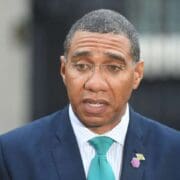
Prime Minister Andrew Holness has signalled that Jamaica would be willing to participate in a multinational security team that could be deployed to Haiti to assist in efforts to restore stability to the country torn by gang violence.

In a parliamentary statement on Tuesday, the prime minister said he has already alerted the Jamaica Defence Force (JDF) and the Jamaica Constabulary Force (JCF) about the possibility of such aid.

“Both the JDF and the JCF have been alerted to this possible course of support and they would have started to plan for such eventualities as part of their routine situational awareness and response awareness,” Holness said.

He said that the country reaffirms its commitment to working with CARICOM and bilateral partners such as Canada, the United States and the wider international community towards achieving sustainable solutions for the situation in Haiti.

The prime minister noted that Jamaica and Haiti have enjoyed longstanding good relations and partnerships as neighbours.

Holness said that the Government and Jamaicans, in general, are deeply concerned about the humanitarian and security crisis being faced by the people of Haiti.

“The people of Haiti continue to have their human rights threatened by powerful gangs and militias which carry out heinous crimes, including murder, kidnappings and violence against women and children.”

Holness also condemned the killing of more than a dozen police officers by criminal gangs in Haiti.

In his comments Leader of the Opposition Mark Golding said that it was in Jamaica’s interest that Haiti be restored to a functional democratic system of government.

He said that the security within Haiti and its borders should be put on a footing where criminal elements don’t hold sway.

Golding said he supported the Government’s efforts to assist in trying to restore peace to the country crippled by gang violence.

Donate At Caribbean News Service, we do not charge for our content and we want to keep it that way. We are seeking support from individuals and organisations so we can continue our work & develop CNS further.


NewsAmericasNow.com

IICA Director General endorses Brazil’s bid to host COP30 in the Amazonian city of Belem

Black Immigrant Daily News

The content originally appeared on: Caribbean News Service

On a visit to Brazil, Manuel Otero, Director General of the Inter-American Institute for Cooperation on Agriculture (IICA), conveyed the hemispheric organization’s full support for the candidacy of Brazil’s Amazonian city, Belem, as the venue of COP30.

In meetings with Brazilian ministers and high-level authorities, Otero also expressed solidarity with and support for assistance to the Yanomami indigenous community, which has been experiencing increased deaths due to malnutrition and malaria in the remote northern areas of the country.

Otero met in Brasilia with the new ministers of Agriculture; Agrarian Development; Social Development; Finance; Science and Technology; and Integration and Regional Development, as well as with the Secretary General of the Ministry of Foreign Affairs and the Deputy Minister of the Environment. In all of these discussions, he laid the foundation for increased collaboration between the specialized organization for agricultural and rural development and the new government of Brazil.

The IICA Director General addressed various issues during the meetings with the eight ministries, including natural resource conservation; the strengthening of national science and innovation systems to boost production, while reducing the impact on the environment; the empowerment of rural communities; the critical balance between productivity and the environment; and a new generation of public policies with a gender perspective.

Accompanied by the local IICA Representative, Gabriel Delgado, Otero met for the first time with Brazil’s new Minister of Agriculture and Livestock, Carlos F?varo, with whom he discussed deepening the collaboration between the Institute and the new government of President Luiz In?cio Lula da Silva, by strengthening the Brazilian agribusiness profile, with an emphasis on environmental aspects.

Also discussed were issues such as the restoration of degraded pastures under the ABC Plus program, as well as new opportunities and cooperation initiatives.

Otero remarked that, “We believe that this new Brazilian administration is extremely receptive to IICA’s work–considering our hemispheric, regional and local dimensions, and our future projection–and we are confident that these different facets offer tremendous opportunities to support the proposed agenda of the new government of Brazil”.

“We see this government as one that is determined to restore the image of a country committed to sustainable development, social inclusion, environmental protection and international cooperation – a model in which agriculture must play a fundamental role”, he added.

The IICA Director General and his Special Advisor, Jorge Werthein, in meeting with the Minister of Social Development, Wellington Dias, spoke about international experiences that would be useful for a country of Brazil’s size and about food assistance programs to contribute to reducing high levels of hunger and food insecurity in this, the largest country in Latin America.

At the end of the meeting, Minister Dias remarked that, “Brazil and the Ministry of Social Development consider IICA to be an important partner, in this instance, focusing on the area of agriculture, evaluation, monitoring and support. IICA is also partnering with other ministries. We must all work together to access research and information and to undertake initiatives that will create an impact, for example, the installation of water tanks. We must collaborate at the State and the community level, integrating social, environmental and economic aspects. President Lula wants to adopt this approach to ensure that we can produce good results”.

On the other hand, Otero maintained that, “IICA pledges its support for the work of the Ministry of Social Development and for the administration of President Lula. Without water, there is no agriculture and without agriculture, there can be no sustainable development. Also, we must always seek to ensure a greater role for vulnerable groups in rural areas. That is why we are launching a project with Minister Dias”.

He also expressed concern about the situation of the Yanomami people, in the state of Roraima, bordering Venezuela and Guyana. An increase in malnutrition- and malaria-related deaths on the Yanomami reserve has prompted the Brazilian government to declare a health emergency in this northern district.

The Minister of Agrarian Development, Paulo Teixeira, and his team, met with Otero at the restructured ministry, to which IICA will provide support in institutional development. The conversation stressed the importance of family farmers and vulnerable groups in the transition towards more environmentally friendly agriculture; and discussed the possible role of the Institute as a major sounding board at the hemispheric level to drive a new generation of public policies to empower these sectors. They also spoke about building bridges with other nations.

Donate At Caribbean News Service, we do not charge for our content and we want to keep it that way. We are seeking support from individuals and organisations so we can continue our work & develop CNS further.


NewsAmericasNow.com
Chronic Law Confronts Disc Jockey Playing Alkaline Music At Boat Party

Black Immigrant Daily News

The content originally appeared on: Urban Islandz

Don’t ever play Alkaline music around Chronic Law.

The St. Thomas deejay was on a boat party recently enjoying himself with some friends when the resident disc jockey decided to commit the ultimate sin and play Alkaline song “Nah Fi Like.” Luckily for us, Chronic Law was on Instagram Live and captured the moment he confront the DJ and demanded he quit playing his opps music. In the clip below, the Law Boss quickly turned to the DJ and let him know none of that will be tolerated in his presence.

“None a that pon e bombocl*** boat ah mi deh yah enuh, yow tell him,” the deejay said as two of his friends seemingly went and informed the DJ, who complied with the request.

Back in 2019, Alkaline famously beefed with the 6ix crew comprising Chronic Law, Squash, and others, with several diss tracks recorded on both sides of the divide. The lyrical feud eventually ended with no clear winner but with several hits from the artists involved. Perhaps it’s safe to say that authentic dancehall won in the end. It seems that the Hill Top deejay is still keeping Alkaline at arm’s length since he doesn’t even want to hear his music play around him.

This is not uncommon in dancehall and hip hop parties where rival artists don’t want their opps music playing once they’re in the party or club. We saw that with Cardi B at a club last year where the deejay mistook her for Nicki Minaj and was playing Nicki’s music at the same time. The whole thing caused a stir, much to the dismay of the partygoers. The DJ later apologizes to Cardi B for the mishap.

As for Chronic Law, he went on to party and seemed to have a good time free of Alkaline music.

NewsAmericasNow.com

Beyoncé Was Paid $45 Million For 1-Hour Dubai Show, Terrence J Says

Black Immigrant Daily News

The content originally appeared on: Urban Islandz

Terrence J has revealed the eyepopping figure that Beyoncé made from her recent performance in Dubai for the opening of resort Atlantis Dubai.

Beyoncé was criticized by some of her fans for performing in the middle east country mainly because of its Islamic stance that is conservative on many things like women’s rights and others like being anti-gay. Still, the country has held steadfast to its religious laws, and those who visit are bound by those rules.

Beyoncé performance saw her giving a very conservative show which didn’t contain the usual spontaneous dancing and other things she includes in her show, and there’s been much speculation as to the figure that Queen Bey earned for the brief performance with some ranging from $24 to $35 million, but now Terrence J claims that the total figure is around $45 million.

While on The Breakfast Club, Terrence J said that the artist walked away with a sizable sum that didn’t include such costs to put on the show, which included models wearing her Ivy Park line and other trimmings.

“The number was reflective of not just the payment to her but it was a whole production around it,” Terrence began.

T.I., also on the show, chimed in that he felt that the singer received $24 million for a day.

However, Terrence J offered, “I don’t even think that was the number. I think the number was actually more. I think like the bigger number was around $45 million. It’s the biggest launch. They wanted to outdo the original Atlantis launch which was the biggest one at the time.”

Beyoncé’s Atlantis performance signaled the return to the stage after four years since she had her twins. The wife of Jay-Z, Beyoncé, remains a powerhouse as an artist with her musical nominations and EGOT nominations for film and television awards over the past year.

She’s set to return on tour this year for her album Renaissance released last year.

Meanwhile, Terrence J also spoke about Beyoncé’s performance which also included her daughter Blue Ivy Carter joining her on stage.

“Beyoncé looked amazing. She looked impeccable. Voice, obviously. Blue Ivy came out. All the vibes were there. A very theatrical performance. So this wasn’t ‘Single Ladies’ dancing type Beyoncé. This was ‘Halo’ Beyoncé. Very classy. The outfits and the wardrobe was masterful. She came out, went on this little platform and had the wind and the water hitting her. It was amazing.”

NewsAmericasNow.com

Commonwealth Secretary-General launches landmark Year of Youth 2023

Black Immigrant Daily News

The content originally appeared on: Caribbean News Service

The Commonwealth Secretariat has officially launched the 2023 Year of Youth – a seminal 12 months devoted to the celebration and empowerment of the 1.5bn under-30s living in the Commonwealth.

Youth-related issues like climate change, access to education, skills, employment, and political, social and economic participation, will take centre-stage throughout 2023, with Commonwealth Heads of Government committing to prioritise collaborative action.

Commonwealth young people will feature in a variety of high-profile events aimed at spotlighting the issues facing their well-being and prosperity.

Prince Edward, The Earl of Wessex, a long-time champion for young people, will act as the Quality Youth Leadership Ambassador throughout the 2023 Year of Youth. In this role, His Royal Highness will support the inclusion of young people and shine a light on the valuable contribution they have made to member states. Further Youth Champions and Ambassadors will be announced in due course.

Speaking at the in-person launch at Marlborough House, London, the Commonwealth-Secretary General Patricia Scotland KC, said:

“It is my absolute pleasure as Secretary-General to be here launching the Commonwealth Year of Youth and I am excited that the next 12 months will bring Commonwealth leaders, stakeholders and citizens together to celebrate and empower our 1.5bn young people.

“Young people are at the heart of the Commonwealth Charter. Despite the many challenges they face, young people give so much towards every aspect of the social, economic, political and cultural life of our 56 member countries.

“The Commonwealth’s future success rests with them. So here today we commit to investing in and promoting their development and engagement at community, regional, national and pan-Commonwealth levels throughout this year and beyond.”

The launch featured the unveiling of the Year of Youth 2023 logo and website and gave an overview of the most prominent youth-focused events that will take place throughout 2023 – the events calendar can be found here.

These include but are not limited to: Commonwealth Day, the Commonwealth Youth Games – to be held in Trinidad and Tobago – the Commonwealth Global Youth Work Conference, and the Commonwealth Youth Awards Ceremony.

The Commonwealth Year of the Youth initiative also marks the 50th anniversary for the world-renowned Commonwealth Youth Programme (CYP). In August, the CYP will mark 50 years of working hand-in-hand with governments to support the education and personal development of millions of young people and giving thousands more the opportunity to sit beside world leaders and advocate for their peers.

The planning of the Year of Youth will be overseen by an Advisory Committee who will take responsibility for ensuring events and activities reflect the diverse, talented and vibrant youth population within the Commonwealth’s 56 member countries.

The launch was attended by Ministers including. Rosemary Mbabazi, Minister of Youth, Rwanda, Shaza Fatima Khawaja, Special Assistant to Prime Minister on Youth Affairs, Pakistan, Sarah Mateke Nyirabashitsi, Minister of State for Youth and Children Affairs, Uganda, and Shamfa Cudjoe, Minister of Sports and Community Development, Trinidad and Tobago, as well as representatives from the Commonwealth Youth Council, Commonwealth Games Federation, the Royal Commonwealth Society and other youth stakeholders.

The special designation for the Year of Youth comes from a mandate by Commonwealth Heads of Government who met in Kigali, Rwanda in June 2022. There, Heads declared 2023 be focused on empowering young people, stakeholders and governments, to sped-up progress on youth-focused issues.

Donate At Caribbean News Service, we do not charge for our content and we want to keep it that way. We are seeking support from individuals and organisations so we can continue our work & develop CNS further.


NewsAmericasNow.com

In Haiti, gangs take control as democracy withers

Black Immigrant Daily News

The content originally appeared on: Caribbean News Service
A man walks past a burning barricade during a protest over the death of journalist Romelo Vilsaint, in Port-au-Prince, Haiti, Sunday, Oct. 30, 2022. Vilsaint died Sunday after being shot in the head when police opened fire on reporters demanding the release of one of their colleagues who was detained while covering a protest, witnesses told The Associated Press. (AP Photo/Odelyn Joseph)

Jimmy Cherizier zips through Haiti’s capital on the back of a motorcycle, flanked by young men wielding black and leopard print masks and automatic weapons.

As the pack of bikes flies by graffiti reading “Mafia boss” in Creole, street vendors selling vegetables, meats and old clothes on the curb cast their eyes to the ground or peer curiously.

Cherizier, best known by his childhood nickname Barbecue, has become the most recognized name in Haiti.

And here in his territory, enveloped by the tin-roofed homes and bustling streets of the informal settlement La Saline, he is the law.

Internationally, he’s known as Haiti’s most powerful and feared gang leader, sanctioned by the United Nations for “serious human rights abuses,” and the man behind a fuel blockade that brought the Caribbean nation to its knees late last year.

But if you ask the former police officer with gun tattoos running up his arm, he’s a “revolutionary,” advocating against a corrupt government that has left a nation of 12 million people in the dust.

“I’m not a thief. I’m not involved in kidnapping. I’m not a rapist. I’m just carrying out a social fight,” Cherizier, leader of “G9 Family and Allies,” told The Associated Press while sitting in a chair in the middle of an empty road in the shadow of a home with windows shattered by bullets. “I’m a threat to the system.”

At a time when democracy has withered in Haiti and gang violence has spiraled out of control, it’s armed men like Cherizier that are filling the power vacuum left by a crumbling government. In December, the U.N. estimated that gangs controlled 60% of Haiti’s capital, but nowadays most on the streets of Port-au-Prince say that number is closer to 100%.

“There is, democratically speaking, little-to-no legitimacy” for Haiti’s government, said Jeremy McDermott, a head of InSight Crime, a research center focused on organized crime. “This gives the gangs a stronger political voice and more justification to their claims to be the true representatives of the communities.”

It’s something that conflict victims, politicians, analysts, aid organizations, security forces and international observers fear will only get worse. Civilians, they worry, will face the brunt of the consequences.—–Haiti’s history has long been tragic. Home of the largest slave uprising in the Western Hemisphere, the country achieved independence from France in 1804, ahead of other countries in the region.

But it’s long been the poorest country in the hemisphere, and Haiti in the 20th century endured a bloody dictatorship that lasted until 1986 and brought about the mass execution of tens of thousands of Haitians.

The country has been plagued by political turmoil since, while suffering waves of devastating earthquakes, hurricanes and cholera outbreaks.

The latest crisis entered full throttle following the 2021 assassination of President Jovenel Moise. In his absence, current Prime Minister Ariel Henry emerged in a power struggle as the country’s leader.

Haiti’s nearly 200 gangs have taken advantage of the chaos, warring for control.

Tension hums in Port-au-Prince. Police checkpoints dot busy intersections, and graffiti tags reading “down with Henry” can be spotted in every part of the city. Haitians walk through the streets with a restlessness that comes from knowing that anything could happen at any moment.

An ambulance driver returning from carrying a patient told the AP he was kidnapped, held for days and asked to pay $1 million to be set free.

Such ransoms are now commonplace, used by gangs to fund their warfare.

An average of four people are kidnapped a day in Haiti, according to U.N. estimates.

The U.N. registered nearly 2,200 murders in 2022, double the year before. Women in the country describe brutal gang rapes in areas controlled by gangs. Patients in trauma units are caught in the crossfire, ravaged by gunshots from either gangs or police.

“No one is safe,” said Peterson Pean, a man with a bullet lodged in his face from being shot by police after failing to stop at a police checkpoint on his way home from work.

Meanwhile, a wave of grisly killings of police officers by gangs has spurred outrage and protests by Haitians.

Following the slaying of six officers, video circulating on social media — likely filmed by gangs — showed six naked bodies stretched out on the dirt with guns on their chests. Another shows two masked men using officers’ dismembered limbs to hold their cigarettes while they smoke.

“Gang-related violence has reached levels not seen in years touching near all segments of society,” said Helen La Lime, U.N. special envoy for Haiti, in a late January Security Council meeting.

Henry, the prime minister, has asked the U.N. to lead a military intervention, but many Haitians insist that’s not the solution, citing past consequences of foreign intervention in Haiti. So far, no country has been willing to put boots on the ground.

The warfare has extended past historically violence-torn areas, now consuming mansion-lined streets previously considered relatively safe.

La Lime highlighted turf wars between Cherizier’s group, G9, and another, G-Pep, as one of the key drivers.

In October, the U.N. slammed Cherizier with sanctions, including an arms embargo, an asset freeze and a travel ban.

The body accused him of carrying out a bloody massacre in La Saline, economically paralyzing the country, and using armed violence and rape to threaten “the peace, security, and stability of Haiti.”

At the same time, despite not being elected into power and his mandate timing out, Henry, whose administration declined a request for comment, has continued at the helm of a skeleton government. He has pledged for a year and a half to hold general elections, but has failed to do so.——-In early January, the country lost its final democratically elected institution when the terms of 10 senators symbolically holding office ended their term.

It has turned Haiti into a de-facto “dictatorship,” said Patrice Dumont, one of the senators.

He said even if the current government was willing to hold elections, he doesn’t know if it would be possible due to gangs’ firm grip on the city.

“Citizens are losing trust in their country. (Haiti) is facing social degradation,” Dumont said. “We were already a poor country, and we became poorer because of this political crisis.”

At the same time, gang leaders like Cherizier have increasingly invoked political language, using the end of the senators’ terms to call into question Henry’s power.

“The government of Ariel Henry is a de-facto government. It’s a government that has no legitimacy,” Cherizier said.

Cherizier, a handgun tucked into the back of his jeans, took the AP around his territory in La Saline, explaining the harsh conditions communities live in. He denies allegations against him, saying the sanctions imposed on him are based on lies.

Cherizier, who would not tell the AP where his money came from, claims he’s just trying to provide security and improve conditions in the zones he controls.

Cherizier walked through piles of trash and past malnourished children touting an iPhone with a photo of his face on the back. A drone belonging to his team monitoring his security follows him as he weaves through rows of packed homes made of metal sheets andwooden planks.

Tailed by a cluster of heavily armed men in masks, he would not allow the AP to film or take photos of his guards and their weapons.

“We’re the bad guys, but we’re not the bad-bad guys,” one of the men told an AP video journalist as he led her through a packed market.

While some have speculated that Cherizier would run for office if elections were held, Cherizier insists that he wouldn’t.

What is clear, said McDermott, of InSight Crime, is that gangs are reaping rewards from the political chaos.

InSight Crime estimates that before the killing of the president, Cherizier’s federation of gangs, G9, got half of its money from the government, 30% from kidnappings and 20% from extortions. After the killing, government funding dipped significantly, according to theorganization.

Yet his gangs have significantly grown in power after the group blocked the distribution of fuel from Port-au-Prince’s key fuel terminal for two months late last year.

The blockade paralyzed the country in the midst of a cholera outbreak and gave other gangs footholds to expand. Cherizier claimed the blockade was in protest of rising inflation, government corruption and deepening inequality in Haiti.

Today, G9 controls much of the center of Port-au-Prince and fights for power elsewhere.

“The political Frankenstein long ago lost control of the gang monster,” McDermott said. “They are now rampaging across the country with no restraint, earning money any way they can, kidnapping foremost.”——Civilians like 9-year-old Christina Julien are among those who pay the price.

The smiling girl with dreams of being a doctor wakes up curled on the floor of her aunt’s porch next to her parents and two sisters.

She’s one of at least 155,000 people in Port-Au-Prince alone that have been forced to flee their homes due to the violence. It’s been four months since she has been able to sleep in her own bed.

Their neighborhood in the northern fringes of the city once was safe. But she and her mother, 48-year-old Sandra Sainteluz, said things began to shift last year.

The once bustling streets emptied out. At night, gunfire would ring outside their window and when neighbors would set off fireworks, Christina would ask her mother if they were bullets.

“When there were shootings I couldn’t go in the yard, I couldn’t go see my friends, I had to stay in the house,” Christina said. “l had to always lay down on the floor with my mother, my father, my sister and my brother.”

Christina started having heart palpitations due to the stress and Sainteluz, a teacher, worried for her daughter’s health. At the same time, Sainteluz and her husband feared their kids could get kidnapped on the way to school.

In October, during Cherizier’s blockade, armed men belonging to the powerful 400 Mawozo gang stormed their neighborhood. That same gang was behind the kidnapping of 17 missionaries in 2021.

Christina saw a group of men with guns from a friend’s house and ran home. She told Sainteluz, “Mommy we have to leave, we have to leave. I just saw the gangsters passing by with their weapons, we need to leave!”

They packed everything they could carry, and sought refuge in the small, two-bedroom home of family members in another part of the city.

Life here is not easy, said Sainteluz, the main provider for her family.

“I felt desperate going to live in someone else’s home with so many children. I left everything, I left with just two bags,” she said.

Sainteluz scrambles to scrub clothes, cook soup for her family in the dirt-floored kitchen and help Christina sitting on an empty gasoline container meticulously doing her math homework.

Whenever a gust of wind blows through the nearby hills, the rusted metal rooftop of the house they share with 10 other people shudders.

The mother once worked as a primary school teacher, earning 6,000 Haitian gourdes ($41) a month. She had to stop teaching two years ago due to the violence. Now she sells slushies on the side of the road, earning a fraction of what she once made.

Young Christina said she misses her friends and her Barbie dolls. But, the sacrifice is worth it, Sainteluz said. Over the past few months, she’s heard horror stories of her daughter’s classmates getting kidnapped, neighbors having to pay ransoms of $40,000 and killings right outside their house.

At least here they feel safer. For now, she added.

Donate At Caribbean News Service, we do not charge for our content and we want to keep it that way. We are seeking support from individuals and organisations so we can continue our work & develop CNS further.


NewsAmericasNow.com

The Oil & Gas Sector: Implications For Agriculture

Black Immigrant Daily News

The content originally appeared on: Caribbean News Service
Dr H. Arlington Chesney is a leading Caribbean Agricultural professional who has served his country, the Caribbean and the hemisphere. He is a Professional Emeritus of IICA and in 2011, was awarded Guyana’s Golden Arrow of Achievement for his contribution to agricultural development in Guyana and the Caribbean.

By Arlington Chesney

An integrated and holistically conceptualised oil and gas (petroleum) sector could assist in developing a transformed and modernised Guyana and regional agriculture and contribute to regional food security. It could thus again be a key driver in the sustainable development of CARICOM.

From the onset, I have strenuously articulated the need for a critical relationship between the windfall revenues of the oil and gas sector and food security in Guyana and all CARICOM. Initially, Guyana’s oil and gas revenues were promoted as a major catalyst for expanding and modernising its agricultural and rural sectors. This need was supported by the concept of “agriculture being more than food on the table” and its resultant “true”, expanded and major importance to sustainable national development. Further, these bonanza revenues were identified as critical to successful achievement of Guyana’s climate change adaptation measures, particularly for its socio-economically important low lying coastal and riverine areas, as part of its Low Carbon Development Strategy 2030. Ultimately, with the developed world’s failure at COP 27 to guarantee immediate inflows of funding required to address major climate change issues, the existential relationship between regional (Guyana, Suriname and Trinidad and Tobago [T&T]) oil and gas windfalls and its food security, in general, and the 25×2025 initiative, in particular, was expounded.

This article discusses how the components of the oil and gas sector (as opposed to their windfall revenues) could facilitate agriculture’s backward (inputs for primary commodities) and forward (elements for secondary commodities) linkages thus ensuring that the major components of the value chains of key agricultural commodities are substantially controlled regionally. Consequently, the concept “Agriculture is more than food on the table” could be operationalised.

Further, it identifies critical inputs for production of both primary and secondary agricultural commodities as compared to previous ones dealing with mostly primary production.

Ranken Energy Corporation, a respected 30+ year oil and gas Company, opines that, “with over 6000 products and counting, petroleum continues to be a requirement for all consumers”. Agriculture is one such key consumer.

Agriculture, the consumer, requires products from the downstream segment of the petroleum industry–refineries and Natural Gas Liquid [NGL] plants.

Some major agricultural products obtained from petroleum and associated natural gas include fertilisers, particularly ammonia-based, pesticides and antiseptics mainly for udder washes for dairy animals. Fertilisers, with annual regional imports approximating US$100m, is the largest single group.

The proposed modular refinery in Berbice, Guyana, should be conceptualised in its design and locality (a petroleum-based park) to definitively facilitate sustainable production of the above named commodities. The experiences in T&T are useful as Guyana’s production should complement that of T&T. Indeed, these countries, plus Suriname, will initially share the Caricom Market, and can significantly contribute to regional energy and food security: two of the three major developmental priorities of CARICOM Heads.

Also downstream, the petroleum industry, through the NGL plant, can produce hydrocarbons, including the gases methane, butane and ethane–all of which can help provide for residential and industrial needs.

In spite of public queries, the Guyana Government (National Budget, 2023) is committed to a Gas to Energy/Gas to Shore Project with a targeted electricity rate, substantially cheaper than the regional range of USD0.20-0.37/kWh and approximating that of a currently subsidised T&T rate of USD0.05/kWh (November 2022). Guyana and T&T will have very favourable electricity rates for producing (processed and frozen) secondary agricultural food commodities.

This integrated Programme should be included in the Draft Action Plan for Industrial Development in CARICOM to be presented to the Quasi Cabinet of Heads within its newest portfolio, Industrial Policy.

In 2021, the annual regional imports of secondary agricultural food (meat, fruits, vegetables, dairy, juices) commodities, plus, as necessary, inputs for their manufacture, approximated US$1.3b. Small quantities originated regionally, mainly from T&T with its cheaper electricity.

Also, the annual value of imported secondary agricultural food commodities is reported as increasing faster than that of food imports generally. This phenomenon is probably due to increasing preferences for convenience foods, with the accompanying increased Non-Communicable Diseases (NCDs) and concomitant curative costs.

In the spirit of the 25×2025 Food Security Initiative, Guyana and T&T can immediately gear up to access this major regional market (and subsequently that of the regional diaspora) for these commodities. However, this Programme, with supporting country projects, must critically now be based mainly on regional, as opposed to extra regional, sources of primary inputs. In the context of regional inclusiveness, all member states should be involved in producing these primary inputs.

Opportunity could also be taken, with the support of the Caricom Regional Organisation for Standards and Quality (CROSQ), to develop regional standards for these commodities that aim to reduce the incidence of NCDs and its.

Some known critical factors to facilitate implementation of this Programme must be aggressively addressed with approved schedules for achieving agreed objectives and targets. Firstly, as articulated by Prime Minister Rowley, at the AgriInvestment Forum and Expo II, August, 2022, the traditional importers of these secondary food commodities must meaningfully “come on board” to this “new” paradigm. Secondly, the Non Tariff Barriers to Trade must be dismantled, starting on a commodity basis and, taking into consideration, the recent amendment to the Revised Treaty of Chaguaramas which allows for a “Group of the Willing” to proceed. Thirdly, intraregional transport for primary and secondary products, which is currently a “nightmare”, must be effectively operational. Fourthly, the Caricom Private Sector Organisation (CPSO) and the Caribbean Agribusiness Association (CABA) must come together and organise their members to meaningfully participate on a commodity basis.

This Programme, based on critical upstream and downstream activities within the regional petroleum industry, would allow CARICOM to significantly control key elements of the supply chain for the production of both primary and secondary food commodities. It also allows for the development of Regional Agricultural Corridors as proposed by CPSO. Further, it allows the gas producing territories to actively explore commercial production of nutraceuticals and, based on the region’s expansive flora and fauna diversity, herbal medicines.

Both the Guyanese refinery and NGL plant are projected to be operational by mid-2025. Consequently, it may be posited that it’s too early to initiate activities to ensure achievement of this reality. However, the CARICOM Medium/ Long Term Action Plan, for agricultural development towards food and nutrition security, identifies the need to resolve 11 major issues with 50+ subitems. These include:

-policy implementation to reduce regulatory barriers to address intra regional trade;

-support to development of improved food quality standards and best practices;

-incorporation of climate smart technology into agrifood systems; and

-supporting agricultural MSME growth in Agro industries and food processing.

These “soft issues”, plus the other generally “hard issues” previously mentioned, require time for completion.

Successful implementation of this upstream/downstream oil and gas initiative must be a Public/Private undertaking, led by the Caricom Ministerial Task Force (CMTF) as part of its Agri-Food Systems Agenda, with meaningful collaboration of CPSO and CABA. Because of agricultural development’s all-embracing and intertwining nature, the CMTF must also work very closely with the team preparing the draft Action Plan for Industrial Development and other regional groupings in trade, health, transport, security, etc.

This program, facilitated by the regional petroleum sector, could, in the medium term, contribute to an enhanced quality of life by operationalising an economically viable, a much less supply (source and chain) dependent and self-sustaining regional agricultural sector.

——————-

Dr. H. Arlington Chesney is a leading Caribbean Agricultural professional who has served his country, the Caribbean and the hemisphere. He is a Professional Emeritus of IICA and in 2011, was awarded Guyana’s Golden Arrow of Achievement for his contribution to agricultural development in Guyana and the Caribbean.

Donate At Caribbean News Service, we do not charge for our content and we want to keep it that way. We are seeking support from individuals and organisations so we can continue our work & develop CNS further.


NewsAmericasNow.com