Fatal Stabbing Being Investigated

Black Immigrant Daily News

The content originally appeared on: ZIZ Broadcasting Corporation

Basseterre, St. Kitts, July 11, 2022 (ZIZ Newsroom) — The police are investigating a fatal stabbing incident of a male.

It occurred in Cayon in the early morning hours of Sunday morning.

More details will be provided as they become available.

NewsAmericasNow.com

Ministry of Energy launches onshore bid rounds

Black Immigrant Daily News

The content originally appeared on: Trinidad and Tobago Newsday

News

Minister of Energy Stuart Young at the Geological Society of Trinidad and Tobago’s 7th Geological Conference at the Hyatt Regency Trinidad. Photo by Sureash Cholai

THE Ministry of Energy launched its 2022 bid rounds for onshore blocks on Monday.

Energy Minister Stuart Young declared the bid round opened as he spoke on Monday at the seventh Conference of the Geological Society at the Hyatt Regency, Port of Spain.

Acting senior geologist Kimberlee London said the bid round would last six months up until January 8. Awards of blocks were set for next April, she added.

Oil and gas companies can bid for exploration and production (E&P) on the blocks which run from central Trinidad to south-east, south and south-west Trinidad.

Kimberlee London, acting senior geologist at the Ministry of Energy, speaks at the Geological Society of Trinidad and Tobago’s 7th Geological Conference at the Hyatt Regency Trinidad. Photo by Sureash Cholai

Eleven blocks are up for grabs.

These are Aripero, Buenos Ayres, Charuma, Cipero, Cory D, Cory F, Guaraguayare Onshore, Southwest Peninsula Onshore, Southwest Peninsula Offshore, St Mary’s, and Tulsa. London read a brief background to each block, such as the names of past occupiers and their reversion to the government for non-exploitation by occupier.

Acreages were typically 10,000-13,0000 hectares. Each bid must be accompanied by a US$30,000 application fee or its equivalent in TT dollars, London said. Bids will be evaluated by using both a model licence and a point system.

London said E&P licences were awarded for six years initially, with an optional extension for 25 years, and then five more years. For each year of holding an E&P licence, a company must supply the minister a work programme for that acreage.

She said the bid rounds were conducted under the legal authority given by the Petroleum Act, Petroleum Production Levy and Subsidy Act and the Petroleum Taxes Act. The Petroleum Act lets the line minister grant the E&P licences, subject to competitive bidding.

Also due soon are the shallow water bid rounds. Last month the 2021/2022 deep-water bid round for 17 blocks attracted just four bids by a consortium of bpTT and Royal Dutch Shell.

NewsAmericasNow.com

Tobago cops search for two bandits

Black Immigrant Daily News

The content originally appeared on: Trinidad and Tobago Newsday

Tobago

File photo.

A MANHUNT is underway by Tobago police for two suspects while a third man remains warded at hospital under police guard following a robbery incident on Saturday night.

Police sources said that at 8.30 pm, three gunmen entered Eat Time Chinese Restaurant on Shirvan Road and demanded valuables from two employees. The workers handed over an undisclosed sum of cash.

After a report was made, Shirvan Road police officers responded and caught one of the suspects who was still fleeing from the area. A struggle ensued between the suspect and one of the officers.

The officer fired shots and the man managed to escape with the officer’s TTPS-issued firearm.

The suspect was found a short distance bleeding from gunshot wounds and the officer’s firearm was recovered. The other two suspects remained at large up to press time. Investigations are ongoing.

NewsAmericasNow.com

EMA directors get instruments of appointment

Black Immigrant Daily News

The content originally appeared on: Trinidad and Tobago Newsday

News

NEW BOARD: Planning Minister Pennelope Beckles, centre, with members of the EMA’s board of directors whom she gave instruments of appointment to on Monday. Photo courtesy EMA

PLANNING and Development Minister Pennelope Beckles gave instruments of appointment to board members of the Environmental Management Authority (EMA).

The instruments were given of the directors chaired by Nadra Nathai-Gyan during a brief ceremony at the EMA offices on Monday. Beckles was accompanied by the ministry’s Permanent Secretary Joanne Deoraj.

She commended the work of the board and recognised the importance of the EMA, particularly as it relates to the National Environmental Policy and TT’s commitment to the Sustainable Development Goals.

Beckles reiterated her long-standing passion and commitment for environmental sustainability against the backdrop of the 26th UN Climate Change Conference of the Parties (COP26) and the upcoming COP27 which is focused on emissions and energy.

Nathai-Gyan said it was an honour to serve as chairman of the board which was appointed for an unprecedented fourth term.

The chairman also conveyed the authority’s dedication to sustainable development and indicated that its new strategic plan (2022-2026) is focused on greater compliance for a greener future.

Directors Althea Thompson, Jacqueline Wilson, Andrew Castor, Garth Ottley, Gordon Paul, John Julien, Dr Roshan Parasram and Vyash Nandlal, also received instruments of appointment.

NewsAmericasNow.com

Mother Whose Son Was Fatally Shot In Castries Urges End To Violence – St. Lucia Times News

Black Immigrant Daily News

The content originally appeared on: St. Lucia Times News

– Advertisement –

The mother of a man shot dead on Friday night in Castries wants an end to the country’s violent crime wave.

Candia Lionel told St Lucia Times that her 27-year-old son, Travis Lionel, was shot on his way home.

Candia described Travis as a hardworking, friendly individual.

Regarding whether he had unresolved issues with anyone, the mother said she did not know as she does not live with him.

– Advertisement –

Candia disclosed that she last spoke with Travis around 3:00 pm on the day he died.

Candia Lionel

According to emergency responders, two men sustained gunshot injuries Friday at Morne Du Don, Castries, around 7:00 pm.

The responders reported that one of the men was unresponsive after he was shot in the region of his eye.

The other patient sustained a gunshot wound to the abdomen, and emergency personnel transported both men to the OKEU Hospital.

“They need to do something about that shooting and if they don’t do something about it I guess the neighbourhood will be empty,” Candia Lionel asserted.

“I think it has been going on too long. People dying and is the same thing happing,” she lamented.

“Is time for that to stop,” Candia told St Lucia Times, adding that those who did not give life should not feel at liberty to take life.

Headline photo: Travis Lionel

– Advertisement –

NewsAmericasNow.com

4 ways parents can help kids have a great summer at camp | Loop Jamaica

Black Immigrant Daily News

The content originally appeared on: Jamaica News | Loop News

For generations of American kids, summer camp has been a familiar rite of passage.

They’d get some exercise, maybe learn a new skill, and hopefully build a few new friendships before the lazy days of summer ended.

Locally, Funland Jamaica has already started enrollment for their summer ’22 season, adding more than just fun and games to the new experiences offered.

But, whatever the camp’s focus might be, kids could mostly count on a predictable ritual of sunny days and nights around the campfire.

But the pandemic-disrupted summers of 2020 and 2021 turned the camping experience, like almost every other part of American life, upside down.

Some camps closed, while others attempted to host kids and adopted safety precautions. For many parents of kids too young to get vaccinated, camp just wasn’t an option.

So this year, many families may be attempting a “normal” they haven’t tried since 2019 – or haven’t tried at all.

And after two years of hybrid school schedules and learning online, kids may feel trepidation at an in-person camp.

Fortunately, camping experts say, there are plenty of ways parents at home can help support their summer campers.

Share Info About Your Camper

This year, “kids need more,” says Tom Rosenberg, president and CEO of the American Camp Association. “They need more supervision, they need more coaching.”

Camp directors and counsellors might be especially grateful for the insight into the children they’re hosting.

Communicate with the folks in charge: Knowing how a child responds to conflict “helps us provide a better experience for the camper,” agrees Julie Bowman, manager of camps and public experiences at the Carnegie Science Centre in Pittsburgh.

Think about dropping a note to camp directors sharing strategies that work for you with your child.

Communicate With Care

Parents often write letters to sleepaway campers explaining how terribly the kids are missed at home.

These parents mean well, “but that 9-year-old kid really believes that their parent needs them. They’re worried about their parents,” says Bob Bechtold, director of programs at Pittsburgh’s Sarah Heinz House, which operates a day camp and overnight camp. And they might feel more homesick.

Rather than focusing your letter on how much you miss the child, Bechtold says, “it should be more prompts to get the kids to talk about their experiences and telling them how proud you are.”

Mention that you’re looking forward to hearing their stories about camp and you’re so glad they’re having new experiences.

“That puts them in a good place where they can be successful – where they’re not worried about home, where they’re not thinking about what’s going on there,” Bechtold says.

“That’s what camp’s about – making those memories, living in the moment.”

Also, let your child know in your letters that this can be a summer for trying new things and having fun rather than worrying about excelling, Rosenberg says.

“Making mistakes is an important part of learning, development and growth mindset,” he says, and “that’s what’s great about camp. It’s a place where kids can really learn to improve their disposition, to learn and become more curious, to be more discovery-oriented. And not be afraid to just go for it and try something new.”

Sending Supplies

Camps often have emergency items like towels that a camper can borrow. But kids can feel surprisingly uncomfortable telling a counsellor they’ve forgotten something, Bechtold says.

Some will do without key items rather than ask for help.

So if your child hasn’t left for camp yet, confirm what’s needed even if you believe you know, and use a written checklist when packing.

And if the camp has already begun, let your child know that if anything got left behind, they can tell their counsellors and ask for help remedying the situation.

Dealing with Devices

Help your child understand and follow the camp’s policy on phones and digital devices. Sometimes the rules can be jarring to kids who have spent lots of time on digital devices throughout the past couple of years.

At Bowman’s day camp, “we encourage them not to bring a cell phone,” she says. “And if they do bring a cell phone, we ask that they keep it tucked away.”

Rosenberg says this can be especially stressful for some boys who are more used to communicating via text or on gaming platforms where they’re not expected to show emotion or connect empathetically with others.

If your child hasn’t begun camp yet, confirm the policy on phones and other devices, and prepare your camper for it.

If camp is underway and your child is frustrated that device use is limited, try to encourage them to embrace a screen-free (or at least screen-minimal) summer.

The beauty of camp, Rosenberg says, is that kids develop their budding identities by forming face-to-face connections with others.

Ideally, he says, millions of kids will set digital screens aside this summer and “start building stronger social-emotional connections — the human connections we all need.”

By Melissa Rayworth

NewsAmericasNow.com

110 new COVID cases recorded amid one death, 16.4% positivity rate | Loop Jamaica

Black Immigrant Daily News

The content originally appeared on: Jamaica News | Loop News

The Ministry of Health and Wellness is reporting that 110 new COVID-19 cases were recorded over a 24-hour period up to Sunday afternoon.

A COVID-19 death that occurred in January were also recorded on Sunday, bringing the overall coronavirus death toll in Jamaica to 3,158.

A 59-year-old woman from St Catherine is among the latest recorded COVID fatality nationally. The separate death of a COVID-19 patient is under investigation by health officials.

There were 81 recoveries on the day, bringing that tally to 91,749. The newly confirmed COVID-19 cases brought the total number on record for the island to 144,092.

Notably, the island recorded a 16.4 per cent positivity rate based on the samples that were tested on Sunday.

Of the newly confirmed cases, 60 are males and 50 are females, with ages ranging from three months to 88 years.

The case count was made up of Kingston and St Andrew (28), St Catherine (27), St James (12), Westmoreland (seven), St Elizabeth (seven), St Ann (seven), Clarendon (five), Manchester (five), St Thomas (four), Portland (three), St Mary (three), Hanover (one), and Trelawny (one).

There are 14 moderately ill patients, four severely ill patients and one critically ill patient among 1,283 active cases now under observation in Jamaica.

A total of 98 COVID-19 patients are now hospitalised locally.

NewsAmericasNow.com

Antigua and Nevis added to the UWI robotics summer programme

Black Immigrant Daily News

The content originally appeared on: Antigua News Room

International Game Technology (IGT) in collaboration with Mona Geoinformatics Institute (MGI) will be implementing a renewal of its coding and robotics summer programme, dubbed the “IGT Coding & Robotics Rock! Camp” across the Caribbean.

The first session of this camp is slated for July 20 – 29 and the second will be held August 15 – 26.

This year’s camp will be hosted under the theme, “Youth Coding for a Sustainable Caribbean” to focus on technological innovations that are capable of addressing social and environmental issues and fuelling sustainable growth within the region.

Similar to the 2021 staging, the camp will feature 36 participants from IGT After School Advantage (ASA) Centres in the English-speaking Caribbean.

Antigua and Nevis, as the two newest participating countries, will join the other participating islands of Barbados, Jamaica, St. Kitts, St. Maarten, and Trinidad & Tobago to increase the number of participating countries to seven.

Brendan Hames, Regional Director, IGT Caribbean, said the event, first staged last year, is geared toward introducing and equipping youth with marketable programming skills.

“There is a growing realization among educators that teaching coding and robotics to children and youth will give them valuable skills for life and expose them to innovative uses of technology,” said Hames.

He continued, “Through the IGT Coding & Robotics Rock! Camp, we hope to give our young participants these skills and to guide them in channelling the skillset and their innovativeness towards national development across the Caribbean.”

Hames further explained that given the success of the 2021 Camp, and to better achieve the objectives of this year’s programme, IGT and MGI have decided to deliver the training at two levels: The cohort from last year’s Camp along with newcomers who already have introductory knowledge in coding, will participate in a more advanced two-week camp (Level II) aiming to build upon the fundamentals learnt in 2021.

The new incoming cohort (Level I) will be introduced to the fundamentals of coding and robotics.

Dr. Ava Maxam, Acting Executive Director at MGI, said the Institute was positive that the training had helped to instil in the boys and girls participating, an appreciation of the potential that existed in that particular field of technology.

“Whether as entrepreneurs or on the corporate level, there is tremendous interest in coding and robotics as career options, and the camp has successfully tapped into and stimulated this even further,” Maxam noted. “We have great expectations for a successful renewal.”

IGT has consistently played a leading role in increasing access to technology and internet connectivity for youth in underserved communities through its After School Advantage (ASA) programme. Since 2011, IGT and its subsidiaries have opened some 39 ASA computer labs across the English-speaking Caribbean.

Through this and other initiatives, IGT aims to continually enhance the technological awareness of students and prepare them to contribute to the social and infrastructural development of the Caribbean.

https://www.linkedin.com/company/igt/

CLICK HERE TO JOIN OUR WHATSAPP GROUP

NewsAmericasNow.com

New coronavirus mutant raises concerns

Black Immigrant Daily News

The content originally appeared on: Antigua News Room

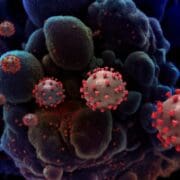
The quickly changing coronavirus has spawned yet another super contagious omicron mutant that’s worrying scientists as it gains ground in India and pops up in numerous other countries, including the United States. CLICK HERE TO JOIN OUR WHATSAPP GROUP FOR NEWS UPDATES.

Scientists say the variant – called BA.2.75 – may be able to spread rapidly and get around immunity from vaccines and previous infection. It’s unclear whether it could cause more serious disease than other omicron variants, including the globally prominent BA.5.

“It’s still really early on for us to draw too many conclusions,” said Matthew Binnicker, director of clinical virology at the Mayo Clinic in Rochester, Minnesota. “But it does look like, especially in India, the rates of transmission are showing kind of that exponential increase.” Whether it will outcompete BA.5, he said, is yet to be determined.

Still, the fact that it has already been detected in many parts of the world even with lower levels of viral surveillance “is an early indication it is spreading,” said Shishi Luo, head of infectious diseases for Helix, a company that supplies viral sequencing information to the US Centers for Disease Control and Prevention.

The latest mutant has been spotted in several distant states in India, and appears to be spreading faster than other variants there, said Lipi Thukral, a scientist at the Council of Scientific and Industrial Research-Institute of Genomics and Integrative Biology in New Delhi. It’s also been detected in about 10 other countries, including Australia, Germany, the United Kingdom and Canada. Two cases were recently identified on the West Coast of the US, and Helix identified a third US case last week.

Fueling experts’ concerns are a large number of mutations separating this new variant from omicron predecessors. Some of those mutations are in areas that relate to the spike protein and could allow the virus to bind onto cells more efficiently, Binnicker said.

Another concern is that the genetic tweaks may make it easier for the virus to skirt past antibodies — protective proteins made by the body in response to a vaccine or infection from an earlier variant.

But experts say vaccines and boosters are still the best defense against severe COVID-19. In the fall it’s likely the US will see updated formulations of the vaccine being developed that target more recent omicron strains.

“Some may say, ‘Well, vaccination and boosting hasn’t prevented people from getting infected.’ And, yes, that is true,” he said. “But what we have seen is that the rates of people ending up in the hospital and dying have significantly decreased. As more people have been vaccinated, boosted or naturally infected, we are starting to see the background levels of immunity worldwide creep up.”

It may take several weeks to get a sense of whether the latest omicron mutant may affect the trajectory of the pandemic. Meanwhile Dr Gagandeep Kang, who studies viruses at India’s Christian Medical College in Vellore, said the growing concern over the variant underlines the need for more sustained efforts to track and trace viruses that combine genetic efforts with real world information about who is getting sick and how badly. “It is important that surveillance isn’t a start-stop strategy,” she said.

Luo said BA.2.75 is another reminder that the coronavirus is continually evolving – and spreading.

“We would like to return to pre-pandemic life, but we still need to be careful,” she said. ” We need to accept that we’re now living with a higher level of risk than we used to.”

CLICK HERE TO JOIN OUR WHATSAPP GROUP FOR NEWS UPDATES.

CLICK HERE TO JOIN OUR WHATSAPP GROUP

NewsAmericasNow.com

Can Caricom still achieve regional integration?

Black Immigrant Daily News

The content originally appeared on: Antigua News Room

While Caribbean Community leaders met this week in Suriname to discuss, among other issues, climate change, agriculture and food security, regional transport and travel, and the impact of global shocks on the region, there remains a concern that the move to regional integration has stalled, if not progressing as steadily as expected. CLICK HERE TO JOIN OUR WHATSAPP GROUP FOR NEWS UPDATES.

Prime Minister of Grenada Dickon Mitchell, the newest elected head of Government in the region, was strident in his address at the 43rd Regular Meeting of the Conference of Caricom Heads of Government, during which he called on the regional intergovernmental organisation to be more than a talk shop.

“For too long this Caribbean Community that we all love has been seen and viewed as a place where we talk, and talk, and talk and then we talk some more, and to what end, Mr Chairman,” he asked.

“No, sir. This is a time colleagues, my friends and to all the young people across the Caribbean Community (Caricom) — this is indeed our moment, this is your moment, where it is a time for action and a time of choosing,” Mitchell continued

The Grenada prime minister called on leaders to “pause and reflect on the many experiences we have had while in pursuit of regional integration” but also urged his colleagues “to redouble our efforts to finding solutions to our challenges”.

Mitchell’s address begs the question, has Caricom’s efforts gone far enough to ensure regional integration?

Since its inception in 1973 under the Treaty of Chaguaramas, Caricom has had four pillars of regional integration: economic integration, foreign policy coordination, human and social development, and security. Under the Revised Treaty of Chaguaramas, 2001, the organisation took a step further to deepen integration with the introduction of the Caricom Single Market & Economy (CSME).

“The CSME is undoubtedly the most ambitious project of Caricom since its founding in 1973. Almost 20 years after the Grand Anse Declaration the Caricom Heads of Government signed on to the Revised Treaty of Chaguaramas (RTC) in 2001. The ultimate goal of the RTC is to create a single economic space and ultimately economic union, complete policy coordination, harmonisation of functional areas and a common currency,” Samuel Braithwaite wrote in ‘Caricom Report: Progress and challenges of the integration agenda’.

“The common currency has since been removed from consideration as its implementation was seen as not realistic in the current dispensation,” he added in the Inter-American Development Bank-commissioned study published in 2021.

There are five main thrusts of the CSME: free movement of skills/labour, free movement of goods, free movement of services, free movement of capital, and the right of establishment.

Committed to implement

In 2006, Caribbean heads of government committed to full implementation of the CSME by 2008. But they would fall short of this goal on account of the 2007-2011 Great Recession.

Again in 2007, during a Heads of Government Meeting in St Lucia, another deadline was set for 2015.

Still, a progress report on the implementation of the CSME by Hassan et al has found that, up to 2016, only 56.5 per cent of measures to realise a single market has been actioned. Of the 619 actions required, only 315 have been completed.

Brathwaite concludes that, “While progress has been made towards achieving the goals of the CSME, Caricom governments have used the Revised Treaty of Chaguaramas to secure the welfare of the citizens of their respective countries.”

Coincidentally, in 2016 Prime Minister of Jamaica Andrew Holness announced the appointment of a Caricom Review Commission to assess Jamaica’s participation in the regional bloc.

Led by former Prime Minister Bruce Golding, the commission focused on four key areas: the economic impact of Caricom, especially on the Jamaican economy; the mechanisms geared towards decision-making, implementation, enforcement and dispute settlement; the effectiveness of functional cooperation; and the possibilities and implications of Jamaica’s economic relationships outside of Caricom.

However, one of the main findings of the commission was that “while [the Caricom Secretariat] is often and unfairly blamed for Caricom’s slow pace of development, its powers are very limited. Much of the implementation deficit lies with national governments over which the secretariat has no authority.”

Moreover, the report proposed the formation of an oversight committee that has the primary responsibility of reviewing Caricom’s performance and the compliance of member states.

In addition, it recommended Jamaica’s withdrawal from the single market should there be no “clear, definitive commitment by all member states to a specific, time-bound, measurable and verifiable programme of action to fulfil all their obligations and complete all requirements for the CSME to be fully established and operational within the next five years”.

In his response to the ‘Golding Report’, Collin Constantine criticised the commission for not acknowledging that inadequate funding and untimely payment of member states’ contributions also factored into the implementation deficit of the Caricom Secretariat to achieve integration.

While Constantine highlighted deficiencies in the Caricom Review Commission’s methodology, he also found that Caribbean integration would also require addressing dissimilar socio-economic structures between member states, the failure to implement at the domestic political level, unequal distribution of gains that would result from integration.

On another note, he said that even though regional integration has been a priority of Caribbean Heads of Government, there is not much information on the buy-in of the citizenry.

Following the Golding Report, Caricom leaders held a special meeting in Trinidad on December 3-4, 2018, with the purpose of fast tracking the implementation of the CSME.

Although Brathwaite points out that the COVID-19 pandemic has disrupted the free movement of people, goods and services, he highlights that there has been increased collaboration between member states on a number of issues including food security.

Following the closing of the Caribbean Heads of Government Meeting on Tuesday, July 5, a communiqué from Caricom noted: “Heads of Government expressed disappointment at the slow pace of implementation of the Caricom Single Market and Economy and took immediate steps to move the process forward.”

Still, a progress report on the implementation of the CSME by Hassan et al has found that, up to 2016, only 56.5 per cent of measures to realise a single market has been actioned. Of the 619 actions required, only 315 have been completed.

Brathwaite concludes that, “While progress has been made towards achieving the goals of the CSME, Caricom governments have used the Revised Treaty of Chaguaramas to secure the welfare of the citizens of their respective countries.”

Coincidentally, in 2016 Prime Minister of Jamaica Andrew Holness announced the appointment of a Caricom Review Commission to assess Jamaica’s participation in the regional bloc.

Led by former Prime Minister Bruce Golding, the commission focused on four key areas: the economic impact of Caricom, especially on the Jamaican economy; the mechanisms geared towards decision-making, implementation, enforcement and dispute settlement; the effectiveness of functional cooperation; and the possibilities and implications of Jamaica’s economic relationships outside of Caricom.

However, one of the main findings of the commission was that “while [the Caricom Secretariat] is often and unfairly blamed for Caricom’s slow pace of development, its powers are very limited. Much of the implementation deficit lies with national governments over which the secretariat has no authority.”

Moreover, the report proposed the formation of an oversight committee that has the primary responsibility of reviewing Caricom’s performance and the compliance of member states.

In addition, it recommended Jamaica’s withdrawal from the single market should there be no “clear, definitive commitment by all member states to a specific, time-bound, measurable and verifiable programme of action to fulfil all their obligations and complete all requirements for the CSME to be fully established and operational within the next five years”.

In his response to the ‘Golding Report’, Collin Constantine criticised the commission for not acknowledging that inadequate funding and untimely payment of member states’ contributions also factored into the implementation deficit of the Caricom Secretariat to achieve integration.

While Constantine highlighted deficiencies in the Caricom Review Commission’s methodology, he also found that Caribbean integration would also require addressing dissimilar socio-economic structures between member states, the failure to implement at the domestic political level, unequal distribution of gains that would result from integration.

On another note, he said that even though regional integration has been a priority of Caribbean Heads of Government, there is not much information on the buy-in of the citizenry.

Following the Golding Report, Caricom leaders held a special meeting in Trinidad on December 3-4, 2018, with the purpose of fast tracking the implementation of the CSME.

Although Brathwaite points out that the COVID-19 pandemic has disrupted the free movement of people, goods and services, he highlights that there has been increased collaboration between member states on a number of issues including food security.

Following the closing of the Caribbean Heads of Government Meeting on Tuesday, July 5, a communiqué from Caricom noted: “Heads of Government expressed disappointment at the slow pace of implementation of the Caricom Single Market and Economy and took immediate steps to move the process forward.” — Jamaica Observer

CLICK HERE TO JOIN OUR WHATSAPP GROUP

NewsAmericasNow.com