
BELIZE-FINANCE-Government adamant that increase minimum wage will not hurt private sector
Black Immigrant Daily News
The content originally appeared on: Cana News Business
Post Content
NewsAmericasNow.com

Black Immigrant Daily News
Post Content
NewsAmericasNow.com

Black Immigrant Daily News
Post Content
NewsAmericasNow.com

Black Immigrant Daily News
Post Content
NewsAmericasNow.com

Black Immigrant Daily News
Post Content
NewsAmericasNow.com
Black Immigrant Daily News
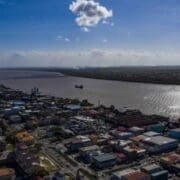
News Americas, MIAMI, Fl, Fri. Dec. 23, 2022: Foreign direct investment, (FDI), in the Caribbean has seen some lean years and some bountiful years. 2020 was a brutal year due to the COVID-19 pandemic; 2021 was much better, with FDI bouncing back throughout most of the region.
Significantly, Guyana, long one of the poorest countries in the Americas and for many decades starved for foreign investment, for the first time showed the largest growth in inflows, moving ahead of the multi-year leader, the Dominican Republic. Guyana’s new-found leadership for FDI in the Caribbean is of critical importance for the Caribbean, particularly in the ongoing development of the Southern Caribbean energy matrix.
In its annual report on FDI for 2021, the Economic Commission for Latin America and the Caribbean, (ECLAC), noted that the Caribbean attracted $8.957 billion, a 19.4 increase over 2020. Of that total, Guyana pulled in $4.4 billion, equal to almost 50 percent. Considering that ten years ago Guyana was one of the poorest countries in the Caribbean and Latin America and attracted little FDI, this is a major milestone in the country’s history.
A large part of that capital is earmarked for the oil sector, much of it from ExxonMobil and other major energy companies who have invested tens of billions of dollars over the last decade in exploration and production.
Guyana’s attractiveness to foreign investors derives from the country’s oil boom, which started in 2015. The country also benefits from strong economic growth, a general openness to foreign investment, political stability, and efforts to upgrade the national infrastructure. As new oil revenues flood into Guyana, there are plenty of needs to be met.
There are four points to be taken from ECLAC’s FDI investment report pertaining to Guyana and the Caribbean. First and foremost, Guyana remains a “hot prospect” for FDI, driven by the oil sector and the ripple effect that sector is having on the rest of the economy. The dynamic nature of Guyana’s oil sector is having a knock-on effect into other parts of the economy. The development of the oil sector is pushing a badly needed overhaul of the country’s roads, bridges, harbors, airports, electricity grid, and boosting sea and flood defenses. According to the ECLAC report new non-hydrocarbon projects worth $180 million were announced in 2021, an increase of 397 percent over 2020.
Part of the ripple effect of oil revenues is the Guyanese government’s efforts to diversify the economy away from hydrocarbons by promoting other sectors, such as agriculture, business support services, healthcare, and technology. The Guyana Office for Investment (GOINVEST) is active in working with foreign companies. It is understood by the Guyanese government that the oil wealth is transitory as the global economy moves toward renewables. One of the government’s aspirations is to make Guyana a breadbasket for the rest of the Caribbean, which currently imports a large portion of its food.
The second point is that Guyana is demonstrating that it has the potential to pull along the rest of the Caribbean. This is evident in the largest major non-hydrocarbon related investment that came in the telecommunications sector due to an announcement by Jamaican company Digicel that it will lay a submarine cable to provide the country with high-technology internet and telephone services. The Digicel “Deep Blue” project has an estimated value of $137 million. Digicel has already signed a partnership agreement with Orange (a French company) to extend the system from Trinidad to French Guiana.
The third point is that large FDI inflows to Guyana are reinforcing the development of a Southern Caribbean energy matrix, which currently is defined by Guyana, Suriname and Trinidad and Tobago.
As Trinidadian energy expert Anthony Bryan has repeatedly asserted, Guyana and Suriname represent new provinces for global oil, Trinidad is a mature oil and mainly natural gas province (with considerable expertise to be tapped) and Colombia, Venezuela, Grenada, and French Guiana could be added. According to the ECLAC report the Digicel project “…is associated with oil and gas exploration in the area, as the intention is to connect oil platforms off the coast of Guyana with other territories and countries in the region, such as French Guiana, Suriname and Trinidad and Tobago.” Consequently, capital flows help bind the matrix together, a development that could benefit the rest of the Caribbean.
The fourth point is that FDI investment in Guyana is led by the United States, which has both geopolitical and economic implications. Indeed, in the broader Caribbean region, U.S. and European investment was dominant in 2021. While ExxonMobil stands out in Guyana for the sheer size and scale of its investment, the U.S. in 2021 continued to be the main FDI source in the Dominican Republic, accounting for 44 percent of inflows according to ECLAC. Moreover, following the Summit of the Americas in June 2022, the Biden administration agreed to promote Caribbean energy security, access to finance and food security.
U.S. engagement is important from the perspective that U.S. and European interest in the Caribbean declined for the better part of the first two decades of the 21st century, while China had stepped up. However, it appears that U.S. and European investment, led by private sector companies, is now more engaged in the Caribbean, especially in Guyana.
China’s investment in the Caribbean and Latin America began to taper in 2015. Although In 2020 for the first time in 15 years, the China Development Bank and China’s Export-Import Bank did not lend to any countries, China’s interest in Guyana has hardly diminished.
This is due to higher global energy costs related to the Russo-Ukrainian war that started in February 2022. China’s state-owned energy giant, CNOOC, shares the Stabroek block with ExxonMobil and Hess. At the same time, Guyana’s mining sector has a relatively new entrant, Zijin Mining, which acquired Guyana Goldfields in 2020 from its Canadian owners with an all-cash transaction. Zijin Mining is actively expanding its operations beyond gold mining; over the past two years it has entered the lithium mining sector and signaled an interest in rare earth metals, which its holdings in Guyana and Suriname could help.
While Guyana’s foreign investment climate has much to offer, there are challenges. According to the U.S. State Department’s 2022 Investment Climate Report, Guyana has a high crime rate, high electricity costs, lengthy delays for permits, and issues with access to land. Indeed, in its 2020 Ease of Doing Business report (the last edition), the World Bank ranked Guyana at 134 out of 190 countries, indicating that there is room for improvement (with some of the issues being addressed in 2021 and 2022).
Efforts are being made to deal with these issues and Guyana has recently signed an engineering procurement contract for the development of a natural gas plant for electricity generation that should reduce prices significantly.
Oil wealth is changing Guyana and providing it with a rare opportunity to rapidly advance its economy, become a more equitable society, and provide a funding mechanism for a non-carbon-based economy. FDI is playing an important role in this process. The challenge ahead is to manage that process. For every United Arab Emirates and Qatar there is a Chad and a Venezuela.
Thus far, Guyana has taken heed of the words of American author H. Jackson Brown, Jr.,” “Nothing is more expensive than a missed opportunity.” The record amount of FDI shows that one of Latin America and the Caribbean’s past poorest states it is not missing the opportunity.
NewsAmericasNow.com
Black Immigrant Daily News
News Americas, NEW YORK, NY, Thurs. Dec. 22, 2022: Grammy nominated Jamaican jazz pianist, Monty Alexander, has sold out his Birdland Jazz Club ‘Island Holiday’ show in NYC through December 24th. The show, with Luke Sellick and Jason Brown is now only available for viewing online HERE
The Kingston, Jamaica born musician is an American classic, touring the world relentlessly with various projects, delighting a global audience drawn to his vibrant personality and soulful message. A perennial favorite at jazz festivals and venues worldwide and at the Montreux Jazz Festival where he has appeared 23 times since 1976, his spirited conception is one informed by the timeless verities: endless melody-making, effervescent grooves, sophisticated voicings, a romantic spirit, and a consistent predisposition, as Alexander accurately states, “to build up the heat and kick up a storm.”
In the course of any given performance, Alexander applies those aesthetics to a repertoire spanning a broad range of jazz and Jamaican musical expressions—the American songbook and the blues, gospel and bebop, calypso and reggae. Documented on more than 75 recordings and cited as the fifth greatest jazz pianist ever in The Fifty Greatest Jazz Piano Players of All Time (Hal Leonard Publishing), the Jamaican government designated Alexander Commander in the Order of Distinction in 2000 and in 2018 The University of The West Indies bestowed him with an honorary doctorate degree (DLitt) in recognition of his accomplishments.
NewsAmericasNow.com
Black Immigrant Daily News
News Americas, WASHINGTON, D.C., Thurs. Dec. 22, 2022: Recent global activities have re-emphasized the importance of oil and gas revenues emanating in the Caribbean with the achievement of climate resilient activities and acceptable food security levels in CARICOM.
Recent global activities have re-emphasized the exceedingly important relationship between regionally obtained oil and gas revenues and acceptable levels of food security in CARICOM. Indeed, the linkage between these two parameters is now existential. Supporting this reality is the contributory role of regional oil and gas to European energy security at least in the short term.
On October 27, 2022, The World Bank Food Security Update stated: (i) Food commodity prices declined from their all-time highs in April. However, grain supplies will be lower due to lower yields (weather related) in the USA and European Union, (ii) Fertilizer prices could remain historically high because of upside risks, (iii) The Black Sea Grain Initiative (BSGI) increased grain availability and reduced food prices since April.
However, further supply disruptions are possible if the BSGI is not renewed, and extreme weather, driven by climate change, puts pressure on food production and prices.
In December, Purdue University/CME Ag Economy reported that rising interest rates and high input and energy costs are creating uncertainty amongst US farmers with 80% responding that it was “bad time” for investments.
On November 20, an extended COP27 concluded in Egypt. A major achievement of Small Island and Low-Lying Developing States (SIDS), like CARICOM’s, was the eventual acceptance by developed nations to create a Fund to pay for Loss and Damage caused by Climate Change. However, details, such as, “who shall pay into the Fund, where the money will come from, and which countries will benefit” have not been agreed. Recommendations will be made to COP28 in November/December 2023.
There were also no specific commitments from developed countries to meet the US$100 billion shortfall in funds promised for developing countries to implement adaptation measures required to minimize climate change effects.
“On COP27’s heels”, USA promised support to climate resilience and sustainable development in SIDS through a Local2030Islands Network and expanding access to risk-based insurance for most vulnerable countries. This may benefit CARICOM countries.
Notwithstanding and importantly for CARICOM’s oil producing countries, fossil fuel use was not rejected.
The results on immediate development funding at COP27 will disappoint CARICOM Heads who have identified development/debt financing as a priority for sustainable development. This is further magnified, as in November 2022,
(i) FAO’s Food and Agriculture Sustainable Development Initiative called for quantitative and qualitative improvement in Climate Change funding, and
(ii) the United Nations Development Programme’s Adaptation Gap Report, subtitled “Too little, too slow”, stated that US$160-340b annually will be required by 2030 for the 152 developing countries to implement a meaningful climate change adaptation Programme, “concentrated in agriculture, water, ecosystems and cross cutting sectors”. Extrapolating, CARICOM’s requirements will approximate US$21-45b annually.
Another instructive event is the Russia/Ukraine war with Russia menacingly threatening its oil and gas supply to the EU: supplying in 2021 40 and 34%, respectively. Although the situation appears very dynamic, the EU to (a) minimize or remove future threats, could from early 2023 cease purchasing Russian supplies, and/or (b) damage Russia’s economy, cap its purchase price at US$60/barrel.
A very likely outcome is the EU immediately requiring alternative supply sources. CARICOM, as a traditional geopolitical ally, can be a preferred option. Indeed, Guyana and Trinidad and Tobago have in 2022, on a year-to-date basis, increased their exports of oil and gas (LNG), respectively, to Europe.
Simultaneously, even with a very dynamic market, the prices for oil and natural gas are projected to remain relatively high in 2023 although not at the “heady heights” of $139/barrel in March 2022. The regional oil and natural gas suppliers, especially Guyana, are expected to accumulate healthy revenues in 2023/24.
In September 2022, the Visual Capitalist opined that: (a) high energy prices could increase food insecurity and social unrest and (b) utilizing World Bank data, high energy prices influence up to 64% of food price movements.
The major conclusions and/or actionable items from these recent and instructive happenings are:
CARICOM, with its small market, can’t depend on the EU and/or the USA, for adequate and reliable supplies of grains, its second most important food import group.
CARICOM, with estimated additional annual needs of US$21-45b, can’t immediately expect significant increased financial support from previous and newly identified funds to address its critical climate change issues that impact negatively on food security.
CARICOM oil and gas producing states are well positioned to be preferred oil and gas suppliers to the EU gaining substantial revenues as global prices are forecast to remain elevated in 2023/24.
CARICOM with projected high energy prices could experience high food prices and possibly social unrest.
Ultimately, CARICOM will have, in the short term, inadequate amounts of international finance to implement needed activities to address climate change and food security issues. With respect to the latter, this opinion concentrates on grain.
This reality places great responsibility on the oil and gas producing countries, with their substantial windfalls, to ensure that CARICOM, collectively, achieves acceptable levels of food security and implements minimally required climate change adaptation measures. Guyana’s Finance Minister, Ashni Singh, recognised this responsibility stating on November 29 that “Guyana intends to utilize its oil revenues to lay a path towards agriculture, transport infrastructure and other areas”. Guyana, in its continuing regional leadership for agriculture, must expand this outlook regionally. A paradigm recently exhorted by Prime Minister Mottley as “necessary to uplift Caribbean people”.
The Guyanese leadership must: (a) appreciate that the region is insecure if any member state remains with a food deficit: a distinct possibility without access to significant quantities of external development funds, (b) recognize that regionally obtained oil and gas revenues are now existential to achieve the 25×2025 Initiative, and (c) include Suriname and Trinidad and Tobago to partially utilize regional large oil windfalls directly and/or indirectly to assist other countries to achieve acceptable levels of food security.
A geographical and organizational approach is recommended for the use of such funding to replace regional imports of soybeans, corn and rice, with approximate annual (2015-2022) values of US$73m, $65m and $22m, respectively.
Geographically, it’s recommended that Guyana accelerates its production of soybeans in the Intermediate Savannahs. Suriname, with similar soil types and topographies, using lessons learned in Guyana can initiate production in two/three years.
Similarly, corn production be rapidly expanded in Belize, taking advantage of decades of successful cultivation by Belizean farmers, particularly the Mennonites. Unlike Guyana, which is already drastically expanding and improving port facilities to enable oil services, Belizean facilities will most likely require modernization and upgrading to enable intra-regional trade.
Further, Guyana and Suriname have traditionally successfully produced rice commercially. These acreages, along with supporting infrastructure throughout the value chain, could be expanded rapidly. For Guyana, abandoned sugar lands, with existing basic drainage and irrigation infrastructure, are available for this expansion.
With the proposed expansion, appropriate quantities of quality seed of suitable, ecologically adapted and high yielding varieties, must be produced, preferably regionally. For rice, Guyana has traditionally produced both breeders and commercial seed.
For soybean and corn, commercial seed can be produced in Antigua and Barbuda, Belize and Trinidad and Tobago which have technical and environmental advantages and/or experience. The Caribbean Agricultural Research and Development Institute can coordinate this production.
Based on recent global events, food insecurity along with food and energy prices may remain high for CARICOM at least for 2023/24. With energy cost influencing 64% of food price movements, the realization of the existential relationship between regional oil and gas windfalls and its food security levels is now easily understood.
NewsAmericasNow.com
Black Immigrant Daily News
News Americas, NEW YORK, NY, Weds. Dec. 21, 2022: Creating a path into horse racing is something that many leading organisations in the sport have struggled with throughout history, as the sport looks to become more inclusive.
However, a track in Winnipeg is making great in roads in creative diversity in the weighing room, as Caribbean jockeys have become the norm at the track.
In fact, 13 of the 17 jockeys at the track in Winnipeg are now from Caribbean descent, and the leading rider in six of the previous seven seasons have gone to one of the jockeys from the Caribbean.
The success that has been achieved by the Caribbean jockeys at Assiniboia Downs is just down to a coincidence, as it is the long-term result of strategic effort.
The plan by Assiniboia Downs was to sustain the sport of horse racing in the state, while also helping aspiring jockeys to fulfil their goal in life. It is something that racing in the state has thrived off, but Darren Dunn, who is the chief executive officer at the track, claimed that without the participation of jockeys from the Caribbean, racing may have already seized to have existed in Winnipeg.
If you want to find out more about this and other horse racing tracks in North America click here: https://edge.twinspires.com/racing/tracks/
Dunn also claims that changes within Canada society have played a role in the lack of athletes wishing to become jockeys, which has had a dire impact on the sport as a whole in the country.
Aside from Woodbine, the majority of tracks in Canada will be the place for aspiring jockeys to perfect their craft before then taking their skills elsewhere. And, that would now be the goal of the current Caribbean jockeys taking Winnipeg by storm.
Of course, the plan on the whole does sound good, but it still revolves around talent from the Caribbean seizing their chance at Assiniboia Downs. There have been no shortage of success stories since the scheme, with one of the first coming with Chavion Chow. Chow was among the first jockeys to swap the Caribbean for Canada, as he moved to Winnipeg in 2008 when he was in his mid 20s.
His best season in the saddle to date came in 2015, as he landed the rider title, and won 269 races at Assiniboia Downs worth $2.4 million in prize money. Chow claimed that the switch has been an excellent decision, as there is only one track in Jamaica, but far too many jockeys for the amount of horses entered. He stated that in Canada there is more options when it comes to racing, and he said it has been a ‘life-changing experience’.
The success achieved by Caribbean jockeys at Assiniboia Downs has also tempted previously retired jockeys back into the saddle. That includes Leroy Nelson, who was brought back into the sport after a five-year break. After hearing about Assiniboia Downs, he decided to race again, and he is credited with winning over 170 races during his career.
There is a clear pathway to the top for the Caribbean jockeys riding at Assiniboia Downs, and a perfect example of that would be the success that would Patrick Husbands. To date, the Barbadian-born jockey has won over 3,000 races in his career, and has been racing out of Woodbine throughout his career. In 2003, he won the Canadian Triple Crown aboard Wando, and landed the Woodbine Mile in 2001. In the same year, he also claimed victory with Exciting Story in the Metropolitan Handicap at Belmont Park.
In 2006, he made his first start in the prestigious Kentucky Derby, as he rode Seaside Retreat for Mark Casse. Husbands legacy is there for all current and aspiring Caribbean riders to witness, and they can also dream of landing victories in the Canadian Classics.
The reaction to the Caribbean riders and the scheme has been welcomed very positively, with many of the current jockeys claiming that they are among the fan favourites at the track.
Many believe that as long as they are giving their all on their rides, and they are caring for the horses then the fans couldn’t care less about where the jockeys are from. It could be a perfect example to spread inclusivity around the rest of the world in horse racing.
These jockeys are setting an example for next generations and creating a new career path that can inspire young ones to pursue in the future. Horse racing has come a long way and is finally becoming a sport that is less elitist and more accepting of anyone in any country, as long as they have passion and dedication for the sport of the kings.
NewsAmericasNow.com
Black Immigrant Daily News
News Americas, NEW YORK, NY, Tues. Dec. 20, 2022: Haitians and Cuban soccer fans were among Caribbean football fans who celebrated Argentina’s victory over France in the Qatar 2022 World Cup Final football match. Here’s how they celebrated.
Haitians celebrate Argentina’s victory over France in the Qatar 2022 World Cup Final football match in Port-au-Prince, Haiti, on December 18, 2022. (Photo by Richard Pierrin / AFP) (Photo by RICHARD PIERRIN/AFP via Getty Images)
Haitians celebrate Argentina’s victory over France in the Qatar 2022 World Cup Final football match in Port-au-Prince, Haiti, on December 18, 2022. (Photo by Richard Pierrin / AFP) (Photo by RICHARD PIERRIN/AFP via Getty Images)
Haitians celebrate Argentina’s victory over France in the Qatar 2022 World Cup Final football match in Port-au-Prince, Haiti, on December 18, 2022. (Photo by Richard Pierrin / AFP) (Photo by RICHARD PIERRIN/AFP via Getty Images)
Cuban fans of the Argentine national football team celebrate after Argentina won the Qatar 2022 World Cup against France in Havana, on December 18, 2022. (Photo by YAMIL LAGE/AFP via Getty Images)
Fans of the Argentine football team wear the team’s t-whirt while riding on a cocotaxi in Havana, on December 18, 2022. (Photo by YAMIL LAGE/AFP via Getty Images)
Cuban fans of Argentine football team watch the final of the World Championship between France and Argentina on TV in Havana, on December 18, 2022. (Photo by YAMIL LAGE/AFP via Getty Images)
NewsAmericasNow.com
Black Immigrant Daily News
A juror who was spotted in an elevator with Tory Lanez and his team during the continuation of Lanez’s trial has shared that she is familiar with the artist, and they have done business on Instagram.
Reports from journalists covering the trial of the alleged shooting of Megan Thee Stallion by Tory Lanez say that proceedings were interrupted on Monday after the judge became aware that a female juror was acquainted with the Canadian rapper and she was also spotted in the elevator with the artist and his team.
According to Law and Crime’s Meghann Cuniff, the juror identified is an African American woman who is known as ‘Juror No. 39″. The reporter said that the judge had addressed the juror issue privately without giving many details.
“The juror, a younger light-skinned Black woman with braided hair and a style of dress that included pink cheetah print pants last week, was asked to stay behind, then she went back into chambers to talk to Judge Herriford,” Cuniff tweeted.
It’s unclear if there is cause to remove the juror, but it was revealed that the woman knows Tory Lanez, but she reportedly insisted that she can be “fair.” It’s unclear if the juror had disclosed that she was acquainted with Tory during jury selection. Still, according to Cuniff, the description of the juror is that she is a women’s clothing “seamstress.” The juror disclosed that she is familiar with “at least one party in the case through Instagram but generally isn’t on social media. Says she can be fair.”
There are reports that the juror and Tory Lanez were in the elevator on Friday and again on Monday. Los Angeles reporter James Queally also said he was in the elevator on Monday with the juror as well as Tory Lanez.
James noted on Twitter, “I did end up on an elevator with Lanez, his security and PR folks today, and that specific juror was in there. I did not see them taking or hear any discussion of the case.”
In the meantime, also on Monday, Jody Little, the senior DA investigator who introduced the recorded interview of Kelsey on Friday, took the stand when she was asked about Kelsey’s diss song “Bussin Back,” diss song that she wrote about Meg saying that if she had the gun there would have been a murder.
The judge also allowed the lyrics of the song to be entered into as evidence after Little spoke to it. The essence of the song was Kelsey denying that she was the shooting and could work against Lanez’s defense.
For other major development, the defense also plans to call a neighbor whom Tory Lanez’s lawyer George Mgdesyan says will testify that he saw someone who was seated where Kelsey got out of the car and attack the person seated where Meg had been seated.
Tory Lanez’s attorney also asked Little for a reason the D.A. decided not to call the neighbor to testify.
In the meantime, there are reports that Megan Thee Stallion’s bodyguard Justin Edison is still missing, but the Los Angeles Police Department has confirmed there is no missing person report for Edison, who was supposed to testify for the prosecution on Friday.
Edison is the one whom Kelsey texted, “help Tory shot meg,” the night of the shooting.
NewsAmericasNow.com