Posts

Ja-based Delta Capital acquires Massy’s Credit Card, changes coming Loop Jamaica

Black Immigrant Daily News

The content originally appeared on: Jamaica News Loop News

The ink has now dried on an agreement for Jamaica-based Delta Capital Group (Delta) to acquire the credit card portfolio of Massy Cards.

This acquisition sees Delta acquiring 100 per cent of a Barbados company, which has 30,000 Massy credit cards issued in Barbados.

The major move on the part of Delta was announced on the first day of the three-day Fintech Islands conference going on in Barbados.

We’re going to issue other types of cards like prepaid cards — both physical and digital.

Delta’s Founder Zachary Harding confirmed that payments have been finalised for the transaction which received regulatory approval in September. Harding is the majority shareholder in Delta and serves as executive chairman.

Partners of the private equity firm include shareholder Ivan Carter, Former CFO of Sagicor Jamaica who serves as Delta Group CEO, and Anthony Dunn who serves as Delta Group chief investment officer.

Carter said, this is also “our entry into the payment space here in Barbados… What we are going to be doing very quickly and very aggressively is building out a comprehensive payment’s platform. We’re going to expand this suite of credit cards. We’re going to issue other types of cards like prepaid cards — both physical and digital.

“The portfolio now has an electronic wallet or e-wallet. We’re going to embellish and enhance and expand the services and capabilities and the reach of that wallet. We’re also going to bring, when the infrastructure is right, and I know my commercial banking friends are in the room, and at the right time we will bring other products that we have already invested in — digital currencies, central bank currencies, USD currencies, digital cards, digital gift cards etc. So we have a full range of all digital because one of our strategic weapons, or distinguishing characteristics, is the use of technology to solve these problems.”

But for now it will look, feel and operate just the same way as it has so far.

Massy, whose 99-year history as a deeply rooted household brand throughout the Eastern Caribbean, was able to provide credit card and loyalty cards to its customers for several decades. The cards are a financial staple throughout the region for the purchase of products and services.

According to Delta’s Executive Chairman Harding during a breakout session Wednesday, “the Massy cards will eventually be transitioned to the MasterCard platform and rebranded as DeltaPaay. But for now, it will look, feel and operate just the same way as it has so far.”

He said that with MasterCard on board the unincluded person will be included and afforded opportunities like online shopping with DeltaPaay.

For Caribbean finance, this is comparable to the shift from hand-delivered mail to email.

In a press release, Harding added that once the transition is complete, Delta aims to swiftly overlay healthcare services onto its payment structure via its telehealth platform — Delta Health & Wellness.

Harding describes the move as “transformational”, saying: “DeltaPaay will enable a wider bracket of Caribbean people, including the unbanked, to take part in the modern digital economy, including paying for goods and services online. Most importantly, our people will have access to pay for online healthcare services through Delta’s telemedicine platform, even if they do not have a bank account.”

NewsAmericasNow.com

Observation: Banking In Antigua Is Killing Business

Black Immigrant Daily News

The content originally appeared on: Antigua News Room

Banking In Antigua Is Killing Business

Here is a true story about the two local banks in Antigua.

A client at ECAB who has been with the bank from the day the bank opened and  owned by a local man, then throughout the Stanford ownership, and now as Eastern Caribbean Amalgamated Bank.

Operating a small business account in both EC & US Dollars the client had one U.S. client for more than 25 years which kept the U.S. account open, transferring the small amount to the EC operating account each month for all those years.

Suddenly the bank started to deposit the U.S. Transfer into the EC account causing the U.S. account to be closed to lack of activity. When discovered and attempts made to correct the situation the bank refused to take responsibility and further returned two transfers sent from the U.S. The client then tried to have their U.S. account restored as it was the bank’s error (?) to no avail, their bank-for-life ECAB continued to fail them.

The client them contracted its sister company to manage the U.S. account on behalf of the smaller company and had their U.S. Client reformat bank transfers to the company’s other local Bank, ACB. This other local bank ACB, failed to communicate on receipt of the transfer, and also twice sent the transfer back to the U.S. without communicating with the local client.  Two local banks sending back money without even trying to communicate with their client. This is the failure of small island penny banks when they have grown into handling millions of dollars, and when their officers have lost their willingness to serve. Five months stringing out their local business with attitude.

The Customer Service of local banks is very, very local, in that the cultural contempt which small islanders have for each other comes to the surface, even as their politics which is worn on their sleeves. Making the cultural shift to offering international banking services after 55 years in operation, suggests that the cultural contempt for each other, grown on the plantations, is too great to overcome without international exposure.

We have seen the Canadian banks when operating in Antigua produce professional bankers with confidential Managers & Supervisors, trained in Know Your Customer (KYC). These persons are of the same background as our current crop of bank officers operating in our indigenous banks, they receive the same education and training, and the only difference is the ultimate management (white) whose wrath they dared not provoke.

The regulatory pressure put on the Caribbean has more to do with the new investors who are attracted to our Criminal Investment Program (CIP) and the on-the-edge business trends which leaders of our region tend attract. There is no good reason why small business and local people are now bearing the brunt of the banking failure of our local banks and their inadequacies. Clearly we had no choice but to try to buy out the Canadian banks, but it may have been a better option to bring in Republic or some additional bank to pick up the slack from exiting Canada.

Whether we like it or not, the local banks just cannot hack it, and to quote the vibe of the Prime Minister, ‘dem just don’t care how dem talk to people’ and worse they don’t care period about locals.

CLICK HERE TO JOIN OUR WHATSAPP GROUP

NewsAmericasNow.com

(UPDATED) Met Office warns of severe risk: Beware of rivers bursting banks

Black Immigrant Daily News

The content originally appeared on: Trinidad and Tobago Newsday

News
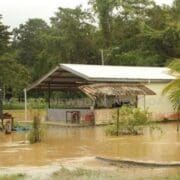
File photo/Marvin Hamilton

The Met Office says there is “a severe risk to public safety, livelihood and property.” It issued an updated orange-level riverine alert at 6.55 this morning.

Shortly before 7 am the Ministry of Rural Development and Local Government issued a list of river level capacities. The hishst was tat El Carmen (Caroni River) at 101 per cent. (See full list below)

As a result, the Education Ministry has said all schools will be closed today. UWI said last night that all classes on Thursday and Friday will take place via Zoom and not on campus.

The Met Office said the continuous rainfall overnight had pushed major watercourses to critical thresholds, and some may be close to overspilling or already doing so.

In addition, heavy rain and thunderstorms are expected to continue.

This, along with spring tides, it said, could keep river levels elevated. Even smaller watercourses in both Trinidad and Tobago were now unusually full and could burst their banks if the rain continues.

The riverine alert was first issued at 5.03 pm on Wednesday, updated at 6.55 am on Thursday and extends until 5 pm on Friday, October 7.

The general yellow-level weather alert remains in effect until noon on Friday.

The Met Office said although the axis of the tropical wave causing it is now west of TT,rain and/or showers are still expected.

There is a high (70 per cent) chance of occasional heavy showers and thunderstorms that could produce rainfall over 25mm, along with gusty winds.It also warned of street/flash flooding and ponding in heavy rain, as well as landslips in areas prone to them.

River level capacity:Issued by the Ministry of Rural Development and Local Government at 6.50am on October 6

El Carmen (Caroni River) 101%North Oropouche (Toco Road) 85%Caroni (Bamboo Settlement 3) 76%South Oropouche 67%Arouca 55%Caparo 47%Aripo 27%

What to do:

People are advised not to wade or drive through flood waters.
Those with loose outdoor items and livestock should secure them.
The public should monitor weather conditions and river levels.

More information can be found at: www.metoffice.gov.tt; www.odpm.gov.tt

This is the original version of this story, published shortly before 8am on October 6:

The Met Office says there is “a severe risk to public safety, livelihood and property.” It issued an updated orange-level riverine alert at 6.55 this morning.

As a result, the Education Ministry has said all schools will be closed today. UWI said last night that all classes on Thursday and Friday will take place via Zoom and not on campus.

The Met Office said the continuous rainfall overnight had pushed major watercourses to critical thresholds, and some may be close to overspilling or already doing so.

In addition, heavy rain and thunderstorms are expected to continue.

This, along with spring tides, it said, could keep river levels elevated. Even smaller watercourses in both Trinidad and Tobago were now unusually full and could burst their banks if the rain continues.

The riverine alert was first issued at 5.03 pm on Wednesday, updated at 6.55 am on Thursday and extends until 5 pm on Friday, October 7.

The general yellow-level weather alert remains in effect until noon on Friday.

The Met Office said although the axis of the tropical wave causing it is now west of TT,rain and/or showers are still expected.

There is a high (70 per cent) chance of occasional heavy showers and thunderstorms that could produce rainfall over 25mm, along with gusty winds.It also warned of street/flash flooding and ponding in heavy rain, as well as landslips in areas prone to them.

The Met Office says there is “a severe risk to public safety, livelihood and property.” It issued an updated orange-level riverine alert at 6.55 this morning.

Shortly before 7 am the Ministry of Rural Development and Local Government issued a list of river level capacities. The hishst was tat El Carmen (Caroni River) at 101 per cent. (See full list below)

As a result, the Education Ministry has said all schools will be closed today. UWI said last night that all classes on Thursday and Friday will take place via Zoom and not on campus.

The Met Office says there is “a severe risk to public safety, livelihood and property.” It issued an updated orange-level riverine alert at 6.55 this morning.

Shortly before 7 am the Ministry of Rural Development and Local Government issued a list of river level capacities. The hishst was tat El Carmen (Caroni River) at 101 per cent. (See full list below)

As a result, the Education Ministry has said all schools will be closed today. UWI said last night that all classes on Thursday and Friday will take place via Zoom and not on campus.

The Met Office said the continuous rainfall overnight had pushed major watercourses to critical thresholds, and some may be close to overspilling or already doing so.

In addition, heavy rain and thunderstorms are expected to continue.

This, along with spring tides, it said, could keep river levels elevated. Even smaller watercourses in both Trinidad and Tobago were now unusually full and could burst their banks if the rain continues.

The riverine alert was first issued at 5.03 pm on Wednesday, updated at 6.55 am on Thursday and extends until 5 pm on Friday, October 7.

The general yellow-level weather alert remains in effect until noon on Friday.

The Met Office said although the axis of the tropical wave causing it is now west of TT,rain and/or showers are still expected.

There is a high (70 per cent) chance of occasional heavy showers and thunderstorms that could produce rainfall over 25mm, along with gusty winds.It also warned of street/flash flooding and ponding in heavy rain, as well as landslips in areas prone to them.

What to do:

People are advised not to wade or drive through flood waters.
Those with loose outdoor items and livestock should secure them.
The public should monitor weather conditions and river levels.

More information can be found at: www.metoffice.gov.tt; www.odpm.gov.tt

NewsAmericasNow.com

WATCH: OAS Funded Training Strengthens Saint Lucia’s Disaster Management – St. Lucia Times News

Black Immigrant Daily News

The content originally appeared on: St. Lucia Times News

– Advertisement –

The National Emergency Management Organisation (NEMO] continues to empower local communities with the faculties needed to mount an efficient response to natural and manmade hazards.

With funding from the Organization of American States, NEMO conducted a five-day Community Emergency Response Team (CERT) training programme for tourism industry stakeholders and community leaders based on the island’s west coast.

More from Rehani Isidore.

– Advertisement –

SOURCE: Office of the Prime Minister

– Advertisement –

NewsAmericasNow.com

Yoles : “Nous voulons redonner un élan à notre activité”

Black Immigrant Daily News

The content originally appeared on: Martinique FranceAntilles

Alain Richard, président de la Fédération des yoles rondes de Martinique

Présent dimanche au François lors des courses de bébé-yoles et de yoles rondes organisées dans le cadre de la fête patronale de la commune, Alain Richard a tiré un premier bilan de la 36e édition du Tour de Martinique et évoqué les perspectives de la saison à venir.

Depuis la fin du Tour, les yoles rondes ne font plus la Une de l’actualité. On peut penser que vous avez continué à travailler, entre autres pour préparer la saison prochaine. Avez-vous tiré le bilan de la 36e édition du Tour de la Martinique des yoles rondes ?

Ce Tour a été un rendez-vous réussi par la Martinique dans son ensemble. Il y a eu déjà plusieurs bilans avec la direction de l’Aviation civile, avec notre équipe de gestion, avec les services de l’Etat et des collectivités. Très…


France-Antilles Martinique

1172 mots – 06.10.2022

NewsAmericasNow.com

Le service du cadastre dysfonctionne depuis des mois en Guadeloupe

Black Immigrant Daily News

The content originally appeared on: Guadeloupe FranceAntilles

Info du jour

L’activité du service du cadastre est ralentie par l’absence de ses deux inspecteurs. Les acquisitions, ventes, successions, donations qui nécessitent au préalable l’attribution d’un numéro cadastral en sont impactées. Selon les professionnels de l’immobilier, tout un pan de l’économie est freiné depuis des mois.

Pendant quelques semaines, le service du cadastre était totalement fermé. La raison ? Les deux agents affectés dans ce service ne sont plus en mesure d’effectuer leurs tâches. L’un est en congé longue maladie depuis des mois et l’autre est malheureusement décédé. «C’est une situation à la fois triste, imprévisible et inhabituelle», explique Stéphane Hamon, directeur adjoint des finances publiques. Une situation très ennuyeuse, aussi.  Le cadastre est sollicité pour la majorité des…


France-Antilles Guadeloupe

1095 mots – 06.10.2022

NewsAmericasNow.com

Explainer: Our constitution and removal of the Speaker of Parliament Loop Cayman Islands

Black Immigrant Daily News

The content originally appeared on: Cayman Compass

At the first sitting of the Parliament following a general election, elected members of the Parliament decide who will be the Speaker and Deputy Speaker of Parliament. This is done by a majority vote.

Although the elected members of Parliament had the option of appointing a person outside Parliament to be the Speaker of Parliament, they made a determination to appoint someone internally, being McKeeva Bush. As the Deputy Speaker could not be chosen from outside Parliament, the elected members chose Katherine Ebanks-Wilks as Deputy Speaker of the Parliament.

As a result of the recent allegations surrounding the Speaker of Parliament, members of the public have asked about the procedures for removal of the Speaker of Parliament from office. The options under Cayman’s constitution are as follows:

the office becomes vacant upon dissolution of the Parliament by the Governorthe Speaker may voluntarily resign in writing and submit his resignation letter to the Clerk of Parliamentthe seat becomes available if the Speaker ceases to be an elected member of Parliament the Speaker must step down if the Speaker becomes a Minister elected members may put forward a motion expressing no confidence in the Speaker (for this vote to pass, two-thirds of the elected members of the Parliament must agree)

At the time of mounting pressure surrounding the allegations, the Speaker of Parliament indicated that he planned to resign, which would have resulted in the vacation of that office.

However, as time passed, the resignation letter did not initially surface. The delay in submission of the resignation letter may have been what triggered certain members of Parliament to file a private member’s motion to force the removal of the Speaker of Parliament through the passing of a vote of two-thirds of their number expressing no confidence in the Speaker of Parliament.

While members of the public were anticipating a vote in Parliament on the issue this Friday, the Speaker of Parliament finally announced that he would be submitting his resignation letter to the Clerk of Parliament.

The Speaker said:

In light of the circumstances, I have taken the decision and tendered my resignation on Tuesday, the third of October, to take effect the thirtieth of November.

I do so in the interest of all parties.

Given this new action and the submission of the letter to the Clerk of Parliament, the post of the Speaker of Parliament will be vacated on November 30.

At that time, Parliament will proceed with its normal rules and elect a person to be the Speaker of Parliament either from among their elected peers or someone outside Parliament.

NewsAmericasNow.com

CABINET NOTES of Wednesday 5th October 2022

Black Immigrant Daily News

The content originally appeared on: Antigua News Room

HURST REPORTS ON CABIBET of Wednesday 5th October 2022

All members of Cabinet were present. Cabinet commenced at 10:30am

The Cabinet invited two groups to address its members this morning.
The Principals of Elite Resorts were asked to address its management of a refurbished Jolly Beach Hotel. The object is to have several rooms rehabilitated for the winter season 2022 and to have the Elite Resorts manage the facility for up to 5 years. The management company will also market the Jolly Beach Hotel and share the profits with the government of Antigua and Barbuda. The government will move to secure ownership of the hotel. One of the outcomes will be the staff are assured that when the sale of the hotel is consummated, the staff members who had been severed will be paid from the proceeds of the sale. Jolly Beach is valued at more than $30 million dollars.
The former Solicitor General and a member of the Ministry of Legal Affairs addressed the Cabinet on the lease of the Halcyon Hotel. The Sunwing Group, the Government of Antigua and Barbuda, and Antigua Isle Ltd., (a wholly owned government company) entered into an agreement for a 99-year lease of the property from the Government. The new hotel is to be called the Royalton Chic. A number of luxury homes are to be built on the hills surrounding the hotel. These holiday homes will be built at a cost of USD $200,000 per home. They will be offered to CIP applicants as real estate investment options.
The junior Minister of Finance reported on the IMF Article IV visit to Antigua and Barbuda. The IMF forecast 6% economic growth in 2022, following a 5% growth in 2021. Despite the Covid-19 Pandemic and the harm caused to all economies globally, the IMF team found the performance to be outstanding. The IMF visiting team addressed the issue of banking and the services offered by these financial institutions. There was a discussion by the banks and noted that their profits emanated from fees charged and not from interest income. The IMF will publish its final report in 10 or more days.
The Cabinet considered the on-going effect on residents and citizens as a consequence of Covid-19. Many households are still struggling to address the financial impact of the pandemic.
It is agreed that those APUA residential customers owing for electricity and water, who are in arrears before and up to December 31st 2021, will have their debts to APUA forgiven. Customers who pay the current month’s obligation, benefiting from this amnesty, will be reconnected by November 1st 2022.
Unpaid property taxes up to December 31st 2021 will also benefit from an amnesty program, provided they pay the current year’s tax.

iii. Residents and citizens with outstanding hospital bills, owed to the Sir Lester Bird Medical Center, and in arrears for more than 180 days, will have their balance forgiven also, under the amnesty program rolled out by the Cabinet.

The Cabinet was informed by the Minister of Education that there will be increased patrols by the Police and the Defence Force of government schools, and there will also be postings at the most vulnerable schools at critical times. There is also an agreement to increase the lighting and cameras on school compounds as deterrents to the vandalism and criminal trespass that have been occurring. The specs for cameras will be managed by the Ministry responsible for Information and Technology, and the creation of a command center, where the cameras can be monitored, will also be established. The Cabinet also expresses gratitude to teachers who play an integral role in the shaping of future generations and wishes them a productive Teachers’ Week.

5.i. The Minister of Health indicated that the COVID-19 pandemic has clearly been on the decline but cautions the vulnerable to continue to practice good hand hygiene and other measures. Those who have not yet been vaccinated are still encouraged to do so.

The National Bulk Waste Removal has come to an end. The teams are returning to their various communities; highways and frequently travelled roads will be tackled first, on account of the rains which have spurred the growth of unwanted vegetation and made some places appear untidy.

iii. The Health Ministry will begin to screen for rheumatic fever, the Minister of Health reported. He also reported that an epidemiological unit is to be built by the Ministry of Works; the center will improve upon that which now exists. The new renal and dialysis center at the old Edward Ward site at the old Holberton Hospital is currently under construction and meeting deadlines. Upon completion, the renal unit at the SLBMC will be converted into a Cardiology and Heart Health Unit, in collaboration with a world-renowned medical center from the United States.

The All Saints Police Station, having undergone major improvements, is shortly to reopen, the Attorney General advised. The temporary station at Clarke’s Hill will continue to serve the communities of Freemans Village, Sea View Farm, Cashew Hill, Bathlodge, and surrounding communities. The Police were congratulated for patrolling on bicycles since their presence seemingly act as a deterrent to petty theft.
Several Government Ministers will attend the opening of a new Call Center on Thursday afternoon, October 6, 2022. The new enterprise is located upstairs in the building where the old Home and Office Depot was located.

CLICK HERE TO JOIN OUR WHATSAPP GROUP

NewsAmericasNow.com

IMF says Antigua and Barbuda’s economy is recovering, but output remains well below pre-pandemic levels

Black Immigrant Daily News

The content originally appeared on: Antigua News Room

An International Monetary Fund (IMF) team, led byMr. Varapat Chensavasdijai, visited St. John’s during September 20-October 3, 2022, to hold the 2022 Article IV consultation. At the conclusion of the mission, Mr. Chensavasdijai issued the following statement.

Recent Developments, Outlook, and Risks

Antigua and Barbuda’s economy is recovering, but output remains well below pre-pandemic levels. Labor market disruptions, loss of tourism capital stock, and school closures during the pandemic may contribute to long-term scarring effects.

Following a decline of 20 percent in 2020, real GDP is estimated to have expanded by 5.3 percent in 2021 buoyed by tourism and construction activity.

The external position in 2021 is assessed to be weaker than the level implied by fundamentals and desirable policies, with the current account deficit estimated at 15 percent of GDP and financed by foreign direct investment.

Tourism has been robust despite some real exchange rate appreciation. The financial sector remains stable so far even as regulatory forbearance has expired, but credit growth is weak.

Higher commodity prices and tighter global financing conditions are weighing on economic activity. 

The country’s first international bond issuance was delayed in the context of elevated gross financing needs (19 percent of GDP at end-2021).

Inflation accelerated to 8½ percent in July following the surge in global food and energy prices. The government responded by allowing fuel price pass-through but introducing targeted subsidies to the transport and fishing sectors to keep public transportation fares and seafood prices stable.

Implementation of the Medium-Term Fiscal Strategy (MTFS) and growth recovery have helped improve the fiscal position, but outturns underperformed the original targets. The primary deficit narrowed by 2 percent of GDP in 2021 as pandemic-related spending was wound down and better tax administration and higher external capital grants bolstered revenues. The outturn, however, fell short of the MTFS target by 1 percent of GDP. Despite arrears resolution during 2021, arrears to domestic and external creditors stood at 19 percent of GDP. Public debt peaked at 102 percent of GDP and is projected to decline to 91 percent of GDP in 2022. Revenue shortfalls in 2022 are likely to imply a primary deficit of about ½ percent of GDP, or 1 percent of GDP below target. Tax exemptions have increased significantly from late 2021. Fuel consumption taxes have fallen by about 1½ percent of GDP since 2021 to absorb the impact of rising global energy prices.

Risks to the outlook are largely on the downside. Output is expected to return gradually to its pre-pandemic level by 2025 supported by strong tourism recovery and foreign direct investment in the hospitality sector, and public sector projects. Real GDP is projected to grow at 6 and 5½ percent in 2022 and 2023, respectively. However, commodity price shocks can dampen domestic demand and entrench inflation. A growth slowdown in main tourism source markets and/or renewed COVID-19 outbreaks and travel restrictions could stall the tourism recovery and deepen scarring effects. A further appreciation of the U.S. dollar would weaken competitiveness through the currency peg. Tighter financial conditions may put additional strain on public finances and lead to further domestic arrears accumulation. On the domestic front, a decline in citizenship-by-investment program (CIP) revenues due to increased scrutiny of such programs by the EU and U.S. would hamper fiscal consolidation efforts. More frequent and intensive natural disasters due to climate change pose an ever-present risk. On the upside, a faster-than-expected recovery in tourism activity could boost growth.

Fiscal Policy

The government should continue to prioritize spending on social safety nets to protect the vulnerable against rising living costs. The authorities should expedite efforts to centralize and digitize information and payment systems for social transfer programs, to improve their coverage and targeting. Coordination amongst government agencies implementing social transfer programs should be enhanced, in line with the objectives of the Social Protection Act. A comprehensive social safety net program, including cash transfers to lower-income households, could then be used to replace the temporary gas voucher program, which needs to be monitored to avoid abuses.

To return to the fiscal path envisaged in the MTFS will require steadfast implementation of the strategy and additional measures of at least 1¼ percent of GDP over the next three years. Tax exemptions should be limited to those specified in the legislation with clear eligibility criteria and sunset clauses, and effective monitoring and evaluation. To improve accountability and transparency, tax expenditures should be published with the budget. The ABST rate for tourism activities could be harmonized to the standard 15 percent and the ABST extended to online purchases. Excise duties could be introduced on alcohol and tobacco products. Stricter controls on the property tax are required to ensure timely payment of obligations, while property valuations for tax purposes should be updated effective 2023. The authorities will also need to contain increases in public sector real wages and rely on worker attrition and redeployment to ensure the wage bill is brought below 9 percent of GDP by 2025. A public sector employment census and skills database will help inform a longer-term strategy to tackle the wage bill. The government’s decision to allow pass-through of international fuel prices to domestic consumers is welcome and should be continued to ensure demand responds to the global shift in relative prices. Going forward, the authorities should consider adopting an automatic fuel pricing mechanism with full pass-through in conjunction with social protection for vulnerable households.

Securing long-term financing and avoiding accumulation of new arrears are critical in an environment of tight financial conditions. Continued fiscal consolidation and growth recovery are expected to bring debt to under 70 percent of GDP by 2030 as set out in the MTFS. However, gross financing needs will remain above 10 percent of GDP until 2025 even as the deficit falls, if high reliance on short-term borrowing continues. Public debt remains unsustainable due to the large outstanding stock of arrears and high gross financing needs, which if not covered, will likely lead to the accumulation of new arrears. To address these vulnerabilities will require progress in reducing the underlying fiscal imbalance and securing financing with long maturities. The authorities are making efforts to issue long-term securities on the domestic and external markets and are planning a green bond issuance in collaboration with multilateral and commercial partners. Securing this financing could potentially extend debt maturity and lower rollover risk and debt service burden. Further progress in clearing the stock of domestic and external arrears, including reconciliation and prioritization of arrears for clearance and close engagement with creditors, will help increase credibility of the government’s commitment to fiscal discipline and will boost economic activity.

Further strengthening of the fiscal framework will help institutionalize fiscal discipline and build buffers against natural disasters. To build political consensus, it would be useful to have the MTFS and underlying Fiscal Resilience Guidelines formally endorsed by parliament. There is also a need to increase the operational capacity of the Macro-Fiscal Unit and get the Fiscal Resilience Oversight Committee up and running before end-year. The government should move ahead to approve regulations to operationalize the Climate Resilience and Development Fund (CRDF), enact the amended Finance Administration Act, develop a public financial management action plan based on the results of the Public Expenditure and Financial Accountability self-assessment, introduce a system to measure the financial performance of SOEs, and finalize amendments to the Procurement Administration Act and ensuing regulations. On revenue administration, operationalization of post-clearance audit and risk management at customs is a welcome step. The authorities should put in place the single window system at customs and extend forensic audits to other low compliance sectors as planned. Implementation of e-filing and e-payment of taxes in the coming year will enhance revenue mobilization and improve the business environment.

Parametric reforms to the pension system are essential to ensure its long-term sustainability. Despite ongoing reforms that began in 2017, the financial position of the public pension system weakened in large part due to the loss in expected contributions as wage income and employment remain permanently lower than pre-pandemic forecasts. Further parametric reforms and revisions to the investment framework and strategy are thus warranted. As a transitory step, retirement age could be increased by half a year to 64.5 years in 2024 and reach 65 years in 2025 as currently envisaged. After 2025, gradual increases in contribution rates (0.5 percent per year up to 17 and 18 percent for public and private sector employees, respectively) and automatic adjustment in the retirement age in line with the increase in life expectancy at retirement would improve the pension system’s sustainability.

Financial Sector Policies

The Financial Services Regulatory Commission (FSRC) should continue to exercise vigilance to safeguard financial stability. It will be important to intensify the monitoring of credit unions’ asset quality and ensure loan loss provisioning is consistent with fragilities in borrowers’ financial position and broader economic prospects. The FSRC should also collaborate with the ECCB to formulate a national crisis management plan to contain potential system-wide risk covering both banks and non-banks. In addition, the supervision, reporting, and regulatory frameworks should be adapted to incorporate climate risks, leveraging regional initiatives led by the ECCB and including through stress tests for non-banks.

Reforms are needed to improve access to credit. The regional credit bureau is expected to accelerate the lending process and enhance credit quality. Modernization of the insolvency law to facilitate out-of-court settlement and clarify creditor rights can help incentivize lending. The recently launched regional partial credit guarantee scheme for micro-, small- and medium-sized enterprises can be utilized to alleviate collateral constraints of borrowers.

Effective implementation of the AML/CFT framework would help mitigate risks to the CIP, thereby protecting existing correspondent banking relationships. Significant progress has been made in adopting and strengthening a risk-based supervisory AML/CFT framework applicable to all financial institutions and designated non-financial businesses and professions (including CIP agents). The due diligence process for screening CIP applicants that is currently in place has several layers to minimize the risks and additional measures are being taken to strengthen the CIP legislative framework. Active communication with counterparts in the EU and U.S. and other CIPs in the region should be maintained to keep all partners abreast of the progress of these reforms and to share best practices.

Structural Reforms

Policies to revive the labor market would support the economic recovery. Formal work arrangements declined and education outcomes worsened due to school closures during the pandemic. To help mitigate these effects, policies should prioritize increased training, vocational education, and skills certification to address human capital deterioration, assisting with job search to facilitate reintegration of workers into the labor force, and reversing the decline in self-employment by providing comprehensive support to small businesses.

Investment in climate resilience continues to be a priority. Resilience building is necessary as part of the current infrastructure is not resilient to natural disasters, which will become more intense and frequent due to climate change. Ongoing efforts to leverage donor resources and other international financing are crucial given the large investment needs and limited fiscal space. The National Adaptation Plan is expected to be completed by June 2023, which will help coordinate and focus donor efforts on key priorities and incorporate climate resilience considerations into the development strategy and budget process. Timely capitalization of the CRDF will be key to building fiscal buffers against natural disasters.

Accelerating the shift to renewables would help insulate the country from swings in global energy prices. Antigua and Barbuda’s electricity tariffs are among the highest in the Caribbean region. Diversifying the energy matrix in line with the National Energy Policy and allowing private sector participation in the renewable energy market can bring significant energy cost reduction. A phased approach to the transition to renewables should be taken, with careful considerations given to the financing instruments and the implications of stranded assets of carbon-intensive sectors.

Data Issues

Progress is being made to improve data quality, but further efforts are needed to update and disseminate critical information for policy and business decision-making. With support from the IMF Statistics Department and CARTAC and other donors, progress is being made on a new Producer Price Index, collection of the rental index for the Consumer Price Index, and improvements to the national accounts and external sector statistics. Key remaining areas that require attention include conducting a poverty assessment, publishing timely reports on central government and SOE operations, and compiling detailed labor market statistics.

The mission team thanks the authorities and other counterparts for their excellent collaboration and the candid and constructive discussions.

Antigua and Barbuda: Selected Economic and Financial Indicators

Population (2021)
98,219
Adult literacy rate (2015)
99
GDP per capita (US$, 2021)
14,978
Mean years of schooling (2021)
9.3
Life expectancy at birth (years, 2021)
78.5
Human Development Index rank
71
Mortality rate (under 5, per 1,000 live births, 2020)
6
(2021, of 191 economies)
Prel.
Projections
2017
2018
2019
2020
2021
2022
2023
2024
2025
2026
2027
(Annual percentage change)
National Income and Prices
Real GDP
3.1
6.9
4.9
-20.2
5.3
6.0
5.6
5.4
4.0
2.7
2.7
Nominal GDP
2.2
9.4
5.1
-18.8
7.4
15.0
10.3
7.9
6.1
4.8
4.8
Consumer prices (end of period)
2.4
1.7
0.7
2.8
1.2
10.5
2.7
2.0
2.0
2.0
2.0
Consumer prices (period average)
2.4
1.2
1.4
1.1
1.6
8.5
4.5
2.4
2.0
2.0
2.0
Money and Credit
Net foreign assets
10.9
6.2
-0.9
-4.6
18.5
5.4
4.2
4.0
2.3
1.0
0.3
Net domestic assets
-3.3
0.1
1.7
-0.6
-4.6
-1.6
6.1
4.0
3.8
3.8
4.5
Broad money (M2)
7.6
6.3
0.8
-5.2
13.9
3.9
10.3
7.9
6.1
4.8
4.8
Credit to private sector
-1.6
1.8
1.3
4.8
-4.1
0.0
5.0
5.0
5.0
5.0
5.0
(Percent of GDP)
Central Government
Primary balance
-0.1
0.0
-1.2
-3.8
-1.9
-0.4
-0.9
1.5
2.0
2.1
2.1
Overall balance
-2.8
-2.5
-4.0
-6.4
-4.8
-2.4
-3.3
-1.2
-0.5
-0.4
-0.4
Total revenue and grants
20.7
19.8
18.6
20.4
20.6
20.9
20.2
21.2
20.9
20.8
20.8
Total expenditure
23.6
22.3
22.6
26.8
25.3
23.4
23.5
22.4
21.4
21.2
21.2
External Sector
Current account balance
-8.0
-14.5
-7.5
-18.4
-15.0
-20.3
-14.1
-13.3
-12.5
-11.8
-11.3
Trade balance
-31.1
-36.1
-34.2
-29.3
-33.7
-39.8
-37.5
-37.4
-37.0
-36.8
-36.7
Nonfactor service balance
32.3
30.2
35.1
18.6
25.6
26.0
29.1
33.6
34.2
34.8
35.1
Of which: Gross tourism receipts
50.2
48.3
53.5
30.1
37.1
45.4
46.0
44.9
45.2
46.2
47.2
Overall balance
-2.4
-0.5
-4.2
-7.1
4.3
-3.9
-5.1
-1.8
-2.6
-3.3
-3.8
External public sector debt
37.5
36.7
36.5
48.1
50.5
49.7
49.9
49.7
49.4
48.3
46.8
Savings-Investment Balance
-8.0
-14.5
-7.5
-18.4
-15.0
-20.3
-14.1
-13.3
-12.5
-11.8
-11.3
Savings
15.4
22.9
27.4
12.9
23.2
19.3
22.7
24.2
24.1
24.3
24.3
Investment
23.5
37.5
34.9
31.3
38.2
39.6
36.8
37.5
36.6
36.1
35.7
Memorandum Items
Net imputed international reserves (US$ million)
314
329
279
222
324
349
414
482
524
543
549
(Months of prospective imports)
3.3
3.3
4.5
3.1
3.1
3.3
4.0
4.4
4.5
4.4
4.2
GDP at market prices (EC$ million)
3,964
4,336
4,556
3,700
3,972
4,567
5,040
5,439
5,770
6,045
6,332
Public debt stock (EC$ million) 1/, 2/
3,654
3,803
3,702
3,754
4,066
4,167
4,305
4,353
4,369
4,354
4,339
(Percent of GDP)
92.2
87.7
81.3
101.5
102.4
91.2
85.4
80.0
75.7
72.0
68.5
Sources: Country authorities, ECCB, UN Human Development Report, World Bank, and IMF staff estimates and projections.
1/ Includes stock of principal and interest arrears, unpaid vouchers, and suppliers’ credits.
2/ Includes central government guarantees of state enterprises’ and statutory bodies’ debt.

IMF Communications Department

CLICK HERE TO JOIN OUR WHATSAPP GROUP

NewsAmericasNow.com

BREAKING: Government wipes off APUA and hospital debts owed by residents

Black Immigrant Daily News

The content originally appeared on: Antigua News Room
SLB-MSJMC

CABINET NOTES: It is agreed that those APUA residential customers owing for electricity and water, who are in arrears before and up to December 31st 2021, will have their debts to APUA forgiven.

Customers who pay the current month’s obligation, benefiting from this amnesty, will be reconnected by November 1st 2022.

ii. Unpaid property taxes up to December 31st 2021 will also benefit from an amnesty program, provided they pay the current year’s tax.

iii. Residents and citizens with outstanding hospital bills, owed to the Sir Lester Bird Medical Center, and in arrears for more than 180 days, will have their balance forgiven also, under the amnesty program rolled out by the Cabinet.

CLICK HERE TO JOIN OUR WHATSAPP GROUP

NewsAmericasNow.com