The Archbishop And The Chambermaid: Cuba and The Caribbean’s Impossible Choice

By Ron Cheong

For much of the modern postcolonial era, the Caribbean has lived inside a permanent contradiction. Its small states speak the language of sovereignty, solidarity, anti-imperialism, and regional fraternity. Yet they survive in a world dominated by overwhelming asymmetries of power – economic, military, and political. No contradiction illustrates this more painfully than the Caribbean’s present dilemma regarding Cuba, Venezuela, and the United States.

At one level, the issue appears binary: remain loyal to Cuba, the region’s long-time friend and benefactor, or align more closely with the United States, the hemisphere’s dominant superpower. But the reality is far more complicated because Venezuela sits at the center of the equation – economically, ideologically, geographically, and militarily.

The Caribbean today is caught between gratitude, fear, morality, and survival.

Cuba: The Loyal Friend

For decades, Cuba did what few larger nations ever bothered to do for the Caribbean.

Cuban doctors staffed rural clinics across the region. Cuban medical brigades appeared after hurricanes, epidemics, and disasters. Thousands of Caribbean students received scholarships to study medicine in Havana when Western education was financially unreachable. In many islands, healthcare systems became deeply dependent on Cuban personnel.

Cuba’s relationship with the Caribbean was never merely transactional. It was rooted in a shared history of colonialism, race, vulnerability, and resistance to external domination. And nations, like people, remember loyalty.

The relationship deepened further through Venezuela’s PetroCaribe initiative. Cheap Venezuelan oil purchased on concessionary terms provided fragile Caribbean economies with breathing room during periods of debt, energy shocks, and fiscal crisis. PetroCaribe was not simply economics; it was oil diplomacy – the conversion of energy wealth into political influence and regional solidarity.

At the center of this arrangement stood the close political partnership between Cuba and Venezuela. Caracas supplied subsidized oil. Havana supplied expertise, intelligence, and legitimacy. Caribbean states benefited from both. For many governments, this was not ideology. It was survival.

When Survival Changes Shape

But survival has changed shape.

As Venezuela descended into economic collapse, political authoritarianism, and increasingly aggressive regional behavior, the moral equation shifted dramatically – especially for Guyana and Trinidad and Tobago.

Guyana now faces an existential territorial threat through the Essequibo dispute with Venezuela. Trinidad, sitting only miles from the Venezuelan coast, confronts the dangers of instability spilling across its borders: migration pressures, organized crime, and strategic vulnerability. This transforms the Caribbean dilemma entirely.

The region is no longer simply choosing between friendship and power. It is choosing between historical loyalty and physical security. And in moments of danger, moral philosophy itself becomes uncomfortable.

The Archbishop And The Chambermaid

The dilemma resembles William Godwin’s famous thought experiment from An Enquiry Concerning Political Justice: “The Archbishop and the Chambermaid.”

Godwin asked whom one should save from a burning building – a brilliant archbishop whose survival benefits humanity, or a chambermaid whose death affects far fewer people. His answer was coldly utilitarian: morality requires saving the person of greater social value.

But critics raised the devastating counter-question:

What if the chambermaid is your mother? Your wife? Your lifelong benefactor?

That is the Caribbean’s Cuba problem. Pure strategic logic may point toward alignment with the United States. Whatever the inconsistencies or moral contradictions of American foreign policy, only the United States possesses the military and economic power capable of deterring Venezuelan aggression against Guyana or wider regional instability.

But Cuba is not an abstract geopolitical actor to the Caribbean. Cuba is the friend who came when others did not. To abandon Cuba under pressure from Washington feels, to many, less like diplomacy than betrayal.

“One Thought Too Many”

The philosopher Bernard Williams sharpened the dilemma even further when he argued that if a man pauses to calculate whether morality permits him to save his own wife first, he has already had “one thought too many.”

His point was that human beings cannot live morally while treating loved ones as morally interchangeable with strangers. Loyalty itself is part of what gives life meaning. Yet, governments are not private individuals.

States carry obligations not merely to friendship or historical gratitude, but to the survival of their citizens. In moments of crisis, nations often behave according to a brutal form of triage: preserving what has the greatest chance of survival, even when the choice feels morally wounding.

This is why the Caribbean’s predicament cannot be resolved through abstract moral rules alone. Immanuel Kant’s ideal that we should act only according to principles we would wish universally applied becomes difficult to sustain when the very existence of small states may be at stake.

Absolute loyalty can become national suicide. But pure self-interest destroys the trust and solidarity upon which small nations themselves depend.

America: Protector And Problem

The final irony is perhaps the cruelest.

The United States itself often behaves in ways that undermine the moral clarity of its demands. Its history in Latin America and the Caribbean includes interventions, embargoes, covert operations, and deeply inconsistent commitments to democracy and sovereignty.

And yet Caribbean states understand an uncomfortable truth: if Venezuela truly threatens Guyana’s territorial integrity or wider regional stability, only the United States possesses the credible power to deter it.

Not Cuba.
Not CARICOM.
Not international law alone.

This is the tragedy of power politics. Moral discomfort does not eliminate strategic dependence.

The Caribbean’s Burden

Large powers often speak in the language of principle because they possess the luxury of abstraction.

Small states rarely do. For the Caribbean, every diplomatic choice carries existential consequences. Choosing Cuba may jeopardize security and economic access. To choose America may feel like abandoning a loyal friend. To oppose Venezuela risks retaliation. To accommodate Venezuela, risks future coercion.

There is no morally clean path because the Caribbean does not control the structure within which these choices are made. And perhaps that is the deepest lesson of all: Ethical theories are easiest to defend when one’s survival is not at stake. For small nations living beside great powers and unstable neighbors, morality is never abstract. It is lived under pressure, memory, fear, necessity, and the constant calculation of survival. The Caribbean’s challenge is no longer simply balancing principle against power. For some states, particularly those facing immediate security risks, it has become a matter of reconciling longstanding political solidarities with pressing concerns about territorial integrity, stability, and national security.

EDITOR’S NOTE: Ron Cheong is a frequent political commentator and columnist whose recent work focuses on international relations, economic resilience, and Caribbean-American affairs. He is a community activist and dedicated volunteer with extensive international banking experience. Now residing in Toronto, Canada, he is a fellow of the Institute of Canadian Bankers and holds a Bachelor of Science degree from the University of Toronto.

RELATED:

The Long Siege Of Cuba: CARICOM At Last Begins Pooling Cash For Cuba Relief Supplies

The Long Siege Of Cuba & Caribbean Geopolitics: The Prequel To King Kong And The Island
King Kong And The Island: America’s Moral Collapse And Cuba

Guyana Born Schools Superintendent Faces Sentencing Today – His Lawyers Say Deportation Is Punishment Enough

By Staff Reporter | NewsAmericasNow.com

News Americas, DES MOINES, Iowa, Fri. May 29, 2026: A Guyana born schools superintendent who rose to lead two major US public school systems over three decades is set to be sentenced Friday on federal fraud, immigration, and firearms charges – with his lawyers arguing that his imminent deportation to Guyana is punishment enough and requesting probation rather than prison time.

Ian Andre Roberts, who served as superintendent of the Des Moines Public Schools in Iowa and previously held the same role at the Millcreek Township School District in Pennsylvania, pleaded guilty to the federal charges and now awaits a sentencing decision that carries profound implications not only for his own future but for the broader Caribbean and immigrant professional community watching closely.

Two Sides Of The Argument

In a newly unsealed 176-page sentencing memorandum, Roberts’ lawyers paint a picture of a man who overcame poverty in Guyana, built an extraordinary career in American public education, and made mistakes related to his immigration status that he now deeply regrets.

The filing details Roberts’ poverty-stricken upbringing in Guyana and claims he came to the United States after his law enforcement work in Guyana put his life at risk. It includes 50 letters of support from community members, educators, and officials requesting leniency – and argues that the loss of his career, his reputation, and his imminent deportation back to Guyana constitute sufficient punishment without adding prison time.

Federal prosecutors see it differently. In a sentencing memo accidentally released earlier this week, prosecutors recommended a 37-month prison sentence – arguing that Roberts demonstrated a “longstanding and deliberate” pattern of lying to employers and illegally possessing firearms. Authorities allege Roberts falsely claimed US citizenship when hired by the Des Moines Public Schools and illegally possessed four firearms while lacking lawful immigration status.

Three Decades In America

Roberts first arrived in the United States from Guyana in the mid-1990s on an F-1 student visa – a young man pursuing higher education and the American dream. Over the following three decades, he built a career that took him to the top of public education in two US states.

He was appointed superintendent of the Des Moines Public Schools in July 2023, following three years in the same role at the Millcreek Township School District in Pennsylvania. His tenure in Des Moines came to an abrupt halt on September 26, 2025, when Iowa State Police arrested him and transferred him to US Immigration and Customs Enforcement custody.

According to ICE, Roberts entered the United States from Guyana in 1999 on a student visa but later lost legal authorization to work. A final order of removal was issued by an immigration court in May 2024 – months before his arrest. He has been held in US Marshals custody at the Polk County Jail in Iowa since his arrest.

A Tangled Immigration Trail

According to the Department of Homeland Security, Roberts cycled through two visas, four Green Card applications, and multiple employment authorization filings over thirty years — a bureaucratic trail that illustrates how easily the line between legal and undocumented status can blur for long-term residents navigating America’s complex immigration system.

He first arrived on a B-2 tourist visa in 1994, returned on an F-1 student visa in 1999, and began applying for work permits and permanent residency in the early 2000s. Each petition was eventually denied – yet temporary approvals along the way provided him with valid Social Security and employment documents that allowed him to continue working and advancing professionally.

By 2024 an immigration judge had ordered him removed in absentia. An immigration judge in Dallas denied Roberts’ motion to reopen his case earlier this year. Still, he remained in public service until ICE agents arrested him in September 2025.

Questions Of Oversight

The case has drawn attention not only because of the criminal charges but because Roberts rose to the highest level of public school administration in two US states while allegedly lacking legal immigration status – raising serious questions about hiring oversight, credential verification, and institutional safeguards.

School boards in both Iowa and Pennsylvania have faced scrutiny over how Roberts’ background and eligibility were vetted. The Millcreek School Board in Pennsylvania has publicly acknowledged reviewing potential legal action related to the matter.

What The Caribbean Diaspora Is Watching

For Caribbean and Guyanese diaspora communities across the United States – many of whom have followed this case closely since Roberts’ arrest – Friday’s sentencing carries significance beyond one man’s fate.

Roberts’ case has sparked debate about immigration enforcement, professional licensing, and how long-term Caribbean residents who have built careers and contributed to their communities can still face sudden detention and removal. Advocates note that his situation highlights the precarious position of non-citizens – even those who have reached the highest levels of public service – as immigration enforcement increasingly intersects with criminal proceedings.

The outcome of today’s sentencing will be watched closely by Caribbean diaspora communities, immigration attorneys, and public education officials across the country.

RELATED: From Student Visa To ICE Custody: The Ian Roberts Case Exposes America’s Immigration Chaos

A Historic Billion-Dollar Caribbean Banking Deal: Who Is Really Behind The Biggest Bank Deal In Caribbean History?

By Business News Editor | NewsAmericasNow.com

News Americas, HAMILTON, Bermuda, Fri. May 29, 2026: Something significant just happened in Caribbean banking – and most people across the region have no idea yet.

Canada’s Imperial Bank of Commerce – one of the largest and most powerful financial institutions in North America – has agreed to sell its entire Caribbean banking operation to a Bermuda-based bank in a deal worth over 1 billion dollars. The transaction, announced this week, will reshape how millions of Caribbean families, businesses, and governments bank across 10 island nations.

But behind the press releases and congratulatory statements, several questions are going unanswered. Why is one of Canada’s biggest banks walking away from the Caribbean after decades of dominance? Why is a Bermuda institution emerging as the region’s new banking giant? And what does all of this mean for the ordinary Caribbean consumer whose account, mortgage, and savings are caught in the middle of a billion-dollar transaction they never voted for?

The Deal – What We Know

Bermuda-based Butterfield Bank has agreed to acquire CIBC Caribbean – the regional subsidiary of the Canadian Imperial Bank of Commerce, headquartered in Barbados and operating across 10 Caribbean countries – for approximately US$1.794 billion. Under the terms of the agreement, unanimously approved by Butterfield’s board of directors, Butterfield will pay US$1.09 billion in cash and approximately US$703 million in Butterfield shares – equivalent to US$1.14 per CIBC Caribbean share – to acquire CIBC’s 91.7 percent controlling stake in the regional bank.

Butterfield will then launch a mandatory takeover bid for the remaining 8.3 per cent of shares held by minority shareholders. Upon completion — expected in the first half of 2027 – CIBC will retain an estimated 22 per cent ownership stake in the combined entity and the right to appoint two directors to Butterfield’s board.

The combined institution will hold approximately US$29 billion in assets – making it one of the largest banking entities operating exclusively across Caribbean and international financial centre markets.

Question 1: Why Is The Canadian Bank Walking Away?

CIBC has operated in the Caribbean for decades through its regional subsidiary. CIBC Caribbean, headquartered in Barbados, has built deep relationships across 10 island economies – relationships that took generations to establish and that Caribbean families and businesses have relied upon.

So why is Canada’s fifth-largest bank selling now? And for $1.79 billion? The official statements offer warm words about strategic alignment and shared values -but no clear answer to the fundamental question of why a bank with decades of Caribbean history and billions in regional assets is choosing this moment to exit.

Global banking trends offer some clues. Large international banks have been quietly retreating from smaller, higher-risk markets for years — a process known in the industry as de-risking. Caribbean nations have faced the consequences of this trend acutely, with correspondent banking relationships severed and international financial access restricted across the region. CIBC’s exit – however it is dressed up in merger language – fits that broader pattern.

The question is whether the Caribbean is losing a partner – or being sold to one.

Question 2: Why A Bermuda Bank?

The buyer in this transaction is not a Caribbean institution. Butterfield Bank is headquartered in Bermuda, a British Overseas Territory that, while geographically in the Atlantic and culturally connected to the Caribbean, operates under a fundamentally different regulatory and economic framework than CARICOM member states.

Butterfield has built its reputation in international financial centers – Bermuda, the Cayman Islands, the Channel Islands, Switzerland, andSingapore. Its expertise is in wealth management and private banking for high-net-worth clients, not retail banking for the everyday Caribbean consumer.

The question that Caribbean governments, regulators, and consumers should be asking is straightforward: why was no Caribbean-owned institution in a position to make this acquisition? Why, in 2026, is the answer to Caribbean banking consolidation a Bermuda bank backed by US$700 million in subordinated debt financing -rather than a regionally owned, regionally governed financial institution?

The answer says something uncomfortable about the state of Caribbean-owned capital and the region’s capacity to control its own financial destiny.

Question 3: What Happens To Your Money?

For the millions of Caribbean families who bank with CIBC Caribbean across Barbados, Trinidad and Tobago, Jamaica, the Cayman Islands, and six other territories – the most immediate and personal question is the simplest one: what happens to my account?

The official answer from both institutions is: nothing changes immediately. CIBC Caribbean chief executive officer Mark St Hill said the merger brings together two organisations with shared values and a common focus on relationship banking, as quoted in official statements. Butterfield chairman Michael Collins described it as combining “two storied and complementary banks” with “time-honoured customer relationships,” as quoted in official statements.

But billion dollar transactions do not happen without consequences for ordinary consumers. Branch networks get rationalized. Fee structures get realigned. Product offerings get standardized. Staff get restructured. The question is not whether these changes will come – it is when, and whether Caribbean regulators will be watching closely enough to protect consumers when they do.

Question 4: What Does This Mean For Caribbean Capital Markets?

One genuinely promising development buried in the transaction details is Butterfield’s announced intention to pursue additional stock exchange listings – on the Barbados Stock Exchange, the Bahamas International Securities Exchange, and the Trinidad and Tobago Stock Exchange -— pending regulatory approval.

If executed, this would give Caribbean retail investors direct access to shares in one of the region’s largest banking institutions – a meaningful step toward the kind of Caribbean capital market deepening that economists and policymakers have long called for. But listings are intentions, not guarantees. And the history of foreign financial institutions making promises to Caribbean markets at the point of acquisition – only to quietly walk them back once the regulatory approvals are secured – is long enough to warrant skepticism alongside cautious optimism.

The Bottom Line

A $1.79 billion deal has just reshaped Caribbean banking. The region’s largest combined banking institution – with $29 billion in assets across 10 countries – will now be controlled from Bermuda, not Barbados. Canada’s biggest bank is walking away. And Caribbean consumers, businesses, and governments are about to navigate a transition that nobody asked them about.

RELATED: Caribbean Real Estate Is A $1.87 Trillion Market – So Why Are Caribbean Developers Still Getting Rejected For Funding?

Buju Banton Announces New Album ‘Too Too Bad’

Buju Banton has announced his new album, Too Too Bad, set for release on July 17.

Guyana – One Destiny, One Future

By Dr. Isaac Newton 

News Americas, NEW YORK, NY, Weds. May 27, 2026: Guyana stands at one of the most unusual moments in modern history. It is a nation where record-breaking economic growth and everyday struggle are happening at the same time. In one Guyana, oil wealth is transforming budgets and global rankings. In the other Guyana, families are calculating survival one week at a time. The true challenge is not growth. The challenge is unity. The task of this generation is to turn two Guyana’s into one shared destiny where national wealth becomes lived dignity for every citizen.

The first step is to tie every dollar of national resource wealth directly to visible human outcomes. Guyana must adopt a national transformation contract that legally links oil revenues to education results, healthcare access, housing delivery, food affordability, and job creation. Citizens should not need economic reports to understand progress. They should see it in shorter hospital lines, stronger schools, lower food prices, and safer communities. When people can see where the money goes and feel what it changes, trust becomes national stability.

The second step is to fix the cost of living with urgency and precision. Growth means nothing if daily life becomes harder. The government should remove taxes on essential food items, strengthen local food production through guaranteed farm purchasing programs, and reduce import dependence through agricultural expansion. At the same time, wages for teachers, nurses, and public workers must be adjusted to match real inflation, not delayed statistics. A country is not successful when its workers are employed. It is successful when its workers can live.

The third step is to build a people owned economy, not only a resource driven one. Every major sector connected to oil, construction, and services should prioritize Guyanese workers, suppliers, and entrepreneurs through enforceable local content laws. Young people should be given direct pathways into ownership through low interest business financing, national entrepreneurship hubs, and technical training linked to real industry demand. A nation becomes powerful when its citizens are not only job seekers but job creators.

The fourth step is radical trust building through transparent governance. Every major government contract should be publicly visible on a digital platform that shows cost, timeline, contractor, and progress. Performance dashboards should track hospitals, schools, housing, and infrastructure in real time. Leadership should be measured by delivery, not speeches. When systems become visible, corruption loses its hiding place and public confidence becomes stronger than political division.

The fifth step is to bring Guyanese talent home and keep it home. Competitive salaries, housing support, professional development, and leadership pipelines must be created for teachers, doctors, engineers, and civil servants. At the same time, the diaspora should be actively invited into national rebuilding through structured return programs. A country does not lose its people because of distance. It loses them because of doubt. To keep its people, it must restore belief.

Guyana now faces a simple but historic choice. It can become a country where wealth is visible only in national accounts or a country where wealth is felt in every household. The difference between those two futures is not economics alone. It is leadership discipline. If Guyana aligns its resources with fairness, its systems with transparency, and its growth with human dignity, it will not just be a fast growing economy. It will become a fully united nation with one shared destiny.

EDITOR’S NOTE: Dr. Isaac Newton is a leadership strategist and governance expert educated at Harvard, Princeton, Columbia and Oakwood University. He advises leaders and institutions across the Caribbean on ethical leadership, organizational culture, and transformational change. He is the co author of Steps to Good Governance.

RELATED: Guyana At 60: The Oil Is Flowing. So Why Are Guyanese Buying Tennis Rolls On Credit?

From 35 Years To Grammy Nominations – Vybz Kartel New Album Is The Most Personal Of His Career

By Staff Reporter | NewsAmericasNow.com

News Americas, NY, NY, Thurs. May 28, 2026: When Vybz Kartel was sentenced to 35 years in a Jamaican prison in 2014, many wondered if the world would ever hear new music from the man widely regarded as the King of Dancehall. When the Court of Appeal unanimously overturned that conviction on August 6, 2024, the answer came swiftly and decisively – and it has not stopped since.

Now, less than two years after walking free, Kartel is set to release his most personal album yet. ‘God & Time’ drops June 5 via TJ Records and Vybz Kartel Muzik, with Zojack Worldwide handling distribution – and the dancehall icon says this one comes from a place no previous album has reached.

“I named the album God & Time because it’s a slang that has been popular in Jamaica since we was children,” Kartel told Billboard in an exclusive interview. “When I was in prison, my lawyer used to always say that to me. I eventually just started believing in myself and applying it to my life.”

The Journey That Made The Album

Dancehall Vybz Kartel, seen here performing at Brooklyn’s Barclays Center on April 11 and 12, 2025. (Photo by Tizzy Tokyo)

For the Caribbean diaspora and millions of fans globally who followed every twist of Kartel’s decade-long legal battle – God & Time carries a meaning that goes far beyond music.

Kartel and his co-accused – Shawn Campbell, Kahira Jones and Andre St. John – were originally convicted following a historic 64-day trial for the 2011 murder of Clive “Lizard” Williams, a charge all four have consistently denied. The Court of Appeal’s unanimous ruling that they would not face a new trial ended one of the most closely watched legal sagas in Caribbean history.

Since his release, Kartel has not wasted a single moment. He mounted a massive Freedom Street concert in Kingston to bring in 2025, appeared at Drake’s Wireless Festival takeover, and completed his own Worl’ Boss Tour across the UK, Europe, and the United States. Earlier this month he appeared on Chris Brown’s “F–k and Party” – a cut from Brown’s LP that debuted at number seven on the Billboard 200.

And through it all, the music kept coming – and getting better. Both 2024’s ‘Party With Me’ and 2025’s ‘Heart & Soul’ earned Grammy nominations for best reggae album, marking Kartel’s first nods at the ceremony and signaling that his artistic powers had not just survived incarceration – they had deepened.

God & Time – What To Expect

‘God & Time’ ‘follows two consecutive Grammy-nominated projects and reunites Kartel with the same creative team behind 2015’s Viking and 2016’s King of the Dancehall – the album that spawned “Fever,” one of the defining dancehall songs of the decade.

The album’s lead single “Panic” features Grammy-nominated pop-dancehall star Shenseea, while the broader track list brings together Latin Grammy-winning reggaetonero Farruko and contemporary Jamaican music star Skillibeng – a lineup that signals Kartel’s intention to push dancehall’s boundaries while staying rooted in its DNA.

‘God & Time’ is set to survey the full range of Kartel’s emotions following his release – self-reflection alongside the waist-wining riddims and genre-bending crossover records that have defined his career. Kartel has also teased additional surprise collaborations yet to be revealed.

“You can expect Vybz Kartel energy,” he told Billboard. “The flow will be different, and the lyrics will be amazing.”

A Caribbean Heritage Month Release

The June 5th release date places ‘God & Time’ ‘squarely in the heart of Caribbean Heritage Month – a timing that feels less like coincidence and more like destiny for an artist whose entire career has been a reflection of Caribbean culture, language, resilience, and reinvention.

For a generation of Caribbean diaspora fans who held onto hope through every court hearing, every appeal, and every year of silence — God & Time is more than an album title. It is a philosophy. And Kartel, more than anyone, has lived it.

‘God & Time’ is available for pre-order now. The album drops June 5, 2026.

RELATED: From Blasphemy To “Glory”: Vybz Kartel’s Sudden Shift To Gospel Sparks Debate

Popcaan Earns First Billboard Hot 100 Entry With Drake Collab ‘Amazing Shape’

Popcaan has earned the first Billboard Hot 100 entry of his career, with his Drake collaboration Amazing Shape debuting at No.

The Caribbean Is Now At The Center Of The Most Dangerous US-Cuba Confrontation In Decades

By Staff Reporter | NewsAmericasNow.com

NEWS AMERICAS, NY, NY, Weds. May 27, 2026: The Caribbean has been placed squarely at the center of a geopolitical confrontation between Washington and Havana that is rapidly moving beyond the realm of diplomacy – one that carries direct and immediate consequences for every nation in the region.

The escalating crisis between the United States and Cuba carries profound implications for the broader Caribbean – a region that has consistently called for an end to the US embargo through CARICOM resolutions and maintains diplomatic and economic ties with Havana that now put Caribbean governments at risk of secondary sanctions exposure under the Trump administration’s expanding pressure campaign.

Cuba’s Foreign Minister Bruno Rodriguez Parrilla framed the moment in stark terms at the United Nations Security Council on Tuesday: a small island nation of 10 million people facing the full military, economic, and legal pressure of the world’s most powerful country – with the Caribbean caught squarely in between.

“I call on the international community to mobilize to prevent a humanitarian catastrophe that could be imposed through arms or the fuel blockade,” Rodriguez told the Security Council, as reported by AFP. “Now should be the time for solidarity with Cuba.”

The USS Nimitz In Caribbean Waters

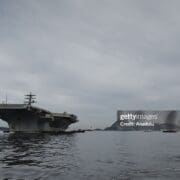
The clearest signal of how far the confrontation has escalated came when the United States deployed the USS Nimitz aircraft carrier and three escort warships to the southern Caribbean, as confirmed by US Southern Command.

The Nimitz is one of the US Navy’s most powerful nuclear-powered aircraft carriers, capable of projecting overwhelming air and naval power across the entire region. Its arrival in Caribbean waters – the shared waters of island nations from Jamaica to Trinidad, from Barbados to the Bahamas – places the military weight of the confrontation directly in the Caribbean’s backyard.

The deployment coincided with the unsealing of a superseding federal indictment last week, charging former Cuban President Raul Castro and five co-defendants for the alleged 1996 shoot-down of two unarmed civilian aircraft operated by Brothers to the Rescue over international waters, killing four Americans. It followed Secretary of State Marco Rubio’s remarks at Homestead Air Reserve Base — approximately 180 miles from Cuba – in which he acknowledged that Cuba hosts Russian and Chinese intelligence operations on its soil and described Cuba as “a failed state 90 miles from our shores run by friends of our adversaries.”

Cuba reportedly maintains an arsenal of military drones provided by Russia and China, which the United States has characterized as a regional threat. The convergence of military, legal, diplomatic, and humanitarian developments marks what analysts are describing as the most dangerous escalation in US-Cuba relations since the Cuban Missile Crisis of 1962.

Cuba’s Foreign Minister: “He Lies, He Lies On And On”

In a remarkable television appearance on Tuesday, Rodriguez appeared on Fox News in an exclusive interview with anchor Gillian Turner – and did not hold back. “In all areas, however, he lies, he lies on and on. He continuously intends to deceive the public opinion in the US, the US Congress, and the international community,” Rodriguez said of Rubi on Fox News.

Rodriguez accused Rubio of driving a dangerous political narrative designed to manipulate American public opinion and build support for military aggression against Cuba — and flatly rejected the Trump administration’s characterization of Cuba as a national security threat.

“Cuba is a small island – 100,000 square kilometers and 10 million inhabitants,” Rodriguez was quoted as saying. “Based on what logic, what would be the common sense behind the idea that Cuba could threaten a nuclear superpower?”

Rodriguez also addressed the federal indictment of Raul Castro, questioning its timing after three decades. “Why did it wait for 30 years to do this?” he asked. “What is the ethical value? What is the legal value behind these allegations right now? Or if this is part of the political narrative aimed at manipulating the US public opinion to justify a military aggression against Cuba?”

The Cuban foreign minister also challenged Rubio’s personal authority to speak on Cuban affairs – pointing to the Secretary of State’s background as the son of Cuban immigrants who left the island before the revolution.

“He was not born in Cuba. He does not know Cuba. He knows nothing about Cuba,” Rodriguez said.

Rodriguez also condemned the United States oil blockade that has sparked massive blackouts across most of Cuba since January 2026 – and rejected a $100 million US humanitarian aid offer announced by Rubio in a video message to the Cuban people on May 20, describing it as cruel given that Washington simultaneously maintains the energy blockade causing the crisis.

“The Secretary of State is one of the main masterminds behind the military threat against Cuba, the energy blockade,” he stated.

Caribbean-American Congresswoman: “Cubans Are Dying”

As military and diplomatic tensions escalated, Caribbean-American Democratic Congresswoman Yvette D. Clarke – the daughter of Jamaican immigrants and chair of the Congressional Black Caucus – wrote directly to President Donald Trump and Secretary of State Rubio demanding an immediate end to the oil blockade imposed on Cuba.

In her letter, Clarke appealed to the Trump administration to relieve economic pressure on the island, which she said has led to increased infant mortality rates, the threat of starvation, and a declining standard of living for Cuban civilians. “Under the administration’s oil blockade and tightening of sanctions, Cubans are dying,” Clarke wrote, as quoted in her letter.

She cited reports indicating that Cuba’s infant mortality rate has more than doubled since 2018 as a result of sanctions — with food shortages leading to more underweight pregnant mothers and newborns unable to survive. “With food shortages leading to more underweight pregnant mothers and their newborns, too many Cuban children are unable to make it out of the hospital and home to their families,” Clarke wrote, as quoted in her letter.

“Enough is enough,” Clarke added, as quoted in her letter. “The Congressional Black Caucus will not stand by and allow this administration to continue this barbaric policy that generates unimaginable human suffering in Cuba. We are demanding that you end the oil blockade, lift the sanctions on Cuba, and allow the Cuban people access to the most basic resources they need to sustain life on the island.”

Clarke’s letter came as the Trump administration deployed the USS Nimitz carrier strike group to Caribbean waters – a move that underscored the mounting military dimension of a crisis that began as an economic and diplomatic confrontation.

A Region Watching And Waiting

For CARICOM member states – many of which maintain longstanding diplomatic, trade, and energy relationships with Cuba – the escalation places governments in an increasingly difficult position. The expansion of US secondary sanctions to foreign entities doing business with Cuba now puts Caribbean banks, energy companies, and businesses at direct risk of US sanctions exposure simply for maintaining normal commercial relationships with Havana.

The arrival of a US aircraft carrier in the waters shared by Caribbean island nations – without formal notification or consultation with regional bodies – signals a unilateral approach to Caribbean security that CARICOM has historically resisted. The region is watching. And the stakes, as Cuba’s foreign minister told the United Nations on Tuesday, could not be higher. “I call upon Latin America and the Caribbean to act in order to preserve their condition as a Zone of Peace and to avert adverse consequences that would destabilize the region,” he added.

RELATED: Cuba Denounces U.S. Indictment Of Raul Castro As Political Provocation

Guyana At 60: The Oil Is Flowing. So Why Are Guyanese Buying Tennis Rolls On Credit?

By Felicia J. Persaud

News Americas, NEW YORK, NY, Tues. May 26, 2026: Guyana turned 60 today; 60 years since its independence from Britain in 1966.

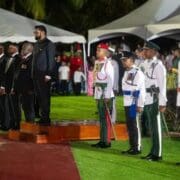
At a flag-raising ceremony for the nation’s 60th Independence Anniversary at Fort Island along the Essequibo River, President Irfaan Ali declared that Guyana is now “one of the world’s fastest-growing economies worth more than US$75 billion.”

“We are today, the fastest growing economy on earth,” he was quoted as saying. “Not in this hemisphere, not in the Caribbean – but on an entire planet.”

On paper, the numbers are staggering. The International Monetary Fund has confirmed that Guyana led the world with an average real GDP growth of 47 percent per year between 2022 and 2024, recording double-digit growth for six consecutive years. Oil production from the offshore Stabroek Block now surpasses 915,000 barrels per day, making Guyana South America’s third-largest oil producer. The national budget crossed one trillion Guyanese dollars for the first time in 2024. Per capita income, once recorded at around $340, is projected to approach $38,000 by 2028.

Impressive numbers. But numbers, as any Guyanese on the ground will tell you, don’t buy tennis rolls.

The Other Guyana

This week, ahead of the pomp and ceremony surrounding the 60th, the Guyana Kaieteur News reported something that should stop everyone mid-applause: the cost of living in Guyana – the globally promoted oil-rich capital of the Caribbean – has become so high that many Guyanese are now buying single tennis rolls, butter flaps, and small pastries on credit just to survive the week.

Let that sink in. The fastest-growing economy on earth. And its people are eating on credit.

According to Numbeo data, the estimated monthly costs for a family of four in Guyana run approximately GY$708,000 – roughly US$2,500 – excluding rent. The average gross salary ranges from G$100,000 to G$174,000 per month – between $480 and $835 USD. The median individual income is between G$50,000 and G$60,000 – or between $240 and $290 USD – meaning half of the country’s workforce earns less than this.

A standard senior citizen receives a non-contributory Old Age Pension of G$46,000 per month – approximately $220 USD. Compare that to the Numbeo cost-of-living estimate, and you see the disparity in stark relief.

As the war in Iran sends gas prices soaring, Guyanese are being forced to pay more for kerosene to cook and for transportation. Kerosene – the cheapest fuel – now runs $3.17 to $3.40 USD per gallon. Cooking gas costs roughly $22 to $27 USD. A meal at an inexpensive restaurant costs approximately $12 USD. A gallon of milk runs about $13. A dozen eggs, $4.50.

Who Is Actually Benefiting?

The salary data tells the real story. According to Paylab’s Guyana Salary Survey:

Expat and oil and gas engineers earn $3,000 to $6,000+ per month

Senior finance and IT managers earn $1,500 to $2,500+

Public school teachers and nurses earn $500 to $750

Administrative assistants earn $350 to $500

Retail, security, and service workers earn $290 to $350

The hospitals the government has built are understaffed and lack basic drugs in their pharmacies, forcing nationals to pay far more at private pharmacies. The many roads and bridges President Ali cited as “the clearest evidence” of transformation are real. But roads do not pay rent. Bridges do not fill a prescription.

The data clearly shows who is benefiting from the wealth the President is celebrating. Expats and foreign workers; while nationals struggle.

Corruption And The Brain Drain

On the Corruption Perceptions Index, Transparency International gives Guyana a score of 40 as of 2025 – ranking it 84th out of 182 countries.

More telling is this: in 2026, Guyanese citizens are still leaving the country despite the nation possessing one of the world’s fastest-growing GDPs. The UN’s Human Flight Index places Guyana at roughly 8.2 out of 10 – making it a leading country for human capital loss in South America, well ahead of Venezuela at 6.5 and Suriname at 5.7.

The 2026 Democracy and Development Report from the United Nations Development Programme ranks Guyana 12th globally for brain drain. In Latin America and the Caribbean, the country sits fourth – behind only Haiti, Jamaica, and one other regional nation. Nearly 90 percent of Guyanese with tertiary education eventually migrate, the report finds, with North America the most common destination. Earlier World Bank data has long held that about 39 percent of Guyanese citizens already live abroad.

Two stories are running simultaneously. One is a sovereign balance sheet that most finance ministries in the region would trade theirs for. The other is a quiet, steady exit by the people who would normally be running its hospitals, classrooms, regulatory agencies, and ministries.

The Promise Still Unkept

Many Guyanese are still awaiting the $100,000 grant the government promised since last December. That is not a footnote. That is a policy failure in the middle of an oil boom. I left Guyana in 1996, nearly 30 years ago. I have watched from the United States. Guyana has transformed from one of the poorest nations in the Western Hemisphere to the fastest-growing economy on earth. I wanted nothing more than to celebrate that transformation today. But I cannot celebrate numbers when many are still suffering.

Guyana at 60 should be a country where every national born and living there is building real, generational wealth from the oil beneath its waters. Instead, the Natural Resource Fund sits above US$3.1 billion while Guyanese buy tennis rolls on credit.

The PPP/Civic government must move beyond rhetoric and ribbon-cuttings. Roads and bridges are necessary. They are not sufficient. Sixty years of independence demands more than infrastructure. It demands that the ordinary Guyanese – the teacher, the nurse, the security guard, the senior citizen living on $220 a month – feel this oil wealth in their daily lives. Not in presidential speeches. Not in budget headlines. In their pockets.

No one in Guyana should be struggling to buy a packet of tennis rolls in an oil-rich nation. Not at 60. Not ever. Guyana at 60 should be wealthy for all – not just for some.

EDITOR’S NOTE: Felicia J. Persaud is a Guyana-born media entrepreneur, founder of News Americas Now, Hard Beat Communications, Invest Caribbean, CaribPR Wire, and AI Capital Exchange. She has lived in the United States since 1996.

Caribbean Real Estate Is A $1.87 Trillion Market – So Why Are Caribbean Developers Still Getting Rejected For Funding?

By NAN Business Editor | NewsAmericasNow.com

News Americas, NEW YORK, NY, Tues. May 26, 2026: The numbers tell a story of enormous promise. According to Statista’s Caribbean Residential Real Estate Market Outlook, Caribbean real estate will reach $1.87 trillion in market value in 2026, growing at 5.19% annually and is projected to reach $2.28 trillion by 2029.

The report noted “the Residential Real Estate market in the Caribbean is experiencing significant growth and development. Customer preferences are shifting towards more luxurious and high-end properties, and there is a growing trend of international buyers investing in Caribbean real estate. Local special circumstances, such as the region’s natural beauty and favorable climate, contribute to the attractiveness of Caribbean real estate. Underlying macroeconomic factors, including stable economic growth and favorable government policies, further drive the market’s growth. Overall, the Residential Real Estate market in the Caribbean presents a lucrative opportunity for investors and developers alike.”

Record sales figures are being posted across the region. As the 2026 Dominican Republic Real Estate Market Report noted, the Dominican Republic alone sees $30 to $40 billion in annual real estate transaction volume, with foreign buyers accounting for 18 to 22% of coastal purchases. And yet, when Caribbean real estate developers show up to access the capital that should logically follow a $1.87 trillion market — they are being rejected. Consistently. At an alarming rate.

After filtering more than $200 million in deals at AI Capital Exchange – the world’s first AI-powered debt capital platform built specifically for Caribbean and emerging market projects – a troubling pattern has emerged that has nothing to do with the market opportunity and everything to do with project preparation.

The Three Reasons Caribbean Real Estate Projects Keep Getting Rejected

1. Zero Equity Contribution

The most common deal-killer is straightforward: developers are arriving at the table asking for 100% financing with zero equity of their own in the project. Institutional lenders – whether development banks, private equity funds, or debt capital providers – require skin in the game. A project requesting $5 million, $10 million, or $50 million with no equity contribution from the developer is not a fundable deal. It is a wish.

The expectation across most institutional lending frameworks is a minimum of 20 to 30% equity contribution from the project owner before external debt capital is even considered. Caribbean developers consistently arrive below this threshold – often with zero.

2. No Revenue History Or Cash Flow Evidence

The second most common rejection reason is the absence of revenue history or demonstrable cash flow. A vacant lot in Barbados with an architect’s rendering is not a business. A planned resort in Jamaica with no pre-sales, no letters of intent from operators, and no occupancy projections backed by market data is not a fundable project.

Lenders need to see – at minimum – signed offtake agreements, pre-sales data, projected cash flows backed by comparable market evidence, or existing revenue from a phase one development. Caribbean developers overwhelmingly arrive with vision decks instead of financial documentation.

3. The Ask Far Exceeds The Project’s Preparation Stage

The third pattern is perhaps the most revealing. Projects regularly arrive at AI Capital Exchange requesting $10 million, $25 million, or $50 million in debt capital for developments that have not yet secured planning permits, environmental clearances, architectural plans, or land title documentation. The size of the ask signals ambition. The absence of preparation signals risk. And as any institutional lender will confirm, capital does not follow unmitigated risk.

The Broader Context

This is not a Caribbean-specific failure of ambition. Caribbean entrepreneurs and developers are building real projects with real potential in one of the world’s most desirable real estate markets. The failure is one of preparation and education.

As Agritecture reported in January 2026, CARICOM nations currently import approximately 80 to 90% of their food at a cost exceeding $6 billion annually – a dependency driven by the same structural gap between regional potential and regional preparation. The capital access gap in real estate follows the same pattern. The opportunity exists. The market is real. The capital is available. The preparation is not.

What Capital Ready Actually Means

For Caribbean real estate developers seeking institutional debt capital in 2026, capital readiness means arriving with:

A minimum 20 to 30% equity contribution to the project

Clean land title documentation

Secured planning and environmental permits

Completed architectural and engineering plans

Financial projections backed by comparable market data

Pre-sales, letters of intent, or signed operator agreements

A clear exit strategy for the lender

Audited financial statements for the development entity

Projects that arrive with all of these elements are fundable. Projects that arrive without them – regardless of the strength of the underlying opportunity – are not.

The Fix Is Available

AI Capital Exchange offers a free capital readiness assessment at investcaribbeannow.com – a tool designed specifically to help Caribbean developers understand exactly where their project stands before approaching institutional lenders, and what steps are required to close the preparation gap.

As Statista reported, the Caribbean real estate market is real and growing. The global capital looking for Caribbean real estate returns is real. The window between those two realities is preparation – and that gap is closeable.

RELATED: Fund It – Why Vision Alone Is Not Enough