
Skillibeng Explains Why He Feels Safer Flashing Diamonds In Jamaica Than The US
Dancehall star Skillibeng says he feels more comfortable moving through the streets of Jamaica with his jewelry than he would in certain parts of the United States.

Dancehall star Skillibeng says he feels more comfortable moving through the streets of Jamaica with his jewelry than he would in certain parts of the United States.
By ET News Reporter | NewsAmericasNow.com
News Americas, New York, NY, Fri. May 22, 2026: Caribbean music is having a serious moment this week, with new releases and major milestones from some of the genre’s biggest names arriving in rapid succession.
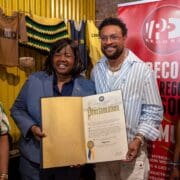
BBrooklyn Borough President Antonio Reynoso declared May 19, 2026 as “Shaggy Day” in Brooklyn – honoring the reggae and dancehall legend on the occasion of his fifteenth studio album release.
The proclamation was handed over to Shaggy – born Orville Richard Burrell in Jamaica – at a public celebration held at I AM CARIBBEING HQ at 1399 Nostrand Avenue in Little Caribbean, with Deputy Borough President Rev. Kim Council representing the Borough President’s office.
The new album, titled “Lottery,” includes “BUN (She Loves Me),” “Dancehall Nice” featuring Beres Hammond and Dexta Daps, the title track “Lottery” featuring Jeremih, and “We Love Di Gal Dem” featuring 450.
Shaggy moved to Flatbush as a teenager from Jamaica and launched his music career in Brooklyn – building a four-decade run that has produced more than 40 million albums sold and eight Billboard Hot 100 singles. Beyond music, he established the Shaggy Make a Difference Foundation in 2009 and most recently led relief efforts following Hurricane Melissa, raising over $500,000 at a benefit concert at UBS Arena and delivering essential goods via private flights.
“Brooklyn is the borough that took a kid from Jamaica and gave him a stage, a sound, and a purpose,” Shaggy said at the celebration, as quoted in the release.
Borough President Reynoso added: “From his musical genius to his leadership in philanthropy, Shaggy embodies the very best of our borough.”
In a rare and highly anticipated collaboration, two of dancehall’s most iconic duos have joined forces on a new single titled “Jealous.”
Chaka Demus & Pliers – whose 1992 hit “Murder She Wrote” remains one of the most recognizable songs in reggae and dancehall history – have teamed with Tanto Metro & Devonte, known for the club anthem “Everyone Falls in Love,” on what Chaka Demus describes as “four the wickedest way.”
The track is a playful, story-driven dancehall record exploring the drama of jealousy in relationships – produced and executive produced by Chaka Demus on his Bright Star Production label. Harmonies were contributed by Brian & Tony Gold over a rhythm crafted by Jazzwad, with mixing by Fatta Marshall. Writing credits are shared across the full collective.
“Jealous” serves as the first single from Chaka Demus’s upcoming album release – a project that brings together a seasoned team of music stalwarts with deep roots in Caribbean music culture.
International superstar Sean Paul has released another riddim compilation through his Dutty Rock Productions imprint — this time delivering “Brawlin Riddim,” a hard-hitting dancehall project featuring an all-star lineup.
The compilation features Busy Signal, Sean Paul, Spragga Benz, Charly Black, Chi Ching Ching, Leftside, Future Fambo, Looga Man, Bush Wakka, and Ras Ajai — each bringing their own lyrical energy to a production anchored by pulsing bass, sharp synth leads, and siren sound effects that evoke the raw energy of a Kingston street dance.
The riddim was produced by Sean Paul and Dutty Rock Productions, mixed and mastered by Grammy-winning engineer Andre “Dre Day,” and recorded by dancehall heavyweight Andre “Suku Ward” Gray at Dutty Rock’s studios in Kingston, Jamaica.
“Brawlin Riddim” is now available on all major digital streaming platforms.
Grammy Award-winning recording artist Stephen Marley has released “Hills of St. Ann,” the first single from an upcoming compilation project paying tribute to Brand Jamaica – celebrating the island’s culture, heritage, and natural beauty.
Released May 8, 2026 via Ghetto Youths International, the track is an inspiring guitar ballad underscored by powerful Nyahbinghi drum rhythms, transporting listeners to Nine Mile, St. Ann – the birthplace of reggae legend Bob Marley. Stephen Marley handled production, drums, bass, and Nyahbinghi drums on the track himself, with guitar by Ranoy Gordon and keyboards by Llamar Brown.
The single is available now on all streaming platforms.
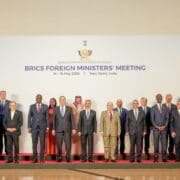
News Americas, NEW YORK, NY, Thurs. May 21, 2026: Cuba’s Foreign Minister Bruno Rodríguez this week stated that despite the U.S. blockade and threats of force, Cuba “continues to build its sovereign path toward socialist development and contribute, from its modest means, to the development of other peoples of the Global South.”
The remarks were made on May 15th during the BRICS Foreign Ministers’ Meeting in India, held as part of discussions on reforms of global governance and the multilateral system. Russian Foreign Minister Sergey Lavrov and Rodríguez exchanged views on regional and international matters, reaffirming their countries’ opposition to unilateral sanctions that they say violate the United Nations Charter.
Lavrov also assured Rodríguez that Russia would support Havana’s demand for the immediate lifting of the U.S. trade, economic and financial blockade against the island, according to a press release on the official website of the Russian Foreign Ministry. At the opening session on May 14th, the Cuban delegation denounced what it described as “the successive executive orders issued by the United States government that reinforce the economic blockade and the threat of military aggression against Cuba.”
The Cuban foreign minister said U.S. actions violate each country’s right to determine its own trade relations. In addition to the energy-related measures imposed on Jan. 29th this year, Cuba also criticized secondary sanctions it said are extraterritorial in nature and target countries that do business with the island.
Foreign ministers and heads of delegations from BRICS member and partner countries attended the ministerial meeting, which concluded last Friday. The meeting comes amid growing geopolitical tensions between Western nations and BRICS-aligned countries over sanctions, trade, and global governance reforms.

By Staff Reporter | NewsAmericasNow.com
News Americas, MIAMI, FL, Thurs. May 21, 2026: Cuba has sharply condemned the U.S. decision to indict former Cuban President Raul Castro over the 1996 shootdown of two civilian aircraft operated by the Miami-based group Brothers to the Rescue, calling the charges a “despicable and infamous act of political provocation.”
The U.S. Department of Justice on Wednesday unsealed a superseding indictment charging Castro, now 94, and five co-defendants with conspiracy to kill U.S. nationals, destruction of aircraft, and four counts of murder in connection with the deaths of four Americans nearly 30 years ago. If convicted, Castro could face life imprisonment or the death penalty.
The four men killed were Carlos Costa, Armando Alejandre Jr., Mario de la Peña, and Pablo Morales. All were members of Brothers to the Rescue, also known as Hermanos al Rescate, a volunteer organization that used small civilian planes to search for Cuban migrants in distress in the Florida Straits.
The now indicted former President of Cuba, Raul Castro, seen here attendinga May Day rally marking International Workers’ Day in Havana on May 1, 2026. (Photo by YAMIL LAGE / AFP via Getty Images)
US federal prosecutors allege that on February 24, 1996, Cuban military pilots radioed Havana twice for authorization before shooting down two unarmed American civilian aircraft over international waters near the Florida Straits, killing four US nationals. Thirty years later, the United States has charged the man it alleges gave the order – former Cuban President Raul Modesto Castro Ruz, now 94 years old.
The US Department of Justice unsealed a superseding indictment on Wednesday, May 20, 2026, charging Castro Ruz and five co-defendants for their alleged roles in the attack. The charges include conspiracy to kill US nationals, two counts of destruction of aircraft, and four counts of murder. If convicted, Castro Ruz faces a maximum penalty of death or life imprisonment.
The four Americans killed were Carlos Costa, Armando Alejandre Jr., Mario de la Peña, and Pablo Morales – members of Brothers to the Rescue, also known as Hermanos al Rescate, a Miami-based organization that flew unarmed Cessna aircraft across the Florida Straits to search for Cuban migrants in distress at sea.
The February 24, 1996 attack was not spontaneous, according to the indictment. Prosecutors allege it was the culmination of a deliberate Cuban intelligence and military operation code-named Operación Escorpión – Operation Scorpion – designed to stop Brothers to the Rescue from conducting flights near Cuba.
According to the indictment, Cuban intelligence had been running agents inside the United States since at least 1992, specifically tasked with infiltrating Brothers to the Rescue in Miami. Those agents were allegedly part of a spy network code-named La Red Avispa – the Wasp Network — whose members posed as Cuban exiles fleeing the Castro regime.
At least one alleged Wasp Network agent, Juan Pablo Roque, went further – offering himself to the FBI as an informant on Miami-based exile groups including Brothers to the Rescue, while allegedly working as a Cuban intelligence operative whose FBI cooperation was directed and controlled by Havana, according to the indictment.
For years, the indictment alleges, the Wasp Network reported back to Havana on Brothers to the Rescue flight operations, personnel, and plans. As Operation Scorpion intensified in early 1996, the network was allegedly instructed to urgently report all Brothers to the Rescue flight data — including specific plans for February 24, 1996.
According to the indictment, after Brothers to the Rescue flights in January 1996 dropped pro-democracy leaflets over Cuba, Castro Ruz personally met with military leaders and allegedly authorized them to take decisive and deadly action against the organization’s aircraft.
The Cuban military allegedly conducted specific training missions following those January flights, during which MiG fighter pilots practiced locating, following, and intercepting slow-moving civilian aircraft of the exact type flown by Brothers to the Rescue. The indictment alleges that all orders to kill by the Cuban military traveled through a chain of command with Castro Ruz and his brother Fidel Castro as the final decision makers.
Among the most significant allegations in the indictment is what prosecutors say happened in the days immediately before the attack. On January 30, 1996, Cuban intelligence allegedly instructed its Miami-based agents – including Roque and fellow operative Rene Gonzalez – to avoid flying with Brothers to the Rescue and to use particular radio phrases if they happened to be airborne during the operation.
On February 21, 1996 – three days before the attack – Roque allegedly falsely informed the FBI that Brothers to the Rescue would not be flying during the weekend of February 24, 1996, despite knowing the organization was scheduled to fly that day. On February 23, 1996, Roque allegedly left Miami as directed and returned to Cuba.
At approximately 1:30pm on February 24, 1996, three unarmed Brothers to the Rescue aircraft departed from Opa-Locka Airport in Miami-Dade County, heading south across the 24th parallel. At approximately 3:00pm, according to the indictment, alleged co-defendant Lorenzo Alberto Perez-Perez and another pilot took off from San Antonio de los Baños airfield near Havana in Cuban military MiG jets.
At approximately 3:20pm, according to the indictment, Perez-Perez radioed for authorization to destroy the first Brothers to the Rescue aircraft – tail number N2456S – which was at that time flying over international waters. Authorization was allegedly granted. At approximately 3:21pm, without warning, the aircraft was allegedly shot down by an air-to-air missile, killing pilot Carlos Costa and his passenger Pablo Morales.
At approximately 3:26pm, according to the indictment, Perez-Perez radioed again – seeking authorization to destroy a second unarmed civilian aircraft, tail number N5485S, also flying over international waters. Authorization was allegedly granted a second time. At approximately 3:28pm, the second aircraft was allegedly destroyed by an air-to-air missile, killing pilot Mario de la Peña and his passenger Armando Alejandre Jr.
A third Brothers to the Rescue aircraft – tail number N2506 – escaped after additional Cuban MiG jets were scrambled to pursue and destroy it as well, according to the indictment.
Of the six defendants named in the superseding indictment, one is already on US soil. Luis Raul Gonzalez-Pardo Rodriguez, 65, of Havana – alleged to have been one of the MiG pilots inside his fighter jet and ready to deploy on the day of the attack – is currently in US custody in the Middle District of Florida, pending sentencing this month for making false statements in an immigration document, according to the DOJ.
Acting Attorney General Todd Blanche described Wednesday’s announcement as a landmark moment. “For the first time in nearly 70 years, senior leadership of the Cuban regime has been charged in the United States for alleged acts of violence resulting in the deaths of American citizens,” Blanche said, as quoted in the DOJ announcement.
US Attorney Jason Reding Quiñones for the Southern District of Florida added: “This passage of time does not erase murder. It does not diminish the value of these lives. And it does not weaken our commitment to the rule of law,” as quoted by the DOJ.
The original indictment in this case was first filed under seal in 2003. Its unsealing Wednesday – more than two decades later – comes as part of the Trump administration’s escalating pressure campaign against Cuba, which has included a national emergency declaration in January 2026, expanded secondary sanctions targeting foreign entities doing business with Cuba in May 2026, and the designation of 11 Cuban regime officials just two days before Wednesday’s announcement.
In a statement issued Wednesday, Cuba’s government said the United States lacks both the legitimacy and jurisdiction to prosecute Raul Castro. Havana argued that the 1996 incident was an act of lawful self-defense after repeated incursions into Cuban airspace by Brothers to the Rescue aircraft.
Cuban officials said they had filed multiple complaints with the U.S. State Department, the Federal Aviation Administration, and the International Civil Aviation Organization regarding more than 25 alleged violations between 1994 and 1996. “The Revolutionary Government condemns in the strongest terms the despicable accusation by the United States Department of Justice,” the statement said.
Cuba also accused Washington of distorting the historical record and using the case to justify tougher sanctions and continued pressure on the island.

Ms. Lauryn Hill publicly defended Rohan Marley against long-running rumors of infidelity while wishing him a happy birthday on Instagram.

Stefflon Don has struck a new catalog deal with HarbourView Equity Partners, giving the investment firm rights to some of her compositions and recordings released before 2024.
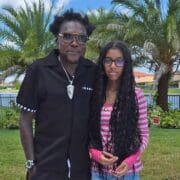
Vybz Kartel has met his daughter Amani for the first time, nearly two years after his release from prison.
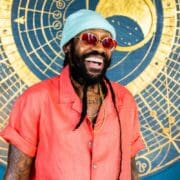
Tarrus Riley has been removed from the 2026 Best Of The Best Music Fest lineup in Miami after the festival objected to his separate free Fort Lauderdale appearance scheduled days later.

Vanessa Bling’s new single True Story is a reflection on her perseverance through the scrutiny and legal trouble that reshaped her career after her time in Vybz Kartel’s Portmore Empire.
News Americas, NEW YORK, NY, Weds. May 20, 2026: At sixteen, a boy in Kingston leaves school hungry and comes home with gang money in his pocket. In Port of Spain, a fisherman shut out of legal work turns to trafficking guns instead of fish. In Bridgetown, a mother working two jobs still cannot fully shield her son from the pull of the streets. In St. Kitts and Nevis, one violent incident can reshape how an entire generation of young people understands safety. Across the region, Caribbean crime is no longer confined to law enforcement. It encompasses public health, broken opportunity, and lost hope.
Violence spreads like sickness. It moves through homes, schools, and neighborhoods where fear becomes normal and trauma goes untreated. The research of Harvard scholars Deborah Prothrow-Stith and Felton Earls makes this clear. In the book Deadly Consequences, Prothrow-Stith explains that violence behaves like a contagious disease. Earls demonstrates that when trust breaks down, families weaken, and communities lose hope, crime rises. A child in St. Vincent who grows up surrounded by conflict may begin to see violence as normal. A young person in Antigua and Barbuda exposed to gang influence may start to associate respect with fear rather than character.
But violence is not only a public health issue. It is also a systemic issue shaped by history and structure. Slavery, colonial inequality, corruption, weak institutions, political division, and global criminal networks all shape today’s reality. In St. Lucia, domestic instability can affect school performance and emotional development. In Dominica, even talented students may feel pressure to migrate when local opportunities seem too limited. In Guyana, rapid development can still leave some communities behind, creating space for criminal recruitment. Crime grows where opportunity feels inaccessible or unjust.
This is why the Caribbean must ask both how to punish crime, and how to prevent it before it begins. Sports must become one of the region’s strongest crime fighting tools. A football field or cricket pitch is more than recreation. It provides structure, discipline, identity, and protection. In Trinidad and Tobago, organized sports can redirect energy away from street conflict. In Jamaica, athletics programs can become daily anchors that keep young people engaged, focused, and supported during vulnerable hours.
While sports are part of the solution, there must also be a clear bridge from sports to education and from education to opportunity. Schools must prepare students with academic knowledge, emotional intelligence, conflict resolution skills, digital competence, and entrepreneurship. In St. Kitts and Nevis, structured training linked to tourism and robotics services can turn learning into income. In Antigua and Barbuda, apprenticeships in hospitality and digital industries can create direct pathways into employment. In St. Lucia, technical and small business training can transform potential into livelihood. In Dominica, agriculture and ecotourism can connect local talent to sustainable futures without making migration seem like the only option.
Nothing works in isolation. Police cannot do it alone. Schools cannot do it alone. Churches, governments, healthcare systems, and families cannot do it alone. Together, however, they can form a prevention network that identifies risk early and responds before violence takes hold. This is the real choice facing the Caribbean: continue reacting to crime after lives have already been broken, or build systems that protect life before it breaks. In the end, crime is not only a law enforcement issue. It is equally a public health emergency, an education emergency, and an opportunity emergency. The real question is how many children we are willing to allow to believe that violence is their only option.