Caribbean Dilemma – Growing Older Before Growing Rich

By Dr. Isaac Newton

News Americas, NEW YORK, NY, Weds. June 10, 2026: Across the Eastern Caribbean, the future is breaking into the present the way morning breaks into a sleeping room, gently, unavoidably. It’s a Caribbean dilemma. One empty classroom, one departing nurse, and one funeral at a time. The most consequential challenge facing the region is not gathering over the Atlantic. It cannot be tracked by satellite or measured by wind speed. Yet, its force grows with every passing year. In Antigua and Barbuda, Dominica, Grenada, St. Lucia, St. Kitts and Nevis, and St. Vincent and the Grenadines, populations are aging rapidly while workforces are shrinking. Hospitals are becoming busier as classrooms grow smaller. What was once considered a challenge for wealthy nations has arrived on the shores of small island states. The Caribbean is growing older before it grows rich.

The numbers are clear. Research from the United Nations, ECLAC, UNFPA, and the OECD shows that the share of older citizens is rising while the share of working age citizens is declining. By the middle of this century, several Eastern Caribbean countries will have far more retirees relative to their workforce than they do today. Yet demographics are never merely statistics. Behind every percentage point is a grandmother living alone, a retired teacher managing chronic illness, a farmer whose children have settled overseas, and a government struggling to stretch limited resources. This is not simply a demographic transition. It is a human story unfolding in real time.

The roots of this transformation lie in both success and loss. Caribbean people are living longer than previous generations because of improvements in healthcare, education, and public health. This is one of the region’s great achievements. At the same time, fewer children are being born, and many of the Caribbean’s most talented young people continue to leave in search of greater opportunity abroad. The region’s greatest export is no longer sugar, bananas, or even tourism. It is its young people. Every nurse who leaves creates a gap in a hospital. Every teacher who emigrates leaves a vacancy in a classroom. Every entrepreneur who builds a future elsewhere takes with them skills, ideas, and productive capacity that their country urgently needs.

The economic consequences are impossible to ignore. A smaller workforce means slower growth. Fewer taxpayers place greater pressure on government finances. Healthcare costs rise. Pension obligations increase. Employers struggle to recruit skilled workers. Small island states feel these pressures with particular intensity because they lack the scale and financial reserves available to larger countries. When a nation of one hundred thousand people loses several hundred skilled professionals, the effects are felt everywhere, from hospitals and schools to businesses and public institutions. Demography is not destiny. But it becomes destiny for societies that refuse to prepare.

The ageing of the Caribbean is fundamentally a challenge of age and a challenge of leadership. Too often, older citizens are viewed primarily through the lens of dependency. This is a costly mistake. Within the region’s older population lies an extraordinary reserve of knowledge, experience, judgment, and practical wisdom. An experienced teacher can mentor young educators. A retired engineer can guide infrastructure projects. A former entrepreneur can help emerging businesses avoid costly mistakes. The countries that prosper in the decades ahead will be those that find ways to care for older citizens and empower them.

The region must also confront another reality. It cannot solve this challenge through local labour alone. The Caribbean can attract talent, reclaim talent, or continue to lose talent. There is no fourth option. Governments should encourage skilled immigration, support diaspora return, attract remote professionals, and remove unnecessary barriers to investment and residency. At the same time, young families must find it easier to build their futures at home through affordable housing, quality childcare, meaningful economic opportunity, and flexible employment. These are not simply social policies. They are demographic policies. A society that cannot retain its young people cannot secure its future.

The clock is already running. The worker who will support tomorrow’s pension system is either sitting in a classroom today or has not yet been born. The nurse who will care for an ageing population is deciding where to build her future. The retiree who will need support ten years from now is already alive. Time is no longer an advantage. It is the constraint. Every year of delay narrows the available choices and increases the eventual cost. The generation that built these nations has already paid its debt to history. Today’s leaders must show the same foresight. Every ageing society eventually confronts a single question: Who will care for us when we can no longer care for ourselves? The Caribbean does not suffer from a lack of reports. It bleeds from a shortage of courage.

EDITOR’S NOTE: Dr. Isaac Newton is a leadership strategist and governance expert specializing in ethical leadership, institutional reform, and transformational change. Educated at Harvard, Princeton, Columbia, and Oakwood University, he advises governments, boards, and institutions across the Caribbean and internationally. He is the co author of Steps to Good Governance and coauthor of forthcoming books Daring to Hope and When Nations Kneel.

RELATED: What Makes A Caribbean Teacher Unforgettable

207 People Have Been Killed In US Military Boat Strikes In The Caribbean And Pacific Waters

By Staff Reporter | NewsAmericasNow.com

NEWS AMERICAS, NY, NY, Mon. 8, 2026: Since September 2025, the US military boat strikes in the Caribbean Sea and eastern Pacific Ocean has killed at least 207 people – in what legal experts are describing as an unprecedented and potentially illegal campaign of extrajudicial killings in Caribbean and Latin American waters.

The data, tracked by The New York Times based on postings by President Trump, Defense Secretary Pete Hegseth, and US Southern Command, reveals a dramatic and largely unreported shift in how the United States is conducting its war on drugs – one that has turned Caribbean waters into an active military kill zone.

At least 17 of the 63 strikes have taken place directly in the Caribbean Sea – killing at least 66 people in the shared waters of the Caribbean region since September 2025.

From Law Enforcement To Kill Zone

The scale and nature of this campaign represents a fundamental departure from decades of established US practice in the Caribbean. Historically, the US Coast Guard – with Navy assistance – treated maritime drug smuggling in the Caribbean as a law enforcement problem. Boats were intercepted. Suspects were arrested. Cases were prosecuted. Due process, however imperfect, existed.

That is no longer the case.

Under the Trump administration, the US military has been authorized to strike and destroy boats suspected of carrying drugs – killing everyone on board – without arrest, without trial, and without any independent verification that the vessels were actually carrying illegal cargo.

The White House has defended the strikes as lawful, telling Congress that President Trump has formally determined that the United States is in an armed conflict with drug cartels and that crews of suspected drug-running boats are therefore “combatants” subject to lethal force under the laws of war.

The Legal Controversy

A broad range of legal specialists on the use of lethal force have publicly stated that the strikes constitute illegal extrajudicial killings – because international law does not permit the deliberate targeting of civilians, even suspected criminals, who do not pose an imminent threat of violence.

As The New York Times reported, the administration’s legal theory rests partly on the argument that tens of thousands of Americans die annually from drug overdoses. However, as the Times noted, the surge in overdose deaths over the past decade has been driven primarily by fentanyl produced in Mexican labs – not cocaine transported on boats from South America through Caribbean waters.

The boats being struck are carrying cocaine. The deaths being cited to justify the strikes are caused by fentanyl. Critics say the legal justification does not hold.

What’s Happening In Caribbean Waters

The Caribbean strikes began on September 2, 2025 – when 11 people were killed in a single Caribbean Sea strike – and have continued sporadically through 2026. Among the deadliest Caribbean strikes documented:

September 2, 2025 – 11 killed in the Caribbean

October 14, 2025 – 6 killed in the Caribbean

October 23, 2025 – 6 killed in the Caribbean

November 12, 2025 – 4 killed in the Caribbean

March 25, 2026 – 4 killed in the Caribbean

May 4, 2026 – 2 killed in the Caribbean

The identities of those killed in Caribbean waters have not been publicly disclosed. Their nationalities are unknown. Whether any were Caribbean nationals – fishermen, migrants, or others – has not been established.

The Questions The Caribbean Must Ask

For Caribbean governments and communities, the US military’s sustained campaign of lethal strikes in Caribbean waters raises questions that have received almost no public attention in the region:

Who are the people being killed? Caribbean waters are not only used by drug traffickers. They are used by fishermen, by migrants, and by small boat operators of all kinds. The US military’s classification system – based largely on aerial surveillance – has never been independently verified.

Were any Caribbean nationals among the dead? The 207 people killed in these strikes have not been identified. Their nationalities, backgrounds, and circumstances remain unknown.

Did Caribbean governments consent? The strikes in Caribbean waters represent military action in the shared maritime space of the region. CARICOM member states have not publicly addressed whether they were consulted or whether they consent to US military operations in Caribbean waters.

What are the legal implications? If the strikes are indeed illegal extrajudicial killings – as a broad range of legal experts contend – what accountability mechanisms exist for actions taken in Caribbean waters?

The Broader Context

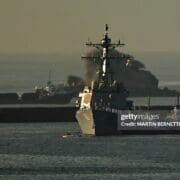
The boat strike campaign is unfolding alongside the USS Nimitz’s recent docking in Kingston, Jamaica, the escalating US pressure campaign against Cuba, and Secretary of State Rubio’s declaration that the United States has taken back control of the Western Hemisphere.

Together, these developments paint a picture of an increasingly militarized US presence in Caribbean waters – one that is operating with minimal transparency, limited legal accountability, and virtually no public discussion within the Caribbean region itself. 207 people are dead. Dozens of them died in Caribbean waters. The Caribbean deserves to know.

“With (over) 200 killings, these extrajudicial killings are becoming normalized,” said Amnesty International USA’s National Director for Government Relations, Amanda Klasing. “Not only are these killings illegal, they are immoral. People of good conscience cannot allow this to continue, yet Congress has so far failed to halt, or even slow down, this lethal and unlawful campaign. We are witnessing the height of lawlessness — a government taking military action to kill people who it unilaterally deems ‘criminals’ or ‘terrorists’ and then bragging about it on social media and stonewalling members of Congress demanding explanations. Regardless of whether the victims committed crimes or not, killing them is completely illegal under both U.S. and international law. Alleged criminal suspects should be dealt with by law enforcement who are bound by international human rights law, which prohibits using lethal force unless absolutely necessary based on an imminent threat to life.”

“Beyond U.S. authorities, we need to see leadership from other governments in the region, as well as the Organization of American States,” added Ana Piquer, Americas Director at Amnesty International. “The international community must speak out firmly against these murders, which constitute a serious threat to human rights and respect for international law. Governments must immediately suspend intelligence sharing that may contribute to these operations. They further should suspend export licenses to any defense material that could be used to perpetuate these murders.”

RELATED: Families Sue U.S. Government Over Caribbean Killings – Arguing There Was No War

What Makes A Caribbean Teacher Unforgettable

By Dr. Isaac Newton

News Americas, NEW YORK, NY, Sat. June 6, 2026: A boy arrived at school each morning with sea salt still clinging to his shoes. Before sunrise, he had already worked beside his grandfather pulling fishing nets from dark water. He often arrived tired. Often late. Most teachers saw a problem. One Caribbean teacher saw a life. She did not begin with punishment. She began with questions. She listened. She learned. She brought fishing boats into mathematics and turned tides into lessons. That boy, once silent at the back of the classroom, began to rise. Years later he said, “She did not teach me numbers. She taught me that I mattered.” Unforgettable teachers begin here. They lead with understanding, they see with recognition, and they remove control and judgment from their teaching practice. Every child enters a classroom with a hidden world that cannot be seen at first glance.

In another village, a girl could barely read aloud. She avoided attention and feared embarrassment. Yet her teacher noticed something others missed. Whenever rhythm entered the room, she changed. He built learning around what awakened her. Words became music. History became voice. Literacy became performance. The same girl who once hid her voice later commanded the room with it. This is not technique alone. It is perception. Caribbean teachers who change lives do one essential thing. They refuse to separate learning from culture. They understand that identity is not a distraction from education. It is the path into it. When children see themselves in what they learn, they do not simply participate. They awaken.

The most powerful teachers see what others overlook. They notice the shy child carrying heaviness. They notice the laughter that hides strain. They notice ability before it is certified. Across generations, adults still recall a sentence that changed them. You are gifted. You can lead. Do not give up. These are not just kind words. They are formative ones. Education is identity formation. Before a child believes in themselves, they often borrow belief from an adult who chose to speak life. This is why unforgettable teachers are careful with language. They understand that words do not disappear. They take root.

In the Caribbean, the teacher is never only confined to a classroom. The unforgettable teacher is present in the life of the community. They greet children by name before the bell rings. They walk into homes after storms have passed. They show up at funerals, graduations, church services, and cricket fields. Their authority is both academic and relational. Teaching here has always been instruction plus stewardship. The teacher shapes achievement and character, success and resilience, learners and citizens.

Great teachers also understand the inner weather of children. They build classrooms where mistakes do not produce shame and questions do not invite ridicule. They understand that silence can signal fear, that anger can signal pain, and that disruption can signal struggle. So they ask differently. Not what is wrong with you, but what has happened to you, and what do you need to succeed. In such classrooms, discipline is firm but humane, and expectations are high but anchored in dignity. Trust becomes the soil where learning grows.

Long after examinations are forgotten, students remember how a teacher made them feel about themselves. They remember the teacher who saw strength in their struggle. Who named potential before it was proven. Who refused to reduce them to their worst moment. Such teachers do more than educate. They shape direction. They influence identity. They alter futures intentionally but permanently. Across the Caribbean today, leaders, builders, parents, artists, and professionals still move through the world driven by one invisible inheritance. At some point, a teacher looked at them and said, without hesitation, you were made for more.

EDITOR’S NOTE: Dr. Isaac Newton is a leadership strategist, governance expert, and author educated at Harvard, Princeton, Columbia, and Oakwood University. He advises leaders and institutions across the Caribbean and beyond on ethical leadership, organizational culture, and transformational change. He is the author of Face Life Squarely, co author of Steps to Good Governance, and co author of the upcoming book Daring to Hope.

RELATED: Guyana – One Destiny, One Future

From Flatbush To The Backdam: The Reality Check Of Moving “Back Home”

By Ron Cheong

News Americas, TORONTO, Canada, Sat. June 6, 2026:  It always happens right around February. You are standing outside in Toronto, London, or New York, shoveling six inches of grey, slushy snow off your driveway while the wind chill threatens to freeze your ears solid. Your back hurts, your boots are wet, and a sudden, desperate thought flashes through your mind: Why am I doing this? How about moving “back home?”

You go inside, log onto the internet, and start browsing real estate listings back home. You see photos of lush green land and wrap-around verandas. You close your eyes and make a solemn vow: “That is it. We are packing up. We are buying a piece of land, building a house, and moving back for good.”

It is the ultimate diaspora dream. We imagine ourselves living a stress-free, Facebook-ready lifestyle. In this dream, we wake up early to the sound of tropical birds chirping, stroll into the backyard to pick the sweetest mangoes from a tree heavy with fruit, and spend our afternoons sipping cold coconut water on the porch while a cool breeze blows away all our foreign anxieties.

It is a beautiful illusion. It is also a complete fantasy.

The reality check begins the exact second you step off the plane. You walk out of the air-conditioned cabin and are immediately hit by a wall of humidity so thick it feels like a punch in the chest. Within three minutes, your neatly pressed shirt is glued to your back.

And then, there are the local residents you forgot to account for: the wildlife.

For reasons unknown to science, local mosquitoes can smell foreign blood from a mile away. To them, a returning diaspora member isn’t a long-lost cousin – you are a walking, talking, five-star buffet. But it’s not just the mosquitoes. You can uncap a two-litre bottle of Coke, walk into the living room for a second, and return to the kitchen to find a lizard has beaten you to it and is happily swimming laps in the last remains of your cola (true story).

Even your daily routine becomes an exercise in survival. You try to dress down, put on your slippers, and blend in like the real local folk that you are. It doesn’t work. The taxi drivers can spot your “foreign walk” from a mile away and will instantly hail you out, doubling the fare before you even open your mouth.

If you try to make a phone call to get something done and launch straight into business, you will be met with icy silence. You forgot the cardinal rule: you must say “Good morning” or “Good afternoon” first, or the conversation is over before it begins.

As for bureaucracy? Forget about it. We get so used to the hyper-speed, automated efficiency of the global North that we forget the golden rule of life back home: things take time. If you need to visit a government office or a bank, prepare for a grueling five-hour lineup. You will need three different forms of identification, a mountain of patience, and a stack of documents requiring numerous official stamps. Everything operates on the relaxed timeline of “just now.”

Even a simple commute can scare you out of your wits. You hop into a minibus, only to find yourself trapped in a speeding rocket ship with music blaring so loud your teeth rattle, praying you make it to your destination in one piece. You look out the window and see a donkey cart or a horse-drawn cart casually moving along the side of the road – a stark contrast to the chaos.

And when the weather turns, it really turns. The heavy tropical rain falls so hard that it feels like “one drop can fill a bucket.” The downpour brings an immediate flood, forcing you to run out and buy heavy-duty mud boots just to cross the street.

Yet, despite the chaos, the illusion never truly dies because the beautiful moments are unmatched.

When that heavy rain hits, you get to lie in bed and listen to the lovely, calming sound of rain dancing on a zinc sheet roof. It is a sound that instantly floods your mind with sweet childhood memories, a comfort you can never buy abroad.

The dream of coconut water actually comes true. You end up drinking gallons of it, so much so that you and the coconut vendor become personal friends. He starts “watching your back” and saving the best ones just for you.

You get to experience real nature. You travel by boat on massive, powerful rivers that make the little creeks they call “rivers” in North America look like puddles. You get to satisfy your deep cravings, eating proper pepper pot, and feeling absolute delight when you see your favorite spot, Shanta’s, is still open and still making the best dhal Puri after all these years.

The cold, distant culture of the North melts away. You find yourself standing in the supermarket line, “gaffing” with the cashier like she is an old childhood friend you haven’t seen in years.

Best of all, you get to escape the madness by sitting on the seawall. You gaze out into the endless ocean, enjoying the cool Atlantic breeze, taking in how things have changed. Today, the seawall is alive with vendors selling ice-cold drinks and smoky, perfect BBQ chicken.

We might complain bitterly about the heat, the lines, and the bugs when we are home. We might fly right back to our heated apartments when the vacation is over. But the very next time the winter slush hits our boots, we will open up those real estate websites all over again. After all, a little bit of flooding and a swimming lizard are a small price to pay for a culture that wraps you up like family.

Dedicated to the resilient diaspora community – the barrel packers, the winter-survivors, and the dreamers. May your suitcases always clear customs safely, your accent never get too foreign, and your longing for home always keep you warm.

EDITOR’S NOTE: Ron Cheong is a frequent political commentator and columnist whose recent work focuses on international relations, economic resilience, and Caribbean-American affairs. He is a community activist and dedicated volunteer with extensive international banking experience. Now residing in Toronto, Canada, he is a fellow of the Institute of Canadian Bankers and holds a Bachelor of Science degree from the University of Toronto.

RELATED: The Archbishop And The Chambermaid: Cuba and The Caribbean’s Impossible Choice

What If The Caribbean Became A Media Hub?     

By Mark Walton

News Americas, NEW YORK, NY, Sun. June 6, 2026: The Caribbean is globally known for sun, sea, and sand – a powerful brand that has driven tourism for decades. But what if the region were also known as a media hub for film, television, and digital content storytelling?

Worldwide spending on film and television production exceeds $250 billion annually, yet the Caribbean captures only a fraction of that value, so small it is difficult to measure. Still, many of the building blocks for a successful screen industry are already in place: talent, production capability, distribution pathways, and audience.

With more than 45 million people in the region, an estimated 25–30 million in the diaspora, and a global audience drawn to its culture, the Caribbean has significant reach. It continues to produce distinctive storytellers while also offering compelling locations for everything from narrative features to reality television.

For many people unfamiliar with the depth and breadth of Caribbean cinema, The Harder They Come and Pirates of the Caribbean are often among the first titles that come to mind when asked to name films associated with the region. While neither fully represents the Caribbean’s rich cinematic legacy, the former demonstrates the enduring global appeal of authentic Caribbean storytelling, while the latter highlights the region’s capacity to support large-scale international production.

In the television realm, The Caribbean has proven its value as a production destination. Long-running productions such as Death in Paradise and Outer Banks have generated significant production activity in Guadeloupe and Barbados, respectively. Yet the region is often used as a backdrop without being identified on screen, limiting the tourism and branding benefits that can accompany production. Despite being filmed in Guadeloupe, Death in Paradise is set on the fictional island of Saint Marie.

Production alone, however, is not enough.

Today’s distribution landscape – spanning theatrical exhibition, broadcast and cable television, streaming platforms, and FAST channels – offers more viable pathways to market than ever before. Social media and platforms like WhatsApp have also created cost-effective tools for global marketing and audience engagement.

The Caribbean already benefits from billions of dollars in annual tourism spending and remittance flows from its diaspora. The challenge is how to better leverage those assets to support a sustainable creative economy.

The ingredients are already there. What is missing is alignment.

Creators continue to leave the region in search of opportunities and financing. Governments have yet to fully embrace the creative sector as an economic development strategy capable of generating employment, exports, tourism, and investment. Investors and industry leaders remain underexposed to the region’s potential. Each is moving forward, but too often separately.

Countries like India and South Korea have shown what is possible when policy, industry, and talent align. Parasite, Squid Game, and the South Indian blockbuster RRR are not accidents. They are the result of long-term investments in talent development, infrastructure, financing, distribution, and international market engagement.

If the question is how to bring these pieces together for the Caribbean screen industry, that conversation is already underway.

One recent effort took shape on May 16, 2026, during the second Caribbean Day at the Marché du Film at the Cannes Film Festival. Presented in collaboration with Pavillon Afronova and sponsored by the British Virgin Islands Film Commission, the initiative expanded its focus from visibility for Caribbean filmmakers to a broader discussion of long-term industry development.

Across a full day of panels, networking, and a screening of The Rhythm of Jamaican Art, distributors, filmmakers, festival programmers, government representatives, media executives, and creators explored how the Caribbean can compete more effectively in the global marketplace.

No single event will transform the Caribbean screen sector overnight. Yet, throughout the day, several themes consistently emerged: stronger connections between the region and its diaspora; deeper engagement with international industry partners; greater collaboration across Caribbean territories; and clearer pathways to global audiences for Caribbean stories, talent, and production capabilities.

The growing importance of regional and diaspora networking was evident in the participation of members of ODOS; a Trinidad and Tobago-based virtual creative community built largely through WhatsApp. Their presence illustrated how digital tools can connect creators across the Caribbean, Europe, and North America, helping to bridge geographic boundaries and foster collaboration.

The Caribbean has already demonstrated its ability to produce compelling stories, cultivate creative talent, and provide world-class production locations. The goal is not to replicate Hollywood, Bollywood, or South Korea’s screen sector. Instead, it is to build a Caribbean model – one that leverages the region’s culture, diaspora, and entrepreneurial spirit while aligning creators, industry leaders, investors, and governments around a shared vision for growth.

It’s industry-building time.

EDITOR’S NOTE: Mark Walton is an Associate Professor of Media Management at Parsons | The New School and regularly advises media companies, government agencies, and independent creators on distribution and business strategy. He is a first-generation Caribbean American with family roots in Barbados and Trinidad. This article was inspired by discussions held during the Marché du Film at the 2026 Cannes Film Festival. The views expressed are those of the author.

YOU MAY ALSO LIKE: Africa, The Global South & The Guyana-Venezuela Case

The $936 Billion Wall: Bridge Loans And Caribbean and Latin American Developers

By News Americas Business Editor

New Americas, MIAMI, FL, Sun. June 7, 2026: A financial reckoning is underway in global commercial real estate markets, and Caribbean and Latin American developers are feeling the pressure. More than $936 billion in U.S. commercial real estate loans, including Bridge Loans, are scheduled to mature in 2026, according to PeerSense, a commercial lending research platform – and that number does not account for the mounting debt pressures facing property owners across Latin America and the Caribbean, where local banks have been steadily pulling back from mid-market lending for years.

The result: a growing class of qualified developers and business owners who own significant assets but cannot access the capital they need to move their projects forward.

“Bridge loans close in two to four weeks,” according to PeerSense’s 2026 commercial lending data. “Conventional lenders take 60 to 90 days. Their credit committees are designed for stabilized, income-producing assets – not for the reality of today’s development landscape.”

That reality is particularly acute in the Caribbean and Latin America, where developers frequently own land and commercial assets free and clear but face what industry observers call a “documentation mismatch” – their wealth does not conform to the templates demanded by traditional lenders.

Bridge financing – short-term capital typically structured for 12 to 36 months – has emerged as the primary solution. According to Global Mortgage Group, the underwriting for these instruments centers on property value and a viable exit strategy rather than a borrower’s personal income, employment history, or domestic credit profile.

Current bridge loan rates in 2026 run between 8 and 14.5 percent depending on leverage, according to PeerSense’s lending index, which rose 112 percent year over year – its highest level since 2018.

For Caribbean and Latin American developers, the window is now. Resort developers who purchased prime beach land in cash, industrial park operators in Mexico and Central America, and commercial property owners in São Paulo, Panama City, and Santiago are among the profiles that financial platforms say are most actively seeking bridge capital in 2026.

AI Capital Exchange, a Miami-based AI-powered debt pre-qualification platform powered by Invest Caribbean, says it is seeing growing demand from exactly this borrower profile across the region.

“The borrowers are there. The assets are there. The equity is there. What’s missing is the connection to the right lender – fast enough to make the deal work,” said Felicia J. Persaud, Founder and CEO of AI Capital Exchange. “Bridge financing doesn’t have to take months. We can tell a borrower in under 30 minutes whether they qualify and which institutional lender is the right match for their project.”

The platform, which has filtered more than $205 million in global deal flow since January 2026, operates what it calls the Whale Filter – an AI pre-qualification engine that screens borrowers against real institutional lender criteria before any lender time is spent reviewing a file.

For developers navigating the 2026 maturity wall, the message from the market is clear: bridge financing is no longer a last resort. It is the primary tool — and accessing it faster may be the difference between a project that closes and one that doesn’t.

To check loan eligibility, visit: www.investcaribbeannow.com/capital-readiness-check or pre-qualify now.

RELATED: A Historic Billion-Dollar Caribbean Banking Deal: Who Is Really Behind The Biggest Bank Deal In Caribbean History?

Squash Set For Early Release

Dancehall star Squash is one step closer to freedom.

The Jamaican entertainer, whose real name is Andrae Whittaker, is now expected to be released from federal custody a month earlier than originally scheduled, according to records from the Federal Bureau of Prisons.

Buju Banton Is Back – And He’s Bringing Caribbean Music To Every Corner Of America This Summer

By ET EDITOR | NewsAmericasNow.com

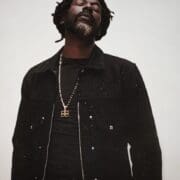
News Americas, NEW YORK, NY, Fri. June 4, 2026: Summer just got a new sound track. Grammy Award-winning reggae legend Buju Banton has announced his thirteenth studio album – ‘Too Too Bad’ – dropping July 17, 2026, alongside a 22-city US summer tour with fellow Grammy winner Stephen Marley.

The duo will take Caribbean music from Seattle to Atlanta in what promises to be the most significant Caribbean music moment on American soil this year and Banton is delivering exactly what the diaspora needs: a reminder that Caribbean culture does not require official recognition to command America’s biggest stages.

The Album: Too Too Bad

Too Too Bad marks Buju’s sixth album for VP Records – the legendary reggae and dancehall label – following a newly minted deal that brought him home to the label after 23 years away.

The album’s lead single “Butterflies” – produced by internationally acclaimed hitmaker Supa Dups, whose credits include Rihanna, Drake, and Bruno Mars – has already amassed over one million cumulative streams since its release. Billboard applauded it as “heart-eyed,” while The New York Carib News noted how Buju “channels the essence of his earlier hits, reminiscent of tracks like ‘Love Sponge,’ as he delivers playful, romantic lyrics.”

A music video for “Butterflies,” shot in Miami by director Justice Silvera, is now available. Buju has also delivered a stunning performance of the 2006 classic “Driver A” on COLORS – a rendition that affirmed, as if any reminder were needed, his status as one of reggae’s greatest showmen.

“A body of work I offer to my fans, friends, and well-wishers with only joy and music,” Buju said of Too Too Bad – a promise that feels especially resonant at a moment when Caribbean communities across the United States could use exactly that.

The Tour: Roots And Rhymes 2026

The album arrives in the middle of the Roots and Rhymes US Summer Tour 2026 – a historic co-headlining run with Stephen Marley that marks the first time the two Grammy-winning icons have embarked on a full-scale tour together. The tour kicks off June 17th at Marymoor Park in Redmond, Washington and winds through 22 cities over six weeks – hitting Red Rocks Amphitheatre in Colorado, Milwaukee Summerfest, UBS Arena in New York, and concluding July 25 at Lakewood Amphitheatre in Atlanta.

Select dates will feature special guest Gramps Morgan of Morgan Heritage, with DJ sets from Splackavelli. And in a gesture that reflects the values at the heart of Caribbean culture, one dollar from every ticket sold will benefit the Buju Banton Foundation – which provides skills training, talent development, and educational empowerment to at-risk boys aged 8 to 18 in Jamaica.

For the Caribbean diaspora spread across every city on this tour – from the Jamaican communities of New York and Boston to the Caribbean enclaves of Atlanta and Miami – Roots and Rhymes is not just a concert tour. It is a homecoming on wheels.

Why This Matters For Caribbean Heritage Month

Buju Banton’s return to the stage this month, Caribbean American Heritage Month, and the studio in 2026, carries weight that goes beyond music. His catalog – spanning ‘Mr. Mention,’ ‘Voice of Jamaica,’ the Gold-certified ‘Til Shiloh,’ and the Grammy-winning ‘Before The Dawn’ — represents some of the most important reggae songs the Caribbean has produced in the last three decades.

His comeback from a decade in federal prison, his continued commitment to Jamaican youth through his foundation, and his ability to fill amphitheatres across America in 2026 tell a story about Caribbean resilience, talent, and cultural influence that no official proclamation could capture more powerfully.

Caribbean Heritage Month has its anthem. And it sounds like Buju.

Too Too Bad is available for pre-order now. The Roots and Rhymes US Summer Tour begins June 17. Tickets and information available at bujubanton.com.

RELATED: From 35 Years To Grammy Nominations – Vybz Kartel New Album Is The Most Personal Of His Career

Afreximbank Deepens Engagement with Jamaica to Drive Trade, Investment and Industrialization

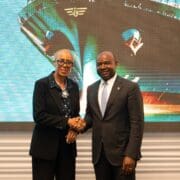
KINGSTON, Jamaica, June 5, 2026 /PRNewswire/ — In a move to highlight the strategic importance of the Jamaican market within the Caribbean and the country’s growing role in regional trade and investment, the African Export-Import Bank (Afreximbank or the Bank) (www.Afreximbank.com) undertook an inaugural roadshow in Kingston, Jamaica, on 2 June 2026.

Organised under the theme, “Empowering Jamaica’s Growth: Catalysing Trade, Investment and Industrialisation through Tailored Afreximbank Solutions,” the roadshow built on the momentum generated by Jamaica’s signing of Afreximbank’s Partnership Agreement in July 2025 and the subsequent approval by the Bank’s Board of Directors of a US$5 billion financing facility for the Caribbean, including Jamaica.

The roadshow attracted strong participation from Jamaica’s business community. It provided an opportunity to raise awareness of Afreximbank’s mandate, mission and vision among key stakeholders in Jamaica, including government representatives, private sector leaders and financial institutions. It also served as a platform to introduce the Bank’s suite of financing, trade facilitation and investment solutions to the Jamaican market for the first time.

In addition, the engagement enabled the Afreximbank delegation to gain valuable insights into Jamaica’s trade and development priorities, investment opportunities, financing needs and business environment. These interactions have further strengthened the Bank’s understanding of the Jamaican market and will help inform the development of tailored solutions to support the country’s economic growth and trade ambitions.

The keynote address was delivered by Hon. Fayval Williams, Minister of Finance and the Public Service. In her remarks, Minister Williams stated: “We understand that, for more than three decades, Afreximbank has been delivering financing solutions that support trade and drive economic growth across Africa. Its reach now extends beyond the continent’s shores, with the Bank establishing a growing presence in the Caribbean. It is clear that the partnership between Afreximbank and Jamaica continues to strengthen. I therefore encourage all Jamaican institutions represented here today to deepen their engagement with Afreximbank so that, together, we can unlock greater opportunities for two-way trade and investment between Jamaica and Africa.”

Also, speaking at the event, Mr. Eric Monchu Intong, Afreximbank’s Group Managing Director, Client Relations and Regional Office Operations, highlighted the Bank’s experience in supporting tourism and hospitality development across Africa and the Caribbean. He said: “At Afreximbank, we believe that industrialisation is the foundation of sustainable trade and economic transformation. To trade successfully with Global Africa, we must first produce. Through investments in industrial parks, special economic zones and local manufacturing, Jamaica has an opportunity to reduce import dependence, increase value-added exports, create jobs and strengthen its economic resilience. This approach has delivered results across 18 African countries, where Afreximbank has supported the development of industrial parks and special economic zones through initiatives such as its US$450 million global credit facility with ARISE IIP, alongside critical trade finance support to businesses across the continent. We believe these lessons and solutions can be adapted to support Jamaica’s industrial growth ambitions and unlock new opportunities for trade, investment and economic development.”

Afreximbank remains committed to supporting increased intra-Caribbean and Africa-Caribbean trade by improving access to trade finance, investment capital and advisory support. The roadshow underscored the Bank’s commitment to advancing the Global Africa agenda and strengthening economic and commercial ties between Africa and the Caribbean.

Distributed by APO Group on behalf of Afreximbank.

Follow us on:
X: https://apo-opa.co/4e7ce54
Facebook: https://apo-opa.co/3RRBrsH#
LinkedIn: https://apo-opa.co/49BRMba
Instagram: https://apo-opa.co/3RKZARP

About Afreximbank:
African Export-Import Bank (Afreximbank) is a Pan-African multilateral financial institution mandated to finance and promote intra- and extra-African trade. For over 30 years, the Bank has been deploying innovative structures to deliver financing solutions that support the transformation of the structure of Africa’s trade, accelerating industrialisation and intra-regional trade, thereby boosting economic expansion in Africa. A stalwart supporter of the African Continental Free Trade Agreement (AfCFTA), Afreximbank has launched a Pan-African Payment and Settlement System (PAPSS) that was adopted by the African Union (AU) as the payment and settlement platform to underpin the implementation of the AfCFTA. Working with the AfCFTA Secretariat and the AU, the Bank has set up a US$10 billion Adjustment Fund to support countries effectively participating in the AfCFTA. At the end of December 2025, Afreximbank’s total assets and contingencies stood at over US$48.5 billion, and its shareholder funds amounted to US$8.4 billion. Afreximbank has investment grade ratings assigned by China Chengxin International Credit Rating Co., Ltd (CCXI) (AAA), GCR (A), Japan Credit Rating Agency (JCR) (A-), and. Moody’s (Baa2). Afreximbank has evolved into a group entity comprising the Bank, its equity impact fund subsidiary called the Fund for Export Development Africa (FEDA), and its insurance management subsidiary, AfrexInsure (together, “the Group”). The Bank is headquartered in Cairo, Egypt.

For more information, visit: www.Afreximbank.com

RELATED: Afreximbank Deepens Commitment to Economic Progress in The Bahamas

Trinidad And Tobago Broke With CARICOM On Cuba – Now Trump Is Sending A Trinidadian National Back Home As US Ambassador

By Staff Reporter | NewsAmericasNow.com

News Americas, WASHINGTON, D.C., Thurs. June 3, 2026: The timing is no coincidence. Days after Trinidad and Tobago broke ranks with CARICOM – reserving its position from the regional body’s statement of concern over escalating US measures against Cuba and aligning itself with Washington through the US-led Shield of the Americas security pact – President Donald Trump has nominated a Trinidad-born former Florida Lieutenant Governor as the next United States Ambassador to Port of Spain.

The nomination of Jennifer Johnson-Carroll, 66, sends a unmistakable diplomatic signal across the Caribbean: countries that align with Washington get rewarded. Countries that don’t – get Kari Lake.

The Reward

Carroll’s biography is extraordinary by any measure. Born in Port of Spain, Trinidad and Tobago, she immigrated to the United States at the age of eight, enlisted in the US Navy in 1979, and served 20 years in uniform – retiring as a Lieutenant Commander in 1999. She went on to become the 18th Lieutenant Governor of Florida – serving from January 2011 to March 2013 under Governor Rick Scott – becoming in the process the first Black person, the first woman, and the first Trinidadian American ever elected to statewide office in Florida, and the first Black Republican elected to Florida statewide office since Reconstruction.

A long-time Trump ally who served as a surrogate during his 2016 presidential campaign and later as a Commissioner on the American Battle Monuments Commission during his first term, Carroll now stands to return to the country of her birth – not as an immigrant child leaving for American shores, but as the United States’ most senior diplomatic representative to the government of Trinidad and Tobago.

The Context: Trinidad’s Strategic Choice

Carroll’s nomination arrives at a moment of significant geopolitical realignment across the Caribbean – one in which Trinidad and Tobago has made a clear and consequential choice about which side of an intensifying US-Cuba confrontation it stands on. When CARICOM foreign affairs ministers expressed their profound concern over escalating US economic and commercial measures against Cuba, Trinidad and Tobago – alongside Guyana – reserved its position. The two nations, both significant energy producers with deep commercial ties to the United States, declined to join the regional consensus in support of Cuba.

Both countries are only 2 of three Caribbean official members of the US-led Shield of the Americas alliance – a security pact signed by 17 Western Hemisphere countries in March 2026 focusing on countering transnational organized crime, drug trafficking, and illegal migration through enhanced intelligence sharing and military cooperation.

The nomination of a Caribbean-born, historically significant diplomat to serve as US Ambassador to Trinidad and Tobago — at precisely this moment of regional fracture – is the kind of diplomatic gesture that Washington makes deliberately and the region understands immediately.

The Contrast With Jamaica

The difference between Washington’s approach to Trinidad and Tobago and its approach to Jamaica could not be more pointed.

For Trinidad – which sided with Washington on Cuba and signed the Shield of Americas pact – Trump nominated a Trinidad-born woman with a historic record of public service, military service, and political achievement who literally grew up in the country she will now represent America within.

For Jamaica d which has not broken with CARICOM on Cuba and which is currently hosting the USS Nimitz in Kingston Harbor in what the US Embassy carefully described as a goodwill visit d Trump nominated Kari Lake. An Arizona-born television anchor with no known connection to Jamaica or the Caribbean and a public record of calling for the mass deportation of immigrants.

The message to the Caribbean is clear. Alignment with Washington opens diplomatic doors. Distance keeps them closed – or worse, puts an anti-immigration hardliner behind them.

A Caribbean Heritage Month Footnote

Carroll’s nomination arrives during Caribbean American Heritage Month – a month the Trump White House has not seen fit to formally recognize with a proclamation. The irony is not lost on Caribbean diaspora observers that the administration’s most symbolically positive gesture toward the Caribbean community in June 2026 is the nomination of a Caribbean-born woman to a diplomatic post – while simultaneously declining to issue the standard recognition of the month dedicated to celebrating Caribbean Americans.

Carroll’s nomination is subject to Senate confirmation.