
Lead With Precision. Leave Room For Possibility

By Dr. Isaac Newton

News Americas, NEW YORK, NY, Sun. Sept. 20, 2026: Leadership requires knowing what to make clear and what to leave open. A promise needs precision. A possibility needs room. An outcome needs ownership. The mistake is treating all three the same way. Leaders who explain everything can leave little room for others to think. Leaders who leave everything open can leave people unsure who is responsible. The wiser approach is simple: define the promise, open the possibility, own the outcome.

Organizational communication scholar Eric M. Eisenberg helped explain why this matters. In his influential 1984 work on strategic ambiguity, he challenged the idea that effective communication always requires complete clarity. People can understand a message differently and still move toward a shared purpose. This matters because leaders often know where an institution needs to go before they know every step required to get there. Leadership, therefore, is not saying everything. It is saying enough to create direction while leaving enough room for others to help create the path.

Define the promise. When people need to know what they can count on, precision matters. If a government promises that a hospital will open by June 30, the date should be clear. Responsibility should be assigned. The budget should be known. Progress should be reported. The same applies to a company’s finances, a university’s obligations, or a nonprofit’s commitments. When money, safety, ethics, authority, deadlines, or performance are involved, vague language creates risk. Precision makes a promise visible and testable.

Open the possibility. When the answer has not yet been discovered, leaders need room for imagination. A national leader might say, “We will build the most innovative economy in our region.” The destination is clear, but the route remains open. An entrepreneur may see a new business. A university may see new research. An investor may see a new market. A student may imagine a career that does not yet exist. The leader provides direction without claiming every solution. Possibility gives people permission to contribute what the leader could not have imagined alone.

Own the outcome. Openness cannot become an escape from responsibility. Once a direction is chosen, someone must own the work. Resources must be assigned. Deadlines must be set. Standards must be established. Results must be measured. A government can invite citizens, businesses, educators, and institutions to imagine better solutions, but someone must still answer for whether the hospital opens. A CEO can invite employees to rethink customer service, but someone must own the result. Ambiguity can create space for invention. It should never create a hiding place from accountability.

These three disciplines form a practical leadership sequence: commit clearly, create freely, deliver accountably. Start with precision so people know the promise. Open the field of possibility so people can improve the path. Then establish ownership so ideas become results. This gives leaders a way to provide direction without controlling every solution and encourage creativity without weakening standards. It gives people something institutions often lack: freedom to think and clarity about responsibility.

Before speaking, leaders should ask three questions: What must people understand exactly? What should they be free to imagine? Who will be responsible for making it real? The first calls for precision. The second calls for possibility. The third calls for accountability. Too much precision can turn capable people into instruction takers. Too much ambiguity can turn shared responsibility into no responsibility at all.

What is the deepest lesson? Define the promise, open the possibility, own the outcome. Precision tells people what they can trust. Possibility tells them what they can create. Accountability tells them who must deliver. Great leadership uses ambiguity with judgment. It knows when people need an exact commitment, when they need room to imagine, and when responsibility must have a name attached to it. Say what must be clear. Leave room for what has not yet been imagined. Then own what you promised.

EDITOR’S NOTE: Dr. Isaac Newton is a leadership strategist, governance scholar, and author specializing in institutional excellence, ethical leadership, and human development. Educated at the University of the Southern Caribbean, Oakwood University, Princeton, Columbia, and Harvard, he writes on leadership, governance, and the development of people and institutions. He is the author of Fix It Preacher, Face Life Squarely, and Intimate Intimacy; and coauthor of Steps to Good Governance, Daring to Hope, When Nations Kneel, and The Belief Code.

YOU MAY ALSO LIKE: Antigua and Barbuda – When Power Meets The Law: Who Bows?
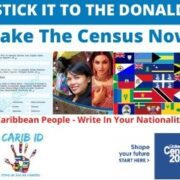
The 2030 US Census Raises A Bigger Question: Who Counts In America?

By Felicia J. Persaud

News Americas, NY, NY, Sun. Sept. 20, 2026: For 12 years, I fought to make Caribbean immigrants and those of Caribbean ancestry count in the United States Census. But after reading the Trump administration’s sweeping proposals to reshape the 2030 US Census, I realized the question confronting America today is much bigger than the Caribbean immigrant community.

The U.S. Census Bureau has proposed changes to the rules governing who would be included in the population used to apportion the 435 seats in the U.S. House of Representatives. The proposed residence criteria could exclude undocumented immigrants and certain other noncitizens whose status is not considered sufficiently permanent.

At the same time, the administration has proposed prohibiting the collection of race and ethnicity information on the decennial enumeration questionnaire, along with questions concerning sexual orientation. One proposal changes who counts for congressional apportionment. The other changes what the government would know about many of the people who are counted.

The Bureau’s proposed residence rule argues that certain foreign citizens lack a sufficient connection to the United States to establish “usual residence” for apportionment purposes. These are proposals, not final rules, and substantial legal challenges could follow if they are adopted. But their direction should concern anyone who understands what Census data mean.

I certainly do. For 12 years, through CaribID, I fought to convince Caribbean immigrants and Caribbean Americans that being properly counted mattered. Simply checking “Black” did not tell America who we are. We are Guyanese, Jamaican, Haitian, Trinidadian, Barbadian, Grenadian, Vincentian, St. Lucian, Dominican and much more. We are people of different races and backgrounds connected by one region and a shared Caribbean culture.

After years of advocacy by communities across America, the 2020 Census made significant progress. For the first time in decennial Census history, the Black or African American race question included a write-in area that allowed respondents to provide detailed identities, with examples including Jamaican and Haitian.

The result was significant. The Census Bureau was able to publish data for 62 detailed Black or African American groups, including Caribbean identities such as Jamaican, Haitian and Grenadian. Nearly two-thirds of Black respondents provided a detailed response to the race question.

That is what better data can accomplish. And this was never simply about ethnic pride.

Data is power.

Census population data determine congressional representation and play a major role in redistricting, government planning, civil-rights enforcement and decisions involving public resources. When immigrants and Black communities become less visible in detailed data, our children do not disappear from schools. Our elderly do not disappear from hospitals. Our families do not disappear from neighborhoods.

What becomes harder to see is precisely who is there. And now there is an even larger issue.

The proposed residence rules could exclude not only undocumented immigrants from the population used for congressional apportionment, but also some immigrants who are lawfully present yet do not have permanent resident status. Think about what that means.

A person could live in Florida, Texas, California or New York. They could rent an apartment, buy groceries, send children to school, travel on local roads and contribute to the economic life of their community.

Yet under the proposed approach, that person may not be included when determining the state’s representation in Congress. At the same time, the federal government is considering collecting less information about the racial and ethnic identities of the people who are counted.

That would mark a major change in the nation’s demographic data collection. Race has been recorded in some form since the first U.S. Census in 1790. More recently, the Census Bureau spent years researching ways to allow Americans to more accurately describe increasingly complex racial and ethnic identities.

The Bureau’s own work following the 2020 Census demonstrated the value of that detail, producing data on nearly 1,500 racial and ethnic groups, tribes and villages.

Now America is considering moving in a different direction. To be clear, removing race and ethnicity questions from the decennial Census would not make all federal race and ethnicity data disappear. The Census Bureau also collects demographic information through the American Community Survey and other programs.

But the philosophical question remains: after decades spent improving America’s ability to understand the people who comprise this nation, why would we now choose to know less?

There is also a constitutional question that is certain to loom over this debate. The 14th Amendment says representatives are to be apportioned among the states according to their respective numbers, “counting the whole number of persons in each State.” How the courts would apply that language to any final 2030 Census rules remains to be seen.

For 12 years, I told Caribbean immigrants and Caribbean Americans: “Stand Up and Be Counted.”

I believed then, as I do now, that visibility matters. But this fight is no longer simply about whether a Jamaican, Haitian, Guyanese or Trinidadian can be seen in America’s demographic portrait. It is about something much more fundamental.

Who gets to count as America?

The 2030 Census is still four years away. These proposals are not final, and the debate is only beginning. But communities should pay attention now. Because when America debates whether millions of people who actually live here should count toward political representation, while also questioning whether the identities of those who do count are worth recording, we are no longer simply debating boxes on a Census form.

We are debating who America chooses to see.

EDITOR’S NOTE: Felicia J. Persaud is the founder and publisher of  NewsAmericasNow.com, the only daily syndicated newswire and digital platform dedicated exclusively to Caribbean Diaspora and Black immigrant news across the Americas.

YOU MAY ALSO LIKE: Carib ID Welcomes Ruling On Census Extension

Lil Durk Beats Murder Case, But Civil Suit From Lil Poppa’s Mother Looms

Lil Durk walked away from a murder case that many expected to end in a conviction, and the legal analysis of how he pulled it off points squarely to the strength of his defense team.[#item_full_content

Keznamdi on Jamaica, Ethiopia, Independence and a Grammy Story He Cannot Yet Tell

Keznamdi is a Grammy-nominated reggae artist who has never signed to a major label, never taken a big distribution deal, and built his entire career on what he calls a guerrilla approach to promotion and marketing.[#item_full_content

Keznamdi Is Bringing “Bun Di Ganja” to SOBs in New York

Keznamdi just announced he’s taking “Bun Di Ganja” live to SOBs in New York, and if you know the venue, you already know what kind of night that’s going to be.[#item_full_content

Valiant Drops ‘Time Capsule’ with a Visual to Match

Valiant just put “Time Capsule” out into the world, and he’s letting the visuals do some of the talking.[#item_full_content

Julian Marley’s ‘Keep The Fire Burning’ Hits #1 on iTunes Reggae Chart

Julian Marley just landed at the top of the iTunes Reggae chart with “Keep The Fire Burning,” and the acknowledgment coming straight from his camp makes it clear this one meant something.[#item_full_content

Cham and Jada Kingdom Drop New Collaboration ‘Move’

Cham and Jada Kingdom just linked up for a new track called “Move,” and it’s out everywhere right now.[#item_full_content

Colin Kaepernick Accuses Jay-Z’s Roc Nation of Planting Fake Stories

The most striking part of Colin Kaepernick’s latest interview is not the accusation itself, but the timing behind it.[#item_full_content

A$AP Rocky Brings Rihanna and Kids Onstage During Copenhagen Tour Stop

A three-year-old grabbing his dad’s megaphone in front of a screaming arena is not something you see every night.[#item_full_content