The Best Dancehall Songs of 2003
Some years in dancehall feel like a slow build. 2003 felt like a door getting kicked off its hinges.[#item_full_content]

Some years in dancehall feel like a slow build. 2003 felt like a door getting kicked off its hinges.[#item_full_content]
If you were anywhere near a sound system in 2002, you heard the same tinny, galloping handclap pattern over and over, and you never got tired of it.[#item_full_content]
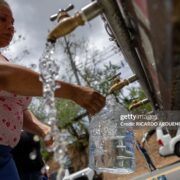
News Americas, NY, NY, Weds. Oct. 21, 2026: As a child, visits to my grandmother’s home in the rural area between the municipalities of Humacao and Yabucoa, in eastern Puerto Rico, often began with the same question: “Is there running water?” Decades later, we have stopped asking—not because the problem has been solved, but because we already know the answer. She either has no running water at all or lives with such low water pressure that access remains uncertain.
Community-based organizations across Puerto Rico, particularly in rural areas, have long organized to demand access to running water, but public officials often treat this struggle as a problem of the past. Yet the water-rationing program initiated by the Puerto Rico Aqueduct and Sewer Authority (PRASA) on August 7 in response to an anticipated drought caused by the El Niño phenomenon reveals how persistent the problem remains. Although the program was recently suspended following temporary relief from cloud-seeding efforts, declining reservoir levels recorded on September 21—nearly a week after the intervention – underscore why Puerto Rico’s water crisis cannot be understood as a matter of climate alone.
The water crisis predates the current drought. PRASA has long struggled with deteriorating infrastructure, compounded by two unsuccessful privatization attempts between 1995 and 2004. Many communities have responded by developing their own aqueducts, but these initiatives cannot match the scale of the structural problem on their own.
Amid the drought, there are also growing concerns that El Súper Tubo, Puerto Rico’s main distribution pipeline, has reached the end of its useful life. In response, the government has called on residents and community organizations to prepare for drought conditions that could persist through the end of the year.
There is broad consensus in Puerto Rico on the importance of local communities in addressing the water crisis. Yet calls for communities to take the lead raise questions that demand a more nuanced approach. How is the burden of the water crisis distributed? What do calls for autonomous community action demand of local leaders and the everyday work of their organizations? How have the austerity measures imposed amid Puerto Rico’s debt crisis affected PRASA’s capacity to respond?
The rationing affected an estimated 500,000 residents across San Juan, Trujillo Alto, Loíza, Canóvanas, Juncos, Gurabo, and Carolina, many of whom continue experiencing interruptions and low water pressure. The burden of Puerto Rico’s water crisis falls along lines of race, class, and gender. In Loíza – where 43 percent of the population lives in poverty and 32 percent identifies as Black or African American – residents have endured unreliable access to running water for nearly six months. Similarly, residents of Canóvanas – where 32 percent of the population lives in poverty and 15 percent identify as Black or African American – have faced this crisis for nearly six months. Among the seven municipalities affected by PRASA’s rationing program, Loíza and Canóvanas have both the highest poverty rates and the largest proportions of residents who identify as Black or African American.
PRASA’s rationing program is not the only institutional response to the water crisis. Jennifer González Colón, Puerto Rico’s right-wing governor, declared a state of emergency through Executive Order 2026-035. The order attributes the crisis primarily to insufficient rainfall, prioritizes available water for potable use, and authorizes exemptions from standard procurement procedures. At the same time, communities and social movements have demanded more transparency from PRASA and González Colón over the management of the situation. In response, PRASA has threatened to fine residents for “misuse of water,” and Puerto Rico’s Department of Natural and Environmental Resources has deployed personnel in enforcement operations resembling police raids to identify residential and community wells it considers illegal.
This move by González Colón’s administration recalls the politics of exception that have accompanied other emergencies in Puerto Rico, including hurricanes, earthquakes, and the COVID-19 pandemic. As Sociologist José Atiles Osoria points out, the Puerto Rican government’s growing reliance on executive orders as a form of governance creates a double state of exception: one produced by U.S. colonial rule and the other by Puerto Rico’s executive branch’s routine use of executive orders. In a similar vein, sociologist Naomi Klein, in her work on The Shock Doctrine, reminds us how government institutions capitalize on emergencies to maximize fear and trauma, and expand their powers.
Puerto Ricans remember how these politics of exceptionality created opportunities for private firms to profit after the widespread destruction caused by Hurricane María in 2017. The current crisis has also revived more intimate memories of María.
“This feels like going back to the times after Hurricane María. This activates my PTSD from [Hurricane] María,” one resident told me while collecting water from a tanker truck. We walked together briefly after filling our containers, and she ended our conversation with a clear statement: “This whole situation is not the result of insufficient rainfall. It is the result of the inefficiency of the people in charge.”
Puerto Rico’s water crisis raises questions regarding PRASA’s situation under La Junta’s austerity measures. La Junta is the federally appointed fiscal control board created by Congress in 2016 to address the archipelago’s $70 billion in public debt and nearly $50 billion in pension liabilities. One of those drivers is PRASA. By 2017, the company had accumulated approximately $5 billion in debt, largely due to its reliance on borrowing to finance capital improvement projects. As part of its austerity agenda, referred to as government-rightsizing, La Junta initially pushed PRASA to reduce operating expenses, raise rates for its customers – 95 percent of whom are residential – and pursue private investment in infrastructure.
As a result, PRASA cut $30 million from its 2026-27 budget for replacing and renovating equipment. At the same time, in its PRASA 2025 Fiscal Plan, La Junta reported that the capital improvement budget had grown, largely through federal post-disaster recovery funds from the Federal Emergency Management Agency and the U.S. Department of Housing and Urban Development. Between 2019 and 2025, approximately $9 billion in federal funding was available for PRASA, of which $6.6 billion was obligated and $773 million disbursed, much of it in response to Hurricane María, Hurricane Fiona, and the earthquakes that struck Puerto Rico in 2020.
These numbers raise more questions than answers, especially given the repeated transparency and contracting scandals under González Colón’s administration. These controversies have ranged from fraud investigations involving procurement in the electric power sector to questionable contracting practices by Víctor Ramos, secretary of the Department of Health. Hence, the biggest scandal of González Colón’s administration was the concerns over conflicts of interest and the alleged influence of former secretary of government Francisco Domenech in benefiting his former lobbying firm, Politank. These and other corruption allegations provide grounds to question the management of the current water crisis and PRASA’s use of its resources, especially given the recent influx of recovery funds.
The resurgence of post-María collective memories of solidarity, community organizing, and mutual aid requires a more nuanced analysis in the context of the current water crisis. After María, autonomous recovery efforts were widely celebrated across Puerto Rican civil society, either as empowering forms of self-reliance or – among more progressive groups – as emancipatory practices that challenged profit-driven approaches to disaster recovery. Now, the water crisis is reviving these memories and familiar calls for communities to care for one another.
However, calls for communities to organize amid the water crisis and other emergencies can obscure the tensions that arise when residents are expected to fill gaps in governance themselves. In Puerto Rico, the burden of fulfilling the state’s role often falls on community leaders who devote hours of unpaid labor to helping neighbors who come to see them as substitutes for public officials. I witnessed these tensions while conducting research for my doctoral dissertation between 2022 and 2025, as community leaders and activists repeatedly expressed frustration with the growing expectation that they provide services and resources in the absence of public officials and state institutions.
One neighborhood activist I spoke with, who is unnamed to avoid jeopardizing her organization’s funding, runs a community agroecological project. When I asked about her workload as a neighborhood activist, she immediately questioned the popular slogan that “only the people save the people.”That slogan sounds nice, and we use it during protests and mobilizations. But sometimes I feel like, all of a sudden, I have another responsibility. Now I have to ‘save the people,’ many of whom don’t even care about what is happening around them,” she said.
Another organizer working in an impoverished community in the San Juan metropolitan area expressed her concern with burnout among local leaders: “Our problem is that the urgent always comes before the important,” they said.
Recognizing these burdens challenges romanticized views of community action, which often place heavy demands on community leaders, many of whom are women and older adults. It also reminds us that community organizing must constantly balance efforts to address broader structural problems with the need to provide practical solutions to people’s immediate needs. Moreover, communities and their leaders should not be expected to absorb the consequences of PRASA’s institutional limitations, Puerto Rico’s debt crisis, and La Junta’s austerity measures. The drought may be a natural emergency, but the water crisis is more than that. It is also the outcome of a colonial system in which debt, austerity, and extraction have shaped the infrastructure on which Puerto Ricans depend. Community organizing may help people survive the crisis, but it should not relieve those who produced it of responsibility.
EDITOR’S NOTE: Mikael E. Rosa Rosa is a full-time lecturer at the Beatriz Lassalle Graduate School of Social Work, University of Puerto Rico, Río Piedras CampusHe completed doctoral studies at the Crown Family School of Social Work, Policy, and Practice at the University of Chicago. His research and activist work focus on community organizing, colonialism, and neoliberal governance regimes.
This article is syndicated in partnership with the North American Congress on Latin America (NACLA).

News Americas Now, NY, NY, Oct. 21, 2026: Just over three months after the Guyana MV Barima ferry capsized off the Essequibo Coast on July 18, 2026, killing 73 people and leaving 30 unaccounted for, the wreck remains on the ocean floor. A G$1.034 billion salvage contract was awarded to BK International Inc. nearly two weeks ago under National Competitive Bidding, but no firm date has been set for when the vessel will actually be lifted, leaving grieving families with no closure and investigators of a Commission of Inquiry working without full access to the evidence in the ship itself.
The contract – covering “Salvaging of Wreck MV Barima (Off Devonshire Castle Flats Essequibo Coast)” – was awarded on October 7 on a “No Cure, No Pay” basis, beating out bids from KMS B.V./Koole Contractors and Industrial Fabrication Inc. The award was not formally announced by the government or the Maritime Administration (MARAD) but only surfaced on the National Procurement and Tender Administration Board’s own website. COI commissioner Dr. Andrzej Jasionowski, a Polish naval architect and forensic marine engineer, told the inquiry only that recovery could take “maybe another week, another two weeks or so.” The tender requires a non-destructive lift, raising the vessel intact onto a barge so investigators can inspect it – a reversal of an earlier government proposal to leave the wreck as a permanent submerged memorial, which had drawn backlash from victims’ families.
The award has drawn its own scrutiny. BK International’s own barge, the Darren B, sank in the Demerara River in 2014 and was left there until the government hired Koole Contractors – the same firm that lost this salvage bid – to clear it at taxpayer expense. Critics have also questioned whether BK meets the tender’s requirement of five to ten years of regional marine salvage experience.
Justice Godfrey Phillip Smith, head of the Guyana MV Barima COI, retorts to MP Odessa Primus on Oct. 7, 2026.
The delay is unfolding against a backdrop of Commission of Inquiry (COI) testimony that has repeatedly exposed how little was recorded, maintained, or trained for before, during, and after the disaster.
Commander of the Guyana Defence Force (GDF) Coast Guard, David Shamsudeen, told the COI on Tuesday that digital recordings of communications from the night of the sinking were handed over to defense headquarters – only to reverse himself minutes later when pressed by Commission Chairman Justice Godfrey Smith, admitting that no recordings were actually made at all.
“You’re stating as a positive fact to this commission that digital tracks, voice recordings, and logs were secured… You’re stating that as a positive, verifiable fact?” Justice Smith asked according to the Demerara Waves. Shamsudeen’s answer: “With regards to any recordings, there are no recordings that I know… We are not mandated to do any recordings as well as digital tracks.”
Shamsudeen also would not commit to handing over the Coast Guard’s own post-search-and-rescue report on the incident without first seeking “guidance” from defence headquarters – prompting visible frustration from Justice Smith, who told him the commission’s findings has “to be able to withstand national, regional, and international scrutiny.”
The Coast Guard commander further admitted that the force’s standard operating procedures (SOPs) – inherited from his predecessors three years ago – have never been updated during his tenure, and that there has been no joint search-and-rescue exercise with foreign assets or fishing vessels “in a while,” because he said there was “no need for it.”
Maritime Administration (MARAD) officials fared no better under questioning. Chief engineer Christopher Clarke, a 20-year MARAD veteran, testified that the agency does not actually license its engineers – it merely promotes them by internal letter after they attend training. Clarke also confirmed there is no planned maintenance system for MARAD vessels and that no safety drills are conducted aboard them. MARAD captain Anthony Williams, confirmed to his rank only in April 2026, said he was never trained in search and rescue despite having since taken part in a 2012 rescue operation.
Separately, GDF petty officer Jerome Agard, who led a coast guard rescue team to the scene after 11:45 p.m. on July 18, told the commission that at least 31 people pulled from the water were not wearing life jackets, and that no log was kept of the names, number, or rescue coordinates of survivors.
The vessel sank the night of July 18th roughly 10 nautical miles off the Essequibo Coast, carrying 179 passengers and crew. Seventy-six were confirmed dead.
The human toll is now also moving through the courts. Magistrate Ravindra Mohabir ruled this week that the murder case against MV Barima captain Kevin Price, chief mate Rondell Dwayne Roberts, and Transport and Harbours Department goods superintendent Delon Granderson will proceed, rejecting defense arguments that the parallel COI made the criminal proceedings an abuse of process. “It is not an abuse of process to have these proceedings conducted in this court,” Mohabir ruled, setting December 14 as the date the court will decide whether sufficient evidence exists to commit the trio to stand trial by judge and jury. The paper committal itself is set to begin November 16.
All three men are jointly charged with the murder of the 66 people and “other persons unknown.”
The named victims are Kevin Wilson, Claymont King, Oxwell John, Roma Mendonca, Nathaniel Matabheek, Nathalia Matabheek, Rachel Wells Matabheek, Ezekiel Matabheek, Cheriannys Valenzuela, Orin Clarke, Edith Gordon, Omar Harris Paul Seapersaud, Andriel Bautisa, Youlanda Marks, Gwenette Marks, Shenira Smith, Cleiveliz Fraser, Vivianna Saddurddin, Argelys Kelly Williams, Devon Mars, Robina Hernandez and Tendhi Standford.
Also listed are Adans Williams, Ranaldo Poon, Aarave Daniels, Marcia Beharry, Leonard Persaud, Mariam Bernard, Ravindra Singh, Shivana LaCruz Ramsindo, Christiani Rodrigues, Annalisa Murray, Owen Arthur, Loveisa Bovell, Joshua Arthur, Ranaldo Pickering, Bibi Mohamed, Sylvester Peters, Shawn John, Akelah Rodrigues, Vishawn Ramjattan, Nelly Duesberry, Samara Manoharlall and Sherlon Joseph.
The remaining named victims are Timar Manoharlall, Dellon Gaskin, Percy France, Alicia Atkinson, Dwyane Forbes, Orin Europe, Orwin Europe, Justin Mury, Odessa Mury, Reshana David, Kishana Sam, Tiona Sam, Elizebeth Bowin, Argany Williams, Omarions Europe Jacob Jerome, Mark Abrams, Ashleena Bovel, Kyle Thomas, Carlton Bennett, Navessa Bovell, Martin Ishmeal and Jason Headley, along with other persons unknown.
With the wreck still unrecovered and the agencies responsible for the response unable – or unwilling – to produce the records the commission says it needs, the central question driving the inquiry remains unanswered three months on: not just how the MV Barima sank, but why no one in a position to prevent it, or to properly respond to it, can produce a clear account of what actually happened that night.

The doctor who examined AKA soon after Anele Tembe’s death says he found the rapper covered in fresh scratches and bruises.[#item_full_content]
For years, Jay-Z has been the man deciding who gets the biggest stage in American music.[#item_full_content]

Long before he collected eight Grammys, Ziggy Marley was a Catholic schoolboy picking fights with Jesuit priests.[#item_full_content]
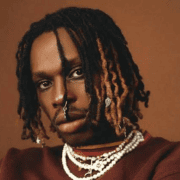
Fireboy DML recorded a prayer asking God for help, then found himself on an operating table days later, convinced he might never sing again.[#item_full_content]

The first voice you hear on Ronaldinho’s debut album isn’t his. It belongs to Sean Paul, who opens Camisa 10 with a track called Lead, and the Brazilian football great couldn’t sound happier about it.[#item_full_content]

Omah Lay was apparently working on something few fans would have expected from him: acrobatics.
The Nigerian singer injured his leg while attempting an acrobatic stunt during a rehearsal session in the United States and was taken to a hospital in Los Angeles.[#item_full_content]