JoZee finds her reggae-gospel calling with ‘Who God Says I Am’ album

Reggae gospel artiste JoZee grew up with Sicily in her blood and Chicago on her doorstep, but by the time she got to her teens, it was reggae music which had already possessed significant real estate in her mind and heart.[#item_full_content]  

Masicka racks up 62.9 million streams as he eyes Grammy recognition

Masicka is making his reign count, with Forever Reign amassing 62.9 million global streams as the dancehall star pursues Grammy recognition.[#item_full_content]  

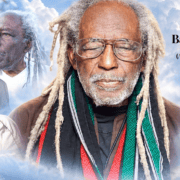
Celebration Of Life For Brother Eusi Kwayana Set For Atlanta And Guyana

By News Americas Now Staff Writer

News Americas Now, NY, NY, Mon. Oct. 19, 2026: A celebration of the life of Guyanese Pan-Africanist and co-founder of the Working People’s Alliance (WPA) Baba Eusi Kwayana will continue tonight, October 19th with a Nine Night celebration, a Guyanese mourning tradition marking nine days since a death while a legacy website, EusiKwayanaLegacy.com, is set to launch tomorrow, October 20.

The family and admirers of Baba Kwayana, who died October 10 at his Atlanta home at age 101, released a multi-city, multi-week program of commemoration stretching from Georgia to Guyana over the coming weeks Sunday.

Born Sydney Evanson King in Lusignan in 1925, Kwayana helped found the People’s Progressive Party with Dr. Cheddi Jagan in the late 1940s, served as Minister of Communication and Works in the short-lived 1953 PPP government, and later co-founded the WPA in 1974 alongside historian and activist Dr. Walter Rodney. He was elected to Guyana’s National Assembly in 1985 and remained active in the WPA until his death — 52 years of service, by the party’s own count. He was also an educator, playwright and author whose works include Guyana: No Guilty Race and Walter Rodney: His Last Days and Campaigns.

Publisher of News Americas Now, Felicia J. Persaud, said she first came to know Brother Eusi Kwayana in 1995, when she worked as a parliamentary assistant to the WPA Member of Parliament at Rodney House in Georgetown, Guyana.

“What I remember most was his extraordinary gentleness,” she said. “Brother Eusi was always gracious. I cannot remember him ever raising his voice. He was unfailingly polite and always addressed me as ‘Sister Felicia.’ And whenever I saw him, he seemed to be doing what he had spent so much of his life doing – reading, researching, thinking, typing, and writing. A quiet discipline about him stayed with me.”

She also revealed that one thing she found especially peculiar at the time was his diet. “By 1995, Brother Eusi had stopped eating cooked food altogether and ate only raw foods – long before raw food diets, clean eating, and all the wellness language we hear today had become fashionable. I remember thinking even then how remarkable his discipline was.”

“Perhaps there was something to it after all. Living to 102 is an extraordinary innings,” added Persaud. “But longevity alone does not define a life. Brother Eusi lived with purpose. He thought deeply. He wrote. He researched. He questioned. He served. And through more than a century of Guyanese history, he remained engaged with the ideas, struggles, and possibilities of the country he loved. For me, however, I will also remember the gentleman behind the public figure – the soft-spoken man at Rodney House who never failed to greet me as ‘Sister Felicia.’”

Atlanta, Georgia – Oct. 30-Nov. 1

A public viewing and wake will be held Friday, October 30, from 3 to 8 p.m. at Murray Brothers Funeral Home, 1199 Utoy Springs Rd SW. A life celebration service follows Saturday, October 31, from 11 a.m. to 2 p.m. at Hillside International Truth Center. A memorial sweat lodge and grounding ceremony is planned for Sunday, November 1, in South Fulton, with RSVP details to be announced.

Guyana, South America – Nov. 13-15

Kwayana’s body will lie in state in Guyana on November 13, alongside a completion-of-walk wake that evening at 6 p.m. A homegoing service and interment are set for November 14 at 1 p.m., followed by a Congosaw – a traditional African-Guyanese wake and life celebration – on November 15 from 10 a.m. to 5 p.m.

Culture, Continuity and Legacy

A 41-Day Celebration follows on November 20, and organizers plan to launch a foundation in Baba Kwayana’s name on April 4, 2027, on what would have been his 102nd birthday. News Americas Now will continue to follow the commemorations for Baba Kwayana, whose seven-decade political and cultural legacy spanned Guyana’s independence movement, its post-independence politics, and its diaspora.

RELATED: Eusi Kwayana – Guyanese Pan-Africanist And Co-Founder Of The WPA Passes At 101

Cruise tourism stakeholders connect in San Juan

Cruise executives, port and destination representatives and tourism partners gathered in San Juan Oct. 12-16 for the 32nd annual Florida-Caribbean Cruise Association (FCCA) Cruise Conference & Trade Show to discuss industry priorities and explore business opportunities across the Caribbean and Latin America. 

Hosted by the Puerto Rico Tourism Company, the event combined leadership panels, workshops, one-on-one meetings and a trade show, giving participants direct access to cruise line decision-makers. Puerto Rican music, culture and hospitality provided a spirited welcome at the opening and throughout the conference.

Discussions addressed destination readiness, the infrastructure and coordination needed for successful homeporting, and ways to enhance the guest experience through local storytelling, immersive attractions and artificial intelligence. 

Across the program, participants explored how cruise tourism supports local businesses and delivers benefits to communities, along with opportunities to expand that impact. 

Receptions and informal gatherings extended those conversations, providing time to reconnect with industry colleagues and build new relationships.

Diddy’s Lawyers Seek to Withdraw From Thalia Graves Lawsuit, Citing Seven Months Without Payment

Sean Combs’s own lawyers say they haven’t seen a dime from him in more than seven months, and they want to hang onto his files until they do.[#item_full_content]  

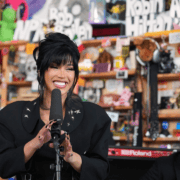
Cardi B Set for NPR Tiny Desk Concert Premiering October 19

Cardi B, the first solo woman ever to win the Grammy for Best Rap Album, is about to trade arena production for a cramped office desk.[#item_full_content]  

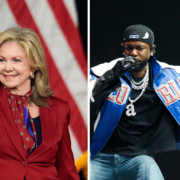
Marsha Blackburn Defends Campaign’s AI Remake of Kendrick Lamar’s Super Bowl Show, Offers No Apology

The senator who helped push a bill to stop unauthorized digital copies of people’s voices and faces is now defending a video that dropped her into Kendrick Lamar’s Super Bowl halftime show.[#item_full_content]  

Rihanna Reportedly Has Vaulted Music on the Way, and Fans Have Heard This Before

Somewhere there’s apparently a locked vault with Rihanna’s name on it, and the songs inside might finally be heading our way.[#item_full_content]  

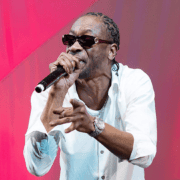
Mikie Bennett Honoured with Order of Distinction (Officer), and Bounty Killer Leads the Salute

When Bounty Killer calls someone a general, it lands differently. The self-styled Warlord of dancehall doesn’t hand out military rank lightly, so his Instagram tribute to Mikie Bennett, newly honoured with Jamaica’s Order of Distinction at the rank of Officer, carries real weight.[#item_full_content]  

U.S.-Caribbean Partnership: Who Sets The Agenda, Who Holds The Power And Who Benefits?

By Dr. Isaac Newton

News Americas Now, NY, NY, Mon. Oct. 19, 2026: Every partnership reveals its true character in the distribution of power. Who sets the agenda? Who shapes the decisions? Whose interests do the outcomes serve? For the Caribbean, these questions are especially vital in its relationship with the United States. Geography binds the neighbours, and shared security and economic interests make cooperation essential. Yet proximity does not guarantee influence, and financial commitments do not automatically deliver public benefit. A durable partnership requires Caribbean nations to help shape the decisions that determine their future.

The United States–Caribbean Dialogue in Washington on October 15, 2026, offered an opportunity to strengthen that partnership. According to informed sources, however, Caribbean leaders were not consulted beforehand in shaping the meeting’s agenda, priorities, or underlying assumptions. This concern warrants scrutiny. Bringing partners to the same table does not guarantee equal influence over what happens there. Consultation after priorities have been established cannot substitute for participation in setting them. Decisions about regional security, trade, migration, and infrastructure affect national budgets, employment, public services, and citizens’ lives. Caribbean governments must help define priorities before commitments take shape.

WASHINGTON

Washington announced US$175.8 million for secure undersea cable infrastructure across the Caribbean and Central America. Other initiatives address regional security and healthcare, while an investment summit is planned for early 2027. These commitments could create valuable opportunities, but announcements alone cannot establish their impact. Governments need clear information about eligibility, funding conditions, implementation schedules, and measurable outcomes. They must distinguish new resources from existing commitments and report what the money delivers. The ultimate test is how well investment improves essential services, strengthens Caribbean businesses, develops local skills, and expands economic opportunity.

The United States has a legitimate right to pursue its national interests. Caribbean governments have an equal duty to protect their citizens, defend national interests, and preserve their freedom to determine development priorities. Cooperation against organized crime, illegal firearms, and threats to critical infrastructure can advance shared security. The challenge arises when strategic priorities overshadow local needs or disparities in economic power translate into unequal influence. Caribbean states cannot erase differences in size, but they can negotiate with greater preparation and collective purpose. They must scrutinize proposals, assess their consequences, and negotiate terms before committing their countries.

CARICOM

CARICOM should turn this principle into a practical negotiating framework. Member states should agree on regional priorities, prepare investment-ready projects, and coordinate positions on major US initiatives. A regional review mechanism should assess financing terms, economic and social implications, security risks, and benefits for local businesses and workers. Governments should publish agreements, establish measurable targets, and report progress regularly. The United States should consult Caribbean leaders during policy development, disclose funding conditions, and provide credible implementation schedules. These measures would turn diplomatic assurances into defined responsibilities and verifiable results.

The planned 2027 investment summit offers an immediate test. Caribbean leaders should arrive with agreed priorities, costed proposals, and clear investment criteria. They should seek commitments that strengthen local enterprises, develop skills, improve essential services, and generate lasting economic value. Agreements should specify financing, responsibilities, timelines, and performance measures. Investment must serve regional development, not merely increase the value of announced commitments.

The Caribbean need not choose between cooperation with the United States and control over its own development. It must pursue both. Diplomatic access opens doors, but preparation determines what governments can negotiate. Financial commitments create possibilities, but accountability determines what citizens receive. Meaningful cooperation requires both sides to help define priorities, understand their obligations, and answer for results.

The Caribbean must not surrender its voice to secure a hearing, its judgment to secure investment, or its sovereignty to secure cooperation. It must shape the agenda, influence the decisions, and demand evidence of results. Its future depends not on the goodwill of larger powers alone, but on its own capacity to think collectively, negotiate intelligently, govern responsibly, and insist that partnership serves its people.

EDITOR’S NOTE: Dr. Isaac Newton is a leadership strategist, governance scholar, and author specializing in institutional excellence, ethical leadership, and human development. Educated at the University of the Southern Caribbean, Oakwood University, Princeton, Columbia, and Harvard, he writes on leadership, governance, and institutional development. He is the author of Fix It Preacher, Face Life Squarely, and Intimate Intimacy, and co-author of Steps to Good Governance, Daring to Hope, When Nations Kneel, and The Belief Code.


RELATED: From Holding Power To Building The Future: A New Vision For Caribbean Leadership