Caribbean Ingenuity In Pictures: How Haiti & Cuba Are Adapting Through Crisis

News Americas, NY, NY, Tues. March 24, 2026: Across parts of the Caribbean, where economic hardship, blackouts, and instability remain daily realities, something else is also visible. Here’s Caribbean ingenuity in pictures.

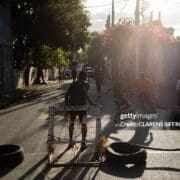
From the streets of Haiti, where children fashion football goals from scrap metal and discarded tires, to neighborhoods in Cuba where communities gather in dim light during ongoing power outages, life continues – creatively, defiantly.

In Delmas, Port-au-Prince, Haiti, young boys play football in the street using makeshift equipment, turning limited resources into moments of joy. In Havana, Cuba, residents navigate fuel shortages and blackouts, improvising solutions to move, cook, and survive while playing dominoes in the dark.

These images reflect more than struggle. They reveal ingenuity.

Across the region, communities are adapting in real time – building, repurposing, and finding ways forward despite mounting challenges tied to economic strain, infrastructure gaps, and political uncertainty.

For many, this is not new. It is a continuation of a long Caribbean tradition: making something out of nothing.

Even amid crisis, the region’s spirit remains unmistakable – resilient, resourceful, and unbroken.

People play football in Delmas, Port-au-Prince, Haiti, on March 22, 2026. (Photo by Clarens SIFFROY / AFP via Getty Images)

Fishermen return from fishing on a makeshift raft in Havana during a national blackout on March 22, 2026. Cuban authorities scrambled on March 22 to restore power to the island after the second nationwide blackout in less than a week, as the grid struggles due to an aging infrastructure and a US oil blockade. (Photo by YAMIL LAGE / AFP via Getty Images)

A woman pushes her cart after filling her water containers in Havana during a national blackout on March 22, 2026. Cuban authorities scrambled on March 22 to restore power to the island after the second nationwide blackout in less than a week, as the grid struggles due to an aging infrastructure and a US oil blockade. (Photo by YAMIL LAGE / AFP via Getty Images)

People transit on a street without power during a nation wide blackout in Havana on March 21, 2026. A power outage struck the entire island of Cuba on March 21, 2026, the energy ministry said, in the second nationwide blackout in less than a week as its grid struggles under a US oil blockade. (Photo by Yamil LAGE / AFP via Getty Images)

Guyana: Extradition Case Of Opposition Leader Could Reshape Political Power

News Americas, NEW YORK, NY, Tues. Mar. 24, 2026: A high-stakes legal battle now unfolding in Guyana could have far-reaching implications not only for the country’s justice system but also for its political future.

Guyana opposition leader, MP Azruddin Mohamed, the US sanctioned and now indicted businessman and founder of the WIN party.

Businessman and the oil-rich CARICOM South American nation’s new opposition leader, Azruddin Mohamed of the We Invest In Nationhood party, has moved to take his fight against possible extradition to the United States to the Caribbean Court of Justice, (CCJ), following a setback in Guyana’s local courts. The development marks a significant escalation in a case that is rapidly evolving into one of the most closely watched legal and political showdowns in the Caribbean.

Mohamed recently lost his bid at the Guyana Court of Appeal to block the extradition process, clearing the way for the matter to advance further. His legal team has now turned to the CCJ – the region’s highest appellate court – in a last attempt to halt the proceedings.

At the center of the case are serious allegations brought by U.S. authorities, including fraud, bribery, and money laundering. While Mohamed has denied wrongdoing, the charges and the potential for extradition have placed him at the center of intense public and political scrutiny.

The case is not just about legal technicalities. It raises broader questions about the relationship between Caribbean nations and the United States when it comes to law enforcement cooperation, extradition treaties, and judicial sovereignty. For Guyana, a country experiencing rapid economic transformation driven by its oil sector, the outcome could carry added significance.

Mohamed is widely known in Guyana’s business and political circles, and his involvement in the case has heightened public interest. His move to the CCJ signals that the legal battle is far from over and underscores the high stakes involved.

Legal experts note that while the CCJ has the authority to hear appeals on constitutional and legal grounds, it typically does not intervene lightly in extradition matters unless there are compelling issues related to due process or fundamental rights. This means Mohamed’s case will likely hinge on whether his attorneys can convincingly argue that his rights could be compromised if extradition proceeds.

Beyond the courtroom, the political implications are already being discussed. Some analysts suggest that the case could influence public perception of governance, accountability, and the rule of law in Guyana. Others see it as a test of how Caribbean jurisdictions balance domestic legal processes with international obligations.

The timing is also notable. As Guyana continues to attract global attention due to its rapidly expanding oil industry, issues related to transparency, governance, and institutional strength are increasingly under the spotlight. High-profile cases such as this one only add to that scrutiny.

For many observers, the central question is no longer simply whether Mohamed will be extradited, but what the case represents for Guyana’s evolving political and legal landscape.

With the matter now heading to the Caribbean Court of Justice, all eyes will be on how the region’s top court handles what could become a defining case – not just for one individual, but for the broader intersection of law, politics, and power in Guyana.

Guyana: The Theatre Of Populism: How Performance Is Reshaping Guyana’s Politics

By Ron Cheong

News Americas, TORONTO, Canada, Mon. March 23, 2026: A bizarre theatre unfolded at Guyana’s Attorney General’s office last Thursday, when the Leader of the Official Opposition arrived with wheelbarrows of small notes and coins to satisfy court-ordered costs of G$4.5 million. The payment stemmed from a failed legal attempt to block extradition to the United States, where he faces charges tied to an alleged US$50 million gold smuggling and money laundering scheme.

The spectacle was deliberate. It was political theatre designed not merely to pay a debt, but to project defiance, grievance, and identification with “the people.”

But it raises a more fundamental question: is this the movement that has displaced APNU as Guyana’s official opposition? How does such a transformation occur?

To understand this moment, one must first understand the myth, and the method, of the populist “champion of the people.”

The Myth Of The “Champion”

The self-styled “champion of the people” presents himself as instinctive and unfiltered – a voice rising organically from the frustrations of ordinary citizens. Supporters reinforce this image: he “speaks his mind,” “says what others are afraid to say,” and “cannot be coached.”

This is a myth. What appears spontaneous is often carefully constructed. The language of grievance, the division of society into “pure people” and “corrupt elites,” and the ritual denunciation of institutions are not improvisations. They are elements of a well-worn political script; refined across countries and decades because they reliably produce results.

The resemblance among such figures is no coincidence. The pattern repeats with striking consistency: simplify complex realities into moral binaries, personalize power, and discredit institutions that might challenge the narrative.

Donald Trump exemplifies this model – reducing complexity into stark moral conflict while positioning himself as both victim and champion.

Privilege And Performance

In Guyana’s current political moment, the leader of the We Invest in Nationhood, (WIN) movement has cultivated precisely this posture – presenting himself as a corrective to injustice, a voice for the overlooked, and a disruptor of the established order.

Yet this raises an inconvenient question: how does one become a “champion of the people” from a position of considerable privilege?

It is not a contradiction. It is a pattern.

Many of the most effective populists emerge not from deprivation, but from advantage. Their distance from everyday struggle becomes an asset. It allows them to construct grievance selectively, dramatize injustice without constraint, and perform identification with “the people” while remaining insulated from their realities.

Again, the example of Donald Trump is instructive – a billionaire who successfully cast himself as the tribune of the forgotten.

What matters is not biography, but the construction.

The Script Beneath The Performance

Human beings are predisposed to respond to narratives of threat, belonging, and betrayal – a dynamic long established in Social Psychology.

Effective populists do not invent these instincts; they exploit them.

The method is consistent:

simplify complexity into moral conflict

elevate the individual above institutions

transform criticism into persecution

dominate the narrative space, particularly through social media

What feels authentic is often rehearsed. What feels instinctive is often engineered.

Champion Vs. Manager: The Test That Matters

If the “champion” is constructed, then the public must be brought to change how it evaluates him – not as a champion, but as a manager.

A champion thrives on emotion, symbolism, and defiance. A manager must deliver outcomes: competence, stability, institutional respect, and measurable progress.

This distinction explains a broader political reality. Consider Donald Trump and J. D. Vance. Vance can replicate arguments and mirror grievances, but he cannot replace Trump as the focal point of that movement.

Why? Because he presents as a manager attempting to perform a champion.

Trump, by contrast, is perceived, however controversially, as the authentic article. His appeal lies not in administrative precision but in emotional command. The contrast exposes a hard truth: populism is not merely a set of ideas. It is a performance not all can sustain.

Guyana’s Political Earthquake

The implications for Guyana are no longer abstract.

The rise of the We Invest in Nationhood, (WIN), movement has upended the country’s political architecture. In a stunning electoral breakthrough, a newly formed party captured 16 parliamentary seats, displacing APNU/PNC as the official opposition and fracturing what once appeared to be an entrenched political order.

This was not an incremental change.

It was a political earthquake – one that cannibalized the traditional opposition base and revealed a deep appetite for disruption over continuity.

Law, Legitimacy, And The Risk Ahead

That disruption now faces its most serious test.

Mohamed’s political rise has unfolded alongside an ongoing extradition battle tied to U.S. indictments alleging large-scale gold smuggling and related financial crimes. The case is not incidental to his political identity – it is central to it.

To supporters, it reinforces a narrative of persecution.
To critics, it raises fundamental questions about credibility and governance.

If extradition proceeds, WIN faces an existential challenge. Movements built around a singular figure rarely outlive his absence. Without Mohamed at the center, the party risks fragmentation, internal rivalry, or gradual absorption into the system it sought to disrupt.

If extradition does not proceed, the challenge shifts to his opponents.

For APNU/PNC, the lesson is stark: its base has been breached. Mimicking populist rhetoric will likely accelerate decline rather than reverse it. Renewal must come through credibility, organization, and a demonstrable capacity to govern.

For the governing PPP/C, the risk lies in miscalculation. If legal pressure is perceived as political containment, the “champion” narrative may deepen rather than diminish. A figure cast as embattled can become more potent, not less.

The more effective response is not theatrical opposition, but competent governance – delivering results, strengthening institutions, and addressing the grievances on which populism feeds.

Beyond The Man: Confronting The Method

Guyana is no longer confronting a personality alone. It is confronting a method.

A method that can rapidly redraw political loyalties. A method that thrives on distrust, feeds on division, and presents performance as authenticity.

And methods, unlike men, do not disappear when one individual exits the stage.

They wait – until the conditions allow them to return.

EDITOR’S NOTE: Ron Cheong is a frequent political commentator and columnist whose recent work focuses on international relations, economic resilience, and Caribbean-American affairs. He is a community activist and dedicated volunteer with extensive international banking experience. Now residing in Toronto, Canada, he is a fellow of the Institute of Canadian Bankers and holds a Bachelor of Science degree from the University of Toronto.

RELATED: The Long Siege Of Cuba & Caribbean Geopolitics: The Prequel To King Kong And The Island

Oil, Food And Geopolitics: How Guyana Could Decide CARICOM’s Future

Cuba – Cuba’s Fuel Crisis Deepens As Castro Grandson Highlights Growing Issue

News Americas, New York, NY, Mon. March 23, 2026: Cuba’s deepening fuel and economic crisis is now being spotlighted in an unexpected way – through viral social media posts by a member of the country’s most powerful political family – Fidel Castro grandson.

Fidel Castro’s Grandson r, and a fake Donald Trump, l.

Sandro Castro, the grandson of the late Cuban revolutionary leader, has drawn widespread attention online after posting videos that appear to mock – and at the same time expose – the worsening shortages facing ordinary Cubans.

In one widely shared clip, Castro, 33, is seen stroking an empty gas pump, highlighting the island’s severe fuel shortages. The moment, framed as satire, has resonated across social media as long lines, blackouts, and energy scarcity continue to disrupt daily life across Cuba.

The videos come amid one of the most difficult periods for the island in decades, with persistent power outages, limited access to basic goods, and mounting pressure on the country’s healthcare and infrastructure systems. Analysts say the crisis has been fueled by a combination of internal economic challenges, reduced fuel imports, and tightening U.S. sanctions.

But Castro’s posts have also ignited debate over inequality in Cuba.

While many Cubans struggle to access essentials such as food, fuel, and medicine, Castro’s social media presence often showcases a markedly different lifestyle – including nightlife, consumer goods, and private business ownership – underscoring what critics describe as a widening gap between elites and everyday citizens.

Observers say his content has become a flashpoint for broader questions about the country’s future. The posts have triggered mixed reactions across the island and among the Cuban diaspora. Some view Castro’s videos as subtle criticism of the system, while others see them as tone-deaf displays of privilege during a time of national hardship.

In another recent video, he rejected a (fake) call from U.S. Secretary of State Marco Rubio to continue his domino game with friends, and in another, he posted a skit of an orange-faced President Trump knocking on his door. The U.S. president implores him to negotiate a deal with Washington, saying, “I want to buy Cuba.”

Mr. Castro tells him he is crazy, then takes him on a tour of Cuba as Mr. Trump says he wants to build mansions on the Havana waterfront.

The situation is unfolding as tensions between the United States and Cuba continue to escalate, with ongoing restrictions on fuel supplies further straining the island’s already fragile energy sector.

For many, the imagery is striking: even a member of the Castro family – long associated with Cuba’s leadership – is now publicly engaging with the very shortages affecting the population.

Whether intended as satire or social commentary, the videos have added a new dimension to the conversation about Cuba’s economic crisis – one that blends politics, performance, and the lived realities of millions.

As conditions on the island continue to deteriorate, the moment underscores a broader truth: Cuba’s challenges are no longer confined to policy debates – they are playing out in real time, in public, and increasingly, online.

Castro is the son of Alexis Castro Soto del Valle and Rebecca Arteaga. His father, Alexis, is one of the five children of Fidel Castro and his second wife, Dalia Soto del Valle. He has over 150,000 followers on Instagram and has attracted public attention for owning a nightclub (EFE Bar) and for showing off luxury items, such as a Mercedes-Benz, which is rare in Cuba.

SECOND BLACKOUT

Castro’s post comes amid a second nationwide blackout in less than a week and as Cuba said it is prepared for any potential US attack as authorities worked to restore power across the island.

Power was gradually restored on Sunday, with two-thirds of Havana regaining electricity by yesterday afternoon, according to the city’s power company. The national grid was reconnected across most of the country, from Pinar del Rio in the west to Santiago de Cuba in the east, with two provinces still pending, the state-run Electric Union said. US President Trump has told reporters in the U.S. that his administration will be “taking Cuba” in some form after implementing a weeks-long oil blockade against Havana. 

Citizens have complained of power outages, and hospitals have reported dire circumstances amid the embargo.

RELATED: Guyana To Repay Billions In Exxon Costs, But Profit Share Still Unclear

International Water Day – Modernizing Caribbean Water Systems For Jobs, Resilience And Growth

By Lilia Burunciuc

News Americas, NEW YORK, NY, Sun. Mar. 22, 2026: It is International Water Day today, March 22nd. Across the Caribbean, tourism, agriculture, and fisheries shape the rhythm of economic life. They support millions of livelihoods in the region. Tourism alone sustains more than 2.75 million jobs. Agriculture and fisheries provide employment for roughly 3 percent of the population and remain critical for food security, rural incomes, and coastal economies. All of this economic activity depends on a fundamental resource: water. Hotels need it to serve guests, farmers rely on it for irrigation and livestock, and fisheries depend on clean coastal waters.

Yet, across much of the Caribbean, water – and the systems that deliver it -are increasingly under pressure. Water utilities face aging infrastructure, growing demand, and intensifying climate change impacts. Strengthening water security is therefore essential for protecting jobs, supporting businesses, and sustaining economic growth.

Despite decades of investment and the fact that about 90 percent of households in the Caribbean are connected to piped water systems, reliable service remains a challenge in many countries. Droughts can lead to water rationing, water pressure is often inconsistent, and utilities frequently struggle to maintain aging infrastructure.

One of the biggest challenges is the scale of water losses. Across the region, utilities lose, on average, about half of the water they produce to leaks and aging pipes. This represents a major economic cost. Caribbean utilities already face some of the highest electricity prices in the world, and pumping and treating water can account for roughly 40 percent of operating costs. When large volumes of water are lost before reaching customers, both energy and financial resources are also lost.

Weak wastewater management also carries economic consequences. In the Caribbean, around 85 percent of wastewater is discharged untreated, polluting coastal ecosystems and marine environments. These waters sustain coral reefs, fisheries, and beaches that are central to tourism and coastal livelihoods. When pollution damages these ecosystems, the impacts extend directly to employment, income, and food security in coastal communities.

Natural disasters are exacerbating these challenges. Heavy rainfall and hurricanes have caused flooding in several Caribbean countries, damaging infrastructure and disrupting water systems and transport networks.

Addressing these challenges requires continued efforts to strengthen the management, financing, and maintenance of water systems across the region.

Several priorities stand out.

First, the region needs to adjust its operational approach. To move more toward reliability, countries should foster a culture of performance. This means running water utilities like modern, data-driven businesses. When a utility uses digital tools to reduce energy waste and find leaks, it stops losing money and gains the financial independence required to reinvest in its own resilience. 

Regional Integration

Second, countries should prioritize stronger regional integration. In an archipelago of small states, technical silos lead to inefficiencies. The goal is to ensure that a breakthrough in one island becomes a shared blueprint for its neighbors. By pooling resources and expertise, the region can implement standardized solutions for leak detection and disaster recovery that would be too costly for any single island to develop alone.

Third, modernizing the water sector requires investing in people. As utilities adopt more advanced technologies and data-driven systems, the workforce must evolve as well. Strengthening education and training in environmental engineering, water resource management, and digital technologies can help prepare Caribbean workers for the skilled jobs emerging in a modern water sector.

Finally, mobilizing investment will be essential. Across Latin America and the Caribbean, achieving universal and climate-resilient water services will require an annual investment of around 3 percent of GDP through 2030, far above current spending levels. Public resources alone will not be enough to close this gap. Strengthening utility governance, improving financial sustainability, and preparing investment-ready projects can help attract greater private investment into the sector.

Transformation

The World Bank is committed to supporting this transformation. We are already supporting promising examples led by national governments, such as Barbados adopting a program-for-results financial instrument to shift the focus from infrastructure delivery to efficient service delivery, and Saint Lucia and Grenada’s commitment to water and sanitation policy reforms, which strengthen the sector’s financing, sustainability, and efficiency.

Building on these national efforts and leveraging Caribbean regional synergies, the World Bank is preparing a new regional water security program which will support countries in improving utility performance and strengthening cooperation across the region.

With governments, utilities, and regional partners already advancing practical solutions, the Caribbean is well-positioned to build stronger water and sanitation systems that support businesses, protect coastal resources, and create and secure jobs across sectors such as tourism, agriculture, and water services.

As the world marks International Water Day today, March 22, the importance of strengthening water systems that sustain Caribbean jobs and industries has never been clearer.

EDITOR’S NOTE: Lilia Burunciuc is the World Bank Director for Caribbean countries. Ms. Burunciuc, a Moldovan national, is
responsible for maintaining the partnership with the countries to address their development challenges. She has extensive experience on leading policy dialogue with governments on various aspects of development.

RELATED: Closing The Skills Gap To Create More Jobs In The Caribbean

How Caribbean Immigrants Are Shaping Small Business Growth In The United States

News Americas, NEW YORK, NY, Sat. Mar. 21, 2026: Are you noticing more small businesses growing in cities across the United States and thinking about who is behind this steady rise?

In 2026, recent trends show that Caribbean immigrants are playing a strong and positive role in shaping small business growth, especially in key urban areas where diverse communities continue to expand.

The Rising Impact Of Caribbean Immigrants on US Business

Recent economic updates in 2026 highlight that immigrant-led businesses continue to grow across the United States, with Caribbean entrepreneurs contributing actively in cities like New York, Miami, and Atlanta. Their businesses are becoming an important part of local economies, supporting both community needs and economic activity.

Strong Contribution Through Consistent Effort

Caribbean immigrants are known for their steady and focused approach to business. Many start with small setups and gradually expand by maintaining quality and building trust with customers. This consistent effort is helping them establish long-term stability in competitive markets.

Their businesses often reflect a strong sense of responsibility towards family and community, which helps them stay motivated and committed to growth.

Growth Across Multiple Business Sectors

In 2026, business activity among Caribbean immigrants is spreading across different sectors, showing a balanced and healthy pattern of growth. This wide participation is helping strengthen small business networks in many regions.

Expanding Into Diverse Industries

Caribbean entrepreneurs are active in various industries, including food services, beauty and wellness, retail, and local services. Food businesses are especially gaining attention, offering authentic Caribbean flavors that attract both local customers and visitors.

In several neighborhoods, these businesses work together like an Orb, where different services support each other and create a connected local economy. This kind of setup helps small businesses grow together instead of competing in isolation.

Positive Influence On Local Economies

Recent observations show that Caribbean-owned businesses are contributing positively to local economic activity. Their growth is creating more opportunities and increasing business movement within communities.

Creating Jobs And Supporting Local Activity

As these businesses expand, they are creating employment opportunities and supporting local spending. This leads to more active neighborhoods where businesses and customers both benefit.

Local areas with strong Caribbean business activity are seeing steady development, as more services become available and more people participate in economic activity. This creates a stable and supportive environment for further growth.

Innovation And Fresh Business Approaches

Caribbean entrepreneurs are also introducing fresh ideas into the business space. By combining traditional knowledge with modern practices, they are building unique and attractive business models.

Blending Culture With Modern Service

Many Caribbean-owned businesses offer services that mix cultural identity with modern customer expectations. Restaurants, for example, present traditional dishes in ways that appeal to a wider audience. Service-based businesses focus on personal attention, which helps build strong customer connections.

This balance helps these businesses stand out and maintain steady growth over time.

Building Strong Community Connections

Community connection continues to be one of the strongest factors behind the success of Caribbean entrepreneurs in the United States.

Trust And Long-Term Customer Relationships

Caribbean business owners often focus on building trust through friendly service and honest interaction. Customers feel valued and respected, which encourages repeat visits and long-term loyalty.

Many of these businesses also take part in local events and community activities, which strengthens their connection with the people they serve. This close relationship helps maintain stability and ongoing growth.

Cultural Identity Supporting Business Success

Caribbean immigrants bring their cultural identity into their work, which adds a unique touch to their businesses and attracts a diverse customer base.

Sharing Culture Through Everyday Business

Through food, services, and customer interaction, many businesses introduce Caribbean culture to a wider audience. This creates a positive experience for customers and helps build cultural understanding.

This cultural exchange also supports business growth, as customers enjoy the unique experience and continue to return.

Future Outlook For Caribbean Entrepreneurs In The US

Looking ahead in 2026, the role of Caribbean immigrants in small business growth is expected to remain strong. Continued support from communities and increasing interest in diverse services are creating more opportunities.

Continued Growth With New Energy

Younger entrepreneurs are entering the business space with fresh ideas while maintaining strong cultural values. This combination is helping expand business opportunities and reach new audiences.

With steady progress and strong community support, Caribbean immigrants are expected to continue contributing positively to small business growth across the United States.

Final Thoughts

In 2026, Caribbean immigrants are clearly shaping small business growth in the United States through steady effort, cultural influence, and strong community connections, helping create a positive and active business environment across many regions.

Actress CCH Pounder To Lead Cross Continental Forum Expansion To South Africa With UMEDA And Pambili Media Partnership  

News Americas, TORONTO, Canada, Fri. Mar. 20, 2026: Award-winning actress, CCH Pounder, is helping to spearhead the expansion of the Cross Continental Forum (CCF), an international co-production platform connecting producers across Africa and the global diaspora, as the initiative moves its 2026 edition to KwaZulu-Natal, South Africa.

CCH Pounder, Award Winning Actor, and CCF Steering Group Member.

“Creation, to me, is our most powerful act of connection. Expanding the Cross Continental Forum to South Africa allows us to turn shared heritage into shared enterprise – creatively, economically and strategically,” commented CCH Pounder, Award Winning Actor, and CCF Steering Group Member.

A Gateway For Global Collaboration

The move is being made in partnership with UMEDA, the economic development agency for the Pietermaritzburg Midlands, and South African production company Pambili Media. The partnership reflects growing interest in building stronger co-production links between Africa, the Caribbean and Diaspora markets as demand increases for globally relevant stories and talent.

“KwaZulu-Natal is ready to engage the global screen economy in new ways. Partnering with the Cross Continental Forum connects our region’s creative industries with international producers, while positioning the Midlands as a gateway for collaboration between Africa and the global marketplace,” stated Michael Newton, CEO of UMEDA.

CCF’s 2026 theme Bridging Markets, Building Futures focuses on strengthening Black authorship and Global South leadership in international co-productions, so that producers enter partnerships as originating partners and rights holders, and creative control and intellectual property remain rooted in the communities where the stories begin.

“For us at Pambili Media, this partnership is about creating the conditions for meaningful collaboration – where projects can be developed locally while building the international relationships they need to travel globally,” said Sydney Masina, partner at Pambili Media.

“Creating strong business connections between Africa and the Diaspora will be the great success story of the 21st Century, one that will be increasingly rewarding and profitable as we move forward,” US-based Pambili partner Steven Adams, who has a long history of working between Africa and the United States

Launched by CaribbeanTales Media Group in 2024, the Cross Continental Forum brings together film and television producers from Africa, the Caribbean, Canada, Europe, and the Americas with potential co-production partners.

After two successful editions in Barbados, the 2026 program will begin with an in-person gathering in the Pietermaritzburg Midlands, KwaZulu-Natal, from July 20-26, presented in partnership with UMEDA and Pambili Media. The program will then continue during the Toronto International Film Festival Market (Sept. 8 – 13), followed by four weeks of virtual labs and curated B2B matchmaking sessions.

Driving South South Collaboration

With the recent co-production agreement signed between South Africa and Nigeria, and the continued growth of the African Continental Free Trade Area, (AfCFTA), cross-regional collaboration in the creative industries is entering a transformative phase. 

The AfCFTA connects 55 African Union nations, forming the world’s largest free trade area by membership.

“We’re witnessing the potential of the AfCFTA to come to life through creative industry partnerships. South Africa’s dynamic screen industry, combined with its co-production infrastructure, positions it as a strategic gateway for South–South collaboration and creative entrepreneurship,” said Dr. Keith Nurse, Cultural Industries Specialist, Chair of CaribbeanTales Worldwide Distribution. 

“The Cross Continental Forum was designed from the outset to move between locations across the Global South.  It is part of a long-term effort to build sustainable co-production pipelines linking African, Caribbean, and diaspora producers to the global screen marketplace,” said Frances-Anne Solomon, Founder and CEO, CaribbeanTales Media Group.

Applications are now open to Black producers and producers of Global Majority descent from Canada, the Caribbean, Africa, the U.K., Europe, and South/Latin America. 

Applications close April 15, with a limited number of bursaries available.

About The Cross Continental Forum

The Cross Continental Forum, established by CaribbeanTales Media Group, is a co-production accelerator connecting Black and Global Majority producers across Africa, the Caribbean, Europe, Canada and the Americas. The hybrid program provides mentorship, training and industry connections designed to support sustainable and equitable global partnerships.

For more information and to apply before April 15, 2026, visit:  www.decolonisingcoproduction.com/apply/

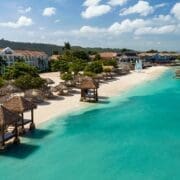
Caribbean Tourism Reinvestment: Sandals’ $200M Jamaica Upgrade Signals Long-Term Confidence

By Nan Business Editor

News Americas, NEW YORK, NY, Fri. March 20, 2026: The Caribbean’s and Jamaica’s tourism sector is seeing a major vote of confidence, as Sandals Resorts International moves forward with a $200 million reinvestment across three flagship properties, signaling long-term optimism in the island’s hospitality industry.

The sweeping upgrade – part of what the company is calling its “Sandals 2.0” transformation – will reshape Sandals Montego Bay, Sandals Royal Caribbean, and Sandals South Coast, all of which have remained closed since Hurricane Melissa struck in October 2025.

Caribbean Tourism Reinvestment Accelerates: Sandals’ $200M Jamaica Upgrade Signals Long-Term Confidence

A Strategic Rebuild, Not Just Recovery

Originally expected to reopen in May, the resorts will now return later in the year following a decision to expand the scope of renovations.

Sandals South Coast is now set to reopen on November 18th.

Sandals Montego Bay and Sandals Royal Caribbean will reopen on December 18th.

Rather than simply restoring damaged infrastructure, the company is using the downtime to deliver a comprehensive redesign – an approach that reflects a broader shift toward premium tourism experiences and long-term value creation.

“The opportunity to completely reimagine three resorts at this scale… is extraordinarily rare,” said Adam Stewart, Executive Chairman of Sandals Resorts International.

What The $200M Investment Will Deliver

The transformation will include:

Reimagined resort entrances and arrival experiences

New accommodation categories

Redesigned pools and expanded social spaces

Updated lounges and entertainment areas

New and enhanced dining concepts

The upgrades are designed to elevate the guest experience while strengthening Jamaica’s position as a leading Caribbean luxury tourism destination.

Confidence in Jamaica’s Tourism Future

Beyond the physical upgrades, the scale of the investment underscores Sandals’ confidence in Jamaica’s long-term tourism outlook.

Tourism remains a cornerstone of the country’s economy, supporting thousands of jobs and driving foreign exchange earnings. Investments of this magnitude send a strong signal to both international travelers and industry stakeholders that Jamaica remains resilient and globally competitive.

Stewart emphasized that the closures presented a rare opportunity to rethink the properties from the ground up.

“With our doors closed, we were given something we almost never have in hospitality: a true blank canvas, and having that clarity changed everything,” he said. “We spent time walking the properties, speaking with our team and thinking about our guests. At a pivotal moment, it became clear: we shouldn’t simply restore what was there. We should dream bigger. When we welcome our guests back, they’ll see the transformation and they’ll feel exactly why we chose to use this moment to create something worthy of their loyalty.”

Positioning For the Next Phase of Growth

The “Sandals 2.0” initiative reflects a broader trend across the Caribbean, where tourism operators are moving beyond recovery toward modernization, innovation, and premium positioning.

By reinvesting at scale, Sandals is not only rebuilding its properties but also helping to reinforce Jamaica’s brand as a destination that delivers high-quality, immersive, and globally competitive experiences.

As the resorts prepare to reopen later this year, the message is clear:

Jamaica is not just recovering – it is upgrading.

RELATED: Wyndham Grand Barbados Highlights How Caribbean Travelers Can Earn Free Stays Through Wyndham Rewards

The Cultural Shift In Global Finance: Not Copying, Reshaping

By Dr. Isaac Newton

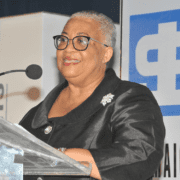
News Americas, NEW YORK, NY, Fri. March 20, 2026: On March 17, 2026, Northern Caribbean University hosted Dr. Marlene Street Forrest for a keynote address that presses leaders to move beyond replication and towards innovation rooted in local realities. Her theme, The Cultural Shift: Not Copying, Reshaping, redefines global finance as a mechanism for social impact, structural opportunity, and sustainable growth. For small nations, where market inefficiencies and global competition often constrain advancement, reshaping systems is both a strategic advantage and a moral necessity.

On March 17, 2026, Northern Caribbean University hosted Dr. Marlene Street Forrest for a keynote address that presses leaders to move beyond replication and towards innovation rooted in local realities. Her theme, The Cultural Shift: Not Copying, Reshaping, redefines finance as a mechanism for social impact, structural opportunity, and sustainable growth.

Remittances as a Foundation for Economic Resilience

One of the most profound indicators of the Caribbean’s economic potential lies in diaspora financial flows. The Inter‑American Development Bank projects remittances to the Caribbean will reach approximately USD 20.9 billion in 2025, growing by 9.2 per cent year over year, with the United States and Canada accounting for more than sixty per cent of all inflows. These transfers are not ancillary; they sustain households, support education, fund entrepreneurial ventures, and provide a form of economic cushioning that formal markets often cannot deliver. In several Caribbean countries, remittances contribute a significant proportion of national income and act as stabilizers during economic shocks. This underscores the importance of designing systems that engage diaspora capital purposefully rather than treating these inflows as isolated financial phenomena. 

Digital Financial Tools as Engines of Growth

Small and medium enterprises are the core drivers of Caribbean economies, yet persistent barriers limit their access to credit, export markets, and scalable networks. Across the region, firms encounter cross‑border payment delays, high transaction costs, and limited digital infrastructure. At the same time, research indicates that digital financial tools can fundamentally change enterprise trajectories. In Jamaica, ninety‑one per cent of SMEs that accept digital payments report that this has led to significant growth in their business operations. These firms also experience time and cost savings, improved supplier relationships, and enhanced ability to engage international customers. Conversely, many SMEs that have not yet adopted digital payments report losing customers regularly because they cannot offer modern payment options. These data demonstrate that digital financial adoption is not an optional accessory but a transformational lever for competitiveness and resilience in the global economy. 

Building Leadership Capacities for Systemic Impact

Innovation without capable leadership remains unrealised potential. Dr. Street Forrest identified five essential capacities for leaders who will reshape Caribbean financial systems. Systems thinking enables leaders to identify leverage points where small interventions can yield outsized improvements. Contextual intelligence ensures policies are matched to cultural and regulatory environments. Governance literacy fosters transparency and accountability that attract investment. Developmental vision converts financial inputs into job creation, enterprise growth, and communal benefits. Leadership in uncertainty equips individuals and institutions to act decisively amid complexity. Together, these capacities form a framework for leaders to convert ideas into functioning systems that empower citizens and attract global participation.

Designing Systems that Reflect Local Purpose

Dr. Street Forrest offered concrete proposals for transformative systems tailored to Caribbean strengths. A regional commodities market, for example, could provide transparent valuation for products such as cacao from Guyana and coffee from Jamaica, giving producers direct access to broader markets and enabling fairer pricing. Another proposal involves community‑backed financing partnerships that match local savings with vetted small businesses needing capital, effectively transforming social trust into productive economic participation. Renewable energy investment platforms can mobilise global capital into projects that strengthen resilience, reduce costs, and create employment. These concepts illustrate how systems designed with local purpose and integrity can unlock latent potential and position the Caribbean as a leader in inclusive economic innovation.

Conclusion

Dr. Marlene Street Forrest’s keynote offers a pragmatic and inspiring blueprint for the future. Replication of external models will not deliver the inclusive prosperity that the Caribbean and its diaspora aspire to achieve. Instead, leaders must design systems that harness diaspora capital, leverage digital transformation, and reflect local realities. This requires a generation of leaders equipped with strategic insight, contextual intelligence, governance proficiency, developmental vision, and the courage to lead in uncertainty. When these capacities converge with innovation, finance becomes not merely a technical discipline but a force for human empowerment, economic inclusion, and sustainable growth. The Caribbean’s future will be defined not by adoption of global templates but by the creativity and conviction of its own leaders to shape systems that elevate communities and earn global respect.

Editor’s Note: Dr. Isaac Newton is a leadership strategist, educator, and public speaker specializing in governance, institutional transformation, and ethical leadership. Trained at Harvard, Princeton, and Columbia, Dr. Newton brings a multidisciplinary perspective to leadership development across the public, private, academic, and faith-informed sectors. He is the coauthor of Steps to Good Governance, a work exploring practical frameworks for accountability, transparency, and institutional effectiveness. Dr. Newton has designed and delivered seminars for corporate boards, educators, public officials, and community leaders throughout the Caribbean and internationally. His work integrates insights from leadership research, psychology, public policy, and ethics to equip leaders to guide institutions through uncertainty with clarity, courage, and measurable impact.

RELATED: The Sound Of A Democracy Thinking: How Silence Speaks In Small States

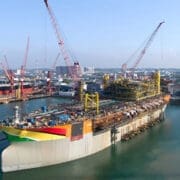
Guyana Set To Repay Billions In Oil Costs, But Full 50% Profit Still Uncertain – Exxon

By NAN Business Editor

News Americas, NEW YORK, NY, Fri. Mar. 20, 2026: Guyana is on track to fully repay ExxonMobil billions of dollars in oil development costs by the end of 2026, marking a major milestone in the country’s rapidly expanding oil economy.

But even as that financial burden clears, a critical question remains unanswered: When will Guyana actually receive its full 50% share of oil profits?

Guyana: Govt. Set To Repay Billions In Oil Costs But Full 50% Profit Still Uncertain Exxon Says

According to ExxonMobil Guyana President Alistair Routledge, the country could wipe out the remaining US$5 billion in recoverable costs this year – faster than originally projected – driven by rising global oil prices and increasing production levels.

Oil Boom Accelerates Cost Recovery

Guyana’s oil production, which began in 2019, has surged to approximately 900,000 barrels per day (bpd) and is expected to climb even higher with new projects coming online. At the same time, global oil prices – now hovering above US$100 per barrel, compared to earlier projections of $60 — are dramatically accelerating revenue flows.

Under the 2016 Production Sharing Agreement (PSA), ExxonMobil is allowed to recover up to 75% of oil revenues each month to cover its expenses before profits are split.

“With the current oil price environment, cost recovery could happen this year instead of 2027,” Routledge said.

That means Guyana, which has so far been receiving a smaller share of revenues – roughly 14.5% into its Natural Resource Fund – could soon see a significant increase in earnings.

The Big Question: When Does Guyana Get 50%?

Despite the positive outlook, ExxonMobil cannot confirm when Guyana will begin consistently receiving its full 50% share of profits, as outlined in the PSA.

Routledge emphasized that the actual percentage depends on multiple factors:

Oil prices

Production volumes

Ongoing project expenditures

“What exactly that percentage is depends on oil price, volume, and spending levels,” he explained.

This uncertainty has reignited debate about whether Guyana is truly maximizing its benefits from one of the most lucrative oil discoveries in recent history.

$40 Billion Already Spent – And More Coming

ExxonMobil has already invested approximately US$40 billion across seven approved offshore projects in the Stabroek Block.

Even as the cost bank shrinks, the company is pushing ahead with additional developments, including:

Longtail (8th project)

Haimara (9th project)

These projects will further boost production and revenues — but also introduce new costs into the system.

Still, Routledge insists that rising production will offset future expenses, ensuring Guyana does not return to accumulating large cost balances.

A High-Stakes Oil Future

Guyana’s rapid transformation into a global oil powerhouse is reshaping not just its economy, but the entire Caribbean energy landscape.

With production expected to exceed 1 million barrels per day in the coming years, the country is poised to become one of the top per capita oil producers in the world.

However, the structure of the PSA continues to draw scrutiny, particularly around:

Cost recovery limits

Profit-sharing timelines

Transparency in financial flows

Boom or Balance?

For now, Guyana stands at a pivotal moment.

On one hand, soaring oil prices and production gains are accelerating revenue and clearing billions in debt to ExxonMobil.

On the other, the timeline for fully realizing its 50% profit share remains uncertain, leaving many to question how much of the oil boom is truly benefiting the country – and when.

As global energy markets shift and new projects come online, the stakes for Guyana have never been higher.

The oil is flowing. The money is growing. But the full payoff is still a waiting game.

RELATED: Exxon Mobil Massive Guyana Expansion – New FPSO to Add 250,000 BPD As Cost Dispute Escalates