
Funeral Service for Lt. Stitchie Set for November 14 in Kingston
Lt. Stitchie’s family wants the send-off to be open to everyone. The announcement posted to his Instagram doesn’t stop at relatives and close friends.[#item_full_content]

Lt. Stitchie’s family wants the send-off to be open to everyone. The announcement posted to his Instagram doesn’t stop at relatives and close friends.[#item_full_content]

Capleton is back in the Grammy conversation, and this time he has a lot of company.[#item_full_content]

An ambulance pulled away from FCI Fort Dix around 1 in the morning on Saturday. By later that same morning, Sean “Diddy” Combs was reportedly back inside.[#item_full_content]

Long before the viral challenges and the platinum plaques, Grace Hamilton was a Portmore girl stepping onto the Sting stage in 2000 with something to prove.[#item_full_content]

News Americas Now, NY, NY, Mon. Oct. 12, 2026: The U.S. boat strikes on alleged drug-trafficking vessels in the Caribbean and Eastern Pacific has killed at least 238 people since it began in September 2025, according to data compiled by USNI News – with mounting evidence that Caribbean nationals are among those killed, not just the Venezuelan and Colombian crews the Trump administration has emphasized publicly.
The latest strike, on October 4 in the Caribbean, killed four people aboard a “go-fast vessel” that U.S. Southern Command said was operating along narco-trafficking routes, under the banner of Joint Task Force Southern Spear. It was the first Caribbean strike in 15 days; most of 2026’s strikes have shifted to the Eastern Pacific.
The campaign’s first strike, on September 1, 2025, targeted a vessel from San Juan de Unare, Venezuela, killing 11 people in the Caribbean. As of late March 2026, the Caribbean Sea had seen at least 15 vessels struck, with the Eastern Pacific accounting for 31 – though the Pentagon has not published a running death toll broken out by region, only the combined national figure now standing at 238.
What has largely gone unreported in U.S. coverage: Caribbean nationals are confirmed among the dead. A Guardian investigation that identified 16 of the campaign’s victims by name found two Trinidad and Tobago nationals – Chad Joseph and Rishi Samaroo – and one Saint Lucian, Ricky Joseph, among those killed in strikes since the campaign began. Two unidentified bodies believed linked to the very first strike washed ashore in Trinidad and Tobago in September 2025; families of two other missing men from Trinidad and Tobago came forward after an October 14, 2025 strike near the Venezuelan coast that killed six. Dozens of the campaign’s victims across both regions remain unidentified, and several families — including that of Colombian victim Alejandro Carranza – have publicly disputed that their relatives were trafficking drugs at all.
The strikes have drawn sharp rebuke internationally even as they’ve divided opinion within the Caribbean itself. Trinidad and Tobago Prime Minister Kamla Persad-Bissessar has publicly praised the U.S. strikes, saying the country wants drug traffickers killed. That stance sits uneasily against the fact that at least three Trinidadian and St. Lucian nationals — Chad Joseph, Rishi Samaroo, and Ricky Joseph — are now confirmed among the casualties of the very campaign she’s endorsed.
Internationally, the legal basis for the strikes remains fiercely contested. President Trump notified Congress in October 2025 that the U.S. considers itself in a “non-international armed conflict” with drug-trafficking crews designated as “unlawful combatants,” a framing that would allow lethal force without the due process a law-enforcement interdiction would require. UN human rights experts called the killings “extrajudicial executions” in October 2025, and UN High Commissioner for Human Rights Volker Türk formally demanded the U.S. halt the strikes and open an investigation. Colombia and Venezuela have filed a complaint with the Inter-American Commission on Human Rights, which held hearings on the matter in March 2026.
A Washington Post report alleged that Defense Secretary Pete Hegseth verbally ordered that no survivors be left after the September 2 strike, in which two survivors of an initial strike were reportedly killed in a follow-up strike minutes later. The Pentagon has called that reporting “completely false,” and a senior admiral told lawmakers there was no “kill them all” order – though several officials briefed on the matter said survivors appeared to be signaling for help or surrender before the second strike.
The Republican-controlled Senate has twice rejected resolutions that would have required congressional approval before further strikes, most recently on November 6, 2025 – hours before a strike killed three more people in the Caribbean.
The Trump administration has defended the campaign as a life-saving measure against fatal overdoses in the United States. But CDC data cited by USNI News show no measurable decline in U.S. overdose deaths since the strikes began over a year ago.
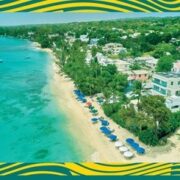
CAIRO, Oct. 12, 2026 /PRNewswire-HISPANIC PR WIRE/ — African Export-Import Bank (Afreximbank) (www.Afreximbank.com) has released its latest Barbados Country brief, offering a comprehensive and timely analysis of the island nation’s macroeconomic outlook. The brief explores key regional and international trade dynamics, financial sector developments and debt sustainability trends.
The brief highlights that Barbados has exhibited resilient growth following the Covid-19 pandemic, with GDP growth averaging 5.6% between 2021 and 2026, driven by a robust resurgence in tourism. Growth is forecast at 1.9% in 2026 and 2.3% in 2027, supported by resilient tourism inflows, a strong pipeline of investment projects and targeted government support for households and businesses.
Central to this transformation is Barbados’ IMF-backed Barbados Economic Recovery and Transformation (BERT) programme. The brief notes that the original BERT programme concluded successfully in 2025, with the IMF Executive Board approving a new 36-month precautionary Stand-By Arrangement of USD257 million in June 2026 to support the next phase of structural reform. This reflects the international community’s confidence in Barbados’ policy track record and the market’s commitment to building a resilient and diversified economy.
This brief edition also explores the high-income island nation’s impressive fiscal consolidation. Public debt has declined from 104.1% of GDP at end-FY2023/24 to 96% of GDP at end-March 2026, backed by a primary fiscal surplus of 4.2% of GDP in FY2025/26. The government’s medium-term framework targets sustained primary surpluses of 3.5% of GDP, placing public debt on a firm trajectory towards the 60% of GDP anchor by FY2035/36. The IMF assesses the overall risk of sovereign stress as moderate, reflecting Barbados’ strong and consistent policy track record.
On trade, the brief points to a steadily strengthening external position. Total goods and services trade grew from USD4.1 billion in 2018 to USD5.5 billion in 2024, with further expansion to USD6.3 billion projected in 2026. Barbados’ services balance remains a key pillar of strength, underpinned by tourism inflows that grew 3.7% in the first quarter of 2026, bolstered by a 30% year-on-year jump in cruise ship arrivals.
The brief further highlights developments within Barbados’ deep and diversified financial sector. In June 2026, the Central Bank of Barbados launched BiMPay, a national instant payment system enabling round-the-clock settlements and broadening financial inclusion. This represents the latest in a series of measures to strengthen the efficiency and resilience of the country’s financial infrastructure.
Commenting on the brief, Dr Yemi Kale, Afreximbank’s Group Chief Economist and Managing Director, Research and Trade Intelligence, noted: “The findings highlight Barbados as a dynamic, reform-driven economy whose resilient fundamentals, stable governance and deepening regional ties position it as an increasingly compelling partner for trade finance and development cooperation across the Caribbean.”
Read more about the Afreximbank Country Brief on Barbados https://apo-opa.co/47NXZPE
Distributed by APO Group on behalf of Afreximbank.
Follow Afreximbank on:
X: https://apo-opa.co/4f1yTjE
Facebook: https://apo-opa.co/3R38D0b
LinkedIn: https://apo-opa.co/4f9bdKd
Instagram: https://apo-opa.co/44hnKq8
About Afreximbank:
African Export-Import Bank (Afreximbank) is a Pan-African multilateral financial institution mandated to finance and promote intra- and extra-African trade. For over 30 years, the Bank has been deploying innovative structures to deliver financing solutions that support the transformation of the structure of Africa’s trade, accelerating industrialisation and intra-regional trade, thereby boosting economic expansion in Africa. A stalwart supporter of the African Continental Free Trade Agreement (AfCFTA), Afreximbank has launched a Pan-African Payment and Settlement System (PAPSS) that was adopted by the African Union (AU) as the payment and settlement platform to underpin the implementation of the AfCFTA. Working with the AfCFTA Secretariat and the AU, the Bank has set up a US$10 billion Adjustment Fund to support countries effectively participating in the AfCFTA. At the end of December 2025, Afreximbank’s total assets and contingencies stood at over US$48.5 billion, and its shareholder funds amounted to US$8.4 billion. Afreximbank has investment grade ratings assigned by China Chengxin International Credit Rating Co., Ltd (CCXI) (AAA), GCR (A), Japan Credit Rating Agency (JCR) (A-), Moody’s (Baa2) and S&P Global Ratings (BBB+). The Bank is headquartered in Cairo, Egypt. Afreximbank has evolved into a group entity comprising the Bank, its equity impact fund subsidiary called the Fund for Export Development Africa (FEDA), and its insurance management subsidiary, AfrexInsure (together, “the Group”). The Bank is headquartered in Cairo, Egypt.
For more information, visit: www.Afreximbank.com
GEORGETOWN, Guyana (Oct. 11, 2026) — The Caribbean Tourism Organization (CTO) has announced that Antigua and Barbuda will host the 2027 State of the Tourism Industry Conference (SOTIC) Oct. 4-8, 2027, bringing the region’s leading tourism forum to the twin-island nation.
The announcement was made during the final day of SOTIC 2026 in Georgetown, Guyana, where tourism ministers, commissioners and directors of tourism, private-sector executives, regional and international partners, academics, media, young people and other industry stakeholders gathered to examine the issues shaping Caribbean tourism.
“Antigua and Barbuda has demonstrated a strong commitment to tourism development and regional collaboration, and we look forward to bringing the Caribbean tourism community together there for SOTIC 2027,” said Dona Regis-Prosper, secretary-general and CEO of CTO. “Each SOTIC gives us an important opportunity to examine the issues affecting our industry, share knowledge and strengthen the partnerships that will help Caribbean tourism remain competitive, sustainable and inclusive.”
Charles “Max” Fernandez, Antigua and Barbuda’s minister of tourism, civil aviation, transportation and investments and the newly elected CTO chairman, welcomed the announcement, saying the destination looks forward to hosting tourism leaders and partners from across the region and beyond.
“Antigua and Barbuda is honored to welcome the Caribbean tourism community for SOTIC 2027,” Fernandez said. “We look forward to sharing the warmth and hospitality of our people while providing a setting for meaningful dialogue about the opportunities and challenges ahead.
“Hosting SOTIC will also allow us to showcase the continued evolution and advancement of our tourism product and the experiences that distinguish our twin-island destination. We are deeply committed to the Caribbean and to working with our regional partners to strengthen tourism as a force for shared prosperity, resilience and opportunity across our region.”
“We are excited to welcome SOTIC to Antigua and Barbuda and to give delegates an opportunity to experience our destination while engaging in important conversations about the future of Caribbean tourism,” said Colin James, CEO of the Antigua and Barbuda Tourism Authority and chair of the CTO Board of Directors. “SOTIC brings together many of the people shaping tourism across our region, and we look forward to creating an environment that encourages collaboration, fresh thinking and meaningful connections while showcasing the people, culture and experiences that make Antigua and Barbuda distinctive.”
Regis-Prosper thanked the government of Guyana and its tourism partners for hosting SOTIC 2026 and said the transition to Antigua and Barbuda reflects CTO’s continued commitment to taking its flagship conference across the region.
Additional information on SOTIC 2027, including the conference theme, program, registration and accommodations, will be announced in the coming months.
SOTIC 2026 was supported by official conference partners Amadeus and the Inter-American Development Bank, Tourism Intelligence Awards sponsor ASM Global Route Development, contributing sponsors the Association of Value Airlines, Digicel Business and Atlantic Suites Hotel, Youth Congress sponsor Carnival Corporation, and official airline partner interCaribbean Airways.

Three nights in the Bronx just earned Jay-Z more than most rap tours make in a full year on the road.[#item_full_content]

Drake’s fight over “Not Like Us” has picked up some unexpected opponents along the way. Outside legal scholars and social scientists have filed briefs backing Universal Music Group, weighing in on artistic expression and how rap lyrics should be read.[#item_full_content]

For a record that spent most of the last decade missing from streaming services, Greetings From California has had a strange afterlife.[#item_full_content]