UK cuts taxes, boosts spending, accelerating pound’s slide Loop Jamaica

Black Immigrant Daily News

The content originally appeared on: Jamaica News Loop News

LONDON (AP) — The United Kingdom’s new government outlined plans Friday to cut taxes and boost spending in an effort to bolster the faltering economy, but the high-risk moves sparked concerns that increased public borrowing will worsen a cost-of-living crisis and sent the British pound on its biggest one-day drop in 2 1/2 years.

Treasury chief Kwasi Kwarteng announced sweeping tax cuts that he said would boost economic growth and generate increased revenue without introducing corresponding spending reductions. He also said previously announced plans to cap soaring energy bills for homes and businesses would be financed through borrowing.

Kwarteng offered few details on the costs of the program or its impact on the government’s own targets for reducing deficits and borrowing, but one independent analysis expected it to cost taxpayers 190 billion pounds ($207 billion) this fiscal year.

It triggered the pound’s biggest drop against the U.S. dollar since March 18, 2020, when then-Prime Minister Boris Johnson announced the first nationwide lockdown to control the spread of COVID-19. The British currency fell more than 3% to as low as $1.0899 in afternoon trading in London, from 1.1255 on Thursday.

Investors are concerned that government lacks a “coherent policy” at a time when the economy is facing “immense inflationary pressures,” said Susannah Streeter, senior investment and markets analyst at Hargreaves Lansdown.

“I think Kwasi Kwarteng really set off fireworks with his budget,? Streeter told The Associated Press. “It was much bigger and bolder than expected. But the real concern on financial markets is that these widespread tax cuts are unfunded, they’re going to add to the government’s debt burden.?

Prime Minister Liz Truss, who took office less than three weeks ago, is racing to combat inflation at a nearly 40-year high of 9.9% and head off a prolonged recession. Facing a general election in two years, she needs to deliver results quickly.

The government’s program offers immediate help for homes and businesses struggling with soaring energy costs while betting that lower taxes and reduced red tape will spur economic growth and increase tax revenue in coming years.

“We need a new approach for a new era, focused on growth,” Kwarteng told lawmakers in the House of Commons.

But opponents accuse the government of dodging scrutiny by rolling out a major shift in economic policy without the normal analysis from the independent Office for Budget Responsibility. Kwarteng said the office would publish a full economic and fiscal forecast before the end of the year.

The opposition Labour Party attacked the plan for favoring the interests of business over working people and failing to provide any figures on its impact on government fiscal targets.

“It is a budget without figures, a menu without prices,” said Rachel Reeves, Labour’s spokeswoman on Treasury issues. “What has the chancellor got to hide?”

The British economy has foundered for the past three months as Truss’ center-right Conservative Party staged an internal contest to replace Johnson, who stepped down after a series of scandals.

That left the country with a caretaker government unable to introduce new policies to shield consumers from soaring energy prices, which are fueling inflation and curbing economic growth. The Bank of England on Thursday forecast that gross domestic product would shrink for a second consecutive quarter in the three months ending Sept. 30, an informal definition of recession.

Since taking office, Truss announced plans to cap energy prices for both consumers and business that are expected to cost taxpayers more than 150 billion pounds ($166 billion).

Inspired by Margaret Thatcher’s small-state, free-market economics, she is also pressing ahead with her campaign promise to boost economic growth by cutting taxes and reducing red tape. This will benefit everyone, she argues, by spurring investment, creating jobs and generating more tax revenue.

The so-called mini-budget unveiled Friday reverses many of the initiatives announced by Johnson and his Conservative predecessors, who have led Britain for the past 12 years.

For example, Kwarteng announced that he was canceling an increase in national insurance taxes that Johnson introduced in May to boost spending on health and social care. Kwarteng said the government would maintain the expected level of funding for the National Health Service — but he didn’t say how.

Kwarteng also said the government would cut the basic rate of income tax to 19% next year from 20%. The top rate will drop to 40% from 45%. In addition, he canceled a planned 6 percentage point increase in the corporate tax rate, leaving it at 19%.

“This was the biggest tax-cutting event since 1972, it is not very mini,” said Paul Johnson, director of the Institute for Fiscal Studies, an independent think tank that scrutinizes government spending. “It is half a century since we have seen tax cuts announced on this scale.”

Truss declared this week that she was ready to make “unpopular decisions”such as removing a cap on bankers’ bonuses to attract jobs and investment.

On Friday, Kwarteng announced new “investment zones” across England where the government will offer tax cuts for businesses and help create jobs. He also said the government would accelerate dozens of major new infrastructure projects, including in transportation, telecommunications and energy.

Truss’ overall program runs counter to the views of many Conservatives, who believe the government shouldn’t rack up huge debts that taxpayers will eventually have to pay.

Reeves, of the Labour Party, criticized the government for expecting taxpayers to foot the bill, rather than increasing a tax on the windfall profits of energy producers benefiting from the jump in oil and natural gas pricestriggered by Russia’s war in Ukraine.

While Kwarteng denied that the government was gambling on a “dash for growth,” many economists said it was taking a huge risk by allowing borrowing to balloon while the economy is weak and inflation is high.

The IFS has estimated that Truss’ policies will push borrowing to 190 billion pounds this fiscal year, compared with the 99 billion pounds that the Office for Budget Responsibility forecast in March. While borrowing is expected to decline over the next four years, it will remain above the previous forecast throughout the period, the IFS said.

As a result, government debt will rise to about 94% of GDP by the 2026-27 fiscal year, compared with the March OBR forecast of 81%, the IFS said.

To offset that increase, the government’s policies would have to achieve an additional 0.7% increase in economic output every year for the next five years, according to the IFS.

“If the government were to achieve this feat and get that extra growth, it would be either a stroke of extraordinarily good luck or a huge policy success,” Isabel Stockton, an IFS economist, said Thursday.

By DANICA KIRKA, JILL LAWLESS and SYLVIA HUI

NewsAmericasNow.com

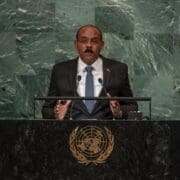
Hon. Gaston Browne Statement at the 77th Session of the UN General Assembly 23 September 2022

Black Immigrant Daily News

The content originally appeared on: Antigua News Room
Gaston Alphonso Browne, Prime Minister and Minister for Finance, Corporate Governance and Public Private Partnerships of Antigua and Barbuda, addresses the general debate of the General Assembly’s seventy-seventh session.

GOVERNMENT OF ANTIGUA AND BARBUDA

Statement by The Honourable Gaston Browne Prime Minister of Antigua and Barbuda at the 77th Session of the UN General Assembly New York on September 23rd, 2022

Check against delivery

Your Excellency, Ambassador Csaba Kőrösi, President of this 77th Session of the UN General AssemblyYour Excellency, António Guterres, Secretary-GeneralDistinguished DelegatesLadies and Gentlemen

As high representatives of our world’s nations gather at this 77th Session of the UN General Assembly, our peoples would have been right to expect greater achievement of global peace and prosperous development.

It has not happened.

Seventy-seven years have passed since the leaders of the world’s big powers promised the international community that they would: “save succeeding generations from the scourge of war” and “promote social progress and better standards of life in larger freedom”.

The five victorious nations of the Second World War assigned to themselves, permanent membership of the UN Security Council.

They assumed the responsibility to implement the promises of the Charter not only in their own interests, but also on behalf of the many

nations, which did not choose them, and which had no option but to trust them.

Mr. President, the state of today’s world does not readily inspire such trust.

Instead, it arouses an overwhelming sense of disappointment.

It is a disappointment, that small countries, such as mine, would be less than candid, less than honest, if we did not convey our sentiments to the permanent members of the Security Council.

We are obliged to ask: What happened to the commitments, which were chiseled into the UN Charter, as binding obligations on all, but particularly those in the Security Council, who took to themselves the task of guardianship of peace and development?

Lest we have forgotten; let my small nation remind all here gathered of those commitments, for they are commitments we took seriously and expected to be fulfilled.

Commitments:

“to practice tolerance and live together in peace with one another as good neighbours, and to unite our strength to maintain international peace and security, and to ensure, by the acceptance of principles and the institution of methods, that armed force shall not be used, save in the common interest, and to employ international machinery for the promotion of the economic and social advancement of all peoples”.

Mr. President, our world is now gripped in a fearful atmosphere of economic and financial instability, and the worry of expanded warfare.

Every nation, without exception, is confronting escalating inflation, food shortages, high prices, and increasing debt.

But the worst effects are being suffered by the poor and powerless, the small and exposed.

There should be no doubt, in this Assembly, that trust in the Security Council has been diminished by the actions taken within its membership.

Many small and defenseless nations now feel gravely unprotected by the weakening of the international legal order, which was our first, last and only defense against aggression.

Even worse, our development prospects and our hard work to rise up from poverty, are being retarded by the high prices and severe disruptions that began with the COVID-19 pandemic, and that are being exacerbated by the war on Ukraine.

Therefore, Mr. President, we call on the Permanent Members of the Security Council to recommit themselves to the role, which they assumed and pledged to safeguard.

Peace must be restored for the world’s sake… and soon.

It is the Permanent Members of the Security Council – all of them – which have that primary obligation.

To abandon that obligation in the pursuit of selfish desires, legitimizes the call for reform and an expansion of the Security Council.

Concerted action by the Security Council is necessary to prevent major human rights violations, stop ongoing breaches and address global conflicts.

If this fails to happen with the urgency that is required, it may call for the General Assembly to initiate its own global actions, and to authorize their implementation.

I do not anticipate that this call for action by the General Assembly would be welcomed by the Permanent Members of the Security Council.

However, each of them must understand the deep concern of other nations when the Council is dysfunctional on issues whose effects are global.

Peace in the world is not a commodity to be traded; it is a right to be protected in the interest of all.

This observation is also strongly pertinent to the issue of Climate Change, which poses an existential threat to small island states and countries with low-lying coastlines.

We will all recall that, last December, due to a veto cast by one of the 5 Permanent Members, the Security Council had to reject a draft resolution, framing the problem of climate change as a threat to international peace and security.

That draft resolution was co-sponsored by one hundred and thirteen member states, representing the second highest number of countries to support a draft resolution in the history of the Security Council.

Mr. President, is it fair that the evidence-based resolution, which emanated from the concerns and anxieties of so large a host of nations, should be vetoed by a single country?

Climate Change remains the single greatest, common threat to all mankind.

More so, for small island developing states (SIDS), which lack the financial resources to adapt to mortal shocks, and to rebuild in their aftermath.

SIDS have a legitimate and urgent concern.

For although, collectively, we contribute the least to CO2 emissions – a mere 0.2% – we are the greatest victims, not only because of unattended loss and damage to our lives and livelihoods, but also because the very existence of our countries is fatally endangered.

Mr. President, the effects of global warming are universal; they reach every country.

But it is vital that we all understand that, in as much as global warming is universal, its damaging effects are not the same; the burden falls mostly on the poor in small developing nations, such as mine.

That is why, as the representative of the people of Antigua and Barbuda, I must stand up for their rights; including their right to livelihoods and to life.

My voice cannot be stilled while danger gathers in the skies above my small and vulnerable country.

I have no choice but to fight unrelentingly for climate justice.

Distinguished Colleagues, many are beginning to lose faith in the Security Council.

We must not be forced to lose faith also in the collective authority of this UN General Assembly.

That is why my government urges this Assembly to act on behalf of the smallest and most powerless among us, and in the interest of global justice.

Distinguished colleagues, an opportunity looms for action.

It is the Resolution being sought by Vanuatu from this Assembly, in the coming months: to request the International Court of Justice to give an advisory opinion that would clarify the legal obligations of states to protect human rights and environments from climate change.

If our nations are indeed gravely concerned about the ravages of climate change, which has spared no country, they will support the Vanuatu request.

Not to support the Vanuatu Resolution would be a vote to circumvent a decision on the legal obligations of each nation.

Not to support Vanuatu would be a vote to prolong this period of abuse, thereby imperiling human civilization.

I also draw attention to an initiative taken by my own country, Antigua and Barbuda, in solidarity with Tuvalu and Palau.

We are 3 small island states which have been buffeted and battered by the effects of Climate Change.

On the eve of COP 26 in Glasgow last year, we launched, The Commission of Small Island States on Climate Change and international Law (COSIS).

The Commission’s purpose is to develop and implement fair and just global environmental norms and practices.

In this connection, it will seek an opinion from the International Tribunal of the Law of the Sea, regarding the binding obligations of its member states, to mitigate the effects of their greenhouse gas emissions, or to pay for the loss and damage they cause.

This effort is separate from, but complementary to, the Vanuatu initiative.

Mr. President, our small countries have talked ourselves hoarse since the 1980s, pointing to the parlous circumstances into which our people and our countries are being plunged.

But with little avail.

Mr. President,Billions were pledged in climate finance and not delivered.Promises were repeated, year after year, each with a zealousness that, on the evidence, was meant to placate and divert, but not to perform and deliver, commensurate with the loss suffered and the damage caused.

The stage now seems set for this year’s COP 27 to fail, despite the genuine efforts of some industrialized nations, to address the grave concerns of the majority of the world’s people to turn climate change into Climate action.

Mr. President, the Group of 20 countries, meeting on August 31st, failed to produce a joint statement on Climate Change, sending an ominous signal that, yet again, the meeting of the COP in November will be long on words, but very short on deeds.

At the COP-26 meeting in Glasgow last year, world leaders acknowledged that their pledges to reduce global greenhouse gas emissions have not met the previously agreed goal of pursuing efforts to limit warming to 1.5 degrees Celsius.

They vowed to do better.

It appears now, that they will not.

And this is despite the fact that, as Secretary-General Guterres observed, we are in a climate emergency that is — literally — setting our planet on fire.

Therefore, small states individually, and collectively under the Antigua and Barbuda’s Chairmanship of AOSIS, will attend COP 27 in Egypt and argue strenuously to establish a new loss and damage response fund.

But we recognize that reliance on the conscience of others will not be enough and may not produce the results we – and the world – urgently need.

We have been patient.We have urged.We have pleaded.We have begged.

And, yet, year after year, small island states bear the overwhelming burden of Climate Change’s catastrophic effects, including persistent destruction, repeated costs of rebuilding and huge debts to finance resilience.

This injustice must end.

We insist that those States most responsible for this dire situation respect their obligations to stop global warming and to provide compensation to its victims.

We will engage fully and constructively at COP 27, we will also use all means necessary, to pursue the objectives of the Commission of Small States, and we invite all countries, whose people’s lives and livelihoods are at grave risk, to join us.

Mr. President, while I have focused my statement, so far, on the damaging effects of Climate Change on SIDS, let it not be believed that the industrialized nations -, the rich and the powerful – have been immune.

The projections of our common future are deeply distressing.In this year alone, temperatures rose above 40° Celsius in Britain, Spain, France and Portugal.

China recorded the most severe heatwave anywhere on Earth.

Floods hit Pakistan with nearly 800% more rainfall than normal, affecting tens of millions of people and leaving a third of the country under water.

Winter temperatures in the southern hemisphere rose above 45° Celsius in South America, while temperatures in some parts of Antarctica were almost 40° Celsius higher than average.

Last year, natural disasters in the U.S. inflicted an estimated $145 billion in damage and killed nearly 700 people.

This year was no better.

So, Mr. President, even if some of the governments of the industrialized nations remain reluctant to curb greenhouse gas emissions for the sake of the most vulnerable globally, they should be motivated by the perils for their own people.

We are all in this together.

While SIDS will suffer more swiftly and greater, no nation will escape.

A global, all of society response is required to effectively combat climate change.

I therefore, plead with all governments to act on the evidence and to do all in their power to curb greenhouse gas emissions, to stop climate change.

Mr. President, I turn now to other international conditions which have unfairly delayed the economic development and social progress of SIDS.

I will start with the Cuban embargo imposed by the United States that is hampering the Cuban people in their collective efforts to achieve economic and social development.

This unjust embargo is seriously undermining Cuba’s efforts to eliminate poverty and improve the living standards of its people.

The government of Antigua and Barbuda urges the U.S. to immediately lift the sixty-year economic embargo against Cuba and allow the 11 million Cubans an opportunity to be prosperous and a fair chance at achieving the sustainable development goals.

Antigua & Barbuda looks forward to the normalization of relations between the United States and Venezuela in the interest of hemispheric peace and prosperity.

Mr. President, the incongruous criterion applied by International Financial and Development Institutions, and the governments that control their policies; to classify some SIDS, such as mine, in the same category as the United States, Japan, and Germany, because of the skewed measurement of high income per capita, is one such condition that is undermining our development.

For decades, my small country has been denied access to concessional financing because of this single criterion.

The criterion of high per capita income also fails to take account of the structural limitations to include, limited natural resources, and the reality that we are compelled to import a large percentage of goods for consumption.

For our people to survive and to pay for the high costs of even basic imports, their earning capacity must align with the costs they confront.

In this connection, my Government is thankful to the former President of this General Assembly, His Excellency Abdulla Shahid of The Maldives, for establishing the High-Level Panel of Experts to, inter alia, provide recommendations on the potential development, finalization and use of a Multidimensional Vulnerability Index (MVI) for Small Island Developing States.

We also thank Secretary-General Guterres, for the proactive stance he has taken on the MVI, in finding lasting solutions to the barriers that prevents access to concessional financing to SIDS.

I was honoured, on behalf of the people of Antigua and Barbuda, to be appointed as a co-Chair of the Expert Panel, along with the former Prime Minister of Norway, Her Excellency Ms. Erna Solberg.

It is our intention that the report and recommendations of the Panel will be factual and evidenced based and it will open the way for indicators that better reflect the vulnerabilities and challenges faced by Small Island Developing States.

For too long, the persistent use of per capita income, as the primary criterion for determining access to concessional or grant resources, has denied small and vulnerable countries, such as mine, access to concessional financing and tailored debt relief measures.

I call on this General Assembly, and all its participants, to seize the opportunity to correct a wrong that has persisted far too long, and that has punished middle and high-income SIDS, that have performed well economically and politically, despite the odds that are stacked against them.

It is time to stop penalizing SIDS for good performance.

It is time to reward and incentivize them so that they can improve their accomplishments, achieve the SDGs and their ability to respond to endogenous and exogenous shocks.

Mr. President, a consequence of the disasters spawned by Climate Change, and the locked door to concessional financing for many SIDS, is high unsustainable debt.

Many of our countries have been forced to the commercial lending market to borrow in order to rebuild after disasters.

We were also forced to do so after the economic devastation caused by the COVID-19 pandemic.

The international financial institutions, and the governments that control them, are well aware that our debt burden is unsustainable, and yet, the Paris Club will not reschedule debt or engage about ways to ease the burden.

Our options are more debt, at more onerous interest rates, from the commercial lending market, or to surrender, literally, burdensome taxing conditions on our people.

It is no choice at all; one is as difficult as the other, and each consigns our small nations to struggle.

Many of us have done so; and we will continue to do so to survive, and not to submit to demands to make the lives of our people harder.

Mr. President

The international community bears responsibility for these blights upon our small countries which we did not create.

The time is upon us to change the direction in how the international community responds to SIDS.

In 2024, Antigua and Barbuda will host the 4th UN International Conference for SIDS.

A Conference that must deliver for ALL Small Island Developing States.

A Conference unlike any other. We can’t do this alone, we need each and every Member State starting now, to begin the process of recommitting to SIDS and offer lasting solutions to our needs.

Mr. President, Excellencies,We did not start wars.We created no pandemic.We did not cause Climate Change.

Is it not right for the rich nations of the world to contribute to alleviating the problems that have been thrusted upon small developing states?

Mr. President, the theme of this General Assembly is: “A Watershed moment; transformative solutions to interlocking challenges”.

This Assembly is indeed meeting at a Watershed moment.

The world is dominated now, not by a conflict in the developing world, but very much in the developed world, and in an expression of the underlying suspicions that have continued to exist between the nations of the East and the West.

The effects of the conflict, exposed by the war on Ukraine, have reached every nation.

Therefore, we have a legitimate interest in it, and a right to call on all the parties – Russia, on the one hand and NATO and European Union countries on the other – to employ their diplomatic resources and skills to end this globally debilitating war.

Interlocked with the severe challenges of the conflict are Climate Change, the lingering economic effects of the COVID-19 pandemic, growing economic inequality between nations, high debt burdens without relief, and persistent poverty.

These interconnected challenges demand meaningful international cooperation; not just words but deeds.

At this watershed moment, I plead with this Assembly: please, let us turn words into collective action.

Thank you.

CLICK HERE TO JOIN OUR WHATSAPP GROUP

NewsAmericasNow.com

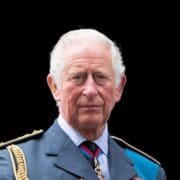
No immediate plans to put the King’s face on the EC Dollar

Black Immigrant Daily News

The content originally appeared on: Antigua News Room


No Immediate Plans to Make Changes to EC Notes and Coins


23 September 2022, Basseterre, Saint Christopher (St Kitts) and Nevis – The Governor of the Eastern Caribbean Central Bank (ECCB) Timothy N. J. Antoine has advised that there are no immediate plans to make changes to the EC polymer notes and coins following the death of Queen Elizabeth the II.

Responding to a question during a live interview ‘Conversation with the Governor’ in Saint Vincent and the Grenadines, Governor Antoine said “nothing happens right now.” He further explained that there are three to four years of inventory or stock of EC polymer notes.

The Governor however noted that the passing of the Queen raises the question as to ‘what happens next?’ He said a conversation needs to take place where the region needs to decide ‘where we want to take our currency.’

Governor Antoine acknowledged that there are people who feel that “its time to move in a different direction and rather than continuing with the British Sovereign, that we should be looking at using our own landmarks and our own heroes.” The Governor said that he looks forward to the conversation, noting that in time, a determination will be made.

CLICK HERE TO JOIN OUR WHATSAPP GROUP

NewsAmericasNow.com
Chief Secretary proposes Tobago whistle-blower council

Black Immigrant Daily News

The content originally appeared on: Trinidad and Tobago Newsday

News

Chief Secretary Farley Augustine – THA Info Dept

A whistle-blower council is proposed to be established in the Tobago House of Assembly.

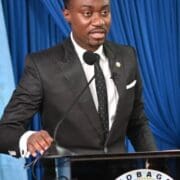
THA Chief Secretary Farley Augustine made the announcement at the 9th sitting of the 2021-2025 assembly on Thursday at the Shaw Park Cultural Complex.

Augustine said: “I wish to ask of this House, ask of the executive council that we eventually agree to set up our own whistle-blower system in Tobago.”

Augustine invited Minority Leader Kelvon Morris to join his discussions on the proposed legislation.

Additionally, his recommendation is that the system would be run by a core council of seven people with the relevant expertise.

“We must include, among the seven, a trained investigator – someone who either retired or is active in service in the TT police service, a certified auditor or financial analyst, an experienced attorney-at-law, a member of the clergy and any other three.”

He said the council should also be furnished with a web-based software “to allow people to anonymously, to secretly submit any claims and accompany documentary evidence, without their security being compromised.”

NewsAmericasNow.com

Relatives of missing Freeport woman cling to hope

Black Immigrant Daily News

The content originally appeared on: Trinidad and Tobago Newsday

News

Marissa Edwards –

Despite growing concern, relatives of missing mother Marissa Edwards remain hopeful that she will be found alive,

Speaking with Newsday on Friday, one of Edwards’ siblings said the family’s hope is between ten and 20 per cent and that is enough to hold on to.

“We are hoping for the best. Hopefully she is alive somewhere in a house. There is the fear that she could be dead. No one wants to accept that, but the evidence is pointing to that.”

Edwards, an administrative clerk at the UWI’s Faculty of Medicine, left home at John Eli Road, Freeport on Sunday night after telling relatives she was going out with someone well known to her for drinks. At the time she was wearing a black and purple dress, black sandals and black clutch purse.

Her cellphone was tracked and last signalled from a gas station around 4 am on Monday. The vehicle belonging to the person she went to have drinks with was found abandoned in Tabaquite, which led both police and the Hunters Association to search the surrounding area for her twice in five days.

Relatives said they have had no contact with the owner of the vehicle since Monday, as the person’s cellphone has been off since then. They also searched a piece of land in Freeport and Waterloo as they tracked various places where her cellphone was tracked.

Edwards’ co-workers said they are worried about her disappearance. They too are hopeful that she is safe, adding that her not showing up for work was alarming to everyone.

Relatives said they are grateful for the support they have received from police since reporting her disappearance.

“The police are really helping and doing a great job of updating us and searching with us” a relative said.

While the family is hopeful, they are bracing for the worst.

“Until we get that reality check, we have hope. Every night at our home come like is a wake we are having, and it is really torture for the family.”

Relatives said only prayers have kept them stable as they chase every lead they get. The 39-year-old mother of one is her parents’ first daughter and sixth of their 11 children.

They are pleading with anyone who may be holding her against her will to release her. Their message to her was that she is loved, missed and they want her back.

Anyone with information about Edwards’ whereabouts is asked to contact the nearest police station or call 555 or 800-TIPS.

NewsAmericasNow.com

Augustine to sue Duke for defamation, reaffirms PDP loyalty

Black Immigrant Daily News

The content originally appeared on: Trinidad and Tobago Newsday

News

PDP political leader Watson Duke, left, and then deputy leader Farley Augustine at the launch of the Trinidad arm of the party earlier this year. – Photo by Jeff Meyers

TOBAGO House of Assembly (THA) Chief Secretary Farley Augustine has made good on his threat to sue Progressive Democratic Patriots leader Watson Duke.

He has also called on Duke to “calm down,” “rethink his position,” and not allow himself to be “undone by superficial emotions.”

Augustine was at loggerheads with the former THA deputy chief secretary over the funding for the Roxborough Folk Performers in New York. Duke removed Augustine as a PDP deputy political leader, and later resigned as deputy chief secretary.

On Friday, attorneys for the Chief Secretary, led by King’s Counsel Anand Beharrylal, wrote to Duke to inform him of Augustine’s intended legal action for defamation for “false and malicious” statements at a PDP press conference in Trinidad on September 15.

Attorney Kiel Taklalsingh called on Duke to issue a full and unequivocal retraction of the statements, in writing, in each of the three daily newspapers. He said Augustine also wanted an apology – in person – at a press conference, and in writing, to be posted on Duke’s Facebook page.

He gave Duke 14 days to remove the offending video from the social media platform and not repeat any of the statements as well as make an offer for monetary compensation for the injury to Augustine’s reputation and feelings.

In the letter, Takalsingh said he was instructed to remind the PDP leader that he committed himself to a life of public service.

He said at one time the two men shared the same “progressive views” to improve the lives of the people of Tobago.

Taklalsingh said that can only be successfully achieved if Duke and Augustine remained brothers “in a common cause” and if “governance is by consent and consensus and not the singular view of a supreme leader of a party.”

In directly addressing the alleged defamatory statements, Taklalsingh said the allegations were calculated to disparage Augustine and imputed he committed crimes. He said his client vehemently denied all allegations.

“…Serious harm to our client’s reputation has been, must have been and was likely to be caused by your defamatory statement and my client has been the recipient of abuse and ridicule due to the statement you made,” Duke was told.

Taklalsingh said since the PDP leader has indicated he intended to persist with his statements, and if it continues, then Augustine will go to court for an injunction.

“Of course, if you have any credible, factual and truthful evidence to support the defamatory statements you have made then you ought to identify and present that evidence in response to this letter; and you are warned that fabricated evidence does not constitute credible evidence, the presentation of which could constitute in and of itself a criminal offence.”

The attorney said Duke’s press conference was reported in the media and allegations of corruption made there triggered further publicity from others, including political personalities.

“Your statement was falsely and maliciously published and was calculated to damage and defame our client in his personal capacity, professional capacity and as Chief Secretary of the Tobago House of Assembly,” Taklalsingh said.

Taklalsingh told Duke that while the chief secretary was mindful of the cut and thrust of the political gayelle in Trinidad and Tobago, where tempers often flared and things are said which are later regretted, that did not give him the licence to make spurious allegations to gain quick political points.

“For the avoidance of doubt, our client refutes entirely any suggestion of impropriety as has been alleged against him by you and would remind you that he has the right to preserve his good name, character and reputation, which he has worked long and hard to establish in the service of the people of Tobago.”

The 16-page pre-action protocol letter provided a transcript of the claims made by Duke and highlighted the defamatory aspects of each of them. In all, there are ten statements complained of by Augustine.

On the issue of funding of the Roxborough group, Taklalsingh said while there was nothing preventing any private organisation from travelling to a foreign country to showcase Tobago’s culture, it did not “automatically justify the payment of money, on-demand, from public funds.”

“Again, proper procedures must be followed to determine whether monies could be paid for what is essentially a private venture and if so, how much should be paid.

“As such, any issue you have raised in relation to paying money to the Roxborough Folk Performers Company should be seen in the context of transparency, accountability and following proper procedures in relation to the disbursement of public funds.”

Taklalsingh said Augustine remained resolute that proper procedures must be followed in the public’s interest.

He also told Duke, “Whilst our client recognises that you are no stranger to the criminal courts, I am instructed to urge you to consider with great care what you may say about our client in the future and to demonstrate a better sense of accuracy and restraint in any statement you may choose to make.”

He said Augustine remained a “loyal member” of the PDP and the THA and did “not wish to engage in meaningless and petty political squabbles with anyone,” including Duke, to distract from the “important progressive work” that has started in the interest of the people of Tobago.”

Also representing Augustine are attorneys Stefan Ramkissoon and Rhea Khan.

NewsAmericasNow.com

Woodland residents clean up after flood

Black Immigrant Daily News

The content originally appeared on: Trinidad and Tobago Newsday

News

Bobby Bansgopaul, a resident and poultry farmer of Pluck Road in Woodland speaks with Newsday, he said he lost a number of layers, including ducks, ducklings chickens and chics following heavy floodwaters that were still visible. – Photo
by Marvin Hamilton

PHOTOS: Marvin

In the aftermath of the New Cut Channel bursting its banks on Thursday, Woodland residents spent most of the day cleaning and assessing their expenses on Friday.

Poultry farmer Bobby Bansgopaul of the La Fortune/Pluck Road told Newsday the floodwater swept away a number of his animals.

“I lost about 30 layers (chicken), five ducks, and several ducklings in the water yesterday,” he said on Friday.

Because the area is low-lying, it frequently floods. Last month, the area was also flooded, and he said he lost about $5,000 worth of animals.

He believes the floodgates that regulate the flow of water from Woodland to the Gulf of Paria contribute to flooding.

“Sometimes the pump is working at only one gate. If more pumps work at the same time, the water will run out faster,” he said.

Another resident, Kanhai Dwarpaul, recalled that many years ago, the community was heavily involved in growing rice and watermelon.

“That has stopped. Now we do not need all that water as before,” he said.

He, too, believes that if the riverbanks are raised and floodgates properly monitored, flooding could be minimised.

Dwarpaul said that water in the channel should constantly be drained when the tides are low.

He added, “When a weather system is coming that would cause rain, the water would fill the lagoon and not the road. That is all, problem solved.”

He estimated 50 homes were affected by Thursday’s flooding.

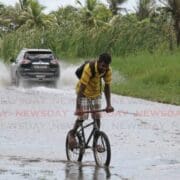
A man rides through flood waters in La Fortune village, Pluck Road in Woodland on Friday afternoon. Residents, who hopes the water subsides soon, said the area flooded significantly compared to the little rainfall. – Photo by Marvin Hamilton

“I have a tractor because when the water rises, not even a dump truck would not be able to pass, given the volume of water here,” he said.

There were also reports of street/flash and residential flooding in Barrackpore, Penal and Debe after the South Oropouche River breached its banks.

The 11.10 am Met Office update on Friday said the South Oropouche River was contained, and the threat of further riverine flooding had decreased considerably.

Some places were still waterlogged and were expected to improve gradually. However, isolated showers in the afternoon might have slowed this process.

The office called on the public to monitor the weather and river/water levels from official sources.

It also called for them not to take unnecessary risks and to avoid driving or wading through floodwaters.

NewsAmericasNow.com

BWA receives US$350, 000 grant from USAID Loop Barbados

Black Immigrant Daily News

The content originally appeared on: Barbados News

The US Government, through the United States Agency for International Development Eastern and Southern Caribbean Mission (USAID/ESC), will provide a grant of USD $350,000 for groundwater monitoring equipment to support the Barbados Water Authority (BWA) in partnership with the Caribbean Institute of Meteorology and Hydrology (CIMH).

This initiative was announced at a September 21 meeting between Acting Prime Minister Santia Bradshaw and USAID/ESC Regional Representative Clinton D White. This program is part of the ongoing commitment by the United States to the people of Barbados to assist in mitigating and adapting to climate change.

As a water scarce country, Barbados faces habitually drought, which is intensified by less frequent rainfall, saline intrusion and an ageing water distributing infrastructure. These challenges make it difficult for the BWA to ensure basic water service island-wide.

Working with the CIMH, the BWA is establishing a network of groundwater monitoring stations that track water levels and quality, including salinity, in three communities.

Under the grant, approximately 20 stations will be added to this network, which will greatly improve BWA’s ability to monitor groundwater flows and will assist with the overall management of water service to the citizens of Barbados. Groundwater monitoring is part of a larger United States assistance program to Barbados and the region to build resilience to the effects of climate change.

In response to the announcement, Acting Prime Minister Bradshaw thanked USAID for the generous support and stated that, “it bears testament to the strong relationship and support for development between the Government of Barbados and the Government of the United States. The needs were heard and USAID responded in short order.”

USAID/ESC Regional Representative Clinton D. White noted, “This data collection and measurement that will result from the placement of the equipment is critical to evaluating the quantity and quality of groundwater and will provide BWA with information to make wise use of limited groundwater resources. It is an important step in ensuring that Barbados has a reliable water supply.”

NewsAmericasNow.com

Customs advises customers to clear cargo at port authority Loop Cayman Islands

Black Immigrant Daily News

The content originally appeared on: Cayman Compass
Loop News

2 hrs ago

Due to the projected path of the Tropical Depression and forecasted strengthening, Customs & Border Control Service (CBC) are encouraging importers who have cargo at the Port Authority Warehouse and CBC’s Transit Shed, to complete the import process and collect their cargo as soon as possible.

Office hours will resume as soon practicable after the all clear has been given.

Related Articles

More From

Cayman News

The National Hurricane Center reported on the morning of Friday, September 23, 2022 that Tropical Depression Nine is moving west-north-west at about 13 mph, with maximum sustained winds of 35 mph.

Cayman News

Plastic Free Cayman, Protect Our Future and other young people are expected to stage a protest outside the Government Administration Building on Friday afternoon, September 23.

The groups wil

Cayman News

OfReg is investigating the pricing practices of telecommunications service provider FLOW.

It has, so far, confirmed that FLOW overcharged all of its fixed line business customers from January 2019

Caribbean News

Hurricane Fiona bore down on the Dominican Republic Monday after knocking out the power grid and unleashing floods and landslides in Puerto Rico, where the governor said the damage was “catastrophic.”

Cayman News

The Cayman Islands Customs and Border Control Service (CBC) confirms that a vessel with six male migrants and one female migrant arrived in East End, off Morritts Tortuga Club at approximately 2:30am

Cayman News

The Cayman Islands Government has issued a Hurricane Alert for the Cayman Islands.

The Cayman Islands National Weather Service said it will continue to monitor the progress of this system.&nb

NewsAmericasNow.com

Expo ‘Wi Alakondre’ brengt ode aan overleden kunstenaar Soeki Irodikromo

Black Immigrant Daily News

The content originally appeared on: De Ware Tijd Online

Tekst en beeld Tascha Aveloo PARAMARIBO — Momenteel loopt de expositie ‘Wi Alakondre’, als onderdeel van het project ‘Alakondre: a

NewsAmericasNow.com