
Malie Donn’s ‘Van Cleef’ Cracks Apple Music Top 25 New York City at No. 15
Malie Donn is quietly doing something that most dancehall artists spend years chasing. His single “Van Cleef” has landed at No.

Malie Donn is quietly doing something that most dancehall artists spend years chasing. His single “Van Cleef” has landed at No.

Songs that sampled reggae are everywhere in popular music, yet listeners rarely trace those borrowed rhythms, vocals, and riddims back to their Jamaican roots.

Songs that sampled dancehall have shaped some of the biggest moments in mainstream pop and hip-hop history.
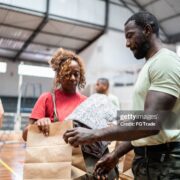
News Americas, NEW YORK, NY, Tues. Sept. 8, 2026: There is a particular kind of pain that comes with starting over in a new country while already carrying the weight of hunger. It is not always visible. It does not always look like homelessness, or someone standing on a corner asking for help, or a family with nothing at all. Sometimes it looks like a well-dressed parent with an accent, a degree, a dream, and a refrigerator that is too empty for comfort.
That is the reality many Afro-Caribbean immigrants know all too well.
The wider community is substantial. According to the Migration Policy Institute’s analysis of U.S. Census Bureau data, more than 9.1 million people in the United States were either born in the Caribbean or reported ancestry connected to a Caribbean country in 2023. By 2024, 5.3 million Caribbean immigrants lived in the United States, representing about 10 percent of the nation’s foreign-born population. This article focuses particularly on the Afro-Caribbean families whose experiences can disappear inside those larger numbers.
For many of us who came from parts of the Caribbean like Jamaica, migration was never just about movement. It was about survival, dignity, sacrifice, and the hope that if we left behind what was difficult, we might finally find something better. But one of the hardest truths to admit is that many immigrants do not arrive in America and suddenly step into abundance. They arrive with education, with discipline, with legal paperwork, with faith, and still find themselves hungry.
That contradiction deserves more attention than it gets.
The American imagination often paints immigration as a clean upward climb. Work hard. Stay out of trouble. Keep your head down. Sacrifice now and prosper later. But for many newly arrived legal immigrants, especially from the Afro-Caribbean community, the first chapter of life in America is not prosperity. It is pressure. It is trying to build a life while prices rise faster than your footing can settle.
And in today’s America, that pressure has become unbearable for many.
The cost of food has gone up. Rent has gone up. Utilities have gone up. Gas has gone up. Childcare remains brutal. Health insurance can feel like a luxury. A family can do everything “right” and still find itself making decisions that feel impossible. Do we buy enough groceries this week, or do we keep the lights on? Do we fill the tank so we can get to work, or do we buy meat, rice, produce, and milk? Do we pay rent in full, or stretch meals for a few more days and hope nobody notices the difference? These are not theoretical questions. These are household decisions being made in silence every day.
The national numbers show how widespread this pressure has become. The U.S. Department of Agriculture reported that 18.3 million households, or 13.7 percent of all U.S. households, experienced food insecurity at some point in 2024. Among households with children, the rate rose to 18.4 percent. For households living below the federal poverty line, it reached 39.4 percent. These figures do not isolate Caribbean families, which is part of the problem: the specific hunger experienced within Caribbean immigrant communities remains too easily buried inside broader national categories.
And what makes this especially painful for Afro-Caribbean immigrants is that many arrive already understanding what scarcity feels like. Hunger is not new to them. They know what it means to make a meal out of very little. They know what it means to hear adults say, “Mi full,” not because they are satisfied, but because there is not enough to go around. They know what it means to eat strategically, not joyfully. To save the best portion for the child. To drink water and sleep early. To stretch one pot across multiple days.
So, when they arrive in the United States, there is often a deep emotional wound in realizing that the place they believed would offer relief still requires the same painful calculations. That is one of the most under-discussed aspects of migration: the emotional violence of discovering that the promised land can still leave you hungry.
For Afro-Caribbean immigrants, food is not just food. It is culture. It is memory. It is identity. It is one of the few things that keeps you connected to home when everything around you has changed. A pot of rice and peas, steamed cabbage, curry chicken, boiled green banana, fried dumpling, soup on a Saturday, porridge in the morning, these are not small things. They are emotional anchors. They remind you who you are.
But when you are newly arrived and trying to survive, even cultural food can become inaccessible. You walk into an American grocery store and realize quickly that what is familiar is expensive, and what is cheap often does not nourish you in the same way. Fresh produce costs more. Traditional ingredients are harder to find unless you live near a Caribbean market, and even then, they are often overpriced. So many immigrant families are forced to substitute, cut corners, or settle. And over time, those substitutions do not just affect health. They affect identity. They affect the dignity of being able to feed your family in a way that feels whole.
This is why food insecurity among migrants cannot be reduced to empty cabinets alone. It is structural, yes, but it is also deeply emotional.
It affects how people parent. It affects how they sleep. It affects their stress, their self-worth, and their sense of stability. A mother who cannot provide enough food for her children does not just feel financially strained. She often feels ashamed. A father who left his country to build a better life but still has to count slices of bread or skip meals can carry that disappointment like a private funeral. Children feel it too, even when adults try to hide it. They notice when portions get smaller. They notice when dinner becomes repetitive. They notice when the adults in the house say they are not hungry.
And the country often responds to this reality with policy that is too slow, too rigid, and too detached from lived experience.
One of the great contradictions of the American immigration system is that it often welcomes legal immigrants into the workforce before it welcomes them into the safety net. Under current SNAP rules, many lawful permanent residents are generally eligible only after a five-year waiting period unless they qualify for an exception, such as being under 18, having a qualifying disability, possessing sufficient work history, or having a qualifying U.S. military connection. A family can arrive legally, work legally, pay taxes, contribute to society, and still be expected to survive years without meaningful food support.
That should trouble us. Because if a nation benefits from immigrant labor, it cannot pretend immigrant hunger is someone else’s problem.
And this issue becomes even more urgent when viewed through the lens of strategic leadership. Hunger is not just a personal hardship. It is a systems failure. It is a policy issue. It is a public health issue. It is an educational issue. It is a workforce issue. A hungry family does not perform at its best. A hungry child does not learn at their best. A hungry worker does not show up with the same emotional capacity as someone who is secure. If we are serious about integration, economic mobility, and human dignity, then food security cannot remain an afterthought.
This is where leadership in America must grow up. We often talk about leadership in terms of innovation, budgets, governance, and performance. But a country’s moral leadership is also revealed in whether people can eat. Whether families who followed the rules and came here to rebuild can access the most basic conditions needed to survive. Whether institutions can see beyond paperwork and understand the human reality of transition.
Starting over is expensive enough without hunger attached to it.
And for Afro-Caribbean immigrants, there is another layer that often goes ignored: many arrive highly capable and highly educated, but are still forced into economic instability because their credentials, accents, experiences, and cultural identities are not valued equally. There are nurses driving for rideshare apps. Teachers working overnight shifts. Professionals with degrees cleaning buildings or doing physically exhausting labor while waiting for one opportunity to break through.
Education does not always remove that vulnerability. MPI’s analysis of 2024 Census data found that one-quarter of Caribbean immigrants age 25 and older held at least a bachelor’s degree, including 30 percent of Jamaican immigrants. Yet the median income of Caribbean immigrant households was $66,500, well below the $81,400 reported for U.S.-born households, and 16 percent of Caribbean immigrants lived below the poverty line, compared with 12 percent of U.S.-born residents.
So, when people hear “legal immigrant,” they should not automatically imagine stability. They should understand that legality does not protect someone from underemployment, inflation, or exclusion. It does not guarantee food security. It does not guarantee dignity.
That is why this conversation matters now. Because where America stands today, many families are already stretched thin, and immigrants often feel the stretch first and hardest. The margin for error is smaller. One missed paycheck, one rent increase, one school expense, one utility spike, one car repair, and the entire household budget collapses. The idea of “starting over” sounds noble until you realize it often means rebuilding life with no cushion and no room to fail.
And yet, despite all of this, Afro-Caribbean communities continue to survive with a kind of resilience that deserves respect. They stretch. They share. They cook for one another. They carry plates across neighborhoods. They support church food drives. They send money back home while trying to stay afloat here. They hold one another up with the little they have. That resilience is beautiful, but it should not be romanticized to the point where it excuses neglect. People should not have to be heroic just to eat.
That is where this country has to do better. If America truly believes in opportunity, then it must confront the structural realities that make opportunity harder to reach for those beginning with less. That means revisiting waiting periods for food assistance. It means supporting culturally competent food access in immigrant neighborhoods. It means investing in urban food systems that do not leave working families trapped between convenience and malnutrition. It means understanding that hunger among migrants is not a side issue. It is central to whether integration succeeds or fails.
More importantly, it means listening. Because the people living this reality have been speaking for a long time. Their stories are not always polished. They are not always captured in policy briefs or academic language. Sometimes they are found in the mother stretching dinner for one more night. In the father standing in the grocery aisle calculating whether chicken is now too expensive this week. In the child learning too early that survival often means silence.
That is where this conversation begins. Not in theory, but in truth. For many Afro-Caribbean immigrants, the journey to America was never just about crossing borders. It was about trying to outrun instability. Trying to give children a better future. Trying to make suffering mean something. But there is something deeply unsettling about arriving in a nation of wealth and still being forced to negotiate with hunger.
No one migrates dreaming of food insecurity. No one leaves home hoping to choose between groceries and gas. No one starts over expecting to be educated, lawful, hardworking, and still hungry. And yet for too many, that is exactly what happens.
That reality should not be hidden behind pride, policy language, or political talking points. It should be named for what it is: a quiet crisis unfolding inside immigrant homes, especially in Afro-Caribbean communities, where starting over often begins not with comfort, but with sacrifice. If this country wants to call itself a land of opportunity, then it must do more than open the door. It must ask what happens after people walk through it. Because beginning again is hard enough. Beginning again hungry is something else entirely.
News Americas, NEW YORK, NY, Weds. Sept. 9, 2026: Cuban President Miguel Díaz-Canel responded Tuesday to President Trump’s AI-generated map depicting Cuba and other territories under the US flag, declaring the island “will never again” be a colony of any “empire.”
“Cuba knows well the meaning of having been a colony and neocolony of two empires,” Díaz-Canel wrote on X, without explicitly naming Trump’s post. “The blood that has been shed for our independence, sovereignty and self-determination will not have been in vain, and we will defend them to the last consequences.”
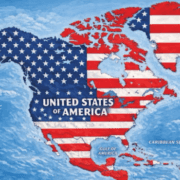
Trump published the map on Truth Social, showing the American flag’s colors covering Mexico, Canada, Cuba, Greenland, Iceland, and parts of the wider Caribbean and Central America, including Cuba, Jamaica, Martinique, Guadeloupe, and Haiti. Cuban Foreign Minister Bruno Rodríguez responded with sharp sarcasm, warning the US government would leave its own citizens “geographically disoriented.” “Soon they will not know in which gulf, lake, building, country, continent or planet they are,” Rodríguez wrote.
US President Donald Trump during the Steel Across America tour on the Ellipse of the White House in Washington, DC, US, on Tuesday, Sept. 8, 2026. Photographer: Annabelle Gordon/CNP/Bloomberg via Getty Images
Cuba’s response comes as relations with Washington face their most severe strain in decades. The Trump administration has pursued a “maximum pressure” campaign against Cuba since early 2026, including an oil blockade and secondary sanctions introduced in May that have discouraged foreign companies from operating on the island. Washington has also kept the possibility of military intervention on the table as an ongoing concern for Havana.
Rodríguez said that the US economic embargo cost Cuba $8.08 billion between March 2025 and February 2026, the highest 12-month total on record and 7% more than the previous year, calling the measures “cruel collective punishment” against the Cuban population. Cuba’s economy contracted 15% between 2020 and 2025, with independent forecasts projecting a further contraction of up to 10.3% this year amid an ongoing energy crisis.
President Trump posted an AI-generated map depicting the American flag superimposed over the United States, Canada, Mexico, Greenland, Iceland, and Caribbean islands – all relabeled simply as the “United States of America,” triggering diplomatic backlash and renewed public questioning of his fitness for office, according to The Hill.
The map, posted to Truth Social without caption or explanation, redrew continental North America entirely within the stars and stripes, with the Gulf of Mexico labeled the “Gulf of America” in line with an earlier executive order. It followed a weekend in which Trump posted at a rapid pace: 60 times on Sunday alone, according to an AFP count, followed by 37 more posts within roughly 10 hours on Monday, many featuring AI-generated or AI-manipulated images, including one claiming the Moon belonged to the US and another relabeling New Mexico as “New America.”
The map follows Trump’s repeated prior suggestions that Canada become the 51st US state, his stated interest in acquiring Greenland from Denmark, and his talk of “taking back” the Panama Canal. But the inclusion of Mexico, Iceland and several Caribbean territories in the latest map marks a new expansion of that rhetoric, The Hill reported. It also comes amid active US-Canada trade tensions, with both countries recently imposing tariffs on each other’s goods; Trump separately signed an executive order renaming Lake Ontario to “Lake America.”
Several of the countries depicted in the map responded swiftly. Iceland said it had summoned the US ambassador, describing the post as “entirely inappropriate.” Mexican President Claudia Sheinbaum rejected the map directly on X: “We are a free, independent and sovereign nation,” she wrote, adding Mexico would be neither a colony nor a protectorate of another country. Danish Prime Minister Mette Frederiksen reiterated Denmark’s opposition to any US takeover of Greenland, telling reporters that both Greenland’s government and its people had repeatedly made clear they did not want to become American.
Iceland’s Foreign Minister Þorgerður Katrín Gunnarsdóttir summoned U.S. Ambassador Billy Long to her office on Monday to “convey a clear message that the image was wholly inappropriate,” according to a statement.
“There was a reason to call the ambassador to a meeting and present a very clear message on our part that this was completely unacceptable,” she added Tuesday.
“I have been repeatedly advised by within the American administration that we should perhaps not take the current U.S. president literally, but we should take him seriously,” Gunnarsdóttir said. “That is exactly what we are doing and emphasizing that Iceland is sovereign, it is an independent state that is responsible for its own destiny.”
The map’s inclusion of Haiti added to the irony noted by observers online: even as Trump’s administration continues deporting Haitian nationals and has stripped Temporary Protected Status from roughly 350,000 Haitians earlier this year, his map depicted the country as part of an expanded American territory. Neither Jamaica, Haiti, nor France, of which Martinique and Guadeloupe are integrated overseas departments, responded.
The post drew widespread ridicule online alongside renewed speculation about Trump’s fitness for office. California state Senator Scott Wiener called the behavior “unbelievably dangerous,” alleging Trump had a “serious brain disease, whether dementia or something else.” Maine Congresswoman Chellie Pingree argued Republicans should be asking whether Trump remains fit to serve, and social media users noted the irony of the posts given years of Republican criticism of former President Biden’s age. It remains unclear whether Trump intended the map as a joke, a provocation, or simply an attempt to generate attention.
NewsAmericasNow will continue tracking Caribbean nations’ response to Trump’s territorial rhetoric.

The best female reggae singers have shaped one of the most globally beloved music genres for more than six decades, from the rocksteady clubs of Kingston in the 1960s to Grammy stages in the 21st century.

When the conversation turns to the best female dancehall artists in history, a handful of names have consistently shaped the genre’s trajectory, from the sound-system dances of Kingston in the early 1980s through to the global streaming era of the 2020s.

News Americas, NEW YORK, NY, Weds. Sept. 9, 2026: Four Caribbean music icons will receive special honors at the 2026 Caribbean Music Awards, set for Sept. 19, at the National Academy for the Performing Arts in Trinidad and Tobago.
Legendary calypsonian Calypso Rose, Jamaican dancehall star Patra, Belizean recording artist and former government official Shyne, and Haitian-American singer-songwriter Alan Cavé will be recognized for their contributions to Caribbean music and culture.
Calypso Rose will receive the Elite Calypso Honor, celebrating a career spanning more than six decades. The Tobago-born trailblazer made history as the first woman to win Trinidad and Tobago’s Road March title and later gained international acclaim with her platinum-selling album Far From Home.
Patra will receive the Lifetime Achievement Honor for her influence on dancehall, reggae and global Black music. Born in Westmoreland, Jamaica, she rose to international fame in the 1990s and became one of dancehall’s most recognizable female stars.
Her 1993 debut album, Queen of the Pack, became the first album by a Jamaican female artist to reach No. 1 on Billboard’s Reggae Albums chart and was later certified Gold in the United States. The project included her signature hit “Worker Man,” while other popular songs included “Romantic Call,” “Scent of Attraction,” “Black Cinderella” and her remake of Grace Jones’ “Pull Up to the Bumper.”
Shyne will receive the Global Ambassador Honor in recognition of his evolution from internationally known recording artist to cultural advocate, humanitarian, and public servant. His 2000 self-titled debut album entered the Billboard 200 at No. 5 and earned Gold certification. He later moved into public service in Belize and has also served as the country’s Music and Goodwill Ambassador.
Alan Cavé will receive the Elite Konpa Honor for his influence on Haitian music and the global konpa movement. Known as the “King of Kompa Love,” Cavé has spent more than three decades shaping the genre through his songwriting, distinctive vocals, and work with the group Zin and as a solo artist.
The awards ceremony will serve as the centerpiece of the Caribbean Music Awards Elite Weekend Experience, a three-day celebration running Sept. 18-20 across Trinidad and Tobago. The weekend will include a welcome reception, industry events, cultural activations, fan experiences, the awards ceremony, an official after-party, and a special steelpan celebration featuring Stars and Steel.
This year’s theme, “Sounds of the Caribbean,” highlights artists whose work has helped expand the global reach of Caribbean music. The 2026 ceremony also marks a milestone for the Caribbean Music Awards. After three years in Brooklyn, New York, the awards will make their international debut in Trinidad and Tobago.

The best dancehall riddims are not merely backing tracks. They are the architectural blueprints of an entire musical culture, shared canvases on which generations of deejays and singers have competed, collaborated, and created some of the most enduring recordings in popular music history.

News Americas, GEORGETOWN, Guyana, Weds. Sept. 8, 2026: More than three weeks after international bids were sought to salvage the sunken Guyana MV Barima, there is still no public update on when, or whether, the ferry will be raised, even as the vessel’s captain and two crew members were ordered to remain jailed on murder charges tied to the disaster Monday.
Vessel Captain Kevin Price, Chief Mate Rondell Roberts and Goods Superintendent Delon Granderson were further remanded to prison yesterday, Sept. 7th, after state prosecutors confirmed full disclosure of evidence had been handed to the defense, according to Kaieteur News. The men appeared virtually before Magistrate Ravindra Mohabir at the Charity Magistrate’s Court, which granted the defense until September 14th to review the evidence, with formal committal proceedings now scheduled to begin November 16th.
The three are jointly charged with 72 counts of murder in connection with the July 18 sinking that killed at least 72 people, with more than 30 others still missing and presumed dead. Price and Granderson are represented by attorney Dexter Smartt, alongside a legal team that includes Dexter Todd. Attorney Everton Lammy-Singh represents Roberts.
The ferry capsized the night of July 18th en route to Port Kaituma, Region One from Georgetown, killing 73 people, including children. Seventy-six people survived. At least 30 people remain unaccounted for at sea, their bodies never recovered, with the sunken vessel itself still resting on the ocean floor with no comments from the Guyana People’s Progressive Party/Civic government on when the vessel could be raised or who the winning bidder is.
Price, Roberts and Granderson, all employees of Guyana’s Transport and Harbours Department, have now spent over 7 weeks in custody while the wreck that could hold answers, and the remains of missing passengers, remains unraised. Price broke down in tears during an earlier court appearance, alleging the government-assigned vessel was unseaworthy. “I ain’t deserve this, father God… I ain’t deserve this,” he told reporters, claiming the ferry lacked a functional anchor, radar, search and rescue transponders, and an Emergency Position-Indicating Radio Beacon, and that its inflatable life rafts had been expired since 2022.
Defense lawyers, legal commentators, and the political opposition have criticized the decision to file murder charges before the search for the missing has concluded and before the international Commission of Inquiry has begun its work. Police have maintained the charges followed legal advice from Director of Public Prosecutions Shalimar Ali-Hack, who has said her recommendation was based on the evidence presented, relevant principles of law, and case law authorities drawn from the United Kingdom, Commonwealth jurisdictions, and the European Court of Human Rights, along with public policy considerations.
Government authorities have continued to deny claims that the ferry was overloaded, even as survivors and grieving relatives maintain otherwise. Price has said a maritime inspection failed to write off the vessel despite its condition.
A Commission of Inquiry, established on July 30, 2026, with a five-member international commission and chaired by Justice Godfrey Phillip Smith, issued a public call for evidence this month as the team began preparatory work and invited public submissions regarding the July 18, 2026, maritime disaster.
NewsAmericasNow will continue following the MV Barima case and any developments on the vessel’s salvage.