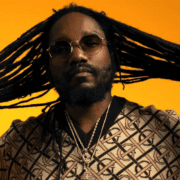
Reggae Veteran Norman Espeut (Of Kotch fame) Swaps Heartbreak For Healing With ‘Stress Free’

By all accounts, Norman Espeut has earned the right to slow down.

The velvet-voiced reggae stalwart, best known as the charismatic former frontman of the 1980s group Kotch, has lived through the whirlwind excesses of the music business, survived shifting eras in Jamaican music and watched generations of fans cling affectionately to the timeless romance of Jean — the song that turned his band into household names across the Caribbean and beyond.

Dyani And Remus Burrell Link Up For The ‘Journey’

Reggae singer D’yani has joined forces with Kareem “Remus” Burrell, the son of legendary Xterminator Records founder Phillip ‘Fatis’ Burrell, for what both men believe could be a defining moment in their respective careers.

Dancehall Veteran Mad Cobra Recovering After Florida Turnpike Crash

Dancehall veteran Mad Cobra is counting his blessings after being involved in a motor vehicle accident on the Florida Turnpike over the weekend.

The US Navy’s Biggest Warship Will Dock In Jamaica Tomorrow – 90 Miles From Cuba

By Staff Reporter | NewsAmericasNow.com

News Americas, WASHINGTON, D.C., Sun. May 30, 2026: On Monday June 1st, the USS Nimitz – one of the largest and most powerful naval vessels on the planet – will drop anchor at the Port of Kingston, Jamaica. Ninety miles away, Cuba is watching. The nuclear-powered aircraft carrier’s arrival in Kingston Harbor marks the final stop of Southern Seas 2026 – an 11th iteration multinational goodwill deployment announced by US Naval Forces Southern Command that has taken the carrier throughout South America and the Caribbean. The United States Embassy in Jamaica has framed the June 1 to June 5 visit as an exercise in maritime cooperation and people-to-people connections.

But the timing, the context, and the fractures it has exposed within the Caribbean Community tell a far more complicated story.

A Goodwill Visit – Or Something More?

The USS Nimitz is not a goodwill vessel in the conventional sense. It is a Nimitz-class nuclear-powered supercarrier – one of the largest warships ever built, capable of carrying dozens of combat aircraft and projecting overwhelming military force across an entire ocean. Its arrival in Kingston comes at a moment of extraordinary tension between the United States and Cuba – the most dangerous escalation in US-Cuba relations since the Cuban Missile Crisis of 1962, according to analysts tracking the situation.

In the weeks leading up to the Jamaica port call, the Trump administration unsealed a superseding federal indictment charging former Cuban President Raul Castro with the alleged murders of four Americans in the 1996 shoot-down of unarmed civilian aircraft. Secretary of State Marco Rubio publicly described Cuba as “a failed state 90 miles from our shores run by friends of our adversaries” — while standing at Homestead Air Reserve Base in Florida, approximately 180 miles from Havana. The administration expanded secondary sanctions targeting foreign entities doing business with Cuba. And US Southern Command confirmed the Nimitz carrier strike group’s deployment to the southern Caribbean.

The carrier is now coming to Jamaica, and Cuba, which sits between Florida and Kingston, is watching every move.

Jamaica: Partner, Not Launchpad – For Now

The United States Embassy in Jamaica was careful in its framing of the visit. Chargé d’Affaires Scott Renner described it as underscoring “the depth of the US-Jamaica bilateral relationship and the importance the United States places on its enduring partnership with Jamaica.”

“The visit of a US aircraft carrier to Jamaica marks an important milestone in the longstanding partnership between our countries,” Renner said, as quoted in the Embassy announcement. “Beyond strengthening maritime cooperation and regional security, this visit creates opportunities for meaningful people-to-people connections and economic benefits for local communities.”

The language is deliberate. Diplomatic. Carefully calibrated to frame a nuclear-powered supercarrier docking in the Caribbean’s third-largest island as a routine partnership exercise. Whether Jamaica – and the broader Caribbean – accepts that framing without question is another matter entirely.

Jamaica Government Moves Quickly To Frame The Visit

As questions swirled about the timing and implications of the USS Nimitz’s arrival, Jamaica House – the Office of the Prime Minister -moved swiftly on May 29th to frame the visit in decidedly civilian terms.

In an official press release, the government noted that the Nimitz had previously visited Panama, Chile, Argentina, and Brazil as part of its Southern Seas regional tour – and had hosted government officials from Guyana and Suriname while in South America. The statement emphasized people-to-people activities during the Jamaica visit – including the beautification of four schools in collaboration with the Jamaica Defence Force, youth sporting activities on June 4, and opportunities for Jamaican students to be exposed to world-class maritime operations and infrastructure.

“Jamaica and the United States have long shared common interests in regional stability, maritime cooperation, disaster response, trade, education, and security,” the statement read, as quoted in the Jamaica House press release. “The visit of the USS Nimitz provides a further opportunity to reaffirm these bonds and to strengthen mutual understanding between both nations.”

The carefully calibrated statement made no mention of Cuba, the escalating US-Cuba crisis, or the broader geopolitical context in which the carrier’s Caribbean deployment has taken place.

CARICOM Fractures – Guyana And Trinidad Break Ranks

The arrival of the USS Nimitz in Caribbean waters has exposed a fault line within the Caribbean Community that had been building quietly for months – and this week it cracked open in public. CARICOM foreign affairs ministers expressed their “profound concern” regarding the ongoing and intensifying economic, commercial, and financial measures imposed upon Cuba by the United States – a statement that reflected the longstanding regional consensus in support of Cuba and against the US embargo.

But two of CARICOM’s most significant members – Guyana and Trinidad and Tobago – reserved their positions from that statement. They did not sign on. The reason is significant. Both Guyana and Trinidad and Tobago are official members of the US-led Shield of the Americas alliance – a security pact signed by 17 Western Hemisphere countries in March 2026, focusing on countering transnational organized crime, drug cartels, and illegal migration through enhanced intelligence sharing and military cooperation.

In practical terms, two of the Caribbean’s most economically powerful nations – one sitting on one of the world’s largest oil discoveries, the other a major natural gas producer – have chosen alignment with Washington over regional solidarity with Havana.

For CARICOM, which has built its diplomatic identity on consensus and the principle of a Zone of Peace in the Caribbean, the public fracture is deeply significant. The regional body that has consistently called for an end to the US embargo on Cuba now cannot speak with one voice on the issue – because two of its most influential members are standing with the country imposing that embargo.

Cuba’s Warning To The Region

Cuban Foreign Minister Bruno Rodriguez Parrilla has not been subtle in his message to Caribbean governments watching this unfold. Addressing the United Nations Security Council last week, Rodriguez warned of an impending humanitarian catastrophe and issued a direct appeal to the region. “I call upon Latin America and the Caribbean to act in order to preserve their condition as a Zone of Peace and to avert adverse consequences that would destabilize the region,” he said, as reported by AFP.

Rodriguez also challenged the logic of the US pressure campaign in terms the Caribbean understands viscerally – the logic of a small island nation facing the full weight of a superpower. “Cuba is a small island – 100,000 square kilometers and 10 million inhabitants,” Rodriguez said, as quoted by Fox News. “Based on what logic, what would be the common sense behind the idea that Cuba could threaten a nuclear superpower?”

The question resonates across a Caribbean made up almost entirely of small island states that have historically understood — from their own colonial experience — exactly what it feels like to be on the wrong side of a great-power confrontation.

The Congresswoman From Jamaica’s Diaspora

As the USS Nimitz prepares to dock in Kingston, one of the most prominent Caribbean-American voices in the US Congress was making herself heard in Washington. Congresswoman Yvette D. Clarke – the daughter of Jamaican immigrants and chair of the Congressional Black Caucus – wrote directly to President Donald Trump and Secretary of State Rubio last week, demanding an immediate end to the oil blockade on Cuba.

“Under the administration’s oil blockade and tightening of sanctions, Cubans are dying,” Clarke wrote, as quoted in her letter. She cited reports that Cuba’s infant mortality rate has more than doubled since 2018 as a result of sanctions – with food shortages leaving pregnant mothers and newborns unable to survive.

“Enough is enough,” Clarke wrote. “The Congressional Black Caucus will not stand by and allow this administration to continue this barbaric policy that generates unimaginable human suffering in Cuba. We are demanding that you end the oil blockade, lift the sanctions on Cuba, and allow the Cuban people access to the most basic resources they need to sustain life on the island.”

The letter came from a congresswoman whose political roots are in the Jamaican diaspora community of Brooklyn – the same community that will be watching the USS Nimitz dock in Kingston Harbor on Monday with deeply mixed emotions.

What Comes Next

The USS Nimitz will be in Kingston from June 1 to June 5. During that time, US sailors will interact with Jamaican communities, maritime cooperation exercises will take place, and the Embassy has promised economic benefits for local businesses. earlier ?

But the questions that the visit raises – about Jamaica’s role in an escalating US-Cuba confrontation, about CARICOM’s fracturing unity, about the Caribbean’s capacity to remain a Zone of Peace when the world’s most powerful military is parking a nuclear carrier in its waters – will not be answered in five days.

The Caribbean has been placed at the center of a geopolitical confrontation it did not choose, between two powers whose conflict has defined the region’s political reality for more than six decades. The USS Nimitz arrives Monday. Cuba is watching. And the Caribbean – fractured, uncertain, and caught in between – is watching too.

RELATED: Is Washington Preparing Another Bay Of Pigs In Cuba?

When Grace Is Not Enough: Accountability in Faith Communities Across The Global South

By Dr. Isaac Newton

News Americas, NEW YORK, NY, Sun. May 31, 2026: In many parts of Sub-Saharan Africa, Latin America, and the Caribbean, faith institutions do much more than teach religion. They educate children, provide jobs, influence public life, and often guide communities where government systems are weak. In these places, spiritual language carries great power. It gives people hope, comfort, and strength. But an important question is growing louder: What happens when the same institutions that preach healing allow preventable harm to continue without fixing it?

Imagine a teacher at a church-run school who reports repeated unethical behavior by a senior administrator. She is told to pray, avoid public conflict, and trust God to handle the situation. But nothing changes. In another case, a young church leader in the Caribbean raises concerns about unfair leadership decisions and unclear financial practices. He is reminded that unity is important and that criticism can hurt the church. Slowly, he is pushed away from leadership. In parts of Latin America, a community worker serving in both religious and political spaces learns that accountability often depends more on personal relationships than on clear rules. In each situation, spiritual language is sincere and meaningful. What is missing is strong institutional action.

These problems are not a failure of faith. They are a failure of systems. Faith helps people survive hard times that cannot be changed. Institutions are supposed to fix problems that should not continue. When organizations use spiritual explanations instead of solving structural problems, the burden falls on individuals instead of the system. Over time, this creates silence. Harm is not openly denied, but it is not corrected either. It is simply carried. The institution may still look stable, but trust slowly weakens beneath the surface.

Three major problems keep this cycle going. First, spiritual explanations are often treated as enough when systems fail. This reduces the need to investigate problems or correct wrongdoing. Second, people are taught to endure suffering instead of preventing avoidable harm. Members are expected to stay faithful through difficulty, while leaders are not always required to remove the causes of that difficulty. Third, pastoral care is separated from accountability. People are comforted, prayed for, and encouraged, but the systems causing the pain often remain the same. This may look compassionate, but without action, compassion changes very little.

In places where faith institutions act almost like parallel governments, this issue becomes more than a moral concern. It becomes a serious risk to communities. Weak accountability can damage education, workplace stability, public trust, and institutional credibility. Informal ways of solving problems may feel familiar, but they cannot replace clear and enforceable standards. When authority is concentrated in a few hands and communities are closely connected, the lack of independent oversight does not protect unity. It increases vulnerability.

A stronger future requires three clear steps. First, faith institutions need independent systems for reporting harm and handling complaints. These systems must be protected from local leadership influence. This is not an attack on spiritual authority. It is a commitment to fairness. Second, institutions should include experts in psychology, law, and social work when making difficult decisions. Human problems are complex and require professional wisdom as well as moral concern. Third, spiritual values must become clear institutional standards. Love, justice, and reconciliation cannot remain only inspiring words. They must shape policies, procedures, and consequences.

When beliefs and systems work together, institutions become stronger and more trustworthy. Members no longer feel forced to choose between loyalty and truth. Leaders are supported by structures that encourage ethical action. Communities experience protection not only through promises, but through consistent practice. In this kind of environment, grace becomes clearer and more meaningful. It no longer carries the weight of unresolved failure. Instead, it works alongside systems that reduce harm and protect people.

The real test of institutional integrity is simple: Is preventable harm actually being prevented? An institution that teaches healing while allowing avoidable injury to continue cannot keep its moral authority for long. In communities where faith institutions shape everyday life, the stakes are too high for silence and weak accountability. Where grace is preached, accountability must also be built into the system. Where endurance is honored, protection must be visible and real. Only then can spiritual language become more than comfort. Only then can it become a force for real institutional transformation.

EDITOR’S NOTE: Dr. Isaac Newton is a theologian, leadership strategist, and global advisor shaped within the Christian educational tradition at University of the Southern Caribbean and Oakwood University, with advanced studies at Harvard, Princeton, and Columbia. He has served as an independent consultant to the General Conference of Seventh-day Adventists, supporting ethical leadership and institutional strengthening across international settings. He is the author of Fix It, Preacher and Steps to Good Governance. His work focuses on faith, governance, and institutional renewal, helping leaders face complex challenges with moral clarity and transformational vision.

RELATED: Caribbean Crime – More Than A Public Health Crisis

The Archbishop And The Chambermaid: Cuba and The Caribbean’s Impossible Choice

By Ron Cheong

For much of the modern postcolonial era, the Caribbean has lived inside a permanent contradiction. Its small states speak the language of sovereignty, solidarity, anti-imperialism, and regional fraternity. Yet they survive in a world dominated by overwhelming asymmetries of power – economic, military, and political. No contradiction illustrates this more painfully than the Caribbean’s present dilemma regarding Cuba, Venezuela, and the United States.

At one level, the issue appears binary: remain loyal to Cuba, the region’s long-time friend and benefactor, or align more closely with the United States, the hemisphere’s dominant superpower. But the reality is far more complicated because Venezuela sits at the center of the equation – economically, ideologically, geographically, and militarily.

The Caribbean today is caught between gratitude, fear, morality, and survival.

Cuba: The Loyal Friend

For decades, Cuba did what few larger nations ever bothered to do for the Caribbean.

Cuban doctors staffed rural clinics across the region. Cuban medical brigades appeared after hurricanes, epidemics, and disasters. Thousands of Caribbean students received scholarships to study medicine in Havana when Western education was financially unreachable. In many islands, healthcare systems became deeply dependent on Cuban personnel.

Cuba’s relationship with the Caribbean was never merely transactional. It was rooted in a shared history of colonialism, race, vulnerability, and resistance to external domination. And nations, like people, remember loyalty.

The relationship deepened further through Venezuela’s PetroCaribe initiative. Cheap Venezuelan oil purchased on concessionary terms provided fragile Caribbean economies with breathing room during periods of debt, energy shocks, and fiscal crisis. PetroCaribe was not simply economics; it was oil diplomacy – the conversion of energy wealth into political influence and regional solidarity.

At the center of this arrangement stood the close political partnership between Cuba and Venezuela. Caracas supplied subsidized oil. Havana supplied expertise, intelligence, and legitimacy. Caribbean states benefited from both. For many governments, this was not ideology. It was survival.

When Survival Changes Shape

But survival has changed shape.

As Venezuela descended into economic collapse, political authoritarianism, and increasingly aggressive regional behavior, the moral equation shifted dramatically – especially for Guyana and Trinidad and Tobago.

Guyana now faces an existential territorial threat through the Essequibo dispute with Venezuela. Trinidad, sitting only miles from the Venezuelan coast, confronts the dangers of instability spilling across its borders: migration pressures, organized crime, and strategic vulnerability. This transforms the Caribbean dilemma entirely.

The region is no longer simply choosing between friendship and power. It is choosing between historical loyalty and physical security. And in moments of danger, moral philosophy itself becomes uncomfortable.

The Archbishop And The Chambermaid

The dilemma resembles William Godwin’s famous thought experiment from An Enquiry Concerning Political Justice: “The Archbishop and the Chambermaid.”

Godwin asked whom one should save from a burning building – a brilliant archbishop whose survival benefits humanity, or a chambermaid whose death affects far fewer people. His answer was coldly utilitarian: morality requires saving the person of greater social value.

But critics raised the devastating counter-question:

What if the chambermaid is your mother? Your wife? Your lifelong benefactor?

That is the Caribbean’s Cuba problem. Pure strategic logic may point toward alignment with the United States. Whatever the inconsistencies or moral contradictions of American foreign policy, only the United States possesses the military and economic power capable of deterring Venezuelan aggression against Guyana or wider regional instability.

But Cuba is not an abstract geopolitical actor to the Caribbean. Cuba is the friend who came when others did not. To abandon Cuba under pressure from Washington feels, to many, less like diplomacy than betrayal.

“One Thought Too Many”

The philosopher Bernard Williams sharpened the dilemma even further when he argued that if a man pauses to calculate whether morality permits him to save his own wife first, he has already had “one thought too many.”

His point was that human beings cannot live morally while treating loved ones as morally interchangeable with strangers. Loyalty itself is part of what gives life meaning. Yet, governments are not private individuals.

States carry obligations not merely to friendship or historical gratitude, but to the survival of their citizens. In moments of crisis, nations often behave according to a brutal form of triage: preserving what has the greatest chance of survival, even when the choice feels morally wounding.

This is why the Caribbean’s predicament cannot be resolved through abstract moral rules alone. Immanuel Kant’s ideal that we should act only according to principles we would wish universally applied becomes difficult to sustain when the very existence of small states may be at stake.

Absolute loyalty can become national suicide. But pure self-interest destroys the trust and solidarity upon which small nations themselves depend.

America: Protector And Problem

The final irony is perhaps the cruelest.

The United States itself often behaves in ways that undermine the moral clarity of its demands. Its history in Latin America and the Caribbean includes interventions, embargoes, covert operations, and deeply inconsistent commitments to democracy and sovereignty.

And yet Caribbean states understand an uncomfortable truth: if Venezuela truly threatens Guyana’s territorial integrity or wider regional stability, only the United States possesses the credible power to deter it.

Not Cuba.
Not CARICOM.
Not international law alone.

This is the tragedy of power politics. Moral discomfort does not eliminate strategic dependence.

The Caribbean’s Burden

Large powers often speak in the language of principle because they possess the luxury of abstraction.

Small states rarely do. For the Caribbean, every diplomatic choice carries existential consequences. Choosing Cuba may jeopardize security and economic access. To choose America may feel like abandoning a loyal friend. To oppose Venezuela risks retaliation. To accommodate Venezuela, risks future coercion.

There is no morally clean path because the Caribbean does not control the structure within which these choices are made. And perhaps that is the deepest lesson of all: Ethical theories are easiest to defend when one’s survival is not at stake. For small nations living beside great powers and unstable neighbors, morality is never abstract. It is lived under pressure, memory, fear, necessity, and the constant calculation of survival. The Caribbean’s challenge is no longer simply balancing principle against power. For some states, particularly those facing immediate security risks, it has become a matter of reconciling longstanding political solidarities with pressing concerns about territorial integrity, stability, and national security.

EDITOR’S NOTE: Ron Cheong is a frequent political commentator and columnist whose recent work focuses on international relations, economic resilience, and Caribbean-American affairs. He is a community activist and dedicated volunteer with extensive international banking experience. Now residing in Toronto, Canada, he is a fellow of the Institute of Canadian Bankers and holds a Bachelor of Science degree from the University of Toronto.

RELATED:

The Long Siege Of Cuba: CARICOM At Last Begins Pooling Cash For Cuba Relief Supplies

The Long Siege Of Cuba & Caribbean Geopolitics: The Prequel To King Kong And The Island

King Kong And The Island: America’s Moral Collapse And Cuba

Guyana Born Schools Superintendent Faces Sentencing Today – His Lawyers Say Deportation Is Punishment Enough

By Staff Reporter | NewsAmericasNow.com

News Americas, DES MOINES, Iowa, Fri. May 29, 2026: A Guyana born schools superintendent who rose to lead two major US public school systems over three decades is set to be sentenced Friday on federal fraud, immigration, and firearms charges – with his lawyers arguing that his imminent deportation to Guyana is punishment enough and requesting probation rather than prison time.

Ian Andre Roberts, who served as superintendent of the Des Moines Public Schools in Iowa and previously held the same role at the Millcreek Township School District in Pennsylvania, pleaded guilty to the federal charges and now awaits a sentencing decision that carries profound implications not only for his own future but for the broader Caribbean and immigrant professional community watching closely.

Two Sides Of The Argument

In a newly unsealed 176-page sentencing memorandum, Roberts’ lawyers paint a picture of a man who overcame poverty in Guyana, built an extraordinary career in American public education, and made mistakes related to his immigration status that he now deeply regrets.

The filing details Roberts’ poverty-stricken upbringing in Guyana and claims he came to the United States after his law enforcement work in Guyana put his life at risk. It includes 50 letters of support from community members, educators, and officials requesting leniency – and argues that the loss of his career, his reputation, and his imminent deportation back to Guyana constitute sufficient punishment without adding prison time.

Federal prosecutors see it differently. In a sentencing memo accidentally released earlier this week, prosecutors recommended a 37-month prison sentence – arguing that Roberts demonstrated a “longstanding and deliberate” pattern of lying to employers and illegally possessing firearms. Authorities allege Roberts falsely claimed US citizenship when hired by the Des Moines Public Schools and illegally possessed four firearms while lacking lawful immigration status.

Three Decades In America

Roberts first arrived in the United States from Guyana in the mid-1990s on an F-1 student visa – a young man pursuing higher education and the American dream. Over the following three decades, he built a career that took him to the top of public education in two US states.

He was appointed superintendent of the Des Moines Public Schools in July 2023, following three years in the same role at the Millcreek Township School District in Pennsylvania. His tenure in Des Moines came to an abrupt halt on September 26, 2025, when Iowa State Police arrested him and transferred him to US Immigration and Customs Enforcement custody.

According to ICE, Roberts entered the United States from Guyana in 1999 on a student visa but later lost legal authorization to work. A final order of removal was issued by an immigration court in May 2024 – months before his arrest. He has been held in US Marshals custody at the Polk County Jail in Iowa since his arrest.

A Tangled Immigration Trail

According to the Department of Homeland Security, Roberts cycled through two visas, four Green Card applications, and multiple employment authorization filings over thirty years — a bureaucratic trail that illustrates how easily the line between legal and undocumented status can blur for long-term residents navigating America’s complex immigration system.

He first arrived on a B-2 tourist visa in 1994, returned on an F-1 student visa in 1999, and began applying for work permits and permanent residency in the early 2000s. Each petition was eventually denied – yet temporary approvals along the way provided him with valid Social Security and employment documents that allowed him to continue working and advancing professionally.

By 2024 an immigration judge had ordered him removed in absentia. An immigration judge in Dallas denied Roberts’ motion to reopen his case earlier this year. Still, he remained in public service until ICE agents arrested him in September 2025.

Questions Of Oversight

The case has drawn attention not only because of the criminal charges but because Roberts rose to the highest level of public school administration in two US states while allegedly lacking legal immigration status – raising serious questions about hiring oversight, credential verification, and institutional safeguards.

School boards in both Iowa and Pennsylvania have faced scrutiny over how Roberts’ background and eligibility were vetted. The Millcreek School Board in Pennsylvania has publicly acknowledged reviewing potential legal action related to the matter.

What The Caribbean Diaspora Is Watching

For Caribbean and Guyanese diaspora communities across the United States – many of whom have followed this case closely since Roberts’ arrest – Friday’s sentencing carries significance beyond one man’s fate.

Roberts’ case has sparked debate about immigration enforcement, professional licensing, and how long-term Caribbean residents who have built careers and contributed to their communities can still face sudden detention and removal. Advocates note that his situation highlights the precarious position of non-citizens – even those who have reached the highest levels of public service – as immigration enforcement increasingly intersects with criminal proceedings.

The outcome of today’s sentencing will be watched closely by Caribbean diaspora communities, immigration attorneys, and public education officials across the country.

RELATED: From Student Visa To ICE Custody: The Ian Roberts Case Exposes America’s Immigration Chaos

A Historic Billion-Dollar Caribbean Banking Deal: Who Is Really Behind The Biggest Bank Deal In Caribbean History?

By Business News Editor | NewsAmericasNow.com

News Americas, HAMILTON, Bermuda, Fri. May 29, 2026: Something significant just happened in Caribbean banking – and most people across the region have no idea yet.

Canada’s Imperial Bank of Commerce – one of the largest and most powerful financial institutions in North America – has agreed to sell its entire Caribbean banking operation to a Bermuda-based bank in a deal worth over 1 billion dollars. The transaction, announced this week, will reshape how millions of Caribbean families, businesses, and governments bank across 10 island nations.

But behind the press releases and congratulatory statements, several questions are going unanswered. Why is one of Canada’s biggest banks walking away from the Caribbean after decades of dominance? Why is a Bermuda institution emerging as the region’s new banking giant? And what does all of this mean for the ordinary Caribbean consumer whose account, mortgage, and savings are caught in the middle of a billion-dollar transaction they never voted for?

The Deal – What We Know

Bermuda-based Butterfield Bank has agreed to acquire CIBC Caribbean – the regional subsidiary of the Canadian Imperial Bank of Commerce, headquartered in Barbados and operating across 10 Caribbean countries – for approximately US$1.794 billion. Under the terms of the agreement, unanimously approved by Butterfield’s board of directors, Butterfield will pay US$1.09 billion in cash and approximately US$703 million in Butterfield shares – equivalent to US$1.14 per CIBC Caribbean share – to acquire CIBC’s 91.7 percent controlling stake in the regional bank.

Butterfield will then launch a mandatory takeover bid for the remaining 8.3 per cent of shares held by minority shareholders. Upon completion — expected in the first half of 2027 – CIBC will retain an estimated 22 per cent ownership stake in the combined entity and the right to appoint two directors to Butterfield’s board.

The combined institution will hold approximately US$29 billion in assets – making it one of the largest banking entities operating exclusively across Caribbean and international financial centre markets.

Question 1: Why Is The Canadian Bank Walking Away?

CIBC has operated in the Caribbean for decades through its regional subsidiary. CIBC Caribbean, headquartered in Barbados, has built deep relationships across 10 island economies – relationships that took generations to establish and that Caribbean families and businesses have relied upon.

So why is Canada’s fifth-largest bank selling now? And for $1.79 billion? The official statements offer warm words about strategic alignment and shared values -but no clear answer to the fundamental question of why a bank with decades of Caribbean history and billions in regional assets is choosing this moment to exit.

Global banking trends offer some clues. Large international banks have been quietly retreating from smaller, higher-risk markets for years — a process known in the industry as de-risking. Caribbean nations have faced the consequences of this trend acutely, with correspondent banking relationships severed and international financial access restricted across the region. CIBC’s exit – however it is dressed up in merger language – fits that broader pattern.

The question is whether the Caribbean is losing a partner – or being sold to one.

Question 2: Why A Bermuda Bank?

The buyer in this transaction is not a Caribbean institution. Butterfield Bank is headquartered in Bermuda, a British Overseas Territory that, while geographically in the Atlantic and culturally connected to the Caribbean, operates under a fundamentally different regulatory and economic framework than CARICOM member states.

Butterfield has built its reputation in international financial centers – Bermuda, the Cayman Islands, the Channel Islands, Switzerland, andSingapore. Its expertise is in wealth management and private banking for high-net-worth clients, not retail banking for the everyday Caribbean consumer.

The question that Caribbean governments, regulators, and consumers should be asking is straightforward: why was no Caribbean-owned institution in a position to make this acquisition? Why, in 2026, is the answer to Caribbean banking consolidation a Bermuda bank backed by US$700 million in subordinated debt financing -rather than a regionally owned, regionally governed financial institution?

The answer says something uncomfortable about the state of Caribbean-owned capital and the region’s capacity to control its own financial destiny.

Question 3: What Happens To Your Money?

For the millions of Caribbean families who bank with CIBC Caribbean across Barbados, Trinidad and Tobago, Jamaica, the Cayman Islands, and six other territories – the most immediate and personal question is the simplest one: what happens to my account?

The official answer from both institutions is: nothing changes immediately. CIBC Caribbean chief executive officer Mark St Hill said the merger brings together two organisations with shared values and a common focus on relationship banking, as quoted in official statements. Butterfield chairman Michael Collins described it as combining “two storied and complementary banks” with “time-honoured customer relationships,” as quoted in official statements.

But billion dollar transactions do not happen without consequences for ordinary consumers. Branch networks get rationalized. Fee structures get realigned. Product offerings get standardized. Staff get restructured. The question is not whether these changes will come – it is when, and whether Caribbean regulators will be watching closely enough to protect consumers when they do.

Question 4: What Does This Mean For Caribbean Capital Markets?

One genuinely promising development buried in the transaction details is Butterfield’s announced intention to pursue additional stock exchange listings – on the Barbados Stock Exchange, the Bahamas International Securities Exchange, and the Trinidad and Tobago Stock Exchange -— pending regulatory approval.

If executed, this would give Caribbean retail investors direct access to shares in one of the region’s largest banking institutions – a meaningful step toward the kind of Caribbean capital market deepening that economists and policymakers have long called for. But listings are intentions, not guarantees. And the history of foreign financial institutions making promises to Caribbean markets at the point of acquisition – only to quietly walk them back once the regulatory approvals are secured – is long enough to warrant skepticism alongside cautious optimism.

The Bottom Line

A $1.79 billion deal has just reshaped Caribbean banking. The region’s largest combined banking institution – with $29 billion in assets across 10 countries – will now be controlled from Bermuda, not Barbados. Canada’s biggest bank is walking away. And Caribbean consumers, businesses, and governments are about to navigate a transition that nobody asked them about.

RELATED: Caribbean Real Estate Is A $1.87 Trillion Market – So Why Are Caribbean Developers Still Getting Rejected For Funding?

Buju Banton Announces New Album ‘Too Too Bad’

Buju Banton has announced his new album, Too Too Bad, set for release on July 17.

Guyana – One Destiny, One Future

By Dr. Isaac Newton 

News Americas, NEW YORK, NY, Weds. May 27, 2026: Guyana stands at one of the most unusual moments in modern history. It is a nation where record-breaking economic growth and everyday struggle are happening at the same time. In one Guyana, oil wealth is transforming budgets and global rankings. In the other Guyana, families are calculating survival one week at a time. The true challenge is not growth. The challenge is unity. The task of this generation is to turn two Guyana’s into one shared destiny where national wealth becomes lived dignity for every citizen.

The first step is to tie every dollar of national resource wealth directly to visible human outcomes. Guyana must adopt a national transformation contract that legally links oil revenues to education results, healthcare access, housing delivery, food affordability, and job creation. Citizens should not need economic reports to understand progress. They should see it in shorter hospital lines, stronger schools, lower food prices, and safer communities. When people can see where the money goes and feel what it changes, trust becomes national stability.

The second step is to fix the cost of living with urgency and precision. Growth means nothing if daily life becomes harder. The government should remove taxes on essential food items, strengthen local food production through guaranteed farm purchasing programs, and reduce import dependence through agricultural expansion. At the same time, wages for teachers, nurses, and public workers must be adjusted to match real inflation, not delayed statistics. A country is not successful when its workers are employed. It is successful when its workers can live.

The third step is to build a people owned economy, not only a resource driven one. Every major sector connected to oil, construction, and services should prioritize Guyanese workers, suppliers, and entrepreneurs through enforceable local content laws. Young people should be given direct pathways into ownership through low interest business financing, national entrepreneurship hubs, and technical training linked to real industry demand. A nation becomes powerful when its citizens are not only job seekers but job creators.

The fourth step is radical trust building through transparent governance. Every major government contract should be publicly visible on a digital platform that shows cost, timeline, contractor, and progress. Performance dashboards should track hospitals, schools, housing, and infrastructure in real time. Leadership should be measured by delivery, not speeches. When systems become visible, corruption loses its hiding place and public confidence becomes stronger than political division.

The fifth step is to bring Guyanese talent home and keep it home. Competitive salaries, housing support, professional development, and leadership pipelines must be created for teachers, doctors, engineers, and civil servants. At the same time, the diaspora should be actively invited into national rebuilding through structured return programs. A country does not lose its people because of distance. It loses them because of doubt. To keep its people, it must restore belief.

Guyana now faces a simple but historic choice. It can become a country where wealth is visible only in national accounts or a country where wealth is felt in every household. The difference between those two futures is not economics alone. It is leadership discipline. If Guyana aligns its resources with fairness, its systems with transparency, and its growth with human dignity, it will not just be a fast growing economy. It will become a fully united nation with one shared destiny.

EDITOR’S NOTE: Dr. Isaac Newton is a leadership strategist and governance expert educated at Harvard, Princeton, Columbia and Oakwood University. He advises leaders and institutions across the Caribbean on ethical leadership, organizational culture, and transformational change. He is the co author of Steps to Good Governance.

RELATED: Guyana At 60: The Oil Is Flowing. So Why Are Guyanese Buying Tennis Rolls On Credit?