Posts

Caribbean Citizenship Programs To Get First-Ever Regional Regulator

News Americas, NEW YORK, NY, Fri. Aug. 8, 2025: The much heralded Caribbean Citizenship by Investment (CBI) program – long a lightning rod for both global scrutiny and investor interest – is about to enter a new era of regional oversight.

In a rare show of unity, five Eastern Caribbean nations – Antigua & Barbuda, Dominica, Grenada, St. Kitts & Nevis, and St. Lucia – will jointly enact legislation this September creating the region’s first-ever regulator for these programs.

This move follows nearly two years of high-level diplomacy and tense negotiations with the United States, United Kingdom, and European Union, all of which have pressed for tighter controls amid global concerns over illicit finance and security loopholes.

The new watchdog will wield binding authority to set common standards, enforce stricter due diligence (including mandatory biometric collection at applicant interviews), and coordinate closely with CARICOM’s crime and security arm to vet all applicants through a centralised portal.

For the OECS, the shift isn’t just about compliance – it’s about survival. CBI revenues have been critical lifelines for small island economies battered by hurricanes, COVID-19, and global economic shocks, funding everything from infrastructure to climate resilience projects.

Officials say the unified regulator is designed to protect both the economic lifeblood of the islands and the reputations of their passports in the eyes of the world — ensuring the programmes remain viable, secure, and credible for decades to come.

As the OECS Commission put it: “Dismantling these programmes would severely compromise the prospects and prosperity of these countries… This is about safeguarding our future.”

“The key objectives of the regulator are to help enhance the transparency, security and sustainability of these vital Programmes. The regulator will issue binding standards on all CBI/CIP Units (CIUs) and all licensees involved with these programmes,” the OECS Commission said, adding that there is now  the collection of biometrics for all new applicants.

“Biometrics will be collected at the time of the interview, which is part of the application process. This provision is intended to enhance the security of these programmes by further strengthening the vetting process of all applications.”

These Caribbean Nations Are Set To Lead Regional Growth In 2025

By NAN Business Editor

News Americas, NEW YORK, NY, Thurs. Aug. 7, 2025: Despite a sluggish global outlook, several Caribbean economies are forecast to outperform their regional peers in 2025, according to new data from the United Nations Economic Commission for Latin America and the Caribbean (ECLAC).

Guyana continues to dominate regional growth projections, with GDP expected to surge by 10.3% in 2025.

ECLAC’s Economic Survey of Latin America and the Caribbean 2025, released Tuesday, projects a modest 2.2% average GDP growth rate for the Latin America and Caribbean region next year. However, a few Caribbean nations are defying the trend, with Guyana, Dominican Republic, and Saint Vincent and the Grenadines emerging as bright spots amid concerns over slowing tourism demand and global economic headwinds.

Guyana Leads With Double-Digit Growth

Guyana continues to dominate regional growth projections, with GDP expected to surge by 10.3% in 2025, powered by robust investments in the country’s booming hydrocarbons sector. Following a staggering 43.6% expansion in 2024, Guyana’s momentum positions it as the fastest-growing economy in the hemisphere.

Dominican Republic and Saint Vincent Also Outperform

Following Guyana, the Dominican Republic is expected to post a 3.7% growth rate in 2025, driven by strong domestic demand, tourism resilience, and structural reforms.

Meanwhile, Saint Vincent and the Grenadines is forecast to grow by 4.0%, placing it among the top five Caribbean performers. The island has benefitted from stable tourism recovery and targeted public investment.

Other Notable Performers

Antigua and Barbuda: 3.5%

Grenada: 3.5%

Suriname: 3.2%

Dominica: 2.5%

Saint Lucia: 2.5%

Barbados: 2.6%

These growth forecasts contrast sharply with larger regional economies like Jamaica (1.3%), Bahamas (1.8%), and Trinidad and Tobago (1.5%), which are projected to remain flat amid global uncertainty.

Tourism and Energy Costs Remain a Drag

The report warns that the overall Caribbean region, excluding Guyana, is expected to grow just 1.8% in 2025, a slowdown from 2.6% in 2024. This is largely due to lower GDP growth in the U.S. – the region’s largest tourism source market – along with persistent challenges like high energy and transport costs, and vulnerability to climate-related disasters.

The Outlier: Haiti and Cuba Face Contraction

Haiti and Cuba remain economic laggards. ECLAC projects Haiti’s GDP will shrink by -2.3% in 2025, following a -4.2% contraction in 2024, citing ongoing political instability and humanitarian crises. Cuba is also expected to contract by 1.5%, reflecting the island’s continued struggle with external financing, sanctions, and weak domestic output.

Looking Ahead

Despite the subdued regional outlook, ECLAC highlights that resource mobilization and policy innovation will be key to unlocking medium-term growth. Caribbean nations that diversify beyond tourism, invest in infrastructure, and harness energy transition opportunities are more likely to weather global volatility.

The report – released at a press conference led by the United Nations regional commission’s Executive Secretary, José Manuel Salazar-Xirinachs – emphasizes that the estimates point to different dynamics among sub-regions and countries.

Aisha Maina Secures USD 40 Million St Kitts Port Deal And Takes Trade Roadshow From Grenada To Jamaica And Trinidad

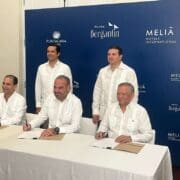
News Americas, ST. GEORGE’S, Grenada, Mon. Aug. 4, 2025: Aisha Maina, Managing Director of Aquarian Consult and founder of Gemini Integrated Commodities, has completed an intensive week of engagements, capped by a USD 40 million deal to build a Panamax deep-water port and special economic zone in Basseterre, St. Kitts, that unite policy, private capital and hard infrastructure around a single objective: forging a reliable commercial bridge between Africa and the Caribbean.

At the signing of the USD$ 40m Port deal for St Kitts & Nevis: L-R (Middle): 1. Hon. Dr. Terrance Drew, PM, St. Kitts & Nevis, Hon Minister Samal Duggins, Minister of Agriculture et. Al, St. Kitts and Nevis, Miss Aisha Maina, Managing Director, Aquarian Consult, Mr. Eric Intong, Acting Group Managing Director, Client Relations, Afreximbank and Prof. Benedict Oramah, President, Afreximbank.

The new port will anchor a 10 square kilometre special economic zone designed for agro-processing, light assembly and bonded warehousing. Feasibility studies begin in August, and financial close is targeted for Q1 2026. The facility is expected to create thousands of jobs and attract an additional USD 300 million in private investment. For Saint Kitts & Nevis, a nation of fewer than 60,000 people, the project positions the federation as a logistics hinge between 19 African and 12 Caribbean Commonwealth members. For exporters in West Africa, it removes a costly European detour and delivers end-to-end digital customs visibility.

One Week, Three Strategic Touchpoints

1. Port Signing In Grenada – July 28th
 At the Afreximbank Afri-Caribbean Trade and Investment Forum in Grenada, Maina co-signed a USD 40 million Letter of Interest with Afreximbank and the Government of St Kitts & Nevis. Prime Minister Dr Terrance Drew witnessed the signing, while Honourable Samal Duggins, Minister of Agriculture and Marine Resources, signed for the island nation. The agreement finances a Panamax-capable deep-water port in Basseterre and a ten-square-kilometre special economic zone for agro-processing and light assembly.

“Africa and the Caribbean need assets, not just aspirations. With this port we move from promise to throughput, from talk to tonnage. It is the physical backbone of a trade bridge that has been too long in the making,” Maina said on stage.

Duggins added: “Fresh off the Afri-Caribbean Exchange, I proudly signed a landmark Letter of Interest with Afreximbank. Facility after facility, deal after deal, we are not just talking transformation; we are delivering it. The vision is clear, the progress is real, and the future is now.”

2. Caribbean Investment Forum In Jamaica – July 30th
 From Montego Bay’s main stage, Maina confirmed that feasibility and environmental studies for the Basseterre port will begin in August. She outlined a corridor that cuts Lagos-to-Basseterre sailing times to about seven days, eliminating costly European detours.

“If private sector does not take charge of the process, we will remain where we have been. Retreat or defeat are not options,” she told delegates.

3. Trans-Atlantic Symposium In Trinidad – August 3rd
 Maina closed the week in Port of Spain, delivering the keynote “Why Caribbean and Africa Trade and Investment and Economic Cooperation Matter” at the Trans-Atlantic Trade and Investment Symposium organised by the Emancipation Support Committee of Trinidad and Tobago. She connected port logistics, economic-zone clustering and new financing tools to broader goals of youth employment, food security and diversified exports.

Project Snapshot

MetricDetailInitial financeUSD 40 millionBerth capacityOne Panamax berth, expandable to twoConstruction jobs600 direct positionsFollow-on capitalUSD 300 million projected private investmentStudies launchAugust 2025Financial closeQ1 2026First containerQ4 2028

Regional and Global Implications

Shorter transit times – Direct sailings remove European detours and lower freight costs.

Value-addition hub – The special economic zone lets African raw materials be processed closer to North American markets.

Commonwealth relevance – One of the Commonwealth’s smallest states will host a strategic maritime asset linking 19 African and 12 Caribbean members.

Private-capital leadership – Gemini Integrated Commodities co-invests with Afreximbank, placing execution risk on balance-sheet owners rather than policy desks.

Background

Momentum began in March with the Afri-Caribbean Investment Summit in Abuja, followed by a June charter of an Air Peace 777 carrying 120 Nigerian entrepreneurs and policymakers to Basseterre. The Grenada signing, Montego Bay confirmation and Trinidad keynote now merge those earlier steps into a single infrastructure roadmap.

About Aquarian Consult

Aquarian Consult is a Nigeria-based advisory and investment firm specialising in trade facilitation, human-capital development and infrastructure. Through Gemini Integrated Commodities, the company designs and executes projects that connect African markets to global value chains, with a focus on Africa-Caribbean integration.

Trump’s Tariffs Hits Guyana, Trinidad & Tobago

BY NAN Business Editor

News Americas, WASHINGTON, D.C., Fri. Aug. 1, 2025: Trump tariffs are back – and this time, two Caribbean nations are feeling the heat.
U.S. President Donald Trump announced new 15% tariffs on goods from Guyana and Trinidad and Tobago as part of his escalating trade offensive targeting dozens of countries. The move has sent shockwaves through the region’s manufacturing and export sectors, particularly among businesses already struggling with supply chain costs and market uncertainty.

In a sweeping move that caught many small economies off-guard, the Trump administration on Thursday re-imposed tariffs on goods from over 70 countries, including Guyana and Trinidad and Tobago, as part of a renewed effort to close America’s trade deficit. Effective immediately, both Caribbean Community (CARICOM) countries will face a 15% reciprocal tariff on their exports to the U.S.

FLASHBACK – U.S. President Donald Trump holds up a chart while speaking during a “Make America Wealthy Again” trade announcement event in the Rose Garden at the White House on April 2, 2025 in Washington, DC. Touting the event as “Liberation Day”, Trump is expected to announce additional tariffs targeting goods imported to the U.S. (Photo by Chip Somodevilla/Getty Images)

The new tariffs come just weeks after a temporary 90-day reprieve on harsher duties, including a previously proposed 38% rate on Guyana, which had sparked diplomatic backlash. While the rollback to 15% softens the blow, the impact remains severe – particularly for niche exporters in Guyana’s timber and manufacturing sectors and Trinidad’s energy and petrochemical producers.

“This is going to have devastating effects on us,” Howard Bulkan, a Guyanese exporter who sells over 60% of his company’s wallaba roof shingles to U.S. buyers told Demerara Waves. “We’ve been absorbing the 10% tariff since earlier this year. A 15% rate is not sustainable. We’ll now have to consider shifting to European markets.”

A Blow To Value-Added Exports

For Guyana, the tariff hike comes at a precarious time. While the country is experiencing rapid GDP growth driven by offshore oil production, its non-oil sectors have been working to diversify and expand exports of value-added goods like wood products, furniture, and agro-processing.

Industry leaders say the U.S. tariffs threaten to undercut those efforts. “That’s going to hurt,” said Ramsey Ali, President of the Guyana Manufacturing and Services Association (GMSA) told Demerara Waves. “We’ll be meeting to assess the fallout, but this clearly impacts competitiveness.”

The U.S. had long been a zero-duty market for many of these products. With freight costs and logistics already straining Caribbean exporters, the added 15% tariff could result in a compounded cost increase of 20–25%, potentially pricing them out of the market.

In Trinidad and Tobago, where petrochemicals, ammonia, and manufactured goods make up the bulk of exports to the U.S., the new tariff could raise costs across supply chains – affecting trade with U.S.-based industrial and construction sectors.

Political Optics vs. Trade Realities

Trump’s move – just a day before his August 1 deadline for trade deal renegotiations – is being billed by the administration as a “reciprocal tariff adjustment.” But critics say it disproportionately harms smaller economies with limited trade leverage and minimal market intrusion.

“The tariff math makes no sense,” said Bulkan. “We’re being penalized for oil exports, even though our wood products aren’t competing with U.S. goods.”

Guyana Vice President Bharrat Jagdeo confirmed ongoing talks with the U.S. Trade Representative, saying Guyana remains hopeful that the duty could be lowered to 10% through bilateral negotiations.

“We’re happy it’s not 38% anymore,” Jagdeo told Demerara Waves. “But we are still working to bring it down further.”

Risk of Market Realignment

The longer-term risk, analysts say, is that Caribbean exporters may permanently pivot away from U.S. markets – opening the door for China, Europe, or South American buyers to step in.

Several GMSA members are already eyeing European buyers as a fallback. But switching markets isn’t simple – it requires new certifications, trade relationships, and logistics chains that many small and mid-sized exporters are ill-equipped to build quickly.

For now, the region’s manufacturers are scrambling to recalculate costs, renegotiate contracts, and brace for a rocky export season.

Could Exxon’s Return To Trinidad Spark An Oil And LNG Boom?

News Americas, PORT OF SPAIN, Trinidad, Mon. July 28, 2025: After more than two decades, ExxonMobil may be heading back to Trinidad — and the implications could be huge for the country’s oil, LNG, and energy services sectors.

The U.S. energy giant is reportedly in advanced talks with the Trinidad and Tobago government to explore up to seven deepwater offshore blocks located off the island’s East Coast. These blocks sit just north of the Guyana-Suriname basin, where Exxon has made over 30 major oil discoveries since 2015.

The negotiations are occurring outside of Trinidad’s current deepwater bid round, which closes in September 2025 – a legal move allowed under Trinidad’s energy framework. This strategic re-entry suggests Exxon sees new potential in Trinidad’s offshore reserves, long considered mature but underexplored at ultra-deep water depths. “If all goes well, I will be able to make a very positive announcement,” said Energy Minister Roodal Moonilal, signaling the government’s optimism about a landmark deal.

A Regional Energy Reset?

Exxon’s return could mark a turning point not just for Trinidad, but for the wider Caribbean’s upstream energy future. With natural gas as the country’s main revenue driver, a new wave of exploration could revitalize LNG exports, feed petrochemical industries, and inject much-needed momentum into the energy services and supply chain ecosystem.

Trinidad is already home to Atlantic LNG, one of the largest gas processing and export hubs in the Western Hemisphere. However, gas production has declined in recent years. A successful Exxon deal could help reverse that trend — especially if paired with joint ventures and long-term offtake agreements.

The move also aligns with shifting global energy dynamics. As Europe and Asia look to diversify energy supply chains, Caribbean gas is back on the map, particularly from politically stable nations with ready infrastructure.

For Investors: Signals to Watch

Deepwater Expansion: If finalized, this deal could pave the way for more international oil companies (IOCs) to revisit Trinidad’s basins.

Supply Chain Rebound: Local services, logistics, and fabrication firms stand to benefit from new offshore activity.

Regional Synergies: With Exxon already dominant in Guyana, its return to Trinidad could spark cross-border energy coordination.

So — could Exxon’s return ignite a new boom?

If talks succeed, the answer may be yes — and Trinidad could once again become a leading energy hub in the Caribbean and beyond.

Could CARICOM’s Green Finance Framework Unlock Billions In Climate Investment?

News Americas, GEORGETOWN, Guyana, Mon. July 28, 2025: In a bold step toward climate-aligned growth, the Caribbean Community, CARICOM, and the International Finance Corporation, (IFC) have partnered to launch a regional green finance taxonomy – a move that could unlock billions in private capital for sustainable infrastructure, clean energy, and resilience projects across the Caribbean.

The framework, introduced on June 18, 2025, defines what qualifies as a “green asset” in the English-speaking Caribbean. It aims to standardize how banks, investors, and governments assess climate-related financing – a necessary step as the region works to close a projected $55 billion climate finance gap by 2030.

The taxonomy will:

Help scale green lending and investment pipelines.

Support ESG-aligned projects in renewable energy, water, transport, and agriculture.

Boost the region’s access to climate funds and sovereign green bond markets.

“It’s about translating ambition into bankable action,” said an IFC regional spokesperson. “This framework will help the Caribbean speak the same green finance language as global markets.”

Small Island Developing States, (SIDS) in the Caribbean remain among the most vulnerable to climate shocks – yet are among the least responsible for global emissions. This taxonomy gives them a path to attract global climate capital on clear and credible terms.

So, could this be the key that unlocks the region’s climate investment potential?

If adopted across CARICOM member states, the answer may be yes – especially as global investors sharpen their focus on sustainability, transparency, and high-impact emerging markets.

Aspida Re Expands Global Footprint With Strategic Reinsurance Transaction in Japan

News Americas, DURHAM, N.C., July 22, 2025: Aspida Life Re Ltd (“Aspida Re”), a Bermuda-based life and annuity reinsurance company, announced the execution of its second reinsurance transaction in Japan, effective June 1, 2025. This milestone marks a significant step in Aspida Re’s ongoing strategy to expand its global footprint and deliver innovative reinsurance solutions to life and annuity insurance partners worldwide.

The transaction was completed with a highly rated Japanese life insurance carrier (“Company”). Aspida Re, rated A- (Excellent) by AM Best, will reinsure new or incoming flow business. The reinsured product is a Japanese yen (JPY) denominated fixed annuity, highlighting Aspida Re’s ability to manage foreign exchange risk and deliver tailored solutions to its cedents.

“This transaction is highly strategic for Aspida Re,” said David Florian, CEO of Aspida Re. “It reflects our deep commitment to the Japanese market and our broader vision of supporting insurers around the world with innovative, capital-efficient reinsurance solutions.”

Aspida Re’s continued growth in Asian markets demonstrates its agility and expertise in navigating complex regulatory and financial environments, while reinforcing its role as a trusted partner in the global reinsurance landscape.

“We are excited to secure our second Japanese reinsurance agreement,” said Jon Steffen, President and Chief Actuary of Aspida Re. “Our flexibility and customized solutions allow us to provide significant advantage to clients and partners, no matter their location.”

To learn more about Aspida Re, visit aspidare.bm.

About Aspida Re

Aspida Life Re Ltd (“Aspida Re”), a Bermuda-based reinsurance platform, is focused on providing efficient and secure life and annuity reinsurance solutions to its global clients. Aspida Re seeks to be a trusted partner in its clients’ long-term financial growth by delivering creative, customized solutions while driving business by doing good for the communities it serves. Aspida Re is part of Aspida Holdings Ltd, with over $23.1bn in total assets as of March 31, 2025. A subsidiary of Ares Management Corporation (NYSE: ARES) acts as the dedicated investment manager, capital solutions, and corporate development partner to Aspida Re. For more information on Aspida Re, please visit www.aspidare.bm or follow them on LinkedIn.

MODEC Deepens Guyana Bet as Exxon Expands Output

By NAN Business Editor

News Americas, GEORGETOWN, Guyana, Mon. July 21, 2025: Japan’s MODEC is doubling down on Guyana’s booming offshore oil sector with a strategic new hub in Georgetown, underscoring the South American nation’s emergence as a critical node in global energy supply chains.

The move by the Tokyo-based offshore engineering giant comes amid a broader regional realignment, with Asian, American, and European stakeholders racing to entrench themselves in what has become the world’s fastest-growing oil frontier.

MODEC’s new office is set to create and sustain more than 160 local jobs, with additional workforce opportunities expected during its operational ramp-up. Beyond job creation, the company’s investment signals a long-term industrial footprint that integrates Guyana more deeply into the global offshore production ecosystem.

“This is not a company dipping its toes in the water,” said Guyanese Minister of Tourism, Industry and Commerce Oneidge Walrond. “MODEC has come with purpose, promise, and proven performance.”

Strategic Commitment Amid Rising Output

Earlier this year, MODEC secured a high-profile contract from ExxonMobil Guyana to construct its second Floating Production Storage and Offloading (FPSO) vessel for the Hammerhead project—projected to process up to 150,000 barrels per day.

With Exxon’s oil production in Guyana expected to surpass 1.3 million barrels per day by 2027, MODEC’s growing role signals that Japan is positioning itself not just as an offshore contractor—but as a long-term industrial partner.

“Guyana’s human capital is an asset,” MODEC Group CEO Hirohiko Miyata said at the launch. “We are 100 percent committed to developing local content.”

Geopolitics, Green Tech, and Japanese Stakes

The Hammerhead FPSO will be one of the most technologically advanced vessels deployed in the Western Hemisphere, outfitted with combined cycle gas turbines to reduce emissions—an innovation aligned with Japan’s energy efficiency push and global decarbonization goals.

That investment in greener offshore production also dovetails with Japan’s strategic interest in diversifying its energy partnerships beyond the Middle East, particularly as global shipping routes and geopolitics become increasingly volatile.

Local Content Law Bears Fruit

Guyana’s 2021 Local Content Act is already reshaping the investment landscape. With over $1.5 billion in contracts awarded and more than 1,100 local firms engaged, the law has pushed foreign operators to embed themselves into the local economy—transforming Guyana from rentier state to industrial stakeholder.

MODEC’s presence reflects that shift. “We welcome MODEC not just as a contractor,” said Walrond, “but as a partner in nation building.”

The company’s website shows a number of open posts HERE

Exxon May Have Won the Block, But Chevron Just Won the Long Game

News Americas, Georgetown, Guyana, Fri. July 18, 2025: While ExxonMobil may continue to operate the world-class oil fields off the coast of Guyana, it’s Chevron that just made the bigger strategic move. On Friday, the International Chamber of Commerce, (ICC) gave the green light for Chevron’s US$53 billion acquisition of Hess, ending a contentious battle over one of the most lucrative oil plays on the planet.

With this ruling, Chevron gains a 30% stake in Guyana’s massive Stabroek Block, home to more than 11 billion barrels of recoverable oil. It’s a long game move that not only secures Chevron’s future in deepwater drilling but also positions it directly alongside Exxon in one of the fastest-growing oil frontiers in the world.

“We welcome Chevron to the venture,” said Exxon in a brief statement, signaling an end to the 18-month standoff between the two energy giants.

A Silent Battle, Publicly Decided
The conflict between Exxon and Chevron has simmered for more than a year, hidden behind closed-door arbitration and legal interpretations of a private joint operating agreement (JOA) between Exxon, Hess, and China’s CNOOC, which holds the remaining 25% stake.

Exxon had claimed it held preemptive rights to Hess’s stake in Guyana and tried to block Chevron’s move. But the ICC’s ruling decisively cleared the path, enabling Chevron to step in as a junior partner on Exxon’s flagship offshore asset.

“This is more than just a merger,” said one energy analyst. “This is Chevron planting its flag in Exxon’s most valuable growth market for the next decade.”

Exxon Runs the Rig, But Chevron Just Joined the Club
While Exxon retains operational control with a 45% share, Chevron’s entry fundamentally shifts the landscape. The Guyana project is expected to produce 1.2 million barrels per day by 2027, amounting to 1% of global supply—and Chevron now shares in the profits and the global clout that comes with it.

Chevron also inherits Hess’s broader portfolio, which includes prime shale assets in North Dakota and stakes in Asia and the Gulf of Mexico, effectively diversifying and strengthening its long-term drilling strategy.

Winners, Losers, and What Comes Next
For Guyana, the new corporate alignment doesn’t change the royalty rates or government take – at least for now. But it does place another powerful multinational into its energy equation. The presence of both Exxon and Chevron in a single national project is rare and brings added pressure on transparency, governance, and fiscal renegotiations, especially as Guyana’s oil revenues surge.

For Exxon, the ruling is a setback—but not a defeat. It retains control of operations and still holds the largest stake in the block. But with Chevron now in the room, it faces a stronger competitor in both financial and geopolitical terms.

“This deal may redefine who dominates deepwater drilling in the Western Hemisphere over the next 20 years,” said a Washington-based energy strategist.

Why This Matters Globally
The Guyana offshore discovery is not just another oil field. According to the International Energy Agency, it’s one of the most promising new oil sources in the world, coming online just as global energy demand is expected to peak. As oil companies race to secure their final frontier projects before energy transitions accelerate, Guyana has become the crown jewel.

And now, Chevron has a seat at the table.

Tariffs, Transformation And The Time To Lead

By Dr. Isaac Newton

News Americas, NEW YORK, NY, Mon. July 14, 2025: With President Donald J. Trump back in office, his administration has begun re-imposing and expanding tariffs on key imports. Among the most affected are Caribbean economies, which depend heavily on exports to the United States. Jamaica, for instance, has reported a sharp rise in trade costs, with aluminum and bauxite exports now facing up to 17 percent in additional duties. Exporters throughout the region are also confronting increased shipping fees, higher insurance premiums, and longer customs processing times. This is not merely an economic inconvenience. It is a wake-up call. The Caribbean must decide: will we passively endure another cycle of dependency, or will we courageously redesign our economic future?

FLASHBACK: US President Donald Trump holds a chart as he delivers remarks on reciprocal tariffs during an event in the Rose Garden entitled “Make America Wealthy Again” at the White House in Washington, DC, on April 2, 2025. (Photo by BRENDAN SMIALOWSKI/AFP via Getty Images)

The global economy is evolving rapidly. Leadership must now be shaped by global awareness, technological readiness, and strategic foresight. According to the Caribbean Export Development Agency, trade between CARICOM and African nations still accounts for less than four percent of total external trade. This is despite Africa’s population now surpassing 1.46 billion people and witnessing strong gross domestic product (GDP) growth in countries such as Rwanda, Ghana, and Kenya. GDP, which measures the total value of goods and services produced in a country, is a vital indicator of economic opportunity, and Africa is surging.

Some Caribbean nations have started to tap into this potential. Trinidad and Ghana are in formal discussions around energy cooperation. Jamaica, with its global cultural influence, is well-positioned to expand intellectual property partnerships and digital service exports with nations such as Nigeria and South Africa. Barbados is forging climate and finance partnerships with Kenya and Namibia, focused on renewable energy and sustainable development.

This is the moment to finalize trade agreements with the African Continental Free Trade Area, (AfCFTA), the world’s largest single market comprising 54 countries. The Caribbean must also accelerate engagement with MERCOSUR, the Southern Common Market comprising Argentina, Brazil, Paraguay, and Uruguay, and deepen economic ties with the Association of Southeast Asian Nations, (ASEAN), which represents over 600 million people and some of the world’s fastest-growing economies. By doing so, the region can redefine itself as a strategic trade bridge connecting the Americas, Africa, and Asia.

Yet, transformation begins at home. Micro, small, and medium-sized enterprises, (MSMEs) employ more than 70 percent of the Caribbean workforce, yet receive less than 11 percent of total private-sector credit, according to the Caribbean Development Bank’s 2024 report. This financing gap stifles innovation, job creation, and inclusive growth. Guyana’s agro-processing sector, Haiti’s artisan cooperatives, and Saint Vincent’s organic farming initiatives all have untapped potential. To unlock it, CARICOM governments must unite to create a regional development finance institution capable of pooling public and private capital. Targeted funding must be paired with business development services, digital training programs, and simplified tax and regulatory frameworks for emerging enterprises.

We already see proof of progress. In Jamaica, the Lynk digital wallet has registered over 500,000 users since its 2022 launch. It empowers small businesses to receive instant payments and operate without reliance on cash. In Barbados, the Blue Economy Innovation Hub, supported by the Inter-American Development Bank, is nurturing startups focused on marine biotechnology, sustainable tourism, and fisheries. These examples underscore what is possible when public policy aligns with innovation and community priorities.

The region’s infrastructure, however, must catch up. According to the 2025 Caribbean Maritime and Logistics Survey, fewer than 55 percent of CARICOM’s customs and port systems are fully digitalized. The result: excessive paperwork, delays, and inflated logistics costs. Shipping goods from Trinidad to Dominica can take over four days due to manual clearance processes. In contrast, ports in Singapore, the Netherlands, and South Korea process cargo in under 24 hours using streamlined digital systems. The Caribbean must adopt modern e-customs platforms, blockchain-backed export tracking, and harmonized regional standards for trade documentation. This is essential for faster trade, greater transparency, and increased competitiveness.

Even in the region’s most challenging contexts, innovation is taking root. In Haiti, solar-powered cooperatives are supporting rural digital hubs and agricultural startups in regions such as Plateau Central and Artibonite. These centers offer online education, mobile banking, and small business development, all sustained by renewable energy. This proves that, with visionary leadership and strong partnerships, progress is possible even in adversity.

For more than three decades, I have worked alongside governments, faith-based institutions, and international partners across Africa, the Caribbean, and Latin America to reform public institutions and design high-performance systems. Whether advising Liberia’s transitional government, crafting youth empowerment strategies in Antigua and Barbuda, building conflict resolution tools in Saint Lucia, developing change management models in Jamaica, or leading political campaign strategies across the region, or lecturing at our universities on reimagining the future, or preaching and teaching in our faith-based institutions on policy transformation, my mission has remained constant: leadership must serve people and produce systems that endure.

The Caribbean’s moment is now. Tariffs may bruise our trade, but outdated thinking poses a far greater threat. Let us not respond with fear, but with fresh vision. Let us trade not only goods, but creativity, services, and ideas. Let us lead not by clinging to the past, but by preparing our people for the future we are destined to shape.

EDITOR’S NOTE: Dr. Isaac Newton is a Harvard, Princeton, and Columbia-trained expert in change management, public sector reform, and international development. Advisor to governments, faith institutions, and multilateral organizations. Author and keynote speaker on governance, strategy, and leadership for the Global South.