
Posts

A New Luxury Beach Resort Is Coming To Puerto Plata

By NAN Business Editor

News Americas, PUERTO PLATA, Dominican Republic, Fri. Oct. 24, 2025: Meliá Hotels International and Grupo Puntacana are expanding their footprint in the Dominican Republic with the launch of Meliá Bergantín Beach, a luxury resort that underscores renewed investor confidence in the country’s northern coast.

A new hotel is coming to the DR.

The development forms part of Punta Bergantín, a state-backed tourism and real estate trust designed to revive Puerto Plata as a major destination. The project – supported by Grupo Reservas and the Ministry of Tourism – covers more than 10 million square meters of coastal land and is being structured under a low-density, sustainability-first urban model, aligning with global ESG tourism trends.

At a groundbreaking ceremony on October 21st, Gabriel Escarrer, CEO of Meliá Hotels International, and Frank Elías Rainieri, CEO of Grupo Puntacana, were joined by Banco de Reservas President Leonardo Aguilera, Banco Popular President Christopher Paniagua, and Project Executive Director Andrés Marranzini Grullón.

The two conglomerates – among the Caribbean’s most influential tourism players – aim to leverage the Dominican Republic’s strong post-pandemic recovery and new infrastructure investments to diversify beyond the Punta Cana–Bávaro corridor.

A New Northern Anchor for Dominican Tourism

The Meliá Bergantín Beach will feature 400 rooms, integrating Meliá’s signature hospitality with new MICE (Meetings, Incentives, Conferences, and Exhibitions) infrastructure, multiple dining options, pools, a spa, and family-oriented amenities.

The resort is expected to serve as a flagship for Puerto Plata’s comeback – attracting international travelers, investors, and regional conferences, while generating hundreds of direct and indirect jobs.

“Puerto Plata has enormous potential to reassert itself as a global tourism destination,” Escarrer said in a statement. “With this project, we’re reaffirming our long-term commitment to the Dominican Republic and to sustainable development that benefits local communities.”

Rainieri added that the collaboration with Meliá “extends the vision of Punta Cana’s success story to the country’s north coast,” marking “the beginning of a balanced, nationwide tourism model.”

The Dominican Republic welcomed over 8.5 million visitors in 2024, a record high according to the Ministry of Tourism, and officials expect the Punta Bergantín development to further boost arrivals in 2026 and beyond.

2025’s Freest Caribbean Economies: The Region’s Bright Spots and Challenges

By NAN Business Editor

News Americas, TORONTO, Canada, Fri. Oct. 11, 2025: The Caribbean’s 2025 Index of Economic Freedom paints a complex picture of progress and persistence – where fiscal health and innovation are rising, but corruption and weak institutions continue to hold some nations back from freer Caribbean economies.

The Washington-DC-based, Heritage Foundation’s Index of Economic Freedom, now in its 31st edition, evaluates 184 economies worldwide annually, using four key pillars: Rule of Law, Government Size, Regulatory Efficiency, and Open Markets. Each pillar includes 12 indicators — from property rights and judicial integrity to labor freedom and fiscal health – measured on a scale from 0 to 100.

The Freest and Most Repressed Caribbean Economies in 2025

No Caribbean economy ranks as “free” in the 2025 report. Instead, most fall within the “moderately free” category, while others remain “mostly unfree” or “repressed.” The data, drawn from the first half of 2023 through the second half of 2024, reveals that while fiscal discipline is improving in several countries, challenges such as public debt, corruption, and unemployment continue to shape the region’s economic landscape.

The Freest Caribbean Economies For 2025

1️⃣ Barbados (Score: 68.9 | Global Rank: 36)
Barbados tops the region for 2025, earning a “moderately free” status with strong scores in judicial effectiveness and tax policy. However, its growing public debt remains a looming concern for long-term stability.

2️⃣ Jamaica (Score: 68.7 | Global Rank: 38)
Jamaica continues to attract investment and ranks among the world’s top 40 economies for freedom. While it benefits from an open business environment, corruption and high government spending still hinder deeper reforms.

3️⃣ Saint Lucia (Score: 67.0 | Global Rank: 47)
Saint Lucia’s ease of doing business and moderate regulatory efficiency secure its place among the top three. Yet, high unemployment and fiscal pressures continue to slow its progress toward greater economic independence.

4️⃣ Dominican Republic (Score: 64.3 | Global Rank: 65)
With a diverse economy and consistent growth, the Dominican Republic’s strong tax management boosts its standing. However, government integrity and inefficient regulations remain key areas for improvement.

5️⃣ Belize (Score: 64.2 | Global Rank: 66)
Belize’s fiscal health and moderate inflation levels reflect steady economic management. Persistent issues like corruption and weak property rights, however, undermine investor confidence.

6️⃣ Trinidad and Tobago (Score: 63.6 | Global Rank: 69)
Rich in energy resources, Trinidad and Tobago enjoys solid fiscal health but struggles with corruption and limited property rights. Diversification remains essential for sustainable growth.

7️⃣ The Bahamas (Score: 63.2 | Global Rank: 72)
The Bahamas boasts strong property rights and no income tax, giving it a competitive edge. Still, high debt and trade barriers restrain its full potential.

8️⃣ Saint Vincent & the Grenadines (Score: 60.1 | Global Rank: 87)
Moderately free but weighed down by limited financing access and unemployment, St. Vincent and the Grenadines remains on the cusp of greater freedom if reforms deepen.

The Somewhat Repressed Caribbean Economies

Guyana (Score: 58.2 | Global Rank: 99)
Despite its booming oil sector, Guyana remains “mostly unfree.” Weak rule of law, corruption, and governance gaps continue to overshadow fiscal progress and rapid GDP growth.

Dominica (Score: 55.3 | Global Rank: 116)
Dominica maintains judicial stability but suffers from inefficient spending and rigid labor policies that restrict competitiveness.

Suriname (Score: 50.9 | Global Rank: 144)
Suriname remains “mostly unfree” with high inflation, corruption, and weak rule of law undermining public trust and investment.

The Repressed Caribbean Economies

Haiti (Score: 48.8 | Global Rank: 153)
At the bottom of the regional list, Haiti ranks among the world’s most repressed economies. Endemic corruption, insecurity, and weak institutions continue to paralyze progress and repel investment.

Cuba (Score: 25.4 | Global Rank: 175th)

Cuba remains classified as “repressed,” with pervasive state control over markets, severely restricted property rights, and limited financial freedom. Structural barriers to private enterprise and foreign investment keep its overall score among the lowest worldwide.

The Big Picture

Across the Caribbean, economic freedom ranges from moderately free to repressed, reflecting both the gains of reform and the drag of persistent challenges. Fiscal responsibility and openness to trade are improving, yet issues of governance, transparency, and institutional weakness remain the biggest barriers to unlocking regional prosperity.

As the Heritage Foundation’s Index reminds policymakers, sustainable growth depends not only on attracting investment but on building trustworthy institutions that support fairness, accountability, and opportunity for all.

(Ramotsamai Itumeleng Khunyeli contributed to this story.)

Is ExxonMobil Operating At A $6 Billion Or $3.4 Billion “Loss” In Guyana?

Analysis By NAN Business Editor

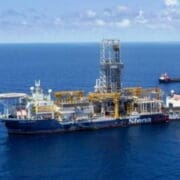
News Americas, Georgetown, Guyana, Tues. Oct. 14, 2025: ExxonMobil’s Guyana President, Alistair Routledge on Monday claimed the company is “still operating in the red to the tune of around US$6 billion” in Guyana, as he retorted over to a question by three U.S. senators on the company’s tax breaks. So which number is closer to reality: $6 billion or $3.4 billion in losses?

The ExxonMobil Guyana offices at 86 Duke Street in Georgetown, Guyana. Photographer: Jose A. Alvarado Jr./Bloomberg via Getty Images

What Routledge Said

Speaking at Exxon’s Ogle, East Coast Demerara headquarters, Routledge told reporters that the NGO Oil and Gas Governance Network, (OGGN) may have misled U.S. senators about the company’s tax filings. He said that ExxonMobil Guyana is still operating with a negative cash flow of around six billion US dollars.

“We continue to be actually cash flow negative on an accumulative basis… we are probably still around six billion US dollars in negative cash flow as we look at the cumulative expenditures and cumulative revenues that we’ve seen from the Stabroek Block,” he told reporters.

Routledge asserted that in ExxonMobil Corporation’s 2023 and 2024 tax filings, there were no Guyanese tax credits included in either of those filings, “and you would recall that prior to 2023, we were not making profits here in Guyana, so there were no tax credits from that. Up until this point, there have been no Guyana tax credits used by ExxonMobil.”

The Alternative Figure: $3.4 Billion

But Exxon’s own Guyana website identifies a different figure: US$3.4 billion in red ink — even while acknowledging an accounting profit in 2024. According to Exxon’s 2024 financials:

Gross production rose sharply with the Prosperity FPSO, boosting revenue for all partners

Despite posting an accounting profit, the company said it remains “in the red” by US$3.4 billion

Exxon and its co-venturers have invested a cumulative US$55 billion in Guyana to date. This divergence begs the question: how can a company be both profitable on paper and yet claim to be billions in losses?

The Contractual Context

Under the 2016 Production Sharing Agreement (PSA), Exxon’s Guyana deal allows it to recover up to 75% of its share of oil revenue for cost recovery before profit payments begin. In practice, this means a large portion of early revenue goes to recovering the developer’s costs- capital, exploration, infrastructure – leaving little net profit early on.

Furthermore, financials for 2024 show:

Operating expenditures of GYD 477.6 billion

Depreciation/amortization at GYD 301.8 billion

Exploration, production, royalties also eat into margins

These mechanics help explain how Exxon could legitimately claim negative cash flow despite strong revenues.

Why It Matters for Guyana

The optics of a $6B loss vs $3.4B matters deeply for public trust, fiscal policy, and future licensing. Guyana has collected over US$6.2 billion in oil profits and royalties since 2020 – so when Exxon claims it’s in the red, critics say the narrative raises concerns about transparency and fairness. If Exxon can delay or reduce profit sharing through cost recovery claims, that changes the magnitude and timing of what Guyana as a partner actually realizes.

Bottom Line

Both $6 billion and $3.4 billion claims could contain grains of truth, depending on accounting methods, timing, amortization and recovery policies.

Routledge emphasized cash flow negativity and absence of Guyanese tax credits in filings.

Exxon’s public data insists on a lower loss figure despite profits.

The discrepancy boils down to methodology, timing, and cost recovery mechanics.

So, while the $6B figure commands headlines, the $3.4B estimate rooted in Exxon’s own reporting asks where did the almost three additional billion come from?. It’s really a question of how loss and profit are really defined.

Senator Bernie Sanders’ AI Warning: Shaping a Human Future For The Caribbean

By Dr. Isaac Newton

News Americas, NEW YORK, NY, MON. Oct. 13, 2025: What does it mean to be human when machines can think, work, and create faster than we ever could? Senator Bernie Sanders has raised the alarm, warning that up to 100 million jobs in the United States could disappear in the next decade because of artificial intelligence and robotics. His warning is not just for the United States. It applies to the Caribbean as well, asking us a critical question: How can we use new technology without losing the value of human work, dignity, and the spirit that holds our communities together?

The Caribbean stands on the edge of profound change. AI and robotics can reimagine farming with smart systems, transform tourism with personalized experiences, and modernize manufacturing through automation. But progress without careful thought can harm as much as it helps. Picture a farmer watching machines harvest land once tilled by his family or a call center worker in Kingston replaced by an algorithm. Technology can create wealth, but it can also leave people behind if we are not deliberate about how we use it.

Senator Bernie Sanders, an Independent from Vermont, during a vote at the US Capitol in Washington, DC, US, on Friday, Oct. 3, 2025. Photographer: Graeme Sloan/Bloomberg via Getty Images

Policy must guide this transformation. Inspired by Sanders’ idea of a robot tax, Caribbean governments could require companies that replace human workers with machines to invest in retraining programs and digital skills education. A Caribbean Digital Skills Fund could train people in coding, cybersecurity, AI management, and robotics maintenance. A hotel clerk replaced by a kiosk could retrain as a data technician. A factory worker could become a robotics supervisor. These solutions are practical, not abstract. Policies like shorter workweeks with full pay could give workers more time for family, rest, and personal growth while maintaining productivity.

Education is key. Dr. Nadine Bryce, Associate Professor of Literacy Education at Hunter College, City University of New York, currently on a Fulbright in Jamaica, explains: “In schools, this translates to being critical consumers of AI. The Ministry of Education reported efforts to use AI to reshape teaching, assessment, and learning. AI tools helped students work at their own pace, and teachers could use the results to improve instruction. This raises important questions about how teachers can translate AI results into real classroom practice. Education is still a human activity. Teaching must remain meaningful, challenging, and tailored to the students in front of us. We cannot lose sight of the big picture.”

Her insight shows that the Caribbean must prepare not just skilled workers but wise citizens who can use technology responsibly. From preschool to university, education must blend digital literacy, creative problem-solving, ethical reasoning, and cultural knowledge. Coding classes and AI labs should exist alongside philosophy, art, and social responsibility. Learning should inspire judgment and creativity, not just teach machines to replace humans.

Fairness must guide the distribution of wealth. Profits generated by AI cannot go only to executives or global companies. Profit-sharing, employee ownership, and cooperatives ensure technology benefits everyone. Sanders in businessinsider.com emphasizes that workers must gain from the tools they help operate. Caribbean governments could require companies to invest a portion of AI profits in pensions, reskilling, and community projects. Imagine a factory in Trinidad funding small businesses or a tech company in St. Lucia building housing for displaced workers. This is not charity; it is fairness in action.

The Caribbean is at a threshold where technology and humanity meet. We cannot simply adapt; we must shape a future where machines enhance life rather than drain it. The urgency is real, and the choice is ours. Either we allow automation to hollow our societies, or we build a region where technology strengthens communities, protects human dignity, and helps people flourish. This choice will define our economies, our communities, and the kind of people we become.

EDITOR’S NOTE: Dr. Isaac Newton is a strategist and scholar trained at Harvard, Princeton, and Columbia. He advises governments and international institutions on governance, public transformation, and global justice. His work blends visionary thinking with practical insight, helping Global South nations address historical injustice, advance human dignity, and engage global issues of peace, sovereignty, and shared prosperity. Dr. Newton envisions societies where innovation and responsibility evolve together to promote human flourishing.

Guyana: The Only Country In The Americas Forecast For Double-Digit Growth Through 2027

By NAN Business Editor

News Americas, NEW YORK, NY, Thurs. Oct. 9, 2025: The South American CARICOM nation of Guyana is defying global economic gravity. According to the World Bank’s October 2025 Global Economic Prospects Report on Latin America and the Caribbean, it is the only country in the Americas forecast to record double-digit GDP growth through 2027.

The opening of the new Bharrat Jadgeo Demerara River bridge adds to the growth in Guyana. (DPI Image)

The report projects Guyana’s real GDP growth at 11.8% in 2025, jumping to 22.4% in 2026 and 24.0% in 2027, fueled by an oil and gas boom that continues to transform its economy. No other nation in the hemisphere comes close to those figures.

A Lone Outlier in a Slow-Growth Hemisphere

While Guyana soars, the rest of Latin America and the Caribbean will expand at far slower rates. The World Bank projects the region’s average growth at just 2.3% in 2025, edging up to 2.5% by 2027, restrained by weak investment, high borrowing costs, and sluggish productivity.

The top ten fastest-growing economies for 2025–2027 are as follows:

Rank Country 2025 Forecast (%) 2026 Forecast (%) 2027 Forecast (%) Key Growth Driver 1Guyana11.822.424.0Oil exports, infrastructure, FDI 2Paraguay4.23.73.7Agriculture, hydropower 3Argentina4.64.04.0Energy sector recovery 4Dominican Republic3.04.34.5Tourism, services, investment 5Costa Rica3.63.63.7Tech exports, green economy 6Panama3.94.14.1Logistics, services, canal expansion 7Suriname3.23.43.7Mining, oil projects 8Guatemala3.93.73.7Remittances, construction 9Grenada3.73.32.7Tourism, public investment 10St. Lucia3.92.52.1Tourism rebound

Guyana’s dominance is clear — growing at three to five times the pace of any other country in the region.

The Power Behind Guyana’s Boom

Since 2020, offshore oil discoveries have catapulted Guyana into the ranks of the world’s fastest-expanding economies. ExxonMobil and its consortium partners have already lifted daily output above 600,000 barrels, with projections to exceed one million barrels by decade’s end.

The government’s Natural Resource Fund (NRF) manages oil revenues to support infrastructure, health, education, and renewable energy projects. Massive road and housing programs, along with plans for a new gas-to-energy plant, are laying the groundwork for diversification including the just opened Demerara Harbour Bridge, renamed the Bharrat Jagdeo Demerara River Bridge.  The US$262 million engineering feat, Guyana’s longest and most advanced river crossing, now connects both sides of the Demerara River with 24/7 traffic, marking a turning point in national infrastructure. Constructed by China Railway Construction Corporation, the new structure replaces the venerable Demerara Harbour Bridge with four vehicle lanes, pedestrian and cyclist paths, and unrestricted river passage for ships. With foundations anchored by 658 piles, it is now the nation’s strongest bridge.

Economists warn, however, that sustaining momentum requires strong governance, transparent spending, and investment in human capital.

World Bank: Reforms Needed for “Transformational” Entrepreneurship

Beyond oil, the report calls for domestic reforms to attract investment and promote “transformational” entrepreneurship — high-growth firms that diffuse technology, create jobs, and raise productivity.

“The entrepreneur is the critical actor in development, identifying opportunities, innovating, and taking the risks needed to create value added and jobs,” said William Maloney, Chief Economist for Latin America and the Caribbean at the World Bank. “Creating more dynamic economies in Latin America and the Caribbean will require strengthening our pipeline of entrepreneurial talent, while undertaking the systemic reforms necessary for them to thrive.”

Despite enthusiasm for entrepreneurship, most firms in the region are micro or small enterprises with limited paths to scale — representing up to 70% of businesses in some countries. The Bank argues that a smaller group of high-growth, innovative firms could drive productivity and innovation but face familiar barriers: scarce financing, burdensome regulation, skills shortages, and weak infrastructure.

To foster private-sector-led growth, the report proposes a three-point reform agenda:

Invest in Human Capital – Improve education at all levels, expand managerial training, and align workforce programs with private-sector needs to fuel job creation.

Reform Business Regulation – Remove distortionary subsidies, modernize tax policy, and upgrade logistics, energy, and digital systems to reduce entry barriers.

Expand Access to Finance – With a quarter of firms credit-constrained, the Bank urges stronger risk-sharing, streamlined dispute resolution, and modern bankruptcy laws to support both lenders and entrepreneurs.

The Road Ahead

The World Bank warns that without reforms, much of the region risks stagnation. Yet, with the right mix of fiscal prudence, institutional reform, and inclusive entrepreneurship, Latin America and the Caribbean could reignite growth and competitiveness.

In that effort, Guyana’s success story — balancing oil wealth with long-term investment — may serve as both an inspiration and a cautionary tale for its neighbors.

A New Caribbean Hotel Is Coming To This Caribbean Island

By NAN Travel Editor

News Americas, KINGSTOWN, St. Vincent and the Grenadines, Thurs. Oct. 9, 2025: A new chapter in Caribbean tourism is being written in the Caribbean islands of St. Vincent and the Grenadines. The Government of St. Vincent and the Grenadines and Sandals Resorts International, (SRI) have signed a landmark agreement for the construction of a US$500 million, (EC$1.35 billion) Beaches Resort at Mount Wynne – the largest single tourism investment in the nation’s history.

Transforming the Tourism Landscape

L-R: Carlos James – Minister of Tourism, Civil Aviation, Sustainable Development & Culture and Adam Stewart – Executive Chairman, Sandals Resorts

The upcoming 500-room Beaches St. Vincent and the Grenadines Resort will redefine family-friendly, all-inclusive luxury on the island’s scenic leeward coast. Designed to cater to families, groups, and multi-generational travelers, the development marks a bold step in expanding the country’s tourism infrastructure and global visibility.

Built in phases, the project is expected to create nearly 2,000 direct jobs during its operational phase, offering training and employment opportunities for Vincentians across hospitality, construction, agriculture, culture, and supporting industries. The resort is scheduled to open in 2027.

“A Game-Changer for St. Vincent and the Grenadines”

Carlos James, Minister of Tourism, Civil Aviation, Sustainable Development and Culture, hailed the investment as a milestone for national growth:

“This investment is a game-changer for St. Vincent and the Grenadines. It represents confidence in our tourism sector and in the Vincentian people — their talent, resilience, and hospitality. The Beaches Resort will open doors to thousands of new jobs, stimulate local enterprise, and position our country as a hub for sustainable, family-oriented tourism.”

James added that the development reflects the government’s vision of a tourism industry that drives inclusive economic growth, empowers communities, and celebrates the nation’s natural and cultural heritage.

Building on Momentum

The project follows the successful opening of Sandals St. Vincent and the Grenadines in March 2023, deepening the partnership between the Government and Sandals Resorts International. The alliance continues to strengthen St. Vincent and the Grenadines’ profile as one of the region’s rising tourism powerhouses.

Tourism officials say the Beaches development is part of a broader tourism renaissance now underway, with four major hotel projects reshaping the nation’s hospitality landscape.

A Wave of Transformative Investments

In addition to the Beaches Resort at Mount Wynne, other major tourism projects currently advancing include:

A world-class Marriott Hotel at Peter’s Hope.

The revitalization of the iconic Palm Island Tourism Development Project.

The Cumberland Resort and Marina, designed to accommodate small pleasure craft and yachting visitors.

Together, these projects represent more than EC$2 billion (over US$740 million) in combined investment and are projected to create nearly 4,000 jobs across construction, tourism, and related sectors — with the Beaches Resort accounting for roughly half of that total.

Empowering Vincentians

The government has reaffirmed its commitment to ensuring Vincentians benefit directly from the tourism boom through training, capacity building, and local business linkages. Officials say these initiatives will help strengthen domestic industries — from agriculture to the creative economy — ensuring tourism growth translates into real, inclusive benefits for communities across the country.

As the groundwork begins for the Beaches St. Vincent and the Grenadines Resort, optimism is high that this investment will not only elevate the nation’s hospitality standards but also solidify its place as a premier tourism and investment destination in the Caribbean.

Bahamas Grid Company Reports Strong Early Progress on Foundational Grid Upgrade Project

NASSAU, The Bahamas, Oct. 9, 2025 /PRNewswire-HISPANIC PR WIRE/ — Six months after the launch of its Foundational Grid Upgrade Project and one year since providing restoration and maintenance activities, the Bahamas Grid Company (BGC) has released its first comprehensive Progress Metrics Report. The report highlights major upgrades to the transmission and distribution systems serving New Providence, paving the way for greater reliability, resilience, and power quality.

Early results show the project is already transforming electricity delivery, with outages declining sharply and thousands of customers now experiencing enhanced service quality.

Building a Stronger, More Resilient Grid

Progress on the $130 million initiative is well ahead of schedule—28% faster than planned—with major infrastructure improvements completed or underway:

144 new steel poles installed, replacing aging wooden structures and providing Category 5 hurricane-grade resilience.

153,120 feet of transmission cable reconductored with double-sized wire to accommodate future load growth and new generation sources.

42,240 feet of distribution cable reconductored to remediate system vulnerabilities and support expanding customer demand.

Three new substations under construction to enhance system protection and enable rerouting of power to prevent large-scale outages.

Leveraging Smart Technologies to Reduce Outages

The deployment of advanced grid technologies is delivering measurable results in outage reduction and faster response times:

47 IntelliRupters installed on high-risk feeders to reduce both the number of outages and the customers affected by them.

137,280 feet of OPGW fiber cable replaced to enable remote operations, protection devices, and the integration of smart technologies across the grid.

A new integrated Work Management System is being implemented to track upgrades and customer connections while providing real-time outage response — a first for The Bahamas.

Direct Public Benefits Already Visible

The positive impact of these upgrades is being felt by homes and businesses across New Providence:

49,000 homes in historically outage-prone areas are now experiencing far fewer interruptions.

16,000 homes have benefited from load-balancing efforts that improve power quality and extend the lifespan of home appliances.

Proactive patrols and maintenance on 70 circuit miles of high-risk areas are reducing potential storm damage before it occurs.

86% reduction in outages for customers downstream of IntelliRupters.

Six months into implementation, the Foundational Grid Upgrade Project is already delivering measurable reliability improvements, laying the groundwork for a more secure and sustainable energy system for New Providence.

About Us
Bahamas Grid Company (BGC), established through a public-private partnership, is a wires company that operates and manages the transmission and distribution system (T&D System) – i.e., the poles, wires and substations that distribute power – across the island of New Providence in The Bahamas.

Website: https://bahamasgrid.net/

Parkland Corporation Announces Election Deadline for the Sunoco Arrangement

CALGARY, AB, Oct. 8, 2025 /PRNewswire-HISPANIC PR WIRE/ — Parkland Corporation (“Parkland”, “we”, the “Company”, or “our”) (TSX: PKI) announced today that the deadline for registered holders of common shares of Parkland (the “Company Shares”) to make elections in respect of the consideration receivable pursuant to the previously announced Sunoco Arrangement1 is 5:00 P.M. (Calgary time) on October 17, 2025 (the “Election Deadline”).

For complete instructions, please refer to the letter of transmittal and election form previously mailed to registered shareholders on September 11, 2025 and the associated press release issued by the Company on the same day, each available on www.parkland.ca and the Company’s profile on SEDAR+ at www.sedarplus.ca.

Beneficial (non-registered) shareholders whose Company Shares are registered in the name of an intermediary such as a broker, investment dealer, bank, trust company, trustee, nominee or other intermediary should not use the letter of transmittal but rather should contact their intermediary for instructions and assistance in depositing their Company Shares and electing the form of consideration they wish to receive. Every intermediary has its own procedures with respect to the election and may have an earlier election deadline.

The Sunoco Arrangement is expected to close in the fourth quarter of 2025, subject to obtaining certain remaining regulatory approvals and the satisfaction or waiver of customary closing conditions.

_________________________________________
1 On May 5, 2025, Parkland announced that it entered into an arrangement agreement (as amended by an amending agreement dated May 26, 2025) with Sunoco LP (NYSE:SUN) (“Sunoco”), SunocoCorp LLC (formerly, NuStar GP Holdings LLC), and 2709716 Alberta ULC (formerly, 2709716 Alberta Ltd.) (the “Purchaser”), pursuant to which Sunoco, through the Purchaser, will acquire all of the issued and outstanding Company Shares by way of a court-approved plan of arrangement under Section 193 of the Business Corporations Act (Alberta) in a cash and equity transaction.

About Parkland Corporation

Parkland is a leading international fuel distributor, marketer, and convenience retailer with safe and reliable operations in twenty-six countries across the Americas. Our retail network meets the fuel, and convenience needs of everyday consumers. Our commercial operations provide businesses with fuel to operate, complete projects and better serve their customers. In addition to meeting our customers’ needs for essential fuels, Parkland provides a range of choices to help them lower their environmental impact, including manufacturing and blending renewable fuels, ultra-fast EV charging, a variety of solutions for carbon credits and renewables, and solar power. With approximately 4,000 retail and commercial locations across Canada, the United States, and the Caribbean region, we have developed supply, distribution, and trading capabilities to accelerate growth and business performance.

Forward-Looking Statements

Certain statements contained herein constitute forward-looking information and statements (collectively, “forward looking statements”). When used in this press release, the words “expect”, “may”, “shall”, “will”, and similar expressions are intended to identify forward-looking statements. In particular, this press release contains forward-looking statements with respect to, among other things, the Election Deadline, the completion of the Sunoco Arrangement and the expected timing thereof, the receipt of the remaining key regulatory approvals that are a condition to completing the Sunoco Arrangement and the satisfaction or waiver of customary closing conditions.

These statements involve known and unknown risks, uncertainties and other factors that may cause actual results or events to differ materially from those anticipated in such forward-looking statements. No assurance can be given that these expectations will prove to be correct and such forward-looking statements should not be unduly relied upon. These forward-looking statements speak only as of the date hereof. Parkland does not undertake any obligations to publicly update or revise any forward-looking statements except as required by securities laws. Actual results could differ materially from those anticipated in these forward-looking statements as a result of numerous risks, assumptions and uncertainties including, but not limited to: general economic, regulatory, market and business conditions; the completion of the Sunoco Arrangement on anticipated terms and the closing date thereof, or at all, including obtaining certain remaining regulatory approvals and the satisfaction or waiver of customary closing conditions; Parkland’s ability to execute its business strategy; action by other persons or companies; the consideration to be received by Parkland shareholders is subject to proration, maximum amounts and adjustments, such that a Parkland shareholder may not receive all of the consideration in the form that they elect to receive; and other factors, many of which are beyond the control of Parkland. See also the risks and uncertainties described under the headings “Cautionary Statement Regarding Forward-Looking Information” and “Risk Factors” in Parkland’s current Annual Information Form dated March 5, 2025, under the headings “Forward-Looking Information” and “Risk Factors” in the Q2 Management’s Discussion and Analysis dated August 5, 2025, and under the heading “Risk Factors” in Parkland’s management information circular and proxy statement dated May 26, 2025, each as filed on SEDAR+ and available on Parkland’s website at www.parkland.ca.

The forward-looking statements contained herein are expressly qualified by this cautionary statement.

Guyana: Turning Urgency Into Advantage

By Ron Cheong

News Americas, TORONTO, Canada, Mon. Oct. 6, 2025: Guyana is navigating one of the most extraordinary moments in its modern history. With vast new oil discoveries transforming its economic outlook almost overnight, the country has embarked on an ambitious program of investment, social development, and national security. The stakes are high: how to turn a sudden torrent of resource wealth into durable, broad-based national advantage, while facing both external threats and internal challenges.

An artist’s impression of the New Demerara River Bridge commissioned on Sunday, October 5, 2025 in Guyana. (DPI image)

The September 1st general election, which returned the People’s Progressive Party/Civic (PPP/C) with a strong mandate, confirms that the majority of Guyanese want continuity in the government’s development strategy. For the first time in decades, the old patterns of strictly race-based voting gave way to a more issue-driven electorate. The PPP/C, traditionally rooted in the Indo-Guyanese community, won about 55% of the vote, in a country where that community makes up roughly 35% of the population. This widening base, alongside the emergence of the WIN party, reflects a population increasingly judging parties on their economic vision and ability to deliver.

Building the Foundations of Transformation

One of the most visible symbols of this transformation came on Sunday, when the long-awaited bridge over the Demerara River opened. This project, which will replace the aging floating bridge, stands as a centerpiece of Guyana’s broader infrastructure push. By improving connectivity between the capital and key economic zones, it promises to slash transport times, boost commerce, and integrate communities more closely into the national economy.

The bridge is only one part of a wider strategy. Drawing from both the National Development Strategy and the Low Carbon Development Strategy, Guyana is using oil revenues to accelerate investments in roads, ports, housing, hospitals, and schools. Social programs — from cash transfers to education initiatives – are designed not just to share the wealth, but to invest in long-term human capacity.

The government’s message is clear: this is not a squandered boom, but a carefully sequenced plan. Oil money is being directed into a sovereign wealth fund, with rules and oversight mechanisms to ensure spending is sustainable. The goal is to convert today’s windfall into tomorrow’s permanent uplift.

Defending Wealth, Protecting Sovereignty

Alongside these economic ambitions is a pressing reality: Guyana must protect its newfound wealth. Venezuela’s persistent claims on Guyana’s Essequibo region — and by extension, its offshore oil fields — have forced Georgetown to integrate defence directly into its development agenda.

Defence and economics are now inseparable. Offshore patrols, maritime security, and alliances with partners such as the United States are being reinforced to safeguard critical assets. But here too, Guyana is looking for models that combine urgency with nation-building. Drawing lessons from countries like Canada, it is exploring how defence contracts can be structured to build local industry, transfer skills, and expand domestic supply chains under firm civilian oversight.

Learning from Global Practice

Guyana’s situation is unique in scale and timing, but not without precedent. Canada’s use of public procurement to strengthen domestic industries during periods of expansion offers useful parallels. Guyana could, for example, phase local content requirements into mega-projects, ensuring that oil money not only builds roads and bridges, but also trains welders, engineers, and project managers who can sustain development long after the oil has peaked.

Workforce development is particularly urgent. Building technical colleges and apprenticeship schemes tied directly to major infrastructure and energy projects would ensure that young Guyanese gain the skills to participate in, and sustain, the transformation. The government has already begun linking housing construction and vocational training, a model that could expand across multiple sectors.

Sequencing and Capacity

The challenge is not lack of ambition, but the risk of overload. Oil revenues are flowing in at a speed few countries have experienced, and the temptation to spend rapidly is ever-present. The government has recognized the importance of sequencing – ensuring that procurement, project management, and oversight systems expand in step with new commitments. Independent fiscal oversight and phased project requirements are being emphasized to keep the sprint from turning chaotic.

In other words, Guyana is racing ahead – but trying to run its sprint like a marathon. That means pacing the rollout of projects, building institutional capacity alongside physical capacity, and resisting the pitfalls that have trapped other resource-rich nations.

The Promise Ahead

The victory on September 1st has given the PPP/C another five years to prove that this model can work. The opening of the Demerara bridge is both a milestone and a metaphor: a structure that connects communities and commerce, built with the revenues of a new era, and designed to last for generations.

Guyana’s path is not without risks. Venezuelan threats, the dangers of overspending, and the social strains of rapid change will test the government’s resolve. But the signs so far suggest that the country is taking the long view, guided by national strategies that balance development, sustainability, and sovereignty.

If Guyana can maintain that discipline, it may succeed where so many resource-rich nations have faltered. It may turn urgency into advantage — and transform an oil boom into a national renaissance.

EDITOR’S NOTE: Ron Cheong, born in Guyana, is a community activist and dedicated volunteer with an extensive international background in banking. Now residing in Toronto, Canada, he is a fellow of the Institute of Canadian Bankers and holds a Bachelor of Science degree from the University of Toronto.

Young America Capital Advises Cloud Carib in Strategic Growth Financing from Partners for Growth

MAMARONECK, N.Y. , Sept. 29, 2025 /PRNewswire-HISPANIC PR WIRE/ — Young America Capital (“YAC”), a FINRA/SEC-registered investment bank, announced that it served as the financial advisor to Cloud Carib Limited, a leading provider of sovereign cloud and cybersecurity services, in securing a strategic growth financing facility from Partners for Growth (PFG), a Silicon Valley-based private credit firm.

This financing will support Cloud Carib’s regional expansion across the Caribbean and Latin America, bolstering its sovereign cloud, cybersecurity, and managed services for governments and regulated enterprises where data sovereignty and compliance are essential.

“This transaction demonstrates how Young America Capital helps innovative technology companies access the right capital partners to accelerate growth,” said Jackson Ritchie, Managing Director at Young America Capital. “Cloud Carib is building a critical platform for digital sovereignty and cybersecurity in the Caribbean and Latin America, and we are honored to support their expansion strategy.”

Headquartered in The Bahamas, Cloud Carib has established itself as a trusted partner for sovereign cloud solutions across CARICOM member states and select Latin American markets. With PFG’s flexible capital, the company is positioned to scale operations, accelerate product development, and strengthen its leadership in secure digital infrastructure.

“Working with Partners for Growth and executing this facility reinforces Cloud Carib’s mission to empower the region with secure, sovereign cloud infrastructure,” said Scott Mackenzie, CEO of Cloud Carib. “This investment is more than capital; it’s a vote of confidence in The Bahamas and the Caribbean as an investable innovation economy.”

Andrew Kahn, Co-Founder and CEO of Partners for Growth, added: “We are pleased to provide Cloud Carib with a flexible capital solution to support its continued expansion. The company has built a resilient platform with a reputation for excellence in cloud and managed services. We look forward to supporting its next stage of growth.”

“Advising Cloud Carib on this transaction reflects Young America Capital’s deep expertise in the technology sector and our growing track record in advising companies that are driving innovation in digital infrastructure and cybersecurity,” added Jackson Ritchie, Managing Director at YAC.

About Young America Capital

Young America Capital is a New York-based investment bank and a FINRA/SIPC-registered broker-dealer. The firm specializes in mergers & acquisitions, growth financing, and strategic advisory for lower middle-market companies across technology, healthcare, real estate, consumer, industrials, renewables, and other sectors.

Forward-Looking Statements

This release may contain forward-looking statements regarding anticipated benefits of the transaction. These statements involve risks and uncertainties that could cause actual results to differ materially. Young America Capital does not undertake to update forward-looking statements except as required by law.