Posts

How Indigenous Land Management Practices Are a Blueprint for Climate-Resilient Agriculture

Black Immigrant Daily News

The content originally appeared on: Caribbean News Service

Source: Independent Media Institute

Several Hollywood action films center around an impending apocalypse in the form of an asteroid on a collision course with Earth–a glaring metaphor for the real-world implications of a rapidly accelerating climate crisis.

As this crisis unfolds before our very eyes, however, rather than look up to the atmosphere to see what can and should be done to curtail some of the worst effects of a rapidly warming world, maybe our gazes should also be trained downward at the soil beneath our feet, while pondering this question: If aggressive commercial agriculture exacerbates the climate crisis, are there key lessons to be learned from Indigenous land management practices that can help to restore environmental balance?

“I’m going to borrow from the founder of the Slow Food movement, Carlo Petrini,” said Enrique Salm?n, head of the American Indian Studies Program at Cal State University-East Bay, when asked this same question.

“In a conference, someone asked him, ‘What is the most important thing that Americans can do to help solve this food and climate change crisis?’ And he said, not missing a beat, ‘if everyone got rid of their refrigerators,’” Salm?n said, relaying Petrini’s response not so much to decry the refrigerator as a greenhouse gas emitter, but to signify its role at the heart of a system that has removed the average consumer from a direct connection to the natural world as a food source.

“We focus so much on the negative impacts from big agribusiness, and rightfully so. And it seems that, to the average American, there’s not much they can do about it. But in reality, they can,” Salm?n said.

Soil Erosion and Climate Change

From the stripping of valuable rainforests to pave the way for crops and cattle grazing to the mismanagement of carbon-storing grasslands, the link between heavily commercialized agriculture and climate change has been well established–as has its association with exacerbating the impacts from climate change.

Take soil erosion, which can be caused by the ritual plowing of farmland before and after growing seasons, along with the overgrazing of cattle. As layers of fertile topsoils are lost, this can lead to a host of damaging consequences, including a reduced ability for the remaining soil to retain moisture, depleted biodiversity within the soil itself, and increased rainwater runoff, which can contaminate and clog local waterways. Soil erosion isn’t a small problem, either.

A 2021 study found that the stretch of land constituting the U.S. Corn Belt–where 75 percent of the nation’s grain is cultivated–has completely lost one-third of its topsoils.

Calls to Revise Global Farming Practices

It’s no surprise then that the Intergovernmental Panel on Climate Change (IPCC)–an organization of governments charged with routinely assessing the current state of climate change science–has called for a revision to global farming practices in order to build a sustainable food supply as the planet warms and dries out.

Dwindling water supplies, for example, pose a major obstacle to growers on the U.S. west coast, which has been undergoing the worst megadrought in 1,200 years for more than two decades. Record low levels in the Colorado River have hit farmers hard.

Indigenous Land Management Techniques

As proponents of Indigenous land management techniques point out, the careful cultivation of naturally available resources can offer an alternate blueprint. Despite the fact that Tribes in the U.S. live on just 1 percent of their historical land base, many continue to successfully practice their ancestral farming techniques in areas often disproportionately impacted by climate change hazards.

A 2021 study found that while Indigenous peoples make up only 5 percent of the world’s population, their land stewardship protects approximately 85 percent of the world’s biodiversity.

Salm?n calls these lands “refugia” of resilience in an increasingly arid environment, using a term to describe surprisingly hardy habitats. “In other words, these are places that [can show us] how to adapt to what we’re witnessing,” said Salm?n, during a presentation at the 2022 national Soil Health Innovations Conference.

During this presentation, Salm?n ran through a snapshot of some of these techniques, such as the Hopi Tribe’s no-till practice of planting corn very deep in the ground using digging sticks, to leave undisturbed the vast array of microbial life under the surface of the soil.

The Hopi also plant their corn and other crops on land at a low angle of repose. This helps the soil retain moisture, maximizes any potential water runoff from higher ground, and better regulates soil temperatures.

In contrast to parts of Nebraska and Iowa (where fields of corn can appear to stretch seamlessly off into the horizon), the Zuni Tribe in New Mexico breaks up the land into small one- or two-meter squares–a system known as “waffle gardens.” Along the edges of these square plots, the soil is raised up to six or eight inches, and the corn is planted inside.

“What happens is that just a small six- or eight-inch height of the wall keeps the winds from whisking away the moisture in the soil, and it helps create just enough of a shade to also keep the soil temperatures low,” Salm?n said.

Artfully placed check dams–human-made constructs to help mitigate water runoff and soil erosion–can play a pivotal role in completely revitalizing a barren area of land within as quickly as ten years. What’s more, Indigenous farming practices eschew the need for harmful pesticides and herbicides, said Salm?n.

“We really wouldn’t need [pesticides] if we altered our agricultural techniques,” Salm?n explained. “We would stop poisoning ourselves and our pollinators and our water and the soil.” Others agree.

Reconnecting Consumers With Nature

“We’re now seeing an impact in our mammal populations,” said Kelsey Scott, director of programs for the Intertribal Agriculture Council (IAC), an organization that connects and promotes Indigenous land uses, about some of the consequences of blanket applications of pesticides and herbicides, like neonicotinoids.

“Deer that have fed on fields planted with seeds treated with neonicotinoids, they’re now seeing a bottom jaw, lower jaw, half the size of what it should be at full maturity,” Scott added, pointing to a 2019 study out of South Dakota State University that found a link between the pesticide and health defects in white-tailed deers that also includes reproductive problems and impaired thyroid function.

While the gulf between the everyday consumer and Indigenous farming techniques may seem wide, however, it’s not insurmountable, says Scott, who listed a series of practical suggestions for anyone interested in bridging that divide. One is to learn about nature at the local level, and see its intended functions “and patterns” not in isolation but as a harmonious whole, Scott said. Importantly for a warming world, these systems have built-in mechanisms that support climate resiliency.

As an example, Scott shared an anecdote from one of her colleagues who discovered that his trees stopped producing sap before a storm arrived. “He was able to correlate that with the fact that the tree had an awareness that there was a weather system coming in, and in order to withstand it, it needed to reserve all forms of energy that it could,” she said.

For most consumers, the connection to farming is rooted in the end product–“the food”–Scott said. Perhaps the most effective way to flesh out and learn about these natural systems and cycles, therefore, is to visit places where Indigenous land management practices are being applied.

“If they can go and experience some connection with the land or find a local farmer or rancher where they can do a day tag-along, helping with operations, absolutely take up that opportunity because it’s such a unique experience,” Scott said.

With a real-world grounding under one’s belt, it can be easier to understand how managing the climate crisis doesn’t require a complete reinvention of the wheel as much as it does an acknowledgment of how thoughtful Indigenous cultivation of biodiversity has thus far stood the test of time.

One example is happening at the Onondaga Nation Farm in Central New York, which has amassed a treasure trove of seeds linking the present to its ancestral past. This includes more than 1,100 varieties of corn seeds–some of which are around 4,000 years old–as well as 500-year-old squash seeds. The farm’s rich bank of seeds is exchanged within an intertribal farming network called Braiding the Sacred.

“Without staples of Indigenous diets that have been very carefully stewarded in a symbiotic relationship over the evolution of time, societies wouldn’t have been able to make it through some of these [historic] natural disasters,” said Scott. “In fact, a lot of times, societies would have been healthier if they would have utilized or grown or harvested the crop in the same production style that the Indigenous community–who they more often than not stole the crop from–would have been doing.”

Credit Line: This article was produced by Earth Life, a project of the Independent Media Institute.

Donate At Caribbean News Service, we do not charge for our content and we want to keep it that way. We are seeking support from individuals and organisations so we can continue our work & develop CNS further.


NewsAmericasNow.com

Why Immigrants Are More Likely To Become Entrepreneurs

Black Immigrant Daily News

News Americas, NEW YORK, NY, Mon. Mar. 27, 2023: Studies done on immigrant entrepreneurs repeatedly show that they have a significant economic impact – not only in their new communities – but on a much larger and even global scale.

The majority of people migrating outside their home country are those with entrepreneurial skills, who have decided to pursue better lives. The best and brightest from impoverished and economically developing countries risk time, money, and their lives to invest in a new future for themselves and their families.

You can also start thinking outside the box and embark on your own path to success by learning how to get 100 free Instagram followers.

What Makes a Great Entrepreneur?

Because of their ability to foresee demands and take the initiative to market solid new ideas, entrepreneurs are a driving force in any healthy economy.

A successful entrepreneur possesses a certain set of skills that make him more immune to the risk of failure, like the ability to adapt, fluid communication, and endurance. Coming with only their skillset and leaving everything behind to embark on a world of possibilities not only fit the description of the average immigrant entrepreneur, but it also seems to be one of the most desired qualities that make a good entrepreneur.

How Do Immigrants Model Society?

Alleviate the economy and bring strong values to the table

Most people who decide to migrate from their country of birth have more to offer than just an adventurous spirit. These people are likely to be professionals and specialists with a university degree, work experience, and talents that make them eligible to contribute to the world economy in many ways.

Studies show that immigrants are also more likely to start businesses in their new communities, adding to the state’s welfare. Indeed, by starting new enterprises and raising employment rates, immigrant entrepreneurs contribute significantly to the economy of the country.

Alleviate Work Shortages

Immigrant entrepreneurs are a vital part of every country’s economy because they bring to the table the dedication and innovative thinking needed to revitalize struggling communities and create jobs.

The proneness for geographic mobility of immigrant workers aids local economies in addressing labor shortages, and by bringing in more laborers, they fill up any gaps in the native population that would eventually cause the economy to crumble.

NewsAmericasNow.com

Regional Collaboration In Guyana’s Gas-To-Power Project

Black Immigrant Daily News

By Dr. Lorraine Sobers

News Americas, PORT-OF-SPAIN, Trinidad, Mon. Mar. 27, 2023: There was greater Trinidad and Tobago presence at this year’s International Conference and Expo Guyana 2023, than in 2022. Trinidad and Tobago Prime Minister, Dr. the Hon. Keith Rowley, was one of the four sitting national leaders delivering remarks at the opening ceremony. He was also on hand to officially open the Expo. Trinidad and Tobago Cabinet Minister, Stuart Young, Ministry of Energy and Energy Industries also participated in the conference on a regional collaboration panel alongside Dr. Thackwray Driver, CEO, Energy Chamber of Trinidad and Tobago. All three bore the same clear and direct message to Guyana: we want to work with you.

In this article I will expand on six statements from Prime Minister Rowley’s speech related to opportunities for collaboration between Guyana and Trinidad and Tobago in the context of Guyana’s Gas-to-Power Project.

We have executed a Memorandum of Understanding (MOU) with the Government of Cooperative Republic of Guyana…in the field of Energy

The MOU between Guyana and Trinidad and Tobago signed in May 2022 established a Bilateral Commission to facilitate cooperation. The Commission is charged with several tasks including “formulation of specific proposals for cooperation and collaboration between the two states in identified areas”. In the field of energy, specifically for gas-to-power, Trinidad and Tobago has a long and successful experience in gas production, building and maintaining gas pipeline networks, using natural gas for electricity generation, and developing a robust and reliable distribution network.

There is no shortage of trained engineers, technicians, and graduates of local education institutions to design, build, inspect and maintain power systems and the supporting technology for the natural gas industry. The MOU between Guyana and Trinidad and Tobago is the doorway for the collaborative, mutually beneficial projects for all aspects of converting natural gas to electric power.

 “…investments in enabling infrastructure and technology can be costly even to the point of being prohibitive. Trinidad and Tobago has the energy infrastructure to monetize hydrocarbon resources produced by its Caribbean neighbours.”

There have been several suggestions on how Trinidad and Tobago’s physical infrastructure can be used by Caribbean neighbours. A pipeline from Guyana to Point Lisas, Trinidad, the hub of the nation’s petrochemical industry, or to Point Fortin, the location of the Liquified Natural Gas (LNG) trains have been contemplated by some commentators. However, the distance between the Stabroek Block and the location of the LNG plants in Point Fortin, Trinidad (approximately 400 km) gives reason to pause. For comparison, the proposed Liza Gas pipeline for the gas-to-power project is estimated to be 225 km from the offshore from Stabroek Block to shore. Another bold option, the dismantling and relocation of LNG trains from Point Fortin to Guyana, is hampered by the age of the trains. However, in the short to medium term the construction of a small LNG plant by Trinidad-based ICON LNG Guyana Inc. seems most plausible.

 “Our current natural gas production averages 2.8 billion cubic feet (bcf) per day and we are still exploring the market for a user for the oil refinery…Trinidad and Tobago therefore provides a viable option for those countries that wish to optimize the monetization of their hydrocarbon resources without incurring substantial capital expenditure.”

At peak performance, Trinidad and Tobago’s petrochemical and industrial sector required four billion cubic feet (Bcf) of natural gas per day as feedstock. Current gas supply falls more than 25% below processing capacity and below demand. In the meantime, Guyana’s natural gas supply is expected to be greater than current demand and as gas comes to shore, it can signal the beginning of a vibrant, possibly low carbon, petrochemical and industrial sector.

At present Guyana is exporting raw crude and importing refined crude oil products. Crude oil transportation to and refining in Trinidad is somewhat easier to envision than the gas supply-demand mismatch both countries face. However, significant investment will be needed to restart, refurbish and possibly reconfigure the oil refinery at Pointe-a-Pierre, Trinidad. Investors will have to compare the cost of a Pointe-a-Pierre purchase and overhaul and building a new refinery in Guyana. The technology, business and economics of oil refining has changed since the Pointe-a-Pierre refinery was built; investors are understandably, cautious.

“We are open to discussion with our other Caribbean neighbours on the monetization of their hydrocarbon resources in Trinidad and Tobago.”

Recently, there has been significant interaction between Guyana and Trinidad and Tobago leading up to the conference held in Guyana last month. In August 2022, Guyana President Dr. Irfaan Ali made a state visit to Trinidad and Tobago with the intention of holding bilateral talks on agriculture, energy and matters of mutual interest. Then in January this year President Ali was a feature speaker at Trinidad and Tobago’s Energy Chamber Conference. At the January  conference, Minister Young made a case for regional collaboration stating that Trinidad and Tobago’s  geographic and institutional position can leverage and fast track the development of natural gas resources in neighbouring countries — Grenada, Barbados, Guyana and Suriname — to meet regional needs.

“We also wish to assist you in developing programmes to meet the necessary training needs of your energy personnel.”

The University of Guyana and The University of the West Indies (UWI) have been working towards training 20,000 Guyana nationals between 2020 and 2025. I was delighted to deliver reservoir engineering courses through the Petroleum Studies Unit at UWI for Guyana nationals. This kind of opportunity and interaction between countries is a significant linkage in the chain that has maintained the connection across CARICOM nations. This is more than a concept to me, I have seen it work first hand, which is how I can agree wholeheartedly with Prime Minister Rowley’s statement:

“I am confident that the spirit of community, which has been key to our success as the oldest surviving integration movement in the developing world, will foster and augment the level of cooperation that can make the Caribbean an economic force in the region.”

EDITOR’S NOTE: Dr. Lorraine Sobers is a Fulbright Scholar currently lecturing at the University of the West Indies, St. Augustine. Dr Sobers has a BS in Chemical Engineering and postgraduate degrees, MS and Ph.D., in Petroleum Engineering from Texas Tech and Imperial College, London respectively. She has  20 years’ experience in the energy sector specialising in Carbon Capture and Storage (CCS). Dr. Sobers is the Project Coordinator for CO2 Emission Reduction Mobilisation (CERM) Project and a Fellow of the Caribbean Policy Consortium.

NewsAmericasNow.com

Shallow and Bassarath elected as President and Vice President of Cricket West Indies

Black Immigrant Daily News

The content originally appeared on: Caribbean News Service

Dr. Kishore Shallow and Azim Bassarath have been elected to the posts of President and Vice President respectively, of Cricket West Indies (CWI). They will serve two-year terms.

The election process was conducted as one of the key items on the agenda of the 24th Annual General Meeting of CWI, which was held on Saturday 25, March 2023 at the Coolidge Cricket Ground in Antigua.

Dr. Shallow said: “On behalf of Cricket West Indies, I sincerely thank the outgoing President Ricky Skerritt for his latest contribution to our beloved cricket. He has served with distinction and pride in one of the most challenging periods in our lifetime, the COVID-19 pandemic. His tenure has certainly moved us in the right direction.”

He added: “The resounding vote of confidence demonstrated by the shareholders is heartening. My profound gratitude to them and all the stakeholders for supporting me throughout the electoral process. As I embark on this new role with Vice President Bassarath, there is no delusion about the considerable workload. My philosophy remains one of unity and inclusivity. For it is only if we pool our resources and efforts together will West Indies cricket make any meaningful advancement as a cricket nation.”

Bassarath said: “It is indeed an honour to be elected to serve as the Vice President of Cricket West Indies and I look forward to working alongside Dr. Shallow and the other members of the Board of Directors as we continue the good work done by Mr. Skerritt for the benefit of everyone involved in West Indies Cricket.”

In addition to the election for President and Vice President, the following persons were duly elected as Member Directors of CWI:

Jason King – Barbados Cricket Association

Conde Riley – Barbados Cricket Association

Bissoondyal Singh – Guyana Cricket Board

Deleep Singh – Guyana Cricket Board

Dr. Donovan Bennett – Jamaica Cricket Association

Wilford Heaven – Jamaica Cricket Association

Enoch Lewis – Leeward Islands Cricket Board

Leon Rodney – Leeward Islands Cricket Board

Kerwin John – Trinidad and Tobago Cricket Board

Arjoon Ramlal – Trinidad and Tobago Cricket Board

Dwain Gill – Windward Islands Cricket Board

Carol Henry – Windward Islands Cricket Board

Donate At Caribbean News Service, we do not charge for our content and we want to keep it that way. We are seeking support from individuals and organisations so we can continue our work & develop CNS further.


NewsAmericasNow.com

Abstention key issue as Cubans vote in parliamentary elections

Black Immigrant Daily News

The content originally appeared on: Caribbean News Service
A man wearing a shirt with an image of Ernesto ‘Che’ Guevara prepares to vote at a polling station in Havana, Cuba, Sunday, March 26, 2023. Cubans vote for the deputies that will make up the People’s Power National Assembly, a unicameral parliament. (AP Photo/Ramon Espinosa)

Cubans headed to the polls on Sunday for parliamentary elections in which the results are a foregone conclusion but with the abstention rate the real issue in play.

As many as eight million eligible voters will select from the 470 candidates on the ballot box vying for the 470 seats in the National Assembly.

What is really in play is the number of Cubans who refuse to vote.

The opposition has called on Cubans to abstain, with one opposition Twitter account calling the vote a “farce.”

Voting is not obligatory and abstention has risen steadily in recent years.

Municipal elections in November attracted a turnout of just 68.5 per cent, down from the 74 per cent who voted two months earlier in a referendum on a new family code, and even further down from the 90 per cent in the 2019 referendum on a new constitution.

Cuba’s communist government does not allow opposition, so most of the parliamentary candidates — made up of 263 women and 207 men — are members of the Cuban Communist Party (PCC).

Dissident Manuel Cuesta Morua, a member of the Council for the Democratic Transition in Cuba, said that “a sociological force is becoming the largest political party in the country: the abstentionist party.”

In reality, candidates still need to receive 50 per cent of votes to be elected.

Voters have two choices on their ballots: they can tick the names of any number of individual candidates, or they can select the “vote for all” option.

“I voted for the unified vote because, despite the needs, the difficulties that this country can have, I could not imagine” abstaining, Carlos Diego Herrera, a 54-year-old blacksmith in Havana, told AFP.

He said abstaining would be like voting “for those that want to crush us, the Yankees.”

The United States has imposed sanctions on the island nation since 1962, three years after the communist revolution that saw Fidel Castro take power after overthrowing the US-backed dictator Fulgencio Batista.

Student Rachel Vega, 19, said she had also voted for all the candidates, considering it “a step forward right now” that would “improve the situation in the country.”

President Miguel Diaz-Canel is among the candidates, as is his predecessor, the 91-year-old Raul Castro.

“With the united vote we defend the unity of the country, the unity of the revolution, our future, our socialist constitution,” said Diaz-Canel, 62, after voting in Santa Clara, a town 175 miles (280 kilometers) southeast of Havana.

More than 23,000 voting offices opened their doors at 7 am (1100 GMT) and will stay open until 6 pm.

Donate At Caribbean News Service, we do not charge for our content and we want to keep it that way. We are seeking support from individuals and organisations so we can continue our work & develop CNS further.


NewsAmericasNow.com

Three Jamaicans apprehended in immigration sweep in US

Black Immigrant Daily News

The content originally appeared on: Caribbean News Service

Three Jamaicans were among Caribbean nationals identified as having been convicted of felony rape, sexual abuse, sexual exploitation, unlawful possession or use of a firearm, drug distribution or trafficking, or driving under the influence in a United States Immigration and Customs Enforcement’s (ICE) immigration sweep.

ICE agency says the Jamaicans were released from incarceration on parole or placed on probation into communities under supervision during a nationwide enforcement effort between March 4 and March 13.

“Working behind the scenes and out of the spotlight, Enforcement and Removal Operations (ERO)officers continually work to identify and arrest noncitizens who violate American laws,” said ERO Philadelphia field office director Cammilla Wamsley.

“Congratulations to all of the officers who took part in this operation and thank you for your vigilance, dedication and hard work.”

ICE said those arrested include a 28-year-old citizen of Haiti, residing in Stroudsburg, Pennsylvania, who was convicted in April 2022 of misdemeanour indecent assault on a person less than 16 years of age.

In addition, ICE said a 24-year-old citizen of Jamaica, residing in Chester, Pennsylvania, was apprehended. He was convicted in March 2022 of felony criminal possession of a firearm.

ICE said ERO Newark, New Jersey also arrested a 40-year-old citizen of Trinidad and Tobago, residing in Teaneck, New Jersey.

He was convicted by the US District Court in the Southern District of New York of felony conspiracy to distribute controlled substances, and felony narcotics – sell/distribute/dispense in November 2022.

“Community safety remains our ultimate priority as the arrests of these dangerous criminals demonstrate,” said ERO Newark field office director John Tsoukaris. “Our officers showed their usual courage and professionalism as they carried out these arrests of these individuals, who were targeted based on the seriousness of their criminal offences.”

In New York City, ICE said two Jamaican nationals were arrested among 27 criminal noncitizens during the nationwide operation.

ICE said the offences included felony rape, sex abuse and criminal possession of a firearm.

Among the arrestees was a 26-year-old citizen of Jamaica residing in Queens, New York, who was convicted in November 2022 by the Kings County Supreme Court in Brooklyn, New York, of felony sex abuse in the first degree. ICE said the victim was under 13 years old.

Another Jamaican, 27, living in Brooklyn, was also arrested.

The immigration agency said he was convicted by the Supreme Court of the State of New York, Kings County of felony criminal possession of a firearm, in July 2022.

Donate At Caribbean News Service, we do not charge for our content and we want to keep it that way. We are seeking support from individuals and organisations so we can continue our work & develop CNS further.


NewsAmericasNow.com

Launch of Blue Justice Caribbean Hub blazes new trail in global fight against fisheries crimes

Black Immigrant Daily News

The content originally appeared on: Caribbean News Service

The Blue Justice Caribbean Hub, a regional hub to strengthen cooperation and coordination in the use of innovation and digital technology to fight fisheries crimes, was launched on the occasion of the two-day International Blue Justice Conference 2023, which concluded Friday in UN City, Copenhagen, Denmark.

The establishment of the Blue Justice Caribbean Hub in Jamaica is the latest in a series of advancements by the Caribbean Regional Fisheries Mechanism (CRFM) and its Member States in combating illegal, unreported, and unregulated fishing and transnational organized crime in the fishing industry.

In May 2021, the CRFM Ministerial Council at its 15th Regular Meeting adopted the Resolution Regarding the Copenhagen Declaration on Transnational Organized Crime in the Global Fishing Industry and the Blue Justice Initiative.

In October 2021, 12 CRFM Member States signed the Declaration together. Several of those Ministers participated in the Blue Justice Conference 2023, during which two more CRFM Member States–Barbados and Dominica–became signatories to the international declaration.

“This climate-sensitive sector straddles the kaleidoscope of coloured economies, unfortunately including the black economy–an economy, of course, bedeviled with illegal activities such as drug and human trafficking and unregulated and unreported fishing, which have often posed a significant challenge in the sector worldwide,” said Adrian Forde, Minister of the Environment and National Beautification, Barbados, in signing the declaration.

Minister Adrian Forde – Barbados signed the Declaration remotely Photo: CRFM

Milton Haughton, CRFM Executive Director, said: “The fish stocks in our waters not only provide a significant source of food and nutrition for our people, but also contribute substantially to livelihoods, economic activities, trade, recreation, culture, and the socio-economic stability of many rural communities. However, the pillaging and plundering of our marine resources … undermine the investments and sacrifices of our governments and stakeholders to protect, manage, and use our fisheries resources sustainably, to improve food and nutrition security, eradicate poverty, and promote economic development.”

Chairman of the CRFM Ministerial Council, Parmanand Sewdien, Minister of Agriculture, Animal Husbandry & Fisheries, Suriname said: “We see that the perpetrators are increasingly making use of sophisticated technology, to carry out these nefarious activities in our waters and across our region… The Blue Justice Platform is providing insights into the movement of vessels in the region and creating a basis for greater collaboration and sharing of information.”

“We welcome and support the intention of Jamaica to function as the regional Hub,” Minister Sewdien added.

Delegates from Dominica, Grenada, Montserrat, as well as Saint Kitts and Nevis, added their public endorsement while pledging their full support to the Blue Justice Caribbean Hub during the proceedings.

Pearnel Charles Jr, Minister of Agriculture & Fisheries, Jamaica, then outlined the importance of the Blue Justice Caribbean Hub to food security, national security, and social mobility. He underscored that reducing illegal, unreported, and unregulated fishing will translate to the sustainability of fish stocks and improved livelihoods for fishers.

Minister Charles explained that although Jamaica will host the Hub, it will also identify and appoint at least one superuser on the Blue Justice Community to follow up with other registered Caribbean countries to connect under the Blue Justice Caribbean Hub. National focal points will also be identified.

Dr. Emma Witbooi, Project Manager, United Nations Development Programme (UNDP) – Blue Resilience Project, said: “The Blue Resilience Project is very proud to be supporting the establishment of regional Blue Justice Hubs globally–of which the Caribbean Hub is the first. These Hubs will essentially be nodes for developing and sustaining capacity on interagency cooperation to address fisheries crime both in the host country and between the countries of the region. The Hub will serve the specific needs identified by the countries in the region, and this is exactly what we’ve heard here today.”

Ava Whyte-Anderson – Deputy Resident Representative, UNDP Multi Country Office in Jamaica, commended the CARICOM governments for their demonstrated commitment to ending illegal, unreported, and unregulated fishing and the Caribbean’s “sizeable contribution to the achievement of SDG 14 (Life below water).”

“UNDP along with our partners are committed to providing the requisite resources at the national and regional levels to ensure the Hub reaches its full potential,” said Whyte-Anderson.

Gunnar St?lsvik, Specialist Director, Fisheries Department, Ministry of Trade, Industry and Fisheries – Norway, commended the Caribbean ministers for the passage of the Ministerial Resolution. “It shows that that region is really taking this seriously and has a clear roadmap in the implementation of this… going from words to action,” he added.

Minister Jullan Defoe – Dominica signed in Copenhagen, Denmark. Photo: Blue Justice Secretariat / UNDP

St?lsvik announced the latest signatories to the declaration: the Ivory Coast, Mauritania, Madagascar, and Barbados, which signed remotely, and Somalia, Angola, Tuvalu, Guinea, as well as the Commonwealth of Dominica, which signed at the event. He said that Thailand was also in the process of signing. H.E. Bj?rnar Selnes Skjaeran, Minister of Fisheries and Ocean Policy, Norway, said that with the new signings, the total number of signatories to the Copenhagen Declaration had surpassed 60.

“On behalf of all the members, I will–as depositor for the Copenhagen Declaration–thank you all for your strong support, and I will also thank our new members for their support,” said Minister Skjaeran as he welcomed them to the global fight and to the Blue Justice family.

Donate At Caribbean News Service, we do not charge for our content and we want to keep it that way. We are seeking support from individuals and organisations so we can continue our work & develop CNS further.


NewsAmericasNow.com

First Fish Week concludes with ‘illuminating discussion of negotiating objectives

Black Immigrant Daily News

The content originally appeared on: Caribbean News Service

WTO members voiced their views on the outcomes they would like to see from the second wave of fisheries subsidies negotiations in meetings during the first of a series of “Fish Weeks” held on 20-24 March.

The meetings pave the way for deeper discussions next month on the best approaches for curbing subsidies contributing to overcapacity and overfishing. The chair of the negotiations, Ambassador Einar Gunnarsson, said members engaged with a positive spirit to lay down the foundation for coming to an agreement by the 13th Ministerial Conference scheduled for February 2024.

“I think it was a very successful first Fish Week,” Ambassador Gunnarsson said at the close of the week, speaking at a meeting of the Negotiating Group on Rules attended by heads of WTO delegations. “It has been illuminating to listen to members. I noticed members’ positive spirit and the willingness to understand each other.”

“I have seen this first week as devoted to discussing what we want to get out of this second wave of negotiations. As the next logical step, I see our second Fish Week in April as the beginning of our discussions of how to get to the result we want,” he said.

Deputy Director-General Angela Ellard welcomed members’ engagement. “I thank everyone for their enthusiastic participation and their constructive spirit throughout this week. I’m gratified that members appreciated the process and transparency that was used this week. I’m also glad members took the opportunity to exchange views among themselves. We clearly had a very thorough discussion on the ‘what’ and the ‘why’ and now we need to begin on the ‘how.’”

The chair said he conducted numerous bilateral consultations, along with four small group meetings which were open for listening mode to those not invited as speakers, and two plenary meetings for the whole membership.

Members recognized that ensuring the sustainability of fish stocks is the shared objective. Members also noted the significance of all three dimensions of sustainability, namely environmental, social and economic. Against this background, the chair said there is a widely held view that the disciplines concerning overcapacity and overfishing should focus on the most harmful subsidies. One recurring theme was subsidies provided to large-scale industrial fishing. Members also debated the relevance of concepts such as the Polluter Pays Principle and the Principle of Common but Differentiated Responsibility.

Members also acknowledged that special and differential treatment (SDT) is an integral part of the negotiations. There was a general call to safeguard the livelihood and food security of small-scale and artisanal fishers. The chair noted that some members see SDT as the means to help developing and LDC members comply with substantive disciplines, while others are of the view that SDT should provide such members with policy space to develop their fishing sectors. Many members stated that they do not seek policy space to pursue subsidies that undermine sustainability.

As for the chair’s consultations with members on setting up the Committee on Fisheries Subsidies, delegations considered it important for this technical work to start early so that members will be well-prepared when the Agreement on Fisheries Subsidies, which was adopted at MC12 in June 2022, enters into force. The chair said he will continue to reflect on the appropriate modalities for this work. Formal acceptances from two-thirds of WTO members are needed for the Agreement to come into effect.

Many delegations reported that they are optimistic about depositing their acceptance of the Agreement soon. Many other members noted that they expect to make donations to the WTO Fisheries Funding Mechanism very soon to help developing and LDC members meet their obligations.

The second Fish Week will be held on 25-28 April.

The chair said that while it would be most productive to maintain a conceptual focus for the meetings, it could be helpful for members to have, as a reference, a list of elements from the previous negotiations that were not reflected in the Agreement adopted at MC12. He encouraged members considering new formulations to bring them to the table soon to inform the discussions in April.

Donate At Caribbean News Service, we do not charge for our content and we want to keep it that way. We are seeking support from individuals and organisations so we can continue our work & develop CNS further.


NewsAmericasNow.com

Trinidad and Tobago’s Proposed Energy Alliance

Black Immigrant Daily News

The content originally appeared on: Caribbean News Service

By Riyad Insanally

Last month, Trinidad and Tobago (T&T) Energy Minister Stuart Young proposed a Caribbean energy alliance involving Guyana, Suriname and, of course, his own country. In broad terms, he was offering T&T’s established capacity to process oil and gas from Guyana and Suriname, and T&T’s expertise to help the two relative newcomers build capacity to manage their offshore resources.

While Guyana really is the new kid sitting on blocks of ever-increasing resources, at least in the Stabroek Block, it should be borne in mind that Suriname has been a small-scale oil producer since 1982, pumping around 15,000 barrels per day (bpd) from onshore wells. It consequently also has some experience and expertise to share.

Presumably, the Minister is offering T&T’s experience of 100-plus years in the oil industry not only in terms of his country’s successes but also with regard to mistakes made and pitfalls to be avoided. Details regarding the energy alliance proposal are however sketchy. The most we know is that, at the opening session of Guyana’s International Energy Conference on February 14, T&T Prime Minister Keith Rowley declared that T&T was “a viable option” for countries seeking to optimise the speedy monetisation of their hydrocarbon resources without incurring substantial capital expenditure. In this respect, he elaborated that T&T is offering its 10 ammonia plants, seven methanol plants and four LNG facilities to process natural gas from neighbouring countries, as well as proposing taking its 140,000-bpd oil refinery out of mothballs.

In a panel discussion, later that day, on Regional Collaboration, Mr Young revisited the proposal, with important contributions also being made by Robert Persaud, Foreign Secretary in Guyana’s Ministry of Foreign Affairs and Dr Dax Driver, CEO of T&T’s Energy Chamber, the representative private sector organisation for the country’s energy industry.

To add to his Prime Minister’s earlier announcement, Mr Young posited that Guyana, Suriname and T&T need to come together to provide energy security for the region, stressing that T&T has “the intellectual capacity and… the resources.” He placed particular emphasis on natural gas as “the energy fuel of the future”, arguing that the global demand for LNG, ammonia and fertilisers should drive regional collaboration among the three countries to develop their gas reserves.

Clearly, based on what the Prime Minister and Energy Minister had to say, the proposed alliance is of high economic importance to T&T. According to Inter-American Development Bank figures, T&T’s economy contracted every year between 2015 and 2021. Crude oil production has been declining steadily from 144,000 bpd in 2005 to just around 60,000 bpd in 2022.[i] While increasing global demand for natural gas in 2022 has been beneficial to the T&T economy, the country’s LNG sector is operating at 75% capacity, with one of its four liquefaction trains having to be shut down in 2021 due to a lack of natural gas. For this reason, T&T has welcomed the conditional US waiver of sanctions on Venezuela (for which it had long been lobbying), which would allow it to develop the Dragon Field in Venezuelan waters. For this reason, too, T&T would be keen to process natural gas from Guyana and Suriname.

Notwithstanding the obvious element of self-interest in the T&T proposal, regional cooperation to promote energy security among the three southern Caribbean producers of hydrocarbons makes a whole lot of sense. For Guyana, at least, there should be no need to reinvent the proverbial wheel, especially at this early stage of the development of its oil and gas resources. Making use of T&T’s existing capacity and facilities therefore has a certain logical appeal in the context of economies of scale, Guyana’s own lack of domestic technical capacity and the need to avoid white elephant projects. Even as more specific details regarding the proposed energy alliance are awaited, the precise modalities for collaboration and the delivery of natural gas would have to be thoroughly thought out and carefully negotiated.

During the aforementioned panel discussion, Dr Driver underlined Mr Young’s point that there is a lot of capacity in T&T that is available to the entire region, more especially Guyana, adding that regional collaboration can be and should be private sector driven. In this respect, he stated that the private sector – presumably the T&T private sector – could drive industry standards across the region, specifically in terms of safety, skills training, competence development and certification. He also opined that the CARICOM Single Market and Economy (CSME) could be used as the framework to facilitate intra-regional investment and business opportunities. This is all very reasonable.

For his part, Mr Persaud agreed that small size demands collaboration but made it clear that regional collaboration on energy security should naturally lead to collaboration on finding solutions to food insecurity. In other words, regional collaboration should go “beyond energy.” One hopes that the message, put very diplomatically, was not lost on his T&T colleagues. For it is no secret that there have been tensions between Guyanese and Trinbagonians over the newfound eagerness of T&T firms to do business in Guyana.

Moreover, Guyanese businesspeople have long been irritated by non-tariff barriers to trade in T&T, particularly in agricultural products, which continue to frustrate the implementation of the CSME and undermine all the rhetoric about regional collaboration and closer economic ties in CARICOM. Indeed, a case in point is the recent fuss in Georgetown regarding T&T’s failure, either through bureaucratic sloth or an absence of political will, to amend an archaic 1935 Act, which prevents the importation or even the trans-shipment of honey from Guyana to other parts of the region. This is a breach of the Revised Treaty of Chaguaramas, which among other things lays the basis for the CSME, and in defiance of decisions of CARICOM’s Council for Trade and Economic Development (COTED).

For CARICOM, regional collaboration is not only central to the regional integration project, it is an absolute imperative. CARICOM’s energy security strategy is built around harnessing hydrocarbon resources to reduce import dependence, pursuing energy diversification and developing renewables. The idea that Guyana, Suriname and T&T could anchor energy security in the region is not new but, as yet, it has not been fleshed out. The T&T proposal could therefore very well be an important step in this direction, by combining the resources of Guyana, Suriname and T&T, and by leveraging the latter’s considerable experience, technical capacity and facilities.

As Dr Driver has pointed out, the CSME already provides something of a framework for the pursuit of deeper public and private sector partnerships in the region. Now that a formal alliance has been mooted, Mr Young should be encouraged to put some concrete proposals on the table. At the same time, his Government would do well to build trust among all regional partners by taking a holistic approach to regional collaboration, especially by showing real commitment to implementing the provisions of the CSME.

————-

Dr Riyad Insanally, CCH was a career diplomat for 31 years and last served as Guyana’s Ambassador to the United States of America and Permanent Representative to the Organization of American States, from September 2016 to June 2021. He is currently a Senior Fellow at the Caribbean Initiative of the Atlantic Council’s Adrienne Arsht Latin America Center and Senior Advisor for the Caribbean at the Transnational Strategy Group, both in Washington, DC, and a Fellow with the Caribbean Policy Consortium.

Donate At Caribbean News Service, we do not charge for our content and we want to keep it that way. We are seeking support from individuals and organisations so we can continue our work & develop CNS further.


NewsAmericasNow.com
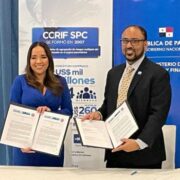
Historic UN conference marks watershed moment to tackle global water crisisand ensure water-secure future

Black Immigrant Daily News

The content originally appeared on: Caribbean News Service

The UN 2023 Water Conference in New York culminated today with a breakthrough response to the global water crisis, with governments, businesses and civil society committing billions of dollars to advance the water agenda, a dealmaker for accelerating sustainable development overall.

Some 10,000 participants gathered at UN Headquarters and online from 22 to 24 March 2023, to urgently scale up action to address the water crisis and ensure equitable access to water for all. Co-hosted by the Kingdom of the Netherlands and the Republic of Tajikistan, the Conference brought together world leaders, civil society, business leaders, young people, scientists, academics, the UN System and others from across sectors — agriculture, energy, environment and water — around a common goal: to urgently tackle the water crisis and set the world back on track to achieving Sustainable Development Goal 6 – On Clean Water and Sanitation.

“The commitments at this Conference will propel humanity towards the water-secure future every person on the planet needs,” noted UN Secretary-General Ant?nio Guterres at the closing ceremony.

To achieve this, the Secretary-General highlighted key game-changers: from reinforcing water’s place as a fundamental human right and reducing the pressures on the hydrological system, to developing new, alternative food systems to reduce the unsustainable use of water in food production and agriculture and designing and implementing a new global water information system to guide plans and priorities by 2030.

The Secretary-General also advocated for integrating the approach on water, ecosystems and climate to reduce greenhouse gas emissions and strengthen communities — from resilient infrastructure, water pipelines and wastewater treatment plans, to ensuring every person in the world is protected with early warning systems against natural disasters by 2027; and continued to press for climate justice and global action to limit global warming to a 1.5-degree rise. Lastly, he called for a dramatic acceleration in resources and investment into the ability of all countries to reach SDG 6.

UN 2023 Water Conference – A watershed moment for the SDGsAccess to safe water, sanitation and hygiene is the most basic human need for health and well-being, and a declared human right. But some 2 billion people around the world still lack access to safe drinking water and 40 per cent of the world’s population are affected by water scarcity. Agriculture demands alone account for some 70% of water usage. Adding to the pressure, more than 90 per cent of disasters are water-related, with climate change hitting hardest through water. And humanity’s demand for water keeps growing, with pressure on freshwater projected to increase by more than 40 per cent by 2050.

Against this background, conference deliberations ranged from the urgency of the water crisis, including its role in forced migration, climate change and conflicts to stressing its critical link to good health, poverty reduction and food security. Attention was also given to solutions, with deliberations spanning the need for better data collection, enhanced governance systems, capacity development opportunities and funding gaps in the water sector. With financing needs at between US$182 to more than US$600 billion annually, the importance of unlocking financing and innovative funding schemes, calling for new innovations and investments at scale in the water economy was also underscored.

Transformative Water Action AgendaResponding to this, the Water Action Agenda, the key outcome of the Conference, captured over 700 commitments aimed at driving transformation from a global water crisis to a water-secure world. The agenda represents the global community’s bold resolve to address the water challenges through a more coordinated and results-driven approach (see select list of commitments below). A number of other follow-up steps are also under consideration – including the appointment of a Special Envoy on Water.

The conference outcomes will also receive concrete follow-up in three key upcoming Summits: the SDG Summit during the UN General Assembly in September 2023, the Summit of the Future in 2024, the World Social Summit in 2025, and through the annual High- level political forum on sustainable development, Conference of Parties and other United Nations processes, as well as the Dushanbe Water Process.

“At the 2023 UN Water Conference a determined global community came together to make a difference not only for the future of water but for the future of the world,” said Mr. Li Junhua, the UN Under-Secretary-General for Economic and Social Affairs and Conference Secretary-General.

“I hope that the energy we experienced at this Conference will flow on to the SDG Summit in September when the world gathers together to advance the transformative actions that we need, to realize all SDGs, and secure a sustainable future for everyone, everywhere, on a healthy planet.”

Note: All Water Action Agenda commitments are posted here.

Donate At Caribbean News Service, we do not charge for our content and we want to keep it that way. We are seeking support from individuals and organisations so we can continue our work & develop CNS further.


NewsAmericasNow.com