

Posts

African and European Royals in Slave Trading Compared

Black Immigrant Daily News

The content originally appeared on: Caribbean News Service

During the Western campaign to illegalise the trans-Atlantic Trade of Africans in the 19th century, traders and their allies argued that African commercial and political interests were their business partners.

According to Vice-Chancellor of The University of the West Indies (UWI) and Chair of the CARICOM Reparations Commission (CRC), Professor Sir Hilary Beckles, “Since then, this perspective has gained global traction, becoming the dominant narrative, particularly in the Caribbean and the Americas. Though the evidence to debunk this narrative, and to contextualize its significance is considerable, it has not gained anywhere near the level of advocacy and academic representation.”

In acknowledgment of this gap, and as a signature event in its 75th Anniversary celebrations calendar, The UWI and its Centre for Reparation Research and PJ Patterson Institute for Africa-Caribbean Advocacy, convened an all-day symposium themed “Reparations and Royalty, Africa and Europe: Exploding Myths and Empowering Truths,” held at The UWI Regional Headquarters on Thursday, March 2, and a Youth Forum titled “Wha Gwaan Africa?!” held at the Mona Campus on Friday, March 3.

Among the featured speakers at the events, was a high-level delegation of royal African traditional leaders hosted by the CARICOM Reparations Commission, who led conversations on the roles of African and European Royalties in the trans-Atlantic trafficking of enslaved Africans.

Vice-Chancellor Beckles noted that The UWI was “honoured as a university community to take this responsibility for the reuniting of the Royal Highnesses with the African people of the Caribbean.” During the opening session on March 2, as he provided historical context on the relationship between Europeans and Africans, he emphasized that it is critical to examine the two sides of the equation, “While the royal families of Europe were organising their armies, building their corporations and establishing structures for the destruction of societies in Africa, so as to secure enchained and enslaved labour, the royal families of Africa were on the receiving end of that violence.” In his plenary presentation, Vice-Chancellor Beckles underscored, “No group of people have been more denigrated by the historians of Europe than the Kings and Queens and nobles of Africa within the context of colonization.”

Chair of the symposium, Professor Verene Shepherd, Director of the Centre for Reparation Research (CRR) at The UWI, who also serves as Vice-Chair of the CRC and Member, National Council on Reparation, Jamaica (NCR) asserted that the discussions are significant as knowledge exchange to fill a knowledge gap “…Because as Marcus Mosiah Garvey stated, a people without knowledge of their past history, origin and culture is like a tree without roots, and we are looking to reconnect with those roots today” she said. “The reasons for the shortfall in academic and public awareness are many, but the time is now for the matter to be successfully re-addressed,” she added.

His Royal Highness Paul Jones Eganda, Global Chief and President, Ateker International Development Organization (AIDO) Network stated, “We are greatly honoured to be invited by Professor Sir Hilary Beckles.”

Addressing the various interest groups and members of the audience in-person and online he said, “We work as a team. We have approximately 657 kingdoms and cultural institutions that are affiliated with us. These groups constitute what we call the AIDO Royal Community.” Highlighting the purpose of the mission, he said, “this royal delegation here today has travelled to Jamaica with one objective, to demonstrate to you, our dear family of Africa in the Caribbean, that we are not a race created as slaves. The fact is that we have a rich, proud, living history of royalty in Africa that still exists today which we represent here.” He affirmed, “Reparations justice has to take place, and Africa has to join in.”

The March 3 Youth Forum saw not just UWI students attending, but other tertiary students along with associations and groups from across Jamaica in person, and others across the region who joined online. The forum examined the significance of royal traditional leaders and other royals in Africa, including their responsibilities and their roles, the importance of reconnecting Caribbean and Jamaica with African culture and traditions, the need for reparatory justice for people of African descent, and how young people could contribute to that process.

Donate At Caribbean News Service, we do not charge for our content and we want to keep it that way. We are seeking support from individuals and organisations so we can continue our work & develop CNS further.


NewsAmericasNow.com
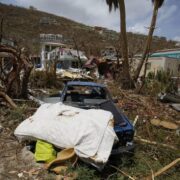
Haiti claims delayed Canadian armoured vehicles hinder plan to control gangs

Black Immigrant Daily News

The content originally appeared on: Caribbean News Service

Haiti’s troubled government is accusing Canada of stalling in its promised delivery of armoured vehicles, and argues the delay is hindering a plan to clear violent gangs fromPort-au-Prince.

In an interview with Haitian radio, the country’s acting justice minister, Emmelie Prophete-Milce, said in French that the company supplying the tanks “did not keep its word.”

Violent gangs have held control over most of Haiti’s capital for months, leading to a shortage of essentials and medical care, and a rise in sexual assaults.

As part of Canada’s response, Ottawa said it has been airlifting armoured vehicles that the Haitian government has purchased, which might avoid the need for an international military intervention.

But Prophete-Milce said the majority of the 18 armoured vehicles her country ordered have yet to arrive, and she claims “the police could implement their strategy if all the armoured vehicles were delivered on time.”

Global Affairs Canada has been asked to respond to these claims.

Her comments come as Prime Minister Justin Trudeau continues to call upon Europe and the U.S. to follow Canada in sanctioning Haiti’s elites.

“For me, the best way to restore stability for Haiti, is to first punish the elites, to tell them that they can no longer finance gangs (nor) political instability,” Trudeau said in Frenchon Monday.

He was speaking at a public event in Montreal’s Saint-Michel neighbourhood, which has a large Haitian diaspora.

Canada has sanctioned 17 of Haiti’s political and economic elite over alleged ties with gangs, barring them from financial dealings in Canada. Many of those sanctioned dispute those claims and argue Ottawa has acted on shoddy information.

Last December, Trudeau urged Europe to follow suit, and Canada’s ambassador to the United Nations, Bob Rae, said in January that France could make a difference by imposing its own sanctions.

Trudeau indicated Monday he was not satisfied by the response.

“The United States has started to impose more sanctions; we need them to do a lot more. We need Europe, France, to do more,” he said.

France has said it’s instead sticking with a slow-moving United Nations process aimed at sanctioning bad actors in Haiti, which effectively bars them from visiting most countries and having virtually any financial transactions with foreign entities.

The process has listed just one person since it started last October.

France’s ambassador to Haiti, Fabrice Mauries, was critical of Canada’s approach in an interview last December.

“I think it’s a collective effort that must be carried out. If the sanctions remain Canadian (only) they will fail,” he told Radio France Internationale.

Haiti’s unelected government has asked for an international military intervention to clear out the gangs, but the idea is deeply divisive among Haitians.

The UN has documented that foreign troops it oversaw in past Haitian deployments sexually assaulted locals and sparked a cholera outbreak.

Separately, Trudeau said on Wednesday that Ottawa has helped Haiti in many ways since its dictatorship ended in 1986, but there needs to be more viable change.

“We have delivered military missions, we have built hospitals, we have trained police officers, delivered prison guards — like, done a huge amount of intervention and yet the problems persist,” he said at a press conference in Newfoundland.

Trudeau argued that a “fresh approach” is needed where Haitians are in charge.

“Outside intervention as we’ve done in the past hasn’t worked to create long-term stability for Haiti.”

In any case, Canada’s top soldier doubts Ottawa has “capacity” to lead such an intervention.

“There’s only so much to go around,” Gen. Wayne Eyre, chief of the defence staff, told Reuters this past week. “It would be challenging.”

Donate At Caribbean News Service, we do not charge for our content and we want to keep it that way. We are seeking support from individuals and organisations so we can continue our work & develop CNS further.


NewsAmericasNow.com
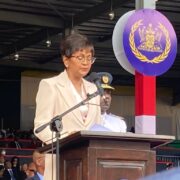
CARICOM strengthens relations with regional, third-state partners

Black Immigrant Daily News

The content originally appeared on: Caribbean News Service

Diplomatic relations between CARICOM and a Member State, as well as two third-state partners, were strengthened on Tuesday, March 14 when CARICOM Secretary-General, Dr. Carla Barnett accredited three new ambassadors.

The Secretary-General accepted the letters of credence of Larry Vaughan, Ambassador of St. Kitts and Nevis to CARICOM; Itai Bardov, Ambassador of Israel to CARICOM; and Rytis Paulauskas, Ambassador of Lithuania to CARICOM.

Secretary-General Barnett said the accreditation of Ambassador Vaughan presented an opportunity for a fresh perspective on various issues confronting the Community.

She said CARICOM has benefitted from St. Kitts and Nevis’ commitment to Regional Integration, particularly in Human Resource Development, and Health and Wellness, as lead Head of Government in the CARICOM Quasi cabinet for those areas.

“Given the multifaceted challenges presented by the protracted COVID-19 pandemic and its severe impact on lives and livelihoods in the Region, this Quasi-Cabinet portfolio is essential to the Region’s post-pandemic recovery,” Secretary-General Barnett stated.

In his remarks, Ambassador Vaughan reflected on the tasks ahead to improve competitiveness in all sectors across the Member States, achieve more coordinated trade negotiation outcomes, and advocate for global appreciation for the multifaceted nature of our vulnerabilities. He committed to actively working with his colleagues in the Committee of Ambassadors for the shared benefit of the people of the Community.

The Israeli Ambassador to CARICOM told Secretary-General Barnett that his country was keen to enhance its relations with CARICOM on Climate Change, Agriculture, Irrigation Technology, and Training.

He signaled Israel’s willingness to provide humanitarian support in areas in which the country has developed expertise, including pediatric heart surgeries and optical treatments.

Secretary-General Barnet noted the timeliness of Israel’s offer to support agriculture in the Region where efforts have been targeted at reducing the importation of food by 25 percent by 2025.

Ambassador Paulauskas and the Secretary-General highlighted Climate Change as a key area for cooperation between CARICOM and Lithuania.

“As we prepare for COP 28, it is important that focus is placed on the significant loss that countries of our Region, which are comparatively low emitters, face,” she said.

She also underscored the need for equitable standards across international financial systems. “We want the international community to agree on a single set of regulations so that what is agreed in one jurisdiction is agreed everywhere, as otherwise, there is great dysfunction within our financial systems,” the Secretary-General emphasized.

Donate At Caribbean News Service, we do not charge for our content and we want to keep it that way. We are seeking support from individuals and organisations so we can continue our work & develop CNS further.


NewsAmericasNow.com
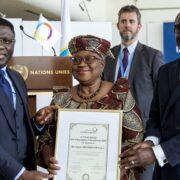
Grenada’s Prime Minister escapes major injuries in vehicular accident

Black Immigrant Daily News

The content originally appeared on: Caribbean News Service

Grenada’s Prime Minister Dickon Mitchell escaped “without major injury” after his official vehicle was involved in a motor vehicle accident on Tuesday morning, according to a statement issued by his office.

It said that Mitchell, who led the opposition National Democratic Congress (NDC) to power in the 2022 general election, was traveling to the Parliament when his vehicle was involved in the accident “with oncoming traffic.

“The Prime Minister is unharmed, and all involved escaped without major injury,” the statement said, quoting Prime Minister Dickon Mitchell as expressing concern for the drivers, noting that not all injuries produce immediate pain.

“The Office of the Prime Minister is currently working to ensure that all parties receive a medical exam, following the incident, to rule out the risk of potential complications,” the statement added.

Donate At Caribbean News Service, we do not charge for our content and we want to keep it that way. We are seeking support from individuals and organisations so we can continue our work & develop CNS further.


NewsAmericasNow.com
St. Kitts and Nevis one step closer to accessing US$40M grant to improve water sector

Black Immigrant Daily News

The content originally appeared on: Caribbean News Service

The Federation is one step closer to accessing a USD $40 million Green Climate Fund (GCF) Grant for Transitioning the Water Supply in St. Kitts and Nevis to a Low Carbon, Climate Resilient Sector also known as the St. Kitts and Nevis TransWater Project.

This was recently announced by Dr. Joyelle Clarke, Minister of Environment and Climate Action.

“St. Kitts and Nevis received its fifth Green Climate Fund (GCF) Readiness Support, and this is to support our Nationally Determined Contributions (NCDs). We have reached the furthest we have ever reached in terms of GCF Grants, and we are now much closer to accessing our USD $40 Million Grant for our TransWater Project,” said Dr. Clarke.

“We at the Ministry of Environment and Sustainable Development recognize that we are uniquely poised to support critical ministries – environment, water, energy, tourism, education and, of course, we continue doing so with the support of the Ministry of Finance.”

Dr. Clarke expressed thanks to all for their “continued support in mobilizing the ministry to adopt and move forward with the government’s agenda for our transformation to a sustainable island state.”

The St. Kitts and Nevis TransWater Project is a cross-cutting climate-resilient development project that is the first of its kind in the water sector in the Federation. The Project seeks to reduce the Federation’s carbon footprint and increase climate resilience and sustainability for the water supply sector. It prioritizes and directly and tangibly supports the implementation of outputs and activities from five (5) of six (6) investment programmes identified in the Federation’s Water Adaptation Plan.

More specifically, it aims to implement soft and hard measures to transition St. Kitts and Nevis to a low-carbon, climate-resilient water supply by strengthening the enabling environment at the national and institutional levels; reduce non-revenue water (NRW); and mainstream low-carbon, climate-resilient water supply systems at national and community levels.

The GCF grant financing will facilitate the mainstreaming of low carbon, climate resilient water supply systems and will strengthen capacity for their management by the Water Services Department, Nevis Water Department, SKELEC and NEVLEC, as well as improve population knowledge on the capacity for climate resilient WASH (water, sanitation and hygiene). This intervention has the potential, therefore, of normalizing climate-smart approaches to water supply and water demand management and creating a paradigm shift toward low emission and climate-resilient development.

Donate At Caribbean News Service, we do not charge for our content and we want to keep it that way. We are seeking support from individuals and organisations so we can continue our work & develop CNS further.


NewsAmericasNow.com
The UWI confers Emeritus Professor titles on Copeland, Agard

Black Immigrant Daily News

The content originally appeared on: Caribbean News Service
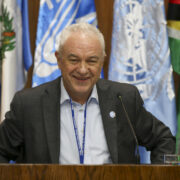
Professors Brian Copeland and John Agard.

The University of the West Indies (The UWI) has conferred ‘Emeritus Professor’ titles on Professors Brian Copeland and John Agard, both of the St. Augustine Campus in Trinidad and Tobago. Both conferrals are with immediate effect.

The title of Emeritus Professor (or, Emerita Professor, for women) refers to retired professors who are recognised and honoured by their universities for notable contributions to academia. Aside from the special title, an Emeritus status gives distinguished professors extra privileges at the University.

Emeritus Professor Brian Copeland, Ph.D. served as the Pro Vice-Chancellor and Campus Principal of St. Augustine from 2016-2022, the last two years of which saw him navigating the campus through the COVID-19 global pandemic lockdown.

During his tenure at The UWI, he served as Professor in Electrical and Computer Engineering, Dean of the Faculty of Engineering, and Head of the Department of Electrical and Computer Engineering. His focus areas have been in Digital Electronics and Microprocessor Systems Design and Control Systems.

As Coordinator of the Real Time Systems Group, a UWI unit for developing university/industry liaison through impactful R&D Projects, Professor Copeland was the project lead for design and construction of the Electronic Scoreboard at the Queen’s Park Oval. He co-ordinates the Steelpan Initiatives Project which saw the development and patenting of the G-Pan, a re-engineered form of the traditional steelpan, as well as the Percussive Harmonic instrument (P.H.I.), an electronic form of the traditional steelpan. Professor Copeland is Convener of the Steelpan Research Centre, UWI and is a former Member of the Board of Directors, CARIRI.

Professor Copeland is the holder of many prestigious awards. In 2008, he was the first recipient of the Order of the Republic of Trinidad and Tobago and in 2007 he was joint recipient of the Chaconia Medal Gold as a member of the G-Pan development team. He received the Guardian Life Premium Teaching Award in 2002, the BP/AMOCO Fellowship Award for Senior Academic Staff at The UWI, 2001 and a LASPAU/Fulbright scholarship for his doctoral programme at the University of Southern California, Los Angeles, 1987 among others.

Emeritus Professor John Agard, Ph.D. is Professor of Tropical Island Ecology at the Department of Life Sciences in the Faculty of Science and Technology at the St. Augustine Campus. He also serves as the Executive Director of the University’s Global Institute for Climate-Smart and Resilient Development (GICSRD).

His research interest is in the field of sustainability science especially as it relates to mainstreaming environmental considerations such as biodiversity and ecosystem services conservation, climate change mitigation and adaptation, and the development of blue and circular economy into the core of policy and decision making.

Internationally, he has served as an independent advisor on environment and sustainability policy to the Board of the Inter-American Development Bank (IDB) in Washington DC. He has also been on the Scientific Advisory Panel of UNEP for the Global Environmental

Outlook (GEO6) and was previously a Coordinating Lead Author for the Scenarios chapter in GEO4. He has also been a Coordinating Lead Author of the Intergovernmental (Science-Policy) Panel on Biodiversity and Ecosystem Services (IPBES), first global assessment chapter 5 ‘Pathways to a Sustainable Future’ as well as the Review Editor for Small Islands in the current 6th assessment of the Intergovernmental Panel on Climate Change (IPCC). Professor Agard has previously served as a Lead Author in IPCC’s previous 4 and 5th Assessments.

Donate At Caribbean News Service, we do not charge for our content and we want to keep it that way. We are seeking support from individuals and organisations so we can continue our work & develop CNS further.


NewsAmericasNow.com

EU Deputy Secretary General launches New Partnership at Regional Security System Headquarters in Barbados

Black Immigrant Daily News

The content originally appeared on: Caribbean News Service

As part of her visit to the region, Deputy Secretary General (DSG) for Economic and Global Issues of the European Union’s External Action Service (EEAS), Helena K?nig, visited the Regional Security System (RSS) Paragon Headquarters Base, Barbados on March 14.

The RSS and the EU recently renewed their partnership, signing a cooperation deal that will allow for the delivery of six training modules to RSS member states’ law enforcement and border security personnel.

The project will also include the rollout of a full-scale field training exercise at sea in St. Lucia next year. The RSS has benefitted from EU support since 2016, with the aim of strengthening the organisation’s capacity to respond to transnational crime threats.

DSG K?nig said: “The European Union is committed to assisting its security partners in the Caribbean. Fighting transnational organised crime is a common priority for our regions, as consequences of the illicit trade of drugs and firearms are felt on both sides of the Atlantic. I am delighted to officially launch our new partnership with the RSS, and I am sure that the training programmes will provide officers with additional skills to combat crime and terrorism in the maritime and land domains.”

Executive Director of the Regional Security System, Commodore Errington Shurland, welcomed the EEAS DSG to the Paragon Base and presented the organisation and its activities to the European guest:The Regional Security System has enjoyed an extremely rewarding partnership with the European Union. The new partnership with the European Union, seeks to build on our previous cooperation in strengthening institutional capacities to respond to common factors in our criminogenic environment. It is expected to foment our capacity to manage transnational organised crime in a realistic way with capacity-building programmes aimed at operational planning, intelligence analysis, counter-terrorism tactics, polygraph examinations and the full-scale exercise to test the RSS response mechanism in addressing organised crime. This slew of interventions will ensure that the RSS Membership will be provided with an opportunity to build further capacity in designing and executing effective inter-agency operations in response to transnational organised crime,” Commodore Shurland affirmed.

In addition to the RSS, DSG K?nig also visited the Queen Elizabeth Hospital in Barbados, which is currently benefitting from EU support to its digitisation. She also met with Barbados Minister of Foreign Affairs and Foreign Trade, Kerrie Symmonds; Minister in the Ministry of Foreign Affairs and Foreign Trade Sandra Husbands; Minister of the Environment Adrian Forde; and President of the Senate Reginald Farley.

While on this visit DSG K?nig travelled to St.Vincent and the Grenadines to discuss ongoing work with Prime Minister Ralph Gonsalves and the CELAC coordinating team in preparation for the upcoming EU-CELAC summit in Brussels (17& 18 July).

DSG K?nig will continue her visit by travelling on to Guyana and Suriname this afternoon.

Donate At Caribbean News Service, we do not charge for our content and we want to keep it that way. We are seeking support from individuals and organisations so we can continue our work & develop CNS further.


NewsAmericasNow.com

Guyana Waiting for ICJ Decision but also Investing in Security, Part 2

Black Immigrant Daily News

The content originally appeared on: Caribbean News Service
Ivelaw Lloyd Griffith, a former Vice Chancellor of the University of Guyana, is a Senior Associate at the Center for Strategic and International Studies in Washington, DC.

By Ivelaw Lloyd Griffith

This is the second article of a two-part series on the ongoing territorial-judicial saga between Guyana and Venezuela. The first one examined some recent developments in Guyana’s oil exploration and production landscape, which have increased the stakes for the two oil-rich nations. In this concluding article we examine the security investment imperative the government has been pursuing while it awaits the ruling of the World Court.

Moutar and Guitar

Budgetary and other recent actions by the Guyana government suggests that investing in security assets isn’t just attracting platitudes, but tangible action. To use Guyanese parlance, the authorities aren’t just “playing moutar, but also guitar.” Put differently, they are putting their money where their mouth is. For one, budget allocations for this year adopted by the National Assembly for the security services suggest that the government takes the investment in security assets imperative seriously, conscious that the security sector agencies have serious deficits in personnel, equipment, and training.

The budget itself–G$781.9 billion (US$3.7 billion)–is the largest ever in the country’s history. It represents a 41 percent increase over the outlay for 2022, with almost 30 percent drawing on oil revenues, to the tune of G$208.9 billion (US$ 992 million). Moreover, for the first time ever, use has been made of funds from the sale of carbon credits, in the amount of G$31.3 billion (US$149 million). The carbon credits deal was made last year with the Hess Corporation and provides for a minimum of US$750 million to the Cooperative Republic between 2022 and 2032. The initial US$75 payment was made in January 2023 and two additional payments are expected later this year.

The allocation for the army increased from G$17,631,014,000 (US$83,165,493) in 2022 to G$20,228,261,000 (US$95,416,707) for this year. The Guyana Defense Force (GDF) identified some pretty aggressive goals for 2023, including increasing the number of foreign threats averted from two in 2022 to 20 this year, growing the number of officers trained by 100 percent, from 40 last year to 80 this year, and expanding joint exercises from 12 in 2022 to 20 this year.

As for the police and other internal security agencies, the funding grew from G$51.5 billion (US$242,925,500) expended in 2022 to an allocation of G$58.6 billion (US$276,416,200) for this year. This included G$2.4 billion (US$11,320,800) to upgrade police stations and facilities, money to increase force mobility, and G$2 billion (US$9,434,000) to expand the safe city program in two of the country’s ten administrative regions, key to which is the provision of Intelligence Video Surveillance Command Centers and 911 emergency response capability in those regions.

Security Partnerships

The government is taking a holistic approach to basic security, prioritizing both hard assets to assist with a broad range of missions and strategic diplomatic partnerships. The growing security relationship with India, for instance is part of a broader strategic partnership between the two countries, in the areas of oil and gas, food security, and technology. One hopes that the diversification of security relationships soon would be extended to Brazil, with which Guyana once had a strong relationship and remains a key actor in the geopolitical relationship involving Venezuela, as well as a valued ally in the proposed tripartite energy security partnership that would include Suriname.

The security partnership with the United States continues to be strengthened, notably is the three-day visits by SOUTHCOM Commander Admiral Craig Faller in January 2021 and last August by his successor, General Laura Richardson, to meet with political, military, and civic leaders about enhancing security ties between the two nations. Guyana also hosted the SOUTHCOM-sponsored Tradewinds 2021, a training exercise with ground, air, sea, and cyber aspects that brings together forces from the United States and Caribbean and other nations.

Noteworthy, too, Guyana has joined the Barbados-based Regional Security System (RSS). In March 2022 President Ali signed the RSS protocol while in Belize for a meeting of CARICOM leaders, and the following September Guyana formally became the eighth member when President Ali signed the instrument acceding to the RSS Treaty, joining Antigua and Barbuda, Barbados, Dominica, Grenada, St. Kitts and Nevis, St. Lucia, and St. Vincent and the Grenadines in the alliance that dates to 1982, becoming the member with the largest army. Incidentally, both the GDF and the Guyana Police Force (GPF) will participate in the RSS, as is the case with the other RSS members that have both defense and police forces.

For all the commendable investment in assets and strengthening of strategic partnerships, a cautionary note is warranted. Guyana faces both traditional and non-traditional security threats, notably territorial claims by both Venezuela and Suriname in the traditional area, and narco-trafficking, crime and violence, illegal migration, and human trafficking in the non-traditional one. Thus, even with the recent and planned investments the country’s security establishment, it will still face serious capability limitations in terms of personnel, equipment, and training.

However, there may be a risk that leaders in Guyana either are under-appreciating the scope of the threats, over-estimating the extent to which the new assets will address the security deficits, or both. A danger in the offing makes this conclusion plausible. The danger is what military professionals call mission creep: the gradual or incremental expansion of an organization’s mission beyond its original focus or goals, which risks compromising its overall efficiency and operational success because of the lack of commensurate resources to accomplish the expanded mission.

Recent pronouncements at the army’s 2023 officers conference, held on February 9 last, portend such a danger. The Commander-in-Chief contended that in addition to meeting the nation’s security challenges the GDF should rise to the challenge and consider how it will address issues such as the food and energy crises not only in Guyana but in the region. He also touted the idea that the Air Corps could expand its mandate and conduct forest monitoring activities, arguing that “the monitoring of our forest is part of our defense challenge, because it is an important national asset, earning revenue.”

Moreover, the president advocated a role for the GDF in the development of emergency mapping services, noting “In every region, I am tired with the fire tender turning up and they don’t know where the drain is, they don’t know where the trenches are… Is there a cluster map? How do we develop a cluster map for every region, and then a cluster map for different communities?”

In sum, as the waiting game plays itself out, Guyana is making prudent and pragmatic investments in security assets. Nonetheless, the leaders there might do well to guard against mission creep, lest they compromise the ability of the army to deliver effectively on its core mission and undermine the confidence of citizens in both them and it.

______

Ivelaw Lloyd Griffith, a former Vice Chancellor of the University of Guyana, is a Fellow with the Caribbean Policy Consortium and Global Americans. His next book, Challenged Sovereignty: The Impact of Drugs, Crime, Terrorism, and Cyber Threats in the Caribbean, will be published by the University of Illinois Press.

Donate At Caribbean News Service, we do not charge for our content and we want to keep it that way. We are seeking support from individuals and organisations so we can continue our work & develop CNS further.


NewsAmericasNow.com
Human remains returned to Statia 30 years after they were sent to the Netherlands

Black Immigrant Daily News

The content originally appeared on: Caribbean News Service

The remains of nine indigenous people shipped to the Netherlands after an archaeological dig over 30 years ago have been repatriated to Statia.

The bone fragments, along with other artefacts, were unearthed during the 1984-89 excavation at the F.D Roosevelt Airport by archaeologist Aad Versteeg as part of a research project by the Archaeological Centre of the Leiden State University in the Netherlands and the Archaeological-Anthropological Institute of the Netherlands Antilles on Cura?ao. The project investigated several archaeological sites in the Windward islands of the Netherlands Antilles, particular in Saba and Statia, to gain an insight into the way of life and patterns of organisation of the indigenous inhabitants of the islands in the pre-Columbian period.

Almost all the excavated material, including artefacts that dated back to the fifth century, was shipped to the Netherlands. The research results were published in the 1992 publication “The Archaeology of Sint Eustatius. The Golden Rock.”

Now, after a near year-long process, which included discussions between the authorities in Statia and the Netherlands, the human remains are back on the island. The Statia Cultural Heritage Implementation Committee will consult residents on burial, said Nasha Radjouki, the programme manager for culture with the Statia Government.

“It’s imperative that we involve the Statian community as we consider how and where to rebury these human remains in a respectful way,” Radjouki emphasised. “The Statian community must know that there is more to their history than just what has been written, and be involved in the new narrative.”

The transfer agreement for the return of the remains was signed last month by Government Commissioner Alida Francis, in the presence of Island Commissioners Derrick Simmons and Glenville Schmidt, Radjouki, and members of the St. Eustatius Center for Archaeological Research, a non-governmental organisation involved in the study of all aspects of the rich and diverse archaeological heritage of the island.

“The discovery more than 30 years ago, and the eventual return of the remains of the indigenous people, helps us to recognise that in addition to the enslaved Africans, we also had an indigenous community who had their own burial grounds,” said Francis. “Our story is much broader and richer than even we thought, and it’s up to us to tell this story.”

The return of human remains is the first phase of a wider repatriation project being undertaken by the Department of Culture. The rest of the artefacts – boxes of ceramic, lithia, coral, shell food remains and artefacts – will be returned in the third quarter of this year. Following this, the process will begin to have William and Mary College, a US public research university, to return a collection of Statian artefacts currently in its possession.

Donate At Caribbean News Service, we do not charge for our content and we want to keep it that way. We are seeking support from individuals and organisations so we can continue our work & develop CNS further.


NewsAmericasNow.com
Jamaican doctors and teachers accept wage offer

Black Immigrant Daily News

The content originally appeared on: Caribbean News Service

Teachers have accepted the government’s latest wage offer ending industrial action that had led to protest action last week and a resumption of classes on Monday.

In addition, doctors have also voted to accept the offer made by the government.

Last week, Finance and the Public Service Minister, Dr Nigel Clarke announced that J$4.3 billion had been allocated in the budget for this fiscal year to settle wage agreements with some of the major public sector groups, which ends on March 31.

Clarke said the Andrew Holness government has allocated J$10.2 billion for rank-and-file police officers, with an additional one billion for District Constables and J$600 million for members of the Police Officers Association, totalling J$11.8 billion.

The total amount allocated for junior doctors is J$6.4 billion.

“We want the doctors to receive the amounts in March 2023. We want to be in a position for these amounts to leave the Consolidated Fund in March 2023. These amounts alone total J$30 billion, and this size of payment cannot be accommodated in the upcoming fiscal year,” Clarke said.

The sum for teachers is approximately J$12 billion.

On Sunday, the teachers associated with the Jamaica Teachers’ Association (JTA) voted to accept the wage offer after they had initially rejected the wage offer under the government’s public sector compensation review programme.

President of the Jamaica Medical Doctors’ Association (JMDA), Dr Mindi Fitz-Henley, said 95 per cent of those present on Sunday voted during a special meeting of the JMDA elected to accept the offer.

“The JMDA met with its membership this evening, and the outcome of the vote is that 95 per cent of persons voted to accept the new compensation package from the Ministry of Finance,” Fitz-Henley said, adding that the wage offer will protect and allow future generations of doctors to properly be hired in posts.

“It is important to note that with this offer, we get all of our doctors currently employed in a contract into a post and we also protect the future generation of doctors to come by, ensuring that they also have to be hired into a post,” she added.

On Friday, March 10, Ministry of the Finance and the Public Service sent a new wage offer to members of the Jamaica Constabulary Force, hours after the leadership of the groups representing the cops denied that they had rejected a proposed pay package from the Government.

Donate At Caribbean News Service, we do not charge for our content and we want to keep it that way. We are seeking support from individuals and organisations so we can continue our work & develop CNS further.


NewsAmericasNow.com