Posts

The Setai Expands Global Footprint With New Luxury Resort In St. Maarten, The Setai St. Maarten

News Americas, MIAMI BEACH, FLORIDA, Thurs. December 18, 2025: The Setai Hotels, one of the world’s most celebrated names in luxury hospitality and Toronto-based Altree Developments, a leader in international real estate, today announced a strategic partnership and the next chapter in its global expansion.

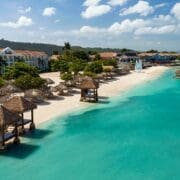
Vie L’Ven is evolving into its next chapter through a new partnership with The Setai, the globally celebrated hospitality brand known for its refined approach to service and design. The primary hotel will now debut as The Setai St. Maarten, a luxurious 205-key and private villas set along the pristine shores of Indigo Bay. This collaboration marks The Setai’s highly anticipated Caribbean debut and a major step in the brand’s continued growing international portfolio. Expanding beyond its established destinations in the U.S. and the Middle East, this partnership brings together The Setai’s legacy of refined hospitality with Altree’s vision for world-class residential development, merging two forces known for excellence in design, service and craftsmanship. Construction is underway, with completion expected for 2028.

​​“We are thrilled to bring The Setai to the shores of St. Maarten, a destination that perfectly complements our vision of timeless luxury and cultural inspiration,” said the Nakash Family, owners of The Setai. “This project marks an exciting next chapter for our brand as we continue to grow globally, always guided by the principles of authenticity, sophistication, and unparalleled guest experience.”

Committed to redefining Caribbean luxury, the concept for The Setai St. Maarten has been brought to life by renowned partners Studio Munge, HKS Architects and Leading Hotels of The World, all of whom have been recognized globally for their dedication to creating world-class properties.

The Resort offerings will remain anchored with signature amenities that will include a beach club with dedicated cabanas and butler service, a Les Clefs d’Or concierge team, three pools, including an adults-only oasis, a 30,000 square foot Destination Spa, tennis and pickleball courts, on-beach water sports, a children’s playroom, childcare programs and access to a protected nature reserve.

Extending this same standard of excellence to its culinary program, the resort will feature five restaurant concepts, including Ocean Grill Beach Club and Jaya, both inspired by the acclaimed culinary concepts of The Setai, Miami Beach.

Zev Mandelbaum, President and CEO of Altree Developments, shared, “From the very beginning, our vision has been to create something extraordinary for the island. Teaming up with the Nakash family to bring The Setai’s first Caribbean property to life allows us to honor St. Maarten’s beauty and distinct character while shaping a new level of hospitality for the region.”

Blending The Setai’s renowned standard of luxury with the natural beauty of the Caribbean, the resort will feature both residential and hotel accommodations. The Setai St. Maarten will offer an array of spacious one to four-bedroom layouts, spanning from approximately 620 to over 2,000+ square feet and dual key residence options expanding up to 6,000 square feet.

The debut of The Setai St. Maarten marks a defining moment for the island, introducing a level of craftsmanship and service that will position St. Maarten among the world’s most distinguished luxury destinations.

For The Setai St. Maarten sales inquiries, contact Sales Representatives:

Anne-Wytske Hoekstra (annewytske@thesetaistmaarten.com)

Shirley van der Borden (shirley@thesetaistmaarten.com)

You can also call +1-721-544-1545, visit thesetaistmaarten.com, or tour the model suite at the presentation gallery on Indigo Bay Boulevard, St. Maarten. You can find The Setai St. Maarten on Instagram and Facebook.

About Altree Developments

Altree Developments is a leader in the international real estate landscape, rooted in a 70-year multi-generational family legacy in the development industry. Under the visionary leadership of Zev Mandelbaum, Altree is redefining urban living by transforming strategic residential and commercial sites into leading destinations. With an admirable portfolio that includes ultra-luxury condominiums and expansive master-planned communities, Altree’s influence stretches across some of the most coveted addresses in Canada, America, and now, Saint Maarten. Driven by an unwavering commitment to innovation and luxury, Altree’s projects are designed to stand the test of time, offering unparalleled value and shaping the future of urban living. For more information, visit altreedevelopments.com.

About The Setai Hotels

The Setai Hotels is a collection of privately owned hotels that represent a vision of unprecedented luxury and service, with a calm and serene ambiance at the heart of each property. The hotels offer connectivity to their host cities while also creating a discreet escape and utmost privacy for its guests. Its Miami Beach flagship holds membership with The Leading Hotels of the World; is recognized as an AAA Five Diamond hotel and Michelin Guide Key holder; and has been awarded in the Condé Nast Traveler’s Readers’ Choice Awards, as well as by the coveted Forbes Travel Guide Five Star Award consecutively since 2015. In 2018, the brand introduced the luxury, sophistication and renowned service to Tel Aviv as a LHW hotel in the historic old Jaffa region, followed by a third location in the Sea of Galilee. Looking ahead, the Setai St. Maarten is anticipated to open in 2028 as a LHW property. For more information, visit thesetaihotel.com.

Caribbean Growth Outlook For 2026-2027

By NAN Business Editor

News Americas, NEW YORK, NY, Tues. Dec. 16, 2025: The outlook for Caribbean growth for 2026 and 2027 points to a widening divide between resource-driven growth and tourism-dependent economies, according to new projections from the UN Economic Commission for Latin America and the Caribbean, (ECLAC) and the World Bank.

ECLAC forecasts average growth of 8.2% for the Caribbean in 2026, largely driven by Guyana’s continued oil expansion. The World Bank projects 5.7% growth for the broader Caribbean economies. However, when Guyana is excluded, growth across the rest of the subregion is expected to slow sharply to approximately 1.7%, underscoring the region’s structural vulnerabilities.

Guyana is projected to remain the fastest-growing economy in the Caribbean, with the World Bank forecasting 15.7% GDP growth in 2026, fueled by sustained investment in hydrocarbons. By contrast, several tourism-dependent economies face more moderate or fragile trajectories. The Bahamas is expected to experience slower growth amid relatively stagnant stayover tourism, while Jamaica may face economic contraction in early 2026 following the impact of Hurricane Melissa on tourism and agriculture.

ECLAC

ECLAC warns that the region remains highly exposed to external shocks, including slower U.S. economic growth, rising energy and transportation costs, high public debt levels, and increasing climate-related risks. While service exports are expected to remain resilient, uncertainty in global trade, commodity price volatility, and delayed interest rate cuts by major central banks pose downside risks.

The outlook reinforces the need for Caribbean economies to diversify beyond tourism, strengthen resilience, and expand into higher-value sectors such as energy, logistics, food security, and digitally delivered services.

Projected GDP Growth Rates for Selected Caribbean Economies (2026–2027)

Ranked from Highest to Lowest (2026)

RankCountry2026 Growth (%)2027 Growth (%)1Guyana23.024.32Dominican Republic4.24.43Dominica3.42.84Grenada3.42.75Suriname3.33.56St. Vincent and the Grenadines2.92.77St. Lucia2.31.98Barbados2.01.79Jamaica1.71.610Trinidad and Tobago1.33.211Bahamas1.21.312Belize1.11.1

Source: World Bank

In the Caribbean, growth is forecast at 5.8% in 2026, led overwhelmingly by Guyana’s oil sector expansion. Excluding Guyana, regional growth is expected to slow to approximately 3.1% in 2026, highlighting the increasing divergence between resource-driven economies and tourism-dependent states.

Felicia J. Persaud, CEO of Invest Caribbean, reacting to the World Bank’s Global Economic forecast data, said: “The time to invest in the Caribbean is now – and the data clearly supports it. For too long, the region has been underestimated. The numbers show a Caribbean that is resilient, investable, and increasingly central to global growth and capital flows.”

Caribbean Competition – Weak Competition Is Holding Back Growth In The Caribbean And Latin America – IDB

By NAN Business Editor

News Americas, WASHINGTON, D.C., Mon. Dec. 15, 2025: Caribbean Competition is weak and holding back growth across the region as well as in Latin America, according to a new flagship report released by the Inter-American Development Bank, (IDB). The report, titled Markets for Development: Improving Lives through Competition, forms part of the IDB’s Development in the Americas series, which uses rigorous data and economic analysis to outline policy priorities to boost prosperity in the region.

Competition As A Driver of Growth

FLASHBACK – People travel by bus during a nationwide blackout in Santo Domingo on November 11, 2025. Santa Domingo found itself without electricity Tuesday as the Dominican Republic’s energy company announced a blackout of unspecified scope, caused by a “transmission system failure.” (Photo by Eddy Vittini / AFP) (Photo by EDDY VITTINI/AFP via Getty Images)

One of the report’s central findings is that markets in Latin America and the Caribbean are, on average, about four times more concentrated than those in advanced economies – meaning fewer dominant firms control larger portions of goods and services. This market power translates into higher markups, limited consumer choice, and slower productivity growth, according to the Bank.

If markets across the region operated with the same level of competitive intensity as in advanced economies, the IDB estimates per-capita output (GDP per person) could rise by about 11%, while income inequality might shrink by around 6%.

Strong competition is shown to benefit not only consumers through lower prices but also workers through higher real wages and expanded employment opportunities.

Business Environment Challenges

The report highlights several structural barriers that hinder competition, including:

Market Fragmentation: High logistics costs and poor connectivity within and between markets make it harder for firms to scale and compete.

Regulatory Complexity: Excessive or poorly designed regulations discourage new entrants and protect entrenched incumbents.

Weak Institutions: Many competition authorities in the region have limited resources or independence, reducing their ability to enforce fair market rules.

These conditions contribute to the so-called “missing middle” — a shortage of medium-sized enterprises that, in more competitive economies, help drive innovation and job creation.

Implications for Businesses and Consumers

For business leaders, the findings point to a pressing need for reforms that unlock competitive pressures:

Reducing red tape and simplifying market entry

Investing in infrastructure that lowers transaction costs

Strengthening antitrust enforcement and regulatory oversight

Lower market concentration could empower small and medium-sized firms to grow, broaden supply chains, and stimulate innovation across sectors such as telecommunications, banking, and health care.

Consumers in Latin America and the Caribbean currently face markups that are estimated to be higher than in advanced markets, while workers in many sectors see wages that reflect a weaker competitive environment.

Policy Priorities and Reforms

The IDB calls on governments to pursue reforms that balance regulation with competition enhancement. Priority areas include:

Modernizing competition laws

Investing in logistics and digital connectivity

Empowering competition agencies with greater independence

Streamlining business regulations to reduce barriers for new entrants

According to the report, countries that adopt such policies may attract more domestic and foreign investment, improve productivity, and create better-paying jobs.

A Roadmap For The Region’s Future

Although Latin America and the Caribbean have achieved macroeconomic stability in recent decades, long-term productivity growth has lagged behind global peers. The IDB report provides a data-driven blueprint focused on competition as a central engine for economic dynamism – offering a new lens for policymakers and business leaders seeking to unlock latent growth potential.

For markets across the hemisphere, encouraging fair competition is not just an economic ideal – it may be the most practical path to inclusive growth and heightened prosperity in the coming decade.

China – Caribbean Policy: China Deepens Caribbean Engagement With New Policy Pledges

By NAN Business Editor

News Americas, NEW YORK, NY, Mon. Dec. 15, 2025: China has signaled a renewed and expanded commitment to the Caribbean with new China – Caribbean Policy, positioning small island states as strategic partners in its evolving Global South diplomacy, according to its newly released Policy Paper on Latin America and the Caribbean.

Chinese President Xi Jinping (L-2) speaks during a meeting with Dominica’s President Sylvanie Burton (R-2) at the Great Hall of the People on October 14, 2025 in Beijing, China. (Photo by Ichiro Banno – Pool/Getty Images)

While much global attention has focused on China’s ties with major Latin American economies, the policy document makes clear that Caribbean nations are central beneficiaries of Beijing’s long-term development, climate, and infrastructure agenda – particularly in areas where island states face acute vulnerability and capital constraints.

A Strategic Shift Toward Small Island States

China explicitly acknowledges the Caribbean’s unique status as Small Island Developing States, (SIDS), committing to tailor cooperation frameworks that reflect climate exposure, limited fiscal space, and reliance on external trade and tourism.

Rather than a one-size-fits-all approach, the policy outlines support mechanisms designed to accommodate smaller economies, including concessional financing, development assistance without political conditionality, and targeted infrastructure investment.

This positioning signals an effort by China to distinguish its engagement from traditional Western development models, which Caribbean leaders have often criticized as restrictive or slow-moving.

Climate Resilience and Disaster Response Take Center Stage

One of the most consequential pledges for the Caribbean lies in climate adaptation and disaster resilience.

China commits to expanded cooperation in:

Disaster prevention, early warning systems, and post-disaster reconstruction

Climate-resilient infrastructure

Coastal and marine ecosystem protection

Renewable energy development, including solar, wind, and hydropower

For hurricane-prone Caribbean states facing mounting reconstruction costs and insurance gaps, these pledges could translate into tangible relief if executed at scale.

China also signals openness to supporting Caribbean climate initiatives within global frameworks, reinforcing SIDS advocacy on climate finance and loss-and-damage mechanisms.

Infrastructure, Ports and Digital Connectivity

China’s policy reinforces its interest in Caribbean infrastructure — not only roads and utilities, but also ports, logistics, digital networks, and smart city development.

The document highlights cooperation in:

Transportation and port logistics

Telecommunications and digital infrastructure

Energy grids and water systems

Housing and urban development

For Caribbean economies seeking to modernize ports, reduce shipping costs, and improve regional connectivity, Chinese-backed infrastructure could play a transformative role – particularly where traditional financing remains limited.

Trade, Investment and Market Access

On the economic front, China pledges to expand trade with Caribbean nations, especially in:

Agricultural products

Specialty goods

Energy and resource-related exports

Beijing also encourages Caribbean participation in major Chinese trade expos and investment forums, offering potential market access for Caribbean exporters seeking diversification beyond North America and Europe.

Additionally, China expresses interest in expanding financial cooperation, including local currency settlements and partnerships with regional financial institutions – a move that could reduce foreign exchange pressures for Caribbean economies.

Education, Training and People-to-People Exchanges

China’s commitments extend beyond economics into human capital development.

The policy outlines:

Scholarships and training programs for Caribbean students and professionals

Cooperation in vocational education and digital skills

Media, cultural, and academic exchanges

Support for tourism cooperation and two-way travel facilitation

For Caribbean states grappling with skills shortages and youth unemployment, these programs may offer long-term workforce benefits.

Geo-political Implications for the Caribbean

China’s expanded engagement comes as Caribbean nations navigate a shifting global order, balancing longstanding ties with the United States and Europe while exploring South-South partnerships.

By emphasizing sovereignty, non-interference, and unconditional development assistance, China positions itself as an alternative partner at a time when Caribbean governments are seeking greater diplomatic and economic autonomy.

However, the scale and impact of these pledges will depend on implementation — a point regional analysts note will be critical in distinguishing policy ambition from practical outcomes.

What Comes Next

The policy paper signals intent, not timelines. For Caribbean governments, the next phase will involve translating these pledges into:

Project-level agreements

Financing structures

Transparent procurement frameworks

Sustainable debt management

If executed effectively, China’s commitments could reshape Caribbean development pathways over the next decade, particularly in climate resilience, infrastructure modernization, and economic diversification.

For now, the message from Beijing is clear: the Caribbean is no longer peripheral in China’s Global South strategy — it is firmly on the map.

Caribbean Immigrant Founder Breaks Barriers with World’s First AI Debt Capital Platform – AI Capital Exchange

News Americas, Fort Lauderdale, FL, Tues. Dec. 2, 2205: Guyana-born, US-based Caribbean immigrant entrepreneur and media leader Felicia J. Persaud, the founder and publisher of News Americas, has quietly made history.

AI Capital Exchange, the world’s first AI-powered debt lending platform connecting institutional investors, lenders, agencies and borrowers globally, created by Felicia J. Persaud

After four months of building in silence, Persaud has soft-launched AI Capital Exchange, the first AI-powered debt capital platform in the world – built entirely by her, a non-tech founder and Caribbean immigrant.

The platform, available at aicapitalexchange.net, uses artificial intelligence to match qualified borrowers with institutional investors, lenders, and investment agencies across the U.S., Caribbean, Latin America, Europe, Africa, and Asia. It is powered by Invest Caribbean.

For the Caribbean – long restricted by limited access to financing — the launch represents a breakthrough moment.

“AI Capital Exchange is about leveling the playing field,” Persaud shared. “It proves that global innovation can come from our community — and that immigrants and non-tech founders can build world-changing technology.”

What the Platform Does

AI Capital Exchange pre-qualifies borrowers and then connects them to lenders for:
• Commercial real estate projects
• Renewable energy ventures
• Equipment financing
• Tech startups
• Business expansions
• Government and infrastructure capital

Lenders and investors can join to access verified, AI-organized deal flow. Investment agencies can showcase national investment programs to attract foreign capital.

A Caribbean Immigrant Building Global Infrastructure

What makes this launch extraordinary is the journey behind it.

Persaud — who migrated from Guyana with no coding background — built every component of the platform herself using AI tools.

“This was hundreds of hours of work, built with discipline, faith, and determination,” she said. “It is proof that where you come from does not limit where you can build.”

The platform has also been submitted to the India AI Global Impact Challenge 2026, marking its entry on the world stage.

Explore or Support The Platform

Test the platform (pilot phase): https://aicapitalexchange.net

Investors interested in supporting the platform’s growth can connect here

About Felicia J. Persaud

Felicia J. Persaud is a Guyana-born, U.S.-based journalist and media and investment entrepreneur, widely known for her groundbreaking work in Caribbean diaspora media, her advocacy for Caribbean Census recognition, and her efforts to expand investment opportunities across the region.

Jamaica Needs To Rebuild A More Resilient, Less Tourism-Dependent Economy

An Analysis By NAN BUSINESS EDITOR

News Americas, NEW YORK, NY, Fri. Nov. 21, 2025: Jamaica now has a clearer picture of the devastation left behind by Hurricane Melissa. According to a new joint assessment by the World Bank and the Inter-American Development Bank, (IDB), the storm caused US$8.8 billion in physical damage – equal to 41% of Jamaica’s 2024 GDP and the costliest hurricane in Jamaica’s recorded history.

An aerial view shows damaged buildings in the aftermath of Hurricane Melissa in Lewis Town, St Elizabeth, Jamaica, on October 31, 2025. (Photo by RICARDO MAKYN/AFP via Getty Images)

This preliminary estimate comes from the Global Rapid Damage Estimation (GRADE) methodology, which analyzes sector-by-sector destruction. The figures do not include broader economic losses, which are expected to be substantial. That means Jamaica’s total recovery need may still approach — or exceed — the US$10 billion figure cited by Jamaican Finance Minister Dr. Nigel Clarke.

The breakdown of physical damage shows the scale of the crisis:

41% — Residential buildings

33% — Infrastructure (roads, bridges, ports, utilities)

21% — Non-residential buildings (businesses, schools, hospitals)

5% — Agriculture (though losses to farms and livestock are likely to surge over the long term)

“This disaster demands a fast, coordinated, and evidence-based response,” said IDB Vice President Anabel González. The World Bank echoed that sentiment, reaffirming its readiness to “mobilize its full range of support.”

But even with multilateral assistance, Jamaica faces a difficult truth: the country cannot rebuild its economy on the same fragile foundation that climate change is repeatedly destroying.

Climate Reality: Jamaica Cannot Depend on Tourism Alone

State Minister Alando Terrelonge, during field assessments in St. James and St. Elizabeth, stated bluntly that Hurricane Melissa “reflects the growing climate vulnerability of Small Island Developing States, (SIDS),” warning that climate-related disasters pose a “direct threat to life, property, and economic and national security.”

Tourism — Jamaica’s largest foreign exchange earner — is also its most exposed industry:

Hotels are built on vulnerable coastlines

Insurance premiums have soared beyond affordability

Storms wipe out years of investment in hours

Airline disruptions reduce arrivals

Tourism jobs vanish instantly after disasters

U.S. economic uncertainty affects visitor spending

Cruise lines dominate arrivals but deliver minimal local revenue

Jamaica, like the wider Caribbean, cannot keep rebuilding the same tourism-centric model that collapses every hurricane season.

Melissa proves: Economic diversification is no longer optional — it is a survival strategy.

So How Can Jamaica Potentially Mobilize the Funds It Needs?

Given the updated GRADE findings, Jamaica will need a layered, multi-year financing strategy. Below are realistic, responsible pathways — not guarantees — based on global best practices for SIDS and the instruments the World Bank, IDB, CDB, and partners already use.

1. Additional Multilateral Financing (Possible US$2–3B Over 3–5 Years)

The World Bank and IDB have already activated some disaster-response instruments, but the agencies publicly confirmed:

“We are ready to mobilize our full range of support.”

This could include:

expanded IDB resilience loans

new World Bank climate-resilient infrastructure windows

targeted CDB emergency programs

Green Climate Fund adaptation financing

Japan-funded disaster-risk programs (already tied to GRADE)

These would require new negotiation rounds and multi-year programming.

2. Diaspora Bonds & Investment Notes (US$500M–1B Potential)

Jamaica’s diaspora is powerful, high-earning, and deeply connected. A “Rebuild Jamaica 2030 Diaspora Bond” series is one of the most viable tools available. Even modest uptake could raise hundreds of millions.

3. Catastrophe & Resilience Bonds (US$250M–500M)

Beyond CCRIF, Jamaica could structure its own cat or resilience bonds — instruments increasingly used by climate-vulnerable countries to pre-finance future risk.

4. Public–Private Partnerships (US$500M–1B)

PPPs can accelerate funding for:

hospitals

roads and bridges

renewable energy

water and wastewater infrastructure

coastal protection

telecom upgrades

This eases fiscal pressure while modernizing infrastructure.

5. Sector-Specific Donor Windows (US$500M–1B)

Especially strong opportunities exist in:

Resilient housing reconstruction

Climate-smart agriculture and agri-tech

Tourism resilience retrofitting

Digital and creative services

Renewable energy and microgrid expansion

These areas align perfectly with donor priorities for SIDS.

Total Possible Funding Pathway: US$4–7 Billion

Not guaranteed — but achievable with coordination, diplomacy, and clear investment frameworks. The remaining gap could be covered through domestic reprioritization, private capital, and phased rebuilding.

Rebuilding Better: What Jamaica Must Do Now

Here is where we fold in the “look beyond tourism” message grounded in the official climate vulnerability framing:

1. Climate-Resilient Housing & Infrastructure

Elevated homes, stronger building codes, underground utilities, seawalls, river training, mangrove restoration.

2. Climate-Smart Agriculture & Agri-Tech

Greenhouses, aquaculture, drought-resistant crops, digital farming — reducing Jamaica’s food-import vulnerability.

3. Digital & Modern Services (Low Climate Exposure)

Animation, fintech, creative industries, remote services — sectors that continue operating even after storms.

4. Renewable Energy Independence

Solar microgrids, wind, storage, resilient energy hubs — reducing reliance on imported fuel.

5. Nearshoring & Light Manufacturing

ECLAC’s new data shows Jamaica now faces lower U.S. tariffs than Asia — a strategic opening for exports.

The Road Ahead

Hurricane Melissa marks a turning point. Jamaica must rebuild — but not back to what it was. The Government’s early damage assessments and calls from Minister Terrelonge make the message clear: Jamaica must rebuild safer, stronger, and more climate-resilient — and it must diversify beyond tourism to survive the next generation of storms.

RELATED: Jamaican Global Diaspora Pitches In: Here Are The Credible Organizations To Support Hurricane Melissa Victims

Why Tourism Can No Longer Carry the Caribbean Economy — And What Must Come Next

By Felicia J. Persaud

News Americas, NY, NY, Thurs. Nov. 20, 2025: The latest Economic Commission for Latin America and the Caribbean (ECLAC) report delivers the clearest warning yet: Caribbean economies must urgently diversify, deepen regional integration, and expand into higher-value exports as global trade undergoes a historic shift.

Tourism Can No Longer Carry the Caribbean

According to the International Trade Outlook for Latin America and the Caribbean 2025, U.S. tariffs – imposed and adjusted repeatedly this year – are reshaping global trade patterns. While major exporters in Asia now face tariffs as high as 100%, Caribbean countries face an average effective tariff of only ~10% when exporting to the U.S. This positions the region for potential export gains in key sectors like apparel, agribusiness, medical devices, and digitally delivered services.

But the report makes another point even more urgent: the region’s overreliance on tourism is becoming economically dangerous.

ECLAC notes that foreign direct investment (FDI) in the region has fallen 53% in 2025 – largely due to global uncertainty, new U.S. trade policies, and a geopolitical climate increasingly hostile to low-diversified economies. Caribbean service exports remain strong, but the bulk still comes from tourism, a sector ECLAC warns is “highly vulnerable to climate shocks, external demand fluctuations, and rising global risks.”

The call is clear: the Caribbean cannot depend on tourism alone in the era of climate change, global volatility, and rising trade uncertainty.

Tourism Can No Longer Carry the Caribbean

The region’s dependence on tourism has always been a double-edged sword – lucrative in good times, devastating in bad ones. Today, that fragility is magnified by a historic convergence of pressures:

Tourism alone cannot withstand:

Climate change – Stronger hurricanes, higher sea levels, reef die-off, saltwater intrusion, and chronic flooding.

Rising insurance costs – Premiums for hotels and coastal assets have more than doubled in parts of the region, threatening closures.

Extreme weather – Hurricane Melissa’s catastrophic destruction in Jamaica underscores the regional vulnerability.

Airline disruptions – Higher costs, route rationalization, and climate-related flight impacts reduce visitor arrivals.

U.S. economic slowdown – The region’s largest tourism source market is tightening its spending.

Geopolitical tension – Tariff wars, instability, and shifting U.S. foreign policy all drive unpredictable shocks.

Cruise ship dominance – Mass tourism keeps growing while local earnings stay disproportionately low.

Each of these forces alone is problematic. Together, they make tourism structurally unreliable as a long-term development strategy.

And the evidence is already here.

Jamaica’s $10 Billion Warning

Jamaica’s government now estimates that damage from Hurricane Melissa will require US$10 billion in reconstruction funding. Hotels, roads, beaches, homes, farms, water systems, telecommunications, and energy infrastructure all suffered heavy losses.

This is not a one-off event – it is the new climate reality. Rebuilding the same tourism-centric model guarantees that:

the next extreme event will wipe out gains again,

governments will remain trapped in recovery cycles,

and long-term growth will be permanently constrained.

The Caribbean cannot keep rebuilding the same economic model that keeps breaking.

So What Comes Next? A Pivot the Region Can No Longer Delay

If tourism cannot carry the Caribbean through the next 20 years of climate and geopolitical volatility, what can? Three pillars now present the strongest path forward — and all align with ECLAC’s recommendations and emerging global market shifts.

1. Agri-Tech & Food Security

ECLAC highlights that the region imports over US$6 billion in food annually — despite fertile land, tropical conditions, and new technologies capable of boosting yields even in drought-prone zones.

A Caribbean agri-tech push can include:

climate-resilient greenhouses

controlled-environment agriculture

agro-processing for export

aquaculture + blue economy tech

digital supply-chain management

smart irrigation and water innovation

This is not theory – investors are already moving into these areas because the opportunity is massive and urgent.

2. Modern Services & Tech Exports

ECLAC’s most troubling statistic: The Caribbean represents less than 2% of global modern service exports. This is the region’s greatest untapped economic engine.

Key opportunities include:

digital outsourcing

fintech and compliance services

medical transcription + health IT

animation, design, digital creative industries

AI-enabled back-office services

These are sectors where:

hurricanes cannot cancel revenue,

diaspora talent is abundant,

and global demand is surging.

3. Nearshoring, Light Manufacturing & Logistics

The U.S.–China trade restructuring and rising tariffs have created a rare opening in Caribbean shipping lanes. The region can scale:

medical device assembly

electronics + small components

apparel and fashion manufacturing

pharmaceutical packaging

logistics hubs tied to Miami, Houston, and Panama

ECLAC estimates these sectors offer the highest potential for “productive transformation” in the next 5–10 years.

The Path Forward

The ECLAC report is both a warning and a roadmap.

The warning:

Tourism – long the Caribbean’s comfort zone—is no longer strong enough to withstand the coming storms, economic or climatic.

The roadmap:

Diversify now.
Strengthen trade links.
Move into higher-value sectors.
Mobilize investment differently.
Solve for resilience, not vulnerability.

The Caribbean can no longer afford to be a single-pillar economy. It must become a multi-sector, export-oriented, climate-resilient region capable of withstanding uncertainty – not collapsing under it.

EDITOR’S NOTE: The writer is a Caribbean-born journalist and entrepreneur, founder of Invest Caribbean, and CEO of ICN Group.

Guyana Oil Boom: ExxonMobil Hits 900,000-Barrel Milestone As Production Race Accelerates

BY NAN BUSINESS EDITOR

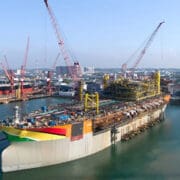
News Americas, GEORGETOWN, Guyana, Weds. Nov. 12, 2025: Guyana’s oil juggernaut, ExxonMobil, has hit another major milestone – 900,000 barrels of oil per day – solidifying the South American nation’s position as one of the fastest-growing petroleum producers in the world.

The announcement from ExxonMobil Guyana and its Stabroek block partners – Hess Guyana Exploration Ltd. and CNOOC Petroleum Guyana Ltd. – marks a symbolic moment just six years after Guyana’s first commercial oil production began.

Yellowtail Boosts Output

The surge comes on the heels of the Yellowtail project’s successful ramp-up to its designed capacity of 250,000 barrels per day, joining the already robust operations at Liza Phase 1, Liza Phase 2, and Payara.

Together, the four projects have propelled Guyana to output levels that rival OPEC producers such as Ecuador and surpass every other Caribbean nation combined.

“Guyana’s story is one of continuous achievements,” said ExxonMobil Guyana President Alistair Routledge. “Through close collaboration with the Government of Guyana, our co-venturers, suppliers, contractors, and employees, we are building a world-class energy sector that delivers significant value for the people of Guyana.”

A $60 Billion Energy Bet

The Stabroek block consortium has now committed more than US$60 billion in development investments — a staggering sum that underscores long-term confidence in Guyana’s offshore reserves.

Six additional government-approved projects are in the pipeline, including Uaru and Whiptail, both expected to deliver 250,000 barrels per day each by 2026 and 2027. The Hammerhead project will follow in 2029 with another 150,000 barrels per day, while Longtail – now under regulatory review – could push Guyana’s total capacity to 1.7 million barrels per day across eight developments.

Guyana’s Global Moment

This exponential growth is transforming Guyana’s economy and geopolitical relevance. Once one of the poorest countries in the hemisphere, it now boasts one of the world’s highest GDP growth rates and has become a central player in global energy markets.

But as production scales, so do expectations – from managing environmental risks and fiscal transparency to ensuring oil wealth benefits the broader population.

Still, ExxonMobil’s rapid progress signals an undeniable reality: Guyana’s oil era is no longer an emerging story – it’s a global force in motion.

Guyana Signs Major Offshore Oil Deal With QatarEnergy, TotalEnergies and PETRONAS

News Americas, GEORGETOWN, Guyana, Weds. Nov. 12, 2025: The Government of Guyana has inked a new Production Sharing Agreement (PSA) for shallow-water Block S4 offshore Guyana with a consortium led by global energy giants QatarEnergy, TotalEnergies, and PETRONAS.

The deal, signed through the Ministry of Natural Resources, marks another milestone in Guyana’s growing oil and gas industry. Under the agreement, TotalEnergies will serve as the operator with a 40% stake, while QatarEnergy and PETRONAS will hold 35% and 25% respectively.

The Government of Guyana has inked a new Production Sharing Agreement (PSA) for shallow-water Block S4 offshore Guyana with a consortium led by global energy giants QatarEnergy, TotalEnergies, and PETRONAS.

Awarded under Guyana’s first-ever licensing round in 2022, the PSA includes a US$15 million signing bonus and underscores continued investor confidence in the country’s hydrocarbon sector.

Minister of Natural Resources, Vickram Bharrat, hailed the signing as a signal of Guyana’s global appeal. “We are pleased to welcome QatarEnergy, TotalEnergies and PETRONAS as new partners in Guyana’s petroleum sector,” Bharrat said. “This investment demonstrates continued international confidence in Guyana’s transparent and robust licensing framework, and it reflects our government’s commitment to ensuring that the development of our natural resources is done sustainably and for the benefit of all Guyanese.”

Block S4 covers roughly 1,788 square kilometers, located between 50 and 100 kilometers off Guyana’s coast, in water depths ranging from 30 to 100 meters. The Ministry said exploration will adhere to both national regulatory standards and international best practices for environmental protection.

TotalEnergies’ Vice President of Exploration for the Americas, Daniel Larrañaga, expressed eagerness to begin operations, saying:

“We want to go fast. We want to explore this basin as soon as we can.”

The Ministry of Natural Resources reaffirmed the government’s commitment to environmental stewardship, transparency, and maximizing local participation in all petroleum activities.

With this latest agreement, Guyana continues to solidify its status as one of the world’s fastest-emerging energy producers—balancing rapid sector growth with a pledge to responsible development and national benefit.

Jamaica: Damage From Hurricane Melissa Nears One-Third of GDP

By NAN Business Writer

News Americas, KINGSTON, Jamaica, Tues. Nov. 11, 2025: Jamaica Prime Minister Andrew Holness has revealed that the record-breaking storm caused damages equivalent to nearly one-third of Jamaica’s annual GDP.

Holness told Parliament recentkly that initial assessments show losses of between US$6 and $7 billion – or roughly 28% to 32% of Jamaica’s 2024 economic output -making Melissa the most destructive hurricane in the island’s history.

“This was not just another storm,” Holness declared. “Experts say Melissa pushed the physical limits of what’s possible in the Atlantic, fueled by record sea temperatures. Its force was so immense that seismographs hundreds of miles away registered its passage. Hurricane Melissa wasn’t only a tragedy – it was a warning.”

An aerial view shows damaged buildings in the aftermath of Hurricane Melissa, in Westmoreland, Jamaica, on October 31, 2025. At least 19 people in Jamaica have died as a result of Hurricane Melissa which devastated the island nation when it roared ashore this week, a government minister told news outlets late October 31. (Photo by RICARDO MAKYN/AFP via Getty Images)

Fiscal Shock and Recovery Plan

The Prime Minister warned that reconstruction costs will temporarily push up Jamaica’s debt-to-GDP ratio, forcing the government to invoke emergency fiscal provisions. He said the administration will seek support from regional partners, multilateral agencies, and private-sector investors to stabilize the economy.

Preliminary data suggests short-term economic output could shrink by 8% to 13%, a major setback for an economy already strained by Hurricane Beryl last year.

Holness said new measures would focus on climate-resilient rebuilding, including plans to bury sections of the national power grid, upgrade coastal defenses, and waive import taxes on critical relief items such as solar panels and Starlink satellite kits.

“Every repaired bridge, re-roofed home, and rebuilt road must be designed for the storms of tomorrow, not the storms of yesterday,” Holness said.

Regional Impact and Rising Costs of Climate Change

While Jamaica bore the brunt of Melissa’s impact, heavy rains also pummeled Haiti, flooding rivers and destroying nearly 12,000 homes. Haitian officials confirmed 25 deaths, including 10 children.

In Cuba, authorities reported no fatalities after large-scale evacuations near Santiago de Cuba, though they cited massive agricultural and infrastructure losses.

Regionally, AccuWeather estimates total damages from Hurricane Melissa at US $48–52 billion, while Verisk Analytics pegs insured losses in Jamaica alone between US $2.2 billion and $4.2 billion.

Caribbean Leaders Renew Climate Call

The scale of devastation has renewed calls across CARICOM for climate reparations and debt relief from high-emission nations. “This is what climate injustice looks like,” said one regional diplomat. “The Caribbean is paying the price for carbon emissions we didn’t create.”

Holness echoed the sentiment, pledging to champion a regional resilience framework that ties reconstruction to green financing and renewable energy transitions.

“Jamaica will rebuild stronger,” he said. “But the world must listen. Our survival depends on global action, not sympathy.”

Jamaica is set to receive a full $150 million payout under its World Bank backed catastrophe bond following the devastation caused by Hurricane Melissa – marking one of the largest single sovereign insurance redemptions in the Caribbean’s history.

The World Bank, (International Bank for Reconstruction and Development, IBRD AAA/Aaa) confirmed that the payout was automatically triggered after third-party analysis by AIR Worldwide Corporation determined that the hurricane met pre-agreed parametric thresholds based on the storm’s central pressure and path, as reported by the U.S. National Hurricane Center.

And In the wake of Hurricane Melissa’s devastating impact, the Caribbean Catastrophe Risk Insurance Facility, (CCRIF-SPC) has announced a record-breaking US$70.8 million payout to the Government of Jamaica — the largest single payout in the organization’s history.

The Cayman Islands-based Caribbean and Central America Parametric Insurance Facility said the funds will be disbursed within 14 days, pending final model verification, in line with CCRIF’s commitment to speed and transparency.

“This marks the largest single payout in CCRIF’s history and is a powerful demonstration of the organization’s parametric insurance model,” CCRIF said in a statement. This payout is Jamaica’s fourth from CCRIF, bringing the country’s total receipts to US$100.9 million since joining the facility in 2007. Previous payments included US$26.6 million following Hurricane Beryl in 2024 and earlier disbursements after Tropical Cyclones Zeta and Eta in 2020.