Posts

The Caribbean’s role in the transformation of agri-food systems

Black Immigrant Daily News

The content originally appeared on: Caribbean News Service
Mario Lubetkin, Assistant Director-General and Regional Representative for Latin America and the Caribbean.

By Mario Lubetkin

The global food security crisis reveals an increase in the undernourishment prevalence, reaching higher than in 2015, when countries first agreed to eradicate hunger by 2030 as one of the SDG targets. In the Caribbean, between 2014 and 2021, hunger increased by 2.3 percentage points, affecting 16.4 percent of its population by 2021. Moreover, the Caribbean is a net importer of almost all the main food groups such as cereals, dairy products, fruits and vegetables (except the Dominican Republic), meat and vegetable oils.

This region is highly vulnerable to extreme events, climate variability and climate change. Increasingly extreme weather events, shifting rainfall patterns, rising temperatures, recurrent drought, and floods, among others, pose an unprecedented threat that can cause substantial socio-economic and environmental loss and damage.

The recent Forty-Fourth Regular Meeting of the Conference of Heads of Government of the Caribbean Community (CARICOM), chaired by the Bahamas, highlighted some of the main challenges affecting food production in the region. The Food and Agriculture Organization of the United Nations (FAO) has strengthened a special focus to implement joint strategies to support the Caribbean countries’ priorities and discuss new ways for the Caribbean to transform agri-food systems.

For the first time, FAO was invited to address this important discussion during the 17th Special Session of the CARICOM Council for Foreign and Community Relations (COFCOR). FAO recognized CARICOM’s great efforts to implement the agri-food systems strategy in member states to help achieve the reduction of the Caribbean?s large food imports bill by 25 percent by 2025.

The Organization is supporting the development of priority value chains to contribute to reducing the region’s food import bill. It is doing so by working with governments and key stakeholders in designing and upgrading strategies, as well as good practices and opportunities for attracting investment to help boost intra-regional trade.

In this frame, the Heads of Government of CARICOM have also supported the project proposal “Building Food Security through Innovation, Resilience, Sustainability and Empowerment” presented by Guyana; and FAO is working closely with the Member States to promote a climate finance mobilization strategy to fund innovative initiatives such as novel animal feed, optimizing greenhouses, soil, and land mapping. FAO supports governments and communities in building capacities to comprehensively manage multi-hazard risks to enhance the resilience of livelihoods and value chains.

It is crucial to increase and improve the efficiency and effectiveness of investments across the agri-food system. In this regard, FAO, together with the CARICOM Private Sector Organization, agreed to pursue collaboration to enhance intra-regional trade and private sector investment in the Caribbean to trigger agriculture sector growth.

On the other hand, the last Summit of Heads of State and Government of the Community of Latin American and Caribbean States (CELAC), whose current pro-tempore presidency is held by St. Vincent and Grenadines, concluded with a declaration from 33 member states, which emphasizes a regional commitment to guarantee food security, supporting agricultural and rural development.

This high commitment of the main government structures of the region will contribute to an effective preparation for the next FAO Regional Conference in Georgetown, Guyana, which will take place in March 2024, disclosing the importance of an effective engagement of the Caribbean in the decision-making process to transform the agri-food systems.

The successful transformation of the agri-food systems in the region will require ownership, political commitment, and action plans. It is necessary to coordinate a joint effort to reinforce technical assistance in the field and more investment and partnerships to support food security, climate change fight, sustainable production, and international fair commerce to protect livelihoods and small-scale producers and guarantee our food security.

Donate At Caribbean News Service, we do not charge for our content and we want to keep it that way. We are seeking support from individuals and organisations so we can continue our work & develop CNS further.


NewsAmericasNow.com

FREE ARTICLE: A third way for global peace

Black Immigrant Daily News

The content originally appeared on: Caribbean News Service
The writer is Antigua and Barbuda’s Ambassador to the U.S. and the OAS. He is also a senior fellow at the Institute of Commonwealth Studies at the University of London and at Massey College in the University of Toronto. The view expressed are entirely his own.

By Sir Ronald Sanders

If developing countries, especially the small and vulnerable states, expected meaningful attention by the G20 to the myriad economic and financial challenges that confront them, their hopes were dashed by failed meetings of Finance and Foreign Ministers in February and March.

The members of the G-20 are: Argentina, Australia, Brazil, Canada, China, France, Germany, India, Indonesia, Italy, Japan, Mexico, Russia, Saudi Arabia, South Africa, South Korea, Turkey, the U.K. and the U.S., as well as the European Union. Small states have no voice at the meetings, unless one of them is invited for a brief presentation.

Both of the G20 meetings were dominated by profound differences over the Russian war on Ukraine. This caused global economic issues to be pushed to one side. The failure of the Finance Ministers meeting, on 24 and 25 February, foreshadowed the collapse of the Foreign Ministers meeting on March 1 and 2. Reuters reported that, when a Communique was being negotiated for the Finance Ministers’ meeting, Russia insisted that the document must not mention the word “war”, insisting that the fighting in Ukraine is a “special military operation.”

In any event, no Communique was issued by either of the two meetings. Instead, the Chairpersons – the Finance and Foreign Ministers of India – were forced to release short statements that did not amount to much more than saying that the major powers dug deeper into their entrenched positions on Ukraine, discarding everything else. The Indian Foreign Minister, Subrahmanyam Jaishankar, said there were “divergences” on the issue of the war in Ukraine “which we could not reconcile as various parties held differing views.”

China and Russia reportedly objected to two paragraphs taken from the previous G-20 declaration in Bali last year. The paragraphs stated that the war in Ukraine was causing immense human suffering while exacerbating fragilities in the global economy, the need to uphold international law, and that “the use or threat of use of nuclear weapons is inadmissible.” This was eminently acceptable language, particularly as all parties, including China and Russia, had accepted it a year ago.

A plea by India’s Prime Minister, Narendra Modi, in a video presentation at the opening of the Foreign Ministers meeting, fell on deaf ears. But his message was right. Importantly, he lamented that the two main goals of the post-World War II international order – preventing conflict and fostering cooperation – were elusive. “The experience of the last two years – financial crisis, pandemic, terrorism and wars – clearly shows that global governance has failed in both its mandates,” he said.

India’s hope for the year of its Presidency of the G20 meshes well with the overall interests of developing countries. It emphasizes the demands of developing states for inclusive growth, climate finance, more representative multilateral institutions, and progress on the United Nations Sustainable Development Goals, which were all reversed by the economic impact of the Covid-19 pandemic.

India’s attention to the heavy burden of debt on developing countries, and, indeed, of industrialized countries as well, is also urgent. Every country now finds it difficult to service outstanding debt, given the demands of recovering and rebuilding damaged economies.

Even before the harmful impacts of Covid-19 and the global disruption, caused by the Russian war on Ukraine, the debt to GDP ratio was already unsustainable. After these two devastating events, debt to GDP ratio in many countries soared to over 100 per cent. Now commercial borrowing has become almost impossible, given the continuing increase in interest rates.

Restructuring sovereign debt is both necessary and urgent. However, China has made it clear it will not participate in restructuring. China follows its own path, regarding money that it lends to friendly nations. And some Western countries have declared that they will not accept reducing debt owed to them, for their debtor countries to pay back China. So, while differences between major powers persisted, the interests of the developing countries at the G20 were ignored.

Climate Change should also have featured meaningfully on the G20 agenda. It did not. No discussion took place, although countries that are victims of climate change expected movement on this issue before the next Climate meeting, COP28, in December.

The fact that developing countries – despite the presence of India and South Africa – could make no impact on the major powers at the G20, is deeply troubling.

This stark reality should spur all developing countries to do more, not less. The economies of the global economy are seriously undermined by the Russian war on Ukraine and its consequences, including the retaliatory economic and other actions taken by the European Union and the member countries of the North Atlantic Treaty Organization. Developing countries lack the resilience and financial resources of the rich countries to ride out this turbulent economic storm; they cannot afford to sit by in silence.

As positions become more entrenched and more strident between the powerful protagonists of the war on Ukraine, world peace is endangered with frightening prospects for all nations, including those involved in the conflict.

In this connection, the failure of the G20 meetings raises a screeching alarm that developing countries should not ignore. If no movement was possible, even with India chairing these meetings, the clarion call for urgent collective action by developing countries should be heard by all. If ever there was a time for a revival of a genuine and practical non-aligned movement in the world, that time is now.

China, also, has an influential role to play in all this as an honest broker, taking no sides, aiding no protagonist, and promoting the established rules of the U.N. Charter and international law.

Efforts are urgent to return the world to an agenda, focused on tackling common problems such as disease and climate change; promoting human development including inequality and human rights; and engaging in dialogue to improve and enhance global rules that respect and uphold sovereignty and territorial integrity.

All developing countries should now work together, in all international fora, to present a third way to resolving global challenges, including conflicts.

Donate At Caribbean News Service, we do not charge for our content and we want to keep it that way. We are seeking support from individuals and organisations so we can continue our work & develop CNS further.


NewsAmericasNow.com
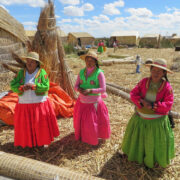
St Lucia adopting CCJ as final court of appeal

Black Immigrant Daily News

The content originally appeared on: Caribbean News Service

The St Lucia Parliament on Tuesday night gave the green light for the island to have the Trinidad-based Caribbean Court of Justice (CCJ) as its final and highest court, replacing it the London-based Privy Council.

All 13 government legislators who were present when the vote was taken supported the motion. Opposition Leader Allen Chastanet, who had earlier walked out of the Parliament during a debate on another matter, did not participate in the CCJ debate.

The government needed a three-fourth special majority of the 17-member Parliament to amend through the Constitution of St Lucia Amendment Bill 2023 and, according to the Speaker Claudius Francis, the requirement was met when all 13 government members voted in support of the motion that had been tabled by Prime Minister Phillip J Pierre.

Two government legislators are out of the country on official business

“It is a sad day that a former prime minister is not in the House to debate this bill,” Pierre said, adding that it showed the “scorn and contempt” Chastanet had for the population.

But speaking on a radio programme earlier, the United Workers Party (UWP) leader defended his decision to walk out, saying that he represents thousands of people and would not be “silenced” by a “biased” Speaker.

“People want to hear a different opinion and I am being denied the opportunity to speak,” Chastanet told radio listeners. “I am not going to allow the voice of the Leader of the Opposition to be marginalised.”

“There needs to be a challenge to what’s going on with the CCJ but I can’t do it alone,” he added, urging the population to express their feelings about the situation as well as the need for a referendum.

But government legislators, including former prime minister Dr Kenny Anthony who drafted the CCJ legislation when he served as the counsel general of the Caribbean Community (CARICOM) Secretariat in Guyana, brushed aside the call, saying that the St Lucia Constitution makes no requirement for a referendum before acceding to the CCJ.

Prime Minister Pierre said he intends to write the British government providing an update on the move towards the CCJ in keeping with the agreement reached when the island attained political independence from Britain 44 years ago.

In addition, he said he would also be informing former Jamaica prime minister PJ Patterson, who in earlier correspondence had expressed confidence in St Lucia’s move and the experience of Anthony to help guide the process

He said he would inform Patterson that “Kenny did give us a lot of his knowledge and we did pass the bill”.

Pierre said passage of the legislation made St Lucia “part of history, and the history books will record that on the 28th of February, St Lucia broke the shackles of colonialism”.

Earlier, another former prime minister, Stephenson King, a senior member of the present administration, said he was pleased that the island was moving towards the regional court.

King said an ordinary person would need approximately EC$130 000 to access the Privy Council.

St Lucia becomes the fifth CARICOM country to make the CCJ its final court, joining Barbados, Belize, Guyana and Dominica.

All 15 CARICOM countries have also signed on to the original jurisdiction of the CCJ that also serves as an international tribunal interpreting the Treaty of Chaguaramas which governs the regional integration movement.

Donate At Caribbean News Service, we do not charge for our content and we want to keep it that way. We are seeking support from individuals and organisations so we can continue our work & develop CNS further.


NewsAmericasNow.com

IMF board approves US$1.7B in funding to Jamaica

Black Immigrant Daily News

The content originally appeared on: Caribbean News Service

The International Monetary Fund (IMF) Executive Board on Thursday approved Jamaica’s request for funding under two of its facilities.

It has approved about US$968 million under Precautionary and liquidity Line arrangement and about US$764 million under the newly created Resilience and Sustainability Facility.

The 24-month programme will provide insurance against risks from higher commodity prices, a global slowdown, tighter-than-envisaged global financial conditions, new COVID outbreaks and in strengthening physical and fiscal resilience to climate change.

Following the executive board’s discussion, Deputy Managing Director and Acting Chair of the Board, Bo Li, stated: “Jamaica strong track record of building institutions and prioritising macroeconomic stability has aided the post-pandemic recovery. The economy continues its strong recovery from COVID, and inflation is expected to converge to the BOJ target range by end-2023.”

He added that international reserves remain at adequate levels and the financial sector remains well capitalised and liquid.

He also said the post-pandemic increase in the primary surplus and the ongoing monetary tightening strike the right balance in response to the external shocks, reducing inflation and securing debt sustainability.

Donate At Caribbean News Service, we do not charge for our content and we want to keep it that way. We are seeking support from individuals and organisations so we can continue our work & develop CNS further.


NewsAmericasNow.com
Foreign military help unavoidable in Haiti to end chaos, pundits say

Black Immigrant Daily News

The content originally appeared on: Caribbean News Service

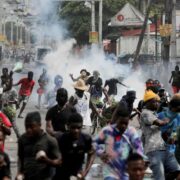
The visit by a CARICOM delegation to Haiti this week has been welcomed by many Haitian political stakeholders, but others fear all the efforts might be in vain should international actors fail to deploy a multinational military force to help the impoverished Caribbean country cope with the current catastrophic security situation, pundits say.

Jamaica’s Prime Minister Andrew Michael Holness who led a CARICOM delegation to Haiti met on Tuesday with diverse political and social actors in quest of a rapprochement between Haitian protagonists. An official report on the outcome of those talks is yet to be communicated to the local media who were kept away.

Director of the Haitian Center for Analysis and Research in Human Rights (CARDH), Gedeon Jean, who attended a meeting with the CARICOM delegation, said his group and other Haitian actors particularly put emphasis on the necessity to primarily address the security situation.

“What the population needs first is security, and it is clear that no one can rely on the Haitian police to provide the needed security,” the head of the human rights organisation based in Port-au-Prince told HCNN on Wednesday.

“So there is no other option. The deployment of an adapted foreign military force, which could result from a bilateral or multinational effort, is unavoidable.”

He added: “It is not that the police do not have the will to crack on gangs, but they don’t have the capability.”

“Bandits are raping women, girls; they kill and kidnap people as they please. Nearly 60 per cent of the capital’s metropolitan area are controlled by gangs.

“Imagine a police with no drones, not even one helicopter, they don’t have any technological tools, they lack appropriate weaponry…,” said Jean.

Several highly regarded personalities who usually avoid getting involved in the heated political debates have decided to speak out, saying that the situation in the country has become unbearable.

“The deployment to Haiti of a foreign military force is absolutely necessary to help the country find its way out of the crisis,” said Patrick Moussignac, a prominent investor and owner of Radio and TV Caraibes, the number one and most popular media outlet in Haiti.

“At this phase, there’s no other way. We should admit that we can’t do it alone. Haiti is now like a cancer that has metastasized.”

Moussignac said the worst thing that can happen is when “those who have the mission to protect you cannot protect themselves.”

He was referring to a wave of attacks on police officers that resulted in dozens of them being killed in the past year.

Moussignac also called on Haitian political protagonists to put Haiti on top of their agenda to end the ongoing political infightings.

He described a December 21, 2022 Accord adopted by a number of political actors, including the government, the private sector, and religious authorities, as a good step towards the end of the deadlock.

Helen La Lime, the UN Secretary-General Special Representative in Haiti, said a rapid action military force should be deployed to the CARICOM nation.

“Without the deployment of such a force which would be done in cooperation with the Haitian National police, the very positive effects of the political process and sanctions so far imposed will remain fragile and vulnerable; they risk to be wiped out,” La Lime stated during a meeting of the UN Security Council at the end of last year. “Haitians desperately need the assistance so that they may resume their activities and live their lives in peace.”

Despite substantial support for the deployment of a multinational force, the prominent group, commonly known as the Montana Accord, says it rejects any move which could include sending foreign military to Haiti.

“We’ve seen several deployments of the kind in Haiti, but they never brought about any solution,” said Magalie Comeau Denis of the Montana Accord.

“We promote a national solution to the Haitian crisis and to solve it once and for all.”

A representative of the Montana Accord also attended the Meeting with the CARICOM delegation on Tuesday.

A prominent Haitian actor, Jorchemy Jean-Baptiste who took part in the meeting with Prime Minister Holness, said he was very moved when the Jamaican leader said as he closed one of the sessions on Tuesday: “You Haitians are the first black nation that has invented the word freedom. Why can’t this nation also become one of the most prosperous and stable black nations in the world?”

Donate At Caribbean News Service, we do not charge for our content and we want to keep it that way. We are seeking support from individuals and organisations so we can continue our work & develop CNS further.


NewsAmericasNow.com
UNICEF report: Number of children without critical social protection increasing globally

Black Immigrant Daily News

The content originally appeared on: Caribbean News Service

The number of children without access to social protection is increasing year-on-year, leaving them at risk of poverty, hunger and discrimination, according to a new report released by the International Labour Organization (ILO) and UNICEF today.

More than a billion reasons: The urgent need to build universal social protection for children warns that an additional 50 million children aged 0-15 missed out on a critical social protection provision – specifically, child benefits (paid in cash or tax credits) – between 2016 and 2020, driving up the total to 1.46 billion children under 15 globally.

“Ultimately, strengthened efforts to ensure adequate investment in universal social protection for children, ideally through universal child benefits to support families at all times, is the ethical and rational choice, and the one that paves the way to sustainable development and social justice,” said Shahra Razavi, Director of the Social Protection Department at the ILO.

According to the report, child and family benefit coverage rates fell or stagnated in every region in the world between 2016 and 2020, leaving no country on track to achieve the Sustainable Development Goal of achieving substantial social protection coverage by 2030. In Latin America and the Caribbean, for example, coverage fell significantly from approximately 51 per cent to 42 per cent. In many other regions, coverage has stalled and remains low. In Central Asia and Southern Asia; Eastern Asia and South-eastern Asia; Sub-Saharan Africa; and Western Asia and Northern Africa coverage rates have been at around 21 per cent, 14 per cent, 11 per cent and 28 per cent respectively since 2016.

Failure to provide children with adequate social protection leaves them vulnerable to poverty, disease, missed education, and poor nutrition, and increases their risk of child marriage and child labour.

Globally, children are twice as likely as adults to live in extreme poverty – those struggling to survive on less than US$1.90 (PPP * ) a day – approximately 356 million children. A billion children also live in multidimensional poverty – meaning without access to education, health, housing, nutrition, sanitation, or water. Children living in multidimensional poverty increased by 15 per cent during the COVID-19 pandemic, reversing previous progress in reducing child poverty and highlighting the urgent need for social protection.

Moreover, the pandemic highlighted that social protection is a critical response in times of crisis. Nearly every government in the world either rapidly adapted existing schemes or introduced new social protection programmes to support children and families, but most fell short of making permanent reforms to protect against future shocks, according to the report.

“As families face increasing economic hardship, food insecurity, conflict, and climate-related disasters, universal child benefits can be a lifeline,” said Natalia Winder-Rossi, UNICEF Director of Social Policy and Social Protection. “There is an urgent need to strengthen, expand and invest in child-friendly and shock-responsive social protection systems. This is essential to protect children from living in poverty and increase resilience particularly among the poorest households.”

The report emphasizes that all countries, irrespective of their level of development, have a choice: whether to pursue a “high-road” strategy of investment in reinforcing social protection systems, or a “low-road” strategy that misses out on necessary investments and will leave millions of children behind.

To reverse the negative trend, the ILO and UNICEF urge policymakers to take decisive steps to attain universal social protection for all children, including:

Investing in child benefits which offer a proven and cost-effective way to combat child poverty and ensure children thrive.
Providing a comprehensive range of child benefits through national social protection systems that also connect families to crucial health and social services, such as free or affordable high-quality childcare.
Building social protection systems that are rights-based, gender-responsive, inclusive, and shock responsive to address inequities and deliver better results for girls and women, migrant children, and children in child labour for example.
Securing sustainable financing for social protection systems by mobilizing domestic resources and increasing budget allocation for children.
Strengthening social protection for parents and caregivers by guaranteeing access to decent work and adequate benefits, including unemployment, sickness, maternity, disability, and pensions.

Donate At Caribbean News Service, we do not charge for our content and we want to keep it that way. We are seeking support from individuals and organisations so we can continue our work & develop CNS further.


NewsAmericasNow.com

Grenada to start taxing lottery winnings

Black Immigrant Daily News

The content originally appeared on: Caribbean News Service

Grenada will enforce a 15 per cent tax on all games of chance winnings above EC$10,000 (One EC dollar = US$0.37) from Wednesday.

The amendment to the Income Tax Act of 2010 which provides for the tax to be levied was approved in 2014 by the then-Keith Mitchell administration but was never enforced.

According to the legislation, taxes are to be paid on “winnings of cash and any reference to an amount and to payment in relation to winnings”.

“A withholding tax of 15 per cent will only be charged on the excess over EC$10,000 and not the full winnings,” explained Permanent Secretary in the Ministry of Finance Mike Sylvester.

The law will apply to all games of chance, including lottery and bingo.

Payment of the tax to Government will not be the duty of the winner but the promoter of the game of chance who must make the deduction and pass it on to the Ministry of Finance.

Donate At Caribbean News Service, we do not charge for our content and we want to keep it that way. We are seeking support from individuals and organisations so we can continue our work & develop CNS further.


NewsAmericasNow.com

Jamaica opposition against cannabis imports from Canada

Black Immigrant Daily News

The content originally appeared on: Caribbean News Service

The parliamentary opposition is expressing concern about reports that the go ahead has been given for importation of cannabis from Canada, even while local farmers face difficulties exporting to the North American country.

In a media release Wednesday afternoon, Opposition Spokesperson on Industry, Investment and Global Logistics, Anthony Hylton, said he had serious concerns over the reported decision of Jamaica’s Cannabis Licensing Authority (CLA) to approve importation from Canada.

He termed the development as alarming.

Hylton said he strongly opposed the decision, “particularly because several attempts to legally export cannabis and cannabis products from Jamaica to the Canadian market have been met with resistance, including trade barriers.”

Hylton said the decision by the CLA to grant import licences for cannabis grown in Canada to be imported into Jamaica deserves a full explanation to the stakeholders in the local industry regarding the basis for such a decision.

He is demanding a quick response from the Minister of Industry, Investment and Commerce, Aubyn Hill, on the agency’s decision.

Donate At Caribbean News Service, we do not charge for our content and we want to keep it that way. We are seeking support from individuals and organisations so we can continue our work & develop CNS further.


NewsAmericasNow.com

Surinamese President starts wide consultation to ease political tension

Black Immigrant Daily News

The content originally appeared on: Caribbean News Service
Chandrikapersad Santokhi

President Chandrikapersad Santokhi began hearings with various civil society organisations and groups in an attempt to de-escalate the high political tensions in the country, but two key groups have refused to be part of the consultations.

The head of state said that he wanted to obtain input from society to adjust his policy, after a peaceful demonstration on February 17 turned into large-scale riots in the capital Paramaribo in which numerous businesses were looted and destroyed and the Parliament building was also attacked by demonstrators.

While President Santokhi indicated that he wants to have dialogue with all groups Trade Union C-47 and the Association of Economists in Suriname (VES), say they will not participate in the discussions with the head of government.

C-47 chairman Robby Berenstein is not satisfied with the implementation of previous proposals made to the government by the trade union and therefore sees no point in talking to Santokhi again without concrete actions being taken by the government.

The President will hear from the trade unions, individual citizens, social groups, political parties and the business community. The president said in the National Assembly last Friday that he will allocate two weeks for these talks. If necessary, the period will be extended.

“We first want to know the status of the things we have requested. Before you come and talk about national dialogue, start giving us an answer to that. We don’t even know where the dialogue should lead,” Berenstein said.

VES cited similar reasons for not participating in the consultations, though it said it is available to provide concrete support to make the country’s economy healthy.

A letter from the organisation to the president indicated that the advice given from June 2020 and in other consultations had not been implemented.

VES claims to have advised the president at an early stage to hold a national dialogue. However, this was not heeded and it said the government had shown itself to be insensitive to the cries from society.

“We already advised you on June 16, 2020 to immediately implement the necessary ‘unpopular’ economic measures. As a result, the derailed economy would return to equilibrium within one year. However, you have continued to consistently ignore the dozens of opinions issued by the VES since then, and your government has remained insensitive to the consequences we have tried to shield you from,” the VES said.

The Surinamese Association of Journalists (SVJ) was one of the organisations received by President Santokhi on Sunday. During the dialogue, the SVJ pointed out the importance of freedom of the press and the right of free expression.

With regard to the freedom of expression of citizens, the media organisation explained that in addition to the citizen’s duty to comply with laws and regulations, the government has an important constitutional task to ensure that this right of citizens is not hindered or limited and at the same time safety is guaranteed to society.

The SVJ has stressed that it is unacceptable that under the pretext of guaranteeing security, the fundamental right of citizens to express their opinion freely and to hold protest demonstrations will be restricted by the government.

Donate At Caribbean News Service, we do not charge for our content and we want to keep it that way. We are seeking support from individuals and organisations so we can continue our work & develop CNS further.


NewsAmericasNow.com

Haiti needs the world’s attention says PM

Black Immigrant Daily News

The content originally appeared on: Caribbean News Service

A day after his return from a Caricom mission in Haiti, Prime Minister Andrew Holness, told a diplomatic audience Tuesday that the French-speaking Caribbean nation needs the attention of the world.

Speaking at a Diplomatic Week event held at the Ministry of Foreign Affairs and Foreign Trade, the prime minister gave his preliminary observations on the Haiti mission, in advance of the formal report.

“All stakeholders that we have spoken to [in Haiti] have pointed out the emergency situation they face with security and safety of their citizens,” Holness said.

He pointed out that although he holds the view that “Haiti has institutions that are functioning”, these institutions are challenged.

“And with the right support, with the right attention, Haiti can overcome its challenges,” he added.

The prime minister affirmed: “I remain hopeful for the Haitians, and Jamaica and Caricom stand in solidarity with them. And we will continue to use our good offices and give whatever support we have in bringing global attention to the situation in Haiti and in supporting the Haitian people in reaching consensus and resolution of their challenges.”

For her part, Minister of Foreign Affairs and Foreign Trade, Senator Kamina Johnson Smith, who was also a part of the mission, said: “We are deeply concerned about our Haitian brothers and sisters and we are working with our partners to treat the matter with the urgency that it deserves.”

She outlined that yesterday’s meetings were “well received” and “we look forward to discussing them formally within the wider Caricom body and beyond”.

Following the prime minister’s address, His Excellency Neville Gertze of the Republic of Namibia, commented that there is an “urgent need” for strengthened multilateralism, one that “is based on caring for one another”.

“And I’m taking the floor really just to say to you that we appreciate that you are bringing the spotlight to the crisis in Haiti. When the focus of the world is elsewhere, we should ensure that we do not leave others out. We should ensure that inclusivity is the order of the day, and we recognise the efforts you are [making],” Gertze said.

The Caricom delegation of leaders convened high-level talks with government officials and civil society in Haiti on Monday and heard from the relevant stakeholders in a bid to determine a path towards consensus-building for the restoration of political and security stability in the country.

This was in addition to a meeting with Canada on the matter of security.

The Caricom team also met with the High Transition Council and the Political Accord groups as well as the political parties, civil society, private sector and religious groups.

Diplomatic Week in Jamaica is being observed under the theme ‘Transcending Borders, Strengthening Partnerships, Advancing Development’.

More than 50 resident and non-resident Heads of Mission are participating in the week’s programme.

Donate At Caribbean News Service, we do not charge for our content and we want to keep it that way. We are seeking support from individuals and organisations so we can continue our work & develop CNS further.


NewsAmericasNow.com