
Posts

Guyana president temporarily relocates office to deal with citizen concerns

Black Immigrant Daily News

The content originally appeared on: Caribbean News Service

President Irfaan Ali has moved his entire office to the East Berbice Corentyne Region for the next two days to comprehensively resolve issues affecting residents there.

The temporary office is located at State House, New Amsterdam and is prepared to deal with any matter and social issues within the ancient county.

Addressing residents on Thursday morning, the Guyanese leader said the initiative forms part of the administration’s strategy to improve the delivery of services and strengthen the efficiency of governance.

He stressed that from day one, the People’s Progressive Party /Civic (PPP/C) Government had been keen on serving the Guyanese populace and providing easy access to government services.

President Ali explained that the exercise will be executed in every region, adding that the administration has no intention of distancing itself from the citizens. The idea is to ensure the head of state stays in touch with the people.

Meanwhile, there are a number of government ministries on site, with the relevant stakeholders to consult with residents.

These include the ministries of Agriculture, Housing and Water, Human Services and Social Security, and Local Government and Regional Development, among others.

National Security Advisor, Gerry Gouveia and Deputy Commissioner of Police, Ravindradat Budhram are responsible for listening and addressing all issues related to security.

Chief Executive Office of GO-Invest, Dr Peter Ramsaroop will talk to residents and stakeholders within the business community, while others were specifically identified to deal health problems.

President Ali said the region will be transformed significantly as major projects are in the pipeline.

Donate At Caribbean News Service, we do not charge for our content and we want to keep it that way. We are seeking support from individuals and organisations so we can continue our work & develop CNS further.


NewsAmericasNow.com
UN Food Systems Stocktaking Moment to take place in Rome, Italy from 24-26 July

Black Immigrant Daily News

The content originally appeared on: Caribbean News Service

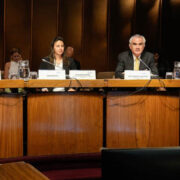
On behalf of the Secretary-General of the United Nations, the Deputy Secretary-General, Amina Mohammed, and the Deputy Prime Minister and Minister of Foreign Affairs and International Cooperation of Italy, Antonio Tajani, announced today the UN Food Systems Stocktaking Moment, will take place in Rome, Italy from 24 – 26 July 2023, at the premises of the Food and Agriculture Organization of the United Nations (FAO).

The high-level meeting will serve as the first global follow-up to the 2021 Food Systems Summit, where more than 50,000 people, including 77 Heads of State and Government, from 193 countries, committed to accelerate and deepen the transformative power of food systems, for the full realization of all 17 Sustainable Development Goals (SDGs). Italy hosted the Pre-Food Systems Summit in Rome in July 2021, an inclusive substantial preparatory event that gathered leaders and numerous stakeholders.

“I am looking forward to Italy’s leadership in bringing together stakeholders to create the evidence that food systems transformation is a critical SDGs accelerator,” said Ms Mohammed, stressing that “more sustainable, equitable, healthy and resilient food systems directly impact people’s lives and livelihoods as we strive for a better future for people and for the planet.”

The UN Food Systems Stocktaking Moment will be hosted by Italy, in collaboration with the Rome-based UN Agencies (FAO, IFAD, WFP), the UN Food Systems Coordination Hub and the wider UN system. The aim is to provide opportunities for countries to report on progress made at the national level since the UN Food Systems Summit in 2021 and their contributions to the achievement of the 2030 Agenda – despite a current global context that has substantially changed.

The number of people unable to afford a healthy diet increased by an additional 112 million between 2019 to 2020, to almost 3.1 billion, reflecting the impacts of rising consumer food prices during the pandemic.

“I strongly welcome the decision of the UN to accept Italy’s offer to host and co-organize in Rome the UN Food Systems Stocktaking Moment, together with the UN Rome-based agencies, the UN Food Systems Coordination Hub and the wider UN system”, said Minister Tajani. “Italy, with the strategic involvement of its strong and innovative agrifood sector, is committed to play an increasingly active role in supporting the efforts of the international community to promote food security and transformative and innovative solutions for sustainable and efficient food systems throughout the world. As one of oldest and most influential food cultures of the world, we intend to play our part in addressing one of the key challenges for the achievement of the 2030 Agenda”.

The three-day meeting will further highlight the central role of food systems transformations in overall SDG advancement ahead of the Sustainable Development Goals Summit in September 2023. It will also be a conducive space for countries to share stories of success and early signs of transformation and maintain the momentum for bold acceleration and bold action to further the resilience of food systems.

The FAO Director-General, QU Dongyu, expressed full support for the Stocktaking meeting for transformation of agrifood systems to be more efficient, inclusive, resilient and sustainable for better production, nutrition, environment and a life leaving no one behind.

The UN and Italy called on all countries and food systems actors to “prepare and seize the opportunity” of the Stocktaking Moment to reaffirm the world’s commitment to act with urgency, at scale and in line with the promise of the SDGs.

Donate At Caribbean News Service, we do not charge for our content and we want to keep it that way. We are seeking support from individuals and organisations so we can continue our work & develop CNS further.


NewsAmericasNow.com

Rowley says court decision ‘disturbing’

Black Immigrant Daily News

The content originally appeared on: Caribbean News Service

Prime Minister Dr Keith Rowley described as “disturbing” the circumstances surrounding the High Court’s decision to compensate nine men, who were acquitted of the 2016 murder of a businesswoman, TT$2.1 million each.

On Monday, High Court Master Martha Alexander, awarded the men a total of TT$19 168 917.56 for malicious prosecution and exemplary damages; costs amounting to $200 917.56; and the cost of an expert witness of $68 000.

Speaking to the media on Wednesday, Prime Minister Rowley said: “As you know, the Cabinet has no role whatsoever in proceedings in the court, but we all follow it as it goes along and elements of it made public.

“I am in the same position that you are in. I’ve seen the news. It is very disturbing and as a result of that, I, too, I’m waiting to hear what the Office of the Attorney General has to say tomorrow (Thursday), but clearly, this is an unsatisfactory situation and I am waiting to hear what the facts are, but this is not what one expects in situations like these.”

The damages awarded to the nine men also have interest attached, at a rate of 2.5 per cent, from May 29, 2020, to January 30 this year.

The nine men – Shervon Peters, Devon Peters, Anthony Gloster, Joel Fraser, Ronald Armstrong, Keida Garcia, Jameel Garcia, Marlon Trimmingham and Antonio Charles – were among 10 persons who had gone on trial in 2016 for the murder of Vindra Naipaul-Coolman.

The 52-year-old former chief executive of the supermarket chain, Naipaul’s Xtra Foods, was kidnapped from the driveway of her residence in Lange Park, Chaguanas in west central Trinidad, on the night of December 19, 2016. Her body was never found. Her kidnappers had demanded a $3 million ransom for her release.

The nine men had filed a malicious prosecution claim in May 2020 which the State did not defend, despite having entered an appearance.

Donate At Caribbean News Service, we do not charge for our content and we want to keep it that way. We are seeking support from individuals and organisations so we can continue our work & develop CNS further.


NewsAmericasNow.com

FAO Director General to visit the Caribbean with a focus on risk and disease prevention

Black Immigrant Daily News

The content originally appeared on: Caribbean News Service
FAO Director-General Qu Dongyu.

The Director-General of the Food and Agriculture Organization of the United Nations (FAO), QU Dongyu, will visit Bridgetown, Barbados, on Monday, for both a technical and political agenda.

The Director-General’s trip will kick off with a visit to the Bridgetown Fisheries Complex, where he will find out more about the implementation of a FAO supported fish silage project, a process that transforms fish waste into a liquid mixture of hydrolyzed proteins, lipids, minerals, and other nutrients that both terrestrial and aquatic animals can digest. It can also serve as an excellent fertilizer.

In this context, the Director-General will meet with Adrian Forde, Barbados’ Minister of The Environment and National Beautification, Green and Blue Economy, and leaders of local fishermen’s associations.

QU will then travel to the United Nations office in Barbados, where he will participate in the Launch of the Early Warnings for All Initiative (EW4ALL) for the Caribbean, whose primary focus is to mobilize the Prime Ministers of the Caribbean to support and facilitate national and regional governance mechanisms to reduce the risks of climate catastrophes.

The event will be attended by the Prime Minister of Barbados Mia Mottley, the Prime Minister of Saint Lucia Philip J. Pierre, along with Amina J. Mohammed, Deputy Secretary-General of the United Nations, and Dr. Carla Barnett, Secretary-General of the Caribbean Community (CARICOM), among other authorities.

The Director-General’s first day in the Caribbean will conclude with a working meeting with the Prime Minister of Barbados Mia Mottley, at the presidential office.

On Tuesday 7, the Director-General will participate in the sixth meeting of the Global Leaders Group on Antimicrobial Resistance (AMR), an initiative promoted by FAO, the World Health Organization (WHO), the World Organization for Animal Health (OIE), and the United Nations Environment Program (UNEP).

This group was established to collaborate globally with governments, agencies, civil society, and the private sector through the “One Health” approach to provide advice on implementing policy measures to mitigate drug-resistant infections through responsible and sustainable access to and use of antimicrobials.

Antimicrobial drugs are essential for treating diseases, and their use is crucial to human, animal, and plant health. However, the misuse and overuse of antimicrobials are of significant concern regarding to the emergence and spread of antimicrobial-resistant microorganisms. Because of AMR, drug-resistant infections represent an increasing burden to human and animal health and the environment.

Donate At Caribbean News Service, we do not charge for our content and we want to keep it that way. We are seeking support from individuals and organisations so we can continue our work & develop CNS further.


NewsAmericasNow.com
France Commits EUR3 Million Euros To OECS Mangrove Restoration on World Wetlands Day

Black Immigrant Daily News

The content originally appeared on: Caribbean News Service

The United Nations has designated February 2 as World Wetlands Day to raise awareness of the importance of wetlands and the need to preserve them, especially in light of their rapid degradation in the last few decades.

“Nearly 90% of the world’s wetlands have been degraded since the 1700s, and we are losing wetlands three times faster than forests. Yet, wetlands are critically important ecosystems that contribute to biodiversity, climate mitigation and adaptation, freshwater availability, world economies and more” – worldwetlandsday.org – Furthermore, in the last 50 years, approximately 35% of the world’s wetlands have disappeared being graded with bulldozers for construction projects, or filled in for various reasons. This year, World Wetlands Day is being observed under the theme, “It’s Time for Wetlands Restoration.”

Today, World Wetlands Day, Chrysoula Zacharopoulou, French Minister of State for Development, Francophonie and International Partnerships, paid a visit to one of Saint Lucia’s prime wetlands, the mangrove area in Marigot Bay, Saint Lucia. There, she announced that

“through the Agence Fran?aise de D?veloppement (AFD), France is going to finance an OECS Mangrove Restoration program for up to EUR3 million euros in 2023.”

The Minister said that “the OECS has a very ambitious agenda regarding sustainable development and I think we are totally aligned [with] President Macron on the question of climate change and the protection of biodiversity.”

The head of the OECS Environmental Sustainability Division, Chamberlain Emmanuel, expressed thanks to the French Government for this initiative and was confident that the initiative would have a positive impact on livelihoods in the region. He stated, “We certainly welcome the emphasis on the environment priorities by the French Government, which for us is not just an issue of protecting the environment but ensuring that there is a sustainable foundation for economic activities and for the social well-being of our people.”

“Wetlands support critical ecosystems and biodiversity, are rich in nature, and vital to human life. They are crucial to agriculture and fisheries. They act as water sources, purifiers, and protect our shores. Wetlands are the planet’s greatest natural carbon stores.” – Dr. Musonda Mumba, Secretary General of the Convention on Wetlands –

The OECS remains committed to preserving vital ecosystems, including wetlands, in the OECS, and is thankful to its partners, including the French Government for its commitment and support to improve the lives of OECS citizens.

Donate At Caribbean News Service, we do not charge for our content and we want to keep it that way. We are seeking support from individuals and organisations so we can continue our work & develop CNS further.


NewsAmericasNow.com
Democracy in ‘The Americas’ in decline: Haiti and Peru biggest worry

Black Immigrant Daily News

The content originally appeared on: Caribbean News Service
The writer is Antigua and Barbuda’s Ambassador to the U.S. and the OAS. He is also a senior fellow at the Institute of Commonwealth Studies at the University of London and at Massey College in the University of Toronto. The view expressed are entirely his own.

By Sir Ronald Sanders

All the countries of ‘the Americas.’ i.e., those in North, Central and South America and the Caribbean are experiencing political, social and economic trials to some extent.

In large part, these trials, in most countries, are the result of several factors, including persistent historical societal inequalities, the lingering economic impact of the COVID-19 pandemic and the global consequences of the Russian invasion of Ukraine on the prices of food, oil and gas, and the worldwide chain of supply of goods and services.

However, in some countries of ‘the Americas’, the tribulations are caused by undemocratic practices by governments or other power holders.

The Economist Intelligence Unit (EIU), usually reliable for the thoroughness of its investigation and analysis, recently published its Democracy Index for 2022. The Index is based on five categories: electoral process and pluralism, functioning of government, political participation, political culture, and civil liberties.

The EIU ranks only 4 countries of ‘the Americas’ among the top 22 fully democratic nations of the world. These are: Uruguay (11), Canada (12) Costa Rica (17) and Chile (19). The United States of America (US) is ranked at number 30 of the 167 countries that were examined.

Latin America and the Caribbean (LAC) experiences its seventh consecutive year of decline in 2022 in the EIU table. The area’s average score fell to 5.79, down from 5.83 in 2021. However, I point out that The Bahamas, Barbados and the 6 independent countries in the Eastern Caribbean, Antigua and Barbuda, Dominica, Grenada, St Kitts-Nevis, St Lucia and St Vincent and the Grenadines, were not examined. This omission is probably due to the smallness of the populations of these countries, although it is an omission in the EIU analysis which should be corrected.

According to the EIU, the countries driving the 2022 decline in the LAC are Haiti (-0.68), El Salvador (-0.66) and Mexico (-0.32). Countries recording more modest declines include Peru (-0.17) and Brazil (-0.08). Peru’s declining score ranks it lower than a “flawed democracy”.

“Weak state capacity” is cited by the EIU as a major cause of the region’s low scores related to the functioning of government and political culture.

The analysis concludes that “the most extreme case of weakening state capacity in the region is Haiti, which experiences the area’s steepest fall in score in 2022”. Stating that the interim prime minister, Ariel Henry, has “failed to re-establish the state’s control over parts of the country, ceding ground to heavily armed gangs, many linked to drug-trafficking networks”, the EUI blames Mr Henry for “failing to call elections, which led to significant score downgrades”. The EUI also regards Henry’s call for foreign intervention to help re-establish order, as “an abdication of leadership and a damaging admission that the country is no longer capable of self-rule”.

Regarding Peru, this country has declined rapidly into political chaos. As I pointed out in a recent commentary, the cause of the current crisis, while it is a struggle for power between rival political parties, is rooted in economic discrimination and marginalization of indigenous people. Even in the midst of social and political upheaval, which should have demanded inclusionary dialogue to find a solution, the response has been a disproportional use of force by the military against protestors, resulting in the deaths of 58 persons so far.

These events in Peru led to the introduction of a Declaration at the Permanent Council of the Organization of American States (OAS) by Antigua and Barbuda and Colombia. The Declaration, which was adopted by the OAS on January 30, called for “respect the right to assembly and for protest to be exercised in a peaceful manner” and for the resumption of dialogue to “build consensus to overcome the current situation”, and also for “the prompt holding of free, fair and transparent general elections, with international electoral observation.” The latter is unlikely to happen anytime soon. The Peruvian Congress has refused to bring forward the date of elections, even though the current President of Peru, Dina Boluarte, has called for it in the wake of angry demonstrations.

Both Peru and Haiti will occupy the attention of the member states of the OAS in the coming weeks. Haiti will be a greater priority for the Caribbean Community (CARICOM). Haiti is now run, for all practical internal purposes, by more than 200 armed gangs, according to United Nations and Haitian National Police figures. The situation has worsened since 9 October 2022, when Prime Minister Henry wrote to the OAS Secretary-General, Luis Almagro, asking countries “that are friends of Haiti” to deploy “without delay a specialized international armed force” to address “the breakdown in security.” There was no formal response from the OAS, although diplomatic representatives have informally expressed concerns about the provision of an “international armed force”, who would contribute to it, how would it be financed, under what terms, including immunity, would it operate, and for how long.

Pierre Espe?rance, the Executive Director of the National Human Rights Defense Network (RNDDH) in Haiti, claimed in a publication on February 2, that “the root of the problem lies in the corruption of successive governments and their increasing use of gangs to suppress public protests, provide personal protection, and ultimately to retain their hold on power.” Espe?rance rejects an international armed force entering Haiti, saying: “… such a force cannot possibly be effective in the current political chaos. Henry effectively rules on his own, with no Parliament, as just last month, the mandate of the 10 remaining members of the Haitian Senate expired for lack of elections in recent years. And yet, elections make no sense in the current tumult.”

The internal situation in Haiti, as in Peru, poses enormous difficulties for the world’s governments to help. In both countries, there has first to be internal political agreement that external governments can support. Everyone wants to help, but all the parties within Haiti and Peru must first agree on the nature of the help they want and the terms on which it could be provided.

The issues to be settled internally are precisely the categories in the EUI index of Democracy: electoral process and pluralism, functioning of government, political participation, political culture, and civil liberties.

Donate At Caribbean News Service, we do not charge for our content and we want to keep it that way. We are seeking support from individuals and organisations so we can continue our work & develop CNS further.


NewsAmericasNow.com
Trinidad police ‘not daunted’ by spate of killings

Black Immigrant Daily News

The content originally appeared on: Caribbean News Service

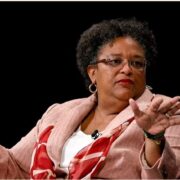
The Trinidad and Tobago Police Service (TTPS) says it is not daunted by the recent spate of murders in the country as the 11 killings last weekend brought the murder toll to 59 for the month.

Last year, Trinidad and Tobago had a record 605 murders.

“We are not daunted by the unfortunate and disturbing spate of violence over this weekend. We will continue to intensify our crackdown on gangs to break the hold of the deadly gang culture and criminality that leaves a trail of death and despair within our communities,” Acting Police Commissioner, Erla Christopher, said in a statement issued late on Sunday night, as she acknowledged that the “weekend has indeed been an unwelcomed one.

“What we may be witnessing is the storm before the calm, as the TTPS will continue to use its resources to suppress these gangs and other criminal activities. We will not stop applying pressure on those who are determined to disrupt and strike fear in the lives of all law-abiding citizens. We will keep up the fight. God willing, we will succeed.

“However, the Trinidad and Tobago Police Service continues to work assiduously to investigate the recent murders, pursuing several strong leads,” she said noting that as it relates to the killings in the Central Division, early indicators suggest there are connecting features, which implies that the same group of individuals are responsible for these acts.

She said early police investigations indicate that the murders committed in the North-Eastern Division, were as a result of disputes between community members.

“Our investigators are working feverishly on the ground to bring the perpetrators to justice,” Christopher said, adding also that the prevalence of illegal guns “in our communities is a central focus of the Service”.

The last of the 11 killings over the weekend occurred on Sunday night when the owner of a mini-mart in Sangre Grande, was shot and killed at his business-place.

Police said that Sherwyn Bernard was at his mini-mart in Sangre Grande, north east of here, when he was ambushed and shot by a gunman. The killer is reported to have escaped in a vehicle.

Donate At Caribbean News Service, we do not charge for our content and we want to keep it that way. We are seeking support from individuals and organisations so we can continue our work & develop CNS further.


NewsAmericasNow.com
FAO launches Regional Projects to boost Food Production and Trade in the Caribbean

Black Immigrant Daily News

The content originally appeared on: Caribbean News Service

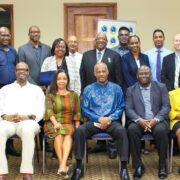
Over the past years, countries of the Caribbean, like many others worldwide, have experienced high rises in food prices and agricultural inputs. The COVID-19 pandemic and the Ukraine-Russia war have further exacerbated these costs and those related to imported goods. In addition, many Caribbean countries have relied heavily on imported goods over the years whilst also suffering from a decline in the export of prime agricultural crops, such as bananas and sugar cane, that traditionally and significantly contributed to their economies.

These factors have led to an increasing need to transform the region’s agriculture food systems and find ways of boosting the export of other indigenous crops to increase foreign exchange earnings and rebuild economies. To support this effort, the Food and Agriculture Organization of the United Nations (FAO) Sub-regional Office for the Caribbean, in collaboration with the Governments of the Commonwealth of Dominica, Grenada, Saint Lucia and St. Vincent and the Grenadines, are launching a regional cluster of projects on Promoting Windward Islands Food Production and Trade Corridor through National and Regional Value Chain Development.

On Friday, February 3, 2023, the Ministers of Agriculture from these countries, along with other government representatives, will join the FAO for an hour-long virtual launch, presentation and discussion on the regional projects. Other regional partners to be in attendance include the Organisation of Eastern Caribbean States (OECS) Commission, the Caribbean Agricultural Research and Development Institute (CARDI), and the Inter-American Institute for Cooperation on Agriculture (IICA).

26 November 2021, Rome, Italy – Taro corms on sale at the market of Piazza Vittorio.

The discussions will focus on plans under the project to build resilient and competitive value chains that can promote exports and reduce the importation of goods. The regional projects aim to replace agri-food imports that have had a toll on Caribbean Community’s (CARICOM) economies by increasing the capacity for countries in the region to produce and export quality agricultural produce. The steps being undertaken under the project are foreseen to contribute to the CARICOM food-importation bill reduction by 25 per cent by 2025 initiative and other global and regional targets such as those under the 2030 Sustainable Development Agenda.

Dr Renata Clarke, FAO’s Sub-regional Coordinator for the Caribbean, remarked that “there was a dire need in the region to build cohesion among governments and partners in our efforts to improve local agricultural production, enhance intra- and inter-regional trade and build more resilient agri-food systems that also promote the consumption of local produce by locals. The regional launch aims to catalyse this transformation.” She added that by making linkages with other regional initiatives geared towards reducing CARICOM’s import bill and increasing agricultural exports, the region could accelerate its recovery from the COVID-19 pandemic and be better positioned to withstand the impacts of the current global food crisis.

The projects have just begun implementation by assessing the value chains with the greatest potential for success on the global market. Dasheen has so far been identified as a crop of good potential and FAO will continue its work with the countries to understand the challenges and opportunities for growing a dasheen industry that can consistently produce high quality dasheen in an environmentally responsible and sustainable manner. The FAO Caribbean’s Value Chain Methodology, which has had success in other Caribbean countries over the years, is to be applied during implementation of the projects and will also be a blueprint for building other industries in the region.

It is expected that the projects being launched will also improve livelihood opportunities and increase the potential for value-added production, whilst also promoting better production, a better environment, better nutrition and a better life for the countries’ people.

The projects fall within FAO’s Technical Cooperation Programme and are expected to run over the next two years.

Donate At Caribbean News Service, we do not charge for our content and we want to keep it that way. We are seeking support from individuals and organisations so we can continue our work & develop CNS further.


NewsAmericasNow.com
Members discuss data on fishing subsidies and ocean resources for second wave negotiations

Black Immigrant Daily News

The content originally appeared on: Caribbean News Service

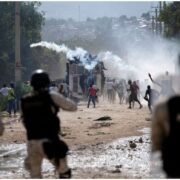
WTO members on 31 January held a second knowledge building workshop to inform the second wave of negotiations on fisheries subsidies, focusing on data concerning the state of marine resources and on fisheries subsidies.

The workshop was intended to enhance members’ ability to reach an agreed outcome by the 13th Ministerial Conference, said Deputy Director-General Angela Ellard, who also called on more members to submit their formal acceptances of the Agreement on Fisheries Subsidies.

“We all know that the availability of data has been a challenge since the beginning of the WTO fisheries subsidies negotiations. Members frequently have noted that a better and more detailed understanding of the state of fisheries resources around the world, as well as the amounts and types of fisheries subsidies being provided by governments, would help to inform and bring greater focus to members’ proposals and the Negotiating Group on Rules’ debates,” DDG Ellard said in her opening remarks for the workshop.

A previous workshop held in November focused on an overview of the key disciplines in the Agreement on Fisheries Subsidies and best practices for and challenges in implementing the Agreement.

Audun Lem, Deputy Director of the Fisheries and Aquaculture Division of the UN Food and Agriculture Organization, likewise emphasized the importance of data in his opening remarks: “Effective management anticipates the public sector playing a significant role in stock assessment, research, enforcement, monitoring, reporting, and institutional capacity building.” He also assured members of support and collaboration from the FAO for stock assessments and other efforts related to implementing the Agreement on Fisheries Subsidies.

Members heard presentations from experts from governments and intergovernmental organizations providing national, regional, and global perspectives on data concerning the state of marine fisheries and subsidies to marine fishing. Members also had the opportunity to share their own reflections and experiences.

WTO members adopted the Agreement at the 12th Ministerial Conference (MC12) held in June 2022. For the Agreement to become operational, two-thirds of members have to deposit their “instruments of acceptance” with the WTO. Members also agreed at MC12 to continue negotiations on outstanding issues such as disciplines on subsidies contributing to overcapacity and overfishing with a view to making recommendations by MC13 to further enhance the disciplines of the Agreement.

DDG Ellard recalled that members expressed their desire at a fisheries subsidies retreat held in October 2022 to conclude the second wave of negotiations by MC13. “As this is just over a year from now – in late February 2024 – we really have our work cut out for us,” she said. She also highlighted the importance of the WTO’s Fisheries Funding Mechanism created as part of the Agreement to help developing and least developed members in implementing the Agreement and complying with the data obligations.

DDG Ellard further urged more members to formally submit their acceptance of the Agreement, noting that Switzerland was the first to do so, in January . “I hope that this first acceptance will create real momentum for additional acceptances by members. The sooner we reach the threshold of two-thirds of members, the sooner the Agreement will enter into force and start delivering its benefits for ocean sustainability and those who depend on it.”

While interventions highlighted challenges associated with data collection, they also indicated a strong commitment by members to increasing knowledge about their fish stocks and enhancing their understanding of the impact of different fisheries management measures. Experts detailed how a strategic approach to data collection, such as through sampling, can help members make best use of limited resources.

Members also heard how different types of government support can affect fisheries sustainability, and how data can support decision making for revitalizing fisheries stocks. The presentations also underlined the gaps in available data on fisheries subsidies and demonstrated how several members have collected and reported data despite challenges. Various programmes and donor support, including through the WTO’s Fisheries Funding Mechanism, are also available for data collection, the speakers noted.

Closing the workshop, DDG Ellard said: “Data is information to decision makers. The better the data, the better those decisions.”

Donate At Caribbean News Service, we do not charge for our content and we want to keep it that way. We are seeking support from individuals and organisations so we can continue our work & develop CNS further.


NewsAmericasNow.com
Crochet puts the spotlight on Climate Change

Black Immigrant Daily News

The content originally appeared on: Caribbean News Service

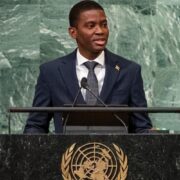
More than 200 persons from Barbados, the Caribbean, USA, and Europe visited the “Crochet for a Cause: Ridge to Reef” Project Exhibit of the Community Empowerment and Environment Partnership (CEEP) program under the Global Environment Facility (GEF) Small Grants Programme (SGP) implemented by United Nations Development Programme (UNDP).

The exhibit stationed at Norman Centre from Monday 23-Friday 27 January highlighted the impact of climate change through the creation of a crocheted village and underwater, sea landscape. The informative display featured crochet replicas of trees, houses, solar panels, vegetable gardens, fish, turtles, and a living, vibrant, protected coral reef, contrasted with a bleached coral reef. Visitors were able to learn about the thirty (30) crochet artisans who participated in the program and were exposed to informational leaflets from the Ministry of Environment and National Beautification, Blue and Green Economy.

During the closing reception, GEF SGP National Coordinator Dr. David Bynoe expressed appreciation for the excellent work of the community stating, “It’s amazing what you have achieved in this space. You have transformed it. You have made it very clear how you can mix crochet and the environmental work that we do. Taking art and using it as a teaching tool is very unique and innovative.” He emphasized the importance and benefits of the coral reef to the Caribbean and the need for the government, civil society and the private sector to continue to work together to empower people.

GEF SGP National Coordinator Dr. David Bynoe views the coral reef portion of the exhibit with Elaine’s Caribbean Crochet Founder Nikisha Toppin

Dr. Vicki Estwick of Versatile Crochet Threads spoke to the camaraderie developed during the three-month program noting that she was “very proud to be a part of this group of women who have come together to show the world that the environment is important to everyone and that any type of art can be used to share the message of how important our earth is.” Elaine’s Caribbean Crochet Founder Nikisha Toppin in her vote of thanks noted the various entities from the private and public sector who contributed to the execution of the project and the hosting of the exhibit.

The “Crochet for a Cause: Ridge to Reef” project administered by Elaine’s Caribbean Crochet through the Barbados Youth Business Trust used the artform of crochet to educate persons on environmental issues such as marine pollution and coral reef degradation. The CEEP is organized by GEF SGP UNDP in partnership with the Ministry of Youth, Sports and Community Empowerment, and Ministry of Environment and National Beautification, Blue and Green Economy.

Donate At Caribbean News Service, we do not charge for our content and we want to keep it that way. We are seeking support from individuals and organisations so we can continue our work & develop CNS further.


NewsAmericasNow.com