Posts

Donald Trump And The False Assumption Of Coherence

By Ron Cheong

News Americas, Toronto, Canada, Thurs. Jan. 29, 2026: Donald Trump’s political approach has not been defined by a consistent commitment to long-term institutional stewardship – either domestically or internationally. To assume otherwise risks attributing to him a degree of altruism or strategic coherence that his record does not clearly support.

Mark Carney’s responsibility, by contrast, is narrowly defined: to safeguard Canada’s interests. That is what he has sought to do. Faced with erratic threats, the use of tariffs as leverage, and diminishing regard for rules-based cooperation, Canada’s choices have narrowed: acquiesce and absorb repeated shocks, or chart a more deliberate course grounded in clarity, discipline, and resolve.

It would be reassuring to believe that these challenges will fade with a change in U.S. leadership. But Trump is better understood not as an aberration, but as a prominent manifestation of a broader American political current – one increasingly skeptical of alliances, resistant to external constraints, and prepared to deploy economic power coercively. That current is unlikely to vanish overnight. Expectations of a simple return to earlier norms therefore risk confusing nostalgia with strategy.

Binding Agreements Strained — Treaties Treated as Contingent

Recent years have underscored a difficult reality for Canada:

Agreements, even when formally ratified, can be reinterpreted or disregarded.

Treaty commitments may be suspended through executive action.

Stability can erode not because rules cease to exist, but because one party signals that compliance is optional.

The central question is no longer whether the United States will formally withdraw from the USMCA, but whether its conduct increasingly resembles partial disengagement – through tariffs, contested justifications, and the politicization of border administration.

In practice, many Canadian businesses and policymakers already operate on that assumption.

Tariffs are no longer confined to conventional trade disputes; they have become instruments of political signaling. The long-standing belief that economic interdependence would reliably constrain political behavior appears less certain. In some cases, political imperatives now drive economic decisions.

A Watershed Moment in the Global Order

For decades, the United States benefited from an international system reinforced by reserve-currency status, deep capital markets, and broad geopolitical trust. There are growing indications that aspects of that system are being reassessed.

What is unfolding is not collapse, but adjustment. Some countries have chosen to diversify reserve holdings, including through increased domestic custody of gold. Gold prices reflect this broader uncertainty. Holdings of U.S. Treasuries are being reduced incrementally – not in panic, but as part of longer-term risk management. Few actors seek a disorderly outcome that would undermine assets they still hold.

This is how systemic change often appears: gradual rather than dramatic, cautious rather than declarative.

The Limits of Negotiating with a Bully

There has been a persistent belief that Trump could be effectively constrained through negotiation alone. Experience has called that assumption into question.

When tariff threats were linked to geopolitical demand such as pressure surrounding Greenland several countries declined to comply, responding instead through coordinated diplomatic resistance. Figures such as Carney emphasized collective resolve rather than bilateral concession.

Subsequent U.S. messaging shifted, with references to prospective frameworks lacking clear institutional endorsement. Observers differed on interpretation, but the episode reinforced a recurring pattern: pressure applied, resistance encountered, narrative adjusted.

History suggests that coercive bargaining rarely stabilizes relationships. Concessions offered under pressure often invite further demands. Durable outcomes, by contrast, tend to emerge from clear limits combined with consistent engagement.

History’s Warning

Historical analogy should be used with care, but certain lessons recur.

In 1938, Neville Chamberlain returned from Munich asserting that concessions would secure peace. Within months, further territorial expansion followed, culminating in a broader European war.

Appeasement, in retrospect, did not preserve stability.
It weakened deterrence.

Contemporary disputes – whether involving Panama, Colombia, Greenland, Venezuela, Iran, or even close partners such as Canada, differ profoundly in context and scale. Yet the underlying logic of pressure and response remains familiar.

Canada as a Trading Nation

Canada is fundamentally a trading nation. Beyond exporting goods, it depends on durable commercial relationships and deeply integrated supply chains.

For many years, Canadians assumed that the U.S. relationship, unequal but fundamentally pragmatic, rested on shared economic self-interest. Highly integrated economies, it was believed, would avoid actions that imposed disproportionate harm on themselves.

That assumption now warrants re-examination.

The Risks of Escalatory Economic Threats

Threats of sweeping tariffs, such as a hypothetical across-the-board increase tied to Canada’s pursuit of diversified trade, would carry serious risks for both economies.

Such measures could disrupt housing, automotive manufacturing, energy markets, and cross-border supply chains with unusual speed and severity.

Canada is not a great power. But it is a capable one: resource-rich, institutionally stable, and deeply embedded in global markets. Treating it as economically subordinate would not only strain bilateral relations; it would undermine shared economic resilience.

What Middle Powers Must Do

So what course remains for Canada?

The one middle powers have historically taken under pressure.

Stay calm.
Stay strategic.
Stay firm.

Avoid panic.
Avoid theatrics.
Avoid reflexive concession.

There is a difference between compromise and capitulation. Between diplomacy and dependency. Between reducing risk and institutionalizing vulnerability.

Geography is immutable. The United States will remain Canada’s closest neighbor and largest trading partner. Abrupt disengagement is neither realistic nor desirable.

But neither can Canada accept a condition of recurring economic coercion – where each political cycle introduces renewed uncertainty.

That is not partnership.
It is not stability.
It is not free trade.

Canada cannot control the direction of U.S. domestic politics. But it can reduce its exposure to their volatility. Success will not be measured in rhetoric or applause, but in whether Canada becomes, over time, more resilient – harder to pressure, harder to isolate, harder to threaten economically. That is stability.
Not submission.

EDITOR’S NOTE: Ron Cheong, born in Guyana, is a community activist and dedicated volunteer with an extensive international background in banking. Now residing in Toronto, Canada, he is a fellow of the Institute of Canadian Bankers and holds a Bachelor of Science degree from the University of Toronto. His comments are his own and do not reflect those of News Americas or its parent company, ICN.

RELATED: Taking The Sign Out Of The Window – Mark Carney’s Illuminating Leadership: The Path For Middle Powers

St. Vincent and Grenadines New Government Lays Out New Budget

News Americas, KINGSTOWN, St. Vincent and the Grenadines, Jan. 29, 2026: St. Vincent and the Grenadines Prime Minister, Dr. Godwin Friday, has laid out his first national budget since taking office – and the figures reveal both ambition and constraint as his administration grapples with rising debt costs, disaster recovery, and tight revenue growth.

Prime Minister Dr. Godwin Friday has laid out his first national budget since taking office — and the figures reveal both ambition and constraint as his administration grapples with rising debt costs, disaster recovery, and tight revenue growth.

Presenting the 2026 Estimates of Revenue and Expenditure, Friday announced a US$703 million fiscal package, a modest 2% increase over last year’s approved budget, signaling continuity rather than expansion in public spending.

The budget is expected to be financed largely through US$336 million in current revenue and US$362 million in capital receipts, reflecting continued reliance on project-based funding and external inflows rather than organic revenue growth.

A Budget Under Pressure

Recurrent spending for 2026 – excluding debt amortization and sinking fund contributions – is projected at approximately US$374 million, leaving a current deficit of about US$39 million.

“That deficit is not new,” Friday told Parliament, acknowledging that successive administrations have run deficit budgets. “Our challenge is to shrink those deficits over time.”

Revenue projections are slightly weaker this year, driven largely by a sharp 40% drop in non-tax revenue, after the government confirmed there will be no repeat of World Bank reimbursements tied to Hurricane Beryl cleanup under the BERRY Project.

Last year’s budget benefited from a one-off US$7.4 million retroactive reimbursement. That cushion disappears in 2026.

Where the Money Comes From

Tax revenue is projected to reach approximately US$282 million, up marginally by less than 1%. Growth is expected mainly from:

Taxes on international trade, rising by about US$1.7 million

Income and profit taxes, climbing roughly 6.5% to US$48 million

Non-tax revenue is forecast at US$53 million, driven largely by government goods and services, expected to generate US$44 million.

Debt Is the Quiet Risk

The most striking pressure point in the budget is debt servicing.

Total recurrent expenditure – including amortization and sinking fund contributions – rises to US$484 million, a 13.7% increase over last year.

Debt amortization alone jumps to US$100 million, up nearly 26%, while sinking fund contributions climb to US$9.3 million. “Amortization is worrying,” Friday admitted — a rare note of candor that underscores the long-term fiscal challenge facing the small island economy.

Wages, Pensions, And Transfers

Public sector compensation increases by US$14.5 million, reflecting wage obligations and staffing costs. Pension payments rise modestly to US$34.6 million, including:

US$29 million for civil service pensions

US$5.6 million in government contributions to the National Insurance Services, (NIS)

Transfers for training, grants, and regional obligations rise by about US$10 million, adding further strain to recurrent spending.

Capital Spending Gets Tighter – And More Targeted

Capital spending for 2026 is set at US$213 million, a 17% reduction from last year, reflecting a more restrained public investment program.

Still, key ministries will see significant allocations:

Transport & Works: US$42.7 million

Education & Vocational Training: US$23.5 million

Higher Education, Grenadines Affairs, Ports & Airports: US$29 million

Finance & Economic Planning: US$70 million

Housing & Informal Settlements: Nearly US$15 million

The focus, Friday said, will be on roads, sea defenses, schools, clinics, and public buildings, with an emphasis on resilience and essential services rather than large new initiatives.

The Bigger Picture

Friday’s first budget is less about bold expansion than fiscal navigation – balancing debt obligations, disaster recovery, and public expectations in a constrained economic environment.

The message is clear: the new government inherits limited fiscal space, rising debt costs, and fewer one-off supports – and the hard choices are just beginning.

RELATED: What Now After Davos

Families Sue U.S. Government Over Caribbean Killings — Arguing There Was No War

News Americas, NEW YORK, NY, Jan. 28, 2026: The families of two Trinidad and Tobago nationals killed last year during a U.S. military strike in Caribbean waters have filed a wrongful death lawsuit against the United States government, arguing the Caribbean killings were unlawful because no armed conflict existed.

MV-22 Osprey aircraft are parked on the tarmac at Mercedita Airport in Ponce, Puerto Rico, on January 15, 2026. (Photo by Ricardo ARDUENGO / AFP via Getty Images)

The suit, filed yesterday in federal court in Massachusetts, is being brought by the mother of Chad Joseph, 26, and the sister of Rishi Samaroo, 41, who were among six people killed on October 14, 2025, when a U.S. missile struck a boat Washington alleged was transporting drugs.

The case is being pursued under the Death on the High Seas Act, which allows civil claims for wrongful deaths occurring in international waters, and the Alien Tort Statute, which permits foreign nationals to seek redress in U.S. courts for violations of international law. At least 125 people have been killed in these strikes since September 2025.

Legal advocates describe the lawsuit as the first of its kind brought against the Trump administration over its expanded use of military force in anti-narcotics operations in the Caribbean. At the time of the strike, U.S. officials said the operation targeted “narco-terrorists” linked to drug trafficking networks allegedly operating between Venezuela and the United States. However, the lawsuit contends that no evidence has been publicly produced to support claims that the victims were affiliated with drug cartels or terrorist organizations.

Instead, the plaintiffs argue that Joseph and Samaroo were civilians who were traveling by boat after engaging in fishing and agricultural work in Venezuela.

“There was no armed conflict,” the lawsuit states. “As such, the laws of war do not apply. These were wrongful deaths and extrajudicial killings carried out without legal justification.”

The Trump administration has previously told members of Congress that the United States is engaged in a non-international armed conflict with transnational drug cartels, using that position to justify the use of lethal military force. The lawsuit directly challenges that claim, asserting that treating alleged drug trafficking as a battlefield conflict erodes international law and due process protections.

The families are being represented by the American Civil Liberties Union, (ACLU) and the Center for Constitutional Rights, (CCR). They are seeking punitive damages, to be determined at trial.

“These were lawless killings in cold blood,” said CCR Legal Director Baher Azmy. “The United States cannot declare a war where none exists and then execute people without trial.”

“The Trump administration’s boat strikes are the heinous acts of people who claim they can abuse their power with impunity around the world,” said Brett Max Kaufman, senior counsel at the ACLU. “In seeking justice for the senseless killing of their loved ones, our clients are bravely demanding accountability for their devastating losses and standing up against the administration’s assault on the rule of law.”

In a statement, Samaroo’s sister said her brother had served time for a past crime and was attempting to rebuild his life.

“Rishi used to call our family almost every day, and then one day he disappeared, and we never heard from him again,” said Sallycar Korasingh, Rishi Samaroo’s sister. “Rishi was a hardworking man who paid his debt to society and was just trying to get back on his feet again and to make a decent living in Venezuela to help provide for his family. If the U.S. government believed Rishi had done anything wrong, it should have arrested, charged, and detained him, not murdered him. They must be held accountable.”

“Chad was a loving and caring son who was always there for me, for his wife and children, and for our whole family. I miss him terribly. We all do,” said Joseph’s mother, Lenore Burnley. “We know this lawsuit won’t bring Chad back to us, but we’re trusting God to carry us through this, and we hope that speaking out will help get us some truth and closure.”

Prior to his murder, Joseph lived with his wife and their three children in Las Cuevas, Trinidad. To support his family, he often traveled to Venezuela to fish and for farmwork. On October 12, he called his wife to let her know that he had found a boat ride home from Venezuela and would see her in a couple of days. On October 14, his wife and Ms. Burnley saw social media reports of a boat strike; fearing that the boat was his, they repeatedly called him, but got no reply. His family has not heard from him since.

Samaroo was born in El Soccorro, Trinidad, where his elderly father, eight younger siblings, and two of his three sons still reside. His elderly mother lives nearby in San Juan. In 2024, he was released early on parole after serving a 15-year sentence for his participation in a homicide. Following his release, Mr. Samaroo moved to Las Cuevas, where he fished and worked in construction to support himself and his family. In August 2025, he let his family know that he was working on a farm in Venezuela, taking care of goats and cows and making cheese. He would call his family almost every day when he was in Venezuela, and in an Oct. 12 call with Ms. Korasingh, he told her he was returning home to Trinidad and would see her in a few days because their mother had fallen ill, and he wanted to help take care of her. That was the last time Ms. Korasingh or anyone else in the family heard from him.

The lawsuit also comes amid growing scrutiny of U.S. military strikes in Caribbean and eastern Pacific waters, which human rights groups say have resulted in more than 100 deaths since late 2025.

“Using military force to kill Chad and Rishi violates the most elementary principles of international law,” said Jonathan Hafetz, a Professor at Seton Hall Law School. “People may not simply be gunned down by the government, and the Trump administration’s claims to the contrary risk making America a pariah state.”

Trinidad and Tobago’s government has previously expressed support for aggressive anti-drug operations, though questions remain about the legality and oversight of foreign military actions in the region.

President Trump and Secretary of Defense Pete Hegseth have publicly boasted about and published videos of the strikes – including the strike that killed Mr. Joseph and Mr. Samaroo. However, the strikes’ victims have remained largely anonymous, seen only as specks on a screen. The Trinidadian Foreign Minister Sean Sobers told a local news outlet after the strike that “the government has no information linking Joseph or Samaroo to illegal activities.”

The U.S. State Department and Department of Defense have not yet publicly responded to the lawsuit.

US Revokes Visas Of Two Members Of Haiti’s Presidential Council

News Americas, NEW YORK, NY, Sun. Jan. 26, 2026: The U.S. Department of State has imposed visa restrictions and revocations on two members of Haiti’s Transitional Presidential Council, (TPC), and their immediate family members, citing alleged involvement in the operations of gangs and other criminal organizations. The move underscores a blunt message: political authority entangled with gang power will no longer be tolerated.

A police vehicle drives around cars burned by armed gangs and used as a barricade during clashes last week with Haitian security forces on a deserted street in the city center, seen from an armored police vehicle during a patrol, in Port-au-Prince on January 16, 2026. An operation on January 14 by the Haitian National Police, conducted jointly with the army, the Gang Repression Force (FRG) and a mercenary unit, took place in the stronghold of Jimmy Chérizier, known as “Barbecue,” leader of the “Viv Ansanm” gang, in one of his residences in the Delmas 6 district, 6km (4 miles) west of downtown Port-au-Prince, although he was absent at the time of the operation. (Photo by Clarens SIFFROY / AFP via Getty Images)

“These actions are being taken due to the TPC members’ involvement in the operation of gangs and other criminal organizations in Haiti,” said State Department spokesman Thomas Pigott, pointing specifically to interference with Haiti’s efforts to combat gangs designated by the U.S. as Foreign Terrorist Organizations (FTOs).

No names were officially released. No evidence was detailed. But the timing – and the context – spoke loudly.

Power, Pressure, and a Fracturing Council

Over the past 24 hours, some council members have reportedly attempted to use their votes as leverage against Prime Minister Alix Didier Fils-Aimé, while a well-known gang figure posted a TikTok video voicing support for the council. The overlap between political maneuvering and gang signaling has become harder to dismiss.

The security situation on the ground continues to deteriorate. On Sunday afternoon, two Brazil-bound charter planes were hit by gunfire as they approached Toussaint Louverture International Airport from Croix-des-Bouquets, east of Port-au-Prince. No injuries were reported – but the message was unmistakable. Armed gangs, already controlling large swaths of the capital, are expanding their reach.

The visa action brings the number of TPC figures who have lost U.S. visas or green cards in the past two months to at least three. Previously, the State Department revoked the visa of former central bank governor and council member Fritz Alphonse Jean, who confirmed he was barred from entering the United States after an alleged attempt in November to remove Prime Minister Fils-Aimé. Jean has denied accusations of gang ties.

Washington Signals the End of Patience

The legal authority for the move – INA 212(a)(3)(C) – allows the U.S. to bar entry to individuals whose presence could have “potentially serious adverse foreign policy consequences.” In practical terms, it is a diplomatic red card.

Tensions within Haiti’s transitional leadership have been escalating since November. With the council’s mandate set to expire on Feb. 7, and no elected president in place, five of the council’s seven voting members recently voted to remove Fils-Aimé and install a new government. The Trump administration has described that move as illegal and warned of consequences.

On Friday, Jan. 23rd, U.S. Secretary of State Marco Rubio personally called Fils-Aimé to reaffirm U.S. support and to underscore that the council’s authority ends on Feb. 7, according to U.S. officials.

“We are the ones who appointed Didier Fils-Aimé,” council member Leslie Voltaire said at a press conference, insisting the council has the right to replace him. Washington disagrees.

A Country Running Out of Time

Haiti’s crisis extends far beyond political infighting. Armed gangs now dominate much of the country, hollowing out the state’s ability to govern and deliver basic services. Presidential elections have not been held in nearly a decade. Humanitarian needs have reached unprecedented levels, with millions struggling to meet daily necessities.

“Violence has intensified and expanded geographically, exacerbating food insecurity and instability, as transitional governance arrangements near expiry and overdue elections remain urgent,” said UN Secretary-General António Guterres in his latest report on the UN’s political mission, BINUH.

More than one in ten Haitians have been displaced by violence. Migration pressures are rising. Regional stability is increasingly at risk.

The Signal Behind the Sanctions

This is not just about visas. It is about legitimacy.

The U.S. move reframes Haiti’s crisis in stark terms: the problem is no longer only gangs versus the state – it is the blurring of lines between the two. By targeting senior political figures, Washington is signaling that stability cannot be built on compromised authority.

“The Haitian people have had enough with gang violence, destruction, and political infighting,” the State Department said, adding that the Trump administration “will pursue accountability for those who continue to destabilize Haiti and the region.”

Elections are tentatively projected for early 2027. Whether Haiti reaches that moment with functioning institutions – or slides deeper into fragmentation – may depend on whether this line drawn by Washington holds.

RELATED: Get Ready To Shell Out More In Immigration Fees

Taking The Sign Out Of The Window – Mark Carney’s Illuminating Leadership: The Path For Middle Powers

 By Ron Cheong

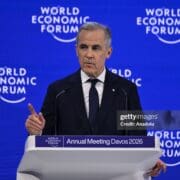
News Americas, TORONTO, Canada, Sat. Jan. 24, 2026: There are moments in global affairs when a speech does more than fill a time slot. It draws a line. It clarifies the stakes. It names the reality that polite diplomacy often tries to soften with euphemisms. Prime Minister Mark Carney’s address at the World Economic Forum in Davos, Switzerland, was one of those moments – brilliant not because it was flamboyant, but because it was uncommonly clear.

Canadian Prime Minister Mark Carney delivers a speech at the World Economic Forum Annual Meeting held in Davos, Switzerland on January 20, 2026. (Photo by Harun Ozalp/Anadolu via Getty Images)

In an era of strategic confusion – where too many leaders speak in foggy generalities, as if ambiguity itself were a form of wisdom – Carney spoke with the precision of someone who understands that history is not a backdrop. It is a force. And right now, history is moving again.

The Old Order Is Not Coming Back

The central insight of his remarks was as sobering as it was necessary: the old order is not returning. Not because we failed to wish hard enough, but because the conditions that sustained it have changed. The world is hardening into blocs, fortresses, and transactional power politics. In such a world, the countries that suffer most are not always the weakest states in absolute terms, but those in the middle – nations that built prosperity through stability, trade, law, and predictable rules.

Carney’s speech was, in effect, a call to these nations: stop waiting for someone else to restore yesterday’s international system. Stop acting as though compliance will buy safety. And above all, stop mistaking nostalgia for strategy.

Thucydides Returns: Power Without Apology

Thucydides saw this logic long before modern institutions, before treaties and summits and declarations. His cold aphorism remains the skeleton key to power politics: “The strong do what they can, and the weak suffer what they must.”

Faced with that grim truth, there is a strong temptation for countries to go along to get along – to accommodate, to avoid trouble, to hope that obedience will purchase protection.

But as Carney warned, it won’t.

This Isn’t A Passing Storm

What we are seeing is not merely about tariffs or territory or rhetoric. It is the return of a worldview: that might makes right, that alliances are optional, that agreements are disposable, that weakness is an invitation, and that smaller countries exist mainly to be leaned on.

This is not a temporary fever. Donald Trump has now been elected twice, and his support remains unwavering among at least a third of the American electorate despite everything that has transpired. That alone shatters the comforting fantasy that the “Trump era” was simply a passing disruption.

Even when Trump is gone, similar politicians – perhaps smoother, perhaps younger, perhaps even more disciplined – will move into the breach. The political demand for strongman certainty is not evaporating; it is being normalized.

The Task Of The Middle Powers

Carney’s Davos speech rejected the illusion that middle countries can survive by staying quiet and staying small. Instead, he offered a more demanding and more hopeful alternative: the middle powers must act together.

Because, as the blunt modern paraphrase puts it: if we’re not at the table, we’re on the menu.

This was the heart of his argument: multilateralism cannot survive on habit. It must be defended through action.

“Geometric Cooperation:” Alliances That Flex And Multiply

Carney described the need for a multilateral alliance built not as a single rigid bloc, but through “geometric” cooperationflexible, overlapping coalitions of middle powers working together across trade, security, energy, technology, climate resilience, and supply chains.

Not one alliance to rule them all, but a latticework of partnerships that makes coercion harder and cooperation easier.

This is not naive idealism. It is realism for a fractured world.

The Power Of The Powerless – And The Courage To Refuse

Carney’s argument carried the moral undertone of a powerful political idea from the late Cold War: the power of the powerless. Even those without tanks and empires possess leverage – if they coordinate, if they speak plainly, if they refuse to internalize the psychology of fear.

It is not powerlessness that destroys nations. It is resignation.

And resignation often begins quietly – with a sign in the window.

The Sign In The Window

In the communist world, one of the sharpest jokes about survival under dysfunction was the idea that the system endured with a sign in the window – something like: “Workers of the world unite” orWe have everything.” Or perhaps, more honestly: Pretend.

Pretend the shelves are full.
Pretend the numbers are real.
Pretend the system is working.

Carney’s message, in essence, was that middle powers must stop pretending.

Stop pretending the rules-based order will automatically repair itself.
Stop pretending bad faith actors will return to good faith.
Stop pretending silence today will spare you trouble tomorrow.

Trouble does not respect silence. It interprets it.

The New Strongman Script

What made the speech particularly striking was the contrast between Carney’s steady clarity and the carnival-mirror rhetoric now common in parts of global politics.

We hear punishment economics dressed up as patriotism: “Instead of raising taxes on domestic producers, we’re lowering them and raising tariffs on foreign nations to pay for the damage that they’ve caused.”

We hear oil-fueled triumphalism: “Every major oil company is coming in with us. It’s amazing. It’s a beautiful thing to say…”

And then there is the language of domination, spoken without embarrassment: “We probably won’t get anything unless I decide to use excessive strength and force where we would be, frankly, unstoppable.”

Or territorial appetite served with legalistic flourish: “All we’re asking for is to get Greenland… because you need the ownership to defend it. You can’t defend it on a lease.”

Even allies are not spared. Gratitude is demanded like tribute: “I watched their Prime Minister yesterday. He wasn’t so grateful… Canada lives because of the United States. Remember that Mark [Carney], the next time you make your statements.”

This is not diplomacy. It is a hierarchy, spoken aloud.

Canada’s Quiet Strength

Carney did not respond with panic, nor with theatrical outrage, nor with the weak comfort of “this too shall pass.” He responded with the calm firmness of a country that knows what it is, and what it stands for.

Canada Is A Pluralistic Society That Works.

Our public square is loud, diverse, and free.
Canadians remain committed to sustainability.
We are stable and reliable in a world that is anything but.
A partner that builds relationships for the long term.

Taking The Sign Out Of The Window

Then came the line that gave the speech its title-worthy force: we are taking the sign out of the window.

No more pretending the old order will return.
No more living off inherited stability.
No more hoping that compliance will buy safety.

The message was not defeatist – it was liberating. Because once you accept that the old order is gone, you can stop mourning and start building.

As Carney put it: We know the old order is not coming back. We shouldn’t mourn it. Nostalgia is not a strategy.” And then came the turn from realism to resolve: from fracture, we can build something “bigger, better, stronger, more just.”

Building The Table

This is the task of the middle powers: the countries with the most to lose from a world of fortresses, and the most to gain from genuine cooperation.

Davos has heard countless speeches about “shared values” and “global partnership.” Many were sincere. Some were hollow. Carney’s stood out because it treated the world as it is – not as we wish it were – and still insisted that agency remains.

Thucydides was right about the strong and the weak.
But Carney reminded us of the third category: the capable – nations strong enough to matter, if only they act together.

The middle powers do not need to beg for a seat at the table.
They need to build the table.

EDITOR’S NOTE: Ron Cheong, born in Guyana, is a community activist and dedicated volunteer with an extensive international background in banking. Now residing in Toronto, Canada, he is a fellow of the Institute of Canadian Bankers and holds a Bachelor of Science degree from the University of Toronto. His comments are his own and do not reflect those of News Americas or its parent company, ICN.

RELATED: Against The Odds: A Guyana Born Centenarian And Current Health Care

What Now After Davos

By Dr. Isaac Newton

News Americas, NEW YORK, NY, Sat. Jan. 24, 2026: Davos is the annual meeting of the World Economic Forum in Switzerland, where political leaders, CEOs, central bankers, and global influencers gather to discuss where the world is headed. No binding decisions are made, but signals are sent. What is said there often shapes policies that later touch everyday lives.

This year, Canada’s Prime Minister Mark Carney used that stage to name a reality many already feel. He described the moment as “a rupture, not a transition,” warned that “the strong do what they can and the weak suffer what they must,” and reminded middle powers that “if we’re not at the table, we’re on the menu.” His message was simple and unsettling. Power is again setting the rules.

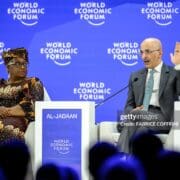
Saudi Arabia’s Finance Minister Mohammed Al-Jadaan (R) gestures next to World Trade Organization (WTO) Director-General Ngozi Okonjo-Iweala during a session during the final day of the World Economic Forum (WEF) annual meeting in Davos on January 23, 2026. (Photo by Fabrice COFFRINI / AFP via Getty Images)

That shift does not stay in conference rooms. When large economies clash, prices rise at local markets. When alliances tighten or loosen, jobs and investments follow. Davos speeches still sound polished, but outcomes now track interest more than intent. Smaller states feel the squeeze first, caught between decisions made elsewhere and consequences felt at home. The language of cooperation remains familiar, yet pressure has become the quiet driver.

In this environment, influence comes from preparation. Policymakers need sharp priorities that guide every negotiation. Foreign ministries must focus on trade, debt, and security with technical skill, not ceremony. For ordinary citizens, foreign policy shows up in fuel costs, food supply, and internet access. Countries that plan well, coordinate internally, and act decisively earn respect even without size.

For African and Caribbean nations, the response must be practical. Work together to buy food and fuel at better prices. Enter debt talks as groups, not single voices. Strengthen local energy, agriculture, and digital systems to soften global shocks. Keep partnerships balanced so no one relationship defines the future. In a world where order feels uncertain, clarity and cooperation remain powerful tools.

EDITOR’S NOTE: Dr. Isaac Newton is an international strategist trained at Harvard, Princeton, and Columbia. He advises governments and global institutions on governance and development, helping leaders turn ideas into practical and lasting results.

RELATED: The Caribbean And Strategic Diplomacy In A Constrained World

Rethinking Foreign Policy – The Case for Tech Diplomacy

By Deodat Maharaj

News Americas, Gebze, Türkiye, Fri. Jan. 23, 2026: The drivers of economic growth, innovation, and societal change are no longer solely wealthy nation-states and global institutional actors, but increasingly the technology companies. The so-called “Magnificent Seven”-Nvidia, Microsoft, Apple, Amazon, Meta, Tesla, and Alphabet (Google) – now dominate the global economy, redefining traditional thinking of economic power and influence. By the end of 2025, these seven companies had an estimated market value of US$22.2 trillion.

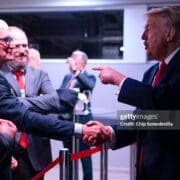
U.S. President Donald Trump (R) speaks to Apple CEO Tim Cook (L) as he attends a reception for business leaders at the World Economic Forum (WEF) Annual Meeting on January 21, 2026 in Davos, Switzerland. The annual meeting of political and business leaders comes amid rising tensions between the United States and Europe over a range of issues, including Trump’s vow to acquire Greenland, a semi-autonomous Danish territory. (Photo by Chip Somodevilla/Getty Images)

NVIDIA alone stood at US$5 trillion. This is more than Japan’s GDP, the world’s third-largest economy, which is US$4.4 trillion according to the International Monetary Fund. In terms of global reach, Meta, formerly Facebook, has more than 3 billion users. Over 2 billion people use it every day.  

This concentration of wealth has profound implications. Breakthrough technologies – artificial intelligence, cloud computing, digital platforms – are reshaping industries, creating new value chains, and generating immense opportunities. Yet, most developing countries, especially the Least Developed Countries, (LDCs), are being left out.

The scale of this digital divide reveals a critical gap: the world’s poor, small, and vulnerable countries are not just lagging in access to technology; they lack meaningful influence in how these technologies are governed, deployed, and regulated. Their exclusion from the emerging architecture for global technology governance will only deepen the already stark divide between rich and poor countries.

Addressing this imbalance requires innovative approaches. Traditional diplomacy and development strategies, while indispensable, are no longer sufficient on their own. To truly harness frontier technologies and ensure their people benefit from global innovation, technology must be an integral part of the diplomatic arsenal of any developing country. Tech diplomacy represents a holistic framework that integrates technology engagement, governance, and investment directly into a country’s foreign policy thrust.

Some countries have already embraced Tech Diplomacy.  Denmark was the first to formally recognize the technology industry as a foreign policy priority in 2017. By appointing a dedicated Tech Ambassador, it acknowledged that engagement with major technology companies requires the same diplomatic attention and strategic seriousness as with traditional state and multilateral actors.  

Brazil, through the appointment of a Tech Ambassador and the creation of more than 70 technology-focused sections across its embassies worldwide, has built a global network designed to facilitate technology transfer, attract investment, and strengthen international innovation cooperation.

Kenya offers a great African example. Through initiatives such as the TechPlomacy Connective and the appointment of a Special Envoy on Technology, Kenya has positioned itself as an active participant in global AI and digital governance. This approach has secured Kenya a leadership role in key international technology fora and enabled direct engagement with both global technology companies and multilateral institutions. Kenya’s example underscores how developing countries can shape technological change rather than simply respond to it.

So, what are the lessons learnt and a reasonable approach for developing countries, especially the 44 LDCs and capacity-constrained island states like those in the Caribbean and Pacific?

To start with, there must be a clear recognition of the importance of integrating Tech Diplomacy in the existing foreign policy architecture with a dedicated focal point and team. This facilitates participation in global technology governance, and ensures meaningful engagement on the standards, norms, and regulatory frameworks that shape emerging technologies. Without their presence at the table, the rules governing artificial intelligence, cross-border data flows, digital platforms, and digital trade will continue to be defined primarily by those who already hold economic and technological power. This will further entrench existing inequalities.

Second, engagement with technology companies is essential. Governments need structured, sustained, and strategic dialogue with global tech firms. Such engagement allows countries to build trust; co-design solutions tailored to local needs; and leverage innovation in support of national development priorities. Most importantly, getting information at the earliest will help place you at the front of the line in accessing opportunities.

Third, investment in digital futures must go beyond basic connectivity. Developing countries, including LDCs, require targeted investment in digital infrastructure, human capital, and innovation ecosystems. In a challenging financial environment, the technology companies have the requisite financing. Here again, Tech Diplomacy can help. With a forensic focus on making investment cases to businesses in the technology and innovation space, countries can create jobs, stimulate entrepreneurship, and begin to effectively compete in the global digital economy. India is a great example of success in attracting massive private investments in this space.

In summary, a world where technological leadership is becoming a defining factor of economic and geopolitical influence, poor, small, and weak countries need to lift their game by recognising this reality and becoming active participants. Tech Diplomacy, once leveraged effectively, gives these countries and their people the chance they deserve.

EDITOR’S NOTE: Deodat Maharaj is a national of Trinidad and Tobago and is presently the Managing Director of the United Nations Technology Bank for the Least Developed Countries. He can be contacted at: deodat.maharaj@un.org

RELATED: The AI Revolution And Least Developed Nations

Against The Odds: A Guyana Born Centenarian And Current Health Care

By Ron Cheong

News Americas, TORONTO, Canada, Fri. Jan. 23, 2026: Giving birth in a developing nation a hundred years ago was an act of quiet bravery. In British Guiana in the 1920s, childbirth carried an ever-present risk: infant mortality stood at a staggering 159 deaths per 1,000 live births. Mothers laboured without modern diagnostics, antibiotics, blood banks, or neonatal care. Survival often depended on little more than resilience, luck, and the skill of a handful of dedicated doctors. Against those odds, my aunt Pauline (Irma) Persaud was born and survived, along with three of her siblings.

Guyana-born Centenarian Pauline (Irma) Persaud, c. (contributed image)

This week, she reached the extraordinary age of 100. Frail in body now, her mind remains remarkably sharp. Even in her late nineties, she could correct me when I misremembered a family detail. At 100, her mental clarity endures, though the energy to converse has understandably waned.

Yet, when I asked her what she could recall of her earliest years, she surprised me. She believes the attending physician at her birth was Dr. Bissessar. She remembers him fondly, especially an image that has stayed with her for nearly a century: the doctor placing her younger sister – my mother – on a swing and gently rocking her. My mother, she said, adored him.

What my aunt did not know is that Dr. Bissessar’s grandson and I have been lifelong close friends. For decades, neither of us was aware of this earlier connection. It is a coincidence that quietly bridges generations – one life, one family, and one country’s long arc of medical progress.

A Century Later: Measuring The Distance Traveled

Fast-forward to 2025. Guyana’s infant mortality rate stands at approximately 24 deaths per 1,000 live births. While still higher than in developed countries, the difference from a century ago is profound. Behind that single statistic lies improved antenatal care, trained midwives, vaccination programs, emergency obstetric services, and access – however uneven – to modern medical facilities.

Healthcare progress, of course, is never linear. Guyana’s system has experienced periods of neglect, underinvestment, and uneven leadership. But the past five years mark a notable inflection point.

Rebuilding The Foundations: Infrastructure And Access

One of the most visible changes has been the rapid expansion of healthcare infrastructure. Several new regional hospitals have been brought on stream or advanced significantly, including facilities in Kato, Lethem, and Moruca – areas long underserved due to geography and historical neglect. These are not symbolic projects; they are functional hospitals intended to reduce the need for dangerous and costly medical travel.

In communities such as Mahdia, improved health facilities have dramatically improved access to primary and emergency care. Across the country, dozens of health posts and clinics have been built or rehabilitated, bringing services closer to hinterland and rural populations where outcomes were once predictably poor.

For a nation still grappling with vast distances and uneven population distribution, bricks and mortar matter. But buildings alone are not enough.

Leadership And Stewardship: A Stark Contrast

Under the stewardship of Minister of Health Dr. Frank Anthony, the health sector has demonstrated coherence, urgency, and a clear sense of direction. This stands in sharp contrast to the dismal performance under a previous administration.

That earlier period was marked by shortages, industrial unrest, deteriorating facilities, and a worrying absence of strategic planning. Morale among healthcare workers sank, and public confidence eroded. The system did not merely stagnate – it regressed.

Dr. Anthony’s return to the ministry brought immediate stabilization and a longer-term reform agenda. Procurement improved, staffing challenges were addressed more systematically, and partnerships that had long been discussed but never realized were finally activated.

COVID-19: A Defining Stress Test

Nothing tested Guyana’s healthcare leadership more severely than the Covid-19 pandemic. The contrast between administrations could not have been clearer.

Dr. Anthony’s response was swift, science-driven, and largely transparent. Guyana moved quickly to secure vaccines, expand testing capacity, and communicate public-health guidance. Mistakes were inevitable, but course corrections were made.

Covid exposed weaknesses everywhere, but it also demonstrated what competent leadership could achieve under pressure.

Vision 2030: Leapfrogging Into Modern Care

Today’s reforms are framed within a broader national blueprint: Vision 2030. The ambition is unapologetically bold: to transform Guyana’s public health system into a modern, accessible, and resilient one.

Central to this vision is “leapfrogging”: using digital health tools and targeted investments to bypass outdated systems entirely. Initiatives include electronic health records, telemedicine for hinterland communities, and dramatically faster diagnostics. The national pathology laboratory, for example, has reduced test turnaround times from months to days – a change that saves lives quietly but decisively.

Partnerships underpin this effort. Collaborations with Mount Sinai, the World Bank, and others are helping modernize infrastructure, train healthcare workers, and strengthen pandemic preparedness through a “One Health” approach that integrates human, animal, and environmental health.

Maternal and child health, cancer care, and workforce development are explicit priorities. Immunization rates have improved significantly, malaria cases have fallen sharply, and diagnostic capacity has expanded nationwide.

One Life, One Century, One Measure Of Progress

My aunt was born into a world where survival itself was uncertain. That she reached adulthood -let alone 100 – is a testament to personal resilience and the quiet dedication of doctors like Dr. Bissessar, working with limited tools but immense commitment.

Her life also offers a human measure of national progress. From an era when infant death was tragically common to one where modern healthcare is increasingly expected, Guyana has traveled far, but there is more to do – the work continues, and my aunt continues to be an inspiration.

EDITOR’S NOTE: Ron Cheong, born in Guyana, is a community activist and dedicated volunteer with an extensive international background in banking. Now residing in Toronto, Canada, he is a fellow of the Institute of Canadian Bankers and holds a Bachelor of Science degree from the University of Toronto. His comments are his own and do not reflect those of News Americas or its parent company, ICN.

RELATED: Hollow Projected Confidence No Substitute For Societies’ Self Discipline & Competent Realistic Governance

The Mahogany That Built Britain And Bankrupted the Caribbean

By Nyan Reynolds

News Americas, NEW YORK, NY, Fri. Jan. 22, 2026: Walk into any Britain manor house built in the eighteenth century, and your eyes will almost inevitably find it. Along the doors, curling up the stair rails, lining the walls, and framing mirrors, a deep reddish-brown glow catches the light. Mahogany!

The Countess’ Bedroom at Florence Court. The view shows the mid eighteenth century Irish four poster mahogany bed with the Queen Anne chest at the end & a chest of drawers by the side.

For Britain’s elite, it was never just wood. It was a symbol of wealth, power, and permanence. Yet the story behind that polished glow is far more complicated, and far more devastating, than the walls of any country house can reveal.

Mahogany did not simply arrive in Britain. It was cut from forests in Jamaica and Haiti, from landscapes where people would never see the true value of what was taken from beneath their feet. These places are now regularly described as developing nations. Yet for generations they supplied some of the finest hardwood in the world, only to watch that resource leave their shores and enrich distant markets.

This is a chapter of Caribbean history that rarely appears in schoolbooks. It should.

The Wood that changed British Rooms

Before Caribbean mahogany entered British workshops in any serious quantity, furniture makers relied on oak, walnut, and pine.

Oak had dominated for centuries. It was strong, familiar, and durable, but it carried a heavy and somewhat muted appearance. Walnut rose in fashion toward the end of the seventeenth century. It offered a more attractive grain, but it could split and was vulnerable to insects. Pine was plentiful and cheap. It was often used for hidden structures or for less expensive furniture, but it lacked the prestige needed for elite interiors.

Mahogany transformed that craft world. The West Indian species described by botanists at the Royal Botanic Gardens in Kew combined strength with beauty. It resisted rot, worked smoothly under tools, and could be polished to a deep glow that looked almost like still water. It was tough enough for shipbuilding and yet refined enough for the finest drawing rooms.

The turning point came in the early seventeen hundreds, when captured Spanish ships brought mahogany planks into British hands. Shipbuilders noticed how well the timber withstood saltwater. Cabinetmakers noticed how stunning it looked indoors. Within a few decades mahogany was no longer a novelty material. It had become the preferred wood of the British upper class and an essential part of Georgian taste.

Britain’s Hunger for Timber and the Turn to the Caribbean

Mahogany’s rise cannot be separated from a wider imperial strategy.

By the early eighteenth century, Britain’s forests were under intense pressure from shipbuilding, construction, and iron production. The island simply could not provide all the timber a growing empire demanded. Parliament answered that problem by looking outward.

In seventeen twenty-one the Naval Stores Act removed import duties on timber and other materials coming from the colonies. That incentive encouraged merchants and shipbuilders to look west rather than toward European forests. Colonial hardwoods became strategic resources, and mahogany quickly moved to the center of this new supply system.

A few decades later, the Free Ports Act of seventeen sixty-six opened select Jamaican harbors to foreign ships, including French traders from Saint Domingue, present day Haiti. This legal change allowed timber from non-British colonies to pass through Jamaican ports and then on to Britain. On paper this looked like commercial flexibility. In practice it deepened Jamaica’s role as a processing and redistribution hub for West Indian hardwoods rather than a place where that wealth stayed and multiplied.

Jamaica and Haiti at the Center of the Trade

By the middle of the eighteenth-century Jamaica had become the most important supplier of mahogany to Britain.

Customs data examined by furniture historian Adam Bowett show that between seventeen sixty-four and seventeen seventy-four Jamaica provided more than ninety percent of Britain’s recorded West Indian mahogany imports. In some years the share was even higher.

Behind those figures was relentless and dangerous labor. Logging crews made up largely of enslaved Africans cut enormous mahogany trees that had taken centuries to grow. They dragged logs that could stretch twenty feet and weigh several tons through dense forest, often with the help of oxen. In interior regions they were forced to build rough roads simply to move the timber to rivers or coastal inlets. From there the logs were floated or hauled to ports such as Kingston and Montego Bay, where they were loaded onto ships bound for the Atlantic crossing.

Haiti, then the French colony of Saint Domingue, entered the British mahogany system in a more indirect way. The Free Ports Act permitted mahogany from Hispaniola to be shipped into Jamaica and then re-exported. As historian Neville Hall has noted, by the seventeen eighties a significant share of the timber listed in British records as Jamaican actually originated elsewhere in the Caribbean and simply passed through these free ports.

The ledgers suggest a single source. The reality was a wider Caribbean of extraction.

The Numbers that Reveal the Scale

The trade in mahogany was not a minor sideline. It was huge.

British customs records and Bowett’s research reveal a dramatic rise in imports.

In seventeen twenty-four Britain brought in a little over one hundred and fifty tons of mahogany. In seventeen twenty-five that figure had nearly tripled to more than four hundred tons. By the late seventeen eighties annual imports were measured in many tens of thousands of tons. Between seventeen eighty-four and seventeen ninety Britain imported more than one hundred twenty-four thousand tons of mahogany. In seventeen eighty-five alone more than ten thousand tons came from Jamaica.

Prices rose along with demand. In the seventeen thirties London prices averaged only a few pence per foot. By the middle of the century, they had roughly doubled. Around eighteen hundred the finest logs could command about two shillings per foot, an increase of several times the original price in less than a human lifetime.

Even after paying for freight and insurance, merchants made handsome profits. Freight typically added a small amount per foot, and marine insurance in peacetime ran only a few percent of the cargo’s value, although it spiked during war. Once those costs were covered, the profit margin on prized hardwood remained high.

Translated into present terms, Britain was importing timber worth the equivalent of millions of pounds each year. Much of it came from Jamaica and through Jamaica from Haiti and other islands.

Chart 1 – British Mahogany Imports: Jamaica vs Total (1724–1790)

Resource stripping and ecological loss

The ecological cost became visible even to observers within the colonial system.

By the seventeen sixties, planter and historian Edward Long was already warning that easily accessible coastal mahogany in Jamaica had been exhausted. Loggers had to push further and further inland. That meant greater labor costs, more roads cut through forest interiors, and more disruption of soils and watersheds. What had once been large continuous forest became scattered stands separated by clearings, paths, and erosion.

In Haiti the story continued into the nineteenth century under a new and cruel pressure. After the Haitian Revolution and independence in eighteen hundred and four, France forced the new Black republic to accept an independence debt in eighteen twenty-five under threat of renewed war. To service this obligation Haiti expanded exports of timber and other cash commodities, including precious woods such as mahogany. Environmental historian Richard Grove and others have shown how this debt driven extraction accelerated deforestation and entrenched economic dependency.

In both islands, forests that might have supported long term local industries and ecological resilience were sacrificed to meet the demands of foreign creditors and distant markets.

Who Gained and Who Lost

Chart 2 – Jamaica’s Share of British Mahogany Imports (%) (1724–1790)

If you stood in a London showroom in the late eighteenth century, the benefits of this trade would have seemed obvious.

Mahogany underpinned a thriving furniture industry, furnished the homes of the wealthy, and helped shape an image of British taste and refinement. Shipbuilders valued its durability for naval and merchant vessels. Merchants, shipowners, and investors profited at every stage of the process.

On the Caribbean side of the equation the picture looked very different.

The value of the timber flowed outward. Local economies saw little structural development from this steady extraction. Enslaved laborers endured the backbreaking work of felling, hauling, and loading vast logs without any share in the profits. Even free people of color who participated in parts of the trade operated inside a system that channeled the greatest returns to Britain and other European centers.

Postcolonial economist Walter Rodney described this pattern as a central mechanism of underdevelopment. Resources are taken from a region without equivalent reinvestment, leaving behind economies that are structurally weak, dependent, and vulnerable. The story of mahogany in Jamaica and Haiti follows this pattern with painful clarity.

Why we Rarely Hear This Story

Sugar, coffee, and bananas dominate the usual narrative of Caribbean economic history. Timber, and mahogany in particular, often appears only in passing or not at all.

This absence matters. It narrows how Caribbean history is understood. When resource extraction is presented mainly through plantation agriculture, we miss how deeply colonial economies reached into forests, mountains, and coastal ecosystems.

Historian Verene Shepherd and others have argued that colonial narratives often highlighted commodities that supported a certain image of the plantation system while minimizing industries that revealed a broader and more flexible web of exploitation. Timber was essential for ships, buildings, and luxury goods, yet its role in the exploitation of Caribbean environments and people has remained relatively obscure in public memory and in many school curricula.

That silence is itself part of the legacy of empire.

A Jamaican Childhood in the Long Shadow of Mahogany

For me this history is not just an intellectual interest. It connects directly to my own life.

My Jamaican family was poor. Not simply living on a tight budget but living with real and constant deprivation. We counted every dollar. We stretched every meal. We watched possibilities slip away because the entry costs were always out of reach.

Many of my friends lived the same way. My grandparents had lived that way for most of their lives. At the time it felt like an unfortunate normal, something we simply had to endure.

Only later, as I began to study the economic history of Jamaica and Haiti, did I start to see those personal experiences as links in a much longer chain. When mahogany and other resources were stripped from our landscapes and shipped abroad, the profits were not used to build broad based prosperity at home. They built estates, institutions, and industries elsewhere.

So, when I ask what my ancestors might have built if the wealth of their forests had been harnessed for their benefit, I am not indulging in fantasy. I am asking a question that belongs at the center of any honest conversation about global inequality.

Too often the modern poverty of countries like Jamaica and Haiti is treated as though it sprang from nowhere or from purely internal failures. In truth it is deeply connected to histories of extraction in which mahogany played a significant role.

The Past is Not Finished Business

People sometimes talk about the past as if it lived only in museums or in carefully bound history texts. Yet history is also present in very concrete ways.

It appears in under-resourced schools and hospitals. It appears in eroded hillsides where forests once stabilized soil and climate. It appears in national budgets shaped by old debts and unequal trading relationships.

The underdevelopment that I saw growing up was not a random misfortune. It was part of a pattern that stretches back to the colonial period, when land and labor were organized around the enrichment of distant powers. Mahogany is one thread in that pattern and following that thread helps us see how the past has been carried into the present.

Why this story still matters

The journey of mahogany from Caribbean forests to British drawing rooms is about far more than beautiful furniture.

It is about power, about who gets to decide how land and labor are used. It is about wealth, about where profits accumulate and where they do not. It is about memory, about whose experiences are recorded and whose are omitted.

Today Jamaica and Haiti are still labeled developing nations. Policy makers and commentators discuss their challenges in terms of governance, crime, education, and external shocks. All of those factors matter. But any analysis that ignores centuries of structured resource extraction is incomplete.

To tell the story of mahogany honestly is to restore part of what has been missing from that wider conversation. It helps explain how magnificent paneling in English houses is connected to exhausted forests and intergenerational poverty in the Caribbean.

Reclaiming the narrative

Mahogany’s legacy in Britain is easy to see. It sits in antiques showrooms and museum galleries, in paneled libraries and sweeping staircases, polished and preserved as part of the nation’s cultural inheritance. The wood is admired for its craftsmanship and beauty, rarely for the conditions under which it was obtained or the worlds it passed through before reaching those rooms.

Its legacy in Jamaica and Haiti is far harder to recognize, precisely because it is not displayed. It survives in altered landscapes, in hillsides where forests once stood thick and continuous, in river systems reshaped by erosion, and in rural interiors stripped of resources that might have supported lasting local industries. It also lives in economies that exported immense value yet retained little of it, leaving behind patterns of poverty and dependency that have proven remarkably durable.

Restoring this history is not simply an academic exercise or a matter of adding footnotes to the past. It is a step toward historical justice. By naming the exploitation, tracing the movement of wealth from Caribbean forests to British drawing rooms, and linking those processes to present economic realities, we begin to confront what was taken and how its absence continues to be felt.

For me, reflecting on mahogany’s story is inseparable from reflecting on my own life and on the lives of those who came before me. It is an act of remembrance and of responsibility. We cannot regrow every tree that was felled, nor can we rewrite the ledgers that recorded extraction while erasing human cost. But we can refuse the silence that has long surrounded this trade. We can insist that these histories be told clearly, honestly, and widely.

Only then can new chapters be written on a foundation of recognition rather than erasure. Only then can the forests and communities that remain be valued not merely as reservoirs of exportable resources, but as places with their own histories, their own dignity, and their own right to thrive.

EDITOR’S NOTE: Nyan Reynolds is a U.S. Army veteran and published author whose novels and cultural works draw from his Jamaican heritage, military service, and life experiences. His writing blends storytelling, resilience, and heritage to inspire readers.  

Who Speaks After Babatunde: The Work That Did Not End

By Nyan Reynolds

News Americas, NEW YORK, NY, Thurs. Jan. 22, 2026: “Unno nuh tired fi pressure poor people? Well, Babatunde have a message fi you.” Those words, spoken by Babatunde, open the song ‘Anytime,’ by Bounty Killer, setting the tone for a message that confronts power, accountability, and social pressure head on.

Former Jamaican Radio Host Winston Babatunde Witter.

When I was younger, there was a Jamaican man whose voice carried a kind of authority that could not be ignored. It was not authority rooted in position or power, but authority shaped by conviction. He called himself Babatunde, a name that sounded exactly like what he represented. Strength. Presence. Purpose. His given name was Winston “Babatunde” Witter, but to the people who tuned in daily, Babatunde was far more than a radio host. He was a conscience that refused to sleep.

Babatunde hosted a daily talk show in Jamaica at a time when speaking openly about social conditions was not without consequence. He addressed issues that made those in power uncomfortable. Not because discomfort was the goal, but because truth, when spoken plainly, has a way of disrupting comfort. In many ways, he was the voice for the voiceless. When others were silent out of fear of social isolation, political retaliation, or threats to life and property, he chose to speak. He was the exception in moments when exceptions mattered.

His voice was raspy, weathered, and unmistakable. It was the kind of voice that demanded attention even before the message landed. When Babatunde spoke, people listened, not because they were entertained, but because they were being addressed. He sounded like a parent who was not afraid to scold you when you were wrong, but who cared deeply about teaching you how to do better. There was discipline in his words, but also love. Correction without contempt. Urgency without chaos.

As the years have passed, I find myself thinking often about men like him. About what it means to stand up consistently for what is right. About what happens to a society when those voices begin to disappear. History has taught us repeatedly that progress is not self sustaining. It requires vigilance. The moment we take our foot off the pedal, momentum does not simply slow. It begins to erode. Like an engine that has lost steam, the loss may not feel immediate, but over time the power fades. Eventually, the significance of the mission becomes harder to connect to the urgency that once drove it.

Today, as I look around and listen within our society, I sit with uncomfortable questions. Where are the voices for the homeless. Where are the voices for the underserved. Where are the voices for starving children. Where are the voices for those who wake up each morning on concrete and call the streets home. Who is willing to speak for them without condition, without branding, without expectation of applause.

I ask these questions not as an outsider, but as someone who has lived between worlds. I was educated here. I have lived here for many years. I understand the language of progress, of opportunity, of achievement. I also understand how easily those narratives can obscure what remains unresolved. As a writer, I find myself constantly questioning where we are today and whether we have confused improvement with completion.

There is a growing tendency in our society to declare the race over. We are told that progress has been made, therefore urgency is no longer required. That we no longer need voices that push, challenge, or unsettle. That running slower is acceptable because we will still cross the finish line. But life does not work that way. When effort slows, problems do not disappear. They accumulate. Neglect compounds quietly until it becomes impossible to ignore.

I fear that many of the glaring issues we see today are the result of this slow accumulation. Not because people stopped caring entirely, but because they were convinced that caring loudly was no longer necessary. That silence could now be mistaken for peace. That comfort was evidence of justice.

One of the most dangerous narratives of our time is the belief that social issues are now purely individual problems rather than collective responsibilities. Poverty is framed as a personal failure. Homelessness is treated as a choice. Inequality is dismissed as outdated rhetoric. These conclusions are rarely reached through deep engagement. They are the product of surface level observation. And surface level observation has never been sufficient to diagnose systemic reality.

Babatunde did not operate at the surface. He walked within communities. He listened to people whose stories rarely made headlines. He understood that lived experience reveals truths statistics alone cannot capture. When he sensed something was wrong, he did not wait for validation from institutions or approval from those in power. He trusted his discernment. He picked up the microphone and said plainly that something was wrong.

There is a difference between being politically charged and being substantively grounded. Some voices are loud but empty, fueled more by outrage than understanding. Others speak with restraint, but their words carry weight because they are informed by observation, empathy, and accountability. Babatunde belonged to the latter. He was not interested in spectacle. He was interested in responsibility.

He inspired people to speak. To call into radio shows and share their lived realities. To pick up pens and pencils and name what mattered. He reminded them that silence was not neutrality. Silence was often complicity. Through his work, people learned that using one’s voice was not about attention, but about stewardship.

Today, writers, broadcasters, and communicators face a different kind of resistance. Not always direct threats, but dismissal. There is a subtle pressure to move on, to stop asking difficult questions, to accept that certain conversations are no longer necessary. People are quick to say that equality exists everywhere now. That freedom has been achieved. That social issues are relics of the past. These statements are often delivered with confidence, as if repetition alone makes them true.

But confidence without examination is not wisdom. If one is willing to dig beneath the surface, to listen carefully, to observe honestly, it becomes clear that the race is far from over. Progress has occurred, yes, but progress does not negate responsibility. It increases it. The more we know, the more accountable we become.

The lesson from Babatunde’s life is not that everyone must shout. It is that everyone must be willing to speak when substance demands it. There is a difference between noise and conviction. Between performance and purpose. He understood that moral clarity requires restraint as much as it requires courage.

This article is not written to romanticize the past. It is written to acknowledge legacy. To give credit to a man who carried the voice of the people with integrity. Winston Witter took his bow years ago, but his absence leaves a question that time alone cannot answer.

Where do we go from here.

Because voices like his do not automatically replace themselves. They must be taken up intentionally. They must be carried by individuals willing to listen deeply, speak carefully, and act courageously even when it is inconvenient. The mantle does not disappear when a life ends. It waits.

Time has a way of making people forget. That is not cruelty. It is human nature. But forgetting does not erase responsibility. If anything, it makes remembrance an act of leadership. To remember voices like Babatunde is to recommit to the values they embodied. Moral consistency. Intellectual honesty. Courage rooted in care.

We live in an era saturated with communication and yet, it is starving for conscience. Platforms are abundant, but conviction is scarce. Everyone has a microphone, but few are willing to use it responsibly. Babatunde reminds us that voice without purpose is just sound. Purpose without voice is unfinished work.

The question before us is not whether society needs voices for the voiceless. The evidence answers that clearly. The question is whether we are willing to become them. Not for recognition. Not for legacy. But because silence has consequences.

The race continues. The work remains. The voice of the core is still needed.

EDITOR’S NOTE: Nyan Reynolds is a U.S. Army veteran and published author whose novels and cultural works draw from his Jamaican heritage, military service and life experiences. His writing blends storytelling, resilience and heritage to inspire readers.