Posts

ICED Guyana-Born Former School Superintendent Gets March 2026 Court Date

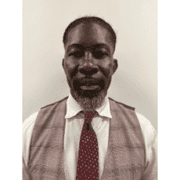
News Americas, NEW YORK, NY, Weds. Dec. 31, 2025: The federal criminal case against Guyana-born, former school superintendent, Ian Roberts, will move into the spring of 2026, as a U.S. court has set a new trial date of March 2, 2026, following a defense request for additional preparation time.

Court filings show Roberts’ legal team sought a continuance, citing the volume of evidence involved in the case and the need for more time to review discovery materials. Federal prosecutors agreed to the delay, pushing the trial from its original December 1st date. Roberts has pleaded not guilty to all charges and has until February 2, 2026, to enter any additional plea.

ICE arrested Guyanese national serving as Des Moines Public Schools Superintendent; prior weapons charges and in possession of loaded handgun at time of arrest

A Case At The Intersection Of Immigration And Public Trust

Roberts has been in custody since September 26th, when he was arrested by Iowa State Police and transferred to US Immigration and Customs Enforcement, (ICE) custody. Federal authorities allege that Roberts falsely claimed U.S. citizenship when he was hired by the Des Moines Public Schools and later illegally possessed four firearms while lacking lawful immigration status.

ICE has said Roberts entered the United States from Guyana in 1999 on a student visa, but later lost legal authorization to work. According to the agency, a final order of removal was issued by an immigration court in May 2024, months before his arrest.

The case has drawn attention not only because of the criminal charges, but also because Roberts rose to the top of public school systems in two U.S. states while allegedly lacking legal status—raising questions about hiring oversight, credential verification, and institutional safeguards.

From Superintendent To Federal Defendant

Roberts was appointed superintendent of the Des Moines Public Schools in July 2023, following three years in the same role at the Millcreek Township School District. His tenure came to an abrupt halt after federal authorities disclosed details of his immigration history and criminal allegations.

School boards in both districts have since faced scrutiny over how Roberts’ background and eligibility were vetted. In Pennsylvania, the Millcreek School Board has publicly acknowledged reviewing potential legal action related to the matter, while education officials in Iowa have faced questions from parents and lawmakers.

Defense Seeks Time Amid “Voluminous” Discovery

In court filings, Roberts’ attorney described the discovery process as extensive, noting that while the charges themselves are not complex, the defense requires significant time to prepare. The filing states that Roberts has not yet had sufficient opportunity to review the materials provided by prosecutors.

The court agreed, granting the delay and setting a new timeline that keeps Roberts in custody as the case proceeds.

Broader Implications For Immigrant Professionals

The case has resonated beyond Iowa and Pennsylvania, particularly within immigrant and Caribbean diaspora communities, where it has sparked debate about immigration enforcement, professional licensing, and how long-term residents can still face sudden detention and removal.

Advocates note that Roberts’ situation highlights the precarious position of non-citizens, even those who have built careers in public institutions, as immigration enforcement increasingly intersects with criminal proceedings.

What Comes Next

As the March 2026 trial date approaches, Roberts remains in ICE custody while federal prosecutors pursue the case. Legal observers say the outcome could have implications not only for Roberts, but also for how public institutions evaluate credentials and immigration status in senior-level hires.

For now, the case continues to underscore the far-reaching consequences of immigration enforcement—extending well beyond borders and into classrooms, communities, and public trust.

As Jamaica PM Bemoaned Images Of Desperate Jamaicans, His Government Routinely Fed Just 1 In 4

By Zahra Burton

News Americas, KINGSTON, Jamaica, Tues. Dec. 30, 2025: Since Hurricane Melissa made landfall in Jamaica on Oct. 28, the government has only provided food packages routinely to a quarter of the more than 600,000 persons that it says are in need.

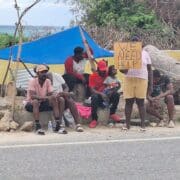
A group of hurricane victims on Dec. 13 that had come down to the main road from their community in the hill of Grass Piece district in Culloden, Westmoreland pleading for help. (18º North image)

That’s according to an analysis by 18º North based on disclosures by the Office of Disaster Preparedness and Emergency Management (ODPEM) — the state entity leading the relief effort —that about 396,000 packages had been disbursed as of its Dec. 24 posting, and each package is supposed to serve four people and last, at most, five days.

The situation has been particularly paltry over the last two weeks heading into Christmas.

For one day last week, ODPEM, which falls under the Office of the Prime Minister, reported delivering as few as 625 packages to 74 communities, and despite queries, it hasn’t explained why.

READ THE FULL STORY BY SUBSCRIBING TO 18º North‘s SUBSTACK

From Port-Au-Prince To Harlem: How A Haitian Immigrant Handbag Maker Became A Viral Fashion Phenomenon

News Americas, NEW YORK, NY, Tues. Dec. 23, 2025: In a moment when Haitian immigrants are often discussed through the lens of crisis, deportation, or policy debates, Pierre Laborde, a Harlem-based Haitian born designer, is quietly rewriting that narrative – one handcrafted handbag at a time.

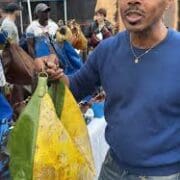
Haitian immigrant bag marker Pierre Laborde whose bags have gone viral featured in NY Times

Laborde, a Haitian immigrant and self-taught luxury bag maker, has become an unlikely viral sensation, drawing long lines, sold-out drops, and social media frenzy for his vividly colored, meticulously crafted handbags. Recently featured by The New York Times, Laborde’s story is not just about fashion – it is about Caribbean creativity, immigrant perseverance, and the power of cultural craft in the diaspora.

A Haitian Creative Journey Rooted In Craft

Born and raised in Port-au-Prince, Laborde immigrated to New York shortly after finishing high school, carrying with him a deep love for fashion shaped by Haiti’s tradition of tailoring and personal style. Long before TikTok and viral drops, he was altering fabrics, experimenting with color, and imagining bags that stood apart from mass-produced luxury.

“In Haiti, all my clothes were tailor-made,” Laborde has said, noting that fashion was always personal, expressive, and intentional. That philosophy now defines his handbags — bold, tactile pieces that resist trends and mass replication.

Years Of Quiet Hustle Before The Spotlight

For nearly a decade, Laborde sold his bags at the Grand Bazaar on Manhattan’s Upper West Side, often enduring weeks with few or no sales. He balanced odd jobs, studied fashion design one class at a time at the Fashion Institute of Technology, and turned his Harlem apartment into both workshop and showroom.

There were moments, he admits, when continuing felt impossible.

But persistence – a familiar trait in Caribbean immigrant stories – carried him forward.

A Viral Moment Meets Community Demand

Everything changed when a TikTok video urging viewers to “blow this man’s brand up” circulated late last year. Without major marketing, investors, or fashion-house backing, Laborde’s work found its audience organically. Shoppers began lining up hours early. Drops sold out in minutes. Crowd control systems had to be introduced to keep things orderly.

His bags, now priced between $295 and $1,200, remain handmade, limited, and deeply personal – each reflecting a commitment to craftsmanship rather than scale.

More Than Fashion: A Diaspora Success Story

What makes Laborde’s rise particularly significant is its timing. Haitian immigrants in the U.S. are currently facing heightened scrutiny, the loss of legal protections, and widespread misinformation. Against that backdrop, his success challenges narrow narratives and highlights the economic, cultural, and creative contributions Haitians bring to American life.

His story echoes a broader Caribbean truth: that migration is not merely movement born of hardship, but also a transfer of skill, vision, and cultural capital.

Redefining Luxury Through Caribbean Hands

Laborde’s handbags are not produced in factories or driven by seasonal trends. They are shaped by lived experience, patience, and artistic integrity – values deeply rooted in Caribbean making traditions.

As customers continue to applaud him at market tables and online drops sell out within minutes, Laborde remains grounded.

“There were times I went home with zero dollars,” he has reflected. “So this is overwhelming.”

For many in the Caribbean Diaspora, it is also affirming – a reminder that behind viral moments are years of unseen labor, and behind every “overnight success” is a long immigrant journey worth telling.

Why Guyana Has Become a Core Growth Engine For Massy Group

By Keith Bernard

News Americas, NEW YORK, NY, Mon. Dec. 22, 2025: On December 18th, 2025, Massy Group released its Management Discussion and Analysis of its Fiscal 2025 operations, which I performed a quick analysis focusing on its Guyana business.

Guyana’s growing importance to Massy Holdings Limited became unmistakable in FY2025, marking a clear progression from its already positive performance in FY2024. While Guyana had been recognized as a high-growth market in the prior year, FY2025 demonstrated that this growth is no longer merely potential but a material contributor to Group results. Strong economic expansion translated into higher consumer demand, improved volumes, and rising profitability, particularly within Integrated Retail and Gas Products. The delivery of double-digit profit growth in gas operations and solid retail performance highlights how Guyana has moved beyond incremental gains seen in FY2024 to become a dependable driver of earnings.

Equally important is the strategic shift that occurred in FY2025. Where FY2024 was characterized by consolidation and groundwork, FY2025 reflected decisive investment in capacity, including new distribution infrastructure to support rapidly expanding demand. Improved governance, forecasting, and working-capital discipline further strengthened cash generation and operational predictability.

In conclusion, taken together, these developments underscore Guyana’s transition from a promising growth story in FY2024 to a central pillar of Massy’s earnings momentum and future expansion strategy in FY2025 – an evolution that deserves broader attention as a case study in how targeted investment and disciplined execution can unlock sustained economic value.

EDITOR’S NOTE: Keith Bernard is a Guyanese-born, NYC-based analyst and a frequent contributor to News Americas. 

Let Caribbean Leadership Shine

By Dr. Isaac Newton

News Americas, New York, NY, Thurs. Dec. 18, 2025: The recent decision by President Donald Trump to impose U.S. visa restrictions on Antigua and Barbuda and Dominica should not be read as an ending, but as a diagnostic moment. Power has a way of speaking in policy rather than poetry, and when it does, small states are forced to interpret the subtext. The question is not whether the Caribbean has been treated fairly, but whether Caribbean leadership is prepared to respond with clarity rather than reflex.

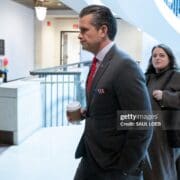
FLASHBACK – US Secretary of Defense Pete Hegseth arrives for a meeting with House leadership on the military strikes against drug boats in the Caribbean, on Capitol Hill in Washington, DC, December 16, 2025. (Photo by SAUL LOEB / AFP via Getty Images)

Visa restrictions are not moral judgments. They are administrative signals shaped by data, trust, and institutional confidence. The real work therefore sits closer to home than to Washington. Leadership must focus on tightening governance systems, aligning regulatory practices, strengthening verification processes, and communicating seriousness through action rather than press statements. International confidence is rarely negotiated in crisis; it is accumulated through quiet consistency.

The vulnerability exposed here is not size but fragmentation. When responses are uncoordinated and reforms are delayed, small states appear uncertain even when they are capable. The global environment rewards countries that plan ahead, manage risk deliberately, and engage partners with preparation instead of protest. Strategic leadership requires foresight, not improvisation.

The Caribbean holds tangible strengths: location that matters, people who adapt quickly, and histories that have sharpened judgment. What remains is the disciplined translation of these assets into durable institutions and credible public administration. Modern sovereignty is not performed. It is practiced daily through reliability, competence, and measured decision-making.

This moment offers a choice. Remain trapped in explanation, or move decisively into reform. Travel restrictions may slow movement, but they do not define destiny. The Caribbean’s future will be shaped by leaders who think beyond reaction, govern beyond excuses, and build systems that work regardless of external pressure. Leadership, when it is deliberate and grounded, becomes its own form of access.

Editor’s Note: Dr. Isaac Newton is a strategist and scholar trained at Harvard, Princeton, and Columbia. He advises governments and international institutions on governance, transformation, and global justice, helping nations and organizations turn vision into sustainable progress.

Bridges Under Strain: Diplomacy, Due Process And The Caribbean U.S. Compact

By Dr. Sheila Newton Moses

News Americas, NEW YORK, NY, Thurs. Dec. 18, 2025: The United States’ recent expansion of travel restrictions to 39 countries has quietly but significantly drawn several small Caribbean states, including Antigua and Barbuda and Dominica, into a policy framework justified by security, documentation integrity, and immigration compliance. Their inclusion raises a fundamental question for diplomacy. By what measurable standards were these countries assessed, and how were those standards applied?

Two US Marine Corps MV-22 Ospreys depart at Mercedita International Airport on December 16, 2025 in Ponce, Puerto Rico. Aircraft movements and coordinated exercises were observed throughout the day as part of heightened regional military readiness linked to ongoing operations at US military bases and maritime security efforts in the Caribbean. President Donald Trump administration is conducting a military campaign in the Caribbean and eastern Pacific, deploying naval and air forces for what it calls an anti-drugs offensive. (Photo by Miguel J. Rodriguez Carrillo / AFP via Getty Images)

Categorized under partial restrictions, these nations are neither deemed hostile nor unstable. Yet their placement alongside vastly different geopolitical contexts invites scrutiny of both the criteria used and the transparency of the process. In international affairs, ambiguity itself carries consequence.

For Antigua and Barbuda and Dominica, the implications extend beyond travel. Their economies are deeply interconnected with the United States through tourism, education, financial services, and remittances. Even a technical perception of elevated risk can undermine investor confidence, disrupt travel flows, and weaken diaspora engagement.

Antigua and Barbuda shares a particularly strong human bond with the United States. Many Antiguans and Barbudans are second and third generation American citizens, woven into U.S. civic, professional, and cultural life. Restrictions that complicate travel for family, study, or business risk straining not only economic ties but the social fabric linking these nations.

This moment also prompts diplomatic inquiry. Were bilateral consultations undertaken before the restrictions were imposed? Was there technical engagement or remediation to address U.S. concerns in advance? Historically, U.S. Caribbean relations have rested on cooperation and shared security interests, including counter narcotics efforts, maritime safety, disaster response, and regional stability. These are not distant partners but neighbors connected by maritime borders, economic interdependence, and decades of coordinated security dialogue.

At its core, this development tests the strength of a long standing relationship. While every sovereign nation has the right to secure its borders, effective diplomacy depends on clarity, engagement, and proportionality, especially among trusted partners. The central question is not whether security matters, but how it is pursued. Collaborative benchmarks and transparent dialogue can address concerns without eroding goodwill.

As Caribbean governments seek clarification and the United States advances its objectives, the durability of this relationship will depend on whether diplomacy once again leads the process, ensuring that longstanding bridges of partnership are preserved rather than weakened.

EDITOR’S NOTE: Dr. Sheila Newton Moses is a global consultant, educator, and writer specializing in policy, governance, and institutional accountability. Her interdisciplinary training informs rigorous, evidence grounded analysis that advances equity, collaboration, and durable public trust.

Islands On The Brink: Caribbean Leaders Demand A Fairer Climate Future After COP30

By Dr. Sheila Newton Moses

News Americas, NEW YORK, NY, Mon. Dec. 15, 2025: After COP30’s bold promises and polished declarations, the Caribbean has delivered a sobering reminder the world cannot ignore. Small island states sit on the frontlines of the climate crisis, yet remain among the last to access the resources meant to protect their Climate Future.

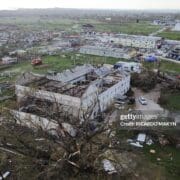
FLASHBACK – An aerial view shows damaged buildings in the aftermath of Hurricane Melissa, in Westmoreland, Jamaica, on October 31, 2025. At least 19 people in Jamaica have died as a result of Hurricane Melissa which devastated the island nation when it roared ashore this week, a government minister told news outlets late October 31. (Photo by RICARDO MAKYN/AFP via Getty Images)

On November 26, 2025, Island Innovation convened a high level virtual press briefing to examine what COP30 achieved and what it failed to deliver. The message from Caribbean leaders was unmistakable climate ambition without access is meaningless.

The panel brought together leaders from across the region and beyond, including Jamaica’s Minister of Water, Environment and Climate Change, the British Virgin Islands Permanent Secretary for Environment, senior climate finance experts, and international development practitioners. Together, they painted a picture of nations rich in resilience but constrained by global systems unfit for climate reality.

COP30’s headline pledge of 1.3 trillion dollars annually by 2035 was welcomed. Still, leaders stressed that money promised is not money received. Small island states face complex application processes, restrictive eligibility rules, and delays that undermine urgent action. For Overseas Countries and Territories, many of which are excluded entirely from major climate finance mechanisms, access remains elusive.

Dr. Mohammad Rafik Nagdee of CCREEE was clear governments with limited technical capacity cannot be expected to navigate funding systems designed for far larger economies. Without simplified and predictable pathways, climate finance becomes an illusion rather than a solution.

Jamaica’s experience after Hurricane Melissa illustrates the stakes. Losses exceeded 30 percent of GDP, wiping out years of progress in a single storm. While Jamaica benefitted from catastrophe bonds, insurance instruments, and national savings, most Caribbean nations lack these financial buffers. Without fair international support, extreme weather will continue to reverse development gains across the region.

The British Virgin Islands offered a model of climate leadership through the creation of the first Climate Change Trust Fund among Overseas Countries and Territories. Capitalized at approximately 5.5 million dollars, the Fund enables faster and more direct access to climate resources. It demonstrates that regional solutions can succeed when global systems fall short.

Yet, many territories remain excluded altogether. Mr. Ahab Downer of the Green Overseas GO Program warned that vulnerability is still not the primary criterion for climate support. His program strengthens energy transition and disaster preparedness across multiple territories, but technical assistance cannot replace systemic access to finance.

Leaders also emphasized the role of nature as critical infrastructure. Jamaica’s large scale mangrove restoration project protects coastlines, sustains fisheries, and stores carbon. In the Caribbean, ecosystems are not luxuries. They are defenses.

The Caribbean is not asking for charity. It is demanding justice. Island nations bear little responsibility for global emissions, yet pay the highest price. As climate impacts accelerate, delay becomes its own form of harm.

Island Innovation continues to elevate these voices through its Island Voices at COP platform. The call from the Caribbean is simple and urgent climate finance must be fair, accessible, and grounded in reality. Anything less leaves islands on the brink, and the world on notice.

EDITOR’S NOTE: Dr. Sheila Newton Moses is an international education consultant and thought leader on leadership, innovation, and human development in emerging economies.

Miss Jamaica Universe Back Home As Recovery Continues

News Americas, NEW YORK, NY, Mon. Dec. 15, 2025: Miss Jamaica Universe 2025, Dr. Gabrielle Henry, is back in Jamaica and is now receiving specialized medical care as she continues her recovery following a serious on-stage accident during the Miss Universe competition in Thailand.

Dr. Henry arrived in Jamaica on Thursday, Dec. 11th, under full medical escort from Bangkok, Thailand, with transportation and care coordinated and funded by the Miss Universe Organization. She had been hospitalized in Thailand after suffering a fall during the evening gown segment of the Miss Universe 2025 preliminary competition on November 19th at IMPACT Muang Thong Thani near Bangkok.

Miss Jamaica Universe fell off the stage at the pageant on Nov. 19, 2025.

According to a statement from the Miss Universe Jamaica Organization and Dr. Henry’s family, the fall resulted in an intracranial hemorrhage with loss of consciousness, a fracture, facial lacerations and other significant injuries. She required intensive care treatment in Bangkok and was unable to participate in the Miss Universe final on November 21st.

The Miss Universe Jamaica Organization confirmed that Dr. Henry continues to make encouraging progress and is expected to be discharged from hospital in the coming days, though she will require around-the-clock specialist supervision as her recovery continues.

Dr. Henry shared her optimism in a message released through the organization, stating that she is “eagerly looking forward to my return home and to seeing everyone in the near future.”

The organization expressed gratitude to the Miss Universe Organization for its unwavering support throughout the ordeal, noting that all medical and living expenses were fully covered and that Dr. Henry bears no responsibility for the incident. Special thanks were extended to Miss Universe President Raul Rocha Cantù, Mario Bucaro, and Maria Jose Unda for their hands-on assistance and constant communication during her hospitalization.

Additional appreciation was expressed to Vradda Rutnin, Honorary Jamaican Consul to Thailand; former Miss Universe Jamaica contestants Aisha and Emily Hall; and international photographer Ricardo St. Cyr for their support during Dr. Henry’s recovery abroad.

The Miss Universe Jamaica Organization also thanked the countless well-wishers in Jamaica and around the world for their prayers and messages of encouragement.

Before competing in Miss Universe, the 28-year-old ophthalmologist at the University Hospital of the West Indies was widely known for her advocacy in education and healthcare. She is the founder of the Her See Me Foundation, which provides educational and economic opportunities for people who are blind or visually impaired.

Organizers say they look forward to welcoming Dr. Henry and her family home and wish her continued healing and restoration as she recovers.

RELATED: Everything To Know About Miss Universe Jamaica 2025 – The Contestant, The Competition & The Viral Fall Seen Around The World

The Weight Of A Word: Rethinking “Minority” In America

By Nyan Reynolds

News Americas, NEW YORK, NY, Fri. Dec. 12, 2005: “In our country, we believe there should be no minority and no majority, just people.” – Steve Biko

The South African activist Steve Biko used these words to highlight how language itself can be a tool of division. Though Biko was speaking in the context of apartheid, his words hold relevance in the United States, where the categories of “minority” and “majority” remain central to how race is discussed and understood.

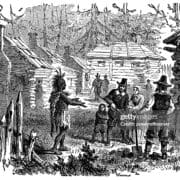
Samoset sagamore of the Abenaki people, greeting the pilgrims of the Plymouth Colony in Massachusetts, USA (circa 17th century). Vintage etching circa 19th century.

Few words in American racial discourse are as common or as unexamined as minority. The term appears in government reports, census categories, school curricula, corporate diversity statements, and daily conversation. Black Americans, along with Latinos, Asians, Indigenous people, and immigrants, are routinely described as “minorities.” The word is so deeply ingrained in the national vocabulary that it often goes unquestioned. Yet its history and social implications reveal a different story. Beneath its surface neutrality, minority operates as a marker of marginalization.

From Numbers To Status

The English word minority originally referred to being smaller in number or lesser in status. In political contexts, it described groups with less representation or less authority, such as a minority party in a legislature. In this setting, the meaning was both numerical and hierarchical: fewer members translated into less influence.

In the United States, this logic made its way into racial discourse. By the early to mid-twentieth century, as government agencies and social scientists studied racial and ethnic groups, “minority” became a shorthand for those outside the white mainstream. The U.S. Census, for example, tracked populations according to racial categories, but policy discussions increasingly referred to these communities collectively as “minorities.” The label appeared in debates on education, employment, and voting rights.

This was more than description. It was categorization. To call Black Americans a minority was not only to note their numbers but also to assign them a social position. It implied less power, less visibility, and less belonging. Over time, the word solidified into a label that carried assumptions of inferiority.

The Social Implications

The implications of this language extend far beyond statistics.

Defining by deficit. To be labeled a minority is to be defined by lack. It frames identity in terms of what is missing, population size, influence, resources, rather than what is present. For Black Americans and Caribbeans individuals, this framing compounds the legacy of slavery, segregation, and systemic exclusion, reinforcing a narrative of limitation.

Masking diversity. The category also obscures difference. By grouping together Black Americans, Latinos, Asians, those of Caribbean decent, Native peoples, and others under one label, the word erases the distinct histories and struggles of each. Black Americans, whose presence in the U.S. is rooted in enslavement and centuries of systemic discrimination, are placed in the same category as immigrant populations with very different experiences. The flattening of identity that results prevents deeper recognition of each community’s unique realities.

Sustaining hierarchy. The persistence of the word minority also reinforces a symbolic hierarchy. Even in places where Black and brown communities form the majority, cities like Detroit, Houston, or Atlanta, they are still labeled minorities. Nationally, demographic projections show that by mid-century, nonwhite populations will collectively outnumber whites, yet the label persists. This demonstrates that minority is less about numbers and more about social status.

Historical Usage In Policy And Education

The institutional use of “minority” has reinforced these implications. Civil rights legislation of the 1960s, while groundbreaking, often used the term “minority groups” to identify those entitled to protection. Affirmative action programs in higher education and employment were designed with “minorities” in mind. These policies addressed real inequities but also embedded the label into the structure of law.

In education, textbooks routinely referred to Black, Latino, and Asian students as minorities. For generations of children, growing up meant encountering a narrative that positioned them as small, lesser, and outside the center of American identity. The repetition of the label in classrooms normalized the idea of difference as deficiency.

In the workplace, “minority hiring” became a standard phrase. While meant to promote inclusion, it often created the impression that employees of color were tokens, exceptions granted space within institutions rather than central contributors. Again, the word framed belonging in terms of scarcity.

The Danger Of Internalization

Perhaps the most damaging effect of the word minority is its internalization. Many Black Americans refer to themselves as minorities without questioning the label. Over time, this acceptance can subtly reinforce a sense of smallness.

Research in social psychology has shown that repeated exposure to deficit-based language can shape self-concept. Children labeled as minorities may come to see themselves as outsiders in their own country. Adults who internalize the term may carry an unspoken sense of limitation, even as they succeed. This is not because they lack confidence or capability, but because the language itself imposes boundaries on how they are imagined.

The damage here is not always visible. It operates quietly, through the drip of repetition, until it feels natural. When people embrace the label for themselves: “I’m a minority in this country,” they may unknowingly reinforce the very hierarchy that the term was designed to describe.

Why The Word Persists

Despite its baggage, the term remains widespread. Bureaucracy plays a role. Government agencies and corporate diversity programs are still organized around categories like “minority representation.” Habit plays another role. Once embedded in textbooks, policies, and popular speech, words are difficult to uproot. Convenience also contributes. “Minority” is a single word that groups together diverse populations, offering an easy shorthand.

But convenience is not harmless. The continued use of minority allows the underlying hierarchy to remain unchallenged. It ensures that entire communities continue to be described, and therefore imagined in terms of what they are not.

Rethinking The Vocabulary

Reconsidering the word is not about semantics for their own sake. It is about disrupting the ways language sustains inequality. Several alternatives have been proposed. “Marginalized groups” highlights the active process of exclusion rather than suggesting an inherent lack. “Communities of color” emphasizes shared experiences of racialization, though it still groups diverse populations together. “Underrepresented populations” draws attention to gaps in visibility and influence.

Some advocates use the phrase “global majority,” noting that people of African, Asian, Indigenous, and Latin descent make up most of the world’s population. This term flips the perspective, reminding us that Black Americans and other groups are not minorities in any global sense.

None of these terms is perfect, but each offers a way of framing identity without reducing communities to symbols of smallness.

Beyond Language

Of course, changing language alone will not dismantle racial inequity. The structural barriers that Black Americans face, economic inequality, disparities in education and healthcare, systemic discrimination—require more than new vocabulary. But words matter because they shape the framework through which these realities are understood. Language is both a mirror and a mold. It reflects existing power structures while also helping to reinforce them.

Questioning the word minority is part of questioning the assumptions that sustain inequality. If Black Americans continue to be labeled as minorities, they are continually positioned at the margins of a society they helped build. Rejecting the term does not solve the problem, but it begins to shift the lens through which the problem is seen.

Conclusion

Steve Biko’s vision that there should be no minority and no majority, just people remains unfinished business in America. The word minority may appear neutral, but its history shows otherwise. For Black Americans, it has been less a description of numbers and more a marker of marginalization. It defines by deficit, erases diversity, sustains hierarchy, and quietly shapes self-perception.

The persistence of the word is a reminder of how deeply systems of inequality are embedded in everyday life. To keep using it uncritically is to accept a worldview where some people are always smaller, lesser, or secondary. To challenge it is to recognize that no group’s worth can be measured by numbers alone.

Reconsidering minority is not about erasing history or denying demographic reality. It is about refusing to let language dictate value. If the United States is to move toward genuine equality, it must begin with the recognition that no community is inherently minor.

EDITOR’S NOTE: Nyan Reynolds is a U.S. Army veteran and published author whose novels and cultural works draw from his Jamaican heritage, military service and life experiences. His writing blends storytelling, resilience and heritage to inspire readers.  

Rethinking Caribbean Diplomacy In A Shifting Global Landscape

By Dr. Isaac Newton

News Americas, NEW YORK, NY, Thurs. Dec. 11, 2025: Caribbean diplomacy must begin with a clear understanding of who we are and what we choose to become. Foreign policy is the outward expression of our identity. It carries our values, voice, and vision into the global arena. Strategy is the quiet discipline of listening beneath the noise of events and sensing change before it arrives. An asset is anything that grows in strength when used with intention. Transformation is the decision to rise into something greater than habit or history. When these ideas converge, foreign policy becomes the compass of national renewal and a foundation for a confident regional posture.

Dr. Denzil Douglas

This vision resonates with the Right Hon. Dr. Denzil L. Douglas, one of the most accomplished statesmen in the modern Caribbean. A former four term Prime Minister and now Minister of Foreign Affairs, Economic Development, International Trade, Investment, and Commerce, he guides national engagement where domestic aspiration meets global possibility. His portfolio demands clarity, discipline, and forward-looking imagination. It is from this vantage that he reminds us, “Foreign policy must not simply describe our world. It must shape the world we wish to enter.”

Norms And Competing Ambitions

The Caribbean operates in a world of shifting alliances, fragile norms, and competing ambitions. Powerful nations speak of rules while bending them and praise sovereignty while ignoring it when convenient. For small island states, this produces both vulnerability and opportunity for those who navigate with insight. Influence no longer depends on size but on resolve, relationships, and resonance. Caribbean diplomacy must move from reaction to deliberate direction, strengthening resilience, economic security, and regional standing.

Diplomacy reaches far beyond negotiating tables. It shapes the price of food, the strength of our borders, the health of our reefs, and the energy that powers our homes. Foreign policy becomes the bridge that determines whether opportunities land on our shores or drift elsewhere. To secure them, Caribbean ministries of foreign affairs must be at the center of national strategy, coordinating systems and sectors with focus and discipline rather than ceremonial visibility.

Looking Outward

Looking outward, partnerships with nations such as Indonesia, Africa, India, Brazil, the Middle East, and other countries with shared needs and compelling interests provide practical paths to renewal. These regions read the sea, the land, and the global economy as teachers rather than boundaries. Shared efforts in marine stewardship, climate resilience, renewable energy, technology transfer, and skills training can lift livelihoods and expand national capacity. These are immediate frontiers where cooperation turns potential into progress. The decade ahead invites the Caribbean to embrace a future powered by clean energy, guided by science, enriched by sustainable oceans, and led by citizens equipped for a complex world. If we meet this moment with clarity and courage, our diplomacy becomes not a mirror of global change but the instrument through which transformation takes flight.

Editor’s Note: Dr. Isaac Newton is a strategist and scholar trained at Harvard, Princeton, and Columbia. He advises governments and international institutions on governance, transformation, and global justice, helping nations and organizations turn vision into sustainable progress.