Posts

From 35 Years To Grammy Nominations – Vybz Kartel New Album Is The Most Personal Of His Career

By Staff Reporter | NewsAmericasNow.com

News Americas, NY, NY, Thurs. May 28, 2026: When Vybz Kartel was sentenced to 35 years in a Jamaican prison in 2014, many wondered if the world would ever hear new music from the man widely regarded as the King of Dancehall. When the Court of Appeal unanimously overturned that conviction on August 6, 2024, the answer came swiftly and decisively – and it has not stopped since.

Now, less than two years after walking free, Kartel is set to release his most personal album yet. ‘God & Time’ drops June 5 via TJ Records and Vybz Kartel Muzik, with Zojack Worldwide handling distribution – and the dancehall icon says this one comes from a place no previous album has reached.

“I named the album God & Time because it’s a slang that has been popular in Jamaica since we was children,” Kartel told Billboard in an exclusive interview. “When I was in prison, my lawyer used to always say that to me. I eventually just started believing in myself and applying it to my life.”

The Journey That Made The Album

Dancehall Vybz Kartel, seen here performing at Brooklyn’s Barclays Center on April 11 and 12, 2025. (Photo by Tizzy Tokyo)

For the Caribbean diaspora and millions of fans globally who followed every twist of Kartel’s decade-long legal battle – God & Time carries a meaning that goes far beyond music.

Kartel and his co-accused – Shawn Campbell, Kahira Jones and Andre St. John – were originally convicted following a historic 64-day trial for the 2011 murder of Clive “Lizard” Williams, a charge all four have consistently denied. The Court of Appeal’s unanimous ruling that they would not face a new trial ended one of the most closely watched legal sagas in Caribbean history.

Since his release, Kartel has not wasted a single moment. He mounted a massive Freedom Street concert in Kingston to bring in 2025, appeared at Drake’s Wireless Festival takeover, and completed his own Worl’ Boss Tour across the UK, Europe, and the United States. Earlier this month he appeared on Chris Brown’s “F–k and Party” – a cut from Brown’s LP that debuted at number seven on the Billboard 200.

And through it all, the music kept coming – and getting better. Both 2024’s ‘Party With Me’ and 2025’s ‘Heart & Soul’ earned Grammy nominations for best reggae album, marking Kartel’s first nods at the ceremony and signaling that his artistic powers had not just survived incarceration – they had deepened.

God & Time – What To Expect

‘God & Time’ ‘follows two consecutive Grammy-nominated projects and reunites Kartel with the same creative team behind 2015’s Viking and 2016’s King of the Dancehall – the album that spawned “Fever,” one of the defining dancehall songs of the decade.

The album’s lead single “Panic” features Grammy-nominated pop-dancehall star Shenseea, while the broader track list brings together Latin Grammy-winning reggaetonero Farruko and contemporary Jamaican music star Skillibeng – a lineup that signals Kartel’s intention to push dancehall’s boundaries while staying rooted in its DNA.

‘God & Time’ is set to survey the full range of Kartel’s emotions following his release – self-reflection alongside the waist-wining riddims and genre-bending crossover records that have defined his career. Kartel has also teased additional surprise collaborations yet to be revealed.

“You can expect Vybz Kartel energy,” he told Billboard. “The flow will be different, and the lyrics will be amazing.”

A Caribbean Heritage Month Release

The June 5th release date places ‘God & Time’ ‘squarely in the heart of Caribbean Heritage Month – a timing that feels less like coincidence and more like destiny for an artist whose entire career has been a reflection of Caribbean culture, language, resilience, and reinvention.

For a generation of Caribbean diaspora fans who held onto hope through every court hearing, every appeal, and every year of silence — God & Time is more than an album title. It is a philosophy. And Kartel, more than anyone, has lived it.

‘God & Time’ is available for pre-order now. The album drops June 5, 2026.

RELATED: From Blasphemy To “Glory”: Vybz Kartel’s Sudden Shift To Gospel Sparks Debate

Shaggy Gets Brooklyn Day Honor, Chaka Demus Teams Up With Tanto Metro, And Sean Paul Drops Brawlin Riddim – Caribbean Music Is Having A Moment

By ET News Reporter | NewsAmericasNow.com

News Americas, New York, NY, Fri. May 22, 2026: Caribbean music is having a serious moment this week, with new releases and major milestones from some of the genre’s biggest names arriving in rapid succession.

Shaggy Gets His Own Day In Brooklyn

BBrooklyn Borough President Antonio Reynoso declared May 19, 2026 as “Shaggy Day” in Brooklyn – honoring the reggae and dancehall legend on the occasion of his fifteenth studio album release.

The proclamation was handed over to Shaggy – born Orville Richard Burrell in Jamaica – at a public celebration held at I AM CARIBBEING HQ at 1399 Nostrand Avenue in Little Caribbean, with Deputy Borough President Rev. Kim Council representing the Borough President’s office.

The new album, titled “Lottery,” includes “BUN (She Loves Me),” “Dancehall Nice” featuring Beres Hammond and Dexta Daps, the title track “Lottery” featuring Jeremih, and “We Love Di Gal Dem” featuring 450.

Shaggy moved to Flatbush as a teenager from Jamaica and launched his music career in Brooklyn – building a four-decade run that has produced more than 40 million albums sold and eight Billboard Hot 100 singles. Beyond music, he established the Shaggy Make a Difference Foundation in 2009 and most recently led relief efforts following Hurricane Melissa, raising over $500,000 at a benefit concert at UBS Arena and delivering essential goods via private flights.

“Brooklyn is the borough that took a kid from Jamaica and gave him a stage, a sound, and a purpose,” Shaggy said at the celebration, as quoted in the release.

Borough President Reynoso added: “From his musical genius to his leadership in philanthropy, Shaggy embodies the very best of our borough.”

Chaka Demus & Pliers Unite With Tanto Metro & Devonte

In a rare and highly anticipated collaboration, two of dancehall’s most iconic duos have joined forces on a new single titled “Jealous.”

Chaka Demus & Pliers – whose 1992 hit “Murder She Wrote” remains one of the most recognizable songs in reggae and dancehall history – have teamed with Tanto Metro & Devonte, known for the club anthem “Everyone Falls in Love,” on what Chaka Demus describes as “four the wickedest way.”

The track is a playful, story-driven dancehall record exploring the drama of jealousy in relationships – produced and executive produced by Chaka Demus on his Bright Star Production label. Harmonies were contributed by Brian & Tony Gold over a rhythm crafted by Jazzwad, with mixing by Fatta Marshall. Writing credits are shared across the full collective.

“Jealous” serves as the first single from Chaka Demus’s upcoming album release – a project that brings together a seasoned team of music stalwarts with deep roots in Caribbean music culture.

Sean Paul’s Dutty Rock Productions Drops Brawlin Riddim

International superstar Sean Paul has released another riddim compilation through his Dutty Rock Productions imprint — this time delivering “Brawlin Riddim,” a hard-hitting dancehall project featuring an all-star lineup.

The compilation features Busy Signal, Sean Paul, Spragga Benz, Charly Black, Chi Ching Ching, Leftside, Future Fambo, Looga Man, Bush Wakka, and Ras Ajai — each bringing their own lyrical energy to a production anchored by pulsing bass, sharp synth leads, and siren sound effects that evoke the raw energy of a Kingston street dance.

The riddim was produced by Sean Paul and Dutty Rock Productions, mixed and mastered by Grammy-winning engineer Andre “Dre Day,” and recorded by dancehall heavyweight Andre “Suku Ward” Gray at Dutty Rock’s studios in Kingston, Jamaica.

“Brawlin Riddim” is now available on all major digital streaming platforms.

Stephen Marley Pays Tribute To Jamaica

Grammy Award-winning recording artist Stephen Marley has released “Hills of St. Ann,” the first single from an upcoming compilation project paying tribute to Brand Jamaica – celebrating the island’s culture, heritage, and natural beauty.

Released May 8, 2026 via Ghetto Youths International, the track is an inspiring guitar ballad underscored by powerful Nyahbinghi drum rhythms, transporting listeners to Nine Mile, St. Ann – the birthplace of reggae legend Bob Marley. Stephen Marley handled production, drums, bass, and Nyahbinghi drums on the track himself, with guitar by Ranoy Gordon and keyboards by Llamar Brown.

The single is available now on all streaming platforms.

RELATED: IShowSpeed Draws Over 16 Million Viewers In Caribbean Tour To Date – And Tourist Boards Are Getting A Free Ride

The Rebel We Need Again: Jimmy Cliff, John Lewis, And The Disappearing Courage To Speak

By Nyan Reynolds

News Americas, NEW YORK, NY, Thurs. May 7, 2026: There are songs that entertain us, and then there are songs that interrogate us. Songs that refuse to remain in the background of life. Songs that return like spirits when society begins drifting too far from its moral center. For me, Jimmy Cliff’s “The Rebel in Me” is one of those songs.

“If the rebel in me can touch the rebel in you,
And the rebel in you can touch the rebel in me,
Then the rebel we be is gonna set us free.”

Those words are not simply lyrics. They are a challenge; a spiritual confrontation; a call for awakening.

As I listened to the song again recently, it did not feel old. It felt frighteningly current. It felt as if Jimmy Cliff was speaking directly to the condition of the modern world, to the exhaustion of ordinary people, to the silence that has overtaken so many communities that once believed in resistance, solidarity, and moral courage.

When people hear the word “rebel,” they often imagine destruction. They imagine violence, disorder, chaos, or rebellion for rebellion’s sake. But that is not the rebel Jimmy Cliff was speaking about. That is not the rebel that John Lewis spoke about when he urged people to get into “good trouble.”

The rebel they spoke of was moral.

The rebel is the person who refuses to become numb while society collapses around them.

The rebel is the teacher who refuses to abandon struggling children.

The rebel is the young man in the inner city who refuses to glorify violence because he understands the funeral costs of the streets.

The rebel is the woman who advocates for the poor while politicians weaponize poverty for votes.

The rebel is the citizen who still believes truth matters in an age where misinformation spreads faster than wisdom.

The rebel is the person who sees suffering and refuses to normalize it.

That kind of rebellion is sacred.

Today, however, something feels missing. We live in one of the most connected eras in human history, yet many people feel spiritually disconnected from one another. We have endless communication, but less courage. Endless information, but less conviction. We are witnessing war, displacement, economic instability, political division, rising housing costs, mental health crises, and loneliness on a global scale. Yet many people remain silent, not because they do not care, but because they are afraid.

Afraid of backlash.

Afraid of losing careers.

Afraid of being labeled.

Afraid of becoming unpopular.

Afraid of speaking too loudly in systems that reward compliance.

That fear is dangerous because silence has always been the greatest ally of injustice.

Growing up in Jamaica and later experiencing life in the United States, I learned early that many communities do not grow from abundance. They grow from absence. There are places where opportunity is absent. Stability is absent. Mental health support is absent. Economic mobility is absent. In many Black, brown, and Caribbean communities, people are forced to survive gaps that society has normalized for generations.

That reality shapes how you see the world.

You begin to notice voids everywhere.

You notice the abandoned schools.

The broken playgrounds.

The exhausted single mothers.

The fathers are working two jobs, yet still unable to afford dignity.

The young boys are being recruited by the streets before they are recruited by colleges.

The prisons are filling faster than classrooms.

The funerals are becoming more common than graduations.

And once you see those things clearly, it becomes impossible to completely silence the rebel inside you.

That rebel is not hatred. It is conscience.

It is the refusal to accept human suffering as ordinary.

When Jimmy Cliff released “The Rebel in Me” in 1989, the world was already wrestling with deep wounds. Communities across America were suffering through the crack epidemic. The AIDS crisis was devastating families while stigma prevented compassion. Many Caribbean nations were navigating violence, instability, and the unfinished consequences of colonialism and political corruption. Across parts of Africa, poverty and famine dominated international headlines while the global powers debated solutions from a distance.

The world was aching.

But there was still visible resistance.

There were student activists.

Community organizers.

Labor unions.

Grassroots movements.

Artists who challenged systems through music and poetry.

Young people who believed they had a responsibility to confront injustice, not merely comment on it online.

Today, despite all our technological advancements, there appears to be a growing emotional paralysis. Outrage has become performative. Many people repost suffering without truly engaging it. Social justice often becomes branding instead of sacrifice. Everyone wants change, but fewer people want the consequences that often accompany standing for something meaningful.

And that is the tragedy of modern rebellion.

We have confused visibility with courage.

Real rebellion has always carried risk.

Martin Luther King Jr. risked his life.

Malcolm X risked his life.

Nelson Mandela lost decades of freedom.

John Lewis had his skull fractured on the Edmund Pettus Bridge in pursuit of voting rights.

Those individuals understood something powerful: comfort has never transformed society.

Only conviction does.

That is why John Lewis’s phrase “good trouble” remains so important today. Good trouble is not reckless behavior. It is ethical disruption. It is the willingness to disturb systems that profit from inequality, indifference, or silence.

Sometimes society desperately needs disruption.

Not destructive disruption, but moral disruption.

The kind that forces people to confront uncomfortable truths.

Because if we are honest, many of the same problems that existed decades ago still exist today, only in different forms.

Housing has become unattainable for many young adults.

Inner-city violence continues to traumatize communities.

Mental illness is increasing while access to care remains unequal.

Loneliness consumes people despite constant digital interaction.

Economic inequality continues to widen.

Many veterans return home carrying invisible wounds that society applauds publicly but neglects privately.

Young people increasingly feel hopeless about the future.

And despite all this, we often pretend progress alone will save us.

But progress without moral courage becomes cosmetic.

A city can build luxury apartments while homelessness rises two blocks away.

A company can post diversity slogans while exploiting workers internally.

A nation can celebrate freedom while entire communities remain trapped in cycles of poverty and violence.

That contradiction is what the rebel notices.

The rebel asks difficult questions.

Who benefits from this system?

Who is being ignored?

Who is suffering quietly?

Why are we becoming emotionally desensitized to human pain?

Those questions matter because societies do not collapse only through war or economics. Sometimes they collapse morally. They collapse when people stop caring enough to intervene.

And perhaps that is why Jimmy Cliff’s lyrics still resonate so deeply.

“My love is deeper than the ocean…
You got the potion to bring out the love in me.”

At its core, rebellion rooted in justice is not about hatred. It is about love. Love for humanity. Love for truth. Love for communities. Love for future generations.

That is the “potion” Jimmy Cliff was speaking about.

The rebel is awakened not merely by anger, but by compassion.

A person who truly loves humanity cannot comfortably coexist with injustice forever.

Eventually, they speak.

Eventually, they challenge.

Eventually, they resist.

Not because they seek attention, but because conscience leaves them no alternative.

There is also another reality many people quietly experience: sometimes life cages the rebel inside them. Careers, institutions, finances, and responsibilities often pressure individuals into silence. Many people feel trapped between survival and conviction. They see what is wrong, but fear what speaking might cost them.

That tension is real.

History is filled with people who buried their convictions to preserve stability.

But history also reminds us that silence rarely protects societies for long.

The “caged lion” eventually begins to roar internally.

People reach a point where the cost of silence becomes heavier than the cost of speaking.

I believe many people are reaching that point now.

You can sense it globally. There is exhaustion. Disillusionment. A growing awareness that something fundamental is broken within modern society. People are questioning institutions, leadership, economic systems, and even the meaning of community itself.

And perhaps that is why the rebel must return.

Not the rebel of destruction.

The rebel of restoration.

The rebel who rebuilds communities.

The rebel who mentors children.

The rebel who advocates for mental health.

The rebel who protects truth in an era of manipulation.

The rebel who chooses empathy over apathy.

The rebel who refuses to surrender their humanity.

Because if the rebel in one person can truly touch the rebel in another, something powerful begins to happen. Courage becomes contagious. Compassion becomes contagious. Integrity becomes contagious.

One voice inspires another.

One act of courage awakens another.

That is how societies heal.

Not only through policy, but through people willing to stand morally awake in a sleeping world.

Jimmy Cliff understood that decades ago.

John Lewis understood it too.

And perhaps the question confronting this generation is simple:

Will we continue adapting to brokenness, or will we finally find the courage to challenge it?

Because there is still good trouble waiting to be made.

And somewhere inside many of us, the rebel is still trying to speak.

EDITOR’S NOTE: Nyan Reynolds is a U.S. Army veteran and published author whose novels and cultural works draw from his Jamaican heritage, military service, and life experiences. His writing blends storytelling, resilience, and heritage to inspire readers.  

RELATED: Goodbye, Old Friend: The Quiet Exit Of Spirit Airlines

Rihanna, Cardi B, Bad Bunny And More Caribbean Roots Stars Steal The Show At Met Gala 2026

By ET News Reporter | NewsAmericasNow.com

NEWS AMERICAS, NEW YORK, NY, Tues. May 5, 2026: Caribbean roots stars turned the Met Gala 2026 into a diaspora showcase Monday night, with some of the biggest names in music and entertainment commanding fashion’s most prestigious red carpet under the evening’s “Fashion Is Art” dress code tied to the Metropolitan Museum of Art’s spring exhibition, “Costume Art.”

Rihanna Owns The Carpet – Again

NEW YORK, NEW YORK – MAY 04: Rihanna attends the 2026 Met Gala celebrating “Costume Art” at the Metropolitan Museum of Art on May 04, 2026 in New York City. (Photo by Theo Wargo/FilmMagic)

Barbados’ own Rihanna cemented her status as the undisputed queen of the Met Gala, arriving in a shimmering sculptural gown by Maison Margiela Couture designed by Glenn Martens. The show-stopping look combined art and technology, featuring a liquid metal fabric woven with silk and recycled metal wiring, an intricate jewel-encrusted long-sleeve bodice in gold and silver, and a dramatic fabric structure that framed her body in what critics immediately dubbed a “sculptural beauty” moment. She completed the look with frosty eyeshadow and a hairstyle adorned with gold hardware.

By her side, A$AP Rocky wore a custom pink Chanel robe-style jacket with black satin lapels, black trousers, and a white shirt – solidifying pink as one of the night’s dominant trends.

Bad Bunny Goes Viral With Age Transformation

Bad Bunny attends the 2026 Met Gala Celebrating “Costume Art” at the Metropolitan Museum of Art on May 04, 2026 in New York City transformed at an older man. (Photo by Michael Loccisano/GA/The Hollywood Reporter via Getty Images)

Puerto Rican superstar Bad Bunny – born Benito Antonio Martínez Ocasio – delivered one of the night’s most shocking and viral moments, appearing as a hyper-realistic version of himself 50 years into the future. Using extensive prosthetic makeup created by Mike Marino — the artist behind Heidi Klum’s most elaborate Halloween transformations – he transformed into an elderly man complete with deep wrinkles, age spots, white hair, and a walking cane.

His custom all-black tuxedo, co-designed with Zara, featured an oversized pussy bow necktie directly referencing designer Charles James’s 1947 “Bustle” gown housed in the museum’s permanent collection. The look was widely praised for highlighting the “Costume Art” exhibition’s exploration of the aging body — a stage of life often ignored by the youth-centric fashion industry.

Cardi B Commands The Carpet

US fashion designer Char Defrancesco, US rapper Cardi B and US designer Marc Jacobs arrives for the 2026 Met Gala celebrating “Costume Art” at the Metropolitan Museum of Art, in New York, on May 4, 2026. (Photo by Angela Weiss / AFP via Getty Images)

Cardi B, whose roots extend to the Dominican Republic and Trinidad and Tobago, made a late-night entrance alongside designer Marc Jacobs despite battling a fever — and the internet noticed. Her custom Marc Jacobs gown leaned heavily into surrealism, featuring a sheer black lace ruffle dress layered over a color-blocked bodysuit, with massive padded sculptural forms around the shoulders and hem inspired by the work of Surrealist artist Hans Bellmer. She navigated the carpet in her signature 9.5-inch platform boots.

Teyana Taylor Dazzles In Silver

Teyana Taylor attends the 2026 Met Gala celebrating “Costume Art” at the Metropolitan Museum of Art on May 04, 2026 in New York City. (Photo by Jamie McCarthy/Getty Images)

Actress and entertainer Teyana Taylor, 35, who carries Caribbean roots and served as a 2026 host committee member, turned heads in a silver fringed Tom Ford gown with a matching fringed headdress that draped dramatically over half her face — one of the night’s most visually striking silhouettes.

Marcello Hernández Honors Caribbean Heritage

Caribbean roots Marcello Hernandez at The 2026 Met Gala Celebrating “Costume Art” held at The Metropolitan Museum of Art on May 04, 2026 in New York, New York. (Photo by Michael Buckner/Penske Media via Getty Images)

SNL breakout star Marcello Hernández paid direct homage to his Cuban and Dominican heritage through a custom ensemble by Willy Chavarria titled “The Caribbean Canvas.” The structured architectural jacket mimicked the movement of tropical flora, while the lining of his cape featured hand-painted imagery inspired by the streets of Havana and Santo Domingo. Custom boots incorporating traditional Dominican embroidery techniques and a vintage Cartier brooch completed the look.

Zoë Kravitz Brings Bahamian Roots To The Red Carpet

Caribbean roots Zoë Kravitz attends the 2026 Met Gala celebrating “Costume Art” at the Metropolitan Museum of Art on May 04, 2026 in New York City. (Photo by Jamie McCarthy/Getty Images)

Zoë Kravitz, who carries Bahamian and African American heritage, served on the 2026 host committee and interpreted the “Fashion Is Art” dress code through a lens of dark Victorian romance. Her custom Saint Laurent by Anthony Vaccarello gown – constructed from dense graphic black guipure lace worn unlined – featured a basque waist and structured exaggerated hip panniers nodding to historical Rococo art. Green stone drop earrings and a large ivory sculptural ring by Jessica McCormack completed the ensemble.

Rauw Alejandro Goes Futuristic

Caribbean roots star Rauw Alejandro attends the 2026 Met Gala Celebrating “Costume Art” at the Metropolitan Museum of Art on May 04, 2026 in New York City. (Photo by Michael Loccisano/GA/The Hollywood Reporter via Getty Images)

Puerto Rican superstar Rauw Alejandro arrived in an ultra-modern Saint Laurent look that fashion critics described as Blade Runner-esque — a custom black slick-textured suit with a draped leather top and the night’s most talked-about accessory: silver bridge jewelry across his nose and face created by Ida Lajevardi’s Yaaqee Studio. He also debuted a fresh new hairstyle specifically for the event.

Caribbean Heritage On Fashion’s Biggest Stage

From Barbados to Puerto Rico, Trinidad and Tobago to the Dominican Republic, the Bahamas to Cuba – the 2026 Met Gala made clear that Caribbean heritage is not just present at the intersection of fashion and culture. It is leading it.

The 2026 Met Gala was held Monday, May 4th at the Metropolitan Museum of Art in New York City.

RELATED: SEE CARIBBEAN STARS AT LAST YEAR’S MET GALA

IShowSpeed Draws Over 16 Million Viewers In Caribbean Tour To Date – And Tourist Boards Are Getting A Free Ride

By Staff Reporter | NewsAmericasNow.com

News Americas, NEW YORK, NY, Weds. April 29, 2026: He arrives by Expedia Gulfstream and gets millions watching. IShowSpeed, the American internet phenomenon whose real name is Darren Jason Watkins Jr., has so far racked up more than 16 million cumulative live stream viewers across five Caribbean islands, turning what would have cost governments millions in tourism advertising into a free, real-time global showcase.

The 19-year-old African American streamer kicked off his Caribbean run in Trinidad and Tobago before hitting Grenada, Barbados, St. Lucia, and St. Vincent and the Grenadines yesterday. His highest single-stream viewership so far has come from Trinidad and Tobago at 4.7 million. Even his lowest – 2.9 million from Barbados – rivals the audience of a major cable news broadcast.

Why Caribbean Tourism Boards Should Be Paying Attention

Speed’s visits aren’t scripted tourism campaigns. They are chaotic, unfiltered, deeply human encounters with local culture – and that is precisely why they work. When millions of Gen Z viewers watch him eat doubles in Port of Spain, react to a fish market in Barbados, or get mobbed by fans on a St. Lucia street, they aren’t watching an ad. They’re experiencing a place.

Tourism economists have a term for this: earned media. What Speed is generating for the Caribbean is essentially the same visibility that agencies spend tens of millions of dollars trying to manufacture – delivered organically to a global audience that trusts him.

During a recent Africa tour spanning 20 countries in under a month, Speed gained more than 3.7 million YouTube subscribers and pushed past the 50 million subscriber milestone. The pattern is consistent: he visits, the world watches, and destinations trend.

The Tour Isn’t Over

While no official schedule has been confirmed, the broader Caribbean leg is expected to include Jamaica, the Dominican Republic, the Bahamas, Puerto Rico, Antigua and Barbuda, Dominica, Guadeloupe, Sint Maarten, St. Kitts and Nevis, and the U.S. Virgin Islands.

For islands still on the itinerary, the calculus is straightforward: millions of eyeballs, zero cost, and the kind of youth-market penetration that no tourism board has reliably cracked.

The Bigger Picture

Speed has taken his cameras across Africa, Europe, Asia, South America, and Australia and New Zealand. His Caribbean run follows that same model: arrive with a massive platform, engage authentically with locals, and let the algorithm do the rest.

What is new is the regional concentration. Five islands in rapid succession means the Caribbean as a whole – not just individual destinations – is getting a sustained moment in front of one of the internet’s largest audiences.

For a region that has long struggled to compete with better-funded tourism markets for global attention, Speed’s tour is a reminder that the rules of visibility are changing. And the Caribbean, for once, is on the right side of the algorithm.

ABOUT ISHOWSPEED

Speed, whose real name is Darren Jason Watkins Jr., was born in Ohio. He reportedly became a millionaire by age 16 or 17 – one of the fastest wealth accumulations in streaming history. By the end of 2023, he had firmly established himself as a multi-millionaire, with his net worth growing well beyond early estimates, driven by YouTube ad revenue, brand deals, merchandise, and his massive live-streaming audience. His net worth ranges from $10 million to $30 million.

IShowSpeed’s Caribbean tour is ongoing. NewsAmericasNow.com will continue tracking viewership data and island visits as they are confirmed.

Caribbean-Roots Actors Star In Michael Jackson Movie

By NAN ET EDITOR

News Americas, NEW YORK, NY, Sat. April 25, 2026: Caribbean-rooted actors are taking center stage in the Michael Jackson movie, Michael, bringing depth and cultural nuance to the story of one of music’s most iconic families.

Award-winning actor Colman Domingo portrays Joe Jackson, the complex and often controversial patriarch of the Jackson family, while Nia Long takes on the role of Katherine Jackson, the matriarch whose quiet strength helped anchor the family through fame and pressure.

The film, which opened in theaters on Friday, April 24th, stars Jaafar Jackson, the nephew of Michael Jackson, as his uncle. Juliano Krue Valdi, a 12-year-old actor and dancer, plays the young Michael. The movie traces the singer’s rise from childhood in Gary, Indiana to stardom with The Jackson 5 and on to solo global superstardom. The story focuses on the period from the 1960s through 1988, stopping before the later controversies that surrounded the artist.

In an interview with Black Girl Nerds, Long, whose roots extend to Trinidad and Tobago, Barbados and Grenada, spoke about approaching the role of Katherine Jackson with empathy rather than judgment.

“I wouldn’t say judgment,” she explained. “I would definitely say empathy, and I would say that I have more in common with her than I ever thought I did.”

Long said portraying Katherine required tapping into her own experiences as a mother, emphasizing the protective instinct that defines the role. “Once you’re a mother and you’re connected to the wellness of your family and the wellbeing of your children, there’s an energy of protection that supersedes everything,” she said. “That was her job, that was her mission, that was her heart.”

She described Katherine Jackson as a steady, grounding force during the family’s rise to global fame. “When you look at what the Jackson family had to manage, the level of stardom, there had to be a quiet force leading the way,” Long said. “That’s what makes her such a beautiful woman.”

Domingo, whose heritage traces back to Belize and Guatemala, also highlighted the importance of portraying Joe Jackson with complexity rather than one-dimensional judgment.

“We started by having great conversations about men that we know, that we’re raised by, men of a certain generation,” Domingo said, noting that Joe Jackson represented a generation shaped by responsibility, discipline, and survival.

He emphasized that the role required acknowledging both strength and vulnerability. “Sometimes people think that they’re just hard in some ways, but we know their softness, we know their vulnerabilities,” he said. “And we care about these men deeply, and so we wanted to make sure that we really looked at Joe Jackson… with as much complexity as possible.”

Directed by Antoine Fuqua, Michael offers audiences an intimate look at the family dynamics, sacrifices, and pressures that shaped the King of Pop’s early life and career.

The film also leaves room for a potential continuation, with Domingo hinting at the possibility of a second installment exploring later chapters of Jackson’s life.

Michael Jackson, who rose to fame with The Jackson 5 before becoming a global superstar, died in 2009 at age 50. He was acquitted in a 2005 criminal trial and consistently maintained his innocence against allegations made during and after his lifetime.

 His nephew does a great job of channeling Michael’s signature look, executing his iconic choreography, embodying his voice, recreating his mannerisms, and getting into his headspace.

When it comes to the music, featuring hits from across Jackson’s early career, does Jaafar provide the vocals in the musical movie? The answer is both yes and no. When asked if he lent his voice to the project, Jaafar replied, “When I was doing all the performances, I was actually singing out live in the microphone on top of Michael’s track.”

He went on to explain that the final product is “a blend” of his vocals and Michael’s together. But there are a few key moments that saw Jaafar on his own in front of a microphone. On more than one occasion, Michael takes its audience into the studio to watch the titular star record a few of his biggest hits. We then cut between Michael singing with and without a backing track. In those instances, the audience is hearing pure Jaafar without his uncle’s blended-in vocals.

“It’s actually me singing acapella,” the actor shared. “Which was really fun to do.”

With its focus on family, legacy, and the human stories behind global fame, Michael delivers not only a portrait of an icon, but also a deeper exploration of the people who helped shape his journey.

Projected Opening: $85M – $95M+ domestically.

Preview Earnings: $12.6 million total (including Wednesday previews and Thursday).

International Start: $18.5 million in 82 markets.

Total Initial Gross: Already topped $44 million worldwide within its first couple of days.

Records: It set records for the biggest opening day for a musical biopic in several markets, including the UK, France, and Australia.

Audience Response: Early data indicates strong, positive audience reception with 5 stars on PostTrak and high, 96% rating on Rotten Tomatoes.

Get a peak at the movie here

Ernie Smith Transitions – His Music Captured The Everyday Story Of Jamaica

News Americas, KINGSTON, Jamaica, Mon. April 20, 2026: Long before reggae became a global force, Ernie Smith was telling the everyday story of Jamaica through music – blending humor, social commentary, and melody into songs that captured the spirit of a generation.

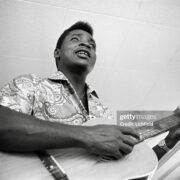
Ernie Smith, born Glenroy Anthony Michael Archangelo Smith on May 1, 1945, was a Jamaican reggae singer known for his deep baritone voice and storytelling style, with his greatest success in the late 1960s and 1970s. Smith died Thursday, April 16, 2026 at age 80 at a hospital in Miami, Florida, following complications linked to cardiac issues, according to his family.

Born in Kingston and raised in St. Ann and May Pen, Smith’s musical journey began early. Influenced by his father, who played guitar, he picked up the instrument as a teenager and later performed with the band The Vandals. Initially pursuing a career in radio, he eventually turned to songwriting and recording, carving out a distinctive space in Jamaica’s evolving music scene.

His breakthrough came in the late 1960s with hits such as Bend Down, followed by a string of Jamaican number one songs including Ride on Sammy, One Dream and Pitta Patta. In 1972, he gained international recognition after winning the Yamaha Music Festival in Japan with Life Is Just For Living, a song that would become one of his signature works.

Prime Minister Andrew Holness led national tributes, describing Smith’s voice and storytelling as “unmistakable” and central to Jamaica’s musical identity. “His contribution to Jamaican music is profound,” Holness said, noting that Smith earned admiration both locally and internationally.

Culture Minister Olivia Grange said his voice “will resound in hearts and memories forever,” while the opposition People’s National Party described him as a creative force whose music captured “the everyday spirit of the Jamaican people.”

Opposition Leader Mark Golding also praised Smith’s ability to deliver “sweet melodies and profound lyrics” that have become part of Jamaica’s cultural fabric.

Beyond his chart success, Smith’s music stood apart for its authenticity. His songs reflected life as it was lived – simple yet complex, humorous yet deeply observant – resonating across generations in Jamaica and throughout the Caribbean diaspora.

In 1973, he was honored by the Jamaican government with the Badge of Honour for Meritorious Service in Music, recognizing his contribution to the country’s cultural landscape.

During the late 1970s, political tensions surrounding his music, including The Power and the Glory, prompted him to relocate to Canada before later moving to the United States. Despite personal and financial challenges, he continued to create and perform, returning to Jamaica in the years following Hurricane Gilbert and reconnecting with audiences through live performances and new recordings.

Over a career spanning decades, Smith released numerous albums, including Life Is Just For Living, To Behold Jah, and Country Mile, cementing his place as one of Jamaica’s most distinctive musical voices.

For many, his songs were more than entertainment – they were reflections of identity, memory and shared experience.

As Jamaica and the wider Caribbean diaspora reflect on his passing, Smith’s legacy endures not only in his music, but in the stories he told – stories that continue to echo across generations. Funeral arrangements and memorial details have not yet been publicly announced.

Celebrate Ernie Smith’s legacy with some of his music here.

RELATED: Caribbean Roots, Hip-Hop Pioneer Afrika Bambaataa Dead At 68

New Caribbean Music Drops: Kartel, Protoje, Machel Lead

News Americas, NEW YORK, NY, Fri. April 17, 2026: The Caribbean music scene is heating up with a wave of new releases from some of the region’s biggest names, delivering everything from high-energy dancehall to soulful reggae and soca anthems.

Leading the charge is Vybz Kartel, who teams up with legendary producer Bobby Konders for a high-energy track already shaping up to be a summer anthem.

The April 17th release blends Konders’ signature bouncing production with Kartel’s unmistakable delivery, creating a vibrant, feel-good dancehall record celebrating women, confidence and island life. The track’s playful and empowering vibe positions it as a strong contender for the “girls’ anthem” of the season, built for parties, beaches and carnival vibes.

PROTOJE

In reggae, Protoje returns with his new album, The Art of Acceptance, further cementing his place as one of the genre’s most influential voices. The project features collaborations with Damian Marley, Shenseea, Masicka and Stephen Marley, among others.

Produced by Winta James, the album blends reggae with hip hop, soul and jazz influences, continuing Protoje’s signature sound that has earned him global recognition and a Grammy nomination.

STREAM NOW: https://ffm.to/protojetheartofacceptance

MACHEL MONTANO

Soca fans are also getting fresh energy from Machel Montano, who drops “No Wayyy,” a vibrant track that captures the infectious rhythm and spirit of Caribbean carnival culture. The song adds to the momentum of his Encore album and reinforces his dominance in the soca space.

MAXI PRIEST

Meanwhile, reggae legend Maxi Priest delivers a smooth, soulful offering with “Touch By An Angel,” a track that leans into his signature lovers rock sound and timeless vocal style.

RAYVON

Adding to the lineup, Rayvon brings fresh dancehall energy with “Hydraulics,” featured on the WYFL riddim produced by DJ Mac, rounding out a diverse set of releases across the Caribbean music landscape.

From dancehall to reggae to soca, the latest drops highlight the region’s continued influence on global music, delivering sounds that move seamlessly from local streets to international stages.

With summer approaching, these tracks are already setting the tone for playlists, parties and festivals worldwide.

Check out here: https://lnkfi.re/rayvon-hydraulics

RELATED: Caribbean Roots, Hip-Hop Pioneer Afrika Bambaataa Dead At 68

Caribbean Roots, Hip-Hop Pioneer Afrika Bambaataa Dead At 68

News Americas, NEW YORK, NY, Fri. April 10, 2026: Afrika Bambaataa, the Bronx-born DJ and cultural innovator widely regarded as a founding figure of hip-hop, has died at age 68, leaving behind a legacy deeply rooted in Caribbean heritage and global cultural influence.

Bambaataa, born Lance Taylor in New York City to Jamaican and Barbadian parents, was shaped by the traditions, rhythms, and community ethos of the Caribbean diaspora in the Bronx. His upbringing in the Bronx River Projects reflected a broader Caribbean-American experience that helped inform the early identity of hip-hop culture, with an activist mother and uncle. As a child, he was exposed to the black liberation movement and witnessed debates between his mother and uncle over conflicting ideologies within it. He was exposed to his mother’s extensive and eclectic record collection.

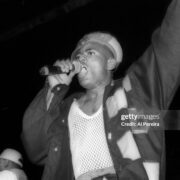
FLASHBACK – Caribbean American DJ & Rapper Afrika Bambaataa (born Lance Taylor) performs onstage at Club de Ville, Austin, Texas, October 26, 2007. (Photo by John Anderson/The Austin Chronicle/Getty Images)

His death was confirmed Thursday by the Universal Zulu Nation, the international movement he founded to promote peace, unity, and cultural awareness through music. No official cause of death has been released.

Emerging in the 1970s, Bambaataa became a central figure in organizing block parties in the South Bronx, where Caribbean sound system culture, DJing traditions, and rhythmic experimentation converged. These gatherings laid the foundation for hip-hop as a global genre.

His landmark 1982 single, Planet Rock, fused electronic beats with rap, helping to define the electro-funk sound and influence generations of artists worldwide. The track is widely credited with expanding hip-hop’s sonic boundaries beyond its New York roots.

Bambaataa’s Caribbean lineage played a key role in his approach to music and community-building. Like many Caribbean-American pioneers of early hip-hop, he drew from a tradition of storytelling, rhythm, and social commentary that transcended borders.

Through the Universal Zulu Nation, he transformed his early involvement with street gangs into a global cultural movement, echoing the communal values often found in Caribbean societies. The organization became instrumental in exporting hip-hop culture internationally.

However, his later years were marked by serious allegations of child sexual abuse. Beginning in 2016, multiple accusers came forward, and in 2025 he lost a civil case involving abuse and trafficking claims. The allegations led to his departure from the organization he founded and complicated his legacy.

For Caribbean-American communities, Bambaataa’s life reflects both the powerful cultural contributions of the diaspora and the complexities of legacy in public life. His role in shaping hip-hop remains undeniable, even as his personal history continues to be scrutinized.

As tributes emerge, Bambaataa is being remembered as a figure whose Caribbean roots helped influence one of the most important cultural movements of the modern era.

WATCH HIM PERFORMING HERE

RELATED: Papa Michigan To Headline Team Jamaica Bickle’s NYC Gala

Papa Michigan To Headline Team Jamaica Bickle’s NYC Gala


News Americas, NEW YORK, NY, Weds. April 8, 2026:
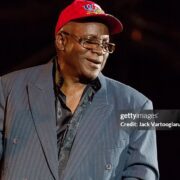
Reggae and dancehall veteran Papa Michigan of Michigan and Smiley fame, is set to take center stage as the featured artist at this year’s Labor of Love Resilience Gala, scheduled for Sunday, April 12th, at the Crest Hollow Country Club, beginning at 12 noon.

In a recent interview, Papa Michigan emphasized that his appearance will go beyond entertainment. “It will be more than a performance, it’s about making an impact and contributing to a cause,” he shared. He added that he is “honored to be part of this year’s Team Jamaica Bickle event, which seeks to raise funds to support our athletes… our ambassadors who continue to amaze fans with their spectacular performances.”

Papa Michigan To Headline Team Jamaica Bickle’s NYC Gala

Patrons attending the gala can expect a dynamic set from the seasoned performer. Papa Michigan noted that guests will be taken on a musical journey spanning his early dancehall hits to his most recent releases, promising an engaging and nostalgic experience. The gala serves as a key fundraiser for Team Jamaica Bickle, which provides critical support to Caribbean athletes competing internationally. Papa Michigan described the athletes as “ambassadors” who continue to represent the region with excellence on the global stage.

The appearance comes as the artist prepares to release his latest single, “Grind Neva Sleep,” on April 10, adding to a career that continues to evolve decades after his emergence in reggae and dancehall.

Papa Michigan has also recently been recognized for his contributions to the genre, including honors linked to his work with legendary group The Mighty Diamonds and accolades in New York’s Caribbean community.

Organizers say the Labor of Love Resilience Gala will combine music, culture and philanthropy, and are encouraging early ticket purchases as interest builds.

The artist was recently honored for his work with The Mighty Diamonds and was among the recipients of the Casony Award in Queens.

With anticipation building, organizers are encouraging supporters to secure their tickets early for what promises to be an inspiring afternoon of music, culture, and community impact. 

Tickets for the Labor of Love Resilience Gala are now available. Patrons are encouraged to secure their seats by visiting www.teamjamaicabickle.org.

About Team Jamaica Bickle

Team Jamaica Bickle, founded by Irwine Clare, Sr., OD, is a non-profit organization dedicated to supporting Jamaican and Caribbean athletes, particularly during international competitions, by providing resources that contribute to their overall well-being and success.

RELATED: Team Jamaica Bickle Honors Jamaican Athletes For Record-Breaking Penn Relays Performances