
Squash’s Prison Sentence Reduced Again, Release Now Set for November
Squash
Incarcerated dancehall artiste Squash has received another reduction in his U.S. prison sentence, bringing his projected release date forward to November 26, 2026.

Squash
Incarcerated dancehall artiste Squash has received another reduction in his U.S. prison sentence, bringing his projected release date forward to November 26, 2026.
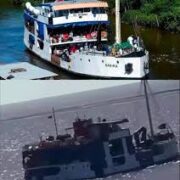
News Americas, GEORGETOWN, Guyana, Tues. July 28, 2026: As many Guyanese continue to bury the dead from the Guyana MV Barima disaster and investigators examine manifest discrepancies, a wharf project three years behind schedule, and a $12.7 million replacement ferry that never sailed the route, a legal question is emerging alongside the grief: can the families of victims sue the government for negligence?
Under Guyanese law, the answer is yes – the mechanism already exists.
Guyana’s State Liability and Proceedings Act, Chapter 6:05, waives the government’s traditional immunity from lawsuits in cases of negligence. Section 3 of the Act establishes the “liability of the State in tort,” while Section 9 grants the public a “right to sue the State” directly. The law is modeled on the United Kingdom’s Crown Proceedings Act of 1947, which made governments legally responsible for the negligent acts of their own agents and employees carrying out official duties.
In practice, this means the Transport and Harbours Department, and by extension the government itself, is not shielded from a negligence claim simply because the Barima was a government-operated vessel.
Guyana does not use the term “class action” in its legal system. Instead, its Civil Procedure Rules, adopted in 2016 and modeled on the rules of England and Wales, allow for what is known as a representative proceeding. Under this rule, claimants who share “the same interest” in a legal matter can have one or more of their number bring, or continue, a claim on behalf of the entire group. Any judgment reached is binding on every person represented, whether or not they were individually named in the suit – functionally similar to a US class action, filed under different rules and a different name.
A negligence claim, whether brought individually or as a representative proceeding, would need to establish that the government owed passengers a duty of care, breached that duty, and that the breach directly caused the deaths and injuries.
Much of the evidentiary groundwork for such a claim is already public record, generated largely by government officials themselves. Public Works Minister Juan Edghill has confirmed that state-owned vessels like the MV Barima do not carry commercial insurance, meaning the government automatically assumes direct responsibility for operational losses and liability. He has also publicly acknowledged that the Port Kaituma wharf meant to receive the Ma Lisha, the newer vessel purchased specifically to replace the MV Barima, failed due to structural problems after the surrounding soil shifted. Guyanese authorities have separately confirmed that at least 35 passengers rescued from the Barima were not listed on its official manifest. The vessel’s captain and first engineer, both currently in custody, tested positive for cannabis after the disaster.
Whether any procedural hurdles apply, such as a required notice period before suing the Attorney General, potential caps on damages, or statutory defenses tied to acts carried out under government authority, will now be up to Guyanese attorneys to assess in detail against the Act’s full text. But Attorney-at-law Darren Wade has argued that ultimate responsibility for the vessel rests with the State.
“The Barima is a national ferry, and the responsibility and accountability for its condition ultimately rest with the Government. Full stop,” stated Wade in a social media post.
NewsAmericasNow will continue following the investigation into the MV Barima disaster.
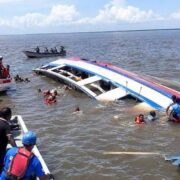
News Americas, NEW YORK, NY, Tues. July 28, 2026: Here we go again Guyana. Subservience and intellectual concession to others. Asking others for solutions for problems we already have the answers to, lying right before our eyes. Let’s not be hypocrites. We are, once again, the unwanted focus of the world’s attention with the MV Barima Disaster, the biggest disaster in the Caribbean since 1970.
And before any of you falsely accuse me of being “unpatriotic” or “biased for any political party,” let me tell you that I hold no brief for any political party, or anyone. I am griping only as a patriotic Guyanese-American who cherishes progress and prosperity for ALL Guyanese and am concerned about this ferry tragedy that cost us more than 100 lives. And I was elected, inter alia, as the Diaspora Leader in NY, USA, and as a voice for the people, and would be remiss if I did not articulate their concerns.
While a Commission of Inquiry (COI)is understood, we must implement IMMEDIATE safety checks and fitness certifications for every aircraft, helicopter, passenger vessel, minibus, and all other vehicles, confirming air, sea, land & other travel worthiness to prevent the alarming expansion of tragedies in our native land.
We demand that the investigation also focus on why, inter alia, the replacement vessel, purchased from India at a cost of US$12.7 million, and which arrived in Guyana in April 2023. It was dedicated only to “party cruises for the higher-ups,” did not replace the eighty-seven-year-old M.V. Barima-which, for generations, has been the lifeline of the North-West District, carrying passengers, produce, fuel and goods between Georgetown and Port Kaituma- and whether discrimination of the indigenous Amerindians played a part in this.
Many are afraid to speak up in Guyana, so we have to be their voice-or this cycle of recurring failures, deaths, injustice and tragedy will continue to plague Guyana. I have also convened a Leadership, Oversight, Reform, Accountability Committee, with jurisdiction in both Guyana and the Diaspora, to ensure this is done NOW.
The crew, passengers, rescue personnel, soldiers, divers, health workers, volunteers, and residents of the river communities who assisted in the rescue and recovery efforts must be consulted, and reforms and systems must be implemented immediately across the board.
The President and Cabinet must convene in an informal, public setting and flesh out all credible information. Not many of these hinterland folks will testify before a COI, for fear of retribution, liability, and possible incrimination. We must also be reminded that the Coroners Act Chapter 4:03 mandates that there be judicial inquiries to answer five core questions on these unnatural deaths: who the deceased are, and how, when, where, and under what circumstances they died.
The Guyanese people cannot wait on any Commission to “recommend legislative, regulatory, institutional and operational reforms to strengthen maritime safety, improve emergency preparedness and reduce the likelihood of similar tragedies in the future.” We owe it to our citizens and others to do so now!
We already know also about the “full circumstances surrounding the disaster, including the causes of the capsizing; reviewing the loading of the vessel, passenger boarding procedures, and onboard conditions; and examining the search, rescue and recovery operations to assess the adequacy, coordination and effectiveness of the response by all agencies involved.” We can take public and judicial notice of information that emerged contemporaneously after the tragedy and let our conscience be our guide.
The other terms of the Commission to “also evaluate compliance with maritime laws and operating procedures, determine whether any negligence, misconduct or dereliction of duty contributed to the tragedy, inspect the vessel’s maintenance history and seaworthiness, assess the influence of weather and other environmental factors, examine the qualifications and conduct of the captain and crew, and scrutinize passenger management, including the vessel’s manifest, possible overcrowding, cargo stowage, and the availability and use of life-saving equipment,” are also moot. Everyone knows what happened.
We don’t need armchair pontificators and post-mortems to divert from taking immediate action, reforms, and genuine resolve to take the place of government’s immediate responsibilities-from top to bottom. Certainly, not another whitewash of our fundamental and constitutional right to travel, work, leisure, exist, and other rights, all of which have been impacted by this tragedy. This tragedy deserves nothing less.
EDITOR’S NOTE: Albert Baldeo is a Guyana-born, Queens-based Community Leader.
The long-running legal battle between ska legend Derrick Morgan and his daughter, reggae singer Queen Ifrica, has gathered momentum after a Supreme Court judge ordered that the matter be fast-tracked, setting a pre-trial hearing for December 11.

News Americas, NEW YORK, NY, Sun. July 26, 2026: The Caribbean’s greatest challenge has never been a shortage of intelligence. It has been a shortage of institutions capable of recognizing brilliance, trusting excellence, and multiplying leadership. This is the Law of Multiplication: institutions ultimately become whatever they choose to multiply. Those that multiply wisdom outlive their founders. Those that multiply character outlast their crises. Those that multiply leaders outlast their generations. Those that multiply power eventually discover that power cannot preserve itself.
This law explains far more than the Caribbean’s struggles. It explains the rise and decline of civilizations, governments, universities, businesses, churches, and families. Institutional decay rarely begins with shrinking budgets, declining membership, or external opposition. It begins when stewardship silently gives way to self-preservation. Familiarity starts outranking competence. Proximity overshadows perspective. Preservation displaces progress. Loyalty becomes more valuable than learning. Questions become unwelcome because they threaten certainty. Excellence is admired from a distance yet resisted when it arrives close enough to reshape established patterns. At that moment, institutions stop preparing for tomorrow and begin negotiating with yesterday.
The tragedy is not that gifted people are scarce. They never have been. Across the Caribbean, each generation produces visionary educators, principled pastors, courageous entrepreneurs, gifted scholars, creative artists, thoughtful public servants, and innovative professionals. Yet too often, the region celebrates excellence after others have already recognized its value. The challenge has never been discovering talent. It has been cultivating cultures mature enough to recognize excellence before it becomes famous, courageous enough to trust it before it becomes popular, and generous enough to release it before it becomes indispensable. Great institutions are distinguished less by the talent they attract than by the futures they create through the talent they faithfully steward.
Nowhere is this principle more consequential than within communities of faith. Scripture never portrays leadership as ownership. It portrays leadership as stewardship. Moses prepared Joshua. Elijah prepared Elisha. Jesus formed disciples who transformed the world. Paul invested deeply in Timothy and Titus. The Kingdom advanced because faithful leaders refused to confuse stewardship with possession. God never entrusted authority as a private privilege. He entrusted it as a sacred responsibility. Whenever elections become more sacred than justice, silence more comfortable than courage, and influence more valuable than integrity, the church slowly begins to resemble the culture it was commissioned to transform instead of the Kingdom it was called to reveal.
The most dangerous illusion in leadership is the belief that significance grows by becoming indispensable. The opposite is true. Leadership reaches its highest expression when institutions become stronger because of a leader rather than weaker without one. Lasting influence is measured not by dependence but by development, not by followers gathered but by leaders formed. The finest legacy is not remembrance. It is replacement. Institutions flourish when those who come next are wiser, stronger, and better prepared than those who came before.
Renewal therefore requires more than structural reform. It demands moral imagination and institutional courage. Healthy organizations cultivate cultures where character outranks charisma, evidence outranks opinion, mentoring outranks gatekeeping, truth outranks comfort, and succession outranks self-preservation. Transparent evaluation becomes routine. Lifelong learning becomes expected. Independent accountability becomes normal. Emerging leaders are identified long before vacancies appear. Such institutions do not merely adapt to change. They become trusted authors of it.
No constitution can repeal this law. No election can suspend it. No tradition can permanently outlive it. Institutions may postpone its consequences for a season, but none has ever escaped them. History patiently waits until multiplication stops. Decline then becomes only a matter of time.
The defining question for the Caribbean is therefore neither political nor economic. It is civilizational. What will we choose to multiply? Power or wisdom? Positions or people? Titles or trust? Preservation or stewardship?
History has never granted permanence to power. It has reserved permanence for wisdom faithfully multiplied. Long after offices are vacated, elections forgotten, and names fade from memory, institutions will bear the imprint of what they chose to cultivate. The Caribbean’s enduring legacy will not be determined by the authority it accumulated, but by the wisdom it multiplied into generations yet to come.
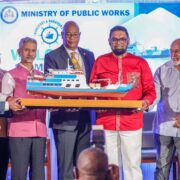
News Americas, GEORGETOWN, Guyana, Mon. July 27, 2026: On April 23, 2023, President Irfaan Ali stood at Georgetown’s GuySuCo Sugar Terminal and personally commissioned a new $2.5 billion (US$12.7 million) ferry, the MV Ma Lisha, telling the country it would replace the aging MV Barima on the Port Kaituma route. The Ma Lisha, he said, could make the 24-hour MV Barima journey in just 15 hours, while saving the Transport and Harbor Department the roughly G$12 million a month it was spending to keep the almost 90-year-old, pre-independence vessel running.
More than three years later, the Ma Lisha has still never sailed to Port Kaituma. The MV Barima was still running that exact route on July 19, when it capsized off the Essequibo coast, killing at least 73 people, with 30 more still unaccounted for.
The reason, according to Guyana Public Works Minister Juan Edghill, is a newly built wharf at Port Kaituma developed structural problems after the surrounding soil shifted, forcing sections to be rebuilt. Construction on that wharf began in January 2023 – the same month the Ma Lisha was flagged to Guyana – at a cost of $1.4 billion, with an original completion target of April 2024. It remains unfinished today.
That hasn’t been for lack of budget. Guyana’s 2024 budget allocated G$2.9 billion for the Ma Lisha’s final loan payment and the wharf’s completion. In March 2026, the government issued a G$440 million tender to rehabilitate three vessels – G$199.3 million earmarked for the Ma Lisha itself, and another G$124.5 million for further work on the MV Barima, the very ship it was meant to retire. River transportation funding climbed from G$9.9 billion in the 2025 budget to G$11.2 billion in 2026. Yet according to at least one analysis, no line item in that spending was ever earmarked to actually retire the MV Barima outright.
A member of the opposition, APNU party, MP David Patterson has called the wharf project “a clear example of mismanagement… so poorly designed it required major corrective works.”
Port Kaituma residents began publicly calling for a newer, faster vessel as early as 2010. By 2015, officials under the previous administration were already acknowledging the fleet serving the North-West District was aging and needed urgent attention. The Ma Lisha’s 2023 commissioning was supposed to be the answer.
Instead, the ship the president called faster, cheaper, and safer has spent three years sailing to Kumaka – a different route altogether -while the vessel it was bought to replace kept making the Port Kaituma run, until it didn’t.
NewsAmericasNow will continue tracking the investigation into the MV Barima disaster and the status of the Port Kaituma wharf project.

News Americas, MIAMI, FL, Sun. July 26, 2026: the region’s first stop. The question the rest of the Caribbean should be asking isn’t whether this was a good deal for Trinidad – it’s what it will take for the next island to be next, and who finances the gap between “signed MOU” and “operational campus” in the Caribbean AI race.
That gap is the real story. Trinidad and Tobago has signed a trio of agreements with U.S. companies that could bring more than US$5 billion in investment to the twin-island republic – the first data center agreements of their kind between major U.S. technology and services firms and any Caribbean nation. But the deals also expose, in stark numbers, exactly what a small island grid and water system look like when asked to absorb hyperscale AI infrastructure: a 2.4-gigawatt national generation capacity being asked to accommodate up to 450 additional megawatts of demand, in a country where parts of the population already receive water on a rationed schedule.
The Memoranda of Understanding, signed July 11 under Prime Minister Kamla Persad-Bissessar’s administration, set the framework for two large-scale data center projects and the revival of a dormant steel plant. Foreign and CARICOM Affairs Minister Sean Sobers signed on the government’s behalf, with officials crediting U.S. government facilitation for bringing the parties together.
Professional services giant Ernst & Young signed on to develop a 300-megawatt data center using its Energy to Intelligence platform, partnering with third parties on construction. A second agreement with Hummingbird AI Holdings, a Florida-based firm led by Massy Holdings non-executive director Marc-Kwesi Farrell, outlines a 150-megawatt AI infrastructure and data center campus, with room to scale up to 500 megawatts. First operations are targeted for early 2028, pending due diligence.
A third MOU with Pinnacle Steel and Vanadium Corporation covers recommissioning the iron and steel plant at Point Lisas — a facility that, if fully developed, officials say could eventually supply up to half of U.S. demand for vanadium, a metal used in aerospace and defense manufacturing.
Combined, the government projects the three initiatives could generate more than 5,000 jobs, spanning construction, engineering, cybersecurity and facility operations.
Caribbean economies are used to two kinds of foreign capital: tourism development and commodity extraction. AI infrastructure is a third category entirely – capital-intensive, long-horizon, and dependent on power and connectivity rather than beaches or barrels. That’s precisely why it pulls in adjacent investment rather than sitting in isolation: cloud providers, network operators, specialized contractors, and – critically – whoever finances the grid and water upgrades a hyperscale campus requires before it can switch on.
The agreements are non-binding frameworks, not final investment decisions – each project still faces technical, commercial, and regulatory due diligence before ground is broken. And the questions being raised locally are the right ones. Data centers, particularly AI-focused facilities, are heavy consumers of both electricity and water for cooling. Trinidad and Tobago’s total generation capacity sits at roughly 2.4 gigawatts, and large parts of the country already operate on scheduled water supply, with some homes relying on tanks because taps run as rarely as once a week. A recent United Nations University report estimates data centers could account for close to 3% of global electricity use by 2030 – a figure that sharpens exactly what a 300-to-500-megawatt buildout would demand of a grid and water system already under strain.
That gap – between the capital arriving for the data centers and the capital still needed for the power and water infrastructure underneath them – is where the next wave of Caribbean deal flow sits. It’s a financing conversation as much as a construction one.
Whether or not these specific projects reach financial close, they signal something every Caribbean government, investment promotion agency, and developer should be watching closely: global AI infrastructure capital has started actively scouting the region, and Trinidad moved first. The islands and territories positioning themselves now – with grid capacity, water resilience plans, and investment-ready proposals in hand – are the ones likely to catch the next wave of this capital, rather than watching it pass them by.
Invest Caribbean and AI Capital Exchange (AICE) work with pre-qualified borrowers – governments, developers and investors – pursuing exactly this kind of energy, water and infrastructure financing across the region. If the Caribbean’s AI infrastructure moment is one your project or government wants in on, start with a Capital Readiness Check.

News Americas, GEORGETOWN, Guyana, Sun. July 26, 2026: With 73 bodies now confirmed and 30 more people still unaccounted for, Guyana’s MV Barima ferry disaster has become the deadliest maritime tragedy in the Caribbean since the August 1, 1970 sinking of the MV Christena off St. Kitts and Nevis – a disaster that claimed 233 lives and remains the worst in the region’s recorded history.
With 73 dead and 30 missing, Guyana’s MV Barima disaster is the Caribbean’s deadliest since the 1970 Christena tragedy
Guyana Prime Minister Mark Phillips has said that of the roughly 179 people believed to have been aboard when the MV Barima capsized off the Essequibo coast on July 19th, 76 have been rescued, and 73 bodies recovered, with 30 people still missing. Search and recovery operations, now in their second week, will continue “for as long as is necessary,” Phillips said, adding that the overturned vessel has not yet been righted and additional remains are expected once it is.
If even a fraction of the missing are confirmed dead, Guyana’s toll will surpass 100 – a number no other Caribbean maritime disaster has approached in more than half a century.
The Caribbean’s worst maritime disaster was the Christena of Nevis
As comparisons between the two disasters have circulated online, a persistent claim has taken hold: that both ferries were built in Guyana. That’s only half true. The MV Christena was indeed built in Georgetown, then the capital of British Guiana, constructed by Sprostons Limited and completed in 1959 for the government of St. Christopher, Nevis and Anguilla. The MV Barima, however, was built roughly 4,300 miles away, in Port Glasgow, Scotland, by Ferguson Brothers, and completed in 1939 as one of three sister vessels — Pomeroon, Lady Northcote and Barima – ordered for British Guiana’s own Transport and Harbors Department.
So while Christena was Guyanese-built and later exported into service in St. Kitts and Nevis, the MV Barima was foreign-built but has spent its entire 87-year life in Guyanese waters. Both vessels, in other words, are woven into Guyana’s maritime history – just not in the way the online rumor suggests.
Beyond the builders, the vessels could hardly be more different. Christena was a compact 66 feet with a 16-foot beam and just 11 years old when it sank. the MV Barima, at 125 feet 9 inches and nearly twice Christena’s width, was 87 years old – one of the oldest passenger vessels still in active government service anywhere in the hemisphere.
Both, however, were acquired under colonial administration decades before independence – the MV Barima in 1939, 27 years before Guyana’s 1966 independence; the Christena in 1959, 24 years before St. Kitts and Nevis became independent in 1983. And both disasters share a chilling institutional thread: neither ship’s manifest reflected who was actually on board.
Guyanese authorities have confirmed that at least 35 of the Barima’s 67 initially rescued passengers weren’t listed on its official manifest of 116 passengers and 17 crew. Christena’s 1970 Commission of Inquiry similarly found no reliable system for counting passengers before departure, despite the vessel carrying more than double its rated capacity of roughly 150 when it went down.
Guyana’s government has ordered a multi-agency investigation into the Barima’s loading, manifest discrepancies, and crew conduct after the captain and first engineer, both in custody, tested positive for cannabis after their rescue. And the country’s President says an independent international Commission of Inquiry will be appointed to conduct a full investigation into the MV Barima tragedy even as his Prime Minister has said the MV Barima was not insured,
Twenty-two funerals have already taken place over the past three days, with more planned as families continue the heartbreaking task of burying their dead.
Fifty-six years after Christena forced the region to confront how little accountability existed for who boards a government ferry, Guyana is being asked the same question again.

Jahreme Shelton
Jamaican national Jahreme “J-Man” Shelton, an alleged associate of dancehall artiste Squash, is scheduled to stand trial before a Broward County jury on November 9, 2026, in connection with a fatal double shooting that claimed the lives of two men nearly four years ago.

News Americas, NEW YORK, NY, Sat. July 25, 2026: Every university president inherits more than campuses, budgets, traditions, rankings, strategic plans, and expectations. Every president inherits trust. That trust is the bridge connecting an institution’s founding purpose with the future it has not yet seen. The presidency is not primarily an office of administration. It is a covenant of stewardship. Buildings can be renovated. Budgets can be replenished. Reputations can be restored. Lost purpose is far more difficult to recover. The defining moments of a presidency rarely begin with the first decision a leader makes. They begin with the questions a leader has the wisdom and humility to ask. Leadership is measured less by the problems it solves than by the future it prepares.
Every enduring presidency begins with a question of institutional necessity: If this university did not exist today, would society create it tomorrow? If so, for what indispensable purpose? Heritage deserves gratitude, but history alone never justifies continued existence. Every generation must earn the right to remain indispensable. Institutions survive because they continue to solve problems that matter, illuminate truths that endure, and cultivate leaders the world cannot afford to lose. A university that merely preserves its past gradually surrenders its future.
The second question defines institutional distinctiveness: What graduate should leave this university unlike any graduate another institution consistently produces? Universities do not change the world because they award degrees. They change the world because they form women and men whose character, intellect, faith, courage, and commitment to service become living expressions of their highest ideals. Diplomas recognize achievement. Lives demonstrate influence. Every graduate extends the reach of the institution into homes, communities, laboratories, classrooms, businesses, hospitals, courts, churches, and governments. In time, a university becomes the accumulated character of the people it has formed.
The third question demands uncommon discernment: Which traditions express our mission so faithfully they must endure? Which practices have outlived their usefulness and should give way to better ones? Great universities understand a distinction weaker institutions often overlook. Mission is permanent. Methods are temporary. Convictions anchor identity. Practices exist to advance those convictions, never to replace them. Wise presidents preserve what is sacred, strengthen what is effective, and release what no longer advances the institution’s calling. Stability without renewal breeds stagnation. Innovation without purpose produces drift. Institutions that endure protect both identity and relevance with equal resolve.
The fourth question extends leadership beyond the horizon of a single administration: How will every major decision strengthen human flourishing, advance truth, and create value for generations yet unborn? The fifth demands moral courage: What decision should we have the courage to make today before history asks why we waited? Every presidency eventually arrives at the moment when comfort confronts conviction. Exceptional leaders meet that moment with disciplined reflection. Does this deepen our mission? Does it prepare students for a future we cannot yet see? Does it strengthen excellence, character, and service together? Will it matter a generation from now? Leadership begins where convenience ends, because stewardship always chooses tomorrow over applause today.
The enduring measure of a university president is never the number of buildings constructed, budgets balanced, rankings achieved, campaigns completed, or speeches applauded. Those accomplishments deserve recognition, but they are not history’s final measure. History remembers institutions that became more faithful to their mission, more courageous in their leadership, more rigorous in their scholarship, more compassionate in their service, and more transformative in the lives they shaped because someone accepted the privilege of stewardship. Buildings weather. Rankings fluctuate. Endowments rise and fall. A life formed in truth, wisdom, faith, and service continues to shape families, professions, communities, nations, and generations long after every administration has passed. The truest legacy of a presidency is not the campus it leaves behind, but the people it sends into the world.
History rarely asks if a president was admired. It asks a more demanding question: Did those who followed inherit an institution stronger in purpose, richer in character, and better prepared to serve the future than the one entrusted to its care? Every presidency writes its own verdict through thousands of decisions, large and small, seen and unseen. Time preserves the evidence. Generations live with the consequences. History simply reads the verdict aloud.
EDITOR’S NOTE: Dr. Isaac Newton is a leadership strategist, governance scholar, ordained minister, author, and President of Paramount Communication & Marketing, LLC. Educated at the University of Southern Caribbean, Oakwood University, Princeton, Columbia, and Harvard, he advises leaders across government, higher education, nonprofit organizations, and the private sector on ethical leadership, governance, institutional renewal, and organizational excellence. He is the author of several books and coauthor of Steps to Good Governance, When Nations Kneel, Daring to Hope, and the forthcoming The Belief Code.