New Album From Buju Banton Is Out Now, Marking His Return To VP Records After 23 Years

By NAN ET Editor, NewsAmericas Now

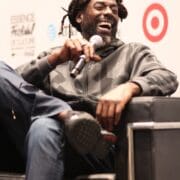
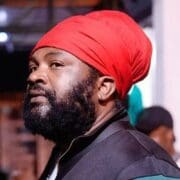
News Americas, NEW YORK, NY, Weds. July 22, 2206: Jamaican-born, Grammy Award-winning reggae icon Buju Banton has released his 13th studio album, “Too Too Bad,” out now via Gargamel Music Inc. and VP Records – his first release on the label in 23 years.

The 13-track digital edition spans the breadth of Buju’s career, opening with “We Nuh Play” before moving into “FAFO,” a track the artist has described as reaffirming his standing as one of reggae’s standard-bearers. DJ Khaled joins him on “Wild Woman,” Ari Lennox features on “Satisfy Me,” and the album closes with “Power,” featuring Gramps Morgan. A 15-track CD edition adds two exclusive bonus tracks, including a feature from Jaz Elise, not available on the digital release.

Buju has backed the album’s release with a full television push, performing on NBC’s “The Tonight Show Starring Jimmy Fallon” and NBC’s “TODAY with Jenna & Sheinelle” this week. The album’s lead single, “Butterflies,” produced by Supa Dups, has surpassed one million cumulative streams and drew praise from Billboard, which described it as “heart-eyed.”

A summer built around the album

Reggae Star Buju Banton

The album’s release follows the July 18 opening of the Roots and Rhymes U.S. Summer Tour at UBS Arena in Belmont Park, New York, where Buju Banton and Stephen Marley launched their first-ever co-headlining tour together, joined by Skillibeng, DJ Norie, Gramps Morgan and Splackavelli. The tour continues through July 25, closing at Lakewood Amphitheatre in Atlanta. Two dollars from every ticket sold benefit charity, split evenly between the Ghetto Youths Foundation, founded by Stephen, Damian and Julian Marley, and the Buju Banton Foundation.

Buju is also set to perform at Angie Martinez’s “Angie’s BBQ,” hosted by Power 105.1 at Paradise Coney Island, alongside French Montana, Remy Ma, Coi Leray and Zeddy Will.

A milestone comeback

Buju’s catalog includes classics such as “Mr. Mention,” “Voice of Jamaica,” the Gold-certified “Til Shiloh,” and “Before The Dawn,” which won the Grammy for Best Reggae Album in 2010. He has collaborated with artists ranging from Beres Hammond to Nipsey Hussle and DJ Khaled, and continues to run the Buju Banton Foundation, which shelters more than 120 Jamaican boys in foster care.

His return to VP Records, the label behind decades of reggae and dancehall releases from artists including Sean Paul, Shaggy and Beenie Man, marks what the artist and label are calling a full-circle moment in a career now entering what Buju’s camp describes as its “boldest, brightest” chapter yet.

“Too Too Bad” is available now on all streaming platforms, with the CD edition offering fans additional exclusive material.

RELATED: Fantan Mojah’s Passing Marks The Loss Of More Than A Reggae Artist; It Is the Loss Of A Soul of Rastafari

Guyana Ferry Disaster: 53 Dead, 50 Still Missing

By Staff Writer, NewsAmericas Now

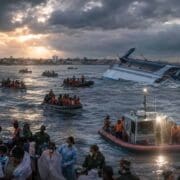
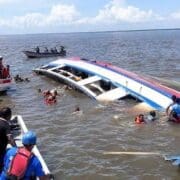
News Americas, GEORGETOWN, Guyana, Weds. July 22, 2026: The confirmed death toll from Saturday’s Guyana Ferry Disaster has risen to 53, with roughly 50 people still unaccounted for, as search and rescue teams continue combing the waters off Guyana’s coast and near the place where the MV Barima sank.

Guyana Prime Minister Brigadier (Ret’d) Mark Phillips said investigations have established that 179 people, and not 133, were aboard the MV Barima when it capsized roughly seven miles offshore near the mouth of the Pomeroon River Saturday night – a figure he said is unlikely to change significantly. As of 6 p.m. Tuesday, authorities had verified 76 people rescued and 53 bodies recovered, with 26 positively identified so far, leaving approximately 50 people still unaccounted for.

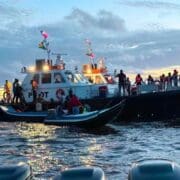
Sixteen vessels remain deployed within the wreckage area, and the search zone has been expanded by an additional 400 square miles, extending up to Waini Point. French and local divers, including a 15-member team from the French Armed Forces in French Guiana, continue underwater search and recovery operations at the wreckage site. Bodies recovered are being transferred to Guyana Police Force custody at a facility established at the Charity River Dam, with identification carried out by family members at Suddie Hospital.

Members of the Guyana Coast Guard are working tirelessly with local fishermen and private boat owners in the search.

Captain, crew member test positive for cannabis

Separately, the captain of the MV Barima and another crew member have tested positive for cannabis and been arrested, authorities disclosed this week. Phillips said blood samples were drawn from both men following the capsizing, and that the results were released to the public as soon as they were confirmed. He said the disclosure reflected the government’s commitment to transparency, noting that when investigators separately determined more people had been aboard the vessel than listed on its manifest, that information was also released promptly.

“This remains a search and rescue operation”

Phillips pushed back against treating the disaster as settled, telling the public that recovering bodies does not mean the government has given up hope of finding survivors. “Notwithstanding the fact that we are recovering bodies, we still have hope that people are out there who are alive, and therefore we continue our search and rescue activities,” he said, urging the public to approach the tragedy with sensitivity and avoid circulating unverified reports, photos or videos.

A separate investigation will be conducted to determine the cause of the capsizing, which the government has said will be full and transparent.

Three days of national mourning

President Irfaan Ali has declared three days of national mourning, from Wednesday, July 22, through Friday, July 24, with the national flag flown at half-mast on government buildings across the country. Wednesday has been designated a National Day of Prayer, with a Day of Prayer and Remembrance held at the Kingston Seawall in Georgetown. A Night of Reflection and Prayer follows in Port Kaituma on Thursday and in Mabaruma on Friday. The government has encouraged religious organizations, civic groups and citizens nationwide to hold candlelight vigils during the mourning period.

NewsAmericasNow will continue following the search and rescue operation and the investigation into the MV Barima disaster.

RELATED: Guyana: The MV Barima Tragedy Puts The Spotlight On A Decades-Old Issue – An Aging Ferry Fleet

Sean Paul Net Worth 2026: The Dancehall Star’s Fortune, and Why the Estimates Don’t Agree

The number attached to Sean Paul depends entirely on who you ask, and the gap is wide enough to raise an eyebrow.

Guyana: The MV Barima Tragedy Puts The Spotlight On A Decades-Old Issue – An Aging Ferry Fleet

By NAN Staff Writer, NewsAmericas Now

News Americas, GEORGETOWN, Guyana, Tues. July 21, 2026: As search teams continue looking for dozens still missing after the MV Barima capsized off Guyana’s coast on July 20th, the disaster is renewing attention on a challenge Guyana’s ferry system has faced for more than 15 years: an aging fleet that has been repeatedly patched rather than replaced.

The Guyana government confirmed Monday that the confirmed death toll has risen to 27 as 83 persons remain unaccounted for. The identification process, involving relatives, is being carried out at Suddie Hospital.

The Maritime Rescue Coordination Center deployed 13 assets from first light Monday and declared that 69 people, including passengers and crew members, have been rescued. The government says it remains fully committed to the search and continues deploying all available resources to account for everyone who was aboard. The government also said the ferry’s location was identified not by its own military or divers, but at 13:31 hrs today by a fisherman – Haresh Singh, who had earlier assisted in rescue efforts yesterday.

International assistance has since joined the operation. President Irfaan Ali announced Monday that a 15-member team from the French Armed Forces in French Guiana, including 12 specialist divers, two medics and a mechanic, had arrived in Guyana to help with the search, rescue and recovery effort. The team is led by Lieutenant Commander Alexis Touboul. The ferry capsized roughly seven miles offshore near the mouth of the Pomeroon River. As of the latest count, 67 people have been rescued and 10 confirmed dead, with the Guyana Defense Force, Coast Guard, private vessels and local fisherfolk continuing to scour the area, including the privately owned vessel Gilligan Island.

Port Kaituma residents began publicly calling for a newer, faster vessel as early as 2010, citing disruptions that caused losses for passengers and local businesses. By 2015, government officials were openly acknowledging that the MV Barima and other ferries serving the North-West District were aging and needed urgent attention. Then-Cabinet Secretary Joseph Harmon, under the David Granger government, said at the time that the old vessels should not remain in service much longer, citing unreliable transportation and its effect on residents, businesses and the movement of goods from Region One. The administration announced plans that year to lease a ferry and acquire two new vessels for the route.

Those plans didn’t result in the MV Barima’s retirement. Instead, in 2017, the government spent 150.6 million Guyanese dollars rehabilitating the vessel – work on its hull, propellers and rudders, two new engines, and improvements to passenger accommodation. The 87-year-old ship, built in Scotland in 1939, remained in active service for nearly another decade until it capsized on July 19 while traveling from Georgetown to Port Kaituma with some 133 people aboard, along with cargo.

Minister pushes back on “unseaworthy” claims

Guyana’s Minister of Public Works, Bishop Juan Edghill, dismissed claims circulating publicly that the MV Barima was unseaworthy, telling reporters at a Sunday evening, July 20th press briefing that the vessel was operating within its routine maintenance schedule and was due for planned dry-docking later this year. Edghill said the ferry was last dry-docked in 2024 and was scheduled for its next dry-docking in the latter half of 2026, alongside the MV Malali and MB Hercules. He said public reports suggesting the vessel had been declared unfit for service were inaccurate.

A fleet of similar age

The MV Barima was far from the only aging vessel in Guyana’s Transport and Harbours Department fleet.

The MV Malali, built in 1962, and the MV Makouria, built in 1959, remain technically active but are prone to frequent mechanical breakdowns and parts shortages. The Malali primarily serves the Parika-to-Bartica route, while the Makouria now operates mainly as an infrequent backup.

The MV Kanawaima, which has handled the Guyana-Suriname crossing since 1998, is reportedly plagued by technical issues serious enough that the terminal has had to rent or swap in alternative tugs and barges to keep the route running.

The government has made some investments in modernizing parts of the fleet in recent years, commissioning the MV Ma Lisha in 2023 and the MV Konawaruk 1899 in December 2025, along with newer vessels serving the busier Essequibo routes. But those additions have not reached every route, and the money committed to the Barima itself went toward continued rehabilitation rather than replacement.

In March 2026, the Ministry of Public Works invited bids for a $440 million rehabilitation initiative covering three vessels – the MV Ma Lisha, the MV Barima and the MB Hercules – with $124.5 million specifically earmarked for further work on the Barima, according to a Department of Public Information notice at the time. Guyana’s 2025 budget had allocated 9.9 billion Guyanese dollars for river transportation overall, rising to 11.2 billion dollars for 2026, but no purpose-built vessel intended to retire the Barima outright was funded in that plan.

In February 2025, President Irfaan Ali said the government was considering acquiring another ferry for the North-West District given rising travel demand, and later that year the administration acquired the Kalliopi N, a vessel that can carry 284 passengers and 51 vehicles, for the Georgetown-to-Region One route. It is unclear from public records whether that vessel had entered service, or was intended to replace the Barima specifically, at the time of Saturday’s disaster.

A pattern beyond one ship

Even as search and rescue operations continue, the broader fleet shows signs of ongoing strain. The Ministry of Public Works temporarily withdrew the MV Sabanto, one of two primary vessels on the heavily used Parika-to-Supenaam route, for urgent repairs this month. That leaves the MV Kanawan and the newly commissioned MV Konawaruk 1899 to carry the load on one of the country’s busiest crossings.

For the outlying Indigenous and rural communities in Regions One, Two and beyond that depend on these aging vessels for both transportation and the movement of cargo and produce, Saturday’s disaster raises a question that predates this weekend by well over a decade: how long a country can keep patching an aging fleet before the patches run out.

NewsAmericasNow will continue following the investigation into the MV Barima disaster and the state of Guyana’s ferry fleet.


RELATED: Over Four Dozen Missing After Guyana Ferry Disaster

Billboard-charting producer Kemar ‘Flava’ McGregor ‘replaces himself’ at #1 on US reggae iTunes chart, makes reggae history

Billboard-charting producer Kemar “Flava” McGregor has added another remarkable chapter to his growing list of achievements after his latest compilation, Riddim 91, knocked his own ‘Kiss of Judas’ reggae crossover album from the top of the U.S.

Over Four Dozen Missing After Guyana Ferry Disaster

By Staff Writer, NewsAmericas Now

News Americas, GEORGETOWN, Guyana, Sun. July 19, 2026: Search and rescue teams in Guyana were racing against time Sunday to find 49 people still unaccounted for after the Guyana ferry disaster. The MV Barima, an almost 90-year-old vessel, capsized off the country’s North Atlantic coast, in what officials are calling one of Guyana’s most serious maritime disasters in recent years.

The vessel, built in 1939 and serving Guyana for decades, transporting both passengers and cargo, was one of the country’s oldest operating vessels. It was reportedly carrying 133 passengers and 17 crew when it overturned in the early hours of Sunday while traveling from Georgetown to Port Kaituma in Region One. The vessel’s manifest listed 116 passengers and 17 crew members but it was reportedly carrying 133 people.

Prime Minister Mark Phillips said Sunday afternoon 67 people had been rescued – 41 men, 11 women and 15 children, six boys and nine girls. Those rescued were taken to medical facilities in Charity and Lima, with the Ministry of Health leading the medical response. The government said only two are confirmed as dead so far. Among those identified as still missing are Sherida Hussein, 48; Babuni Harrier, 75, a pensioner; and Alwin Joseph as well as Rachel Welch, and her three children – Nathaniel Jr., Natalia, and Ezekiel. Indrawattie Natram and Eve Jerome, who was traveling to Mabaruma in Region One aboard the MV Barima survived but her two children, Alliya Gonsalves, 12, and Jerome Jacobs, 3, remain missing. Elena Moonsammy lost seven children.

The search operation

Since first light Sunday, the search area has expanded from 400 to 1,070 square kilometers, with air and sea assets increasing throughout the day. Three command centers were established by 7 a.m. Sunday, in Mabaruma, Port Kaituma and at the Umana Yana in Georgetown. The Guyana Defence Force Coast Guard is leading the operation, supported by other emergency responders, private vessels and local fisherfolk with knowledge of the waters. The vessel’s captain and mate, who were among those rescued, have returned to the search area to assist.

President Irfaan Ali and Vice President Bharrat Jagdeo, according to government statements, have remained engaged in the response, and multiple Cabinet ministers have been meeting directly with families of passengers at the Umana Yana, Port Kaituma Community Centre and the NAREI Extension Centre in Kumaka, providing updates and psychosocial support. “This is why we govern, for people,” said Kwame McCoy, minister within the Office of the Prime Minister, urging the public to rely only on official government channels for verified information.

Minister rejects overload claims

As speculation spread on social media that the ferry had been overloaded, Guyana’s Public Works Minister Juan Edghill said there is no evidence the vessel was carrying more passengers or cargo than permitted, and that investigators have not yet determined the cause of the capsizing.

According to Prime Minister Phillips’ statement, the MV Barima is licensed to carry more than 300 passengers; it had 133 aboard. Its cargo capacity is 284 tonnes; the manifest recorded 268 tonnes at the time of the incident. The vessel was last dry-docked in 2024 and remains within its required docking cycle. Officials said it is operating with new engines, making three to four trips to Port Kaituma monthly. The government says the vessel was equipped with 250 life jackets, six inflatable life rafts and two rigid life rafts.

Prime Minister Phillips has also revealed that some of the people rescued after the MV Barima capsized were not officially listed as passengers, and two of the crew members tested positive for narcotics.

Opposition raises safety concerns

The opposition party, We Invest In Nationhood, pushed back on the government’s account, saying in a Facebook statement that the 87-year-old MV Barima “should never have been sent out to sea” and should have been decommissioned in favor of a modern vessel, alleging the ship had unresolved “structural, hull, propulsion and steering damage and issues.” The party framed the ferry’s continued use as reflecting how the government treats Indigenous communities along the route, calling the disaster “an abomination.”

Questions over helicopter readiness

Separately, the opposition said two of the Guyana Defence Force’s primary helicopters, a Bell 429 and a Bell 412, have been out of service for more than a month due to reported cockpit display unit failures during engine start, potentially leaving the older Bell 407 as the Air Corps’ only airworthy helicopter during the search. Estimates suggest that repairing both aircraft’s display systems could cost approximately 100 million Guyanese dollars in total. It is not publicly known whether an investigation into the failures has been completed. The timing has raised questions about whether additional air search capacity could have supported the ongoing operation roughly eight miles offshore.

Authorities have appealed for patience as the search continues and the investigation proceeds. NewsAmericasNow will continue following developments as more information becomes available.

Why The Teacher Standing Before A Child May Be The Most Important Leadership Decision A School Makes

By Dr. Isaac Newton

News Americas, NEW YORK, NY, Sun. July 19, 2026: The child arrived early on the first morning of school. The uniform was carefully prepared. The backpack was filled with fresh books. The excitement was visible, even though the child could not yet explain the dreams, fears, and questions carried into that classroom. What the child did not know was that a leadership decision had already been made about the person who would influence those dreams. Before the first word was written on the board, before the first assignment was completed, before the first conversation between teacher and student occurred, leaders had already determined who would occupy one of the most influential positions in that child’s life. The child did not choose the teacher. The family trusted the school. The community trusted its leaders. And the future waited to see whether that decision would be worthy of the responsibility entrusted to it.

This is the heart of The Placement Principle. The placement of a teacher is not simply an administrative decision. It is a leadership decision that determines how human ability is positioned to shape human possibility. Great schools understand something that ordinary systems often overlook: classrooms do not create themselves. They are created through intentional choices about people, purpose, and priorities. A teacher assignment is less focused on filling a vacancy. It rests on what a school believes matters most. It reveals whether leadership values convenience or contribution, tradition or evidence, availability or impact. The strongest principals and deputy principals approach placement with a deeper responsibility. They ask where a teacher’s greatest strengths can serve students most effectively. They examine instructional expertise, classroom leadership, emotional intelligence, professional commitment, adaptability, and the ability to build relationships that encourage students to believe in themselves.

Because every classroom has a different need. Some students need confidence before they need complexity. Some need structure before they can discover independence. Some need challenge because their abilities have not yet been fully recognized. Others need a teacher who sees possibility before they see it themselves. The exceptional leader understands that effective placement occurs when three realities meet: The teacher’s strengths. The students’ needs. The institution’s mission. When these three align, education reaches its highest purpose. In religious private schools and other values-driven educational communities, this responsibility carries an even deeper meaning. Teachers do not simply transfer knowledge. They influence character, model values, demonstrate integrity, and shape the attitudes students carry into families, workplaces, and society.

The best leaders also know that good intentions are not enough. Placement decisions require evidence and wisdom working together. Student progress, classroom observations, professional growth, collaboration, reliability, family relationships, and demonstrated contribution provide the insight required for responsible decisions. Data does not replace leadership judgment. It strengthens it. A leader who ignores evidence risks protecting comfort. A leader who uses evidence wisely creates opportunity. The most transformative schools also recognize that every placement decision has a future beyond the current academic year. A teacher placed in a classroom today may become tomorrow’s mentor, department leader, administrator, or educational innovator. Every assignment either strengthens institutional capacity or leaves potential undeveloped.

For Caribbean societies, this responsibility holds national significance. Small nations cannot depend on accidental excellence. The teacher placed before a child today influences the professionals, leaders, entrepreneurs, parents, and citizens who will shape tomorrow. Teacher placement is therefore not only a school decision. It is a societal investment. Before finalizing assignments, every principal and deputy principal should confront one standard: “If this classroom represented my own child’s future, would I make this placement with confidence, conviction, and peace?” That question removes bias. It challenges assumptions. It restores the purpose of leadership. Because schools reveal their deepest values through the teachers they place before children.

Buildings matter. Resources matter. Technology matters. Curriculum matters. But every morning, the most powerful influence in education enters the classroom as a person. A teacher. The future of education is shaped long before examinations are written. It is shaped in the quiet decisions leaders make about who will inspire, challenge, guide, and believe in the next generation. The right teacher in the right classroom at the right moment is more than a placement decision. It is a commitment to human possibility. That is The Placement Principle.

EDITOR’S NOTE: Dr. Isaac Newton is a leadership strategist, governance scholar, and author specializing in institutional excellence, ethical leadership, and human development. Educated at the University of the Southern Caribbean, Oakwood University, Princeton, Columbia, and Harvard, he writes on leadership, governance, and the development of people and institutions. He is the author of Fix It Preacher, Face Life Squarely, and Intimate Intimacy; coauthor of Steps to Good Governance and Daring to Hope; and coauthor of the forthcoming works When Nations Kneel and The Belief Code.

RELATED: The Partnership Dividend: How Small States Can Turn Strategic Cooperation Into Economic Power

Buju Banton’s Too Too Bad Debuts Strong as Dancehall Icon Returns to His Hardcore Roots

Buju Banton. Photo: Jamie Crawford-Walker

Reggae heavyweight Buju Banton has made an emphatic return to his dancehall roots with the release of his 13th studio album, Too Too Bad, which debuted at No.

Power Struggle Erupts Over Fantan Mojah’s Legacy After Singer’s Death

Fantan Mojah

Just days after the death of reggae singer Fantan Mojah, a bitter dispute has erupted over who has the authority to manage the late artiste’s affairs, with rival camps exchanging accusations over representation, social media accounts and the protection of his legacy.

The Will Of God Or The Work Of The Devil? – Pursuing Power In The Church

By Dr. Isaac Newton

Power never creates the heart. It reveals it. Elections do not manufacture character. They uncover it. Every campaign, every committee, and every difficult decision exposes what was already present. The church does not face its greatest danger when people seek responsibility. It faces its greatest danger when responsibility becomes more important than the reason it exists.

The deepest crisis is not conflict. Healthy people can disagree. The deepest crisis begins when sacred language is used to excuse conduct that sacred Scripture condemns. Prayer cannot cleanse manipulation. Worship cannot redeem gossip. A vote cannot justify betrayal. No holy purpose is advanced by unholy means because the method eventually becomes the message.

Leadership worthy of the church follows another pattern. It listens before deciding. It tells the truth even when the truth is costly. It protects the dignity of opponents as carefully as the loyalty of friends. It understands that every conversation teaches people what the church truly believes. Culture is not written in policy. It is written in daily conduct.

History repeats one lesson with remarkable consistency. Institutions seldom fail from a lack of gifted leaders. They fail when gifted leaders love position more than purpose. Titles change hands. Character shapes generations. Every leader leaves two legacies. One is recorded in the minutes. The other is written in people. The second always lasts longer.

Some will welcome these words. Others will dismiss them. That changes nothing. Truth does not wait for permission. Every genuine renewal has required leaders with enough humility to examine themselves before attempting to correct everyone else. Reform always begins with the person in the mirror.

The church will never rise above the character it rewards. Every election casts two votes. One selects leaders. The other defines culture. The first lasts for a term. The second shapes a generation. Wherever ambition claims the highest seat, everyone pays the price. Wherever Christ remains the highest authority, power finds its proper place, people flourish, and the gospel speaks with unmistakable credibility.

EDITOR’S NOTE: Dr. Isaac Newton is a leadership strategist, development specialist, theologian, and author of Steps to Good Governance and Fix It, Preacher. He is coauthor of Daring to Hope and When Nations Kneel, and forthcoming author of The Belief Code. Educated at Oakwood University, the University of Southern Caribbean, Harvard, Princeton, and Columbia, he advises leaders across government, business, education, and the church, helping build cultures where people flourish and leadership creates lasting impact.

RELATED: Church Hurt