Where Is The US Support For The Guyana Ferry Disaster?

NewsAmericas Editorial

News Americas, NEW YORK, NY, Fri. July 24, 2026: Just days after US officials stood in Washington promising to help lead Guyana’s energy and infrastructure future, the country was hit by one of its worst maritime disasters in decades. So where has that promised American partnership been in the recovery?

As the MV Barima death toll climbed past 72 this week, the US response has amounted to a single social media post from Deputy Secretary of State Christopher Landau and a statement from the US Embassy in Guyana, both offering condolences. Neither US President Donald Trump nor Secretary of State Marco Rubio has personally commented on the disaster. No US personnel, vessels or equipment have been reported as part of the search and recovery operation.

Who actually showed up

Compare that to the countries that sent people and equipment into the water. France deployed a 15-member military team from French Guiana, including 12 specialist divers, two medics and a mechanic, to join the search. Trinidad and Tobago’s Prime Minister Kamla Persad-Bissessar announced her government had mobilized air and naval assets along with Trinidad and Tobago Defence Force personnel, including a Coast Guard vessel. Brazil’s navy joined the recovery effort as well, assisting with diving missions at the wreck site. Even the CARICOM Private Sector Organisation pledged to stand ready to assist.

China’s response has mirrored Washington’s: the Chinese Embassy in Guyana said it was “closely following” the search and extended sympathy, but has not been reported as providing personnel or equipment either. The European Union, Canada and the United Kingdom similarly offered only condolences.

The contrast that’s hard to ignore

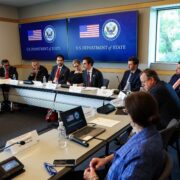
Just last week, Deputy Secretary Landau himself addressed a US-Guyana Investment Enabling Forum in Washington, where officials described positioning American companies to “lead in energy, infrastructure, and other sectors central to” Guyana’s growth as a strategic priority. That rhetoric of partnership and American commitment to Guyana’s future has not translated into operational support during the country’s actual moment of need.

Guyana holds one of the fastest-growing oil economies in the world, and Washington has spent months courting a deeper commercial relationship with Georgetown, paired with public reassurances about respecting the country’s sovereignty. Whether that relationship extends to showing up when Guyana is drowning, literally, is a question this week has left unanswered.

For those families facing the grueling task of burying their dead, including Rachel Wells’ surviving husband, now left to bury his wife and their three children, Nathaniel Jr., 8, Natalia, 5, and Ezekiel, 3, the US silence is mind-numbing. Even ExxonMobil, so often accused of profiting quietly off Guyana’s oil wealth while giving little back, moved faster than Washington, redirecting all ticket proceeds from next month’s Guyana Amazon Warriors Super League final to victims’ families. Washington sent a condolence post.

RELATED: Funerals Begin For Guyana Ferry Disaster Victims As Recovery Total Rises To 72 And Vigil Set For NYC

South Florida Man To Spend 20 Years In Jail For Laundering COVID Relief Money That Helped Kill Haiti President

By NAN Staff Writer, NewsAmericas Now

News Americas, CORAL SPRINGS, FL, Fri. July 24, 2026: A Coral Springs man was sentenced to 20 years in federal prison Thursday for laundering fraudulently obtained pandemic relief funds that helped finance the 2021 assassination of Haiti President Jovenel Moise. U.S. District Judge Jacqueline Becerra handed down the sentence in Miami federal court after Keegan Harricharan, 42, pleaded guilty to conspiracy to commit money laundering, the U.S. Attorney’s Office for the Southern District of Florida announced.

How the money moved

Prosecutors said Harricharan and a co-conspirator, Jacob Israel, fraudulently obtained roughly $840,827 in Paycheck Protection Program and Economic Injury Disaster Loan funds issued under the CARES Act, beginning in June 2020, with Israel and associates pocketing about $126,124 in kickbacks. Harricharan ran a Coral Springs company called TNR Holding Group Inc., which prosecutors say he used to move the fraud proceeds toward the assassination plot.

During the spring of 2021, Harricharan met repeatedly with members of the conspiracy in South Florida, where the group discussed funding, weapons, ammunition and personnel for the operation, according to court records. Between May 18 and May 28, 2021, about $175,000 in fraud proceeds landed in the TNR Holding bank account; Harricharan quickly wired the money to co-defendant Walter Veintemilla for distribution to other plotters. Weeks later, in early June, he wired another $80,000, including EIDL funds, through the same pipeline.

U.S. Attorney Jason A. Reding Quiñones for the Southern District of Florida said the case shows how financial crime can fuel far more dangerous plots, saying Harricharan helped funnel stolen taxpayer money into a conspiracy that ultimately ended in bloodshed and political violence.

The assassination

On July 7, 2021, a team of Colombian mercenaries entered Moise’s private residence in Port-au-Prince and exchanged gunfire with security guards. The attackers shot and killed Moise, 53, and wounded First Lady Martine Moise, while the couple’s children hid inside the home during the attack. The killing plunged Haiti into what has become years of continued political and security turmoil.

Part of a broader prosecution

Harricharan’s sentencing is the latest in a yearslong prosecution spanning Miami federal court. Four other defendants in the case were convicted at trial in May. A fifth defendant is scheduled for trial later this year, and a sixth, who pleaded guilty, awaits sentencing in December. Previous sentences in the broader case have included life imprisonment for former Haitian Sen. John Joel Joseph, Haitian-Chilean national Rodolphe Jaar, and Colombian ex-army officer Germán Alejandro Rivera García, all convicted or pleaded guilty to roles in the plot to kidnap or kill Moise.

NewsAmericasNow will continue following developments in the ongoing prosecution of those responsible for the assassination of Haiti’s former president.

A $647 Million US Caribbean Operation Has Killed 205 People And Congress Says It’s Not Even Legal

By Staff Writer, NewsAmericas Now

News Americas, WASHINGTON, D.C., Thurs. July 23, 2026: A US Caribbean operation and military campaign that has killed at least 205 people in the Caribbean Sea and eastern Pacific has cost American taxpayers more than $647 million – and, according to Congress’s own nonpartisan research arm, almost none of the policy driving it has ever been authorized by law.

That finding comes from a Congressional Research Service report, “U.S. Foreign Policy in the Western Hemisphere: Issues for Congress,” published on May 26th for members of Congress and their staff. The report documents how the Trump administration has reshaped US policy toward Latin America and the Caribbean almost entirely through executive orders, presidential proclamations, and bilateral agreements – without a single law passed by Congress to authorize, codify, or constrain any of it. Efforts to invoke the War Powers Resolution to check the campaign have failed by razor-thin margins.

The toll and the cost

Since September 2025, the campaign – known as Operation Southern Spear – has carried out dozens of lethal strikes on small boats accused of drug trafficking in the Caribbean Sea and eastern Pacific. As of early May, at least 205 people had been killed, including seven missing and presumed dead, while only three people have been captured alive and two extradited to the United States. The Trump administration has provided little public evidence connecting each vessel or victim to drug trafficking, and the overwhelmingly lethal ratio – 205 killed against three captured – has drawn criticism from legal experts who argue the campaign functions less like law enforcement and more like undeclared warfare.

The U.S. military started attacking boats off the coast of Venezuela on Sept. 2; the Trump administration has said it’s part of an effort to thwart drug smuggling. The U.S. has since struck at least 59 boats in the Caribbean Sea and eastern Pacific Ocean. In October 2025, President Donald Trump declared that the U.S. is in an “armed conflict” with drug cartels and designated some as terrorist organizations.

Rights groups like Amnesty International called it “extra-judicial killings.” “With nearly 200 killings, these extrajudicial killings are becoming normalized,” said Amnesty International USA’s National Director for Government Relations, Amanda Klasing. “Not only are these killings illegal, they are immoral. People of good conscience cannot allow this to continue, yet Congress has so far failed to halt, or even slow down, this lethal and unlawful campaign.”

A Department of War Inspector General report found the operation cost more than $647 million in its first two quarters alone, with additional strikes conducted since that accounting period likely pushing the total higher. Family members of people killed in at least one strike have filed wrongful death lawsuits in US federal court, arguing their relatives were fishermen and laborers with no connection to trafficking. The United Kingdom reportedly stopped sharing maritime intelligence with the US late last year over concerns that its intelligence was being used to facilitate killings without due process.

Executive action, not law

The CRS report is notable for what it doesn’t find: congressional authorization. It describes a hemisphere-wide policy shift – the strikes, tariffs imposed on regional allies, the military capture of Venezuela’s president, and the rollback of longstanding democracy-promotion programs – carried out almost entirely by executive action. That distinction matters because it means the policy remains, in the report’s own framing, legally vulnerable and potentially reversible, without the durable legitimacy a congressional vote would provide.

The doctrine underlying the campaign, dubbed the “Trump Corollary” to the 1823 Monroe Doctrine in the administration’s November 2025 National Security Strategy, asserts the US will actively enforce primacy across the Western Hemisphere to prevent migration, secure cooperation against cartels, and block rival powers – chiefly China – from gaining influence.

A region reacting unevenly

The Caribbean Community has responded to the surrounding pressure unevenly. Some CARICOM governments have joined the broader Americas Counter Cartel Coalition, also called the “Shield of the Americas,” a 17-nation security alliance the administration launched in March. It focuses on deploying military capabilities against narco-terrorist networks.

“Cooperate in the following areas: whole-of-government efforts regarding border security; countering narcoterrorism and trafficking; securing critical infrastructure; and other areas as mutually determined” and “Join a coalition to combat narco-terrorism and other shared threats to the Western Hemisphere” states the memorandum signed in Doral, Florida.

Others have voiced concern about sovereignty, and CARICOM foreign ministers have pushed to accelerate the CARICOM Single Market and Economy in part to reduce the region’s dependence on Washington.

For a region built substantially on tourism and small, trade-dependent economies, a US military campaign of this scale and cost operating without firm legal footing – one that has already killed people from Caribbean and neighboring nations – carries consequences that reach well beyond the current news cycle.

NewsAmericasNow will continue tracking Operation Southern Spear, the “Trump Corollary,” and Congress’s response as the policy develops.

Caribbean Wages 2026: Guyana And Suriname’s Oil Boom vs. Some Of The Region’s Lowest Pay

By NAN BUSINESS EDITOR | NewsAmericasNow.com

News Americas, NEW YORK, NY, Fri. July 24, 2026: Where do Caribbean wages stand in 2026, amid rising costs of living? News Americas decided to investigate – especially as Guyana and Suriname are, by nearly every measure, becoming the Caribbean’s next oil powerhouses.

Guyana is already pumping roughly 650,000 barrels of oil a day from ExxonMobil’s offshore Stabroek Block – a resource base exceeding 11 billion barrels of oil equivalent that has made it the fastest-growing economy on earth. Suriname is not far behind: TotalEnergies and partners committed $10.5 billion to the GranMorgu project in October 2024, targeting first oil by 2028 from reserves estimated at more than 750 million barrels.

Both governments are moving fast to show the wealth on the ground – new roads, bridges and infrastructure projects are underway or planned across both countries, funded in large part by oil revenue and the borrowing power it unlocks.

And yet, according to wage data compiled by wage.is and analyzed by NewsAmericasnow, Guyana and Suriname have the two lowest statutory minimum wages anywhere in the Caribbean: Suriname at $1.40 an hour, and Guyana at $1.66 an hour – lower than many other territory in the region, including nations with no oil at all.

To be clear, this is about the wage floor, not the whole economy. Oil-sector engineers, executives and skilled professionals in both countries earn far more than minimum wage, and their earnings aren’t reflected in this comparison. What the numbers do show is that the region’s lowest-paid workers – the people cleaning, driving, serving and laboring at the base of these economies – are earning less than their counterparts anywhere else in the Caribbean, even as their countries sit on some of the most valuable oil reserves in the hemisphere.

At the very bottom of the regional table sit Cuba and Haiti – but for entirely different reasons than Guyana and Suriname. Cuba’s minimum wage, tied to a peso in free fall against the US dollar, converts to just $0.03–0.05 an hour even after a 53 percent nominal increase took effect July 1. Haiti’s $0.34–0.74 an hour reflects a different crisis altogether: a state contending with entrenched gang violence and currency instability rather than an oil boom. Neither nation’s low wages can be attributed to energy wealth – they simply mark the floor against which the rest of the region, including Guyana and Suriname, can be measured.

The Region’s Full Wage Picture

Across 24 Caribbean territories, minimum wages range from just above zero to nearly $14 an hour:

Trinidad and Tobago – the Caribbean’s longest-established oil and gas producer, with decades of hydrocarbon revenue behind it – sits at $3.00 an hour, still among the lower tier of the region despite generations of energy wealth. It is a pattern worth noting: none of CARICOM’s three oil and gas producers rank in the top half of the region’s wage table.

Building Fast, Paying Slow

Guyana’s government has moved aggressively to convert oil revenue into visible infrastructure – new highways, bridges and energy projects have become a hallmark of President Irfaan Ali’s administration, even as this outlet has previously reported on questions surrounding a private agricultural estate built with resources whose origin the president says predates his time in office. Suriname’s Staatsolie has likewise signaled, through its stake in GranMorgu, that oil development will bring “significant positive economic spin-off through the deployment of local labor and the procurement of goods and services.”

Neither country’s minimum wage has kept pace with that infrastructure push. Guyana’s statutory minimum wage of $1.66 an hour translates to roughly $285 a month – a figure that has drawn scrutiny as the country’s GDP has grown at rates unmatched almost anywhere in the world. Suriname’s $1.40 an hour, at roughly $280 a month, is the lowest in the entire Caribbean, even as the country prepares to become a major offshore oil producer within two years.

A Regional Pattern Worth Watching

None of this proves oil wealth causes low wages – Suriname, in particular, has not yet begun producing offshore oil, so its current minimum wage predates any revenue from GranMorgu entirely. What the data does show is a consistent gap: the three CARICOM nations most associated with oil and gas – Guyana, Suriname and Trinidad and Tobago – all sit below the regional median for minimum wage, while smaller, non-oil territories like Barbados, the Cayman Islands and the French collectivities of Saint Martin and Saint Barths pay their lowest earners substantially more.

As both Guyana and Suriname race to build the physical infrastructure of their oil futures – the roads, the bridges, the ports – the question their lowest-paid workers are left asking is a simple one: when does the wage floor catch up to the boom?

Diversifying beyond oil? AICE works with borrowers building the non-extractive economy – from agro-processing to manufacturing. Start your Capital Readiness Check.

Trump’s New Tariffs Hit These Four Caribbean Countries

By NAN Business Editor, NewsAmericas Now

News Americas, WASHINGTON, D.C., Fri. July 24, 2026: US President Trump is imposing new tariffs on dozens of U.S. trading partners, including four Caribbean nations, after determining they have failed to adequately enforce bans on imports made with forced labor.

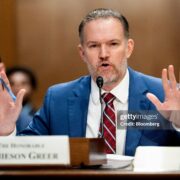
The Bahamas, the Dominican Republic and Guyana will face a 12.5% tariff, while Trinidad and Tobago will face a 10% tariff, under action U.S. Trade Representative Jamieson Greer announced Thursday. The new tariffs apply to 60 economies in total, accounting for 99% of U.S. imports, and take effect as temporary 10% worldwide tariffs Trump had imposed under a separate authority expire at 12:01 a.m. Friday.

“The United States has had a forced labor import ban for nearly a century, and rigorously enforces it; it’s well past time for our trading partners to do the same,” Greer said in a statement. “Today’s action will begin to correct what is both a human rights abuse and distortive trade practice to improve the welfare of workers everywhere.”

Ironically, all four countries have signed on to Trump’s Shield of the Americas, and Trinidad and Tobago in particular has been front and center in its support of the US amid angst with other CARICOM nations. Guyana last week saw the US State Department host an investment forum to push American businesses to invest there.

Why these tariffs, and why now

The administration is invoking Section 301 of the Trade Act of 1974, a more durable legal authority than the emergency powers Trump previously used to justify sweeping global tariffs. The Supreme Court struck down those earlier tariffs earlier this year, ruling that the International Emergency Economic Powers Act did not authorize them and forcing the administration to refund duties already collected. Trump had then relied on temporary Section 122 tariffs, which are capped at 150 days by law and expire Friday. Section 301, by contrast, allows the president to impose tariffs against countries found to engage in “unjustifiable,” “unreasonable” or “discriminatory” trade practices, and has previously survived legal challenges when used against China.

The forced labor investigation began in March, when USTR opened probes into 60 economies’ enforcement of import bans on goods made with forced labor. Following two rounds of public hearings and more than 2,100 public comments, USTR determined 54 of those economies, including all four Caribbean nations named, have failed to impose and effectively enforce such a ban. A separate group of six economies, including Canada, Mexico and the European Union, were found to have failed to effectively enforce a ban they do have in place.

Oil, gas, fertilizer and goods qualifying for duty-free status under the US-Mexico-Canada Agreement are exempt from the new tariffs.

What it means for the Caribbean

The tariffs add a new layer of economic pressure on four Caribbean economies already navigating a complex relationship with Washington on trade, security and investment. Guyana in particular has been the subject of an intensifying US commercial courtship in recent months, with American officials publicly pushing to position US companies to lead the country’s energy and infrastructure sectors even as this new tariff adds friction to its broader trade relationship with Washington.

Human rights advocates offered mixed reactions to the broader tariff action. Martina Vandenberg, founder and president of the Human Trafficking Legal Center, said import bans can be “a potentially effective tool in combating forced labor across the globe,” but urged a phased approach so countries have time to build enforcement mechanisms, warning that without it, “the import bans will be thin slips of paper with no enforcement.” Isabelle Glimcher, a senior research scientist for global labor at the NYU Stern Center for Human Rights, noted the tariffs are structured around what countries import rather than what they produce domestically, though she said the threat of tariffs has already pushed some countries to strengthen their own forced labor import policies.

Tariffs are ultimately paid by the US companies importing the goods, costs that are often passed on to American consumers, and the administration is rolling out the new levies just months ahead of the November midterm elections.

NewsAmericasNow will continue tracking how the new tariffs affect trade between the US and the Caribbean.

The MV Barima Predates Guyana’s Independence By 27 Years

By Staff Writer, NewsAmericas Now

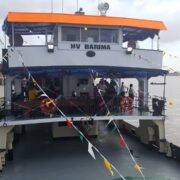
News Americas, NEW YORK, NY, Fri. July 24, 2026: The MV Barima, the ferry that capsized off Guyana’s coast on July 19, killing at least 65 people with dozens more still unaccounted for, was not built for Guyana. It was built for a colony that no longer exists – 27 years before that colony became an independent nation.

Built for a colony that no longer exists

The MV Barima was born on the River Clyde in Port Glasgow, Scotland, at the yard of Ferguson Brothers – a shipbuilder that still operates today as Ferguson Marine. According to the company’s own heritage records, work began on a passenger-cargo vessel named the Pomeroon, which underwent sea trials in January 1936.

The yard then built two sister vessels, the Lady Northcote and the Barima, which were completed in 1939. All three were ordered through the Crown Agents for the Colonies on behalf of the Transport and Harbors Department of British Guiana Railways, built specifically to stitch together a colonial territory by water – decades before Guyana would become an independent nation on May 26, 1966.

The Barima was a twin-screw vessel of modest ambition by design – built to cruise at roughly 8.5 knots, carrying the cargo and passenger loads of a colony whose coastal trade bore little resemblance to a modern independent nation’s. When it capsized on July 18, nearly six decades after Guyana’s independence, the vessel was carrying 179 people and cargo, a load far exceeding what its rigid, nearly 90-year-old hull, engineered under colonial administration, was ever built to safely stabilize.

An echo of the 1970 Christena disaster

The Barima’s capsizing bears an unsettling resemblance to another Caribbean maritime tragedy from a similar era: the MV Christena, the government ferry that disappeared beneath the waters of The Narrows between St. Kitts and Nevis on August 1, 1970, killing 233 people and leaving only 91 survivors — one of the deadliest maritime disasters in Caribbean history. The Christena was smaller than the Barima, at about 66 feet long with a 16-foot beam versus the Barima’s roughly 126 feet, but both were aging government ferries serving as the primary lifeline for isolated island and coastal communities, and both capsized carrying more people than their design and era were ever built to accommodate.

A pattern that predates both disasters

The Christena’s sinking led to a Commission of Inquiry that found the vessel had been dangerously overloaded and improperly loaded with cargo positioned to destabilize it – findings that reshaped maritime safety oversight across the Eastern Caribbean in the years that followed. Guyana has similarly launched an independent Commission of Inquiry into the Barima’s capsizing, with Prime Minister Mark Phillips confirming a full investigation into potential criminal negligence and institutional failures within the country’s maritime administration.

Whether an independent nation, nearly 60 years removed from the colonial administration that ordered the Barima into existence, still relied on that same vessel as recently as this month is itself a question the Commission of Inquiry may have to reckon with – one that goes beyond mechanical failure, to what infrastructure a country inherits at independence, and how long it can go without replacing it.

NewsAmericasNow will continue following the Commission of Inquiry into the MV Barima disaster as it develops.

RELATED: Guyana: The MV Barima Tragedy Puts The Spotlight On A Decades-Old Issue – An Aging Ferry Fleet

Funerals Begin For Guyana Ferry Disaster Victims As Recovery Total Rises To 72 And Vigil Set For NYC
By NAN Staff Writer, NewsAmericas Now

News Americas, GEORGETOWN, Guyana, Fri, July 25, 2026: Families across Guyana have begun burying their dead as the confirmed recovery total from the Guyana ferry disaster, the MV Barima, rose to 72 Thursday night, with 65 victims positively identified, Prime Minister Brigadier (Ret’d) Mark Phillips said in his latest update.

With 179 people confirmed to have been aboard the ferry when it capsized on July 18, and 76 to 77 rescued in the days that followed, roughly 30 people remain unaccounted for as search and recovery operations continue.

Burials begin across the country

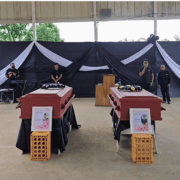
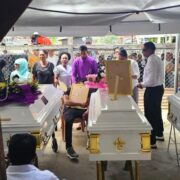
Funerals were held Thursday for several of the identified victims, including Kevin Wilson, laid to rest in East Bank Berbice, and 11-year-old Ronaldo Poon, buried following a service in Wakenaam. Seven-year-old Adans Williams of Bartica was set to be laid to rest today, July 24th. Other victims identified so far include Paul Seepersaud, the MV Barima’s chief engineer; Viviana Sadruddin; Rubina Hernandez; Akeela Rodrigues; Rachel Wells and her three children, Nathaniel Jr., 8, Natalia, 5, and Ezekiel, 3; Bibi Akela Mohamed, 49 and Ravindra Singh, 46.

Survivors describe a traumatic ordeal

Opposition WIN Member of Parliament Deon La Cruz, who traveled to Port Kaituma to meet with survivors and victims’ families, said accounts from survivors were consistent: that the ferry was overloaded, that rescue boats took too long to arrive, and that survivors watched helplessly as others who could not hold on any longer went under. La Cruz said survivors have not yet received a single call from human services or any government representative checking on their well-being, and that many cannot sleep, replaying the sounds of screams and calls for help each time they close their eyes. La Cruz called on the Guyana Minister of Amerindian Affairs, the Minister of Social Services and Minister Collin Croal to urgently dispatch qualified counselors to the affected communities.

Meanwhile, Guyana opposition leader Azruddin Mohamed, who has participated directly in the search along the Pomeroon River from Sunday, said his search teams recovered more than 25 bodies in a single stretch of the operation and renewed his call for Guyana’s Minister of Public Works Juan Edghill to resign. Mohamed reported that at least three additional bodies were recovered today.

US Diaspora response

The tragedy has drawn attention from US officials representing New York’s large Guyanese-American community. Senate Majority Leader Chuck Schumer said in a statement that he is “thinking of the Guyanese American community in New York this week,” adding that his office would do everything it can to help members of the diaspora affected by the disaster during Guyana’s period of national mourning.

In Brooklyn, a candlelight vigil for victims of the MV Barima tragedy is planned for today, Friday, July 24, at 6:30 p.m., at the corner of Church and Utica Avenues in Brooklyn, NY and is open to all Guyanese and friends of Guyana.

How the disaster unfolded

The MV Barima’s manifest listed 133 people – 116 passengers and 17 crew – but investigators later confirmed at least 179 people were actually aboard, with dozens having boarded unofficially and never recorded. The ferry issued a distress call around 10:30 to 11 p.m. on July 18th while traveling through the North Atlantic off the Pomeroon River, roughly seven miles offshore near Iron Punt, an area mariners have long described as one of the most hazardous stretches of the Georgetown-to-Port Kaituma route due to unpredictable currents and sudden wave shifts as the ferry clears the shelter of the Demerara River and Essequibo River mouth. Survivors described a sudden, powerful wave or tide shift striking the vessel in the darkness.

Local fishermen were the first responders in the wee hours of the morning Sunday, followed by the Guyana Defence Force Coast Guard, private vessels and later support boats from ExxonMobil. Passengers and crew remained in the water for hours overnight before rescue reached them.

RELATED: The MV Barima Predates Guyana’s Independence By 27 Years

Queens, NY Soldier Killed In Iranian Attack In Jordan Was Born In Trinidad

By Staff Writer, NewsAmericas Now

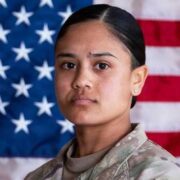
News Americas, NEW YORK, NY, Thurs. July 23, 2026: U.S. Army Sgt. Angel Sarah Rampersad, who was killed in action on July 17 during an Iranian ballistic missile and drone attack on Muwaffaq Salti Air Base in Jordan, was an immigrant from Trinidad and Tobago.

Rampersad, 28, of Ozone Park, Queens, was reportedly killed during an Iranian ballistic missile and drone attack on the Muwaffaq Salti Air Base in Jordan, according to the Department of War. She was born in Trinidad and Tobago and moved to New York at age 5 with her mother, an American citizen, and an older sister. Her Trinidad-born father remained in Trinidad.

She grew up in Ozone Park, NY, and taught herself to play drums, sang in her church choir, and ran track and played softball at Forest Hills High School. An uncle who served in the military inspired her toward the Army, though her mother, Carol Acevedo, initially asked her to attend college first. Rampersad enrolled at CUNY’s John Jay College of Criminal Justice before enlisting at 21, around 2019, and re-enlisted last year. Her awards included the Army Commendation Medal, the Army Achievement Medal with two Oak Leaf Clusters, the Army Good Conduct Medal, the National Defense Service Medal and the Army Service Ribbon.

Remembered in Ozone Park

Members of a US Army carry team transports a flag-draped transfer case containing the remains of US Army Sergeant Angel S. Rampersad during a dignified transfer solemn event at Dover Air Force Base in Dover, Delaware, US, on Wednesday, July 22, 2026. The US and Iran signaled they aren’t ready to return to the negotiating table after both countries escalated attacks deep into a second week of renewed fighting. Photographer: Daniel Heuer/Bloomberg via Getty Images

An American flag now flies at half-staff outside her family’s home in Queens, NY. Rampersad was one of four American service members killed in the attack, alongside Army 1st Lt. Tyler James Feehan, 25, of Hawaii, and Army Pvt. Isabella Gonzales, 19, of Texas. A fourth soldier, Sgt. Michael Emmanuel Swinton of North Carolina, died separately while attempting to disarm a downed Iranian drone in Iraq. Their deaths bring the total number of American service members killed since the war with Iran escalated to 18.

Sgt. Rampersad was assigned to 1st Battalion, 57th Air Defense Artillery Regiment, 52nd Air Defense Artillery Brigade, 10th Army Air & Missile Defense Command, Ansbach, Germany.

The government of Trinidad and Tobago said Rampersad’s heritage gave her death “a particular resonance” for the nation, extending sympathies to her family, fellow service members and all those whose lives she touched.

In a statement released by her family, Rampersad was remembered as “a gentle giant” who “stood up for those who couldn’t fight for themselves – a defender, a friend,” and who “loved her family fiercely and will live on in the hearts of everyone she touched.”

“Today, we mourn the loss of Sgt. Angel Rampersad,” said Brig. Gen. Glenn Henke, commanding general of the 10th Army Air and Missile Defense Command, in a statement.

Rampersad’s family traveled to Dover Air Force Base in Delaware on Wednesday for the dignified transfer of her remains alongside those of the three other fallen service members, a ceremony attended by President Trump and Secretary of War Pete Hegseth.

New York Gov. Kathy Hochul and other officials also offered condolences, with Hochul saying, “New York, and our nation, are safer because of brave Americans like her who answer the call to serve” while New York City’s Mayor Zohran Kwame Mamdani stated: “Sgt. Rampersad’s courage and sacrifice will be remembered not just in Queens, but across all five boroughs. My deepest condolences are with her family, loved ones, and all those grieving this profound loss.”

Sergeant Rampersad was assigned to the 52nd Air Defense Artillery Brigade, 10th Army Air & Missile Defense Command, in Ansbach, Germany. Her father is a national of Trinidad and Tobago, while her mother is an American citizen.

“Her passing is therefore mourned with particular sorrow in Trinidad and Tobago. Though she served under the United States flag, Sergeant Rampersad also shared a meaningful connection with our nation through her Trinidad and Tobago heritage.,” said Trinidad & Tobago Prime Minister Kamala Persad-Bissessar. On Tuesday July 21st, a team from the Consulate General of the Republic of Trinidad and Tobago in New York visited Sergeant Rampersad’s family to express the nation’s sympathies and offer support.

The Ozone Park Residents Block Association planned a candlelight vigil outside Rampersad’s family home this week, with neighbors describing her as someone whose sense of duty and warmth touched the wider community well beyond her own family.

NewsAmericasNow extends its condolences to Sgt. Rampersad’s family and the entire Trinidadian and Trinidadian-American community during this difficult time.

RELATED: Guyana – US Pushes To Lead Guyana’s Energy Future As Country’s Aging Ferry Fleet Turns Deadly

Buju Banton Says Dancehall Cannot Be Trapped: ‘This Is Rebel Music’

Buju Banton has a clear message for anyone trying to reshape dancehall into something it was never meant to be: the music is free, and it must stay that way.

Guyana – US Pushes To Lead Guyana’s Energy Future As Country’s Aging Ferry Fleet Turns Deadly

By NAN Business Editor, NewsAmericas Now

News Americas, WASHINGTON, D.C., Thurs, July 23, 2026: The United States is positioning American companies to dominate Guyana’s energy and infrastructure sectors as the South American nation’s oil-fueled economy continues its rapid expansion, according to a State Department readout of a US-Guyana investment forum held last Thursday in Washington – a push that lands even as ordinary Guyanese confront the human cost of decades of underinvestment closer to home.

Just two days after the forum wrapped, the 87-year-old ferry MV Barima capsized off Guyana’s coast. The confirmed death toll has since risen to 65, with 76 rescued out of the 179 people the government says were aboard, leaving roughly 38 people still unaccounted for as search and recovery operations continue. Of the bodies recovered, 44 have been positively identified by relatives, and 23 have been released to their families for funeral rites and burial. The government has deployed 19 vessels and three aircraft to the search, and technical teams are now assessing how to right the capsized vessel, plan to use marine salvage airbags to restore its buoyancy before towing it closer to shore so recovery operations can continue under safer conditions.

A ferry carrying 179 passengers capsized off the coast of Guyana with authorities saying 76 people had been rescued so far, with 63 confirmed dead, in Guyana, on July 19, 2026. (Photo by Guyana Prime Minister’s Office / Handout /Anadolu via Getty Images)

The disaster has renewed scrutiny of a domestic transportation system that has been patched rather than modernized for years, even as billions in oil revenue have flowed through the country and Washington courts American businesses to lead its energy and infrastructure future. The juxtaposition has been hard for many Guyanese to ignore this week: a government being asked to open its most valuable sector further to foreign capital, while the vessels its own citizens depend on to reach hinterland and Indigenous communities remain decades old.

Deputy Secretary of State Christopher Landau addressed the US-Guyana Investment Enabling Forum, co-hosted with the Business Council for International Understanding at the Donald J. Trump Institute of Peace, bringing together senior US and Guyanese officials alongside private-sector leaders. According to the State Department’s media note, the forum focused on strengthening investor confidence and expanding US commercial engagement in Guyana’s business environment, energy sector and infrastructure.

The State Department described commercial diplomacy as “a core element of American foreign policy,” stating that “the United States is committed to ensuring that where American companies invest, the U.S. Government stands behind them,” including cutting red tape and expanding access to financing. The department said Washington is “positioning American businesses to lead in energy, infrastructure, and other sectors central to” Guyana’s growth.

Part of a months-long push

Thursday’s forum builds on a series of high-level engagements between Washington and Georgetown dating back at least to early June, when Guyana’s Foreign Minister Hugh Todd and Foreign Secretary Robert Persaud met in Washington with Landau, Secretary of Energy Chris Wright, and Acting Assistant Secretary of War for Homeland Defense and Hemispheric Affairs Joseph Humire. Those talks covered energy security, border security cooperation, irregular migration, and combating illicit trafficking, alongside the commercial agenda.

In each of these engagements, US officials have paired the investment push with public reaffirmations of Guyana’s “sovereignty and territorial integrity” – language that has taken on added significance given Guyana’s long-running border dispute with Venezuela over the oil-rich Essequibo region.

Why it matters

The push for a larger American commercial footprint in Guyana’s energy sector comes as questions have already emerged over how the country’s oil wealth is being tracked. NewsAmericasNow previously reported on a $6.7 billion discrepancy between the Bank of Guyana’s reported oil revenue and the amount ExxonMobil says it has recovered from its cost bank – a gap that, applied to Guyana’s current 14.5% revenue share, could represent close to $1 billion the country may never have received.

With Guyana holding one of the fastest-growing oil economies in the world and a population of fewer than one million people, the scale of foreign investment now being actively courted – and which companies end up leading the sectors that will define the country’s economic future – carries outsized weight for ordinary Guyanese. The MV Barima disaster is a stark reminder of what that weight looks like on the ground: a nation courting billions in foreign energy investment while a domestic ferry system serving its most remote communities has gone without a purpose-built replacement for decades. Prime Minister Phillips said this week that the government will finance funeral and burial expenses and provide immediate assistance to affected families, while any decision on compensation will wait for the findings of an independent Commission of Inquiry. “The focus now is not on compensation,” Phillips said. “The focus is on recovering bodies, financing the burial and funeral rites, and providing whatever assistance the families need now.”

NewsAmericasNow will continue tracking US-Guyana engagement as the investment relationship develops.

RELATED: Guyana: The MV Barima Tragedy Puts The Spotlight On A Decades-Old Issue – An Aging Ferry Fleet