Jaii Frais Hit With Multiple Charges After Big Wall Shooting

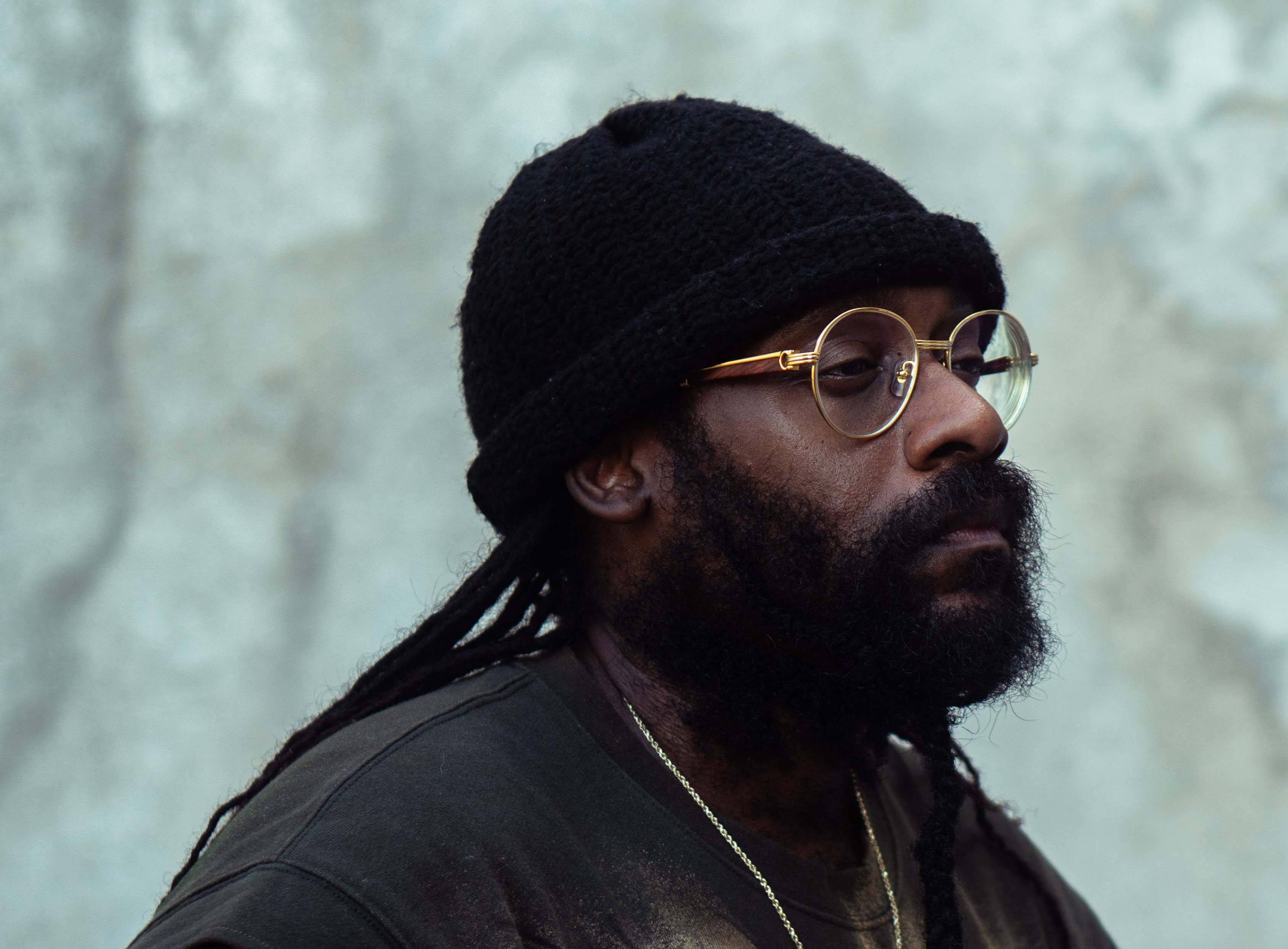
Jhaedee ‘Jaii Frais’ Richards has been hit with a battery of charges in the wake of the shooting incident at the Big Wall carnival party on Sunday that left three people nursing gunshot wounds.

COMMENTARY: When Loyalty Becomes A Leadership Risk In Small States

By Dr. Isaac Newton

News Americas, NEW YORK, NY, Thurs. April 16, 2026: The minister finishes speaking. The outcome is already clear. People notice, but their reactions fade into silence. Empty praise follows, smooth and practiced, covering what remains unspoken. No one objects. No one corrects. Certainty is performed rather than examined. In small states, leadership is revealed not in open failure, but in the quiet habits that hide it.

In closely connected societies, distance does not exist. Professional, family, and social ties overlap. Every word carries consequence. Speaking honestly can affect future opportunities, so truth competes with caution. What is said depends as much on timing and tone as on facts. Silence becomes a powerful presence. Insight often lives in what is implied rather than stated.

Over time, leaders come to represent more than their role. They embody stability, identity, and shared history. Questioning them can feel like challenging the community itself. Evidence may remain visible, but its influence weakens. Loyalty protects relationships, sometimes at the cost of judgment. Leaders become symbols, not just decision makers.

Where Truth Retreats and Distortion Grows

Truth does not disappear, but it moves. In private spaces, it is direct and unfiltered. Decisions are questioned, mistakes are named, and alternatives are explored. In public, language becomes careful and controlled. By the time information reaches leadership, it has been softened. What remains feels complete but lacks depth. Approval increases while understanding narrows.

This pattern is not unique to small states, but it intensifies within them. Pressure builds quietly as honest insight is reduced before it is shared. Over time, reality asserts itself. When it does, it arrives with force.

In tightly connected systems, the effects of error move quickly. Decisions shape economic outcomes, public confidence, and institutional strength with little delay. Small distortions grow fast. There is little distance between action and consequence.

The Discipline of Truth in Leadership

Leaders who want clarity must create it. When they respond well to difficult truths, they signal that honesty matters. People adjust. Fear begins to loosen. Clear standards help separate personal loyalty from performance. Broader input brings sharper perspective, especially from those who are not dependent on approval. Discipline keeps perception aligned with reality.

A simple test reveals much. Ask three people who do not rely on you, “What am I getting wrong?” Listen fully. If answers are cautious or identical, truth is still restricted. If the response is uncomfortable, it is likely closer to reality.

Loyalty can become a form of currency. It can grant access and influence. When it outweighs competence, performance declines quietly. Agreement remains visible, but systems weaken. When accuracy is valued instead, standards recover and trust strengthens.

Leadership is defined by the environment it creates. In strong systems, people speak openly. Information moves without distortion. Decisions reflect the full picture. In these spaces, what is heard carries meaning, not performance.

Every system eventually meets reality. Some encounter it early and adjust. Others delay until correction becomes unavoidable. The defining question for any leader is simple:

Did the truth reach you in time to change what mattered or are you satisfied with chasing pretty butterflies over deadly waterfalls?

EDITOR’S NOTE: Dr. Isaac Newton is a leadership strategist, educator, and institutional advisor focused on governance, institutional transformation, and ethical leadership. With training from Princeton, Harvard, and Columbia, his work integrates leadership research, psychology, public policy, and faith-informed ethics. As coauthor of Steps to Good Governance, he has designed and delivered seminars for corporate boards, educators, public officials, and community leaders across the Caribbean and internationally. His work equips leaders to navigate complexity with clarity, act with courage, and build systems that endure.

RELATED: Church And Politics In The Caribbean And Africa: Prophetic Voice, Public Trust, And The Moral Future Of Nations

U.S.-Vatican Relations Strained By Conflicts In Cuba, Iran And Latin America

By John P. Ruehl

News Americas, NEW YORK, NY, Fri. April 17, 2026: Cuba’s deepening crisis has once again pulled the Vatican into a familiar role. In March, it was revealed that Cuban officials ​turned to the Holy See to help persuade U.S. President Donald Trump to ​ease its oil embargo, underscoring the Church’s position as one of the few actors capable of mediating between Washington and Havana. Since Cuba relaxed religious restrictions in the 1990s, the Vatican has reemerged as a major institutional force on the island, helping to facilitate the normalization of U.S.–Cuba relations in 2015.

Yet tensions with the Trump administration are complicating the role the Church has traditionally played in diplomatic mediation. In late 2025, the Vatican sought to mediate in Venezuela by offering asylum to former President Nicolás Maduro in Russia to avert military escalation, which ultimately failed. Days after the January 2026 raid by the U.S. to capture Maduro, Pope Leo XIV warned against further conflict in his “state of the world” address, after which Cardinal Christophe Pierre, the Vatican’s U.S. representative, was summoned to a tense, closed-door meeting at the Pentagon, where U.S. officials later denied issuing veiled threats.

The divide has further widened over Iran. As an early critic of war, the pope called on the U.S. on March 31 to halt its campaign, naming Trump for the first time publicly. Shortly after, the pope condemned Trump’s rhetoric about destroying Iran as “completely unacceptable.” Amid the fallout, the pope’s planned 2026 visit to the U.S. has been postponed indefinitely.

On April 13, matters further escalated after Pope Leo XIV said that he had “no fear of the Trump administration,” responding to Trump’s criticism of him on social media as being “weak on crime,” according to the New York Times.

These tensions follow decades of outwardly stable relations between Washington and the Holy See. Catholics make up roughly 20 percent of American adults and remain well represented at the highest levels of government, including former President Joe Biden, Vice President J.D. Vance, and six of the nine Supreme Court justices. The current pope, notably, is the first American to lead the Church.

Underneath this overlap lies a more complicated history. Early American suspicion of centralized religious authority, tied to predominantly Protestant culture, has evolved into recurring domestic and foreign political disagreements with the Vatican. While the two sides share some common ground, competing spheres of influence are becoming more pronounced under Trump.

Given that the U.S. was founded in part on a rejection of entrenched religious hierarchy, early friction with the Vatican was almost inevitable. At the time, however, the Papal States were already in decline against the growing power of neighboring monarchies in Europe, and American leaders paid little attention to the Holy See as either a strategic concern or domestic threat. Catholics made up only a small minority of relatively elite communities until about 1845, within a larger society dominated by a Protestant political and cultural order.

This changed with waves of Irish and later Italian immigration in the 19th century, with the number of Catholics growing from five percent of the population in 1850 to 17 percent by the end of the century. The Catholic Church built extensive networks of social services, education, and jobs, and became a major social and political force.

This led to backlash, including nativist movements that warned of immigrants’ allegiance to the pope and conspiracy theories of Vatican involvement in Abraham Lincoln’s assassination. Tensions also emerged beyond U.S. borders, with Washington using the Monroe Doctrine to justify backing liberal movements across Latin America, which often stripped the Catholic Church of land, legal privileges, and political authority, while simultaneously encouraging Protestant missionary expansion.

Although the decline of the Portuguese and Spanish empires left the church without much of its formal authority in Latin America, the end of royal patronage resulted in the Catholic Church becoming a more centralized and globally coordinated institution. Greater control over episcopal appointments and governance helped the Vatican “[consolidate] its grip on the new regional structures, linking them to the reconstruction of its global project,” with a form of Catholic continentalism becoming a post-imperial alternative to cementing its power in the Americas, according to a 2019 study published in the publication Territory, Politics, Governance. Instead of collapsing with the empires that brought it there, the Church evolved beyond them, sometimes placing itself in competition with Washington.

Geopolitical rivalries continued into the Cold War, particularly with the rise of liberation theology in 1960s Latin America. Its focus on social justice and perceived overlap with Marxism alarmed American policymakers, who worked with governments in Bolivia, El Salvador, and elsewhere to counter left-leaning elements within the Church, at times through violent suppression. “Liberation theology was perceived as a threat to U.S. dominance in the region by leaders in the CIA and even the White House. … For the U.S. government, by siding with the interests of the poor and oppressed, the proponents of liberation theology stood against the interests of the empire. And that was deemed unacceptable,” stated a blog by theologian Stephen D. Morrison.

Domestically, the election of John F. Kennedy signaled growing Catholic acceptance in the U.S., but he was still compelled to constantly reassure voters that his loyalty lay with Washington over the Vatican.

But the 20th century also proved that cooperation could emerge when interests aligned. The U.S. quietly supported Catholic actors during the Mexican Revolution in the early century and later found common ground in opposing communism. The diplomatic relations that were severed in 1867 were reestablished by U.S. President Ronald Reagan and Pope John Paul II in 1984 and developed into what came to be known as the “holy alliance” to counter Soviet influence.

Contemporary Clashes

Modern U.S. disagreements with the Vatican are not unique to Trump. The U.S. Conference of Catholic Bishops (USCCB) issued a rare special message in 2013 opposing the Obama administration’s contraceptive mandate, and has long aligned with conservative groups on issues like abortion. This cross-partisan engagement, combined with the Church’s institutional reach and lobbying capacity, has made policymakers on both sides wary of its influence, with “[v]ery few religions having the type of lobby machine that the United States Conference of Bishops have,” according to Jon O’Brien, former president of Catholics for Choice.

Despite occasional tensions, relations between the Church and Trump were largely free of sustained disputes until his first term, which saw disagreements over immigration, foreign policy, and climate issues. Catholic networks developed sophisticated humanitarian and legal support systems for migrants moving north from Latin America, often parallel to, and at times conflicting with, U.S. policy that expanded border controls into Mexico and restricted access to asylum.

These divisions have escalated into Trump’s second term. Pope Leo XIV has been openly critical of the Trump administration’s immigration policies, aligning with the USCCB, which chose not to renew cooperative agreements with the federal government amid funding cuts for refugees. The body later issued another special message in 2025, expressing concern over enforcement practices and detention conditions.

Latin America remains the most obvious area of friction between the U.S. and the Vatican. As Trump attempts to consolidate U.S. dominance in the hemisphere, it competes with the Vatican’s longstanding presence. Nearly half of the world’s Catholics live in the Americas, and through institutions such as the Latin American and Caribbean Episcopal Council (CELAM) and strong local infrastructures, the Vatican continues to shape politics and society.

At the same time, the Catholic Church faces a growing internal challenge through the rapid rise of Latin American evangelical movements. The U.S. supported these modern movements in the 1970s and 1980s “as a pretext for anti-communist policies,” which continue to have enormous effects today. Evangelicals now make up more than a quarter of Brazil’s population, up from 5 percent in 1970. In fact, such congregations have expanded across Latin America. Evangelicals enjoy growing political power, with many maintaining links to U.S. evangelical networks that complement Washington’s larger regional footprint.

Africa has also seen increasing competition between the U.S. and the Vatican, despite historical cooperation. The continent is home to roughly 20 percent of the world’s Catholics, and that share is growing rapidly. While the Church’s presence in Africa has not become as deeply entrenched as seen in Latin America, it has nonetheless been established in many African countries for more than a century and often commands greater trust than Western NGOs. Many international aid operations rely on Church-linked infrastructure for logistics and community access, with the Church in turn relying on Western funding.

The Church’s political role is particularly visible in countries where state institutions are weakest. In the Democratic Republic of the Congo (DRC), Catholic organizations such as the National Episcopal Conference of Congo deployed thousands of election observers during the 2018 presidential vote and openly challenged official results. While Washington initially expressed similar concerns, it changed its position within weeks and recognized the outcome, prompting criticism from Church leaders and marking a larger pattern of divergence in parts of Africa.

The scope of Catholic activity frequently brings it into conflict with various U.S. policies. In Uganda, for example, the passage of controversial anti-LGBTQ legislation in 2023, with tacit support from the Catholic Church, drew sharp criticism from the Biden administration, while receiving backing from U.S. evangelical networks. Conversely, the Church’s involvement in migration and humanitarian initiatives in Africa has exacerbated tensions with conservative U.S. policymakers.

Bipartisan unease is also evident in U.S. policy toward China. Lawmakers from both parties have concerns that the Holy See has been overly accommodating to Beijing, particularly following the 2018 agreement allowing the Chinese government a role in selecting bishops in the country. Democratic leaders like Representative Nancy Pelosi, Trump officials, and members of the U.S. Commission on International Religious Freedom, an independent, bipartisan federal commission, have all voiced their concern over the agreement in recent years.

Despite the disagreements, the U.S. and the Vatican remain more aligned than opposed in many of the world’s regions, even in those most contested between them. In Venezuela, both former presidents, Hugo Chávez and Nicolás Maduro, framed the U.S. and Catholic Church as quasi-colonial actors. Meanwhile, Nicaragua’s government shared a similar sentiment, expelling the Vatican ambassador in 2022 amid a wider crackdown on Church activities. A shared set of adversaries, at least in theory, forms a basis for cooperation, as seen during the Cold War.

That could be beneficial in fragile states. Venezuela’s eroded institutions could be improved by U.S. resources and Catholic networks to help rebuild elements of civil society. Competition would be unavoidable, but it could take a more constructive form rather than outright confrontation.

Instead, the relationship is drifting in the opposite direction. Cuts to U.S. foreign aid and a more unilateral, security-driven approach have reduced Washington’s reliance on Church networks it once worked alongside. The Vatican remains embedded at the local level and structurally positioned to fill the vacuum left by the hollowing out of USAID. With each side increasingly defining itself against the other, the pope’s decision to indefinitely postpone his 2026 visit to the U.S. suggests relations will get worse before they can get better.

EDITOR’S NOTE: John P. Ruehl is an Australian-American journalist living in Washington, D.C., and a world affairs correspondent for the Independent Media Institute. He is a contributor to several foreign affairs publications, and his book, Budget Superpower: How Russia Challenges the West With an Economy Smaller Than Texas’, was published in December 2022. Follow him on X @john_ruehl.

Source: Independent Media Institute

Credit Line: This article was produced by Economy for All, a project of the Independent Media Institute.

RELATED: Who Gets To Belong? Birthright Citizenship Case Could Redefine Who Belongs In America

Music Producer Falconn Eyes More Success

With his success on an upward trajectory,  music producer Alton “Falconn” Bennett is committed to improving his skillset and notoriety in the local and international music landscapes.

Jamaican Singer Ernie Smith Dies Two Weeks Short Of 81st Birthday

Singer-songwriter Ernie Smith, famous for his deep baritone voice and smooth, easy-listening style, passed away on April 16, 2026.

Haitian TPS – US House Advances TPS Protection Bill For Haitians

BY NAN STAFF WRITER

News Americas, WASHINGTON, D.C., Thurs. April 16, 2026: A bipartisan group of U.S. lawmakers has taken a major step toward protecting Haitian nationals from deportation, advancing legislation that could extend Temporary Protected Status, (TPS), to an estimated 350,000 Haitians living in the United States.

The measure, H.R. 1689, was brought to the House floor through a rare discharge petition signed by members of both political parties, forcing a vote on the bill despite initial leadership resistance. The bill would designate TPS for Haitian nationals, allowing them to remain in the United States amid ongoing instability and dangerous conditions in Haiti.

The American Immigration Lawyers Association, (AILA), welcomed the move, calling it a significant example of bipartisan cooperation on immigration. “This bipartisan action reflects the very best of what Congress can do, which is to put aside politics and come together to protect vulnerable people from being sent back to life-threatening conditions,” said Ben Johnson, executive director of AILA.

Johnson emphasized that Haiti continues to face severe challenges, and returning nationals under current conditions would be both dangerous and inconsistent with U.S. humanitarian values. He also noted the critical role Haitian TPS holders play in the U.S. economy, particularly in essential sectors such as healthcare, construction, hospitality, and food processing.

If the legislation passes the Senate, TPS protections for Haitians could be extended through 2029, offering stability to thousands of families.

Several Republican lawmakers were among those supporting the discharge petition, including Don Bacon, Brian Fitzpatrick, Carlos Gimenez, Mike Lawler, Nicole Malliotakis and Maria Elvira Salazar, among others.

AILA also highlighted advocacy efforts behind the push, noting that hundreds of its members traveled to Washington, D.C. this week as part of its National Day of Action to urge lawmakers to maintain protections for Haitian nationals. The organization said it will continue to push for immigration policies that reflect compassion, fairness, and the realities facing vulnerable populations.

The vote marks a rare moment of bipartisan alignment on immigration and could signal broader momentum for similar measures in Congress.

RELATED: Haiti TPS Update 2026: What Haitians In The U.S. Should Know

COMMENTARY: The High Cost of Outsourcing Deportations To Africa

By Felicia J. Persaud

News Americas, NEW YORK, NY, Weds. April 15, 2026: At a time when Americans are facing cuts to healthcare and rising costs for food, gas, and basic goods, a recent U.S. Senate report reveals something deeply contradictory: millions of taxpayer dollars are being paid for deportations to Africa and other foreign nations, forcing them to take in immigrant deportees who are not their own.

According to a report released recently by U.S. Senators Jeanne Shaheen, Chris Coons, Chris Murphy, Tim Kaine, Jeff Merkley, Cory Booker, Chris Van Hollen, Tammy Duckworth, and Jacky Rosen, the Trump administration has spent more than $32 million on so-called “third country deportation” deals – sending migrants to countries they have no connection to.

Among the recipients are Rwanda, Equatorial Guinea, and Eswatini – African nations now central to a controversial system raising serious economic, ethical, and geopolitical concerns.

The numbers are staggering.

In one of the most extreme cases, the administration paid Rwanda $7.5 million, plus an estimated $601,864 in flight costs, to accept just seven people – roughly $1.1 million per deportee.

Equatorial Guinea received $7.5 million to take 29 individuals, at an estimated $282,126 per person.

Eswatini was paid $5.1 million to accept 15 people.

This is not just immigration policy. This is outsourcing deportation at premium prices. And it is happening with countries that raise serious governance concerns.

Equatorial Guinea ranks 172 out of 182 countries on the 2025 Corruption Perceptions Index, placing it among the most corrupt nations globally.

Eswatini ranks 153rd out of 182 countries, with a score of just 23 out of 100, reflecting rising public sector corruption.

Rwanda, by contrast, ranks 41st least corrupt globally, with a score of 58 out of 100, making it one of the stronger performers in sub-Saharan Africa.

Yet, according to the Senate report, there is little to no oversight on how U.S. taxpayer funds are used once transferred. Even more troubling is how inefficient – and at times absurd – this system has become.

In some cases, the United States is paying twice to deport the same individual. One example cited in the report involved a Jamaican national who was deported to Eswatini at a cost of more than $181,000, only to be flown back to Jamaica weeks later – again at U.S. expense.

The Jamaican government made it clear: “The Government has not refused the return of any of our nationals.”

That directly contradicts the administration’s claim that third-country deportations are necessary because home countries refuse to accept their citizens. So, what is really driving this policy?

The Department of Homeland Security has argued that some migrants are “so uniquely barbaric that their own countries won’t take them back.”

But the data – and even internal accounts – suggest something else: a costly system designed less for efficiency and more for deterrence. Or as one lawmaker put it bluntly: “We spent so much of last year hearing about how we have to cut waste… but we are spending millions of dollars on this.”

Senator Jeanne Shaheen, Ranking Member of the Senate Foreign Relations Committee, was even more direct: “For an Administration that claims to be reining in fraud, waste and abuse, this policy is the epitome of all three.”

And that may be the most important takeaway. Because this is not just about immigration. It is about how policy is being executed – through opaque deals, questionable partners, and significant US taxpayer expense – with little accountability and even less transparency.

It is also about what happens when human beings become bargaining chips in international agreements, sent to countries they have never known, with uncertain protections and unclear futures. For African nations now drawn into this system, the implications are equally serious – raising questions about sovereignty, responsibility, and the long-term cost of participating in what is effectively a global deportation network.

At its core, this policy raises an uncomfortable question: why are African nations agreeing to take in Black and brown migrants who are not their own, in exchange for millions? Because when human movement begins to follow money instead of law, it forces us to confront a history we claim to have left behind.

Felicia J. Persaud is the founder and publisher of  NewsAmericasNow.com, the only daily syndicated newswire and digital platform dedicated exclusively to Caribbean Diaspora and Black immigrant news across the Americas.

RELATED: Sinners, Vampires,  Nicki Minaj & Trump

Who Gets To Belong? Birthright Citizenship Case Could Redefine Who Belongs In America

By Felicia J. Persaud

News Americas, NEW YORK, NY, Thurs. April 16, 2026: The U.S. Supreme Court is now hearing a case that could redefine one of the most fundamental truths about America: who gets to belong in what is being dubbed the birthright citizenship case. At stake is birthright citizenship – the constitutional guarantee that if you are born in the United States, you are American. But this is not just a legal debate. It is a test of whether history is repeating itself.

Last week, the Court heard arguments in a case challenging an executive order signed in 2025 that seeks to deny citizenship to children born in the United States to undocumented immigrants or those on temporary visas. The order, already blocked by multiple lower courts, attempts to reinterpret the 14th Amendment – a move legal experts widely argue cannot be done by executive action alone.

Because birthright citizenship is not a policy. It is a constitutional guarantee.

Enshrined in the 14th Amendment in 1868, birthright citizenship was designed to settle a question the nation had once answered disastrously wrong: whether Black people born in the United States were citizens at all.

The amendment overturned the infamous Dred Scott decision of 1857, which declared that Black people “had no rights which the white man was bound to respect.” It was a direct response to exclusion – a deliberate effort to ensure that citizenship could not be denied based on race, origin, or parentage.

But Black Americans were not the only people denied belonging. Native Americans – the first people of this land – were also excluded from citizenship for decades. It was not until the Indian Citizenship Act of 1924 that Indigenous people were formally recognized as U.S. citizens – long after the country had been built on their land.

In other words, birthright citizenship was never just about immigration. It was about equality – and who gets to decide who belongs. And yet, here we are again.

At the center of this case is not just a constitutional argument, but a human story. The lead plaintiff, identified only as “Barbara,” is a Honduran asylum seeker living in New Hampshire. She fled gang violence with her family and is now fighting to ensure that her unborn child – a baby who would be born on U.S. soil — is recognized as American.

Her case raises a profound question: if a child is born here but denied citizenship, what are they? The implications are far-reaching.

If the executive order were allowed to take effect, babies born in the United States to non-citizen parents – including those here legally on work visas or under temporary protections – could be denied citizenship at birth. These children would exist in legal limbo, creating what many legal experts warn would become a permanent, multi-generational subclass of people born in America but not recognized as belonging to it.

The American Civil Liberties Union, representing the plaintiffs, has made it clear: the Constitution does not allow the government to pick and choose which children born on U.S. soil are citizens.

That is not just a legal shift. That is a structural one.

For more than a century, the Supreme Court has affirmed birthright citizenship, including in the landmark case United States v. Wong Kim Ark, which confirmed that children born on U.S. soil are citizens regardless of their parents’ immigration status.

That precedent has held – through wars, waves of immigration, and political change. Until now.

Supporters of the executive order argue that the Constitution’s phrase “subject to the jurisdiction thereof” should be interpreted more narrowly – excluding children of undocumented immigrants and temporary visa holders.

But critics warn that such an interpretation is not only historically unsupported, but dangerous. Because once a government begins deciding which children qualify for citizenship and which do not, it opens the door to redefining belonging itself.

And that has never ended well.

From slavery to Reconstruction to the civil rights era – and even in the delayed recognition of Native Americans – the United States has repeatedly struggled with the question of who counts as fully American.

Each time, the answer has shaped the nation’s moral and legal foundation. This moment is no different.

Because once a nation starts deciding which children are worthy of citizenship, it is no longer debating immigration – it is redefining equality itself.

Felicia J. Persaud is the founder and publisher of  NewsAmericasNow.com, the only daily syndicated newswire and digital platform dedicated exclusively to Caribbean Diaspora and Black immigrant news across the Americas.

RELATED: 11 Immigrants Now Dead In ICE Custody In 2026 As Questions Mount Over Care and Release Practices

Hard To Beat Season 5 Podcast Blends Music, Business, Tips And Caribbean Identity

News Americas, NEW YORK, NY, Weds. April 15, 2026: The Hard To Beat podcast has officially returned with its fifth season, introducing a new format that blends original music, business, and Caribbean identity into a single platform aimed at immigrant entrepreneurs.

Hosted by Caribbean immigrant entrepreneur and journalist Felicia J. Persaud, the podcast opens its new season with an original anthem that sets the tone for what listeners can expect going forward. Described as a fusion of spoken word, Caribbean soul and original music, the new season aims to connect with entrepreneurs navigating the journey from early hustle to long-term success.

Season 5 marks a shift in direction for the podcast, with a stronger focus on delivering practical strategies, investment insights and business education tailored to Caribbean and diaspora audiences.

The format combines storytelling with actionable advice, positioning the show as both a motivational and educational resource for listeners seeking to build and scale their ventures.

From New York City to the Caribbean, the podcast explores the realities of entrepreneurship across borders, highlighting the challenges and opportunities faced by immigrant founders.

Persaud, who has built a career spanning media, advocacy and investment, said the new season is designed for those who are still actively working toward their goals.

The podcast’s tagline – “For Those Still In The Game” – reflects its focus on resilience and long-term commitment in business. With its blend of music and business content, Hard To Beat is carving out a distinct space in the growing podcast landscape, offering a culturally grounded perspective on entrepreneurship and investment.

Season 5 is now available on major streaming platforms. Listen here and follow.

RELATED: The Caribbean’s Question For Washington: Where Is the Economic Offer?

Haitian TPS Debate Intensifies After Violent Florida Killing

News Americas, FORT MYERS, FL, Tues. April 14, 2026: A violent killing in Fort Myers, Florida, involving a Haitian immigrant has intensified scrutiny of the Temporary Protected Status, (TPS) program as the issue heads toward a critical legal battle in the United States.

Authorities say Rolbert Joachin, 40, who entered the US via a smuggling operation, is accused of killing a Bangladeshi immigrant woman on april 3rd at a Chevron gas station on Dr. Martin Luther King Jr. Boulevard. The victim, identified as Nilufa Easmin, also known as Yasmin, was reportedly a mother of two teenage daughters.

Law enforcement officials confirmed that Joachin’s Temporary Protected Status has been revoked, clearing the way for his deportation to Haiti following the case. According to the U.S. Department of Homeland Security, Joachin entered the United States in August 2022 via boat, and was later issued a final order of removal that same year. However, he was subsequently granted Temporary Protected Status in 2023, which expired in 2024.

Authorities say U.S. Immigration and Customs Enforcement assisted local police in locating Joachin earlier this month after a request from the Fort Myers Police Department. Investigators allege that Joachin targeted the victim and carried out the attack using a hammer. Surveillance footage reportedly captured the incident, which has drawn national attention.

Police say Joachin admitted to deliberately damaging the victim’s vehicle to lure her outside before attacking her. He was taken into custody after being read his rights in Creole and English, authorities said.

The case has quickly taken on national significance, as it intersects with the broader debate over immigration policy and protections for migrants. President Donald Trump has pointed to the incident as part of his call for stricter immigration enforcement, including ending TPS protections. The program is currently under review, with implications for an estimated 350,000 Haitians living in the United States.

Temporary Protected Status allows nationals from designated countries experiencing conflict or disaster to live and work in the U.S. temporarily. Critics argue it has evolved into a long-term protection mechanism, while supporters say it remains a critical humanitarian safeguard.

Immigration advocates warn that high-profile cases such as this risk shaping public perception and policy outcomes, particularly as legal challenges surrounding TPS move toward the U.S. Supreme Court. Executive Director Guerline Jozef of the Haitian Bridge Alliance stated: “Our hearts are with the family of the victim during this unimaginably painful time. We condemn this act of violence in the strongest possible terms. But we must also be clear: one individual’s actions do not define an entire people. The exploitation of this tragedy to demonize Haitian immigrants and dismantle humanitarian protections is both unjust and deeply harmful. Haitian TPS holders and immigrant families in the United States are workers, caregivers, students, and neighbors. They deserve dignity, protection, and policies grounded in truth – not fear.”

HBA called on elected officials and public leaders to exercise restraint, accuracy, and compassion in addressing matters of public safety and immigration. Amplifying graphic violence and linking it to entire populations fuels division, perpetuates racial bias, violence and distracts from meaningful solutions.

While Murad Awawdeh, President and CEO, New York Immigration Coalition added: “The tragic situation that happened in Florida should not be used to demonize entire communities or dismantle protections that thousands of families rely on to live safely and work legally under programs like Temporary Protected Status. The escalating rhetoric from the Trump administration fuels this harm by distorting individual incidents into justification for broad, punitive policy changes that scapegoats all immigrants and puts a target on their backs. Trump has repeatedly shown that he will seize on any case to dismantle legal pathways, strip protections, and expand a deportation machine that operates with little accountability or regard for due process. We must uphold and strengthen TPS as a critical lifeline grounded in humanitarian protection, ensure everyone has access to due process, and reject any effort to weaponize isolated cases to justify policies that put entire communities at risk.”

The outcome of the case – both legally and politically – could have far-reaching consequences for Haitian migrants and the broader Caribbean diaspora in the United States.

RELATED: Haiti TPS Update 2026: What Haitians In The U.S. Should Know