Posts

Cubans respond with zeal to new US migration policy

Black Immigrant Daily News

The content originally appeared on: Caribbean News Service

In barely a week, 25-year-old engineer Marcos Marzo went from riding his small electric motorcycle past the low buildings of Havana’s Vedado district to traveling the mega-highways of Florida, amazed by the towering high-rises and giant supermarkets.

A close relative told Marzo on Jan. 21 that he had applied online to sponsor the young engineer’s trip to Florida as required by the new parole program for Cuban migrants set up by the Biden administration. The next day the sponsorship had been confirmed and the day after that it was approved.

With his printed authorization in hand and a small blue suitcase, Marzo climbed aboard a plane to Hialeah last Friday, shaken by the speed of it all.

“It has been a very hard, that in seven days your life changes so drastically, it fills you with hope, but at the same time it fills you with dread,” Marzo told The Associated Press before leaving for what he knew would be a personal watershed.

Overwhelmed by thousands of Cubans crowding its southern border after making the dangerous trip through Central America and an increase in makeshift boats crossing the Florida Straits, the United States in early January approved a policy change that makes migrants request a permit, or parole, online before arriving with the sponsorship of a relative or acquaintance in the U.S.

Cubans, who qualify for the program along with Nicaraguans, Haitians and Venezuelans, have responded with zeal, launching a search for sponsors and long lines to obtain documents. The program’s backers hope it will help would-be migrants avoid the risks of the route through Mexico — plagued by traffickers – and bring order to the migrant flow.

“This option has come like a light,” said Marzo, who had been living with his parents in Havana. Now in the U.S., his dream is to do a master’s degree at the Massachusetts Institute of Technology and work as an engineer, which he says is his passion.

According to figures from U.S. border authorities, in the 2021-2022 fiscal year – which began in October last year and ended in September – officials had a record 224,000 encounters with Cuban migrants on the Mexico border. In October 2022 there were 29,878 Cuban migrants stopped, in November 35,881 and in December 44,064.

Meanwhile, the Coast Guard intercepted 6,182 Cubans trying to arrive by sea in fiscal year 2021-2022. Add to that 4,795 in the past three months.

All the figures are records and come amid a serious economic crises on the island caused by the coronavirus pandemic, inefficiencies in economic reforms and a radical tightening of U.S. sanctions, which seek to pressure its government to change its model. Blackouts, shortages, inflation, long fuel lines and dollarization marked parts of 2021 and 2022 in Cuba, while the country saw its first street demonstrations in decades with thousands of people demanding an end of the power outages.

Until Jan. 5, Cubans who arrived at the northern border of Mexico obtained permits that granted them entry into U.S. territory, assuming there was a credible fear that prevented them from returning to the island. Later they usually ended up with refugee benefits and a year after that the protection of the Cuban Adjustment Act.

Then the Biden administration unveiled its new policy: 30,000 migrants will be accepted each month from Cuba, Nicaragua, Venezuela and Haiti. The migrants can stay for up to two years but must have a sponsor already in place in the United States. Those who risk reaching the borders without permission would be deported and not be able to enter U.S. territory for five years.

There are still questions about the program, including how many people from each of the four countries will be accepted.

And the program is not without controversy in Cuba amid the migrant boom in recent months, since many people had already began their journeys toward the United States on the previous route. Some had even sold houses and cars to make the journey through Central America, which begins with a flight to Nicaragua and continues up through Mexico to the U.S. border. It is a route plagued by dangers and human traffickers.

Yudith Cardozo, a 46-year-old homemaker, said the new parole program is “a unique opportunity” that could save lives.

“Nicaragua is a total risk, Mexico, all that journey is a total risk,” she said.

Marzo acknowledged that he had considered migrating by the route of “the volcanoes,” as Cubans popularly call the Central American journey, but his parents talked him out of it. The number of people who have died on the journey is unknown.

Cardozo, speaking while waiting in front of a government office to obtain birth certificates and a criminal record certificate, said a relative in the U.S. had initiated the process as sponsor her, her 16-year-old son and her husband, but in three weeks they had gotten no response.

Many Cubans wanting to migrate cannot apply for the program because they lack a sponsor in the U.S.

On social media, memes have spread rapidly about Cubans rediscovering distant cousins or previously unknown uncles in the United States, and the U.S. Embassy warned Cubans to careful to avoid fraud and even human trafficking.

Meanwhile, Cubans are crowding public offices to request passports and other documents, in some cases forming lines before dawn. The AP found that the postage stamps needed for the process have become scarce.

Some experts defend the program but acknowledge that without an upturn in the Cuban economy it is unlikely to reduce the record number of departures.

Biden’s widespread use of humanitarian parole has been criticized forcefully by advocates for more restrictive immigration policies, including Stephen Miller, a former senior adviser to President Donald Trump. Texas and 19 other Republican-led states have sued halt the policy, arguing it is effectively an amnesty for 360,000 people a year. Many on the left welcome the policy but caution that it cannot be used a substitute for asylum. .

The parole program “will help to a certain extent to make Cuban migration safer, more orderly and legal,” said William LeoGrande, a political scientist at the American University in Washington. “But the number of Cubans trying to come to the United States right now is so huge that the parole program is not big enough to meet the demand.”

Donate At Caribbean News Service, we do not charge for our content and we want to keep it that way. We are seeking support from individuals and organisations so we can continue our work & develop CNS further.


NewsAmericasNow.com

Toronto marks Bob Marley’s 78th Birthday on Monday

Black Immigrant Daily News

The content originally appeared on: Caribbean News Service

Toronto city council has proclaimed February 6, Bob Marley Day in Toronto.

This is the 32nd time that the city has honoured the late great Jamaican musician. In previous years there have been public events held to mark the Reggae star’s birthday, this year it will pre-recorded and broadcast on YouTube at 7 pm ET on February 6.

After the Proclamation issued by Mayor John Tory is read, we will honour this year’s recipients of the Bob Marley Humanitarian Award.

Receiving awards this year will be:

1. 1. Senator Bernadette Clement (Canadian Senator from Ontario)

2. Dr. Wisdom Tettey (Vice-President & Principal of University of Toronto Scarborough)

3. Yolanda McClean (Secretary-Treasurer of CUPE Ontario)

4. Cheryl Kerr (Founder & Managing Partner of MedEx Health Services)

5. Kevin Modeste (Former Deputy Director of Research and Legislative Affairs for the Ontario NDP Caucus)

6. Yasmin Hurd (Ward-Coleman Chair of Translational Neuroscience and the Director of the Addiction Institute at Mount Sinai.)

7. Viola Stewart (Entrepreneur)

8. Elladj Bald? (Olympic Figure Skater)

“This marks the 32nd year in a row that the City of Toronto has officially declared February 6th Bob Marley Day (which began with former Toronto Mayor Art Eggleton),” explained founder of Bob Marley Day, Courtney Betty.” Bob Marley would have been 78 on Monday.

“Bob Marley said “One Love”. So, each year we take time to honour the best of the best, people – acting in the diversity spirit of Bob Marley’s One Love, – who have worked hard to make our country a better place for all. As the diverse population continues its tremendous growth, it becomes even more critical that the doors of opportunities are open to all. “

Bob Marley’s message of unity, freedom, peace, empowerment and love have never been more relevant. Bob Marley Day Awards maintains an active social media presence. Details about this year’s award recipients have been posted on the @bobmarleydayto Twitter account.

Donate At Caribbean News Service, we do not charge for our content and we want to keep it that way. We are seeking support from individuals and organisations so we can continue our work & develop CNS further.


NewsAmericasNow.com

Belize Poultry Industry receives Trade and Market Access Boost as Poultry Health Regulations come into effect

Black Immigrant Daily News

The content originally appeared on: Caribbean News Service
Jose Abelardo Mai, Minister, Ministry of Agriculture, Food Security and Enterprise signing the Belize Poultry Health Regulations Statutory Instrument No. 121 of 2022.

The Belize Poultry Health Regulations, Statutory Instrument No. 121 of 2022, published in the Gazette on August 25. came into effect on November 30.

These regulations will enable the Belize Agricultural Health Authority (BAHA), in collaboration with poultry farmers, to effectively prevent, control, and eradicate poultry diseases. It also calls for effective biosecurity controls at poultry establishments to further safeguard the industry. As part of the implementation process, poultry industry importers, exporters, and other poultry establishments are required to register with BAHA, registration commenced in November 2022.

Xavier Canton-Lamousse, Team Leader/Project Manager of the European Union Technical Support Office to Belize, expressed his satisfaction with the project’s progress to date, “I am delighted that the European Union’s partnership with the Ministry of Agriculture of Belize, BAHA and IICA has contributed to strengthening the Poultry Health regulations here in Belize.

“The update of the regulations made with the assistance of the European Development Fund Sanitary and Phytosanitary Measures Project, was necessary to ensure that establishments are registered and contain provisions for biosecurity. It will further enhance disease control and traceability of poultry food products in Belize. This is also well aligned with the European Union farm to fork strategy that was designed in 2020 for the EU market. The regulation is now compliant with international standards, and this will give better access to regional and international markets. It will certainly translate into greater export earnings for Belize”.

Since the launch in December 2021 of the strengthening Agricultural Health and Food Safety (AHFS) legislative framework in Belize component of the 11th European Development Fund (EDF) Sanitary and Phytosanitary (SPS) Measures Project, BAHA has been working assiduously to train farmers on the new regulations, specifically registration and biosecurity. As the regulations come into effect the objective was to ensure that poultry producers would be fully sensitised on what they are expected to do.

In 2020, the wholesale value of poultry in Belize was more than BZE$104 million. Without the enactment of these essential regulations, the industry would remain vulnerable to disease. These regulations will permit BAHA to take the necessary measures to control and eradicate poultry disease. When these standards are included in national legislation it strengthens the technical capacity of the Veterinary Services, and stakeholders and trading partners can be assured that the local trading measures are in accordance with the appropriate levels of protection required globally.

Speaking at the signing of the Regulations earlier in August Jose Abelardo Mai, Minister, Ministry of Agriculture, Food Security and Enterprise in Belize said, “This is a very important milestone in the sanitary and phytosanitary accomplishments of Belize. BAHA is the frontline for the protection of plant and animal health. This is essential to increase future export prospects for Belizean poultry to CARICOM and other markets. We give great importance to achievements like this which in the past have been overlooked.

“It is time that we step up the game to keep at the level of other countries. The important thing about this regulation is that it provides for traceability and registration of commercial producers and other establishments. We must monitor and report these diseases. Surveillance of poultry disease and biosecurity is critical to ensure that producers keep disease from spreading and entering farms. This is a winning moment for our poultry industry, for our poultry producers, for our economy, because this is what will keep our poultry industry alive.”

This enabling structure will allow Belize to safeguard food security, animal health, public health, and the environment; and applies to both commercial and backyard poultry operations. The successful completion of this component of the project ensures that Belize now has regulations that facilitate the enforcement of SPS measures for improved production, market access and trade of poultry. Compliance with these regulations will increase market opportunities not only with the European Union but also the Caribbean Region and will further contribute to integrating Belize into the world economy by boosting the competitiveness of Belizean products.

Zoe Zetina, Managing Director of BAHA, thanked stakeholders for their input, “The 11th EDF Sanitary and Phytosanitary Measures Project main objective was to increase compliance with international SPS measures, standards, and procedures to improve international and regional market access. Specifically, within Belize its role was also to enhance BAHA’s legal framework and to repeal SI-47 of 1982. In Belize both the public and private sector will benefit from the decision that Belize made to focus on the Poultry Health Regulations that was signed in August. I thank the European Union for providing the funds necessary for this project, the Inter-American Institute for Cooperation on Agriculture (IICA) Project Implementation Team; the IICA Belize Delegation; the project consultants; the Belize Poultry Association; the Ministry of Agriculture, Food Security and Enterprise; the Attorney General’s Ministry of Belize; Ministry of Foreign Affairs, Foreign Trade and Immigration; Ministry of Health and Wellness; and the BAHA team of the Animal Health and Food Safety departments and other poultry sector stakeholders for their support in getting this legislation passed.”

Stakeholders can obtain more information from BAHA by contacting the Animal Health Department at (+501) 824 4899.

Donate At Caribbean News Service, we do not charge for our content and we want to keep it that way. We are seeking support from individuals and organisations so we can continue our work & develop CNS further.


NewsAmericasNow.com
Antiguan Govt accepts some blame for Antigua Airways migrant fiasco

Black Immigrant Daily News

The content originally appeared on: Caribbean News Service

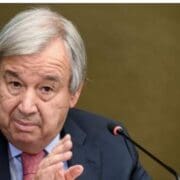
Antigua and Barbuda has said that it can locate the West Africans, who were brought to the twin islands from Nigeria via chartered Antigua Airways flights recently.

There were reports that some of the Africans are missing and may have sought transport off Antigua to neighbouring countries and the United States.

Immigration officials held discussions with government members yesterday and a note from the meeting said: “The Cabinet was informed that the visitors remaining in Antigua can be located in several small hotels and guest houses across the island. An offer to return them to their country is to be made, though many are likely to choose to stay, it was reported. Some arrangement may likely be made to ensure that their status is legal.”

Information Minister Melford Nicholas told members of the media today that approximately 637 of the 911 Africans remain on the island.

Nicholas said the government is weighing its options to return the Africans to their homeland or make them legal residents.

The question was raised regarding offering protections to the Africans who may seek asylum due to issues in their homeland.

“I don’t know if asylum is being considered at this stage. The question would be if persons have economic difficulties returning to their jurisdiction then the options for the government would be to arrange an aircraft to take them back. Alternately, if they have pleaded hardships and would like to remain in the jurisdiction then that is a consideration that we would look at in terms of what can be done to assimilate them into the population,” he said.

Nicholas says the government takes some responsibility for the situation that has developed but he maintained that having flights between the Caribbean and Africa will have benefits.

The minister noted that there is “no harm done” in keeping some of the West Africans in Antigua as he said many might have skills and knowledge the country could use.

Nicholas expressed his hope that Antigua Airways could resume operations between St John’s and Lagos, Nigeria to connect the Caribbean with Africa.

The Eastern Caribbean Civil Aviation Authority (ECCAA) halted Antigua Airways’ charter operations last month because it did not comply with regulatory requirements.

The embattled airline had been operating a charter between Antigua and Nigeria on November 1, 2022.

Donate At Caribbean News Service, we do not charge for our content and we want to keep it that way. We are seeking support from individuals and organisations so we can continue our work & develop CNS further.


NewsAmericasNow.com
Prime Minister Mottley: France a strategic ally in climate fight

Black Immigrant Daily News

The content originally appeared on: Caribbean News Service
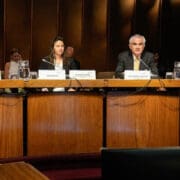
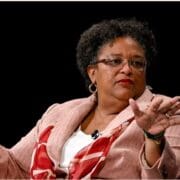
Prime Minister Mia Mottley and France’s Minister of State for Development, Francophonie and International Partnerships, Chrysoula Zacharopoulou, discuss the effects of climate change on Barbados’ coastline while on a recent island tour. (C. Pitt/BGIS)

Barbados now has a key strategic ally in one of its G7 partners, France, which has pledged to assist with building financial capacity, creating protective frameworks and building resiliency to climate change for small island developing states.

Prime Minister Mia Mottley disclosed this recently, during a press conference at Ilaro Court, with France’s Minister of State for Development, Francophonie and International Partnerships, Chrysoula Zacharopoulou.

Mottley praised President Emmanuel Macron’s leadership and voice in support of vulnerable countries.

She stated that countries could no longer ignore the issue of the climate crisis, which she warned was resulting in increased poverty and food insecurity for developing nations.

“There is a moment in everyone’s life…just as there is a moment in a country’s life when to stand still will only invite destruction. We live in a world…that is threatened by too many things now for us to contemplate staying still. This is not just about climate; it is also about our continued determination to claim development for our people.

“If we allow the threats of climate and the pandemic, and of violence and of the digital divide and of food insecurity to crowd out the traditional ambition of development as captured by the sustainable development goals, then our people will come to suffer, and regrettably, the world is going to become a very inhospitable place for us to live,” the Prime Minister added.

She suggested that global financial institutions were not adequately meeting the needs of developing countries, while pointing out that middle income countries were at risk of pauperisation because of the climate crisis, the pandemic and other exogenous shocks, including rising oil prices and inflation.

Meanwhile, Minister Zacharopoulou lauded Prime Minister Mottley for her “huge” contribution to global awareness around climate justice and the need for increased financing opportunities for vulnerable states.

The French Minister said France shares Barbados’ assessment regarding the major global challenges. Zacharopoulou, who was the first French Minister to visit Bridgetown on official business, was on a one-day trip to the island for talks with Prime Minister Mottley and other government officials.

Donate At Caribbean News Service, we do not charge for our content and we want to keep it that way. We are seeking support from individuals and organisations so we can continue our work & develop CNS further.


NewsAmericasNow.com

Caribbean Development Bank President pays courtesy call on Premier of Nevis

Black Immigrant Daily News

The content originally appeared on: Caribbean News Service

President of the Caribbean Development Bank (CDB), Dr. Hyginus Leon, paid a courtesy call on Premier of Nevis Mark Brantley at his Pinney’s Estate office on Friday

Premier Brantley, Minister of Energy in the Nevis Island Administration (NIA), was pleased to welcome Dr. Leon to the island. The CDB president was accompanied by his Senior Advisor, Andrea Power.

“We are delighted to have you here. The CDB has done very good work in St. Kitts and Nevis, and more specifically on the island of Nevis. I can think of a major water project for example that we embarked on, and more recently we’ve been talking about the CDB being involved in our geothermal exploration.

“I hope that while you are here on business, I know it’s a short visit, that you have the opportunity to enjoy some of the hospitality which we are quite famous for,” he said.

Dr. Leon said he was looking forward to having engaging conversation with Premier Brantley as the CDB is very excited about the prospects for Nevis, and the Federation generally, particularly in the geothermal space.

“As you know, renewable energy is one of the ways in which we will contribute in a very big way to the whole climate change action that is required to advance our economies in a very planet-friendly way.

“So Nevis leading the charge in terms of geothermal development and of course the benefits that we have, both in terms of providing energy but equally horizontally into what we would think of as green industries. It’s clearly a way of the future and we are very excited at the prospect and we look forward to cooperating very much with the administration in developing this going forward,” he said.

Ahead of their discussion Premier Brantley presented Dr. Leon with a Nevis Naturally gift bag with locally made products, and CDB President gifted the Premier with a token of appreciation on behalf of the institution.

The Caribbean Development Bank recently approved US$17 million in funding for the Nevis geothermal project. The production drilling phase is set to begin in June 2023, and is anticipated to last six months. Once that is successful, the NIA will begin the second phase, constructing a geothermal power plant with a capacity of 10 megawatts.

Donate At Caribbean News Service, we do not charge for our content and we want to keep it that way. We are seeking support from individuals and organisations so we can continue our work & develop CNS further.


NewsAmericasNow.com
Courtesy Call on Saint Kitts and Nevis PM by CDB President

Black Immigrant Daily News

The content originally appeared on: Caribbean News Service

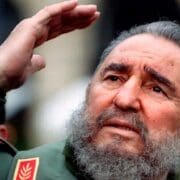
Dr. Hyginus ‘Gene’ Leon, President of the Caribbean Development Bank (CDB) and Ms. Andrea Power, Senior Advisor to the President of the Caribbean Development Bank paid a courtesy call on the Prime Minister of Saint Kitts and Nevis Dr. Terrance Drew on Friday.

Several pertinent matters of national and regional importance were discussed including Inter-Regional Travel, Climate Change, Renewable Energy, Citizenship by Investment, Health, Food Security, and Education.

Prime Minister Drew shared with the President of CDB the nation’s holistic economic strategies in the advancement towards a Sustainable Island State and the seven (7) pillars of development to attain that transformation.

Dr. Leon appreciated the Prime Minister’s vision regarding the Sustainable Island State concept and reiterated the importance of cultural connectivity to better identify as a region. He added that the bank is seeking to operate beyond the traditional form, but rather position itself for a more holistic approach, which he described as “banking with a purpose”, that is engaging in more integrated projects with multimodal functions.

The President of CDB expressed his enthusiasm towards working closely with Prime Minister Drew on future projects.

Donate At Caribbean News Service, we do not charge for our content and we want to keep it that way. We are seeking support from individuals and organisations so we can continue our work & develop CNS further.


NewsAmericasNow.com

Energy Diplomacy in Guyana and CARICOM

Black Immigrant Daily News

The content originally appeared on: Caribbean News Service

By Riyad Insanally

On January 24 last, the Kaieteur News (KN) reported that an erroneous map of Guyana was used by Rystad Energy, as part of a panel discussion at the recently held Trinidad and Tobago (T&T) Energy Conference.[i] The offending map showed part of the Stabroek Block as belonging to Venezuela. Curiously, there was no Guyanese official on the panel, which dealt with “The role the Southern Caribbean can play in meeting the global demand for natural gas and petrochemicals” but, fortunately, KN publisher Glenn Lall brought the matter to the attention of the Conference organisers and President Irfaan Ali. Following the President’s intervention, the T&T Energy Chamber apologised “unreservedly” and disseminated a new map.

This is just one example of the need for continuous vigilance regarding the demarcation of Guyana’s borders. Mr Lall’s alertness and President Ali’s action were commendable. One can only hope that the egregious error had also been spotted by Guyanese government officials and private sector representatives in the room and that they were lining up to make their objections known.

President Ali is clearly the chief spokesman at international forums for Guyana’s new-found status as a rapidly evolving energy producer. This is good given the need for the Head of State to be at the forefront of Guyana’s energy diplomacy. One therefore expects that he is ensuring he has at his disposal the expertise and support necessary to present the country’s energy policies and imperatives in the best possible way.

Energy Diplomacy

In August 2022, I was invited to deliver closing remarks at a ground-breaking course on Energy Diplomacy, organised by the Diplomatic Academy of the Caribbean, housed at the Institute of International Relations, at the St. Augustine Campus of The University of the West Indies.

Most of the course participants came from T&T’s public and private sectors, with a sprinkling coming from other Caricom countries. There was only one participant from Guyana, who seemed to have signed up of her own accord. There was no one from the Ministry of Natural Resources or the Ministry of Foreign Affairs.

The virtual course focused on global energy governance and the dynamics of global energy politics, as well as on the importance of foreign policy and diplomacy in the quest for energy security. Unsurprisingly, there was also a focus on Guyana’s emergence as a petrostate, which has tremendous implications for Caricom. The course’s scope and structure, designed by Professor Anthony Bryan, were comprehensive and well-thought out. It was both timely and necessary and should serve as a template for future training in an area critical to Caricom’s economic development and security.

The Need for Energy Security

The need for energy security, not only in the Caribbean but across the world, has become more acute following Russia’s invasion of Ukraine and the disruption to the global energy market. Against this backdrop, the quest for new supplies and the prospects of new investments could be advantageous to the Caribbean in two respects: i) the exploitation of hydrocarbons in Guyana, Suriname and T&T, and exploration in other parts of the region; and ii) accelerating the transition to renewable energy.

For the Southern Caribbean, in particular, with huge reserves of high quality, sweet, light crude in Guyana and potentially Suriname, as well as abundant natural gas in T&T, the increased global demand for oil and gas is a good thing. As Western nations push for augmented production, there is an opportunity for Guyana and T&T to help alleviate supply concerns and increase their geopolitical influence. With a coordinated policy, these countries should be able to leverage their resources to position themselves better in their relations with the United States and the European Union (EU), in spite of the movement away from hydrocarbons to renewables.

On the other hand, even with Guyana’s impressively rising rates of oil production, it and most Caricom countries are heavily reliant on imported fossil fuels, so much so that increasingly volatile pricing can wreak havoc on their budgets. They furthermore have some of the highest average electricity costs in the Americas. It will be some time yet before Guyana can play the role many hope it can play in anchoring regional energy security. But, with informed energy diplomacy, it can start manoeuvring to take advantage of the current global energy scenario to attract bilateral and multilateral support for capacity building, investments and technology transfers to support both the energy transition in the context of the Low Carbon Development Strategy (LCDS), as well as downstream development.

Energy Dependence is Energy Insecurity

Europe’s dependence on Russian energy has hitherto given Russia tremendous leverage in its relations with the EU. In the face of Russia’s weaponization of oil and gas, the EU is working to correct this strategic blunder. But the lesson is clear: energy dependence is bad; it is tantamount to energy insecurity.

Recognising this reality, Caricom Heads at their July 2022 meeting in Suriname, devoted considerable time to energy security and agreed on the following:

Approval of a paper on Economic Development and Energy Transition and Climate Change as the Community’s “overarching strategy in advancing energy security”;
Increased “focus and investment in energy security by utilising and harnessing hydrocarbon resources in the region towards reducing dependency on external resources and supplying the growing global needs arising out of the Russia-Ukraine conflict”;
The pursuit of “energy diversification and security through making use of significant assets in the Region with immediate existing capacity in LNG and fertiliser for agriculture”;
The development of the renewable energy sector “through building infrastructure to meet regional power generation needs”; and
Urging the United States to remove the sanctions on Venezuela to allow for countries in “the region to benefit from the PetroCaribe initiative and for progress on the exploitation of cross-border natural gas fields between Trinidad and Tobago and Venezuela”.[ii]

The first four objectives make perfect sense in the current global energy context. They will, of course, require the deployment of appropriate resources – human, financial and technical – to ensure implementation. T&T’s desire to exploit cross-border natural gas fields in the adjoining maritime area with Venezuela is also understandable. The announcement on January 24 that the US has approved the waiver of sanctions to allow T&T to develop the Dragon Field in Venezuelan waters has therefore been welcomed across the region.

One hopes, however, that it is not Caricom’s intention to put its eggs once more into the PetroCaribe basket, which would be a resurrection of not only energy dependence but also debt dependence. Of course, Barbados and T&T never did sign on to PetroCaribe. And Guyana only took 50% of its needs under PetroCaribe for strategic reasons, until the arrangement fell apart in 2015 when Venezuela began to raise the temperature over its claim to Guyana’s territory and maritime area. If anything, those Caricom states that were party to PetroCaribe would do well to recall the precarious position they found themselves in after its collapse, especially with no guarantee that Venezuela will be able to become, in the short to medium term, a reliable supplier to the Caribbean.

Caricom needs to avoid dependence on PetroCaribe and, for that matter, any other arrangement that leads to greater energy insecurity. Indeed, it needs to become less dependent on expensive, imported fossil fuels. To do so, though, Caricom countries will need to find ways to move towards energy efficiency and a certain degree of self-sufficiency, in other words, energy security.

One possible avenue for achieving this is the US-Caribbean Partnership to Address the Climate Crisis 2030 (PACC2030) and its promise to promote the energy transition and energy resilience in the region. Although concrete details are scarce, with proper engagement and negotiation, assistance should be forthcoming to build capacity in individual countries and regionally, and to establish investment facilitation teams to unlock new financing for climate and clean energy projects in the Caribbean. Ultimately, success will depend on how Caribbean governments develop and present a joint strategy in negotiations with the US, to take advantage of PACC2030’s potential.

Conclusion

The PACC 2030 negotiations, the follow-up to COP 27 and the pursuit of the Sustainable Development Goals, among other processes, will necessitate robust and well-coordinated energy diplomacy by Caricom. Achieving the transition to renewable energy and ensuring energy efficiency and energy security, as well as leveraging the Southern Caribbean’s energy resources, will require technocrats and diplomats capable of advancing the region’s energy interests, in a volatile and sometimes contradictory global environment. The harmonising of regional policies and frameworks to achieve economies of scale will also be critical for success. This, arguably, is the future of energy diplomacy in the Caribbean.

As the emerging leader in the Caricom energy space, Guyana is poised to play a pivotal role in all this. The 2023 budget has allocated GY$45 billion (up from GY$33 billion in 2022) to the education sector and GY$500 million (approximately US$2.3 million) has been earmarked from a World Bank US$20 million loan for building institutional capacity for the management of the oil and gas sector in the Ministries of Natural Resources, Public Works and Finance, the Geology and Mines Commission, and the Environmental Protection Agency. It is not clear how much of the Foreign Ministry’s allocation is to be spent on training Foreign Service Officers, but it is to be hoped that some of the funds in the budget destined for education and capacity building will be spent on training in energy diplomacy.

Guyana has all to play for. There is a definite need for a new cadre of diplomats and other public officials imbued with a deep understanding of the geopolitics of energy and equipped with the skills to navigate the interlocking worlds of climate change and energy security, and to negotiate in the best interests of Guyana and the region. Indeed, members of the private sector could also benefit from such training.

————

Dr Riyad Insanally, CCH was a career diplomat for 31 years and last served as Guyana’s Ambassador to the United States of America and Permanent Representative to the Organization of American States, from September 2016 to June 2021. He is currently a Senior Fellow at the Caribbean Initiative of the Atlantic Council’s Adrienne Arsht Latin America Center, in Washington, DC.

Donate At Caribbean News Service, we do not charge for our content and we want to keep it that way. We are seeking support from individuals and organisations so we can continue our work & develop CNS further.


NewsAmericasNow.com
Guyana president temporarily relocates office to deal with citizen concerns

Black Immigrant Daily News

The content originally appeared on: Caribbean News Service

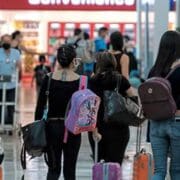
President Irfaan Ali has moved his entire office to the East Berbice Corentyne Region for the next two days to comprehensively resolve issues affecting residents there.

The temporary office is located at State House, New Amsterdam and is prepared to deal with any matter and social issues within the ancient county.

Addressing residents on Thursday morning, the Guyanese leader said the initiative forms part of the administration’s strategy to improve the delivery of services and strengthen the efficiency of governance.

He stressed that from day one, the People’s Progressive Party /Civic (PPP/C) Government had been keen on serving the Guyanese populace and providing easy access to government services.

President Ali explained that the exercise will be executed in every region, adding that the administration has no intention of distancing itself from the citizens. The idea is to ensure the head of state stays in touch with the people.

Meanwhile, there are a number of government ministries on site, with the relevant stakeholders to consult with residents.

These include the ministries of Agriculture, Housing and Water, Human Services and Social Security, and Local Government and Regional Development, among others.

National Security Advisor, Gerry Gouveia and Deputy Commissioner of Police, Ravindradat Budhram are responsible for listening and addressing all issues related to security.

Chief Executive Office of GO-Invest, Dr Peter Ramsaroop will talk to residents and stakeholders within the business community, while others were specifically identified to deal health problems.

President Ali said the region will be transformed significantly as major projects are in the pipeline.

Donate At Caribbean News Service, we do not charge for our content and we want to keep it that way. We are seeking support from individuals and organisations so we can continue our work & develop CNS further.


NewsAmericasNow.com
UN Food Systems Stocktaking Moment to take place in Rome, Italy from 24-26 July

Black Immigrant Daily News

The content originally appeared on: Caribbean News Service

On behalf of the Secretary-General of the United Nations, the Deputy Secretary-General, Amina Mohammed, and the Deputy Prime Minister and Minister of Foreign Affairs and International Cooperation of Italy, Antonio Tajani, announced today the UN Food Systems Stocktaking Moment, will take place in Rome, Italy from 24 – 26 July 2023, at the premises of the Food and Agriculture Organization of the United Nations (FAO).

The high-level meeting will serve as the first global follow-up to the 2021 Food Systems Summit, where more than 50,000 people, including 77 Heads of State and Government, from 193 countries, committed to accelerate and deepen the transformative power of food systems, for the full realization of all 17 Sustainable Development Goals (SDGs). Italy hosted the Pre-Food Systems Summit in Rome in July 2021, an inclusive substantial preparatory event that gathered leaders and numerous stakeholders.

“I am looking forward to Italy’s leadership in bringing together stakeholders to create the evidence that food systems transformation is a critical SDGs accelerator,” said Ms Mohammed, stressing that “more sustainable, equitable, healthy and resilient food systems directly impact people’s lives and livelihoods as we strive for a better future for people and for the planet.”

The UN Food Systems Stocktaking Moment will be hosted by Italy, in collaboration with the Rome-based UN Agencies (FAO, IFAD, WFP), the UN Food Systems Coordination Hub and the wider UN system. The aim is to provide opportunities for countries to report on progress made at the national level since the UN Food Systems Summit in 2021 and their contributions to the achievement of the 2030 Agenda – despite a current global context that has substantially changed.

The number of people unable to afford a healthy diet increased by an additional 112 million between 2019 to 2020, to almost 3.1 billion, reflecting the impacts of rising consumer food prices during the pandemic.

“I strongly welcome the decision of the UN to accept Italy’s offer to host and co-organize in Rome the UN Food Systems Stocktaking Moment, together with the UN Rome-based agencies, the UN Food Systems Coordination Hub and the wider UN system”, said Minister Tajani. “Italy, with the strategic involvement of its strong and innovative agrifood sector, is committed to play an increasingly active role in supporting the efforts of the international community to promote food security and transformative and innovative solutions for sustainable and efficient food systems throughout the world. As one of oldest and most influential food cultures of the world, we intend to play our part in addressing one of the key challenges for the achievement of the 2030 Agenda”.

The three-day meeting will further highlight the central role of food systems transformations in overall SDG advancement ahead of the Sustainable Development Goals Summit in September 2023. It will also be a conducive space for countries to share stories of success and early signs of transformation and maintain the momentum for bold acceleration and bold action to further the resilience of food systems.

The FAO Director-General, QU Dongyu, expressed full support for the Stocktaking meeting for transformation of agrifood systems to be more efficient, inclusive, resilient and sustainable for better production, nutrition, environment and a life leaving no one behind.

The UN and Italy called on all countries and food systems actors to “prepare and seize the opportunity” of the Stocktaking Moment to reaffirm the world’s commitment to act with urgency, at scale and in line with the promise of the SDGs.

Donate At Caribbean News Service, we do not charge for our content and we want to keep it that way. We are seeking support from individuals and organisations so we can continue our work & develop CNS further.


NewsAmericasNow.com