Posts

The Data Tells A Different Story About Black Immigrants

By Felicia J. Persaud

News Americas, NEW YORK, NY, Fri. April 24, 2026: At a time when immigration rhetoric in the United States has reached a fever pitch, a new report from the Pew Research Center offers a powerful reminder: the story being told about immigrants – particularly Black immigrants – is often not the truth.

The data tells a very different story. According to Pew’s latest analysis, there are now 5.6 million Black immigrants living in the United States, making up roughly one in ten Black people in the country.

That alone should shift the conversation. Because Black immigrants are not a small or marginal group. They are a significant and growing part of the American story.

And yet, they are rarely at the center of the national immigration debate. Even more telling is their legal status.

Despite narratives that often conflate immigration with illegality, the Pew data shows that 79% of Black immigrants are in the United States legally, while a majority – 61% – are naturalized U.S. citizens.

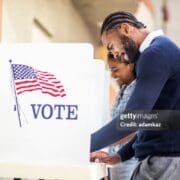
That means most Black immigrants are not only here lawfully, but they are also Americans who can vote.

Fully. Legally. Permanently.

And still, they are often treated as outsiders, with xenophobic talk about “eating cats and dogs,” committing crimes, or worse of all, being from “S-Hole” countries.

The data also challenges assumptions about education and contribution.

Today, 35% of Black immigrants hold a bachelor’s degree or higher, a rate that exceeds that of U.S.-born Black Americans. Among African-born immigrants, that number is even higher, with some of the most highly educated immigrant populations in the country coming from nations like Nigeria.

These are not communities on the margins. They are doctors, nurses, entrepreneurs, educators, and caregivers. They are part of the infrastructure of American life.

And their numbers are growing.

African-born immigrants, according to the data, are now the fastest-growing segment of the Black immigrant population, increasing fourfold since 2000. At the same time, Caribbean immigrants remain a dominant force, making up a similarly large share of the Black immigrant population.

Together, African and Caribbean immigrants account for the overwhelming majority of Black immigrants in the United States. That is not incidental.

It reflects a deep and ongoing relationship between the United States and the Black diaspora – one that has shaped culture, labor, politics, and identity for generations.

And yet, despite these contributions, the policy environment is moving in the opposite direction.

Immigration crackdowns are intensifying. Temporary protection is being challenged. Legal pathways are becoming more uncertain. Huge bonds are being tacked on to simple visitors and business visas.

And Black immigrants – like other immigrant groups – are increasingly caught in that shift. This disconnect between reality and rhetoric is where the real story lies. Because the data makes one thing clear: Black immigrants are not a burden on the United States. They are part of its growth. Part of its workforce. Part of its future.

And yet, the question of belonging continues to linger. Who gets to be seen as American? Who gets to be protected?, Who gets to stay? These are not new questions. But they take on new urgency in a moment where facts are often overshadowed by fear.

Because when a group that is largely legal, highly educated, and deeply embedded in the fabric of the country is still viewed through the lens of suspicion, it suggests that the issue is no longer just immigration. It is perception. And perhaps something deeper. Because the data tells a story.

The question is whether America is willing to listen.

Felicia J. Persaud is the founder and publisher of  NewsAmericasNow.com, the only daily syndicated newswire and digital platform dedicated exclusively to Caribbean Diaspora and Black immigrant news across the Americas.

RELATED: 11 Immigrants Now Dead In ICE Custody In 2026 As Questions Mount Over Care and Release Practices

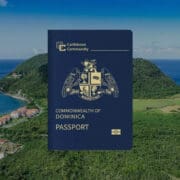
Dominica Revokes ‘Golden Passport’ Of Iranian After Sanctions Probe

News Americas, ROSEAU, Dominica, Thurs. April 23, 2026: Dominica has revoked the citizenship of an Iranian national linked to a widening international sanctions probe, in a move that underscores growing scrutiny of the Caribbean’s Citizenship by Investment, (CBI), programs.

The decision follows an investigation by the Organized Crime and Corruption Reporting Project (OCCRP), which found that Abolfazl Shamkhani and his brother, sanctioned oil trader Hossein Shamkhani, used Dominican-issued identities to quietly build a luxury real estate portfolio in Dubai valued at approximately $29 million.

According to documents obtained by OCCRP, Dominica revoked Abolfazl Shamkhani’s citizenship – which had been granted under the name “Sami Hayek” – citing the concealment of key information during the application process. Officials said Shamkhani failed to disclose his connection to his father, Ali Shamkhani, a senior Iranian political figure, when applying for citizenship in 2020.

The revocation letter also cited actions deemed incompatible with loyalty to Dominica, and gave Shamkhani 25 days to request a formal review of the decision. The move mirrors a similar action taken in 2025 against his brother, Hossein Shamkhani, who has been sanctioned by the United States, European Union, and United Kingdom for his alleged role in a large-scale oil smuggling network tied to Iran and Russia.

Authorities allege that the network used offshore companies, global shipping operations, and foreign passports to evade sanctions and move funds across borders.

U.S. officials have further claimed that the Shamkhani network funneled millions into international real estate holdings and shell companies to conceal the origins of its wealth. While Abolfazl Shamkhani has not been criminally charged, U.S. prosecutors have linked him to companies associated with the broader network and are currently pursuing the seizure of millions in assets connected to those operations.

The case is also drawing renewed attention to the use of Caribbean citizenship programs by high-net-worth individuals seeking global mobility, and the risks of such programs being exploited.

In response, Dominica has begun tightening its CBI program, including restricting new applications from Iranian nationals unless strict residency and financial disclosure conditions are met. The government says the changes are aimed at protecting the integrity of the program and ensuring compliance with international standards.

The developments highlight the increasing pressure on Caribbean nations to strengthen due diligence frameworks, as global scrutiny intensifies around the intersection of citizenship programs, financial networks, and geopolitical risk.

RELATED: The Top 10 Caribbean Passports For 2026

CCJ Ruling Could Decide Fate Of High-Profile Guyana Extradition Case

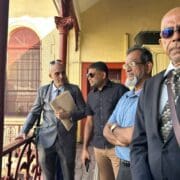
News Americas, NEW YORK, NY, Weds. April 22, 2026: A high-profile extradition case involving Guyana opposition leader and Azruddin Mohamed and his father, remains in legal limbo as the Caribbean Court of Justice, (CCJ), prepares to deliver a ruling that could determine whether proceedings against them can move forward.

The region’s highest court on Tuesday confirmed that an interim stay on the extradition of the Guyana opposition leader and his father, businessman Nasar Mohamed, will remain in place until a final judgment is handed down, effectively halting proceedings before the Georgetown Magistrates’ Courts for now.

At the heart of the case is a legal dispute over whether the extradition process was compromised at its earliest stage, raising broader questions about fairness, due process, and the limits of executive authority in such matters.

Attorneys representing the Mohameds argued before the seven-member CCJ panel that the issuance of the Authority to Proceed, (ATP), by the Minister of Home Affairs was tainted by bias, potentially undermining the legitimacy of the entire extradition process. Senior Counsel Fyard Hosein, appearing for the appellants, maintained that the minister’s decision must meet established standards of procedural fairness. He argued that if bias exists at this preliminary stage, it could invalidate all subsequent steps in the process.

However, members of the CCJ bench, led by President Justice Winston Anderson, repeatedly challenged that position during the hearing, questioning whether concerns about bias could be addressed at later stages, including during committal proceedings or through habeas corpus applications.

Under sustained questioning, the defense acknowledged that no specific unlawful act had been identified beyond the allegation of bias, a point that appeared to weigh on the court’s consideration of the arguments presented.

Adding another dimension to the case, Senior Counsel Roysdale Forde suggested that even if bias were proven, the law allows for the delegation of ministerial authority. He indicated that the process could continue under a different decision-maker rather than being brought to a complete halt.

Attorneys representing the state strongly rejected the claims of unfairness, arguing that the minister’s role in issuing the ATP is administrative in nature and limited to determining whether any obvious legal barriers exist.

Trinidadian Senior Counsel Douglas Mendes, appearing on behalf of Minister of Home Affairs Oneidge Walrond, told the court that the applicants had effectively engaged with the minister’s office prior to the issuance of the ATP, suggesting acceptance of her role in the process. Mendes emphasized that the minister does not assess the merits of the case at this stage but instead performs a threshold function to determine whether the extradition request can proceed.

Guyana Attorney General, Anil Nandlall, supported that position, describing extradition as a “sui generis” process governed by international obligations and distinct from ordinary domestic legal proceedings. He also dismissed concerns about his public commentary on the matter, telling the court that his statements had been taken out of context.

The case has already moved through Guyana’s domestic legal system, with earlier challenges by the Mohameds dismissed in both the High Court and the Court of Appeal.

Now before the CCJ, the outcome is expected to carry significant implications not only for the parties involved but also for how extradition cases are handled across the Caribbean, particularly in relation to procedural fairness and the role of government officials.

With the interim stay still in effect, the proceedings remain stalled – placing increased focus on the court’s pending ruling, which is likely to clarify key legal questions surrounding the balance between executive authority and judicial oversight. As the region awaits the CCJ’s decision, the case continues to highlight the complexities of extradition law and the high stakes involved when legal, political, and procedural issues intersect.

RELATED: Azruddin Mohamed Sworn In As Guyana MP Despite U.S. Sanctions, Indictment And Extradition Case

Leadership Insights: The Power Of Relationships In Decision-Making

By Dr. Isaac Newton

News Americas, NEW YORK, NY, Mon. April 20, 2026: After years of absence, a mentor posed a question that resisted an immediate answer: How do we engage with each other and the wider world if not through relationships? It did not feel like a request for information. It felt diagnostic. Beneath its simplicity lies an unsettling implication: much of what we call engagement may, in fact, be performance, transaction, or control, each imitating relationship while quietly replacing it.

Relationships are not merely part of how we engage the world. They are the only way we do. Every decision, every exchange, and every system we build is carried along invisible currents of trust, perception, and shared meaning. Even in the most technical domains, strategy moves through conversation, authority rests on belief, and execution depends on alignment that cannot be forced into being. Remove relationship, and what remains is not efficiency but resistance, not progress but strain.

The evidence is not argued; it is lived. The longest running longitudinal study on human flourishing found that the clearest predictor of life satisfaction is not wealth, intelligence, or achievement, but the quality of close relationships. Neuroscience arrives at the same conclusion from another direction. The human brain is organized for connection. It registers safety through belonging and threat through isolation. Even judgment, often described as rational, is shaped by networks of trust and social context. Where trust is present, complexity becomes navigable. Where it is absent, even simple coordination begins to unravel.

Yet, the modern world is increasingly structured against the very medium on which it depends. We have built systems that scale productivity but not presence, and networks that expand reach but dilute depth. Communication is constant, while understanding is sporadic. In organizations, relational work is treated as secondary to measurable output, even though it is the condition that makes meaningful output possible. The result is a quiet fragility. Performance holds until pressure reveals what connection was never built to sustain.

RELATIONSHIPS

Relationships do not glide toward strength; they recede without attention. They require presence that cannot be automated, attention that cannot be outsourced, and a willingness to remain when convenience suggests withdrawal. This is why they are universal, yet uncommon in their maturity. Everyone participates in them, yet few cultivate them with the discipline they demand. The cost is cumulative: trust thins, misalignment grows, and the capacity for shared progress weakens.

For leaders, this reframes the work entirely. The task is not only to decide, but to create the conditions in which decisions can be understood, trusted, and carried forward. Influence does not move through authority alone; it moves through relationship. This requires a shift from control to connection, from communication as delivery to communication as shared understanding. It calls for environments in which people are seen clearly enough to contribute and engaged deeply enough to grow. Such environments are not accidental; they are formed through consistent acts of attention, clarity, and integrity.

If relationships are the medium of all engagement, then their quality becomes the measure of both leadership and life. Every interaction carries weight. Every exchange shapes what becomes possible next. The question is no longer whether relationships matter. It is whether we recognize, before it is too late, that nothing meaningful in our lives has ever happened outside of one.

Editor’s Note: Dr. Isaac Newton is a leadership strategist and change management expert specializing in governance and ethical leadership. Educated at Harvard, Princeton, and Columbia, he is co-author of Steps to Good Governance and has advised boards, educators, and public leaders across the Caribbean and internationally, integrating policy, psychology, and ethics to strengthen institutional performance.

RELATED: CARICOM Governance Under Scrutiny: Why Process and Legitimacy Matter In Regional Leadership

US Travel Warning Issued For Trinidad and Tobago

News Americas, PORT OF SPAIN, Trinidad, Mon. April 20, 2026: The United States has renewed its travel advisory for Trinidad and Tobago, urging travelers to reconsider travel due to ongoing concerns about crime and public safety.

The updated advisory, issued April 13th, comes amid heightened security measures in the twin-island nation following recent violent incidents, including the killing of a municipal police officer in San Fernando.

In response, the Ministry of Defence confirmed that the Trinidad and Tobago Defence Force has moved to an “elevated operational posture” to support ongoing investigations and national security efforts.

The US State Department advisory also follows the government’s declaration of a nationwide State of Emergency on March 2nd, aimed at addressing a spike in violent criminal activity that authorities say could threaten public safety. Under the State of Emergency, law enforcement agencies have been granted expanded powers, including the ability to arrest individuals on suspicion, conduct searches of properties, and suspend bail for certain offenses.

While officials note that crime levels have declined compared to previous years, concerns remain, particularly in parts of Trinidad. Tobago continues to experience lower crime rates. As of early April 2026, Trinidad and Tobago is experiencing a high-stakes struggle with violent crime, including a reported 92 murders by April 4th, prompting a State of Emergency declared on March 2nd to combat escalating violence. Despite initial reports claiming a sharp decrease in the number, and conflicting reports suggesting a surge in January, the country faced 11 deaths in the first 24 hours of 2026

The U.S. advisory highlights specific areas in Port of Spain where government personnel are restricted from traveling, including Laventille, parts of Charlotte Street, Piccadilly Street, Besson Street, and communities such as Beetham and Sea Lots. Additional restrictions apply at night in areas including downtown Port of Spain, beaches, Fort George, and the Queen’s Park Savannah.

The advisory also warns of a potential risk of terrorist activity, as well as limited access to healthcare services in rural areas across both islands. Travelers are being urged to exercise increased caution, remain aware of their surroundings, avoid displaying signs of wealth, and take additional safety precautions, particularly at night.

Authorities in Trinidad and Tobago have emphasized that security operations remain ongoing, and the situation continues to be monitored closely, with the potential for changes to restrictions under the State of Emergency.

The renewed advisory underscores ongoing concerns about safety and security in the Caribbean nation, even as officials continue efforts to stabilize conditions and reduce crime.

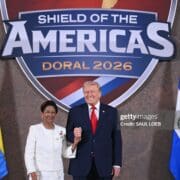
The travel advisory comes also on the heels of Trinidad and Tobago Prime Minister Kamla Persad-Bissessar close alignment with U.S. President Donald Trump on security and anti-drug trafficking initiatives. She has supported U.S. military actions in the Caribbean and Venezuela, resulting in meetings, such as at the Shield of the Americas Summit.

3.3 Million Cases Later – What Justice Looks Like in America’s Immigration Courts

By Felicia J. Persaud

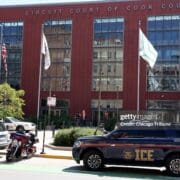
News Americas, NEW YORK, NY, Sun. 19, 2026: America’s immigration system is often described as “broken.” But that word does not quite capture what is happening inside U.S. immigration courts right now. Because what we are witnessing is not just dysfunction. It is delay – on a scale so large that it is quietly reshaping what justice even means.

According to new data from the Transactional Records Access Clearinghouse (TRAC), there are now more than 3.3 million cases pending in U.S. immigration courts as of February 2026.

Let that number sit for a moment.

More than three million people – families, workers, asylum seekers – are waiting for a decision that will determine whether they can stay in the United States or be forced to leave. And many of them will wait not months, but years. In fact, more than 2.3 million of those cases involve asylum seekers, people who have come to the United States seeking protection from violence, persecution, or instability in their home countries.

Yet, the narrative around immigration continues to focus on crime. But the data tells a very different story. Only 1.64% of new immigration court cases involve any alleged criminal activity, beyond possible illegal entry.

That means the overwhelming majority of people caught in this system are not criminals. They are waiting. Waiting for a hearing. Waiting for a decision. Waiting for a future that remains indefinitely on hold. And that waiting comes at a cost.

It means children growing up in uncertainty. Parents unable to plan their lives. Workers unsure if they will be allowed to remain in the country they are helping to sustain.

This is not just a legal backlog. It is a human one. Because justice delayed, as we have long been told, is justice denied.

But in immigration courts, delay has become the system itself. As TRAC noted: “The latest case-by-case Immigration Court records show that at the end of February 2026, the Immigration Court backlog stands at 3,318,099 active cases, a decrease from the 3,377,998 cases pending at the end of December 2025. The court has closed 333,957 cases so far in fiscal year 2026 as of February 2026, while receiving 201,878 new cases during the same period. This represents a case completion rate of approximately 1.65 times the rate of new case intake.”

And the consequences are not evenly felt.

Black and brown immigrants – including those from the Caribbean and across the African diaspora – are disproportionately caught in this limbo, navigating a process that is often complex, under-resourced, and increasingly politicized.

At the same time, enforcement continues. New cases are filed. Detentions increase. Deportation efforts expand. But the system tasked with deciding these cases cannot keep up.

The result is a growing gap between enforcement and resolution – a space where people exist not as citizens or non-citizens, but as something in between.

Waiting. Uncertain. Unresolved. And that raises a deeper question. What does justice look like when it takes years to arrive?

Because immigration policy is often framed around who should be allowed to stay and who should be removed. But far less attention is paid to what happens in between.

What happens when millions of people are left in legal limbo, neither accepted nor rejected?

What happens when a system meant to deliver decisions becomes a system defined by delay?

The answer is already unfolding. A generation of immigrants living in uncertainty. A court system under strain. And a definition of justice that is slowly being stretched beyond recognition.

Because when more than three million cases are waiting to be heard, the issue is no longer just immigration.

It is whether the system designed to deliver justice can still do so at all.

Felicia J. Persaud is the founder and publisher of  NewsAmericasNow.com, the only daily syndicated newswire and digital platform dedicated exclusively to Caribbean Diaspora and Black immigrant news across the Americas.

RELATED: Caribbean Immigrants Helped Build America Too

Haitian-American Coral Springs Vice Mayor Legacy Resonates Beyond Tragedy

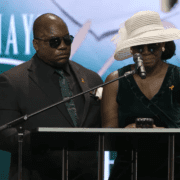
News Americas, CORAL SPRINGS, FL, Fri. April 17, 2026: The life and legacy of Haitian-American Coral Springs Vice Mayor, Nancy Metayer Bowen, took center stage Friday as family, friends and community members gathered, many wearing green, to honor the rising political figure whose impact extended far beyond her years.

Metayer Bowen, 38, the first Black and Haitian-American woman elected commissioner in the city’s history, was remembered not for the tragic circumstances of her death, but for the energy, compassion and leadership she brought to her community.

Hundreds gathered at Church by the Glades for a public viewing and celebration of life, reflecting on a leader many described as “the heart of the commission” and a force who made people feel seen, heard and included.

“This was not supposed to be the moment where we gather to say goodbye,” said City Commissioner Joshua Simmons, a close friend. “We were supposed to be celebrating everything she had accomplished and everything that was still ahead.”

Born to Haitian parents, Metayer Bowen’s journey reflected both academic excellence and public service. A graduate of Florida A&M University, she later earned a master’s degree from the Johns Hopkins Bloomberg School of Public Health and built a career that included work with the Clinton Foundation and the National Oceanic and Atmospheric Administration.

At the time of her death, she was preparing to announce a run for Congress – a move that underscored her growing influence and ambition to serve on a larger stage.

Those closest to her described a woman deeply committed to environmental sustainability, public health, women’s rights, and expanding access to housing – causes that defined both her policy work and her personal mission.

Family members painted a picture of someone equally devoted in private life – a sister, daughter and aunt who maintained close daily connections and found joy in supporting those around her.

Her sister Jennifer Metayer-Smith called her love incarnate. She said Metayer was her role model and “built-in best friend.” Metayer drove her to the hospital to give birth to her daughter, “only for my mom to be feeding her ice chips because she was feeling light-headed,” she said. The sisters talked over the phone daily, and Metayer loved spending time with her nieces, who she jokingly called her children.

“Looking at our girls, I see a little bit of us in them,” Jennifer said. “And it makes me smile.”

Through tears, Jennifer said goodbye to her sister. “Please tell Donny how much we miss him. Sleep well, beautiful.”

Many in church were overcome with emotion throughout the service. They raised up their hands, seeking comfort from God. As a singer performed “Pi Devan Na We” in Haitian Creole, Metayer’s mother lifted her arms to the sky.

Metayer Bowen’s death has also reignited conversations around domestic violence, with lawmakers and community leaders calling for stronger protections and earlier intervention measures. Her husband has been charged in connection with her death, which authorities say occurred earlier on April 1st at the couple’s home in Coral Springs. The Jamaican Stephen Bowen remains in lock-up.

As tributes poured in, many pointed to her role as a symbol of representation and progress within the Haitian-American and broader Caribbean diaspora. For a community that watched her rise, her loss is being felt deeply – but so too is the impact of her work, her voice, and her vision for a more inclusive future.

In the words of one speaker, her life – though cut short – was both “brief and brilliant.”

Lawmakers are now pushing for more protections, including tools that could silently alert police.  “What we see is the escalation happens between rounds of these different incidents of abuse, so the quicker we can get law enforcement to the scene to understand what the issue is, the more seriously we can deal with the perpetrator and the abuser,” State Sen. Alexis Calatayud said.

“She was the best of us,” said an attendee at the memorial. “Kind, brilliant, graceful, dignified, and that beautiful smile – this is our Nancy.”

Metayer is survived by her parents Misselin and Marly Maxime Metayer, her grandmother Marie-Theresa Maxime, her brother Francelin Metayer, her sister Jennifer Metayer-Smith and her nieces and nephew. This is the second tragedy her family has experienced in a matter of months. Her younger brother Donovan died by suicide in December.

View The Full Service HERE

YOU MAY ALSO LIKE: Haitian TPS Debate Intensifies After Violent Florida Killing

COMMENTARY: When Loyalty Becomes A Leadership Risk In Small States

By Dr. Isaac Newton

News Americas, NEW YORK, NY, Thurs. April 16, 2026: The minister finishes speaking. The outcome is already clear. People notice, but their reactions fade into silence. Empty praise follows, smooth and practiced, covering what remains unspoken. No one objects. No one corrects. Certainty is performed rather than examined. In small states, leadership is revealed not in open failure, but in the quiet habits that hide it.

In closely connected societies, distance does not exist. Professional, family, and social ties overlap. Every word carries consequence. Speaking honestly can affect future opportunities, so truth competes with caution. What is said depends as much on timing and tone as on facts. Silence becomes a powerful presence. Insight often lives in what is implied rather than stated.

Over time, leaders come to represent more than their role. They embody stability, identity, and shared history. Questioning them can feel like challenging the community itself. Evidence may remain visible, but its influence weakens. Loyalty protects relationships, sometimes at the cost of judgment. Leaders become symbols, not just decision makers.

Where Truth Retreats and Distortion Grows

Truth does not disappear, but it moves. In private spaces, it is direct and unfiltered. Decisions are questioned, mistakes are named, and alternatives are explored. In public, language becomes careful and controlled. By the time information reaches leadership, it has been softened. What remains feels complete but lacks depth. Approval increases while understanding narrows.

This pattern is not unique to small states, but it intensifies within them. Pressure builds quietly as honest insight is reduced before it is shared. Over time, reality asserts itself. When it does, it arrives with force.

In tightly connected systems, the effects of error move quickly. Decisions shape economic outcomes, public confidence, and institutional strength with little delay. Small distortions grow fast. There is little distance between action and consequence.

The Discipline of Truth in Leadership

Leaders who want clarity must create it. When they respond well to difficult truths, they signal that honesty matters. People adjust. Fear begins to loosen. Clear standards help separate personal loyalty from performance. Broader input brings sharper perspective, especially from those who are not dependent on approval. Discipline keeps perception aligned with reality.

A simple test reveals much. Ask three people who do not rely on you, “What am I getting wrong?” Listen fully. If answers are cautious or identical, truth is still restricted. If the response is uncomfortable, it is likely closer to reality.

Loyalty can become a form of currency. It can grant access and influence. When it outweighs competence, performance declines quietly. Agreement remains visible, but systems weaken. When accuracy is valued instead, standards recover and trust strengthens.

Leadership is defined by the environment it creates. In strong systems, people speak openly. Information moves without distortion. Decisions reflect the full picture. In these spaces, what is heard carries meaning, not performance.

Every system eventually meets reality. Some encounter it early and adjust. Others delay until correction becomes unavoidable. The defining question for any leader is simple:

Did the truth reach you in time to change what mattered or are you satisfied with chasing pretty butterflies over deadly waterfalls?

EDITOR’S NOTE: Dr. Isaac Newton is a leadership strategist, educator, and institutional advisor focused on governance, institutional transformation, and ethical leadership. With training from Princeton, Harvard, and Columbia, his work integrates leadership research, psychology, public policy, and faith-informed ethics. As coauthor of Steps to Good Governance, he has designed and delivered seminars for corporate boards, educators, public officials, and community leaders across the Caribbean and internationally. His work equips leaders to navigate complexity with clarity, act with courage, and build systems that endure.

RELATED: Church And Politics In The Caribbean And Africa: Prophetic Voice, Public Trust, And The Moral Future Of Nations

U.S.-Vatican Relations Strained By Conflicts In Cuba, Iran And Latin America

By John P. Ruehl

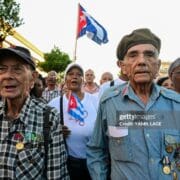
News Americas, NEW YORK, NY, Fri. April 17, 2026: Cuba’s deepening crisis has once again pulled the Vatican into a familiar role. In March, it was revealed that Cuban officials ​turned to the Holy See to help persuade U.S. President Donald Trump to ​ease its oil embargo, underscoring the Church’s position as one of the few actors capable of mediating between Washington and Havana. Since Cuba relaxed religious restrictions in the 1990s, the Vatican has reemerged as a major institutional force on the island, helping to facilitate the normalization of U.S.–Cuba relations in 2015.

Yet tensions with the Trump administration are complicating the role the Church has traditionally played in diplomatic mediation. In late 2025, the Vatican sought to mediate in Venezuela by offering asylum to former President Nicolás Maduro in Russia to avert military escalation, which ultimately failed. Days after the January 2026 raid by the U.S. to capture Maduro, Pope Leo XIV warned against further conflict in his “state of the world” address, after which Cardinal Christophe Pierre, the Vatican’s U.S. representative, was summoned to a tense, closed-door meeting at the Pentagon, where U.S. officials later denied issuing veiled threats.

The divide has further widened over Iran. As an early critic of war, the pope called on the U.S. on March 31 to halt its campaign, naming Trump for the first time publicly. Shortly after, the pope condemned Trump’s rhetoric about destroying Iran as “completely unacceptable.” Amid the fallout, the pope’s planned 2026 visit to the U.S. has been postponed indefinitely.

On April 13, matters further escalated after Pope Leo XIV said that he had “no fear of the Trump administration,” responding to Trump’s criticism of him on social media as being “weak on crime,” according to the New York Times.

These tensions follow decades of outwardly stable relations between Washington and the Holy See. Catholics make up roughly 20 percent of American adults and remain well represented at the highest levels of government, including former President Joe Biden, Vice President J.D. Vance, and six of the nine Supreme Court justices. The current pope, notably, is the first American to lead the Church.

Underneath this overlap lies a more complicated history. Early American suspicion of centralized religious authority, tied to predominantly Protestant culture, has evolved into recurring domestic and foreign political disagreements with the Vatican. While the two sides share some common ground, competing spheres of influence are becoming more pronounced under Trump.

Given that the U.S. was founded in part on a rejection of entrenched religious hierarchy, early friction with the Vatican was almost inevitable. At the time, however, the Papal States were already in decline against the growing power of neighboring monarchies in Europe, and American leaders paid little attention to the Holy See as either a strategic concern or domestic threat. Catholics made up only a small minority of relatively elite communities until about 1845, within a larger society dominated by a Protestant political and cultural order.

This changed with waves of Irish and later Italian immigration in the 19th century, with the number of Catholics growing from five percent of the population in 1850 to 17 percent by the end of the century. The Catholic Church built extensive networks of social services, education, and jobs, and became a major social and political force.

This led to backlash, including nativist movements that warned of immigrants’ allegiance to the pope and conspiracy theories of Vatican involvement in Abraham Lincoln’s assassination. Tensions also emerged beyond U.S. borders, with Washington using the Monroe Doctrine to justify backing liberal movements across Latin America, which often stripped the Catholic Church of land, legal privileges, and political authority, while simultaneously encouraging Protestant missionary expansion.

Although the decline of the Portuguese and Spanish empires left the church without much of its formal authority in Latin America, the end of royal patronage resulted in the Catholic Church becoming a more centralized and globally coordinated institution. Greater control over episcopal appointments and governance helped the Vatican “[consolidate] its grip on the new regional structures, linking them to the reconstruction of its global project,” with a form of Catholic continentalism becoming a post-imperial alternative to cementing its power in the Americas, according to a 2019 study published in the publication Territory, Politics, Governance. Instead of collapsing with the empires that brought it there, the Church evolved beyond them, sometimes placing itself in competition with Washington.

Geopolitical rivalries continued into the Cold War, particularly with the rise of liberation theology in 1960s Latin America. Its focus on social justice and perceived overlap with Marxism alarmed American policymakers, who worked with governments in Bolivia, El Salvador, and elsewhere to counter left-leaning elements within the Church, at times through violent suppression. “Liberation theology was perceived as a threat to U.S. dominance in the region by leaders in the CIA and even the White House. … For the U.S. government, by siding with the interests of the poor and oppressed, the proponents of liberation theology stood against the interests of the empire. And that was deemed unacceptable,” stated a blog by theologian Stephen D. Morrison.

Domestically, the election of John F. Kennedy signaled growing Catholic acceptance in the U.S., but he was still compelled to constantly reassure voters that his loyalty lay with Washington over the Vatican.

But the 20th century also proved that cooperation could emerge when interests aligned. The U.S. quietly supported Catholic actors during the Mexican Revolution in the early century and later found common ground in opposing communism. The diplomatic relations that were severed in 1867 were reestablished by U.S. President Ronald Reagan and Pope John Paul II in 1984 and developed into what came to be known as the “holy alliance” to counter Soviet influence.

Contemporary Clashes

Modern U.S. disagreements with the Vatican are not unique to Trump. The U.S. Conference of Catholic Bishops (USCCB) issued a rare special message in 2013 opposing the Obama administration’s contraceptive mandate, and has long aligned with conservative groups on issues like abortion. This cross-partisan engagement, combined with the Church’s institutional reach and lobbying capacity, has made policymakers on both sides wary of its influence, with “[v]ery few religions having the type of lobby machine that the United States Conference of Bishops have,” according to Jon O’Brien, former president of Catholics for Choice.

Despite occasional tensions, relations between the Church and Trump were largely free of sustained disputes until his first term, which saw disagreements over immigration, foreign policy, and climate issues. Catholic networks developed sophisticated humanitarian and legal support systems for migrants moving north from Latin America, often parallel to, and at times conflicting with, U.S. policy that expanded border controls into Mexico and restricted access to asylum.

These divisions have escalated into Trump’s second term. Pope Leo XIV has been openly critical of the Trump administration’s immigration policies, aligning with the USCCB, which chose not to renew cooperative agreements with the federal government amid funding cuts for refugees. The body later issued another special message in 2025, expressing concern over enforcement practices and detention conditions.

Latin America remains the most obvious area of friction between the U.S. and the Vatican. As Trump attempts to consolidate U.S. dominance in the hemisphere, it competes with the Vatican’s longstanding presence. Nearly half of the world’s Catholics live in the Americas, and through institutions such as the Latin American and Caribbean Episcopal Council (CELAM) and strong local infrastructures, the Vatican continues to shape politics and society.

At the same time, the Catholic Church faces a growing internal challenge through the rapid rise of Latin American evangelical movements. The U.S. supported these modern movements in the 1970s and 1980s “as a pretext for anti-communist policies,” which continue to have enormous effects today. Evangelicals now make up more than a quarter of Brazil’s population, up from 5 percent in 1970. In fact, such congregations have expanded across Latin America. Evangelicals enjoy growing political power, with many maintaining links to U.S. evangelical networks that complement Washington’s larger regional footprint.

Africa has also seen increasing competition between the U.S. and the Vatican, despite historical cooperation. The continent is home to roughly 20 percent of the world’s Catholics, and that share is growing rapidly. While the Church’s presence in Africa has not become as deeply entrenched as seen in Latin America, it has nonetheless been established in many African countries for more than a century and often commands greater trust than Western NGOs. Many international aid operations rely on Church-linked infrastructure for logistics and community access, with the Church in turn relying on Western funding.

The Church’s political role is particularly visible in countries where state institutions are weakest. In the Democratic Republic of the Congo (DRC), Catholic organizations such as the National Episcopal Conference of Congo deployed thousands of election observers during the 2018 presidential vote and openly challenged official results. While Washington initially expressed similar concerns, it changed its position within weeks and recognized the outcome, prompting criticism from Church leaders and marking a larger pattern of divergence in parts of Africa.

The scope of Catholic activity frequently brings it into conflict with various U.S. policies. In Uganda, for example, the passage of controversial anti-LGBTQ legislation in 2023, with tacit support from the Catholic Church, drew sharp criticism from the Biden administration, while receiving backing from U.S. evangelical networks. Conversely, the Church’s involvement in migration and humanitarian initiatives in Africa has exacerbated tensions with conservative U.S. policymakers.

Bipartisan unease is also evident in U.S. policy toward China. Lawmakers from both parties have concerns that the Holy See has been overly accommodating to Beijing, particularly following the 2018 agreement allowing the Chinese government a role in selecting bishops in the country. Democratic leaders like Representative Nancy Pelosi, Trump officials, and members of the U.S. Commission on International Religious Freedom, an independent, bipartisan federal commission, have all voiced their concern over the agreement in recent years.

Despite the disagreements, the U.S. and the Vatican remain more aligned than opposed in many of the world’s regions, even in those most contested between them. In Venezuela, both former presidents, Hugo Chávez and Nicolás Maduro, framed the U.S. and Catholic Church as quasi-colonial actors. Meanwhile, Nicaragua’s government shared a similar sentiment, expelling the Vatican ambassador in 2022 amid a wider crackdown on Church activities. A shared set of adversaries, at least in theory, forms a basis for cooperation, as seen during the Cold War.

That could be beneficial in fragile states. Venezuela’s eroded institutions could be improved by U.S. resources and Catholic networks to help rebuild elements of civil society. Competition would be unavoidable, but it could take a more constructive form rather than outright confrontation.

Instead, the relationship is drifting in the opposite direction. Cuts to U.S. foreign aid and a more unilateral, security-driven approach have reduced Washington’s reliance on Church networks it once worked alongside. The Vatican remains embedded at the local level and structurally positioned to fill the vacuum left by the hollowing out of USAID. With each side increasingly defining itself against the other, the pope’s decision to indefinitely postpone his 2026 visit to the U.S. suggests relations will get worse before they can get better.

EDITOR’S NOTE: John P. Ruehl is an Australian-American journalist living in Washington, D.C., and a world affairs correspondent for the Independent Media Institute. He is a contributor to several foreign affairs publications, and his book, Budget Superpower: How Russia Challenges the West With an Economy Smaller Than Texas’, was published in December 2022. Follow him on X @john_ruehl.

Source: Independent Media Institute

Credit Line: This article was produced by Economy for All, a project of the Independent Media Institute.

RELATED: Who Gets To Belong? Birthright Citizenship Case Could Redefine Who Belongs In America

Haitian TPS – US House Advances TPS Protection Bill For Haitians

BY NAN STAFF WRITER

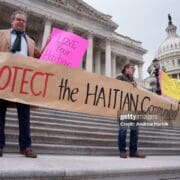
News Americas, WASHINGTON, D.C., Thurs. April 16, 2026: A bipartisan group of U.S. lawmakers has taken a major step toward protecting Haitian nationals from deportation, advancing legislation that could extend Temporary Protected Status, (TPS), to an estimated 350,000 Haitians living in the United States.

The measure, H.R. 1689, was brought to the House floor through a rare discharge petition signed by members of both political parties, forcing a vote on the bill despite initial leadership resistance. The bill would designate TPS for Haitian nationals, allowing them to remain in the United States amid ongoing instability and dangerous conditions in Haiti.

The American Immigration Lawyers Association, (AILA), welcomed the move, calling it a significant example of bipartisan cooperation on immigration. “This bipartisan action reflects the very best of what Congress can do, which is to put aside politics and come together to protect vulnerable people from being sent back to life-threatening conditions,” said Ben Johnson, executive director of AILA.

Johnson emphasized that Haiti continues to face severe challenges, and returning nationals under current conditions would be both dangerous and inconsistent with U.S. humanitarian values. He also noted the critical role Haitian TPS holders play in the U.S. economy, particularly in essential sectors such as healthcare, construction, hospitality, and food processing.

If the legislation passes the Senate, TPS protections for Haitians could be extended through 2029, offering stability to thousands of families.

Several Republican lawmakers were among those supporting the discharge petition, including Don Bacon, Brian Fitzpatrick, Carlos Gimenez, Mike Lawler, Nicole Malliotakis and Maria Elvira Salazar, among others.

AILA also highlighted advocacy efforts behind the push, noting that hundreds of its members traveled to Washington, D.C. this week as part of its National Day of Action to urge lawmakers to maintain protections for Haitian nationals. The organization said it will continue to push for immigration policies that reflect compassion, fairness, and the realities facing vulnerable populations.

The vote marks a rare moment of bipartisan alignment on immigration and could signal broader momentum for similar measures in Congress.

RELATED: Haiti TPS Update 2026: What Haitians In The U.S. Should Know