Posts

Cuba Denounces U.S. Indictment Of Raul Castro As Political Provocation

By Staff Reporter | NewsAmericasNow.com

News Americas, MIAMI, FL, Thurs. May 21, 2026: Cuba has sharply condemned the U.S. decision to indict former Cuban President Raul Castro over the 1996 shootdown of two civilian aircraft operated by the Miami-based group Brothers to the Rescue, calling the charges a “despicable and infamous act of political provocation.”

The U.S. Department of Justice on Wednesday unsealed a superseding indictment charging Castro, now 94, and five co-defendants with conspiracy to kill U.S. nationals, destruction of aircraft, and four counts of murder in connection with the deaths of four Americans nearly 30 years ago. If convicted, Castro could face life imprisonment or the death penalty.

The four men killed were Carlos Costa, Armando Alejandre Jr., Mario de la Peña, and Pablo Morales. All were members of Brothers to the Rescue, also known as Hermanos al Rescate, a volunteer organization that used small civilian planes to search for Cuban migrants in distress in the Florida Straits.

The now indicted former President of Cuba, Raul Castro, seen here attendinga May Day rally marking International Workers’ Day in Havana on May 1, 2026. (Photo by YAMIL LAGE / AFP via Getty Images)

THE INDICTMENT

US federal prosecutors allege that on February 24, 1996, Cuban military pilots radioed Havana twice for authorization before shooting down two unarmed American civilian aircraft over international waters near the Florida Straits, killing four US nationals. Thirty years later, the United States has charged the man it alleges gave the order – former Cuban President Raul Modesto Castro Ruz, now 94 years old.

The US Department of Justice unsealed a superseding indictment on Wednesday, May 20, 2026, charging Castro Ruz and five co-defendants for their alleged roles in the attack. The charges include conspiracy to kill US nationals, two counts of destruction of aircraft, and four counts of murder. If convicted, Castro Ruz faces a maximum penalty of death or life imprisonment.

The four Americans killed were Carlos Costa, Armando Alejandre Jr., Mario de la Peña, and Pablo Morales – members of Brothers to the Rescue, also known as Hermanos al Rescate, a Miami-based organization that flew unarmed Cessna aircraft across the Florida Straits to search for Cuban migrants in distress at sea.

A Long-Planned Operation, Prosecutors Allege

The February 24, 1996 attack was not spontaneous, according to the indictment. Prosecutors allege it was the culmination of a deliberate Cuban intelligence and military operation code-named Operación Escorpión – Operation Scorpion – designed to stop Brothers to the Rescue from conducting flights near Cuba.

According to the indictment, Cuban intelligence had been running agents inside the United States since at least 1992, specifically tasked with infiltrating Brothers to the Rescue in Miami. Those agents were allegedly part of a spy network code-named La Red Avispa – the Wasp Network — whose members posed as Cuban exiles fleeing the Castro regime.

At least one alleged Wasp Network agent, Juan Pablo Roque, went further – offering himself to the FBI as an informant on Miami-based exile groups including Brothers to the Rescue, while allegedly working as a Cuban intelligence operative whose FBI cooperation was directed and controlled by Havana, according to the indictment.

For years, the indictment alleges, the Wasp Network reported back to Havana on Brothers to the Rescue flight operations, personnel, and plans. As Operation Scorpion intensified in early 1996, the network was allegedly instructed to urgently report all Brothers to the Rescue flight data — including specific plans for February 24, 1996.

Castro Allegedly Authorized Deadly Force Personally

According to the indictment, after Brothers to the Rescue flights in January 1996 dropped pro-democracy leaflets over Cuba, Castro Ruz personally met with military leaders and allegedly authorized them to take decisive and deadly action against the organization’s aircraft.

The Cuban military allegedly conducted specific training missions following those January flights, during which MiG fighter pilots practiced locating, following, and intercepting slow-moving civilian aircraft of the exact type flown by Brothers to the Rescue. The indictment alleges that all orders to kill by the Cuban military traveled through a chain of command with Castro Ruz and his brother Fidel Castro as the final decision makers.

The Spies Allegedly Knew What Was Coming

Among the most significant allegations in the indictment is what prosecutors say happened in the days immediately before the attack. On January 30, 1996, Cuban intelligence allegedly instructed its Miami-based agents – including Roque and fellow operative Rene Gonzalez – to avoid flying with Brothers to the Rescue and to use particular radio phrases if they happened to be airborne during the operation.

On February 21, 1996 – three days before the attack – Roque allegedly falsely informed the FBI that Brothers to the Rescue would not be flying during the weekend of February 24, 1996, despite knowing the organization was scheduled to fly that day. On February 23, 1996, Roque allegedly left Miami as directed and returned to Cuba.

February 24, 1996

At approximately 1:30pm on February 24, 1996, three unarmed Brothers to the Rescue aircraft departed from Opa-Locka Airport in Miami-Dade County, heading south across the 24th parallel. At approximately 3:00pm, according to the indictment, alleged co-defendant Lorenzo Alberto Perez-Perez and another pilot took off from San Antonio de los Baños airfield near Havana in Cuban military MiG jets.

At approximately 3:20pm, according to the indictment, Perez-Perez radioed for authorization to destroy the first Brothers to the Rescue aircraft – tail number N2456S – which was at that time flying over international waters. Authorization was allegedly granted. At approximately 3:21pm, without warning, the aircraft was allegedly shot down by an air-to-air missile, killing pilot Carlos Costa and his passenger Pablo Morales.

At approximately 3:26pm, according to the indictment, Perez-Perez radioed again – seeking authorization to destroy a second unarmed civilian aircraft, tail number N5485S, also flying over international waters. Authorization was allegedly granted a second time. At approximately 3:28pm, the second aircraft was allegedly destroyed by an air-to-air missile, killing pilot Mario de la Peña and his passenger Armando Alejandre Jr.

A third Brothers to the Rescue aircraft – tail number N2506 – escaped after additional Cuban MiG jets were scrambled to pursue and destroy it as well, according to the indictment.

One Defendant Already In US Custody

Of the six defendants named in the superseding indictment, one is already on US soil. Luis Raul Gonzalez-Pardo Rodriguez, 65, of Havana – alleged to have been one of the MiG pilots inside his fighter jet and ready to deploy on the day of the attack – is currently in US custody in the Middle District of Florida, pending sentencing this month for making false statements in an immigration document, according to the DOJ.

Historic Charges

Acting Attorney General Todd Blanche described Wednesday’s announcement as a landmark moment. “For the first time in nearly 70 years, senior leadership of the Cuban regime has been charged in the United States for alleged acts of violence resulting in the deaths of American citizens,” Blanche said, as quoted in the DOJ announcement.

US Attorney Jason Reding Quiñones for the Southern District of Florida added: “This passage of time does not erase murder. It does not diminish the value of these lives. And it does not weaken our commitment to the rule of law,” as quoted by the DOJ.

The original indictment in this case was first filed under seal in 2003. Its unsealing Wednesday – more than two decades later – comes as part of the Trump administration’s escalating pressure campaign against Cuba, which has included a national emergency declaration in January 2026, expanded secondary sanctions targeting foreign entities doing business with Cuba in May 2026, and the designation of 11 Cuban regime officials just two days before Wednesday’s announcement.

Cuban Government Response

In a statement issued Wednesday, Cuba’s government said the United States lacks both the legitimacy and jurisdiction to prosecute Raul Castro. Havana argued that the 1996 incident was an act of lawful self-defense after repeated incursions into Cuban airspace by Brothers to the Rescue aircraft.

Cuban officials said they had filed multiple complaints with the U.S. State Department, the Federal Aviation Administration, and the International Civil Aviation Organization regarding more than 25 alleged violations between 1994 and 1996. “The Revolutionary Government condemns in the strongest terms the despicable accusation by the United States Department of Justice,” the statement said.

Cuba also accused Washington of distorting the historical record and using the case to justify tougher sanctions and continued pressure on the island.
RELATED: Is Washington Preparing Another Bay Of Pigs In Cuba?

Caribbean Crime – More Than A Public Health Crisis

By Dr. Isaac Newton

News Americas, NEW YORK, NY, Weds. May 20, 2026: At sixteen, a boy in Kingston leaves school hungry and comes home with gang money in his pocket. In Port of Spain, a fisherman shut out of legal work turns to trafficking guns instead of fish. In Bridgetown, a mother working two jobs still cannot fully shield her son from the pull of the streets. In St. Kitts and Nevis, one violent incident can reshape how an entire generation of young people understands safety. Across the region, Caribbean crime is no longer confined to law enforcement. It encompasses public health, broken opportunity, and lost hope.

Violence spreads like sickness. It moves through homes, schools, and neighborhoods where fear becomes normal and trauma goes untreated. The research of Harvard scholars Deborah Prothrow-Stith and Felton Earls makes this clear. In the book Deadly Consequences, Prothrow-Stith explains that violence behaves like a contagious disease. Earls demonstrates that when trust breaks down, families weaken, and communities lose hope, crime rises. A child in St. Vincent who grows up surrounded by conflict may begin to see violence as normal. A young person in Antigua and Barbuda exposed to gang influence may start to associate respect with fear rather than character.

But violence is not only a public health issue. It is also a systemic issue shaped by history and structure. Slavery, colonial inequality, corruption, weak institutions, political division, and global criminal networks all shape today’s reality. In St. Lucia, domestic instability can affect school performance and emotional development. In Dominica, even talented students may feel pressure to migrate when local opportunities seem too limited. In Guyana, rapid development can still leave some communities behind, creating space for criminal recruitment. Crime grows where opportunity feels inaccessible or unjust.

This is why the Caribbean must ask both how to punish crime, and how to prevent it before it begins. Sports must become one of the region’s strongest crime fighting tools. A football field or cricket pitch is more than recreation. It provides structure, discipline, identity, and protection. In Trinidad and Tobago, organized sports can redirect energy away from street conflict. In Jamaica, athletics programs can become daily anchors that keep young people engaged, focused, and supported during vulnerable hours.

While sports are part of the solution, there must also be a clear bridge from sports to education and from education to opportunity. Schools must prepare students with academic knowledge, emotional intelligence, conflict resolution skills, digital competence, and entrepreneurship. In St. Kitts and Nevis, structured training linked to tourism and robotics services can turn learning into income. In Antigua and Barbuda, apprenticeships in hospitality and digital industries can create direct pathways into employment. In St. Lucia, technical and small business training can transform potential into livelihood. In Dominica, agriculture and ecotourism can connect local talent to sustainable futures without making migration seem like the only option.

Nothing works in isolation. Police cannot do it alone. Schools cannot do it alone. Churches, governments, healthcare systems, and families cannot do it alone. Together, however, they can form a prevention network that identifies risk early and responds before violence takes hold. This is the real choice facing the Caribbean: continue reacting to crime after lives have already been broken, or build systems that protect life before it breaks. In the end, crime is not only a law enforcement issue. It is equally a public health emergency, an education emergency, and an opportunity emergency. The real question is how many children we are willing to allow to believe that violence is their only option.

Editor’s Note: Dr. Isaac Newton is a leadership strategist and governance expert specializing in ethical leadership. Educated at Harvard, Princeton, and Columbia, he advises leaders, educators, and institutions across the Caribbean and internationally on leadership, accountability, and human development.

Is Washington Preparing Another Bay Of Pigs In Cuba?

By NAN Editorial Board | NewsAmericasNow.com

News Americas, WASHINGTON, D..C., Weds. May 20, 2026: Sixty-five years after one of America’s most humiliating foreign policy failures, a chilling pattern of escalation between Washington and Havana is raising an uncomfortable question across the Caribbean and Latin America: Is the United States preparing another Bay of Pigs?

The question is no longer being whispered. Cuban President Miguel Díaz-Canel is saying it openly. “The threats of military aggression against Cuba by the world’s greatest power are well known,” Díaz-Canel wrote on his X account on Monday. “The threat itself constitutes an international crime. If it materializes, it will provoke a bloodbath with incalculable consequences, in addition to the destructive impact on regional peace and stability.”

The Escalation Timeline

The current crisis has been building rapidly and the pattern mirrors – with uncomfortable precision – the sequence of events that preceded the April 1961 Bay of Pigs Invasion.

On January 29, 2026, the Trump administration declared a national emergency citing Cuba as an “unusual and extraordinary threat” to US national security – language that echoed the Cold War framing used by President Eisenhower in the late 1950s as he began planning covert operations against Fidel Castro’s government.

On May 1, 2026, a new executive order dramatically expanded the extraterritorial reach of the US blockade, authorizing secondary sanctions against non-US individuals and entities – including foreign banks – operating in key sectors of the Cuban economy including energy, defense, mining, financial services, and security. The Cuban Ministry of Foreign Affairs described it as “an act of ruthless economic aggression.”

And on May 18, 2026 – just this week – the US State Department sanctioned 11 Cuban regime-aligned officials and three Cuban government entities in what Washington described as part of its “comprehensive campaign to address the pressing national security threats posed by Cuba’s communist regime.”

Among those sanctioned were Cuba’s Ministry of Interior, the national revolutionary police force, and the Directorate of Intelligence – the island’s primary intelligence agency. Eleven named Cuban officials, including military commanders, intelligence chiefs, and cabinet ministers, were also designated, with all their US-held property blocked.

Cuba Fires Back

Díaz-Canel did not mince words in his response, delivered directly to his X account on Monday – the same day the sanctions were announced. “The collective punishment to which the Cuban people are being subjected is an act of genocide that must be condemned by international organizations and its promoters prosecuted,” the Cuban president wrote.

He described the executive order expanding secondary sanctions as “immoral, illegal, and criminal,” and pushed back directly against US claims that Cuba poses a national security threat. “Cuba does not represent a threat, nor does it have any aggressive plans or intentions against any country,” Díaz-Canel wrote. “Cuba, which already suffers multidimensional aggression from the United States, does have the absolute and legitimate right to defend itself against a military onslaught.”

The Cuban president also addressed the sanctions targeting regime officials directly, saying: “In the leadership of our Party, State, Government, and its military institutions, no one has any assets or property to protect under US jurisdiction. The US government knows this perfectly well, so much so that there isn’t even any evidence to present.”

The Bay Of Pigs Parallel

The historical echoes are impossible to ignore for anyone familiar with the events of 1961. The Bay of Pigs Invasion – a failed US military landing operation on Cuba’s southwestern coast in April 1961 – followed a strikingly similar escalation sequence. The US imposed an embargo on Cuba. Washington severed diplomatic relations. The CIA trained and funded a paramilitary force of Cuban exiles. Military threats escalated. And then, on April 17, 1961, over 1,400 CIA-backed paramilitaries launched an invasion that was defeated within three days by Cuban Revolutionary Armed Forces – becoming one of the most catastrophic foreign policy failures in American history.

As documented in historical records, the failure solidified Castro’s role as a national hero, widened the political divide between the two nations, emboldened other Latin American groups to undermine US influence in the region, and pushed Cuba closer to the Soviet Union – directly setting the stage for the Cuban Missile Crisis in 1962.

Today’s escalation follows the same arc: embargo tightened, secondary sanctions expanded, military threats issued, Cuban government officials designated and sanctioned, and a Cuban president warning publicly of war.

What It Means For The Caribbean

For the broader Caribbean – which has consistently called for an end to the US embargo on Cuba through CARICOM resolutions – the escalating confrontation carries serious regional implications. Any military confrontation between the United States and Cuba would have immediate consequences for Caribbean tourism, trade, migration patterns, and regional stability. Cuba sits at the geographic heart of the Caribbean Sea – a military conflict there would be felt from Jamaica to Trinidad to the Bahamas.

CARICOM nations have for decades maintained diplomatic and trade relationships with Cuba that put them at odds with US policy. The expansion of secondary sanctions to foreign entities doing business with Cuba now puts Caribbean businesses and banks operating in sectors like energy and financial services at potential risk of US sanctions exposure.

History’s Warning

As Chester Bowles, a senior US official at the time of the Bay of Pigs, wrote in his memoir: “The humiliating failure of the invasion shattered the myth of a New Frontier run by a new breed of incisive, fault-free supermen. However costly, it may have been a necessary lesson.”

The question in 2026 is whether Washington has learned that lesson – or whether the Caribbean is about to watch history rhyme again?

RELATED: King Kong And The Island: America’s Moral Collapse And Cuba

The Growing Influence Of Guyana In The Caribbean: From The Dominican Republic To Haiti

By  Keith Bernard 

News Americas, NEW YORK, NY, Mon. May 18, 2026: In the evolving landscape of Caribbean geopolitics, Guyana is emerging as one of the region’s most influential states. Fueled by one of the world’s fastest-growing oil economies, the country is building strategic partnerships that reflect both economic ambition and regional responsibility. Nowhere is this more evident than in Guyana’s rapidly expanding relationship with the Dominican Republic and its humanitarian-driven engagement with Haiti.

These two relationships reveal a changing Caribbean order – one increasingly shaped by economic pragmatism, energy security, and geopolitical influence. The relationship between Guyana and the Dominican Republic has accelerated dramatically since 2023. Although the two countries maintained diplomatic ties for decades, cooperation remained limited until Guyana’s oil boom transformed the country into a major regional economic player.

That changed with the appointment of the Dominican Republic’s first resident ambassador to Guyana and the signing of multiple bilateral agreements covering energy, agriculture, infrastructure, tourism, security, and trade. These agreements quickly evolved from diplomatic gestures into concrete economic initiatives.

One of the clearest signs of growing cooperation was the establishment of chambers of commerce in both Georgetown and Santo Domingo in 2024. These institutions were designed to promote bilateral investment and deepen private-sector collaboration between the two economies.

Connectivity also improved significantly with the launch of direct flights between Georgetown and Santo Domingo by Sky High Dominicana. The new route strengthened tourism, trade, and business travel, making economic integration far easier than in previous years.

Trade between the two countries has since increased substantially. Dominican Ambassador Ernesto Torres-Pereyra described the relationship as having “basically no limit,” reflecting growing optimism about future economic opportunities.

Energy remains the centerpiece of the partnership. Guyana’s massive offshore oil discoveries have attracted regional and international interest, and the Dominican Republic is positioning itself as a key partner in the emerging petroleum economy. At the 2025 Guyana Energy Conference, Dominican President Luis Abinader announced ongoing agreements connected to the Berbice oil block. For the Dominican Republic – the Caribbean’s largest economy – Guyana represents both an energy supplier and a model for economic transformation through natural resources.

For Guyana, the Dominican Republic offers technical expertise, a large consumer market, investment capital, and growing geopolitical influence. The partnership demonstrates how Caribbean nations are increasingly forming alliances based on shared economic interests rather than traditional regional structures alone.

Agriculture has also become an important pillar of cooperation. In 2025, the two countries signed a major agreement for large-scale coffee and cocoa cultivation in Guyana’s Region One. The initiative is expected to generate thousands of tonnes of cocoa production while creating employment and investment opportunities for local communities.

In contrast, Guyana’s relationship with Haiti is rooted less in economics and more in regional responsibility and humanitarian concern. Haiti has been a full member of CARICOM since 2002, yet years of political instability and violence have severely limited opportunities for economic cooperation. Since the 2021 assassination of President Jovenel Moïse, Haiti has faced escalating gang violence, state collapse, and a worsening humanitarian crisis.

As CARICOM Chair and a member of the United Nations Security Council, Guyanese President Mohamed Irfaan Ali has taken a leading diplomatic role in efforts to stabilize Haiti. In February 2024, Guyana hosted the 46th CARICOM Heads of Government Meeting in Georgetown, where the Haiti crisis dominated discussions. President Ali coordinated meetings with international partners, including the United States, Canada, France, and the United Nations, to support a political transition and restore constitutional governance in Haiti.

Guyana also supported CARICOM-led negotiations that encouraged commitments toward future elections and transitional governance structures. In March 2024, President Ali joined regional and international leaders in Jamaica to announce plans for a transitional presidential council aimed at stabilizing Haiti.

Despite these efforts, the limitations facing CARICOM are significant. Caribbean states, including Guyana, lack the military and financial resources necessary to resolve Haiti’s crisis independently. Their role has therefore focused largely on diplomacy, humanitarian advocacy, and international coordination. The contrast between Guyana’s relationships with the Dominican Republic and Haiti reflects a broader transformation in Caribbean diplomacy.

With the Dominican Republic, Guyana sees economic opportunity, investment, and strategic growth. With Haiti, it sees a moral and regional obligation grounded in Caribbean solidarity and stability. Together, these relationships highlight Guyana’s emergence as a regional power balancing economic ambition with diplomatic leadership. As oil wealth continues reshaping the country’s influence, Guyana is redefining its role not only within CARICOM but across the wider Caribbean basin.

EDITOR’S NOTE: Keith Bernard is a Guyanese-born, NYC-based analyst and a frequent contributor to News Americas.

RELATED: CARICOM Rift Deepens As Trinidad Aligns Closer With U.S., Venezuela

Jeffrey Epstein Caribbean Island Back In The Spotlight – And A Trump Cabinet Member Is At The Center

By Staff Reporter | NewsAmericasNow.com

News Americas, WASHINGTON, D.C., Mon. May 18, 2026: Jeffrey Epstein’s Caribbean island is back in the international spotlight – and this time a sitting member of President Donald Trump’s cabinet is at the center of the storm.

US Commerce Secretary Howard Lutnick, a billionaire and former Wall Street investment banker, told the US House Oversight Committee last week that a 2012 visit to Little Saint James – the infamous private island in the US Virgin Islands once owned by convicted sex offender Jeffrey Epstein – amounted to nothing more than “chitchat,” according to a transcript of the May 6th closed-door interview released last week, as reported by MS Now.

The revelation puts fresh and unwanted attention on the US Virgin Islands at a time when the Caribbean territory has been working to move past its association with one of the most notorious criminal cases in American history.

“Just Chitchat” On Epstein’s Island

U.S. Commerce Secretary Howard Lutnick departs following a closed transcribed interview with the House Oversight Committee in the Rayburn House Office Building on May 6, 2026 in Washington, DC. Photo by Chip Somodevilla/Getty Images)

As MS Now reported, Lutnick told lawmakers he had “no recollection of anything being discussed” during his visit to Little Saint James. “If you said chitchat, I’d go with that,” Lutnick said according to the released transcript. “‘Discussed’ sounds like there was like a discussion, which I don’t think there was.”

Lutnick told the committee that Epstein’s staff invited him to the island for lunch after learning he and his family would be vacationing in the Caribbean – though Lutnick said he had no idea how Epstein’s staff learned of his travel plans, describing it as “unsettling,” as MS Now reported. He described the visit as part of a family trip to the US Virgin Islands with his wife, children, friends, and nannies.

A Next-Door Neighbor For 14 Years

The Caribbean island visit was not Lutnick’s only connection to Epstein. As MS Now reported, Lutnick told lawmakers that Epstein lived next door to his family for 14 years – first meeting the financier in 2005 when Epstein’s staff knocked on his door and invited him for coffee.

Despite 14 years as neighbors, Lutnick insisted he interacted with Epstein in person only three times – describing each encounter as “meaningless and inconsequential.” During one visit, Lutnick said he asked Epstein about a massage table in his living room. Epstein replied “Every day and the right kind of massage,” according to the transcript reported by MS Now. Lutnick said he and his wife left shortly after.

Democrats Push Back

As MS Now reported, Democrats on the committee accused Lutnick of being evasive – particularly when asked whether Trump administration officials had instructed him on what to say. Lutnick’s interview was notably different from others who have appeared before the committee. Unlike former President Bill Clinton, former Secretary of State Hillary Clinton, and billionaire Les Wexner – who all gave formal depositions — Lutnick’s testimony was a transcribed interview that was not recorded on video, MS Now reported.

Lutnick has denied any wrongdoing. As MS Now noted, his appearance in the Epstein files does not imply guilt.

The Caribbean Island At The Center Of It All

Little Saint James – long dubbed “Epstein Island” – sits in the US Virgin Islands and remains one of the most scrutinized pieces of real estate in the Caribbean.

As Moneywise reported, the island was purchased in 2023 by Stephen Deckoff, founder of Black Diamond Capital Management, who paid less than half the asking price and announced plans for a luxury resort. As Moneywise noted, today there is no sign of that resort or any momentum toward it. The island continues to attract unwanted attention – drone operators, conspiracy theorists, and trespassers arriving by jet ski — as the ongoing release of Epstein files by the Trump administration keeps the case alive in the public consciousness, Moneywise reported.

For the US Virgin Islands – a US Caribbean territory that depends heavily on tourism and foreign investment – the continued international spotlight on Little Saint James represents an ongoing reputational challenge that shows no signs of fading, particularly as Washington’s appetite for Epstein-related revelations intensifies.

RELATED: Five Claims The US Virgin Islands Lawsuit Against Jeffrey Epstein’s Estate Makes

Trump’s State Visit To Beijing And The New Cold War On Asia

By Tings Chak

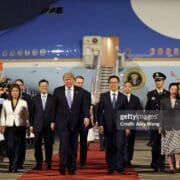
News Americas, NEW YORK, NY, Thurs. May 14, 2026: From Beijing this week, the first US state visit to China in nine years is being staged for the world to see. The Great Hall of the People is open to Donald Trump, who has traveled with eighteen US executives – Apple, Tesla, BlackRock, Boeing, and Nvidia among them. A state banquet on Thursday, followed by tea and lunch on Friday.

On the streets of Beijing, ‘the Beast‘ has been securing the motorcade route since last week, flown in by C-17 ahead of Trump’s arrival to meet with Chinese president Xi Jinping. The international mainstream press is calling this a thaw between Washington and Beijing. Trump’s actions seem to speak otherwise.

Encountering a Different China

The last US state visit to Chinese soil was Trump’s own, in November 2017 – at the start of the US-imposed trade war that would deepen under Biden and intensify in his second presidency. The China that received him then was still learning to respond to the aggressions. The China that receives him now has spent nine years diversifying its export markets, building supply chain autonomy, developing the technological leverage to push back, while turning towards Global South countries. Trump’s failed tariff war against China ended up hurting its own economy and people more than China’s, and Beijing’s export controls on rare earth elements ultimately forced Trump to back down. The eighteen US executives in the delegation, including Tim Cook, Elon Musk and Nvidia’s Jensen Huang, have come because their companies cannot do without the Chinese market. The economic instruments of US containment have not produced the result Washington wanted.

The War on Iran

Since 28 February, the illegal US-Israeli war on Iran—which postponed this summit by six weeks – has killed Iran’s Supreme Leader Ali Khamenei and thousands of Iranian civilians. Meanwhile, more than 2,700 civilians have been killed in Lebanon, where US-Israeli strikes continue.

In retaliation against the US-Israeli aggression, Iranian missiles and drones have struck fifteen US military sites across Qatar, Bahrain, Kuwait, Jordan, Saudi Arabia and the UAE – Al Udeid Air Base alone hit by 44 missiles and 8 drones, with 217 structures damaged or destroyed and an estimated $5 billion in repair costs. In its eleventh week, despite the US naval blockade and bombings, Iran has mounted sustained resistance and the war has not gone as Washington predicted. It has made unmistakable what anti-war movements across our region have long argued: the bases sold to host nations are not shields but targets.

In the days immediately before his arrival, Trump rejected Tehran’s peace proposal as ‘garbage‘. On 11 May – the eve of his departure – the US Treasury sanctioned twelve more individuals and companies over Iran-China oil trade, and the same day, a group of US senators urged Trump to approve a new $14 billion arms package for Taiwan.

Beijing has not been silent. On 2 May, in answer to an earlier round of US sanctions on five Chinese refineries, China invoked its anti-sanctions Blocking Rules for the first time since their introduction in 2021: the US measures “shall not be recognized, enforced, or complied with” within Chinese territory. The Chinese Foreign Ministry called them illegal and unilateral, without basis in international law. Though the defiance was not unconditional – Chinese banks have been quietly advised to limit exposure to the sanctioned refiners—the public position is clear. In the same week, Chinese Foreign Minister Wang Yi received Iran’s foreign minister Abbas Araghchi in Beijing. China remains Iran’s largest trading partner and the principal buyer of its oil.

An Architecture of Containment

Iran is not the only war backdrop. Across the region, the architecture of US military presence is being expanded and accelerated. The same week of Trump’s visit, the largest joint military exercises in Philippine history concluded – Balikatan 2026, with seventeen thousand foreign troops from seven nations, Japanese anti-ship missiles positioned on Filipino soil, and a new US fuel depot in the south of the country. In central Luzon, the Philippines has granted 4,000 acres in New Clark City to the Pax Silica Initiative—a US-controlled high-tech zone operating under US common law and granted diplomatic immunity, on a lease renewable for 99 years.

On 28 April, the commander of US Forces in Korea, General Xavier Brunson, told the Japan Times that Washington is building a ‘kill web‘—a networked system fusing Korea, Japan and the Philippines into a single architecture against China, Russia and North Korea. In August 2025, Trump told reporters of the US base at Pyeongtaek that he would like to “get ownership of the land where we have a massive military base” in South Korea, a country where the US has 66 military bases. In Japan, military spending is being doubled – the largest rearmament since 1945 – with 400 US Tomahawk missiles purchased, a project that has continued and accelerated under right-wing Prime Minister Sanae Takaichi. For Taiwan, Trump authorized $11 billion in arms in December, the largest package in history, and has told the press he intends to discuss arms sales—with Xi himself.

From Hyperimperialism to Hands off Asia

What is on display in Beijing this week is not a thaw, and the executives traveling with Trump are not a sign of moderation. The economic and military aggression against China are two halves of the same project of containment. This is hyperimperialism: an empire turning increasingly to force as its economic dominance erodes, with China and other Global South countries defending their sovereignty as the primary targets. Trump’s transactional style is not a departure from US imperialism but the form it takes when its economic instruments no longer deliver.

The Hands Off Asia campaign, launched on 30 April—the anniversary of the liberation of Vietnam—by the International People’s Assembly and partner organizations across our region, calls for the removal of foreign military bases from Asia, the cancellation of aggressive pacts like AUKUS and the Quad, and the redirection of military spending towards the needs of our peoples. The architecture being expanded across our region was not built to protect the people but to encircle China and discipline the rest of Asia. As Trump arrives in Beijing this week, no deal signed at the Great Hall will hide what his administration is building across our region—and the peoples of those places, from Okinawa to Subic, from Pyeongtaek to Tehran, see this war-mongering for what it is and oppose it, calling for: Hands off Asia.

EDITOR’S NOTE:  This article was produced by Globetrotter. Tings Chak is the Asia co-coordinator of Tricontinental: Institute for Social Research and co-editor of Wenhua Zongheng: A Journal of Contemporary Chinese Thought. She is based in Beijing.

Source: Globetrotter

The British Empire They Carried: The Fractured Identity Of Britain’s Caribbean Generation

By Nyan Reynolds

News Americas, NEW YORK, NY, Weds. May 13, 2026: There are elderly men and women throughout the Caribbean today who grew up saluting the British flag, singing “God Save the Queen,” learning British history in school, and pledging allegiance to a Crown that once claimed them as its own. Many of them are now in their sixties, seventies, and eighties, yet few fully understand that at one point in history, they were legally tied to the British Empire as nationals of the United Kingdom and Colonies. Even fewer understand what happened to that identity after independence arrived across the Caribbean.

Recently, I began asking older Caribbean people a simple question:

“Did you know that before independence, you were legally connected to Britain as a colonial national?”

Most looked confused.

Citizen Of The United Kingdom And Colonies

Some had never heard the term “Citizen of the United Kingdom and Colonies,” commonly referred to as CUKC. Others assumed that because Jamaica, Trinidad, Barbados, and other Caribbean nations later became independent, whatever relationship existed before simply disappeared without consequence. A few believed they were always only Jamaican, Trinidadian, or Barbadian. Yet history tells a far more complicated story.

For generations born under British colonial rule, identity was never as simple as geography. A child born in Jamaica in 1957 was not born into the same constitutional reality as a child born in Jamaica in 1970. One was born into the British Empire. The other was born into an independent nation. That distinction matters because law shapes identity, and identity often survives long after laws change.

Before Jamaica gained independence in 1962, it was a British colony. The same was true for many Caribbean territories that existed under British control for centuries. People born in these colonies were classified under British nationality law as British subjects and later as Citizens of the United Kingdom and Colonies following the British Nationality Act of 1948. Their nationality did not come from words printed on a birth certificate. It came from the legal structure governing the colony itself.

In practical terms, this meant that many Caribbean people born before independence were legally tied to Britain. They were part of an imperial system that viewed the colonies not as foreign lands, but as extensions of British rule. This reality shaped every aspect of life. Children attended schools that centered on British history and British values. They learned about British monarchs, wars, literature, and patriotism. Portraits of the Queen hung in classrooms. The Union Jack represented authority and national belonging. The British Empire was not presented as distant. It was presented as home.

This is one of the most overlooked psychological consequences of colonialism.

Colonial education did not merely teach subjects. It taught identity. It cultivated loyalty to the empire and produced generations who were conditioned to see Britain as the political and cultural center of their world. Many Caribbean people grew up knowing more about English kings and queens than they knew about African civilizations, Caribbean resistance movements, or their own ancestral histories. Their worldview was filtered through the lens of empire.

INDEPENDENCE

Then independence arrived.

For countries like Jamaica, Trinidad and Tobago, and Barbados, independence represented liberation, dignity, and self-determination. These nations could finally govern themselves without direct colonial oversight. Flags changed. Constitutions changed. Political power shifted into local hands. Across the Caribbean, independence was celebrated as the birth of a new national consciousness.

Yet, beneath the celebration lay another reality rarely discussed.

A generation of people who had spent their entire lives being shaped as colonial subjects suddenly found themselves politically reclassified. The imperial identity they inherited no longer carried the same meaning it once had. Many transitioned from being legally connected to Britain to being citizens of newly independent Caribbean nations almost overnight. The empire that once claimed them was shrinking, and as it shrank, so too did the meaning of imperial citizenship.

This created a profound contradiction.

How do you spend your childhood singing “God Save the Queen,” pledging loyalty to Britain, and learning that you belong to an empire, only to later discover that the relationship was politically temporary?

How does a person emotionally process the idea that they were once considered part of Britain, only to later become categorized as separate from it?

For many Caribbean people, these questions were never clearly explained. Life simply moved forward. Nations became independent, passports changed, and new national identities emerged. Yet the emotional and psychological transition was far more complicated than the constitutional transition.

The law changed quickly. Identity did not.

This fracture became even more visible during the Windrush era. Thousands of Caribbean people migrated to Britain after World War II to help rebuild the country. Britain faced labor shortages in transportation, healthcare, manufacturing, and public services. Caribbean migrants answered the call because many believed they were traveling not to a foreign country, but to what they had been taught was the “mother country.”

Some arrived holding British passports. Many had every reason to believe they belonged there legally and culturally. They worked in hospitals, factories, railways, and transit systems. They paid taxes, raised families, and helped shape modern Britain itself.

Yet decades later, many members of the Windrush generation found themselves questioned, detained, denied healthcare, denied employment, and even threatened with deportation because they could not produce paperwork proving rights they once assumed were unquestionable. The Windrush scandal exposed a painful truth about empire: people who were once welcomed as imperial citizens later became treated as immigrants whose belonging could be challenged.

That contradiction still echoes across the Caribbean diaspora today.

Many elderly Caribbean people do not fully know the legal history of their former status within the empire. They remember the flag. They remember the songs. They remember the schools and the rituals of British colonial life. But few were taught how dramatically their political identity shifted after independence. Some still carry an emotional attachment to Britain while simultaneously identifying deeply with their Caribbean nationhood. Others reject colonial identity altogether because of the harm colonialism inflicted upon the region.

The result is a layered identity that cannot be reduced to a single label.

ANCESTRY

Many Caribbean people are African by ancestry, Caribbean by culture, British by colonial formation, and part of a wider Black Atlantic experience shaped by slavery, migration, empire, and resistance. The modern world prefers clean national categories such as citizen, immigrant, foreigner, or national. But the empire created identities far more complex than modern immigration systems are comfortable admitting.

This is why history matters.

Not because people want to remain trapped in the past, but because the people who lived this history are still alive. There are senior citizens walking throughout Jamaica, Trinidad, Barbados, and the broader Caribbean who were born into one constitutional reality and aged into another. Some never understood the transition. Some never questioned it. Some are only now realizing that the empire they pledged loyalty to once considered them part of itself.

Their story deserves to be told because identity is not merely paperwork. It is memory. It is education. It is belonging. It is the stories nations tell people about who they are.

The Caribbean carries deep scars from colonialism, but it also carries forgotten truths. One of those truths is that there exists a generation whose lives were shaped by an empire that later redrew the boundaries of belonging around them. They were taught to see Britain as home while simultaneously being kept at the edges of it. They inherited an identity that dissolved politically even while its psychological imprint remained.

And perhaps the greatest tragedy is not simply that this happened, but that so many people who lived through it were never fully told the story of who they once were.

EDITOR’S NOTE: Nyan Reynolds is a U.S. Army veteran and published author whose novels and cultural works draw from his Jamaican heritage, military service, and life experiences. His writing blends storytelling, resilience, and heritage to inspire readers.  

RELATED: The Rebel We Need Again: Jimmy Cliff, John Lewis, And The Disappearing Courage To Speak

Guyana-Venezuela Border Battle: The Battle For Global Narrative

By Ron Cheong

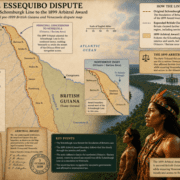
News Americas, Tues. May 12, 2026: Guyana has undergone a remarkable transformation over the last decade, following the discovery of vast offshore oil reserves, and has emerged as the world’s fastest-growing economy.  President Irfaan Ali has expressed confidence that the coming decade could prove even more extraordinary, driven by rapid advances in infrastructure, energy, technology, and national development. Yet, amid this unprecedented progress, a serious shadow remains: the Guyana-Venezuela border battle continues. Venezuela continues to lay claim to nearly two-thirds of Guyana’s territory, including the resource-rich Essequibo region. Although Venezuela maintains that it does not recognize the International Court of Justice’s jurisdiction, the long-running border controversy has finally come before the Court for adjudication.

The Law, Historical Record, And Established Practice Favor Guyana

Based on the evidence presented so far, it appears highly likely that Guyana will prevail in the case now before the International Court of Justice at the Peace Palace.  This may not be the end, but hopefully it might at least be the beginning of the end.

The law, the historical record, and decades of established state practice all strongly favor Guyana’s position. Venezuela itself celebrated the 1899 Arbitral Award as a victory at the time, having secured control of both banks of the strategically vital Orinoco River – a settlement that remained effectively uncontested for more than sixty years.

Since then, Guyana’s engagement with Venezuela, including during the 1966 Geneva Agreement process, has consistently reflected the posture of a responsible neighbor: acknowledging Venezuela’s differing position while steadfastly maintaining its sovereignty and territorial integrity.

Venezuela’s Two-Pronged Gambit: Invoking Post-Colonial Injustice

Despite its claims and periodic provocations, including the recent brooch controversy, Venezuela increasingly appears to understand that its legal position before the Court is weak. As a result, Caracas seems to be pursuing a parallel strategy aimed at shaping international perceptions – not only through legal submissions before the ICJ, but also through a broader diplomatic and public-relations campaign rooted in the language of colonial injustice.

Venezuela argues that the 1899 arbitral process was tainted by manipulation and that the country, weakened and vulnerable at the time, was effectively overpowered by the then-dominant British Empire. That narrative carries emotional and political resonance, particularly across the Global South, where many nations still bear the scars of colonial exploitation and unequal power relations.

Moreover, Venezuela’s diplomatic and public relations offensive appears to be entering a more aggressive – yet far more polished and strategically disciplined phase. Ironically, the removal of Nicolas Maduro, whose administration was widely associated with international isolation, confrontation, and criticism, may have created an opening for a recalibrated Venezuelan leadership to refine its messaging and international posture. The tone is now more measured and sophisticated, crafted to appeal to global audiences and diplomatic institutions, but the substance remains every bit as strident, uncompromising, and expansionist in advancing Venezuela’s longstanding claims over Guyana’s Essequibo region.

On Saturday, Venezuela’s acting President made a dramatic televised announcement declaring that she was traveling to The Hague to personally represent Venezuela in the case before the International Court of Justice, asserting that it was her duty to defend what she described as Venezuela’s “inalienable rights.” The highly choreographed declaration underscored Caracas’ increasingly assertive diplomatic campaign – one designed not only to challenge Guyana’s position legally and politically, but also to project confidence, legitimacy, and resolve on the international stage.

Guyana’s options are therefore either to actively, though discreetly, counter this international public-relations offensive or to allow the eventual ICJ ruling to speak for itself.

Venezuela’s acting President, appeared personally before the International Court of Justice on Monday in what many viewed as an unusually
confrontational and another highly choreographed public relations offensive. Her extraordinary personal appearance before the Court – despite Venezuela’s repeated claims that it does not recognize the ICJ’s jurisdiction, carried an unmistakably defiant and “in- your-face” message aimed as much at the international audience as at the judges themselves.

In a strikingly dismissive and unapologetic closing statement, Rodríguez declared that Venezuela would not accept any ruling by the Court affirming the validity of the 1899 Arbitral Award that definitively settled the boundary with Guyana. “Even if the Court were to declare
the award valid, Venezuela would be unable to comply with such a ruling,” she argued, insisting that any decision contrary to Venezuela’s position would itself violate the Geneva Agreement and international law.

The spectacle of Venezuela’s acting President personally delivering such a blunt repudiation of the Court’s authority appeared designed to project strength and nationalist resolve. Yet to many observers, it also reflected a government increasingly aware of the legal fragility of its
case and therefore turning to political theatre, diplomatic pressure, and media spectacle to compensate for weaknesses in the historical and legal record.

Building A Global South Narrative Of Its Own

Guyana would likely be better served by not allowing Venezuela to monopolize anti-colonial language. Guyana itself is a post-colonial state: a small developing country of fewer than one million people and approximately 83,000 square miles, facing sustained pressure from a neighbor of roughly 28.6 million people and more than 384,000 square miles in size.

This reality significantly undermines Venezuela’s attempt to invalidate the 1899 Award on the basis of power imbalance. If historical asymmetry alone were grounds to reopen settled borders, countless international frontiers across the developing world could become vulnerable to revisionist claims.

Guyana’s diplomatic messaging should therefore emphasize a central principle: post-colonial justice cannot mean overturning settled international borders whenever historical grievances are invoked.

At the same time, Guyana would benefit from quietly deepening relations not only with Caribbean states – where it remains a leading voice for regional unity, but also with members of the African Union, ASEAN states, and moderate Latin American governments. The broader framing should be clear: this is not “Britain versus Venezuela”; it is about protecting small-state sovereignty, international stability, and the sanctity of international law.

Guyana’s Posture: Dignified And Committed To International Law

If the ICJ rules decisively in Guyana’s favor, as many observers expect, Venezuela’s political establishment, regardless of ideology, may still find it domestically difficult to abandon the claim immediately.

For that reason, Guyana’s post-ruling messaging should avoid framing the outcome as a humiliating defeat for Venezuela. A measured, statesmanlike approach would lower the political cost for Venezuelan leaders to gradually moderate their positions over time. By contrast, triumphalist rhetoric could unintentionally harden Venezuelan nationalism for generations.

Any future provocations should continue to be addressed through the ICJ, the United Nations, CARICOM, the Commonwealth of Nations, the Organization of American States, and established diplomatic channels.

Guyana must continue to position itself, as it largely has throughout the dispute, as calm, lawful, restrained, and principled – thereby retaining the moral and diplomatic high ground as a defender of the rules-based international order while Venezuela risks being viewed as revisionist.

Going Forward: Reinforced Sovereignty And Greater Diplomatic Influence

Guyana could ultimately emerge from this dispute with internationally reinforced sovereignty, enhanced investor confidence, stronger diplomatic stature, greater regional influence, and recognition as a mature defender of international law.

A successful outcome before the ICJ would also significantly stabilize the environment for offshore energy development and long-term economic planning. In doing so, Guyana could become a modern example of how small states can successfully defend their sovereignty not through force, but through law, diplomacy, and international legitimacy.

EDITOR’S NOTE: Ron Cheong is a frequent political commentator and columnist whose recent work focuses on international relations, economic resilience, and Caribbean-American affairs. He is a community activist and dedicated volunteer with extensive international banking experience. Now residing in Toronto, Canada, he is a fellow of the Institute of Canadian Bankers and holds a Bachelor of Science degree from the University of Toronto.

RELATED:

CARICOM News: How U.S. And China Are Shaping Caribbean Energy

The Long Siege Of Cuba: CARICOM At Last Begins Pooling Cash For Cuba Relief Supplies

The Long Siege Of Cuba & Caribbean Geopolitics: The Prequel To King Kong And The Island

King Kong And The Island: America’s Moral Collapse And Cuba

Who Gets To Lead? Antigua & Barbuda At The Crossroads

By Dr. Isaac Newton

News Americas, NEW YORK, NY, May 12, 2026: A democracy weakens when leadership is mistaken for entitlement or when readiness is ignored in favor of assumption. If ordinary citizens are trusted to vote, then leadership must remain open to ordinary citizens who have been properly prepared to serve. This is a synopsis of the current situation in Antigua & Barbuda.

A child born into poverty is not a burden on a nation. That child is a possibility in motion. Yet, poverty alone does not prepare anyone to lead. In the same way, wealth alone does not prepare anyone either. Leadership is never inherited through circumstance. It is formed through discipline, learning, and character.

There is a danger on both ends of the spectrum. A poor and unprepared child will struggle to lead. A wealthy and self focused child will also struggle to lead. One may lack access to knowledge and training. The other may lack empathy and responsibility. Both conditions can produce failure. Leadership requires more than background. It requires readiness.

A nation suffers when emotion replaces evaluation, when status replaces skill, and when popularity replaces preparedness. Societies often send mixed messages about success. They elevate individuals based on family name, wealth, or influence while overlooking whether they are actually prepared to govern. At the same time, they romanticize struggle as though hardship alone guarantees leadership ability. Neither is true.

Education should produce wisdom, humility, and competence. It should not produce arrogance or resentment. A qualification may open a door, but character determines what a leader does once they enter. A strong country entrusts leadership to those who are prepared and disciplined, regardless of their background. Preparedness means understanding how to solve real problems, how to manage resources responsibly, how to serve people fairly, and how to make sound decisions under pressure. It also means emotional control, patience, and the ability to think beyond personal gain.

Without these qualities, leadership becomes unstable and harmful. Passion alone is not preparation. Many movements struggle because they focus on complaints without building solutions. It is easy to name problems. It is far harder to design systems that solve them.

Real leadership asks difficult and necessary questions. How will jobs be created. How will schools improve. How will corruption be prevented. How will decisions serve the entire population rather than a select few.

This truth is especially important for young leaders. Popularity is not preparation. Visibility is not readiness. Influence without discipline becomes risk rather than strength. A leader must think clearly under pressure, listen carefully, work with others, and carry responsibility for outcomes that affect an entire nation.

This challenge is not unique to Antigua and Barbuda. It is the challenge of every democracy. The question is never simply who has power or who has suffered. The real question is who is prepared, who is disciplined, and who is capable of selfless service.

Leadership must not remain trapped among the privileged. It must also not be handed to the unprepared simply because they have endured hardship. Strong democracies choose leaders based on readiness. Not background alone. Not emotion alone. Not popularity alone.

Poor and unprepared individuals cannot lead effectively. Wealthy and self centered individuals cannot lead responsibly. But those who are trained, disciplined, and morally grounded can rise from any circumstance and serve with excellence.

Leadership is not defined by where a person begins. It is defined by how they develop in wisdom, responsibility, and service to others. A nation becomes stronger when it chooses leaders who are prepared rather than merely passionate, disciplined rather than merely popular, and responsible rather than merely privileged.

When leadership is earned through preparation and character, democracy becomes stable, fair, and capable of lasting progress. Leadership is not inherited. It is built. Popularity is not preparation. Hardship does not qualify a leader. Character does. A nation is judged by how it chooses those who lead it.

Editor’s Note: Dr. Isaac Newton is a leadership strategist and governance expert in ethical leadership. He was educated at Harvard, Princeton, and Columbia. He advises leaders, educators, and institutions across the Caribbean and internationally on leadership, accountability, and human development.

RELATED: Mother’s Day Reflection – Mothers The World Forgot But Time Could Not Defeat

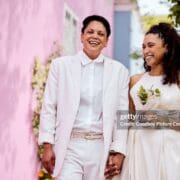
The BVI Says No To Same-Sex Marriage In New Constitution

By Staff Reporter | NewsAmericasNow.com

News Americas, ROAD TOWN, British Virgin Islands, Mon. May 11, 2026: British Virgin Islands Premier Natalio Wheatley has defended the decision by elected leaders to exclude same-sex marriage from the territory’s next constitution, even as negotiations with the United Kingdom continue and a related court challenge remains active.

Elected leaders recently accepted a recommendation from the Constitutional Review Commission to amend Section 20 of the Constitution to explicitly define marriage as a union between a man and a woman. Lawmakers subsequently expanded the wording further, agreeing that marriage should be defined specifically as a union between a man and woman of the opposite sex at birth – language intended, according to legislators, to provide greater constitutional certainty.

Premier Speaks At Public Engagement Session

The issue came to a head during a public engagement session on constitutional negotiations this week, when a resident directly challenged Premier Wheatley on why the government was choosing to deny same-sex marriage and what role the government should play in protecting minority rights – particularly while a court challenge involving same-sex marriage remains active in the territory.

Wheatley responded carefully, saying he did not wish to comment extensively given the active court proceedings.

“I don’t want any of my comments to impact the court proceedings,” the Premier said.

However, he stressed that the negotiating team remains mindful of internationally recognized human rights standards – particularly those linked to the European Convention on Human Rights, which the United Kingdom has extended to the BVI. “What I can assure you is the concept of adhering to principles, particularly the European Convention on Human Rights, is really foremost in our minds,” Wheatley said.

Room For Other Forms Of Partnership

The Premier also suggested that while marriage may continue to be traditionally defined in the constitution, there could still be accommodation for other forms of partnerships without discrimination – stopping short of elaborating on what specific legal framework that might involve.

Wheatley argued that BVI society is capable of holding both positions simultaneously. “At the very same time, ensuring that we defend and represent our culture, our heritage and our way of life,” he said. “I believe that in a tolerant society that we have here today, that it’s possible for those two things to coexist.”

UK Negotiations Still To Come

Critically, the constitutional proposals – including the marriage definition – are not yet final. The recommendations adopted by elected leaders remain subject to formal constitutional negotiations between the BVI and the United Kingdom before any final decision is made, leaving the door open for further debate and potential modification.

The tension between the BVI’s traditional cultural values and the human rights framework of the European Convention – which the UK has extended to its overseas territories – is expected to be a central point of discussion in those negotiations.

The outcome will be watched closely across the Caribbean, where several territories and independent nations are navigating similar debates around marriage definitions, minority rights, and the extent to which colonial-era legal frameworks should shape modern constitutions.