Posts

Haitian gangs’ gruesome murders of police spark protests as calls mount for U.S., Canada to intervene

Black Immigrant Daily News

The content originally appeared on: Caribbean News Service
A man shouts by a barricade of burning tires during a police demonstration after a gang attack on a police station and killed six officers in Port-au-Prince, Haiti, January 26, 2023.

Outraged rebel police officers paralyzed Port-au-Prince on Thursday, roaring through the streets on motorcycles in protest of a slew of killings of police officers by Haitian gangs. More than a hundred protesters blocked roads, shot guns into the air, and broke through gates in the capital’s airport and the prime minister’s house, with tensions escalating throughout the day.

Gangs have killed at least 10 officers in the past week; another is missing and one more has severe bullet wounds, according to the Haitian National Police.

Video circulating social media — likely recorded by gangs — shows the naked and bloodied bodies of six men stretched out on the dirt, their guns laying on their chests. Another video shows two masked men who are smoking cigarettes from the dismembered hands and feet of the dead men.

The gang that killed the police officers, known as Gan Grif, still has the bodies, police said.

The wave of grisly killings of police is only the latest example of escalating violence in the Caribbean nation, which has been gripped by gang wars and political chaos following the 2021 assassination of President Jovenel Moise. His unelected successor as head of the government, Prime Minister Ariel Henry, has asked the United Nations to lead a military intervention, but no country has been willing to put boots on the ground.

The U.N. estimates that 60% of Port-au-Prince is controlled by the gangs. On the streets of the capital, Haitians say it’s more like 100%.

This week, the U.N. special envoy for Haiti urged the American and Canadian governments to lead an international armed force to help Haiti combat the gangs.

The U.S. Embassy in Haiti tweeted Thursday afternoon asking for calm, and U.S. Ambassador Brian Nichols, Assistant Secretary for Western Hemisphere Affairs, in a message on his own Twitter account, condemned the gang violence that left the officers dead, repeated the call for calm and extend his condolences to the families of the slain officers.

He said the U.S. would “continue to impose costs on those responsible for this heinous violence,” but gave no indication of any new efforts by the U.S. or its regional partners to address it.

CBS News correspondent Pamela Falk reported that the U.S. and Mexico proposed two resolutions to the United Nations Security Council in October, one to enact an arms embargo and that would impose financial costs on Haitian gang leaders, and another to create a non-U.N. multinational force under the U.N. Charter’s “use of force” provision.

To date, there has been no agreement on a multinational security force.

“Dozens of women and children as young as ten years old have been brutally raped as a tactic to spread fear and destroy the social fabric of communities under the control of rival gangs,” U.N. special envoy for Haiti, Helen La Lime, told the Security Council this week. She said an estimated five million people face acute hunger in the tiny nation, which has a total population of only about 11.5 million.

CBS News’ Falk said La Lime had stressed that the U.S. and Canada had not refused to send a joint security force, but that the North American nations were treading with caution over the details of how such a force might work.

“The United States continues to work to address Haiti’s humanitarian crisis, as well as its insecurity and to support Haitian-led efforts to facilitate the political conditions that would lead to free and fair elections,” said U.S. Alternate Representative for Special Political Affairs Ambassador Robert Wood, acknowledging that “gang-related violence has reached unprecedented levels, which has only exacerbated the ongoing humanitarian crisis and hampered the ability to address the cholera outbreak, which has disproportionately impacted children and youth.”

Canada’s U.N. Ambassador, Bob Rae, said it was important to remember the history of “all previous military interventions in Haiti,” and he added that any new force “must be led by Haitians and by Haitian institutions.”

“We cannot wait,” Haiti’s own Ambassador to the U.N., Antonio Rodrigue, said this week. “The security situation could worsen any day, and worsen the fate of the people who are already suffering terribly.”

U.S. Customs and Border Protection agents have reported an “alarming” increase in boats full of migrants from Haiti and Cuba attempting to reach Florida in recent weeks.

Haitian police, meanwhile, are pleading for more resources.

The police deaths enraged members of Fantom 509, an armed group of current and former police officers that has violently demanded better conditions for officers.

Dozens of these men wove through Port-au-Prince on Thursday, many wearing hoods along with police uniforms, flak jackets and rifles and automatic weapons. They seized buses to blockade roads and torched tires across the city, leaving smoke plummeting through the streets.

Many demanded tougher crackdowns on the gangs, and called for the end to Henry’s administration, which many Haitians view as illegitimate. Demonstrators broke down one of the gates outside Henry’s home and a barrier at the Port-au-Prince airport, where he planned to make an appearance later in the day.

“We need a revolution,” screamed one protester dressed in a bullet proof vest, helmet and gas mask. “We are in the streets to fight, for our brothers and sisters who are victims of the bandits. We have to take to the streets every day to get what we want.”

A video recorded by local Haitian media shows empty streets and closed businesses on a key road of Port-au-Prince where the rebel group passed through.

In addition to the bodies displayed by the gang, a number of officers were killed last week in a firefight with gangs in a neighborhood that was once considered relatively safe.

Since Henry took the reins of the country, 78 police officers have been killed, according to a Thursday report by Haitian human rights group, National Network of the Defense of Human Rights.

The Haitian National Police expressed condolences to the slain officers’ families and colleagues, and said it’s “calling for peace and invites police officers to come together to bring forward an institutional response to the different criminal organizations that terrorize the Haitian people.”

“The movement will continue, we can’t let police get killed like this,” said one masked man in a police uniform carrying a pistol who did not want to be identified. “We can do the job if they give us ammunition.”

Donate At Caribbean News Service, we do not charge for our content and we want to keep it that way. We are seeking support from individuals and organisations so we can continue our work & develop CNS further.


NewsAmericasNow.com

CWI pays tribute to former West Indies batsman Irving Shillingford

Black Immigrant Daily News

The content originally appeared on: Caribbean News Service

Cricket West Indies paid tribute to Irving Shillingford, the former Dominica, Combined Islands and West Indies batsman who passed away on Thursday. He was 78.

Shillingford was a stylish and determined middle-order batsman who made his international debut at age 32 against Pakistan in March, 1977, where he played alongside Sir Clive Lloyd, Sir Viv Richards, Sir Gordon Greenidge and Sir Andy Roberts. In his second Test he made a huge impact with a memorable topscore of 120 at the Bourda Ground in Guyana. Overall, he played four Test matches and two One-Day Internationals.

After his career ended, Shillingford held several roles in regional cricket including manager and coach of the West Indies Under-19 team, selector and coach of the Windward Islands team, and made a major contribution to the development of the game at all levels in his native Dominica. A stand at the Windsor Park Stadium is named in his honor.

Ricky Skerritt, President of CWI paid tribute to Shillingford.

“On behalf of CWI I offer my sincere condolences to the family and loved ones of Irving Shillingford. He was someone who played in the true spirt of the game and pioneered the way for others to follow. He was also one of cricket’s finest gentlemen, and an astute thinker with a wealth of knowledge. Irving was dedicated to the game over six decades as a player and administrator. He worked patiently and tirelessly to make sure Dominica and the Windward Islands featured prominently in the cricket map of the Caribbean.”

Donate At Caribbean News Service, we do not charge for our content and we want to keep it that way. We are seeking support from individuals and organisations so we can continue our work & develop CNS further.


NewsAmericasNow.com

Antigua Gov’t set to repatriate West African visitors as temporary pause of chartered flights goes into effect

Black Immigrant Daily News

The content originally appeared on: Caribbean News Service
Melford Nicholas.

Cabinet spokesperson Melford Nicholas said the government may have to repatriate visitors from West Africa as they announce a major stumbling block in their pursuit of airline connectivity between the African continent and the Caribbean.

In its first post-Cabinet briefing since being re-elected to office, the government said it had decided to temporarily halt all chartered flights emanating from West Africa.

With reported cases of African visitors struggling to find accommodations and some claiming they are only in the country en route elsewhere, Minister Nicholas said the government was looking to organise flights for their return.

“It is recognised that there are a number of persons who had come on earlier flights who are still in Antigua and may need to be returned to their respective jurisdictions.

“We will obviously have to arrange for an aircraft to arrive to take those persons who are here back home in the coming days and weeks,” Nicholas said.

On December 28, Observer media reported that chartered flights organised by Abuja-based FastFlyLinks Travel & Tours were transporting persons including Cameroonians here for US$5,000 per person–the average Cameroonian earns 460,000 Central African CAF francs a month, equating to around US$750.

Some have said they are escaping a harrowing situation in Cameroon where a civil war has been raging for the last six years.

The minister conceded that some of the West Africans may have genuine reason for leaving their homeland.

When asked if the government had concerns about their safety if repatriated, Nicholas replied, “If there are Cameroonians who have found themselves here and are in distress and have need for consideration of what you just mentioned, then I am sure we have mechanisms in place to deal with those.”

He confirmed that none had so far approached the Ministry of Foreign Affairs for consideration of asylum.

The Information Minister went on to further explain the government’s decision to suspend the charter flights.

“Antigua Airways, in order to establish the commercial viability of the route, arranged a few [chartered flights] and that came with clamour.

“What had transpired since was that their efforts was imitated by another operator who would have arranged another charter outside of the knowledge of the government,” Minister Nicholas said.

He said that some charter operators were using Antigua and Barbuda as a “stepping-stone” and, therefore, the government had to suspend the routes from Africa to Antigua.

Minister Nicholas called this situation an abuse of the government’s intention.

“If that opportunity has now lent itself to abuse, we certainly have to do the responsible thing and to curtail the use of the chartered flights to be able to ensure that, once we have established the routes properly,” he said.

Antigua Airways, which was a partnership between the Antiguan government and Nigerian investor, Marvellous Mike, has been under much scrutiny since its initial announcement in July 2022 and the first flight landing in November 2022.

The airline company once touted by the government as a boost for regional connectivity to the African continent had not been in compliance with Eastern Caribbean Civil Aviation Authority (ECCAA) rules, according to Cabinet notes.

However, Information Minister Melford Nicholas said that it was not the case that Antigua Airways had contravened ECCAA rules.

“It’s still not known to us that Antigua Airways has done any violation but…below the radar, another entity would have organised a charter with the intent of using Antigua as a trans-migration pathway into South America…and so that is the reason we have closed the option for any chartered flights like that,” he added.

Donate At Caribbean News Service, we do not charge for our content and we want to keep it that way. We are seeking support from individuals and organisations so we can continue our work & develop CNS further.


NewsAmericasNow.com

Barbados Hotel and Tourism Association BHTA appoints new CEO

Black Immigrant Daily News

The content originally appeared on: Caribbean News Service

The Barbados Hotel and Tourism Association (BHTA) has announced the appointment of a new Chief Executive Officer (CEO). He is Ryan Forde, who will officially take up the post on February 13.

With over 12 years of experience in the industry, Forde has held various management positions during that time including Sales and Marketing Manager, Group Sales Manager and Marketing Officer at local, regional and International brands.

Forde holds a Master’s Degree in Tourism and Hospitality from EADA Business School (Barcelona, Spain) and a Bachelor’s Degree with honours from the Barcelona Business School (UIBS) in International Business with a minor in Tourism Management.

The new CEO is honoured to be the first Barbadian to be accepted and graduate from the Elevator Management Trainee programme for Hilton Worldwide, where he trained as a Manager across multiple brand hotels and departments within Hilton throughout the Caribbean and Latin America.

With a proven track record of successfully delivering on significant marketing projects and sales initiatives, Forde explained that he is up for the challenge of being one of, if not, the youngest CEOs to join the BHTA team and noted that his main mission is to work towards the continuous improvement, growth and success of the Barbados tourism industry.

Chairman of the BHTA, Ren?e Coppin, said the Association was thrilled and delighted to welcome Ryan as its newest CEO, “Our Board of Directors and members have expressed unanimous delight at his selection. In our 70th year of existence as an association, as a mature tourism destination coming out of a pandemic, we feel it is time for our industry to take fresh guard.

“Ryan represents the new face of the organisation while incorporating the best of our traditional values of excellence, which we hold dear as an association. He is a young, intelligent, well-educated, and trained industry professional and totally symbolizes our commitment to bring the best and brightest into this, our island’s leading industry.”

Donate At Caribbean News Service, we do not charge for our content and we want to keep it that way. We are seeking support from individuals and organisations so we can continue our work & develop CNS further.


NewsAmericasNow.com
CDB Chairman Encourages Greater Youth Focus by Regional Institutions

Black Immigrant Daily News

The content originally appeared on: Caribbean News Service

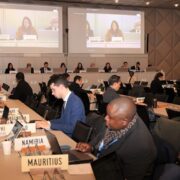
“We need all regional institutions to cater to the needs of young people” says Chairman of the Board of Governors of the Caribbean Development Bank (CDB) and Prime Minister of Saint Lucia Philip J. Pierre. Speaking at a youth focused panel discussion on January 23 at CDB Headquarters, in Barbados, the Bank’s Chairman pointed out that more can be done for the region’s young people.

While highlighting the unrecognized contributions of the various regional organisations he indicated that “… they (the regional institutions) must focus more on people to measure their success. The impact must be how they have changed the lives of the people of the region.”

The Prime Minister added “We are in a very strange situation in the Caribbean in that our population is aging, but we still have a very young population and we have to find a measure between taking care of our aging population and dealing with the needs of our younger people. This calls for innovation and for us to think outside the box.”

Relaying Saint Lucia’s experience he shared with the Bank’s personnel local pursuits which seek to engage and empower the younger members of their society. The country has focused on the youth economy and is seeking to monetize the skills and interests of young Saint Lucians. Through various programmes the State is directing them towards entrepreneurship by providing technical support and mentorship in an unconventional way. This approach, he revealed, ensures flexibility and agility in response to the needs of fledgling business-persons creating a space in the economic structure for youth to follow their passion and utilize their talents to contribute to the economy.

He encouraged the region’s young persons, some of whom were present at the panel and shared their views, to continuously challenge and critique the system and offer solutions to accelerate changes and improvements for their benefit and that of their families and societies.

Participating in the panel discussion were Rachel Skeete and Sariah Boyce of Parkinson Memorial Secondary School, Elizabeth Taylor and Jazeera Kothdiwala of Samuel Jackman Prescod Institute of Technology as well as Andwele Boyce, Senator (Barbados), Megan Theobalds, Former CARICOM Youth Ambassador (Barbados), Edith Emmanuel, Project Officer, Education Quality Improvement Project (Equip) Saint Lucia and Kendell Vincent, Chair, Caribbean Regional Youth Council.

CDB’s staff attended the event which examined education, mental health and opportunities for meaningful youth engagement. The engagement was facilitated as part of the Chairman’s visit to CDB’s Barbados offices where he met with the Bank’s President Dr Hyginus “Gene” Leon and other members of the executive management team.

Donate At Caribbean News Service, we do not charge for our content and we want to keep it that way. We are seeking support from individuals and organisations so we can continue our work & develop CNS further.


NewsAmericasNow.com

Being homosexual is not a crime

Black Immigrant Daily News

The content originally appeared on: Caribbean News Service
(The writer is Antigua and Barbuda’s Ambassador to the United States of America and the Organization of American States. He is also a Senior Fellow at the Institute of Commonwealth Studies, University of London and Massey College in the University of Toronto)

By Sir Ronald Sanders

“Being homosexual is not a crime. We are all children of God, and God loves us as we are and for the strength that each of us fights for our dignity.” Those words were spoken by Pope Francis, easily the most radical pontiff that the Roman Catholic Church has ever had.

The Pope was speaking in an interview with the Associated Press that was published on January 25, ahead of a planned tour of two African countries, South Sudan and the Democratic Republic of the Congo (DRC). The African continent ranks among the most homophobic regions of the world. Apart from South Africa, Mozambique and Angola, which are countries whose governments and peoples are most tolerant of homosexual rights, the majority of African nations rate equally with the intolerant governments of Russia, Afghanistan, Saudi Arabia, Iran and Iraq.

Throughout his papacy, Pope Francis has advocated a less doctrinal policy approach for modern Catholicism. Francis is a man of his time, determined not to harden the Church’s anachronistic positions in times, which have changed, with a greater emphasis on human rights, including gay rights. In the interview with the Associated Press, he emphasised the Holy See’s position that laws that criminalize homosexuality outright are “unjust” and that the Church must work to put an end to them.

He did not spare Bishops of the Church who support laws that criminalize homosexuality. He said that they need to “have a process of conversion” and should apply “tenderness, please, as God has for each one of us.” Whether he has opened the eyes, ears and hearts of the controlling hierarchy of the Church is left to be seen.

What is certain is that Francis has succeeded in humanising the face of the Church which, for centuries, imposed repressive rules on its followers that, politically, supported colonialism, imperialism and racism. In a socio-economic context, its rules on abortion, caused suffering and hardship for poor communities around the world, particularly in Ireland and Latin America where Catholicism dominated.

The impact that his approach has achieved is evident in the leadership of Ireland and in parts of Africa. The current Taoiseach, or the head of government, of Ireland is Leo Eric Varadka who is the child of an Indian father and an Irish mother, and is a declared homosexual. Many prejudices – both racial and religious – were overcome with his election, in a remarkable tribute to the openness of the Irish people to change. But, the influence of Pope Francis, now completing a decade as a change-agent of the Church, contributed immensely to the freedom of thinking and attitudes in Ireland.

Similarly, his papacy has had a beneficial effect in Africa where recent statistics show 2.1 per cent growth in Catholic followers between 2019 and 2020. Out of a global population of 1.36 billion Catholics, 236 million are African or 20% of the total. Reports indicate that Catholicism is witnessing a “youth bulge” in Africa. This follows the effective transmission of Pope Francis’ message that churches, religious groups and governments show solidarity with young people. He calls them “the church of now.”

In November 2022, during a synodal consultation with African youth, he denounced the exploitation of Africa by external forces and its destruction by wars, ideologies of violence and policies that rob young people of their future. That message by the Head of a Church, which conspired with many authoritarian regimes in Latin America, Europe and in parts of Africa and Asia, to exploit and repress their people, has a powerful appeal.

Nonetheless, his visit to South Sudan and the DRC will not be without its problems. In the interview with the Associated Press, Pope Francis acknowledged that in Africa and other parts of the world, there needs to be change in relation to anti-homosexual laws. Responding to the question, “Can the Church contribute to repealing these laws?”, he was unequivocal, saying: “They have to do it. What happens is that they are cultures in a state and the bishops of that place, although they are good bishops, [they] are part of the culture and some still have their minds in that culture. The bishops also have [to undergo] a process of conversion.”

Some of these reluctant Bishops exist in South Sudan and DRC as they do in other parts of Africa and the Caribbean. Having been nurtured in a culture of intolerance, they find adjustment to a new dispensation difficult. Although, as Pope Francis pointed out, “In the catechism of the Catholic Church it says that people of homosexual tendency have to be welcomed, they do not have to be marginalized”. He makes it clear that “Every man and woman has to have a window into his life where he can pour his hope and where he can see the dignity of God. And being gay is not a crime. It’s a human condition.”

Throughout most of the world, societies and governments have accepted that “being gay is a human condition.” The result is that members of the LGBTQIA community have attained high positions in all sectors of society. While there may be little hope in authoritarian countries, such as Russia, Afghanistan and Iran, it is past time for more progressive societies to heed the counsel and wisdom of Pope Francis, who has emerged as an enlightened, caring example of the best of humanity.

I had the privilege of working with a former Justice of the High Court of Australia, Michael Kirby, when we were members of the Commonwealth Eminent Persons Group, which was commissioned by Heads of Government to propose ways of reforming the Commonwealth in 2010. Justice Kirby urged all members of the Group to recommend abolition of the homosexual laws, which were imposed on its colonies by the colonial British government – laws which Britain itself repealed but are retained to this day by some Commonwealth countries in Africa and the Caribbean.

He made this telling point to the group – if governments and civil societies had not taken a strong and determined stand against Apartheid in South Africa, and before that in Southern Rhodesia (now Zimbabwe), institutional racism would still exist in Africa, robbing the majority black populations of their right to equality, fairness and justice.

Kirby’s irresistible argument resonates in the words of Pope Francis.

Donate At Caribbean News Service, we do not charge for our content and we want to keep it that way. We are seeking support from individuals and organisations so we can continue our work & develop CNS further.


NewsAmericasNow.com

Haiti’s sexual violence survivors demand justice

Black Immigrant Daily News

The content originally appeared on: Caribbean News Service
A woman walks in a neighbourhood of Port-au-Prince, Haiti on February 6, 2018 [File: Andres Martinez Casares/Reuters]

Warning: The story below contains descriptions of sexual violence

The men came before sunrise, burning and destroying everything in their path before they reached *Sarah’s sheet-metal home in the impoverished Port-au-Prince neighbourhood of Cite Soleil. Then, they broke down the door.

“If it wasn’t for God, they would have killed me for sure,” the young Haitian woman told Solidarite Fanm Ayisyen (SOFA), a feminist civil society group in Haiti, about the July 2022 attack. She said three men raped her in front of her mother and two children before they let them all go.

“Thank God they didn’t do anything to my mother and children,” Sarah said in her testimonial, which was shared with Al Jazeera this month. “They let us go, but after a few minutes they set our house on fire.”

Sexual violence has surged in Haiti amid widespread gang killings and kidnappings, a political stalemate that has crippled most state institutions, and socioeconomic uncertainty across the Caribbean nation.

Over the past several months, criminal gangs vying for control of territory have enacted a campaign of terror in the capital of Port-au-Prince. They have used sexual violence “to instill fear and to punish and to terrorise” residents, a United Nations official recently warned.

“We are in an abysmal situation,” said Elizabeth Richard, programme coordinator at ActionAid Haiti, a non-profit group working to support sexual violence survivors in the country. With videos of gang attacks circulated widely on social media, Richard said a sense of numbness and dehumanisation has set in, eclipsing the scope of the problem.

“I don’t want it to be normal – because we have to reach a point where we say, ‘OK that’s enough’,” she told Al Jazeera. “In Haiti, [women] are the pillar of the society. If you have women experiencing this type of issue, how can you have a society at all in a sense?”

Cases skyrocket

SOFA, which operates five centres in support of sexual violence survivors in Haiti’s northwestern region of Grand’Anse as well as another centre in Port-au-Prince, documented a sixfold increase in reported rape cases in the capital between January and December of last year.

A senior SOFA representative, who spoke to Al Jazeera on condition of anonymity for fear of reprisals, said approximately 20 rape victims sought out the organisation’s help in Port-au-Prince each month between January and September 2022.

In November, that figure shot up to 77 – and it reached 123 in December. But the real number of sexual assaults is likely much higher because many cases go unreported, the representative said. “Every time that insecurity increases, women are the first targets,” they said in an interview this week, adding that incidents of gang rape also have become more common.

Fanm Deside, a women’s rights group based in Jacmel in southern Haiti, also said in its year-end report that it provided support to 508 victims of violence in 2022, including 39 rape survivors and five survivors of gang rape. Ten others were victims of attempted rape.

Both the SOFA representative and Richard at ActionAid Haiti said female Haitian merchants, many of whom are forced to travel across gang-controlled areas to make a living, are among those most vulnerable to attacks by gang members.

The United Nations Office of the High Commissioner for Human Rights also found in an October report (PDF) that gangs have tried to disrupt Haiti’s “social fabric” by targeting “women and girls crossing ‘frontlines’ or moving across neighborhoods on foot or in public transport to carry out their daily livelihood activities, such as going to work, to marketplaces or to schools”.

The result in many cases of sexual violence, said Richard, is that women abandon their jobs for fear of being attacked again, or are forced to seek out alternative fields of employment, which are scarce. “So of course this has repercussions on [household] income,” she said.

Access to justice

In the meantime, Haiti’s virtually non-existent government system has made seeking justice for acts of violence a seemingly impossible task.

The country no longer has any elected representatives as it last held national elections in 2016, and the administration of acting Prime Minister Ariel Henry – who took office two weeks after the assassination of President Jovenel Moise in July 2021 – faces a crisis of legitimacy.

In its October report, the UN said “impunity remains the norm” for sexual violence perpetrated by Haitian gangs, while the lack of accountability is made worse by insecurity and weak state agencies, including specialised police units that lack resources and gender sensitivity training.

“Rule of law institutions are not only under-resourced and understaffed, but they are affected by lack of independence and corruption. Their representatives are also subjected to intimidation and reprisals by gang elements,” the report found.

According to the SOFA representative, “the judicial system practically doesn’t exist” in the country. “So when women come and don’t find results … they get discouraged. And for us, too, we feel diminished compared to the type of service that we’re used to providing,” the representative said.

Richard at ActionAid Haiti also said many civil society groups working to stem sexual violence have few resources to respond to survivors’ needs, which include medical as well as psychological support. “You can try your best to respond to the need or to give the basic help needed, but the level of treatment that [is required] is tremendous,” she said.

But she said she remained optimistic that the veil of impunity could be broken. “Hope is possible, but officials and also the community, the international community, really need to support our justice system for these women to get the justice they deserve,” Richard said.

That is what *Sarah in Cite Soleil hopes for as she struggles to cope with the July attack.

“If there is a state in this country, I only ask for justice,” she told SOFA. “Since I was raped I don’t feel like a human anymore. I don’t feel like a human being anymore … I don’t feel like I have a life anymore. I ask for justice.”

*Pseudonym used for fear of reprisals

Donate At Caribbean News Service, we do not charge for our content and we want to keep it that way. We are seeking support from individuals and organisations so we can continue our work & develop CNS further.


NewsAmericasNow.com
Pressure mounts to remove polluters, not just oil exec, from UN climate talks

Black Immigrant Daily News

The content originally appeared on: Caribbean News Service
Simon Stiell

Today, through an open letter, 425 civil society groups and representatives of UNFCCC observer groups have expressed widespread condemnation to news from earlier this month that Sultan Al Jaber, an oil executive of Abu Dhabi National Oil Company (ADNOC), would be overseeing this year’s UN climate talks happening in the United Arab Emirates (UAE) in November.

These signatories, representing millions of people from across the globe, are calling not only for a COP28 president that is free and independent of fossil fuel influence, but for an end to the undue influence that allowed his appointment in the first place.

In the letter to the Parties of the UNFCCC, Simon Stiell, executive secretary of the body, and United Nations Secretary General Ant?nio Guterres–who has not minced words about the fossil fuel industry’s deceit and its catastrophic expansion plans–the constituencies and groups detail ADNOC’s outsized role in fueling the climate crisis, as well as the negligence of world governments in allowing polluters to steer the agenda of global talks.

“Polluters have a role to play: stop polluting. They cannot be placed on a leadership pedestal and certainly not in a position to undermine and weaken policy. That is basically nonsense. The UNFCCC is not only reluctant to accept a straightforward conflict of interest policy, but it is undermining its already weak international trust year after year,” said Gadir Lavadenz of the global campaign to Demand Climate Justice, a member of the global Kick Big Polluters Out (KBPO) network behind today’s letter.

The 450+ organization network is calling for the UNFCCC to adopt an Accountability Framework that prevents the world’s largest polluters from steering global climate policymaking.

Absent controls on industry interference, legions of lobbyists converge on annual climate talks each year. They even attend as members of country delegations, such as was the case with the UAE’s 1000-person delegation, which featured more fossil fuel lobbyists than any other country delegation.

What’s more, corporations like the world’s largest plastics polluter, Coca-Cola, were allowed to literally sponsor last year’s climate talks. 18 out of 20 COP27 sponsors either directly partner with or are otherwise linked to the fossil fuel industry. And at COP27, a PR firm with long ties to the fossil fuel and other pariah industries was retained to manage communications.

“The list of political interference and cooptation of the UNFCCC goes on and on. They make a mockery of the space and the critical work it needs to accomplish. The appointment of an oil executive is the tipping point and must now be the impetus at long last to retrieve the UNFCCC from a long descent into Big Polluters pockets,” said Coraina de la Plaza of Global Forest Coalition, another KBPO member organization.

Making Al Jaber’s appointment particularly insidious is that he helms a corporation that is among the top 15 corporations most responsible for carbon emissions. ADNOC’s expansion plans are second only to Qatar Energy globally. And these plans, not surprisingly, are entirely incompatible with International Energy Agency scenarios, among others, to avert even more catastrophic harms from climate change. ADNOC is even pledging to produce more than 5 million barrels of oil a day.

Further affirming the KBPO network’s call for enduring safeguards against polluting interests, world leaders like the United States government’s special envoy John Kerry and the EU’s Frans Timmermans have actually lauded Al Jaber’s appointment, with Kerry coining it a “terrific choice.” Kerry has argued the fact that he has also done some business in renewables somehow makes him a “balanced” pick, not a puppet of polluters.

Climate Action Network, a signatory to the letter, had voiced condemnation for this conflict of interest as soon as the news on Al Jaber’s appointment broke with a reaction from the CAN Executive Director Tasneem Essop.

Speaking more broadly today on the need for an accountability framework and conflict of interest policy by the UN, Tasneem Essop said:“For years, civil society groups have asked the UNFCCC to implement a conflict of interest policy and an accountability framework to stop big polluters and fossil fuel vested interests from hijacking the climate talks. It is no surprise that decisions to take actions against the main culprits of climate change was never on the agenda of the COP’s up until recently. And now we are at this outrageous point where the fossil fuel industry has one of its captains at the helm. There is no place for polluters at a UN climate conference, least of all in presiding over one. We have called on COP28 President Al Jaber to step down as CEO of ADNOC and also strongly call on the UNFCCC to put in place a robust conflict of interest policy now.”

The World Health Organization’s Framework Convention on Tobacco Control (WHO FCTC), had the foresight to address industry interference from the outset to strong effect. Other UN bodies such as the nascent pandemic and plastics treaty negotiating bodies are also facing similar calls to govern the engagement of vested commercial interests. And a binding treaty on business and human rights is nearing a decade of negotiation to deliver some modicum of accountability globally for corporations like those engaging most actively in the UNFCCC and other UN fora.

Signatories of the letter, as with peers in these aligned spaces, see corporate accountability mechanisms as fundamental to the success of the UNFCCC, not to mention climate action more broadly.As a starting point, organizations are demanding a COP28 president free of fossil fuel influence and for the interests of all COP28 participants to be proactively declared.

Donate At Caribbean News Service, we do not charge for our content and we want to keep it that way. We are seeking support from individuals and organisations so we can continue our work & develop CNS further.


NewsAmericasNow.com
UN and regional Governments intensify efforts under new UN Regional Cooperation Framework

Black Immigrant Daily News

The content originally appeared on: Caribbean News Service
UN Resident Coordinator, Didier Trebucq.

With only seven years left to deliver on the Sustainable Development Goals, Caribbean Governments and the United Nations have renewed their commitment to intensifying efforts to achieve the vision of the 2030 Agenda, under the new UN Muti-country Sustainable Development Cooperation Framework (MSDCF) 2022-2026.

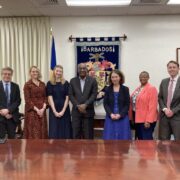
An inaugural meeting of a sub-regional Joint Steering Committee, the governing body charged with strategic oversight for implementation of the regional MSDCF in the Eastern Caribbean, was yesterday successfully held at UN House, with robust participation from government leaders. It was co-chaired by UN Resident Coordinator, Didier Trebucq and representative of the Government of Barbados, Minister in the Prime Minister’s Office, Senator Dr. Shantal Munro-Knight.

The hybrid meeting, follows a series of independent reviews of Country Implementation Plans at the country-level with key stakeholders, and brought together Heads and representatives from 13 UN Agencies, and Ministers and senior Government officials from across nine Eastern Caribbean member states. Fruitful discussions were held on how governments and the UN Development system will work together to ensure efficiency, UN results for 2022, and priorities for 2023, to build resilience and advance SDG progress.

In delivering opening remarks in his capacity as Co-chair, Trebucq said the first Steering Committee meeting was opportune for the Sub-region since it allowed partners to come together after one year under the Cooperation Framework, to continue their partnership in the work started last year.

“High debt burden, already a longstanding concern in this region is increasing its pressure on countries. This year alone global debt service payments skyrocketed to 35% – the largest increase in decades, and food insecurity has risen from 33% to 57 %. Coupled with the lingering effects of the pandemic and the acceleration of climate change, people and governments in the sub-region are increasingly facing difficult choices to build resilience. In this context, working together and working effectively is of paramount importance. And that is why we are here today,” the UN Head explained.

Identifying efforts around tackling learning losses following the pandemic, increasing access to financing and strengthening food-security as among the key critical issues delivered for the sub-region in 2022, the UN head said going forward increased attention would be placed on SDG acceleration, digitization across key sectors, and climate change and resilience , with greater emphasis on climate financing.

Co-chair, Senator Dr. Shantal Munro-Knight in addressing the gathering noted the unprecedented challenges that faced the region over the past two to three years in terms of intensity, continuity and impact. “I don’t think that there’s ever been a time in the history of the globe that we have seen shock, after shock, after shock coming, and particularly for small states,” she maintained, positing that the region is poised to overcome these challenges by virtue of its history of survival, strong partnerships and penchant for innovation.

“In the context of facing a crisis, we always know how to innovate with what we have. I point to the work that is being done in the context of greening our economies, the energy transitions that are happening, the efforts to digitize our economies and to essentially transform our social structures as well as our governance systems. I also point to the work that is taking place in the context of criminal justice reform, and a whole body of work that is happening within the region. We need to ensure that we continue to highlight the efforts that are being made with the assistance of the UN and other partners, to be able to continue to build and instill resilience into our countries,” she added.

Minister Munro-Knight also underscored the importance of having partners like the UN System that are focused on walking beside countries, focused on delivery, listening, being flexible, and ensuring that they are demand-driven. “Those are the partnerships that are going to define the extent to which as a region, we are going to be able to continue to thrive,” she maintained.

Despite myriad challenges, 2022 solidified regional progress, with 20 UN Agencies supporting development of 10 Country Implementation Plans, implementation of over 150 programme interventions, and the launch of 13 joint programmes across Barbados and the Eastern Caribbean. The MSDCF covers all the SDGs and supports Caribbean Governments in four strategic areas: shared prosperity/economic resilience; equality/ well-being /leaving no one behind; resilience to climate change/ sustainable natural resource management; and peace, safety, justice, and the rule of law.

Minister of Social Development, St. Vincent and the Grenadines, Orando Brewster; Minister of Sustainable Development, Environment, Climate Action and Constituency Empowerment, St. Kitts and Nevis, Dr. Joyelle Clarke; Minister of Finance, Climate Resilience and Social Security, Commonwealth of Dominica, Dr. Irving McIntyre; Permanent Secretary in the Ministry of Foreign Affairs (MSDCF Focal Point), Antigua and Barbuda, Ambassador Anthony Liverpool; Special Envoy of the Premier, British Virgin Islands, Benito Wheatley; Premier and Minister of Finance, Montserrat, Joseph Farrell, were among key Government leaders providing country- specific highlights on successes, key implementation challenges and interventions that should be prioritized for 2023.

Donate At Caribbean News Service, we do not charge for our content and we want to keep it that way. We are seeking support from individuals and organisations so we can continue our work & develop CNS further.


NewsAmericasNow.com
Applications Open for 2024 Young Leaders of the Americas Initiative Fellowship Program

Black Immigrant Daily News

The content originally appeared on: Caribbean News Service

The U.S. Embassy in Bridgetown is pleased to announce the opening of the application period for the Young Leaders of the Americas Initiative (YLAI) Fellowship Program.

Through the YLAI Fellowship, up to 280 business and social entrepreneurs from across the Caribbean, Latin America and Canada build leadership skills and collaborate with U.S. host organizations and mentors to address shared business challenges.

Applications are now being accepted at https://ylai.state.gov through February 15, 2023.

Launched in 2015, YLAI is the Department of State’s flagship program to empower emerging entrepreneurs from the Western Hemisphere to enable the full economic potential of the region’scitizens.

Combining a fellowship program, an active and open online network, and ongoing activities organized by U.S. embassies and consulates, YLAI fosters prosperity, inclusive development, and democratic values.

YLAI also promotes U.S. business models, increased trade, and job creation. The YLAI Fellowship Program is funded by the U.S. Department of State’s Bureau of Educational and Cultural Affairs and implemented by IREX.

To apply for the YLAI fellowship program, and to join the free YLAI Network, please visit https://ylai.state.gov or visit the U.S. Embassy website at www.bb.usembassy.gov.

Donate At Caribbean News Service, we do not charge for our content and we want to keep it that way. We are seeking support from individuals and organisations so we can continue our work & develop CNS further.


NewsAmericasNow.com