Posts

Our Planet Versus Plastic Bags–A Tale of Two Cities

Black Immigrant Daily News

The content originally appeared on: Caribbean News Service

By Erika Schelby

With oceans, countries, populations, and governments inundated by a plague of plastic worldwide, it may be useful to focus on the single-use plastic bag choices made by two cities, in the same U.S. state, located at a distance of only 64 miles (104 km) from each other. Both Santa Fe and Albuquerque share many qualities and conditions, foremost among them a distinctive cultural mix of American, Hispanic/Latino, and Native American citizens. But the two communities are also dissimilar, and this is reflected in the way they have dealt with the plastic bag dilemma.

Santa Fe is the oldest capital city in the United States. It is the seat of the New Mexico government and is home to the country’s third-largest art market. It calls itself “the City Different” and has more than 250 art galleries and dealers, a dozen state and private museums, and a world-class opera, for its more than 88,000 residents.

The “costly negative implications for tourism, wildlife and aesthetics” led Santa Fe to ban single-use plastic carryout bags with Ordinance No. 2015-12 in April of 2015. The decision was also made “to protect the environment while reducing waste, litter, and pollution in order to help improve the public’s health and welfare.” In April 2016, an open letter was sent from the mayor and addressed to the local businesses explaining the project and the new rules in detail.

Nearby Albuquerque is also attractive but less rarefied and more of a workhorse city. It is much larger with a population of 562,599 as of 2021, a growth rate of 24.8 percent since 2000, and a metropolitan area population of 942,000 until 2022. It has a total of 49.8 percent Hispanic inhabitants. Most have lived here for generations. Located in the high desert along the Rio Grande, Albuquerque has several museums, an Old Town dating back to 1706, and various cultural and recreational attractions.

After long debates, Albuquerque’s Clean and Green Retail Ordinance became effective on January 1, 2020. Single-use plastic bags were banned from the point of sale. But then came the pandemic, and enforcement was deferred. Doing business at the retail level had already grown difficult and stressful for management, employees, and shoppers. Supply chains were disrupted. With the new challenges thrown up during the pandemic, these changes seemed all too much at once. The city council listened to the plight of constituents and decided to oppose Mayor Tim Keller’s progressive plastic bag ban. It voted 6-3 to revoke it. The mayor bravely vetoed the reversal. Yet on April 4, 2022, the councilors’ motion to override the veto passed with a vote of 6-3 once again. The ban on single-use plastic bags was lifted. Convenience won the battle against environmental concerns but did not win the war.

That struggle is undeniably bigger than one city council’s decision to put off what needs to be done. In 2007, San Francisco became the first U.S. city to pass a law against the use of single-use plastic bags. California followed by implementing a statewide ban in 2014. Puerto Rico and 10 states have enacted legislation to ban single-use plastic bags: California, Connecticut, Delaware, Hawaii, Maine, New Jersey, New York, Oregon, Vermont, and Washington. And in contrast to Albuquerque’s reversal of the ban, a growing number of American cities have introduced plastic bag bans or bans and fees–among them are Boston, Chicago, Los Angeles, Seattle, Boulder, New York, Portland, Washington, D.C., and San Francisco. Internationally, a growing number of countries have launched nationwide bans on producing, using, and distributing plastic bags.

Experiencing devastating floods in the summer of 1998, Bangladesh noted that thin plastic bags were clogging hundreds of storm drains and drainage systems during flooding, worsening the situation. This caused an estimated 80 percent of the flooding blockages in cities. So in 2002, Bangladesh implemented a ban on all plastic shopping bags in the nation, becoming the first country in the world to do so. Others followed. “According to a United Nations paper and several media reports, 77 countries in the world have passed some sort of full or partial ban on plastic bags,” reported Statista.

Unfortunately, such prohibitions are not enough. Despite the fact that Bangladesh became the world’s first country to ban plastic bags, their use continued to cause environmental harm. Its Department of Environment confiscated 592,223 metric tons of polythene from 2019 to 2021. The number of illegal polybag manufacturers increased from 300 in 1999 to an estimated 700 to 1,000 by 2021. In addition, until 2019, about 1.2 million metric tons of plastic waste was shipped in from the U.S. and the UK, making a bad situation worse.

Instead of finding solutions to the issues related to plastic pollution, reports by Western nonprofits and companies have, meanwhile, helped push the blame for polluting the world’s oceans onto “a small geographical area in East and Southeast Asia.” In July of 2022, the well-known nonprofit advocacy organization Ocean Conservancy delivered an official apology for the damage done by a report it coauthored along with McKinsey Center for Business and Environment in 2015: Stemming the Tide: Land-Based Strategies for a Plastic-Free Ocean.

Impeccably written, professional in tone, and convincing in language, the report claimed research had shown that more than half of the plastic pollution entering the ocean originated from five Asian countries: China, the Philippines, Indonesia, Vietnam, and Thailand. The report claimed that “increasing economic power” and “exploding demand for consumer products” had led these countries to produce and use plastic heavily, and they lacked the infrastructure to deal with the resulting plastic waste tsunami. Consequently, the waste ended up in the ocean. The study argued that the most effective way to deal with this was through recycling. What was meant by this euphemistic term was the deployment of waste-to-energy technology: gasification, and incineration.

Yet burning plastic discharges a potent and dangerous mix of toxins and greenhouse gases into the atmosphere and into the communities unfortunate enough to be near the incinerating sites. Moreover, for a number of rich countries with environmental restrictions, the cynical hype for recycling has fostered the export of plastic trash to less developed countries like Bangladesh, resulting in the charge of “waste colonialism.” Additionally, the report created an injurious and false narrative. Although it was removed from the Ocean Conservancy website, it lingers on as a sophisticated and warning masterpiece of greenwashing. It is surprising that it took so long to acknowledge this truth, given the list of the project’s supporters: the Coca-Cola Company, the Dow Chemical Company, the American Chemistry Council, and the Recycling and Economic Development Initiative of South Africa, among others.

Meanwhile, with a March 2022 UN resolution adopted during the United Nations Environment Assembly 5.2 in Nairobi to end plastic pollution, governments have started to strive for a global, legally binding agreement by 2024. It could not be like another timid 2015 Paris Agreement. It needed teeth. So from November 28 to December 2, 2022, delegates from 150 countries met for the UN’s first session of the Intergovernmental Negotiating Committee (INC1) in Punta del Este, Uruguay, to begin negotiations that will eventually lead to an international plastics treaty. Or so one hopes. “Turn off the tap on plastic,” said UN Secretary-General Ant?nio Guterres. “Plastics are fossil fuels in another form.”

Indeed, that’s what they are: products made from oil and gas. Americans discard 100 billion bags annually, which are manufactured from 12 million barrels of oil. And what makes these flimsy thin, light, cheap, containers especially dreadful is perhaps the fact that globally 500 billion of them are used annually, for an average of only 15 minutes. After that brief moment in time, they are thrown away. Yet they go on polluting the environment and causing health hazards for years.

What is more, most of the 8.3 billion metric tons of plastic that have been manufactured since the 1950s remain in landfills or within the natural environment. By 2050, it is estimated that around 12 billion metric tons of plastic waste will reside in landfills or the natural environment. Plastic is a synthetic substance. It does not biodegrade. Eventually and very slowly the sun, wind, water, waves, and abrasion break it down into tiny particles. Single-use polyethylene plastic bags will take up to 1,000 years to photo-degrade. Effective recycling, specifically in the U.S., may be a pipe dream. The practical infrastructures, facilities, workers, and readiness to handle this daily flash flood of indestructible waste do not exist and would be expensive to achieve. Incineration is not a solution: it does more harm than good. Therefore it is no big surprise that globally, more than 90 percent of plastic is not recycled. The pile ends up in landfills, rivers, and oceans.

Much of the plastic waste is dumped in landfills. As it breaks down, it leaches hazardous chemicals, contaminates the surroundings, and infiltrates the food chain. According to a fact sheet from EarthDay.org, “Researchers in Germany indicate that terrestrial microplastic pollution is much higher than marine microplastic pollution–estimated at four to 23 times higher, depending on the environment.”

Nevertheless, tossing plastic garbage into the oceans proceeds at a furious pace. A lot of it is swept in from rivers. At least 10 million tons of plastic waste ends up in our oceans each year. If this continues, we may have more plastic than fish in the oceans by 2050.

Globally, people generate so much filth and debris that these waste products are now beginning to accumulate and occupy significant space, sometimes larger than the size of whole cities and countries. One such example is the Great Pacific Garbage Patch (GPGP), which “is a collection of marine debris” spanning “waters from the West Coast of North America to Japan.” It is already enormous–estimated to be some 1.6 million square kilometers, about twice the size of Texas or three times the size of France–and may spawn a whole family of floating trash concentrations that drift and travel with ocean currents and thereby can reach additional bodies of water. The relentless energy of the sea grinds portions of these garbage vortexes into microplastics. This produces a thick, cloudy gumbo in which larger items are suspended. A share of this mess sinks down to the seafloor. As a result of this, algae and plankton are deprived of sunlight and wiped out, which leads to fish and turtles growing hungry and weak. Many perish. This causes less food for tuna, sharks, and whales, leading to the marine food web being destabilized.

Humans already eat–literally–five grams of microplastics and nanoplastics, or a credit card’s worth of plastic, every week. That amounts to between 39,000 and 52,000 particles of plastic added to our diet every year. Microplastics can be found in animals, fish, and birds, and also in human blood and organs. They even invade the placentas of unborn babies. They are everywhere.

Plastic is affecting human health and reproduction and might have irreparable consequences for the human species, even leading to “human extinction” if uncontrolled use of plastics is not prevented. In mice, research has already shown a decrease in the quantity and quality of sperm and a reduction of total follicles in the ovaries of females. So far, investigations into the effects of microplastics absorbed into the human body have barely begun. Science needs another 10 to 15 years to come up with answers.

The wish for a clean, safe personal space–a home–is hardwired into humans. Indeed, many individuals want to make their homes as beautiful as possible according to their means and their taste. But each person also generates waste and is responsible for it–that’s the flip side of our way of life. In contemporary households, the waste is flushed away or picked up in a trash bin by the waste management services of a city. Residents pay fees for this convenience. But the waste is still theirs. It has simply been relocated–it’s out of sight, out of mind.

That is where the problem lies. Municipalities and landfills are overwhelmed with plastic waste. In 1960, the U.S. generated 88.1 million tons of solid waste; by 2018, this had increased to a whopping 292.4 million tons. America had become a wasteful society that throws stuff away. In 2022, it became the second largest per capita generator of solid municipal waste in the world–surprisingly after Denmark, which is often cited as a model global citizen. Other highly developed countries produce far less waste than the U.S. A special case is Australia’s city of Adelaide, which may have the most effective waste program anywhere. A recent article in the Guardian tells the story of Alice Clanachan, a woman who applied the city’s “reduce, reuse, recycle” plan so resolutely, that for a total of 26 months, she didn’t need to put her rubbish bin out for collection.

Here in the United States, in the state of New Mexico, the city of Santa Fe succeeded in banning single-use plastic bags years ago. Its residents understood that you cannot maintain a beautiful home for long without caring for the surroundings. If individuals loathe the idea of befouling their own interior spaces, they can also leap to the wider view of detesting the squalor inflicted on the entire planet–our common home. Perhaps this was easier to do in Santa Fe. It’s a small place that knows its own mind.

For Albuquerque, the American can-do attitude may reassert itself sometime soon. Civic pride and civic duty will remind the residents that the ban on single-use bags is a rare thing they can control and do right here and now, at the local level. People have done just that before the plastic plague began. And we can even do our shopping by adopting the uncomplicated routine of bringing our own durable and reusable bags. This simple step could help decrease plastic waste and help promote a cleaner way of living and supporting all life on Earth.

Donate At Caribbean News Service, we do not charge for our content and we want to keep it that way. We are seeking support from individuals and organisations so we can continue our work & develop CNS further.


NewsAmericasNow.com

Trinidad and Tobago to hold national consultation on crime

Black Immigrant Daily News

The content originally appeared on: Caribbean News Service

Prime Minister Dr Keith Rowley says the government will host a national debate on the crime situation in Trinidad and Tobago as the number of murders climbed to 36 so far this year, including the killings of three relatives on Sunday.

Rowley told reporters that the consultation will take place in early March as he reiterated an appeal for people to help law enforcement agencies deal with the spike in criminality by reporting wrong doing to the police.

“You have some responsibility You cannot continue to pretend that you don’t know who is doing and what is going on and to expect miracle from the police to know who is doing, or thinking of doing it and who is hiding firearms…I am asking you to do the nation a favour in the house…and get that information to law enforcement,” Rowley said.

He said in other countries, citizens play an important role in curbing crime by providing the relevant information to the law enforcement agencies.

At the start of the New Year, Rowley said that in 2022, the country experienced the relentless assault of the criminal element, resulting in a record number of murders, facilitated, and bolstered by other alarming incidents of crime, such as persistent gun running, institutional corruption and facilitation as well as the ever-present growth of gang activity in many parts of the country.

“It is against this background that the Government commits to making 2023 a year of public review and consequent overhaul and redoubling of our efforts aimed at increased focus on,” he said then.

Meantime, the head of the Northern Division, Senior Superintendent, Kerwin Francis, warned parents that criminal gangs were out to snatch their children as the authorities investigate the murders of three people, including two brothers on Sunday.

“To parents, mothers and fathers, please pay careful attention to the activities of your children. You must understand that there are individuals who are determined and will wrestle control of your child where you have failed to take the required steps as a parent and indoctrinate them into a life of crime and criminality in their gangs.

“In those circumstances their lives now become open season to any gang with which the gang they are in is warring. Speak to your sons, speak to your daughters, you have a responsibility to preserve their lives and future,” the senior police officer told the media.

Police said that brothers Andre Singh, 16, and Jamal Hackshaw, 19, as well as their 16-year-cousin, Keron Modoo, were shot dead by unknown gunmen on Sunday.

Francis said that the three men were shot and killed at an unfinished concrete structure at D’ D’Abadie, along the east west corridor.

He said that three gunmen had alighted from a vehicle “and began firing shots in the direction” of the men.

Last year, Trinidad and Tobago recorded 606 murders.

Donate At Caribbean News Service, we do not charge for our content and we want to keep it that way. We are seeking support from individuals and organisations so we can continue our work & develop CNS further.


NewsAmericasNow.com
2022 Year in Review of Guyana, Part 2

Black Immigrant Daily News

The content originally appeared on: Caribbean News Service
Dr. Lorraine Sobers is a Fulbright Scholar and currently lectures at the University of the West Indies, St. Augustine. Dr. Sobers has a BS in Chemical Engineering and postgraduate degrees, MS and Ph.D., in Petroleum Engineering from Texas Tech and Imperial College London respectively. She has 18 years’ experience in the energy sector specializing in geologic CO2 storage. Dr. Sobers is the Project Coordinator for CO2 Emission Reduction Mobilisation (CERM) Project and a Fellow of the Caribbean Policy Consortium (CPC).

By Dr Lorraine Sobers

In my latest article I rehashed a selection of themes addressed during 2022. Regular readers and energy sector observers may have noticed the omission of local content, education, ESG criteria, Guyana’s political stability and positioning on climate action, since becoming a major oil producer and, action Guyana can take to avoid the resource curse. This, my final article for the year, will review these outstanding issues.

The Local Content Policy (LCP) and its upcoming legislation were the focus of attention at the end of 2021 into the first quarter of 2022. Education is to local content as sowing is to reaping so at that time I decided to focus on education, writing:

“A solid foundation at the primary school level leads to improvement in performance through to secondary and tertiary education which feeds into the availability of professionals to provide the technical goods and services required by the energy sector.”

“Guyana needs to aggressively pursue a vastly improved quality of education for the majority of Guyanese children in the primary and secondary school system right now. Enhancements of tertiary education institutions alone will not suffice.”

In reference to the energy sector specifically, I agreed with statements made by Prof Cardinal Warde, Executive Director of the Caribbean Science Foundation, during the third episode of Transforming Guyana series stating:

“STEM education can become the means to achieving sustainable socio-economic development for Guyana through technology-based entrepreneurship.”

“Rapid growth is needed in STEM companies working in Guyana to provide real opportunities that translate technical expertise into other industries.”

I also added, noted that education, on its own, is not enough:

“Education may be the passport but it cannot also be the aircraft, fuel and engine all at the same time. The impact of STEM education is intricately linked to policies, legislature and spending in other sectors such as business and banking.”

Without supporting policies and action, those educated in STEM will continue to leave their homeland as documented in “The Guyanese Diaspora” report published in 2020 by the Center for Strategic International Studies.

“Almost 90 percent of Guyanese nationals with a tertiary-level education and 40 percent of those with a secondary education emigrated from Guyana between 1965 and 2000…Based on these statistics, Guyana is thought to have one of the highest levels of “brain drain” of any country on Earth.”

Petrodollars will be spent on a range of projects but where can they be strategically invested? Apart from spending on immediate developmental needs — infrastructure, health care and education — investment is needed in areas such as the manufacturing sector and electricity systems that can, in turn, generate or support the generation of revenue. This is how countries avoid the resource curse:

“Investment in a robust manufacturing sector can shift Guyana away from exporting its raw materials, towards creating more value-added products. As a natural consequence there can be an accompanying increase in the value of exports, reduced demand for importing those products and increased employment.”

“…Guyana’s manufacturing sector will be able to boast of producing products using cleaner and green energy with a mix of natural gas, hydropower and solar power.”

“Guyana’s power sector must meet the demand for the shift from centralized systems of thermal power plants. The inclusion of offshore natural gas bolsters Guyana’s energy security by providing cleaner energy for the growing domestic and industrial power demand. Additionally, there will be a more attractive environment for investment with lower energy cost and greater reliability of supply.”

Shifting to external factors that affect Guyana’s progress, imagine that Guyana retained its abundant resources and completely resolved governance, labor force capability and capacity challenges by 2030. Is that enough to ensure success and prosperity for all Guyanese? Unfortunately, resolving those issues will not be enough. The response of foreign investors and climate change also need to be considered and navigated.

In June I identified some additional “fire clubs” that the country will face starting with the Environmental, Social and Governance (ESG) Criteria:

“ESG criteria are a set of standards used by socially conscious investors to screen potential projects for investment. These standards influence the allocation of funds and management of operations. … In short, fossil fuel production and development in Guyana may be a stumbling block to environmentally conscious investors — this cannot be completely ignored. “

“Meeting ESG standards adds complexity to the energy transition … These challenges call for innovation and new approaches to doing business.”

“The country’s attractiveness to environmentally and socially conscious international investors can also determine its ability to compete for foreign direct investment.”

Guyana’s positioning in climate change policy has also become more complex as it ramps up its oil production:

“Guyana holds a unique position being a longstanding significant carbon sink then swiftly becoming a significant oil exporter, transitioning to clean energy consumption and boosting the development of the nation in less than a decade. The Tyndall report and the IEA are asking governments and oil and gas producers to walk away from hydrocarbon reserves.”

On one hand the country acknowledges the need for action on climate change but on the other hand there is equally valid need for socio-economic development in a country that is eager to modernize and provide a better standard and living for its people while it can do so:

“Guyana’s oil revenue is earmarked advance much needed development in infrastructure, energy reliability and access, telecommunications, health care, education, agriculture housing and national security. The issue is more about survival than it is about progress.”

“…oil demand is expected to decline after 2050 and Guyana is racing against the clock to produce and sell a commodity that is slated to be phased out. Revenue projections indicate that this is a long-awaited opportunity to secure sufficient funds to meet national objectives and absorb inevitable economic shocks.”

There is one gift the people of Guyana ought to give themselves in 2023 and beyond — political stability:

“History will judge the actions and statements of government representatives and the opposition that impact and influence the sentiments and, in turn, demands of the general public. Weak political institutions are a fast track to the dreaded Resource Curse, corruption and inflation.”

“It is quite simple; politically stable countries flourish, politically unstable countries devolve into chaos and poverty regardless of form of government, size of hydrocarbon reserves or the favourability of contracts secured with multinational companies.”

In 2023 optimists can confidently hope for Guyana’s progress and prosperity as long as the country does all within its power to secure political stability. As local government elections approaches in under three months, I say to Guyana: the world and investors are watching.

————–

Dr. Lorraine Sobers is a Fulbright Scholar currently lecturing at the University of the West Indies, St. Augustine. Dr Sobers has a BS in Chemical Engineering and postgraduate degrees, MS and Ph.D., in Petroleum Engineering from Texas Tech and Imperial College, London respectively. She has 19 years’ experience in the energy sector specialising in Carbon Capture and Storage (CCS). Dr. Sobers is the Project Coordinator for CO2 Emission Reduction Mobilisation (CERM) Project and a Fellow of the Caribbean Policy Consortium.

Donate At Caribbean News Service, we do not charge for our content and we want to keep it that way. We are seeking support from individuals and organisations so we can continue our work & develop CNS further.


NewsAmericasNow.com
U.S. and UK Governments Support Training on National Case File Standards

Black Immigrant Daily News

The content originally appeared on: Caribbean News Service

The Governments of the United States of America and the United Kingdom continue to provide assistance to the criminal justice system in Barbados by supporting the introduction of national case file standards.

Over 400 officers of the Barbados Police Service (BPS) will participate in training workshops on a new filing system that will improve the quality and content of criminal case files submitted by the police to prosecutors.

Standardised case files improve the ability of the police and prosecutors to prosecute cases in a timely and efficient manner and ensure that a case can be managed and presented in a coherent and professional manner at trial. Standardizing criminal case file management is expected to reduce delays in the hearing of criminal matters and increase public confidence in the criminal justice system.

Director of International Narcotics and Law Enforcement at US Embassy Bridgetown Reggie Singh applauded the initiative stating that “The Criminal Justice Reform Project seeks to identify solutions that lead to more effective criminal justice systems in the region. This practical training will result in more organised and comprehensive files submitted by the police to prosecutors, who will be able to prepare cases more thoroughly to address serious crime.”

The National Case File Standards, were jointly produced by the US/UK Criminal Justice Reform Project and the Regional Security System (RSS).

The first workshop took place on January 12, 2023 at the Regional Police Training Centre, where facilitators Sirah Abraham, Criminal Justice Advisor to Barbados and the Eastern Caribbean, and Major Kerry Waterman of the RSS trained senior officers on the concepts of early evidential reviews, file building, and case management. Training is expected to continue next week and will include a ‘train the trainer’ component to ensure that the initiative is sustainable and fully embedded within the BPS and among other key criminal justice actors.

Tom Hines, Head of Political & Communications Team at the British High Commission welcomed the introduction of the standards and thanked the officers for their commitment to improving the criminal justice system in Barbados.

He stated, “The implementation of these standards will have a positive impact on the criminal justice system. They will not only increase in the number of well-prepared and well-compiled files originating from the police but also improve the quality of standards of prosecuting serious crime”. Erwin Boyce, Deputy Commissioner, declared the training open and added that the introduction of case standards is critical to witness protection and ensuring public confidence in the Barbados Police Service.

Donate At Caribbean News Service, we do not charge for our content and we want to keep it that way. We are seeking support from individuals and organisations so we can continue our work & develop CNS further.


NewsAmericasNow.com
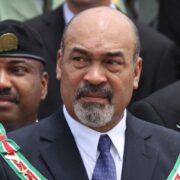
Professor Sir Hilary Beckles honoured by American Peers

Black Immigrant Daily News

The content originally appeared on: Caribbean News Service

The American Historical Association has voted to select Vice-Chancellor of The University of the West Indies (The UWI), Professor Sir Hilary Beckles as its Honorary Foreign Scholar for 2023.

The Association has annually recognised a foreign scholar since 1885, and the list includes the most acclaimed international historians. Beginning with Leopold von Ranke (1885), it showcases well-known names such as George Trevelyan (1944), Sir Winston Churchill (1963), Fernand Braudel (1966), Eric Hobsbawm (1994) and Ramachandra Guha (2019).

Past President of the Association, and Distinguished Professor at University of Wisconsin, James H. Sweet noted, “It is the judgement of the Association that the contribution of Professor Beckles, to historical scholarship, his efforts to internationalise historical study, and his crucial role as a mentor to other scholars does great honour to the discipline.”

Furthermore, Professor Sweet said, “In addition to his superb scholarship, activism, and administrative work at The UWI, Beckles has been a selfless supporter of scholars from around the world, including the United States. He has served as a Council Member for the Institute of Early American History and Culture, and as International Editor for the Journal of American History. Over the course of his career, he has offered personal support to U.S. professors and graduate students conducting research in the Caribbean.”

The Honorary Foreign Scholar award was presented at the Association’s 2023 ceremony in Philadelphia on January 5, 2023. In response, Professor Beckles noted, “This award by my American peers is among the greatest of academic honours, which I accept on behalf of The UWI that gave me the opportunity as a young historian to develop and contribute at the global level.”

Professor Sir Hilary Beckles is the second Caribbean scholar to receive the award, following the legendary Cuban historian Manuel M. Fraginals in 1998. The 2023 honour also follows Professor Beckles’ 2022 appointment as the President’s Honorary Visiting Distinguished Scholar at Cornell University, for six years.

Donate At Caribbean News Service, we do not charge for our content and we want to keep it that way. We are seeking support from individuals and organisations so we can continue our work & develop CNS further.


NewsAmericasNow.com
UNAOC launches call for applications for 6th edition of its young peacebuilders programme

Black Immigrant Daily News

The content originally appeared on: Caribbean News Service

The United Nations Alliance of Civilizations (UNAOC) is launching the call for applications for the 2023 edition of its Young Peacebuilders programme, which for the second time will focus on Latin America and the Caribbean.

The call is open to participants between 18 and 25 years old from the region, with a strong interest in growing their ability to act as agents of peace in their respective communities, preventing violent extremism through intercultural and interfaith dialogue.

To this end, twenty young civil society leaders will be selected to participate in this peace education experience. They will engage online through a series of facilitated interactive modules, and in-person during a one-week face-to-face workshop. After completing their training, participants will then apply their learnings by implementing a peace initiative at the community level with the support and mentorship of UNAOC trainers.

The project will then culminate in a symposium where the young participants will share their experiences, lessons learned, achievements, and recommendations with a broader audience of practitioners, UN officials, policymakers, media entities, and civil society representatives, bringing visibility to their initiatives toward the promotion of diversity and dialogue.

Implemented with the generous support of the Agencia Extreme?a de Cooperaci?n Internacional para el Desarrollo (AEXCID), and in collaboration with the United Network of Young Peacebuilders (UNOY), UNAOC Young Peacebuilders strengthens the global network of young peacebuilders who are equipped with the tools to tackle stereotypes, prejudice, and polarization to build more inclusive and peaceful societies. The long-term aim is their integration into governmental peace processes and policies.

More details about the programme and its eligibility criteria are available here. To apply, click here. The deadline for applications is no later than 19 February 2023.

Donate At Caribbean News Service, we do not charge for our content and we want to keep it that way. We are seeking support from individuals and organisations so we can continue our work & develop CNS further.


NewsAmericasNow.com

Guyana Keeps On Rolling In The Oil

Black Immigrant Daily News

News Americas, NEW YORK, NY, Weds. Jan. 25, 2023: US oil giant Hess Corporation is rolling in the oil. The company on Wednesday announced that another oil find was recorded in the prolific Stabroek Block offshore of the South American CARICOM nation of Guyana.

That “significant new oil discovery” was from the Fangtooth SE-1 well. Hess said approximately 200 feet of oil bearing sandstone reservoirs was found. It adds to the estimate of more than 11 billion barrels of oil equivalent in the Stabroek block, though further appraisal activities are underway.

Hess contended that the new oil find “has the potential to underpin a future oil development on the Stabroek Block.” What that means is that the Fangtooth area could become a new oil production field in the Stabroek Block like the Liza Phase 1 and Liza Phase 2, where the combined production of at least 360,000 barrels of oil per day is ongoing.

Hess is a co-venturer with a 30 per cent stake in the Stabroek Block. Esso Exploration Production Guyana Limited (EEPGL), ExxonMobil’s local subsidiary, is the operator in the block, and has a 45% stake. The other partner is China National Offshore Oil Corporation.

Beyond Liza Phase 1 and Liza Phase 2, production is expected to start at the Payara development in the Stabroek Block by the end of this year. Future production fields include Yellowtail and Uaru.

Aside from this new discovery, Hess reported significant earnings in the fourth quarter of 2022- a large sharing drawn from the production in Guyana.

And earlier this week, the company said it would increase spending on capital projects this year by US$1 billion, to US$3.7 billion, mostly for its Guyana’s and North Dakota’s Bakken shale field projects.

ExxonMobil, the operator of the Block is expected to confirm the find on Friday.

NewsAmericasNow.com

Bahamian start-up Partanna partners with Caribbean Climate-Smart Accelerator to boost climate-smart construction

Black Immigrant Daily News

The content originally appeared on: Caribbean News Service
Partanna home prototype, built adjacent to Partanna’s building material factory in Bacardi, Bahamas.

Partanna Bahamas, pioneer of the world’s first carbon-negative concrete, has signed an MoU with the Caribbean Climate-Smart Accelerator (CCSA), an entity driving the Caribbean economy’s transition into a climate-smart zone.

As part of the agreement, both parties will highlight the growing economic and social costs of climate change to the region, and call on governments and the private sector to invest in climate-resilient infrastructure.

Partanna’s carbon-negative concrete has the potential to revolutionise the global construction industry – which contributes around 40% of the world’s annual CO? emissions. The CCSA will help Partanna to realise its mission and potential by identifying public and private sector collaborators throughout the region.

The MoU is part of a drive by CCSA to champion Caribbean businesses who have the potential to create global impact through their climate innovations. The CCSA does this by matching entrepreneurs and businesses to its network of regional donors, investors, and philanthropists.

The agreement comes shortly after Partanna announced the development of up to 1000 affordable homes with the Government of the Bahamas, a move set to meet shortages and revolutionise affordable housing in a nation at the frontline of the climate crisis.

Paramount to the MoU is a commitment from both parties to make use of the region’s young talent. It is hoped that increased use of Partanna within the Caribbean can spark a green jobs boom, in a region where 1 in 4 young people are unemployed.

Partanna’s housing development project will provide at least 1000 direct and indirect jobs for Bahamians over its duration. Partanna will also provide training in the new skill sets required to establish the Caribbean as a global centre of a new sustainable building materials industry.

Rick Fox, former Los Angeles Lakers and founder of Partanna Global, commented:”For the Caribbean, adaption to climate change is a matter of survival. With more and more extreme weather events impacting our region – it’s vital we invest today in resilient homes and infrastructure that can cope with climate change. Our building materials offer greater protection, and also suck CO2 from the atmosphere – making them part of the short-term and long-term solution to climate change.

“We know there is simply no time left, and the CCSA shares our urgency. We’re delighted to work with the accelerator and its incredible network of regional leaders, to secure green growth that delivers for Bahamians and the region.”

Racquel, Moses UNFCCC Global Ambassador & CEO of the Caribbean Climate-Smart Accelerator said: “Times are few that we have such a unique opportunity to build global leadership within our region. We see the Partanna solution as one that can finally usher in a new age of Global South leadership in setting the standards and by extension bringing within the region the certification process for climate action projects. We need to be smart, avoid the climate catastrophe by unlocking positive economic transformation.

“Local solutions will be critical to our transition to low carbon economies. By engaging local innovators, like Partanna, we want to lead on the world’s stage, not follow, and with construction being one of the most difficult to decarbonise industries, Partanna offers an exciting opportunity to do so.”

Donate At Caribbean News Service, we do not charge for our content and we want to keep it that way. We are seeking support from individuals and organisations so we can continue our work & develop CNS further.


NewsAmericasNow.com
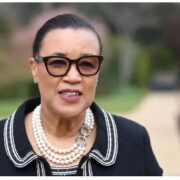
Trinidad and Tobago has a new president

Black Immigrant Daily News

The content originally appeared on: Caribbean News Service

Attorney Christine Carla Kangaloo was on Friday elected as the President of Trinidad and Tobago, succeeding outgoing head of state, Paula Mae Weekes, and in the process becoming the second woman to be elected to the position.

Kangaloo, who resigned her position as Senate President earlier this week and was nominated by the government, easily defeated veteran Senior Counsel, Israel Khan , who had been nominated by the main opposition United National Congress (UNC).

The Electoral College, which is composed of all members of the House of Representatives and the Senate assembled together, took just over two and a half hours to vote in support of Kangaloo, by secret ballot.

The government has 38 votes in the College, while the opposition has 28. There are nine independent legislators. The Presiding officer also has a vote.

When the results were announced, Kangaloo received 48 votes, Khan received 21 votes and there were three rejected ballots.

The Presiding Officer, Bridgid Annisette-George, who is also the Speaker of the Parliament, said under the Constitution, “the candidate who has obtained the greater number of the votes cast shall be declared elected.

“Accordingly I hereby declare that Christine Carla Kangaloo has obtained the greater number of votes cast and as such is elected as the President of the Republic of Trinidad and Tobago,” she said, adding that the necessary instruments would be sent to the President elect later.”

Prime Minister Dr Keith Rowley in nominating Kangaloo, said that the former government minister, university lecturer, had during her tenure as President of the Senate, acted as President of the Republic of Trinidad and Tobago no fewer than 33 occasions.

“It is with a sense of great pride that as Member of Parliament for Diego Martin West and along with all other members who signed or otherwise endorse her nomination that, as Prime Minister of this Republic that I present Ms Christine Carla Kangaloo as a most worthy candidate for the consideration of this esteemed Electoral College to be elected to the position of President of the Republic of Trinidad and Tobago,” he said.

Following her election, he said the “well written constitution of Trinidad and Tobago has functioned” properly, a reference no doubt to the claims made by the opposition during the run up to Friday’s presidential election that Kangaloo was an active politician and shoul;d have stepped aside for another nominee.

“Madam Speaker we were called to duty under the provisions of the relevant sections of our Constitution to elect a head of state and today we did so smoothly, dutifully,” he said, adding that “public service is honourable and it is in that vein I would like to congratulate the citizens who put their names forward to be considered for the post of President of Trinidad and Tobago.

“It was an electoral process and Madam Speaker we can still be proud, not knowing of a better way to do it and out of this process…this Chamber by clear majority has chosen a distinguished daughter of Trinidad and Tobago”.

In her brief remark, Opposition Leader, Kamla Persad Bissessar said she has “taken note of this electoral process and I serve notice that the opposition will hold that office to scrutiny in the best interest of the people of Trinidad and Tobago”.

Kangaloo is the only person to serve as both President and Vice President of the Senate. She becomes the seventh head of state and Commander in Chief.

Donate At Caribbean News Service, we do not charge for our content and we want to keep it that way. We are seeking support from individuals and organisations so we can continue our work & develop CNS further.


NewsAmericasNow.com

LAC region can be at forefront of global food and agriculture, provided it first tackles hunger and inequality

Black Immigrant Daily News

The content originally appeared on: Caribbean News Service
FAO Director-General Qu Dongyu.

Latin America and the Caribbean “can and must step up” to address increasing hunger and inequality rates in the region, a role that would move them “to the forefront of global food and agriculture” – this was the message conveyed by the Director-General of the Food and Agriculture Organization of the United Nations (FAO), QU Dongyu, to a regional political leaders here on Tuesday.

Qu’s speech to the 7th Summit of Heads of State and Government of the Community of Latin America and Caribbean States (CELAC), presided over this year by Argentina, was delivered by FAO Chief Economist Maximo Torero.

CELAC is an intergovernmental mechanism for dialogue and political agreement designed to support regional integration programs and comprised of 33 countries that are home to around 600 million people.

Its role is important today as recent years have seen a weakening of collective efforts towards regional and global integration.

“Multilateral institutions need to innovative” to respond to current unprecedented and overlapping crises, said Qu, who will sign several letters of intent to pursue projects in the region during the meeting.

“We live in the most unequal continent in the world and once and for all we must undertake a process leading to equality,” said President Alberto Fern?ndez of Argentina in his opening remarks. “It is much easier to achieve such results working together.”

Qu pointed to key priority areas that integration through CELAC would facilitate, highlighting the need to expand food supply in the Caribbean, where healthy diets are expensive, investing in water infrastructure and food production initiatives in Central America, where droughts and outmigration are persistent trends, improving food exchange between countries in the Andean region, and fostering a large regional programme of infrastructure for production, storage and transportation of food to facilitate intra-regional trade and exports.

While prioritizing protection of national economies is natural, it is important to note “we are all together on this small planet and the measures taken in one country affects all the other countries,” the Director-General said, citing the worldwide experience of the COVID-19 pandemic as an example of the value and importance of international collaboration.

FAO can efficiently provide support for implementation of CELAC initiatives and goals of all Members if their concerns are made clear and the tangible and sustainable solutions agreed, he noted.

Transform agrifood systems to reboot SDG agendaLatin America and the Caribbean was an outperforming region in terms of reducing hunger and poverty in the decade up to 2015. Yet, despite being the world’s largest net food exporting region, it has faced major setbacks lately. Between 2019 and 2021, the number of people suffering from hunger increased by 30 percent to 56.5 million, while those enduring poverty has also increased.

That could represent a setback of a decade or more in the effort to reduce poverty and hunger in the region and beyond, and stymie efforts to reduce inequalities as called for by Sustainable Development Goal 10, FAO’s Director-General said.

While the FAO Food Price Index has been declining, offering some respite, recovery has yet to be established and more challenges are inevitable as the world’s agrifood systems operate under risks and uncertainties, including those stemming from the climate crisis and economic slowdowns, he added.

Qu called for urgent collective action now to focus on the social and economic consequences of the pandemic, rising food insecurity, rising prices of staple foods, fertilizers and other agricultural inputs, the climate crisis, erosion of biodiversity, deforestation and water scarcity, and persistent poverty and rising inequalities that are especially impacting rural populations, women, youth and the most vulnerable.

“All FAO teams in the region are ready and fully committed to providing all the Organization’s technical expertise and capacity to governments to assist then to face the current challenge of food security,” he said. “No one can do it alone.”

The best way to do this, regionally and globally, is to transform agrifood systems to make them more efficient, more inclusive, more resilient and more sustainable, he said. “It is critical to achieve our common goal of the Four Betters: better production, better nutrition, a better environment and a better life for all,” he added.

Donate At Caribbean News Service, we do not charge for our content and we want to keep it that way. We are seeking support from individuals and organisations so we can continue our work & develop CNS further.


NewsAmericasNow.com