
Posts

Navigating the Emerging Oil & Gas Economy for Guyana’s Indigenous Communities: Consultation, Challenges, and Opportunities

Black Immigrant Daily News

The content originally appeared on: Caribbean News Service

By Sydney Allicock, Dr. Carolyn Walcott, Dr. Terrence Blackman

The indigenous peoples of Guyana, known locally as Amerindians, comprise nine distinct groups, each with their own unique culture and traditions, three in coastal areas and six in the forest and savannah areas of the interior. The indigenous peoples, Arawaks, Wai Wai, Caribs, Akawaio, Arecuna, Patamona, Wapixana, Macushi, and Warao, are approximately 90 thousand strong and are the fastest-growing population of the six ethnic groups of Guyana. There are over two hundred and fifteen Amerindian villages and communities.

Amerindian life in Guyana is governed by the Amerindian Act established in 2006, and both past and present administrations have acknowledged Amerindians by granting them legal land ownership. As a result, Amerindians are the second largest land and forest owners after the government of Guyana.

The Amerindian way of life is based on subsistence, a cooperative approach, living in harmony with nature, and following the laws of nature. Amerindians believe that there are four elements of true life: fresh air; pure water; sunlight; and common sense; without this, nothing survives. Amerindians do not sell land; the land is their mother, and many Guyanese Amerindians still speak their native tongue.

The Arawak, the largest indigenous group in Guyana, located mainly in the country’s coastal regions, are known for their pottery and basket weaving. The Carib are known for their traditional lifestyle, closely tied to the natural environment. They have a strong connection to the land and the rivers and are known for their fishing and hunting skills. The Wai Wai, located in the remote southern region of Guyana, are known for their self-sufficiency and close relationship with the natural environment. They are also known for their traditional hunting and fishing practices and their knowledge of medicinal plants. The Warao, located mainly in the northern regions of Guyana, and known for their traditional fishing, hunting, and agriculture practices, have a rich cultural heritage that includes traditional music and dance. Finally, the Makushi are located mainly in Guyana’s central and southern regions and are known for their traditional farming practices and knowledge of medicinal plants.

The National Toshaos Council represents all the Indigenous peoples of Guyana, and the Amerindian Purposes Fund, which still lacks complete functionality, is supposed to do business on behalf of Guyana’s Amerindian community.

With the development of oil and gas reserves in the country, these indigenous communities have been and will continue to be affected positively and negatively. In this essay, we explore the challenges and opportunities that indigenous communities in Guyana face in the emerging fossil fuel extraction economy. The panelist on GBJ’s Transforming Guyana Episode VII: Guyana’s Indigenous Peoples and the Oil and Gas Economy serve to inform our reflections.

Guyana’s recent sale of 30 percent of its carbon credits to Hess Corporation to the tune of US$750 million and the allocation of 15 percent of the proceeds from that sum to the indigenous communities across the country is the most recent manifestation of the intersection between the oil and gas economy and Guyana’s Indigenous Peoples. The sale of carbon credits is a mechanism that countries and companies will use to offset their greenhouse gas emissions by purchasing credits from other countries or entities that have reduced their emissions below their targets. Guyana has vast rainforests which act as a carbon sink, and the government has been selling carbon credits to companies to monetize the environmental services provided by its forests.

Key Amerindian stakeholders, however, question the capacity of the indigenous communities to absorb and harness the resources effectively to the benefit of the community without an existing menu of prerequisites. While many have acknowledged the coordinating role of the National Toshaos Council in advancing the aspirations of Guyana’s indigenous communities, they simultaneously cite the lack of training interventions, particularly within Guyana’s most populous indigenous regions, as potentially undermining sustainable development and inclusion of indigenous citizens. Key indigenous stakeholders believe that Guyana’s First Peoples may be unable to optimally derive the benefits from the carbon credits and wider oil sector without additional technical capacity and the appropriate training in the service and agricultural industries, where the essential components of local content engagement with the oil and gas industry are located. They have proposed the establishment of an indigenous bank and training in environmental and natural resources conservation as critical educational components that must be facilitated through direct involvement of the state, private sector, Hess, and members of the Diaspora if the actual capacity is to be met.

Florence Alexi La Rose, a local consultant on indigenous development, has proffered a micro-level approach to building local capacity through meaningful engagement. She posits that education, training, and access to critical information on available opportunities in the oil and gas sector are precursors to the inclusive engagement of hinterland communities. Even with the local content act’s institution, La Rose has suggested that members of the indigenous community across Guyana can be excluded from opportunities due to a lack of awareness, and linguistic barriers only further compound the situation for the indigenous population. One of the most significant challenges facing the community today is the need for meaningful consultation with companies and governments about developing projects in their communities. Stakeholder intentionality around substantive consultation is likely to preempt the emergence of issues these communities face in adapting to the already evident broader impacts of the new Oil & Gas economy on the larger Guyanese society, i.e., changes in prices, employment opportunities, and access to services.

Despite the potential challenges the new Oil & Gas economy poses to indigenous communities in Guyana, there are also opportunities for these communities to benefit from the industry. One of the most significant opportunities is the potential for the development of Indigenous-owned businesses connected to the oil and gas value chain. For example, suppose Indigenous people can increasingly own and operate companies that provide various services to the fossil fuel industry, from exploration and production to pipeline construction and operations. In that case, they will be able to provide employment opportunities for indigenous people and help communities generate revenue from the fossil fuel industry. In addition to these Indigenous-owned companies, various government and private sector initiatives can help Indigenous communities deploy existing cultural assets to benefit from the fossil fuel extraction economy. These initiatives could include targeted tax incentives, capital access, and other technical support for Indigenous-owned businesses.

The emerging Oil & Gas economy is a complex system that has existed for centuries in many parts of the world, including Guyana. This system has significantly impacted indigenous communities globally, and we can expect the same in Guyana, both positively and negatively. Guyana’s stakeholders must be intentional in their engagement with the Amerindian community. We have outlined some challenges and potential opportunities that Amerindians in Guyana face and will continue to face and some strategies they can use to navigate Guyana’s emerging oil and gas economy. The Oil & Gas economy will inevitably have an impact on Amerindian communities, and it is essential to ensure that Amerindians, in all their communities, are adequately consulted and supported to ensure that, as a community, they benefit from the industry. We close by reiterating the Amerindian maxim: The four elements of true life are fresh air; pure water; sunlight; and common sense; without which nothing survives.

——————–

Mr. Sydney Allicock, MP (former) Minister of Indigenous Peoples’ Affairs of the Republic of Guyana, South America is from the North Rupununi, Upper Takatu-Upper Essequibo, Region No.9. He is a pioneer of community-based tourism in Guyana. He was Public & Civic Contributions 2010 Laureate and a Representative of the Guyana Action Party (GAP) in A Partnership for National Unity (APNU). Mr. Allicock has articulated and promoted a vision of Indigenous Rural Community Development based on Communal Effort, Wise Use of Natural Resources, Traditional Knowledge and Social Systems, and Equitable Partnership with Outside Agencies. He has been a key figure in the development over the past two decades of the village of Surama, the North Rupununi Region more widely, and Guyana’s Indigenous Communities, which account for nearly a tenth of the Country’s Population. A Former Toshao of Annai, Mr. Allicock pioneered celebrations for Amerindian Heritage Day, which was later adopted as a National Event by the Guyana Government. His writing has been published in the distinguished Literary Journal Kyk-Over-Al, and he has performed his poems at Guyana’s National Cultural Centre. Mr. Allicock served in the Tenth Parliament of Guyana, with responsibilities for Local Government and Hinterland Development.

Dr. Carolyn Walcott is a media and communications educator and scholar with a diverse background in journalism education, international communication, and media development. She received her undergraduate degree in Communication and her Graduate Diploma in International Studies at the University of Guyana. She completed her M.A. in Communication and Development at Ohio University and her Ph.D. in Communication at Georgia State University. Her research agenda focuses on media pedagogy and practice, national identity, rhetoric, and political communication.

Dr. Terrence Richard Blackman is a member of the Guyanese diaspora. He is an associate professor of mathematics and a founding member of the Undergraduate Program in Mathematics at Medgar Evers College. In addition, he is a former Dr. Martin Luther King Jr. Visiting Professor at MIT and a member of The School of Mathematics at The Institute for Advanced Study. He previously served as Chair of the Mathematics Department and Dean of the School of Science, Health, and Technology at Medgar Evers College, where he has worked for more than twenty-five years. He graduated from Queen’s College, Guyana, Brooklyn College, CUNY, and the City University of New York Graduate School.

Donate At Caribbean News Service, we do not charge for our content and we want to keep it that way. We are seeking support from individuals and organisations so we can continue our work & develop CNS further.


NewsAmericasNow.com
Health officials urge member states to continue surveillance for dengue, chikungunya and Zika

Black Immigrant Daily News

The content originally appeared on: Caribbean News Service

The Caribbean Public Health Agency (CARPHA) is reminding the public that arboviral diseases such as dengue, chikungunya and Zika are still circulating in the Caribbean region.

In light of this, CARPHA emphasizes the importance of prevention and control measures to reduce the transmission of these viruses.

Executive Director, Dr. Joy St. John gave the assurance that CARPHA remains committed to strengthening public health systems for early detection and response to the emergence, re-emergence, and spread of arboviral infections.

She said, “The CARPHA Medical Microbiology Laboratory (CMML) has the capacity and remains ready to test and provide diagnostic confirmation of suspected cases in the Region”.

However, she stated, “Member States must maintain a strategic approach to surveillance and sample collection and submission to increase our chances of early identification of infections”.

At the same time, Dr. St. John is also encouraging persons to eliminate potential mosquito breeding sites in and around their homes.

Given the increase in regional and international travel to the Caribbean and the presence of the Aedes aegypti mosquitoes, which are endemic to this Region and transmit dengue, chikungunya and Zika, CARPHA is urging its Member States to strengthen routine surveillance for undifferentiated fever in their communities.

CARPHA said it is also critical for Ministries of Health to continue public education campaigns to remind people of the importance of keeping their surroundings free of mosquito breeding sites and avoiding mosquito bites.

This involves keeping water drums and barrels tightly covered, and throwing out stagnant water from flower vases, old tyres, and other containers.

Dengue, chikungunya and Zika are associated with moderate to severe health consequences, with young children and/or older age groups at higher risk. Symptoms of Zika include rash, fever, muscle and joint pain, and conjunctivitis.

Zika has been confirmed as a cause of congenital abnormalities in neonates of women infected with Zika virus during pregnancy and is also a trigger of Guillain-Barr? Syndrome.

Symptoms of dengue include rash, fever, muscle and joint pain, and nausea, while chikungunya may cause similar symptoms with muscle and joint pain persisting for an extended period.

Donate At Caribbean News Service, we do not charge for our content and we want to keep it that way. We are seeking support from individuals and organisations so we can continue our work & develop CNS further.


NewsAmericasNow.com
CARICOM Statement on Haiti

Black Immigrant Daily News

The content originally appeared on: Caribbean News Service

The Caribbean Community (CARICOM) notes the efforts made by various groups of Haitian stakeholders to negotiate political accords since 2021 to contribute to resolving the protracted political stalemate. This includes the latest agreement that was made public by the Interim Prime Minister on 21 December 2022.

CARICOM urges all stakeholders to come together in their search for a consensus agreement. The Community remains willing and ready to assist in achieving this goal and in that regard had commenced sounding Haitian stakeholders over the past few weeks about their willingness to attend a meeting in a CARICOM country.

Donate At Caribbean News Service, we do not charge for our content and we want to keep it that way. We are seeking support from individuals and organisations so we can continue our work & develop CNS further.


NewsAmericasNow.com
The Bahamas Development Bank and IICA Partner to Boost Economic Development in Family Islands

Black Immigrant Daily News

The content originally appeared on: Caribbean News Service

In continuation of the partnership between The Bahamas Development Bank (The Bank or BDB) and the Inter-American Institute for Cooperation on Agriculture (IICA), both organizations have signed an official Memorandum of Understanding (MOU) to provide technical cooperation, innovation, and specialized knowledge to aid in the competitive and sustainable development of agriculture in The Commonwealth of The Bahamas.

The Bank is mandated under the 1974 BDB Act, to promote industrial, agricultural, and commercial development through financing and investing in approved enterprises; and IICA is a specialized agricultural agency that provides support to its 34 member states to promote and encourage agricultural development and economic growth. As such, this ongoing partnership meets both The Bank’s mandate and IICA’s mission.

Recently, BDB has been meeting with IICA to discuss opportunities for financing agri-tourism, climate resilience, and Family Island development, and this MOU is the result of those meetings. The Bank and IICA have a long history of collaboration, having worked together previously on several initiatives including the Apiary Project in Grand Bahama which trained and provided financing for young beekeepers; this newest project will provide technical capacity building to increase the agriculture sector and aid in economic growth and sustainable development.

Previously, The Bahamas Development Bank has cooperated with IICA to support the development of the recently launched “Integrated Landscape Management for Addressing Land Degradation, Food Security and Climate Resilience Challenges in The Bahamas Project”. This project is sponsored by The Bahamas Government (led through the Department of Environmental Planning & Protection (DEPP)) in collaboration with United Nations Environment Program (UNEP), and the Inter-American Institute for Cooperation on Agriculture (IICA), with funding from the Global Environmental Facility (GEF). The ILM project is a $20M initiative which will result in improved livelihoods, well-being, and global environmental benefits through improvements in the sustainability, productivity, health and resilience of productive ecosystems across seven islands. BDB will continue to support this project throughout its upcoming phases as a member of the project’s steering committee.

“Family Island development is integral to The Bank’s mission, especially as it relates to agriculture,” noted Quinton Lightbourne, BDB Chairman. “Currently, The Bank has a slate of projects targeted toward sustainable development in the chain of family islands, and this MOU is an integral step toward that development. This partnership with IICA will increase the technical capacity of farmers throughout The Bahamas, and allow them to increase their output, leading toward a decrease in food importation, which is a big goal for the current administration.”

“Family Island development is also fundamental to IICA’s core mission,” echoed IICA Representative Mari Dunleavy. “At IICA, we firmly believe in and support our family island farmers and rural development, which are bedrocks of economic growth and food security. IICA’s partnership with BDB is a natural alliance and I’m excited for the potential our relationship holds for the Family Islands.”

As a part of the MOU, BDB and IICA agree to cooperate and work together for the expansion and enhancement of agriculture and rural development throughout The Bahamas and to share resources in the conduct of programs and projects intended to achieve the above purpose. The MOU also contains several areas of cooperation, including joint programs, sourcing of funding for agricultural projects in the Family Islands, and other forms of cooperation as agreed on by both parties, including meetings on a regular basis.

Both organizations are committed to supporting agricultural growth and sustainable development throughout The Bahamas, and this MOU is evidence of their cooperation to achieve the above.

Donate At Caribbean News Service, we do not charge for our content and we want to keep it that way. We are seeking support from individuals and organisations so we can continue our work & develop CNS further.


NewsAmericasNow.com
The U.S. Blockade of Cuba Hurts Medical Patients in Both Countries

Black Immigrant Daily News

The content originally appeared on: Caribbean News Service

By Natalia Marques

Scientists in Cuba believe that the breakthroughs they have made in the health care and technology sectors should be used to save and improve lives beyond the country’s borders. This is why the island nation has developed important scientific and medical partnerships with organizations and governments across the globe, including with those in Mexico, Palestine, Angola, Colombia, Iran, and Brazil. However, such collaborations are difficult due to the blockade imposed on Cuba by the United States, which has now been in place for the last six decades.

In a conference, “Building Our Future,” held in Havana in November 2022, which brought together youth from Cuba and the United States, scientists at the Cuban Center of Molecular Immunology (CIM) stated during a presentation that the blockade hurts the people of the United States, too. By lifting the sanctions against Cuba, the scientists argued, the people of the United States could have access to life-saving treatments being developed in Cuba, especially against diseases such as diabetes, which ravage working-class communities each year.

A Cure for Diabetes

Cuban scientists have developed both a lung cancer vaccine and a groundbreaking diabetes treatment. The new diabetes treatment, Heberprot-P, developed by the Cuban Center for Genetic Engineering and Biotechnology (CIGB), can reduce leg amputations of people with diabetic foot ulcers by more than four times. The medication contains a recombinant human epidermal growth factor that, when injected into a foot ulcer, accelerates its healing process, thereby, reducing diabetes-related amputations. And yet, despite the fact that the medication has been registered in Cuba since 2006, and has been registered in several other countries since, people in the United States are unable to get access to Heberprot-P.

Diabetes was the eighth leading cause of death in the United States in 2020, according to the Centers for Disease Control and Prevention, killing more than 100,000 patients in that year. “Foot ulcers are among the most common complications of patients who have diabetes,” which can escalate into lower limb amputations, according to a report in the National Center for Biotechnology Information. Each year, around 73,000 “non-traumatic lower extremity amputations” are performed on people who have diabetes in the U.S. These amputations occur at a disproportionate rate depending on the race of a patient, being far more prevalent among Black and Brown people suffering from diabetes. Many point to racial economic disparities and systemic medical racism as the reason for this.

“If you go into low-income African American neighborhoods, it is a war zone… You see people wheeling themselves around in wheelchairs,” Dr. Dean Schillinger, a medical professor at the University of California-San Francisco, told KHN. According to the KHN article, “Amputations are considered a ‘mega-disparity’ and dwarf nearly every other health disparity by race and ethnicity.”

The life expectancy of a patient with post-diabetic lower limb amputation is significantly reduced, according to various reports. “[P]atients with diabetes-related amputations have a high risk of mortality, with a five-year survival rate of 40-48 percent regardless of the etiology of the amputation.” Heberprot-P could help tens of thousands of patients avoid such amputations, however, due to the blockade, U.S. patients cannot access this treatment. People in the U.S. have a vested interest in dismantling the U.S. blockade of Cuba.

“So after five years [post-amputation], that’s the most you can live, and we are preventing that from happening,” said Rydell Alvarez Arzola, a researcher at CIM, in a presentation given to the U.S. and Cuban youth during the conference in Havana. “And that also is something that could bring both of our peoples [in Cuba and the U.S.] together to fight… to eliminate [the blockade].”

Cuban Health Care Under Blockade

Perhaps one of Cuba’s proudest achievements is a world-renowned health care system that has thrived despite economic devastation and a 60-year-long blockade.

After the fall of Cuba’s primary trading partner, the Soviet Union, in 1991, the island saw a GDP decrease of 35 percent over three years, blackouts, and a nosedive in caloric intake. Yet, despite these overwhelming challenges, Cuba never wavered in its commitment to providing universal health care. Universal health care, or access to free and quality health care for all, is a long-standing demand of people’s movements in the United States that has never been implemented largely due to the for-profit model of the health care industry and enormous corporate interests in the sector.

As other nations were enacting neoliberal austerity measures, which drastically cut social services in the 1980s and 1990s, Cuba’s public health care spending increased by 13 percent from 1990 to 1994. Cuba successfully raised its doctor-to-patient ratio to one doctor for every 202 Cubans in the mid-1990s, a far better statistic than the United States’ ratio of one doctor for every 300 people, according to a 2004 census.

As the blockade begins its seventh decade, Cuba is not only upholding universal health care but also continues to be at the forefront of scientific developments globally.

This was evident during the COVID-19 crisis. Cuba, faced with the inability to purchase vaccines developed by U.S. pharmaceutical companies due to the U.S. blockade, developed five vaccines. The nation not only achieved its goal of creating one of the most effective COVID-19 vaccines but also launched the first mass COVID-19 vaccination campaign for children from two to 18 years old in September 2021.

To Share Knowledge Without Restrictions

Despite its achievements, Cuban health care still faces serious, life-threatening limitations due to the economic blockade. CIM, for example, has struggled to find international companies willing to carry out vital services for them. Claudia Plasencia, a CIM researcher, explained during the conference that CIM had signed a contract with a German gene synthesis company which later backed out because it had signed a new contract with a U.S. company. “They could not keep processing our samples, they could not keep doing business with Cuba,” Plasencia said.

Arzola explained how it is virtually impossible to purchase top-of-the-line equipment due to trade restrictions. “A flow cytometer is a machine that costs a quarter-million dollars… even if my lab has the money, I cannot buy the best machine in the world, which is from the U.S., everyone knows that,” he said. Even if CIM were to buy such a machine from a third party, it cannot utilize the repair services from the United States. “I cannot buy these machines even if I have the money, because I would not be able to fix them. You cannot spend a quarter-million dollars every six months [buying a new machine]… even though you know that this [machine] is the best for your patients.”

I spoke to Marianniz Diaz, a young woman scientist at CIM. When asked what we in the U.S. could do to help CIM’s scientists, her answer was straightforward: “The principal thing you can do is eliminate the blockade.”

“I would like us to have an interaction without restrictions, so we [Cuba and the U.S.] can share our science, our products, [and] our knowledge,” she said.

This article was produced in partnership by Peoples Dispatch and Globetrotter.

Natalia Marques is a writer at Peoples Dispatch, an organizer, and a graphic designer based in New York City.

Donate At Caribbean News Service, we do not charge for our content and we want to keep it that way. We are seeking support from individuals and organisations so we can continue our work & develop CNS further.


NewsAmericasNow.com
Fix region’s transportation nightmare, says St Lucia PM

Black Immigrant Daily News

The content originally appeared on: Caribbean News Service

Prime Minister of St. Lucia Philip Pierre has urged CARICOM member states to redouble efforts towards fixing the region’s transportation issues and removing lingering trade barriers.

The regional leader said last weekend that the absence of any reliable transportation network in and around member states, given the “unfortunate demise of LIAT”, was a major hindrance to modern cooperation which regional leaders need to address as a matter of urgency.

“Travelling around the region has become a nightmare, both from the standpoint of high fares and reduced flight availability. It is having an undermining effect on the economic prospects of the region… This state of affairs must not be allowed to continue for much longer.Addressing the annual Errol Barrow Memorial Lecture hosted by the Democratic Labour Party (DLP) at the University of the West Indies Cave Hill Campus last Friday, Pierre said “The issue of regional air and sea transportation must be approached from the premise that regional transportation is a regional public good, and as such, governments must invest in and finance it because it is a duty they owe the people of the Caribbean.”

Examining the future of CARICOM as it celebrates 50 years and the legacy of Errol Barrow as a Caribbean champion, Pierre noted that though Barrow, along with Prime Ministers Forbes Burnham of Guyana, Michael Manley of Jamaica and Eric Williams of Trinidad and Tobago signed the Treaty of Chaguaramas in 1973 with the intent of creating CARICOM with deeper ties between the islands, this vision has unfortunately been hindered in several areas.

He said that despite the phased approach to freedom of movement throughout the islands, there were still difficulties with national legislation and administrative frameworks falling short of what was required at this stage.

Pierre added: “Regional integration in the Caribbean will never be effective if the people cannot, and do not have the means and the systems to move freely between the islands and to easily communicate between themselves and share their ambitions and their experiences with each other. How can we be serious about building a vibrant regional community and single market, if the people who are the main participants, can not get around the region freely and affordably?”

According to the St Lucia PM, one of the key pillars of CARICOM – economic integration, which is supported by the philosophy of free trade – has also been slow in its adoption across the various member countries to a worrying degree. He stressed that the removal of the current trade barriers between the islands was a must.

“If free trade, therefore, is to be a more significant stimulant to economic development throughout the region, and therefore positively impact the lives and living standards of the peoples of the region, then in the decades ahead CARICOM member states must make a concerted effort to dramatically increase trade by removing the outmoded barriers that still encumber genuine free trade,” he explained.

Pierre also pointed to the colonial era’s influences on economic policies as another factor that needs to be corrected in order to improve the social and economic output of CARICOM.

“There is a school of thought that believes that in the CARICOM context, the freeing of trade among member states is necessary but insufficient to obtain the gains of economic integration. It argues that it also necessitates the removal of colonial economic and social structures and production and consumption patterns that have kept the region at a low level of development.

“It is clear that if CARICOM is to deliver on raising the standards of living of its people, as Errol Barrow had hoped, the deepening of regional integration through the CSME, must proceed at 50 times the pace of integration during the next 50 years.

“We must revisit with some urgency the agreement for a single economy, whose attainment is now a goal on a distant horizon.”Pierre reminded attendees that it was the duty of citizens and leaders within the region, to fully support the true purpose and ideology behind CARICOM, as it will serve as an integral support and development body for all.

“As CARICOM ends the first 50 years of regional integration, I urge all of us, leaders and citizens alike, to adopt the approach of Errol Barrow and the other leaders, that in this journey, the only goal must be to see the Caribbean fully integrated so that in 50 years’ time CARICOM would not have gone, but CARICOM would have become, not a community of states, but a truly integrated community of the peoples of the Caribbean – economically prosperous, socially advanced, culturally confident, and proudly independent.”

Donate At Caribbean News Service, we do not charge for our content and we want to keep it that way. We are seeking support from individuals and organisations so we can continue our work & develop CNS further.


NewsAmericasNow.com

Region must take practical steps to secure energy future

Black Immigrant Daily News

The content originally appeared on: Caribbean News Service

President Irfaan Ali said that the region must make practical steps in securing its energy future and be logical in its undertakings given the heavy financial burden of climate change.

The Head of State called on governments across the region to lead from the front in understanding the ramifications and creating the needed structure. He told the Trinidad and Tobago Energy Conference 2023 today, in Port of Spain, that the region must move forward with its survival in mind.

The President asked some tough questions and noted that although renewable energy should be the main pursuit, as a region, we should be practical in our approach in understanding the implications and necessities of energy needs.

REGIONAL ENERGY SECURITY

“We in CARICOM all have lofty renewable energy targets but the reality is that the energy demands in our countries continue to rise, and our energy systems are being challenged to meet our growing population centres and appetite for energy services.”

The President spoke of the large amount of energy that the region requires and the billions of US dollars needed to achieve “the most fundamental of targets”.

“So, we can safely say that in this region fossil fuel and natural gas has a long future ahead of us.”

He reinforced the call that every country in the region with potential in natural gas should be allowed to explore that potential to its fullest for the energy security of the region.

“Here in Trinidad and Tobago that opportunity exists and that opportunity should be allowed to blossom for the benefit of the people of this region and the globe.”

He noted that high energy prices contribute to high inflation in both developing and developed countries. With the idea of imported inflation in mind, political leaders and policymakers must face the reality of inflation that is not a result of bad policies or measures.

ACCESS TO CAPITAL

President Ali said that amidst these crises, there is a “strange movement” driven by a policy agenda of a few countries which is not fixed in “facts and reality”.

“We have seen an unwillingness to lend to companies related to oil and gas. We have seen the cost of capital increasing for companies related to oil and gas….”

When this occurs, he added, the consumers and supporting industries suffer.

“If you increase the cost of capital and make capital less available to investors, wherever they get the capital to invest, they will also increase the costs of the product because they also have to get back their investments, and who suffers at the end of the day?”

As such, Dr Ali emphasised that stakeholders from the government and the industry must speak out in a collective voice.

The President also spoke on the Caribbean region’s energy potential, including the plans in place in the Guyana Shield, which will be the collaborative energy effort between Suriname, French Guiana, Guyana and Northern Brazil.

He called on those gathered to examine the “remarkable” policy measures that governments in this region implemented to cushion the effects of inflation.

“In Guyana today, we have no other room to deal with the increases in fuel prices. We took every cent of tax off. What more? Together with short-term measures, government must take long-term steps either to increase or diversify oil and gas supply or look to accelerate structural change, very simple.”

He added that by using practical and innovative approaches, the region can “secure our future and advance our cause”.

Donate At Caribbean News Service, we do not charge for our content and we want to keep it that way. We are seeking support from individuals and organisations so we can continue our work & develop CNS further.


NewsAmericasNow.com
Primate group appeals to Governor Baly to abandon plans to kill monkeys on Sint Maarten

Black Immigrant Daily News

The content originally appeared on: Caribbean News Service

Action for Primates, a UK-based project that campaigns on behalf of non-human primates globally, is urging the Governor of Sint Maarten to abandon plans to kill the entire population of vervets (African green monkeys), believing that such drastic and inhumane action will not only be ineffective, but it will also tarnish the reputation of Sint Maarten as a popular Caribbean holiday destination.

A letter has been sent to Governor Ajamu G. Baly by Dr Nedim Buyukmihci, co-founder of Action for Primates and a veterinarian with many years practical experience working with non-human primates, including reproductive control, as well as advising on education and humane methods of resolving issues related to negative interactions between people and non-human primates.

In the letter, Dr Buyukmihci points out the inhumanity of the capturing and killing of hundreds of vervets, as well as the ineffectiveness of using such lethal means to resolve the issue of conflicts between the monkeys and people. In particular, he noted:

– “It is stated that the vervets in question will be trapped and killed over the next three years. But, as this is being done over this length of time, there will be an increase in pressure for the vervets to reproduce. It is almost certain that there will be a surge in births, increasing the number of individuals.”

– “Regardless of the timeline, however, given the Sint Maarten terrain, it is highly unlikely that every vervet will be captured, allowing those remaining to continue to reproduce.”

– “There is also the issue of vervets residing in neighbouring French St Martin. There will be nothing to keep them from expanding their range into Sint Maarten.”

Instead, Dr Buyukmihci advocates the adoption of measures that can be taken to humanely reduce the negative interactions between vervets and people without having to resort to killing the vervets, and provides a comprehensive review of the issue. Considerations for non-lethal resolution include reproductive control such as sterilisation combined with education programmes to help the public deal with and prevent negative interactions with monkeys.

Rather than dismiss vervets as a ‘pest’ or a nuisance and killing them, Action for Primates appeals to the government and communities of Sint Maarten to adopt a humane approach to the situation.

The fact that vervets are non-native is irrelevant. Not only have they been on Sint Maarten for over 400 years, having been brought there by people, and are now part of the ecosystem, they are living, sentient individuals who share many of the important characteristics we value in ourselves. They experience pain, suffering and distress similarly to people.

It is not their fault that they are there and they should not have to pay for this human-caused problem with their lives. With the globally growing acknowledgement of the negative impact human activities are having on the planet and its inhabitants, it is more important than ever that we reassess the way we not only treat non-human primates, but how we humanely resolve negative interactions.

Donate At Caribbean News Service, we do not charge for our content and we want to keep it that way. We are seeking support from individuals and organisations so we can continue our work & develop CNS further.


NewsAmericasNow.com
HIV data experts from the Caribbean gather in Jamaica for a five-day training with UNAIDS and partners

Black Immigrant Daily News

The content originally appeared on: Caribbean News Service

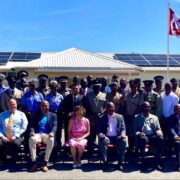
The Joint United Nations Programme on HIV/AIDS (UNAIDS) is hosting an HIV/AIDS estimates and projections workshop with government data experts from 13 Caribbean countries in Kingston (Jamaica) from January 23-27.

The workshop’s purpose is to train the staff of Caribbean national authorities responsible for the estimates and projections of the HIV pandemic using the methods and procedures recommended by UNAIDS.

HIV estimates are generated with the support of country teams generally comprised primarily of epidemiologists, demographers, monitoring and evaluation specialists and technical partners.

The software Spectrum is the main program used to produce the estimates such as HIV prevalence, new HIV infections, AIDS-related deaths, and the need for treatment for adults and children.

During these five days, national staff will be trained to obtain country-specific estimates by the end of March 2023. These estimates are the basis for regional and global HIV estimates and national and regional planning and decision-making. They are published in the UNAIDS global reports, generally launched every July.

Data have long served as the bedrock of the Global AIDS Response. Timely, accurate data also inform HIV policies and programmes, strategic planning, and resource allocation to maximize the impact of the response. Data on HIV and its innovations are also integral to the United Nations Decade of Action for the Sustainable Development Goals (SDGs) to promote gender equality, protect human rights and accelerate UN Reform.

Efforts to reduce HIV-related inequalities are guided by two primary documents: the 2021 Political Declaration on HIV and AIDS `Ending Inequalities and Getting on Track to End AIDS by 2030′ and the Global AIDS Strategy 2021-2026 ‘End Inequalities, End AIDS’. Both documents call on countries to improve the collection and use of data to accelerate progress towards the global targets for 2025.

“UNAIDS is grateful to the Government of Jamaica, especially the Minister of State for Health, Juliet Cuthbert-Flynn, for the continued strong partnership with the UN system and for hosting the regional workshop”, said Luisa Cabal, UNAIDS Regional Director for Latin America and the Caribbean. “As the old saying goes, ‘what is not measured is not treasured`, and therefore not taken into account. So, we need data! And beyond that: quality and disaggregated data to address inequalities and reach the most vulnerable to HIV.”

Donate At Caribbean News Service, we do not charge for our content and we want to keep it that way. We are seeking support from individuals and organisations so we can continue our work & develop CNS further.


NewsAmericasNow.com
Executive Board Approves US$105 Million Food Shock Window to Haiti

Black Immigrant Daily News

The content originally appeared on: Caribbean News Service

The Executive Board of the International Monetary Fund (IMF) approved today a disbursement of SDR 81.9 million (US$105 million) to Haiti under the Food Shock Window of the Rapid Credit Facility[1] to help Haiti address urgent balance of payment needs related to the global food crisis.

Haiti has been hit hard by the global food price shock. Record price inflation has worsened Haiti’s fragility given the high pass through from global to domestic food prices and shortages in food supplies. With more than half the population already below the poverty line, Haiti faces a dire humanitarian crisis, with an expected financing gap in FY2023 of at least US$105 million (0.5 percent of GDP), assuming import compression and pending additional external financing from development partners. This shock compounds the hardships of an already highly fragile country–also suffering a public health emergency (cholera) and serious security risks.

Following the Executive Board’s discussion, Antoinette Sayeh, Deputy Managing Director and Acting Chair, issued the following statement:

“Haiti is facing a dire humanitarian crisis and was hit hard by the economic spillovers from Russia’s invasion of Ukraine. These spillovers included record price inflation that worsened Haiti’s fragility and compounded the suffering of Haiti’s population already affected by a severe malnutrition. Measures are being taken by the government to cushion the impact of the food price shocks on the population and to expand the social safety nets.

“IMF emergency support under the food shock window of the Rapid Credit Facility will help fill the balance of payment gap and support those most affected by food price rises through feeding programs and cash and in-kind transfers to vulnerable households, waives school fees and other measures.

“To address the crisis, budgetary resources will need to be allocated toward priority spending on food programs and to increase social assistance toward the most vulnerable. To ensure the appropriate use of emergency financing, which will be vital for catalyzing further donor support and mitigate risks to debt sustainability, the authorities should carefully control, track, record, and publish all spending related to the emergency response. Supported by close Fund engagement, they should undertake internal expenditure audits by all the line ministries involved in the use of emergency resources provided under the food shock window through the General Inspectorate of Finance and communicate these internal audits to the Supreme Audit Court in a timely way.

“The combination of appropriate macroeconomic and structural policies under the Staff-Monitored Program (SMP) provides additional safeguards for the Fund’s outstanding obligations. While providing adequate liquidity support to the financial sector, the central bank should reduce monetary financing of the deficit and limit foreign exchange interventions to smoothing volatility.

“The SMP is also catalytic to donor support. A successful implementation of Haiti’s SMP would be key in the process of restoring macroeconomic stability and sustainability, strengthening the social safety net, and tackling governance weaknesses and corruption.”

Donate At Caribbean News Service, we do not charge for our content and we want to keep it that way. We are seeking support from individuals and organisations so we can continue our work & develop CNS further.


NewsAmericasNow.com