

Posts

NIA reveals plans to further assist Non-nationals living on Nevis

Black Immigrant Daily News

The content originally appeared on: Caribbean News Service

The Nevis Island Administration (NIA) has revealed several initiatives it intends to pursue in the new parliamentary term that will assist nationals from other Caribbean countries living on Nevis.

The initiatives were announced via the Throne Speech delivered by Hyleeta Liburd, Deputy Governor-General for Nevis, during the opening session of the Nevis Island Assembly on January 19.

“Caribbean nationals who are legally resident in Nevis will be able to buy real estate without having to pay the ten percent Alien Landholding License Fee; we will lobby the Federal Parliament to pass legislation to reduce the time limit required for a non-national to be eligible for citizenship; reduce the Work Permit and Annual Residency Fee paid by non-nationals who are not members of the legal, medical, accounting, engineering, land surveying, management or actuarial professions.”

The government will also move to make it easier for non-nationals legally migrating to Nevis from the Dominican Republic to assimilate into the local economy by provide tutoring in English for 12 months. This will especially benefit children entering the island’s school system, while ensuring that there are bilingual personnel in the public service so as to better aid the delivery of government services to its non-English-speaking residents.

Additionally, the NIA committed to implementing programs whereby children of non-nationals who are legally residing on Nevis will pay the same rates for school and other educational opportunities as Nevisian students.

The Concerned Citizens Movement (CCM)-led administration has consistently demonstrated its inclusive approach with respect to the development of Nevis and improvement of the lives of citizens and residents alike. Under the leadership of Premier Hon. Mark Brantley, the Nevis Island Administration has on several occasions implemented amnesty on arrears of payment for Work Permits, Annual Residency and Visa Extensions for non-nationals, the most recent coming in July-September 2022. In addition, the regular fee of $2,500 for Work Permits was reduced to $1,000 and the regular fee for Annual Residence was reduced to $750.

“My government recognizes the contributions that our sisters and brothers from our Caribbean neighbours have made to the development of Nevis. We continue to welcome non-nationals to aid in our development as we are a government of inclusion. We will continue to advocate for a managed migration approach in which non-nationals can join our labour force as our development needs dictate. We are fully aware that many of our own citizens reside in Caribbean countries and elsewhere and we expect them to be able to live comfortably and have their rights respected,” according to the 2023 Throne Speech.

The NIA continues to urge all non-nationals living in Nevis illegally to legalize their status.

Donate At Caribbean News Service, we do not charge for our content and we want to keep it that way. We are seeking support from individuals and organisations so we can continue our work & develop CNS further.


NewsAmericasNow.com

Empty promises and blunt tools: Lack of funding stalls dementia progress in the Caribbean

Black Immigrant Daily News

The content originally appeared on: Caribbean News Service

Despite recent statistics showing that dementia prevalence is set to increase in the Caribbean by 155 per cent by 2050, regional progress in tackling the neurodegenerative condition is far too slow, say Alzheimer’s Disease International (ADI), the global federation for 105 Alzheimer’s and dementia associations across the world.

Only 16 per cent of Caribbean countries and territories have made progress in developing a National Dementia Plan, most of which have inadequate funding.

ADI is calling for the public across the Caribbean to urge their governments to take urgent action on dementia, teaming up with Alzheimer’s associations in Bahamas, Barbados, Bonaire, British Virgin Islands, Cayman Islands, Dominica, Jamaica, Grenada, Puerto Rico, Saint Kitts and Nevis, Sint Maarten, St Lucia, and Trinidad and Tobago to launch a regional campaign ‘What’s Your Plan‘ (#WhatsYourPlan).

Urgent action is required now: Dementia care is a human right

While a few countries in the region, like the Dominican Republic and Cuba have implemented National Dementia Plans, unfortunately most are without adequate funding. The Caribbean ADI members participating in the #WhatsYourPlan campaign are yet to have any fully funded, implemented National Dementia Plan in their countries.

Daisy Acosta, co-founder of The Asociacion Domincana de Alzheimer and former Chair of ADI says that the issue of dementia in the Caribbean is growing.

“Dementia is a real problem in our Caribbean countries. By 2050 almost 750,000 people will be living with dementia in region. Governments are not paying enough attention to because it is often still wrongly considered a normal part of ageing. Well IT IS NOT! Key policies can be taken that can help delay or reduce up to 40 per cent of the number of cases of dementia in the future. I urge our governments to invest now to save later!”

Paola Barbarino, ADI’s CEO, says developing, funding, and implementing National Dementia Plans is essential to improving health outcomes for people living in the Caribbean with dementia.

“A National Dementia Plan is a vital step in helping those living with dementia to have access to the support and services they need to live well, for longer,” says Barbarino. “Access to support and a care plan, including care at home and in community settings, at-home adaptations, and respite for carers, alongside medical treatments, are vital for people living with dementia, as well as their carers and family.”

“By denying Caribbeans across the region this support, governments are doing a disservice to their communities,” says Barbarino. “All people living with dementia in the Caribbean deserve access to the kinds of support and services a National Dementia Plan makes available. It’s their human right.”

As the world’s population gets older, the prevalence of Alzheimer’s disease and dementia is rapidly increasing, threatening to overwhelm health services in many countries. In 2019, dementia was ranked the 3rd leading cause of death in the Americas, accounting for over 390,000 deaths.

ADI is calling on people living in Caribbean countries participating in the #WhatsYourPlan campaign to urge their governments to develop a National Dementia Plan that features, improvements in care for those living with dementia, support for carers and to implement key policies to help delay or reduce up to 40 per cent of the possible number of cases of dementia in the future.

“We’re talking with the various Ministries of Health, Age & Social Support in many Caribbean countries, and while in some cases it can lead to progress it is often too slow. For a condition like dementia, time is of the absolute essence. People cannot wait,” says Paola Barbarino. “We need people from all over the Caribbean to speak up for people with dementia so that their governments might actually listen and act.”

Empty promises and blunt tools: Lack of funding stalling progress in the Caribbean

While some progress has been made in developing National Dementia Plans in the Caribbean, Paola Barbarino, ADI Chief Executive Officer, says that a lack of funding for these plans means many communities are missing out.

“A National Dementia Plan is a government’s best tool for preparing for this looming global health crisis,” says Barbarino. “Despite some progress to develop plans in a few Caribbean nations, without adequate funding to implement them, these plans are laying unused on the desks of bureaucracy across the region – more empty promises, and blunt tools.”

“Continued inaction now will lead to much greater health, care and societal challenges in managing dementia later,” continues Barbarino. “Governments must have robust dementia strategies funded and in place, to save healthcare systems from being overwhelmed as dementia cases rise in the future.”

Over 740,000 people: While progress stalls, the number of people in the Caribbean living with dementia continues to soar

The latest estimates show that there will be over 740,000 people living with dementia in the Caribbean by 2050.

Research has found that the greatest risk factors for dementia in the Caribbean include Cardiovascular health, diabetes, family history, older age, education. Further, women with lower levels of education in rural areas are overrepresented in dementia statistics in the Caribbean.

Risk reduction should be designed with a life-course approach in mind, targeting both older and younger populations, with a focus on the modifiable 12 risk factors estimated to contribute to 40 per cent of the cases of those living with dementia.

1 Caribbean territories with Alzheimer’s associations participating in ADI’s ‘What’s Your Plan’ indicated in bold: Antigua and Barbuda, Anguilla, Aruba, Bahamas, Belize, Barbados, Bonaire, British Virgin Islands, Cayman Islands, Cuba, Cura?ao, Dominica, Dominican Republic, Grenada, Guadeloupe, Guyana, Haiti, Jamaica, Martinique, Montserrat, Puerto Rico, Saint Kitts and Nevis, Saint Martin, Saint Barthelemy, Saint Lucia, Saint Vincent and the Grenadines, Sint Maarten, Suriname, Trinidad and Tobago, Turks and Caicos Islands, and United States Virgin Islands.

Donate At Caribbean News Service, we do not charge for our content and we want to keep it that way. We are seeking support from individuals and organisations so we can continue our work & develop CNS further.


NewsAmericasNow.com
Barbados Advances its Marine Spatial Planning Process with IDB support

Black Immigrant Daily News

The content originally appeared on: Caribbean News Service

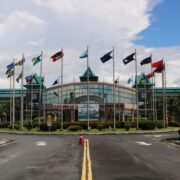
The government of Barbados launched a planning process to set the foundations for its marine management, in an exercise supported technically and financially by the Inter-American Development Bank (IDB).

This MSP process builds upon Barbados’s longtime work on marine ecosystems and environmental governance. It is also part of Barbados’ commitments under the debt conversion for nature transaction that the Caribbean country signed in September 2022, backed by a US$150 million guarantee from the IDB and The Nature Conservancy (TNC).

A Marine Spatial Planning process involves a holistic vision for ocean governance and the participation and inclusion of all key stakeholders. The outcome provides direction to balance development and conservation interests and address the cumulative effects of various human uses of the same space.

In this sense, an MSP goes beyond conservation planning and ocean zoning. It also seeks to balance economic and social development with environmental conservation while enabling dialogue and collaboration between stakeholders. It also considers social and environmental change by monitoring continuously.

The Minister of the Environment and National Beautification of Barbados, the Hon. Adrian Forde, said, “Having the full participation of all stakeholders is essential to this process. We need them to share information about our marine space to ensure that equitable consideration is given to all relevant sectors. We recognize that climate change is real and the impact it has for Barbados, especially along its coastal corridors. Life started with biodiversity – and it will die without it.”

With the leadership of Barbados’ Coastal Zone Management Unit, the MSP will provide planners and decision-makers in Barbados with accurate, current data to inform their decisions. The initial stage of the MSP entails the creation of institutional, financial, legal and policy frameworks.

This MSP process shows Barbados’ commitment to continue strengthening the country’s ownership of this exercise. The MSP also highlights the importance of collaborative work in organizing the use of marine space, balancing demands for development with the need to protect marine ecosystems, conducting planning processes to achieve social and economic objectives, and alleviating pressures on ocean resources.

The IDB is committed to these efforts and will provide technical and financial cooperation. IDB Country Representative, Viviana Alva Hart, said, “We are honored by the trust placed in the IDB by the Government of Barbados to support them in their Marine Spatial Plan, a knowledge driven exercise to protect Barbados’ ocean space. Ensuring that global biodiversity remains rich and brings benefits to everyone will require reducing inequalities and strengthening the work being done by island states. With this launch, we are celebrating an important milestone towards achieving Barbados’ sustainability commitments.”

Donate At Caribbean News Service, we do not charge for our content and we want to keep it that way. We are seeking support from individuals and organisations so we can continue our work & develop CNS further.


NewsAmericasNow.com
Caribbean Countries to benefit from German-funded TNC Project

Black Immigrant Daily News

The content originally appeared on: Caribbean News Service

The Nature Conservancy is delighted to announce that its proposal “CoralCarib: Pioneering a new strategic approach for conserving and restoring Caribbean coral reef ecosystems that targets Climate Resilient Refugia” to the International Climate Initiative (IKI) has been approved by the Federal Ministry for the Environment, Nature Conservation, Nuclear Safety and Consumer Protection (BMUV) in Germany.

The proposal will be implemented in four target Caribbean countries, including Cuba, Dominican Republic, Haiti, and Jamaica, with additional exchanges with Belize over a six-year period with an investment of 6.3 million Euros.

GoalThe goal of the CoralCarib project is to increase marine biodiversity in 1,871 hectares of priority coral reef ecosystems in the four target Caribbean Islands and regionally through scaling.

Through project interventions, healthier and more resilient reefs will provide socio-economic benefits to people living in the coastal zones in these four countries. Specifically, the project states: “Healthier coral reef ecosystems will contribute significantly to increased biodiversity, economic prosperity, food security and social resilience of the selected countries.”

This project will pioneer a new strategic approach focused on “Coral Climate Refugia”, with activities designed to protect, restore, and sustainably use coral reefs with high potential to survive future climate impacts.

Project activitiesSome of the major activities to be undertaken during the project include effective management of marine areas, reducing the threats to coral reefs survival, coral restoration using advanced technologies, promotion of sustainable livelihoods, and a range of scaling activities to achieve region-wide impacts. Under this project, knowledge and experiences related to coral conservation, restoration, and sustainable livelihoods will be also shared with reef conservation partners in Belize.

The project is expected to generate long-term socio-economic benefits to coastal communities across the Caribbean region as a result of improved coral reef health. The benefits will be derived particularly in the form of greater coastal protection from storms and related flooding/shoreline erosion and an economically vibrant coastal tourism sector supported by extensive natural beaches, marine ecotourism, and fresh seafood.

OutcomesThe teams in the four CoralCarib target countries of Cuba, Dominican Republic, Haiti, and Jamaica will have numerous resources at their disposal because of the project. These include access to the methods and results of Coral Climate Refugia mapping, coral restoration methods, protocols, spawning calendars, online monitoring platforms, and a coral monitoring analytic toolbox. Several important coral restoration and monitoring tools will be produced and made freely accessible to be shared with the broader coral restoration community.

CoralCarib is a joint program being implemented by a Consortium of four partners: The Nature Conservancy (TNC), Fundaci?n Dominicana de Estudios Marinos (FUNDEMAR), Fundaci?n Grupo Puntacana (FGPC), and Alligator Head Foundation (AHF). The Consortium will also work with several implementing partner organizations in the target countries, including the Acuario Nacional de Cuba (ANC), Centro para la Conservaci?n y Ecodesarrollo de la Bah?a de Saman? y su Entorno (CEBSE), Haiti Ocean Project (HOP), Initiative pour l’Environnement et le D?veloppement Int?gr? en Ha?ti (IEDIH), and the University of the West Indies (UWI).

The Caribbean has ten percent of the world’s coral reefs, with 60% of the region’s reefs found in the four target countries. However, live coral cover has declined 60% in the past 20 years due to climate change and a range of other factors.

Donate At Caribbean News Service, we do not charge for our content and we want to keep it that way. We are seeking support from individuals and organisations so we can continue our work & develop CNS further.


NewsAmericasNow.com
As Haitian gangs expand control, cop’s family is left shaken

Black Immigrant Daily News

The content originally appeared on: Caribbean News Service
A photo of missing Haitian police Officer Ricken Staniclasse is held by his 11-year-old son at their home in Port-au-Prince, Haiti, Saturday, Jan. 21, 2023. One of Haiti’s gangs stormed a key part of the capital, Port-Au-Prince, and battled with police throughout the day, leaving at least three officers dead and another missing. (AP Photo/Megan Janetsky)

Every day when Daniel Marie Carmel’s husband put on his flak vest and walked out the door for another day of fighting Haiti’s gangs, she wondered if he would come home that night.

Friday was the day her smiling spouse of 18 years, Ricken Staniclasse, didn’t.

One of the country’s nearly 200 gangs ambushed his police unit that morning, sending gunfire echoing through the streets in an unexpected area — a mansion-lined stretch of the country’s capital, Port-Au-Prince.

A gang lead by Lionel Lazarre battled the police patrol under the sweltering Caribbean heat as officers desperately called for backup. But help never came, the country’s police union said.

The fighting killed three officers, hospitalised a fourth with bullet wounds and left the 44-year-old Staniclasse missing.

Carmel, meanwhile, was terrified for herself and their three children.

“My husband was fighting a lot with the gangs, and we don’t know what could happen to us,” Carmel, 43, said while curled up on her red couch surrounded by neighbours. “I can’t sleep at the house anymore because I don’t know what could happen to us.”

The firefight was just the latest example of how Haitian gangs have grown in power and expanded in reach, leaving much of the population terrorised.

While the United Nations estimates that 60 per cent of Port-Au-Prince is controlled by the gangs, nowadays most Haitians on the street reckon that number is closer to 100 per cent.

Haiti has struggled with endemic gang violence for years, but the country spiraled into lawlessness after the 2021 killing of former President Jovenel Mo?se.

Powerful gangs have taken advantage of the political chaos and discontent with the current government led by Prime Minister Ariel Henry to further consolidate their control.

The government has failed to ease the violence, forcing many to flee their homes. News of rapes, kidnappings and ambushes on police have become the new norm.

Jolicoeur Allande Serge, director of the police unit that was attacked, said the Friday blitz in the Petion-Ville neighbourhood was a sign of that. He noted that moving into upper class areas “benefits (the gangs’) economic interests.”

Kidnappings and ransoms as high as $1 million have been a key part of the financing for such armed groups.

Meanwhile, police units struggle to keep up.

While Canada and the United States have sent armored vehicles and other supplies to Haiti, law enforcement officials say it is just a fraction of what they really need.

Tensions remained high Saturday, and in the afternoon Serge stood among a pack of armored trucks dented with bullet strikes. Officers holding automatic weapons, their faces covered by black masks, bustled about.

A group of 50 officers was returning to the area where they fought Friday night to try to break a gang blockade and search for the missing officer, Staniclasse.

“I lost three men … We’re not scared. We’re frustrated because we don’t have enough equipment to fight,” Serge said as he watched a convoy of police trucks roll out from the station. “We need ammo, helmets, armored vehicles.”

Analysts expect the bloodshed to get worse, especially after Haiti’s final 10 elected officers ended their Senate terms in early January, leaving the parliament and presidency unfilled because the government has failed to hold elections.

Critics say that has turned Haiti into a “de-facto dictatorship.”

Meanwhile, people like Daniel Marie Carmel feel hope drain for their country. Carmel said her husband always hoped he could help clean up his city. Together, they built a home and a life together. Their 11-year-old son dreamed of following in his father’s footsteps.

“He loved people, he loved to help people,” she said of her husband.

But two years ago, violence began to get so bad in their neighbourhood that they applied for a visa to migrate to the United States, hoping to join an exodus of people leaving Haiti. They never got a reply.

“I don’t know if he’s alive or dead, but I’m worried,” she said. “If we were able to leave the country, my husband would be alive.”

Donate At Caribbean News Service, we do not charge for our content and we want to keep it that way. We are seeking support from individuals and organisations so we can continue our work & develop CNS further.


NewsAmericasNow.com

Death toll from cholera climbs to just under 500 in Haiti

Black Immigrant Daily News

The content originally appeared on: Caribbean News Service
Patients with cholera symptoms sit in an observation center at a cholera clinic run by Doctors Without Borders in Port-au-Prince, Haiti, Friday, October 7, 2022.

Nearly four months after its reappearance in this French-speaking Caribbean Community (CARICOM) member state, the number of cholera victims has risen to 496 dead.

In a statement on Saturday, the Ministry of Public Health and Population (MSPP) said the country has already registered 25,182 suspected cases and 21,407 hospitalised, 73 new, while 312 of the 496 deaths occurred in health institutions and 184 in the communities.

In a bulletin, the health authorities state that the average age of those infected is 19 years, and the positivity rate is 37.25 per cent.

Most of the suspected cases – 56.60 per cent are men, and the remaining are women.

The most affected age group is 1 to 4 years old, with 374 confirmed cases out of more than 3,000 suspected cases.

The most affected department is the West, where Port-au-Prince is located and where more than one-third of the population lives, with 1,155 confirmed cases for 16,408 suspected cases.

Last week, the World Health Organisation (WHO) warned that the world is suffering unprecedented cholera outbreaks in countries affected by climate disasters and other crises.

As a result, vaccines to prevent this disease have become “extremely scarce.”

Donate At Caribbean News Service, we do not charge for our content and we want to keep it that way. We are seeking support from individuals and organisations so we can continue our work & develop CNS further.


NewsAmericasNow.com
Economic inequality at the root of protests: Police brutality not the answer

Black Immigrant Daily News

The content originally appeared on: Caribbean News Service
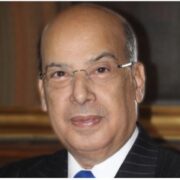
The writer is Antigua and Barbuda’s Ambassador to the U.S. and the OAS. He is also a senior fellow at the Institute of Commonwealth Studies at the University of London and at Massey College in the University of Toronto. The view expressed are entirely his own.

By Sir Ronald Sanders

Many countries in South America are now in a state of troubling unease. Recent events in Peru have catapulted it to the forefront of security concerns in all its dimensions. But worry also exists about other countries which are tiptoeing through political minefields that could explode overnight.

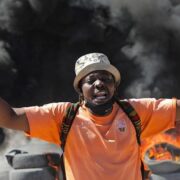
Although the causes of these conditions of dysphoria are ascribed to hostilities between political parties in their constant battles to control power, the root of the problem lies in inequality, injustice and racial and ethnic discrimination.

The dispossessed, throughout Latin America, found a voice and a champion among left-leaning parties which demand change. The elite and the privileged, including the military, maintain their economic and social advantage through right wing political parties and alliances with powerful multinational companies from North America and Western Europe. The two sides are persistently in conflict.

These conditions have been portrayed in the poetry of Pablo Neruda, the novels of Isabelle Allende, Gabriel Garc?a M?rquez, and Mario Vargas Llosa among others; and in the painstaking research and raw descriptions in the works of Marie Arana and Eduardo Galeano.

In his seminal work, Open Veins of Latin America, in one sentence, Galeano poignantly describes the structural divide in many Latin American societies – “The system has multiplied hunger and fear; wealth has become more and more concentrated, poverty more and more widespread. That is recognized by the documents of specialized international organizations in whose aseptic vocabulary our oppressed territories are ‘countries in the process of development’ and the pitiless impoverishment of the working class is ‘regressive income distribution’.”

And, inasmuch as the judgement may seem harsh, there is a sobering truth in Marie Arana’s assertion in, Silver, Stone and Sword, that “… extractive societies such as Latin America’s are built on social injustice. They are designed and maintained by a ruling class whose primary goal is to enrich themselves and perpetuate their power. They thrive when absolute privilege reigns over absolute poverty”.

None of this is to say that, over the years, progressive elements in Latin America have not succeeded in pushing for institutional change. They have been aided in the work of the United Nations Human Rights bodies, and in the efforts of the Inter-American Commission and Court on Human Rights. Authoritative external organizations have been hugely instrumental in pushing governments to adopt international treaties on human rights and non-discrimination.

But adherence to treaties and laws is only as good as effective implementation of their values. In this connection, not all law enforcement agencies and governments have been as dutiful as they could have been. Thus, inequality has continued and the desire by the disadvantaged to overturn it has escalated.

The role of the military has also not been neutral or respectful of their constitutional requirement to be apolitical servants of the executive branch and subordinate to their civilian commander-in-chief, the President. As social unrest escalated throughout Latin America in the decades between 1964 and 1985, military dictatorships took control in several countries including Brazil, (1964), Chile (1973), Uruguay (1973), and Argentina (1976).

It was the military that pressured Evo Morales in November 2019 to abandon his disputed Presidency in Bolivia. The same military acted heavy-handedly to subdue street protests over the controversial installation into the Presidency of the right-wing, opposition representative Jeanine A?ez.

While in Argentina and Chile, the return to democratic regimes was “accompanied by transitional justice, a reckoning with the past and a recognition that the armed forces had strayed from their constitutional mission”, as one political commentator put it, the role of the military in Brazil and Peru remains questionable.

Brazil’s President Lula da Silva dismissed the country’s army chief, General Julio Cesar de Arruda, in the aftermath of the storming of several government buildings by the supporters of former President Jair Bolsonaro on January 8. Lula said he suspected collusion by “people in the armed forces”.

In Peru, where elected President, Pedro Castillo, was ousted on December 8, after an ill-advised and clumsy attempt to suspend the Congress, which was seeking to impeach him, his vice-president, Dina Boluarte, was sworn in to replace him. He was carted off to prison at a police base that triggered protests in the rural areas and poorer neighbourhoods in the capital.

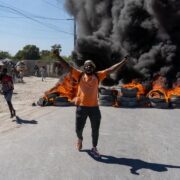
In response, police raided San Marcos University, detaining hundreds of protestors. This was part of a violent crackdown on the protestors which has left many dead or seriously injured. The UN Office of the High Commissioner for Human Rights (OHCHR) in Peru condemned the Peruvian administration over the violence used to curb the protests.

But the fundamental problems, driving the unrest remains ignored – a huge gap between rich and the poor, particularly the people in the South of the country who feel neglected by its institutions and, most of all, its hugely unpopular congress, which is largely viewed as a tool of the rich and powerful.

Hemispheric institutions, such as the Organization of American States (OAS), should seek a constructive role in Peru, and they must keep a watchful eye on the military and right-wing forces in Brazil which may yet turn on President Lula.

It is difficult to see what practical role the OAS can play in resolving the political issues in Peru, but, at the very least, the member states must let the Peruvian government know that further brutality against protestors will receive the strongest condemnation; and, instead, they should seek meaningful dialogue to address the deep-rooted issues in the country.

In the meantime, Caribbean governments and political parties should ensure that, in their own countries, economic inequalities must be discouraged. Dissatisfaction is fuelling the fire of unrest in Peru and other Latin American countries; it must not spread to the Caribbean.

Donate At Caribbean News Service, we do not charge for our content and we want to keep it that way. We are seeking support from individuals and organisations so we can continue our work & develop CNS further.


NewsAmericasNow.com

LIAT cancels flights due to withdrawal of aircraft

Black Immigrant Daily News

The content originally appeared on: Caribbean News Service

LIAT wishes to advise that one of its aircraft has been withdrawn from service due to an incident at one of its stations.

The incident, which occurred between the aircraft and a piece of ground equipment, compelled the airline to ground the aircraft in the interest of passenger and crew safety

The aircraft is currently being evaluated in accordance with the company’s Safety and Maintenance Procedures and will be returned to service once all checks have been completed.

The regular LIAT schedule will be disrupted due to the withdrawal of this aircraft. Between January 21 and 23, 2022, several flights will be impacted or cancelled.

Passengers affected by this disruption will be accommodated on alternate services or can rebook by contacting our Reservations Call Centre.

Passengers are asked to monitor their e-mails and LIAT’s social media platforms for updates.

LIAT sincerely apologizes for any inconvenience caused by these disruptions. (PR)

Donate At Caribbean News Service, we do not charge for our content and we want to keep it that way. We are seeking support from individuals and organisations so we can continue our work & develop CNS further.


NewsAmericasNow.com

CDB to study regional airlift issue

Black Immigrant Daily News

The content originally appeared on: Caribbean News Service

The Caribbean Development Bank, CDB, will be backing a study on regional airlift amid early moves to find a solution to the long-standing dearth of transportation that has been hobbled by limitations on free movement within Caricom and exacerbated by the collapse of LIAT airline two to three years ago.

For the Eastern Caribbean, the airline’s failure in 2020 cut airlift from 500 weekly flights to 50 now.

“We don’t have to have a critical mass of political will for us to get to a harmonious solution,” said CDB Vice-President Isaac Solomon at the bank’s annual news conference. But, he added, “we are encouraged because at least seven governments approached us in August last year to begin the study … it is the start of a process.”

A long-term resolution would require a system that addresses the cost of transportation, regulatory issues around transport, and the bottlenecks that hamper seamless movement from country to country.

CDB President Dr Hyginus ‘Gene’ Leon said the bank views dependable and cost-effective air transportation services as essential for the transformation of several of the region’s economies.

“Consequently, to safeguard the region’s future, governments need to take decisive and integrated action to reform the air transportation operating environment,” he said at the news conference.

He acknowledged that there would be a series of hurdles and issues to overcome, including the assets required, the financing of those assets, as well as the legal framework and environment in which those assets would be deployed.

“Then you have to have the political arrangements in place that would say we are all benefiting from this. Networks cannot exist in segments … they have to exist in their entirety, and so connectivity of a network becomes a global public good,” the CDB president said.

Leon said establishing a regional transportation system would require two phases, starting with free movement among the 15-member Caricom bloc.

“That is a major problem not only for the people, but equally for our heads of state, our governments … ,” he said.

“Now, if we are citizens of the region, why can’t we ask for that right to be able to move freely across the region? So transportation is part of the CSME [Caricom Single Market & Economy] issue that we have to solve. We need to solve this urgent part now, and how we do it may or may not be optimal or efficient.”

But: “We need to get a service going,” Leon added.

Donate At Caribbean News Service, we do not charge for our content and we want to keep it that way. We are seeking support from individuals and organisations so we can continue our work & develop CNS further.


NewsAmericasNow.com
As Haitian gangs expand control, cop’s family is left shaken

Black Immigrant Daily News

The content originally appeared on: Caribbean News Service

Every day when Daniel Marie Carmel’s husband put on his flak vest and walked out the door for another day of fighting Haiti’s gangs, she wondered if he would come home that night.

Friday was the day her smiling spouse of 18 years, Ricken Staniclasse, didn’t.

One of the country’s nearly 200 gangs ambushed his police unit that morning, sending gunfire echoing through the streets in an unexpected area — a mansion-lined stretch of the country’s capital, Port-Au-Prince.

A gang lead by Lionel Lazarre battled the police patrol under the sweltering Caribbean heat as officers desperately called for backup. But help never came, the country’s police union said.

The fighting killed three officers, hospitalized a fourth with bullet wounds and left the 44-year-old Staniclasse missing.

Carmel, meanwhile, was terrified for herself and their three children.

“My husband was fighting a lot with the gangs, and we don’t know what could happen to us,” Carmel, 43, said while curled up on her red couch surrounded by neighbors. “I can’t sleep at the house anymore because I don’t know what could happen to us.”

While the United Nations estimates that 60% of Port-Au-Prince is controlled by the gangs, nowadays most Haitians on the street reckon that number is closer to 100%.

Haiti has struggled with endemic gang violence for years, but the country spiraled into lawlessness after the 2021 killing of former President Jovenel Mo?se.

Powerful gangs have taken advantage of the political chaos and discontent with the current government led by Prime Minister Ariel Henry to further consolidate their control.

The government has failed to ease the violence, forcing many to flee their homes. News of rapes, kidnappings and ambushes on police have become the new norm.

Jolicoeur Allande Serge, director of the police unit that was attacked, said the Friday blitz in the Petion-Ville neighbhood was a sign of that. He noted that moving into upper class areas “benefits (the gangs’) economic interests.”

Kidnappings and ransoms as high as $1 million have been a key part of the financing for such armed groups.

Analysts expect the bloodshed to get worse, especially after Haiti’s final 10 elected officers ended their Senate terms in early January, leaving the parliament and presidency unfilled because the government has failed to hold elections.

Critics say that has turned Haiti into a “de-facto dictatorship.”

Meanwhile, people like Daniel Marie Carmel feel hope drain for their country. Carmel said her husband always hoped he could help clean up his city. Together, they built a home and a life together. Their 11-year-old son dreamed of following in his father’s footsteps.

“He loved people, he loved to help people,” she said of her husband.

But two years ago, violence began to get so bad in their neighborhood that they applied for a visa to migrate to the United States, hoping to join an exodus of people leaving Haiti. They never got a reply.

“I don’t know if he’s alive or dead, but I’m worried,” she said. “If we were able to leave the country, my husband would be alive.”

Donate At Caribbean News Service, we do not charge for our content and we want to keep it that way. We are seeking support from individuals and organisations so we can continue our work & develop CNS further.


NewsAmericasNow.com