Posts

207 People Have Been Killed In US Military Boat Strikes In The Caribbean And Pacific Waters

By Staff Reporter | NewsAmericasNow.com

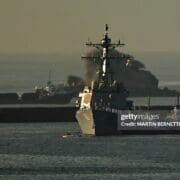
NEWS AMERICAS, NY, NY, Mon. 8, 2026: Since September 2025, the US military boat strikes in the Caribbean Sea and eastern Pacific Ocean has killed at least 207 people – in what legal experts are describing as an unprecedented and potentially illegal campaign of extrajudicial killings in Caribbean and Latin American waters.

The data, tracked by The New York Times based on postings by President Trump, Defense Secretary Pete Hegseth, and US Southern Command, reveals a dramatic and largely unreported shift in how the United States is conducting its war on drugs – one that has turned Caribbean waters into an active military kill zone.

At least 17 of the 63 strikes have taken place directly in the Caribbean Sea – killing at least 66 people in the shared waters of the Caribbean region since September 2025.

From Law Enforcement To Kill Zone

The scale and nature of this campaign represents a fundamental departure from decades of established US practice in the Caribbean. Historically, the US Coast Guard – with Navy assistance – treated maritime drug smuggling in the Caribbean as a law enforcement problem. Boats were intercepted. Suspects were arrested. Cases were prosecuted. Due process, however imperfect, existed.

That is no longer the case.

Under the Trump administration, the US military has been authorized to strike and destroy boats suspected of carrying drugs – killing everyone on board – without arrest, without trial, and without any independent verification that the vessels were actually carrying illegal cargo.

The White House has defended the strikes as lawful, telling Congress that President Trump has formally determined that the United States is in an armed conflict with drug cartels and that crews of suspected drug-running boats are therefore “combatants” subject to lethal force under the laws of war.

The Legal Controversy

A broad range of legal specialists on the use of lethal force have publicly stated that the strikes constitute illegal extrajudicial killings – because international law does not permit the deliberate targeting of civilians, even suspected criminals, who do not pose an imminent threat of violence.

As The New York Times reported, the administration’s legal theory rests partly on the argument that tens of thousands of Americans die annually from drug overdoses. However, as the Times noted, the surge in overdose deaths over the past decade has been driven primarily by fentanyl produced in Mexican labs – not cocaine transported on boats from South America through Caribbean waters.

The boats being struck are carrying cocaine. The deaths being cited to justify the strikes are caused by fentanyl. Critics say the legal justification does not hold.

What’s Happening In Caribbean Waters

The Caribbean strikes began on September 2, 2025 – when 11 people were killed in a single Caribbean Sea strike – and have continued sporadically through 2026. Among the deadliest Caribbean strikes documented:

September 2, 2025 – 11 killed in the Caribbean

October 14, 2025 – 6 killed in the Caribbean

October 23, 2025 – 6 killed in the Caribbean

November 12, 2025 – 4 killed in the Caribbean

March 25, 2026 – 4 killed in the Caribbean

May 4, 2026 – 2 killed in the Caribbean

The identities of those killed in Caribbean waters have not been publicly disclosed. Their nationalities are unknown. Whether any were Caribbean nationals – fishermen, migrants, or others – has not been established.

The Questions The Caribbean Must Ask

For Caribbean governments and communities, the US military’s sustained campaign of lethal strikes in Caribbean waters raises questions that have received almost no public attention in the region:

Who are the people being killed? Caribbean waters are not only used by drug traffickers. They are used by fishermen, by migrants, and by small boat operators of all kinds. The US military’s classification system – based largely on aerial surveillance – has never been independently verified.

Were any Caribbean nationals among the dead? The 207 people killed in these strikes have not been identified. Their nationalities, backgrounds, and circumstances remain unknown.

Did Caribbean governments consent? The strikes in Caribbean waters represent military action in the shared maritime space of the region. CARICOM member states have not publicly addressed whether they were consulted or whether they consent to US military operations in Caribbean waters.

What are the legal implications? If the strikes are indeed illegal extrajudicial killings – as a broad range of legal experts contend – what accountability mechanisms exist for actions taken in Caribbean waters?

The Broader Context

The boat strike campaign is unfolding alongside the USS Nimitz’s recent docking in Kingston, Jamaica, the escalating US pressure campaign against Cuba, and Secretary of State Rubio’s declaration that the United States has taken back control of the Western Hemisphere.

Together, these developments paint a picture of an increasingly militarized US presence in Caribbean waters – one that is operating with minimal transparency, limited legal accountability, and virtually no public discussion within the Caribbean region itself. 207 people are dead. Dozens of them died in Caribbean waters. The Caribbean deserves to know.

“With (over) 200 killings, these extrajudicial killings are becoming normalized,” said Amnesty International USA’s National Director for Government Relations, Amanda Klasing. “Not only are these killings illegal, they are immoral. People of good conscience cannot allow this to continue, yet Congress has so far failed to halt, or even slow down, this lethal and unlawful campaign. We are witnessing the height of lawlessness — a government taking military action to kill people who it unilaterally deems ‘criminals’ or ‘terrorists’ and then bragging about it on social media and stonewalling members of Congress demanding explanations. Regardless of whether the victims committed crimes or not, killing them is completely illegal under both U.S. and international law. Alleged criminal suspects should be dealt with by law enforcement who are bound by international human rights law, which prohibits using lethal force unless absolutely necessary based on an imminent threat to life.”

“Beyond U.S. authorities, we need to see leadership from other governments in the region, as well as the Organization of American States,” added Ana Piquer, Americas Director at Amnesty International. “The international community must speak out firmly against these murders, which constitute a serious threat to human rights and respect for international law. Governments must immediately suspend intelligence sharing that may contribute to these operations. They further should suspend export licenses to any defense material that could be used to perpetuate these murders.”
RELATED: Families Sue U.S. Government Over Caribbean Killings – Arguing There Was No War

What Makes A Caribbean Teacher Unforgettable

By Dr. Isaac Newton

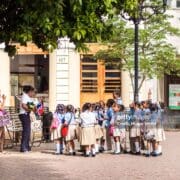
News Americas, NEW YORK, NY, Sat. June 6, 2026: A boy arrived at school each morning with sea salt still clinging to his shoes. Before sunrise, he had already worked beside his grandfather pulling fishing nets from dark water. He often arrived tired. Often late. Most teachers saw a problem. One Caribbean teacher saw a life. She did not begin with punishment. She began with questions. She listened. She learned. She brought fishing boats into mathematics and turned tides into lessons. That boy, once silent at the back of the classroom, began to rise. Years later he said, “She did not teach me numbers. She taught me that I mattered.” Unforgettable teachers begin here. They lead with understanding, they see with recognition, and they remove control and judgment from their teaching practice. Every child enters a classroom with a hidden world that cannot be seen at first glance.

In another village, a girl could barely read aloud. She avoided attention and feared embarrassment. Yet her teacher noticed something others missed. Whenever rhythm entered the room, she changed. He built learning around what awakened her. Words became music. History became voice. Literacy became performance. The same girl who once hid her voice later commanded the room with it. This is not technique alone. It is perception. Caribbean teachers who change lives do one essential thing. They refuse to separate learning from culture. They understand that identity is not a distraction from education. It is the path into it. When children see themselves in what they learn, they do not simply participate. They awaken.

The most powerful teachers see what others overlook. They notice the shy child carrying heaviness. They notice the laughter that hides strain. They notice ability before it is certified. Across generations, adults still recall a sentence that changed them. You are gifted. You can lead. Do not give up. These are not just kind words. They are formative ones. Education is identity formation. Before a child believes in themselves, they often borrow belief from an adult who chose to speak life. This is why unforgettable teachers are careful with language. They understand that words do not disappear. They take root.

In the Caribbean, the teacher is never only confined to a classroom. The unforgettable teacher is present in the life of the community. They greet children by name before the bell rings. They walk into homes after storms have passed. They show up at funerals, graduations, church services, and cricket fields. Their authority is both academic and relational. Teaching here has always been instruction plus stewardship. The teacher shapes achievement and character, success and resilience, learners and citizens.

Great teachers also understand the inner weather of children. They build classrooms where mistakes do not produce shame and questions do not invite ridicule. They understand that silence can signal fear, that anger can signal pain, and that disruption can signal struggle. So they ask differently. Not what is wrong with you, but what has happened to you, and what do you need to succeed. In such classrooms, discipline is firm but humane, and expectations are high but anchored in dignity. Trust becomes the soil where learning grows.

Long after examinations are forgotten, students remember how a teacher made them feel about themselves. They remember the teacher who saw strength in their struggle. Who named potential before it was proven. Who refused to reduce them to their worst moment. Such teachers do more than educate. They shape direction. They influence identity. They alter futures intentionally but permanently. Across the Caribbean today, leaders, builders, parents, artists, and professionals still move through the world driven by one invisible inheritance. At some point, a teacher looked at them and said, without hesitation, you were made for more.

EDITOR’S NOTE: Dr. Isaac Newton is a leadership strategist, governance expert, and author educated at Harvard, Princeton, Columbia, and Oakwood University. He advises leaders and institutions across the Caribbean and beyond on ethical leadership, organizational culture, and transformational change. He is the author of Face Life Squarely, co author of Steps to Good Governance, and co author of the upcoming book Daring to Hope.

RELATED: Guyana – One Destiny, One Future

From Flatbush To The Backdam: The Reality Check Of Moving “Back Home”

By Ron Cheong

News Americas, TORONTO, Canada, Sat. June 6, 2026:  It always happens right around February. You are standing outside in Toronto, London, or New York, shoveling six inches of grey, slushy snow off your driveway while the wind chill threatens to freeze your ears solid. Your back hurts, your boots are wet, and a sudden, desperate thought flashes through your mind: Why am I doing this? How about moving “back home?”

You go inside, log onto the internet, and start browsing real estate listings back home. You see photos of lush green land and wrap-around verandas. You close your eyes and make a solemn vow: “That is it. We are packing up. We are buying a piece of land, building a house, and moving back for good.”

It is the ultimate diaspora dream. We imagine ourselves living a stress-free, Facebook-ready lifestyle. In this dream, we wake up early to the sound of tropical birds chirping, stroll into the backyard to pick the sweetest mangoes from a tree heavy with fruit, and spend our afternoons sipping cold coconut water on the porch while a cool breeze blows away all our foreign anxieties.

It is a beautiful illusion. It is also a complete fantasy.

The reality check begins the exact second you step off the plane. You walk out of the air-conditioned cabin and are immediately hit by a wall of humidity so thick it feels like a punch in the chest. Within three minutes, your neatly pressed shirt is glued to your back.

And then, there are the local residents you forgot to account for: the wildlife.

For reasons unknown to science, local mosquitoes can smell foreign blood from a mile away. To them, a returning diaspora member isn’t a long-lost cousin – you are a walking, talking, five-star buffet. But it’s not just the mosquitoes. You can uncap a two-litre bottle of Coke, walk into the living room for a second, and return to the kitchen to find a lizard has beaten you to it and is happily swimming laps in the last remains of your cola (true story).

Even your daily routine becomes an exercise in survival. You try to dress down, put on your slippers, and blend in like the real local folk that you are. It doesn’t work. The taxi drivers can spot your “foreign walk” from a mile away and will instantly hail you out, doubling the fare before you even open your mouth.

If you try to make a phone call to get something done and launch straight into business, you will be met with icy silence. You forgot the cardinal rule: you must say “Good morning” or “Good afternoon” first, or the conversation is over before it begins.

As for bureaucracy? Forget about it. We get so used to the hyper-speed, automated efficiency of the global North that we forget the golden rule of life back home: things take time. If you need to visit a government office or a bank, prepare for a grueling five-hour lineup. You will need three different forms of identification, a mountain of patience, and a stack of documents requiring numerous official stamps. Everything operates on the relaxed timeline of “just now.”

Even a simple commute can scare you out of your wits. You hop into a minibus, only to find yourself trapped in a speeding rocket ship with music blaring so loud your teeth rattle, praying you make it to your destination in one piece. You look out the window and see a donkey cart or a horse-drawn cart casually moving along the side of the road – a stark contrast to the chaos.

And when the weather turns, it really turns. The heavy tropical rain falls so hard that it feels like “one drop can fill a bucket.” The downpour brings an immediate flood, forcing you to run out and buy heavy-duty mud boots just to cross the street.

Yet, despite the chaos, the illusion never truly dies because the beautiful moments are unmatched.

When that heavy rain hits, you get to lie in bed and listen to the lovely, calming sound of rain dancing on a zinc sheet roof. It is a sound that instantly floods your mind with sweet childhood memories, a comfort you can never buy abroad.

The dream of coconut water actually comes true. You end up drinking gallons of it, so much so that you and the coconut vendor become personal friends. He starts “watching your back” and saving the best ones just for you.

You get to experience real nature. You travel by boat on massive, powerful rivers that make the little creeks they call “rivers” in North America look like puddles. You get to satisfy your deep cravings, eating proper pepper pot, and feeling absolute delight when you see your favorite spot, Shanta’s, is still open and still making the best dhal Puri after all these years.

The cold, distant culture of the North melts away. You find yourself standing in the supermarket line, “gaffing” with the cashier like she is an old childhood friend you haven’t seen in years.

Best of all, you get to escape the madness by sitting on the seawall. You gaze out into the endless ocean, enjoying the cool Atlantic breeze, taking in how things have changed. Today, the seawall is alive with vendors selling ice-cold drinks and smoky, perfect BBQ chicken.

We might complain bitterly about the heat, the lines, and the bugs when we are home. We might fly right back to our heated apartments when the vacation is over. But the very next time the winter slush hits our boots, we will open up those real estate websites all over again. After all, a little bit of flooding and a swimming lizard are a small price to pay for a culture that wraps you up like family.

Dedicated to the resilient diaspora community – the barrel packers, the winter-survivors, and the dreamers. May your suitcases always clear customs safely, your accent never get too foreign, and your longing for home always keep you warm.

EDITOR’S NOTE: Ron Cheong is a frequent political commentator and columnist whose recent work focuses on international relations, economic resilience, and Caribbean-American affairs. He is a community activist and dedicated volunteer with extensive international banking experience. Now residing in Toronto, Canada, he is a fellow of the Institute of Canadian Bankers and holds a Bachelor of Science degree from the University of Toronto.

RELATED: The Archbishop And The Chambermaid: Cuba and The Caribbean’s Impossible Choice

What If The Caribbean Became A Media Hub?     

By Mark Walton

News Americas, NEW YORK, NY, Sun. June 6, 2026: The Caribbean is globally known for sun, sea, and sand – a powerful brand that has driven tourism for decades. But what if the region were also known as a media hub for film, television, and digital content storytelling?

Worldwide spending on film and television production exceeds $250 billion annually, yet the Caribbean captures only a fraction of that value, so small it is difficult to measure. Still, many of the building blocks for a successful screen industry are already in place: talent, production capability, distribution pathways, and audience.

With more than 45 million people in the region, an estimated 25–30 million in the diaspora, and a global audience drawn to its culture, the Caribbean has significant reach. It continues to produce distinctive storytellers while also offering compelling locations for everything from narrative features to reality television.

For many people unfamiliar with the depth and breadth of Caribbean cinema, The Harder They Come and Pirates of the Caribbean are often among the first titles that come to mind when asked to name films associated with the region. While neither fully represents the Caribbean’s rich cinematic legacy, the former demonstrates the enduring global appeal of authentic Caribbean storytelling, while the latter highlights the region’s capacity to support large-scale international production.

In the television realm, The Caribbean has proven its value as a production destination. Long-running productions such as Death in Paradise and Outer Banks have generated significant production activity in Guadeloupe and Barbados, respectively. Yet the region is often used as a backdrop without being identified on screen, limiting the tourism and branding benefits that can accompany production. Despite being filmed in Guadeloupe, Death in Paradise is set on the fictional island of Saint Marie.

Production alone, however, is not enough.

Today’s distribution landscape – spanning theatrical exhibition, broadcast and cable television, streaming platforms, and FAST channels – offers more viable pathways to market than ever before. Social media and platforms like WhatsApp have also created cost-effective tools for global marketing and audience engagement.

The Caribbean already benefits from billions of dollars in annual tourism spending and remittance flows from its diaspora. The challenge is how to better leverage those assets to support a sustainable creative economy.

The ingredients are already there. What is missing is alignment.

Creators continue to leave the region in search of opportunities and financing. Governments have yet to fully embrace the creative sector as an economic development strategy capable of generating employment, exports, tourism, and investment. Investors and industry leaders remain underexposed to the region’s potential. Each is moving forward, but too often separately.

Countries like India and South Korea have shown what is possible when policy, industry, and talent align. Parasite, Squid Game, and the South Indian blockbuster RRR are not accidents. They are the result of long-term investments in talent development, infrastructure, financing, distribution, and international market engagement.

If the question is how to bring these pieces together for the Caribbean screen industry, that conversation is already underway.

One recent effort took shape on May 16, 2026, during the second Caribbean Day at the Marché du Film at the Cannes Film Festival. Presented in collaboration with Pavillon Afronova and sponsored by the British Virgin Islands Film Commission, the initiative expanded its focus from visibility for Caribbean filmmakers to a broader discussion of long-term industry development.

Across a full day of panels, networking, and a screening of The Rhythm of Jamaican Art, distributors, filmmakers, festival programmers, government representatives, media executives, and creators explored how the Caribbean can compete more effectively in the global marketplace.

No single event will transform the Caribbean screen sector overnight. Yet, throughout the day, several themes consistently emerged: stronger connections between the region and its diaspora; deeper engagement with international industry partners; greater collaboration across Caribbean territories; and clearer pathways to global audiences for Caribbean stories, talent, and production capabilities.

The growing importance of regional and diaspora networking was evident in the participation of members of ODOS; a Trinidad and Tobago-based virtual creative community built largely through WhatsApp. Their presence illustrated how digital tools can connect creators across the Caribbean, Europe, and North America, helping to bridge geographic boundaries and foster collaboration.

The Caribbean has already demonstrated its ability to produce compelling stories, cultivate creative talent, and provide world-class production locations. The goal is not to replicate Hollywood, Bollywood, or South Korea’s screen sector. Instead, it is to build a Caribbean model – one that leverages the region’s culture, diaspora, and entrepreneurial spirit while aligning creators, industry leaders, investors, and governments around a shared vision for growth.

It’s industry-building time.

EDITOR’S NOTE: Mark Walton is an Associate Professor of Media Management at Parsons | The New School and regularly advises media companies, government agencies, and independent creators on distribution and business strategy. He is a first-generation Caribbean American with family roots in Barbados and Trinidad. This article was inspired by discussions held during the Marché du Film at the 2026 Cannes Film Festival. The views expressed are those of the author.

YOU MAY ALSO LIKE: Africa, The Global South & The Guyana-Venezuela Case

Trinidad And Tobago Broke With CARICOM On Cuba – Now Trump Is Sending A Trinidadian National Back Home As US Ambassador

By Staff Reporter | NewsAmericasNow.com

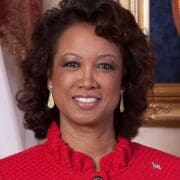
News Americas, WASHINGTON, D.C., Thurs. June 3, 2026: The timing is no coincidence. Days after Trinidad and Tobago broke ranks with CARICOM – reserving its position from the regional body’s statement of concern over escalating US measures against Cuba and aligning itself with Washington through the US-led Shield of the Americas security pact – President Donald Trump has nominated a Trinidad-born former Florida Lieutenant Governor as the next United States Ambassador to Port of Spain.

The nomination of Jennifer Johnson-Carroll, 66, sends a unmistakable diplomatic signal across the Caribbean: countries that align with Washington get rewarded. Countries that don’t – get Kari Lake.

The Reward

Carroll’s biography is extraordinary by any measure. Born in Port of Spain, Trinidad and Tobago, she immigrated to the United States at the age of eight, enlisted in the US Navy in 1979, and served 20 years in uniform – retiring as a Lieutenant Commander in 1999. She went on to become the 18th Lieutenant Governor of Florida – serving from January 2011 to March 2013 under Governor Rick Scott – becoming in the process the first Black person, the first woman, and the first Trinidadian American ever elected to statewide office in Florida, and the first Black Republican elected to Florida statewide office since Reconstruction.

A long-time Trump ally who served as a surrogate during his 2016 presidential campaign and later as a Commissioner on the American Battle Monuments Commission during his first term, Carroll now stands to return to the country of her birth – not as an immigrant child leaving for American shores, but as the United States’ most senior diplomatic representative to the government of Trinidad and Tobago.

The Context: Trinidad’s Strategic Choice

Carroll’s nomination arrives at a moment of significant geopolitical realignment across the Caribbean – one in which Trinidad and Tobago has made a clear and consequential choice about which side of an intensifying US-Cuba confrontation it stands on. When CARICOM foreign affairs ministers expressed their profound concern over escalating US economic and commercial measures against Cuba, Trinidad and Tobago – alongside Guyana – reserved its position. The two nations, both significant energy producers with deep commercial ties to the United States, declined to join the regional consensus in support of Cuba.

Both countries are only 2 of three Caribbean official members of the US-led Shield of the Americas alliance – a security pact signed by 17 Western Hemisphere countries in March 2026 focusing on countering transnational organized crime, drug trafficking, and illegal migration through enhanced intelligence sharing and military cooperation.

The nomination of a Caribbean-born, historically significant diplomat to serve as US Ambassador to Trinidad and Tobago — at precisely this moment of regional fracture – is the kind of diplomatic gesture that Washington makes deliberately and the region understands immediately.

The Contrast With Jamaica

The difference between Washington’s approach to Trinidad and Tobago and its approach to Jamaica could not be more pointed.

For Trinidad – which sided with Washington on Cuba and signed the Shield of Americas pact – Trump nominated a Trinidad-born woman with a historic record of public service, military service, and political achievement who literally grew up in the country she will now represent America within.

For Jamaica d which has not broken with CARICOM on Cuba and which is currently hosting the USS Nimitz in Kingston Harbor in what the US Embassy carefully described as a goodwill visit d Trump nominated Kari Lake. An Arizona-born television anchor with no known connection to Jamaica or the Caribbean and a public record of calling for the mass deportation of immigrants.

The message to the Caribbean is clear. Alignment with Washington opens diplomatic doors. Distance keeps them closed – or worse, puts an anti-immigration hardliner behind them.

A Caribbean Heritage Month Footnote

Carroll’s nomination arrives during Caribbean American Heritage Month – a month the Trump White House has not seen fit to formally recognize with a proclamation. The irony is not lost on Caribbean diaspora observers that the administration’s most symbolically positive gesture toward the Caribbean community in June 2026 is the nomination of a Caribbean-born woman to a diplomatic post – while simultaneously declining to issue the standard recognition of the month dedicated to celebrating Caribbean Americans.

Carroll’s nomination is subject to Senate confirmation.

The Rule That Binds Us All: Why Small Nations Defend Sovereignty Before It Is Tested

Dr. Isaac Newton

News Americas, NEW YORK, NY, Weds. June 3, 2026: In a world where powerful states can decide that another nation’s government may be removed, small nations do not survive by force or wealth. They survive by defending a single principle before it is ever tested: that no state has the right to rewrite another by power.

First, small states survive because rules exist that restrain power. A Caribbean nation cannot outspend, outfight, or outpressure global powers. Its survival depends on a shared agreement that borders and governments are not to be rewritten by force. When that agreement holds, small states have space to exist with dignity. When it weakens, small states do not gain new tools; they lose their only protection.

Second, every exception becomes a precedent. If intervention is accepted in one case because it appears justified, then the same reasoning becomes available in the next case. The Caribbean cannot treat Cuba or Venezuela as isolated situations because the real issue is not the country involved, but the permission being created. Once permission exists, it can be reused by stronger actors in different places, under different labels.

Third, geography does not adjust itself to political change. Governments rise and fall. Leaders change. Policies are rewritten. But Cuba remains in the Caribbean basin. Venezuela remains on its edge. Jamaica, Barbados, Guyana, and Trinidad and Tobago remain in the same geographic position regardless of global shifts. A foreign policy built on temporary political conditions rather than permanent geography places small states in a position of constant instability.

Fourth, trust is one of the few forms of power available to small states. Large nations rely on military reach and economic force. Small nations rely on credibility being consistent, predictable, and reliable. The Caribbean has built influence in global affairs not through coercion but through the ability to be trusted across different political environments. When that consistency breaks, influence does not change shape; it declines.

Fifth, memory shapes future credibility. Cuba provided medical training when the region lacked doctors. Venezuela provided energy support when several economies faced severe pressure. No nation is required to offer permanent loyalty. But every nation is judged by how it treats those who stood with it when conditions were difficult. If those experiences are dismissed whenever pressure rises, then future partners will assume that all commitments are temporary.

Sixth, history shows that intervention is rarely introduced in direct terms. It is usually framed through language such as stability, security, democracy, or necessity. The justification changes, but the underlying structure remains similar. Once the international system accepts that sovereignty can be suspended when a powerful state deems it necessary, weaker states inherit a world where rules bend toward capability rather than equality.

Seventh, independence requires the ability to think and act under pressure without surrendering principle. The Caribbean can disagree with Cuba or Venezuela on specific policies while still defending their right to exist without external removal. It can cooperate with the United States while rejecting any principle that would become dangerous if applied universally. Sovereignty is not agreement with the powerful. It is the capacity to maintain principle when power moves in another direction.

Is Cuba or Venezuela right in every decision? No country is. Sovereignty is a universal right, not a conditional privilege granted by the powerful. If sovereignty becomes conditional, it will not remain secure anywhere. For the Caribbean, this is essential to its thriving.

It is an issue that shapes its future before that future arrives.

EDITOR’S NOTE: Dr. Isaac Newton is a leadership strategist and governance expert educated at Harvard, Princeton, Columbia, and Oakwood University. He advises leaders and institutions across the Caribbean on ethical leadership, organizational culture, and transformational change. He is the co-author of Steps to Good Governance.

RELATED: When Grace Is Not Enough: Accountability in Faith Communities Across The Global South

Marco Rubio Says America Has Taken Back Control Of The Western Hemisphere

By Staff Writer | NewsAmericasNow.com

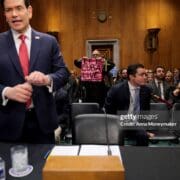
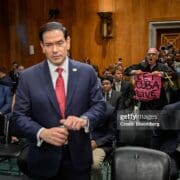
News Americas, WASHINGTON, D.C., Weds. June 3, 2026: On the second day of Caribbean American Heritage Month – a month the Trump White House has still not seen fit to formally recognize – US Secretary of State Marco Rubio told the United States Senate that the Trump administration has taken back control of the Western Hemisphere.

Those were Rubio’s words Tuesday before the Senate Foreign Relations Committee – delivered as the USS Nimitz, one of the world’s largest nuclear-powered aircraft carriers, sat docked at the Port of Kingston, Jamaica, 90 miles from Cuba, and as the United States quietly met with Guyana’s Foreign Minister to discuss oil investment and sovereignty protection in what analysts say is a deliberate strategy to reshape the Caribbean’s geopolitical alignment.

For the millions of Caribbean Americans marking Heritage Month across New York, Florida, Connecticut, and beyond – the message from Washington could not have been clearer. The Western Hemisphere belongs to the United States. The Caribbean’s role in that hemisphere is to fall in line.

The Testimony: Control, Regime Change And A Contradiction

Rubio’s appearance before the Senate Foreign Relations Committee produced some of the most revealing language yet about the Trump administration’s vision for the Caribbean and Latin America. Touting the January operation that removed Venezuelan President Nicolás Maduro – a key ally of Cuba’s communist government – Rubio declared that the administration had taken back control of the Western Hemisphere, as reported by NPR.

On Cuba specifically, Rubio was unambiguous about his position. “I really don’t believe this system is capable of reform, unless new people take over or a new mindset takes hold,” he told the committee, as quoted by NPR, language that analysts describe as a clear call for regime change.

But here is where the contradiction emerges – and where the Caribbean should be paying close attention. The Helms-Burton Act, which Rubio has long championed, requires credible steps toward democracy before the US embargo on Cuba can be lifted. Rubio’s vision is nothing less than the collapse of the Cuban communist system – an Eastern European-style regime change, as Christopher Sabatini of the Chatham House think tank described it to NPR.

President Trump, however, appears to have a different vision. In Venezuela, the administration toppled Maduro but left the state largely intact – opening up business deals for American companies. That kind of arrangement, analysts told NPR, might appeal to Trump in Cuba as well. But it is not what Helms-Burton requires. And it is not what Rubio has called for.

“So he’s going to have to confront his own constituency and his own conscience, if you will, in a policy that Trump is dictating in which Trump will want a victory,” Sabatini told NPR. “But it’s not the same absolute victory that Marco Rubio and many of his constituents have imagined, literally, for more than six decades now.”

The Caribbean – caught between two competing American agendas neither of which considers regional interests – is watching two powerful men pull in different directions over a crisis that will be felt from Havana to Kingston to Port of Spain regardless of who wins that internal argument.

The Man Who Has Never Been To Cuba

One of the most striking details to emerge from coverage of Rubio’s testimony is a fact that Cuba’s own Foreign Minister raised last week and that Cuban history professor Lillian Guerra of the University of Florida confirmed to NPR this week: Marco Rubio has never been to Cuba.

“He is very unaware of how – what life is like in Cuba. He’s never been there,” Guerra told NPR. “And I think that he needs to be cognizant of that.”

Rubio’s parents were born in Cuba but left before the revolution. The Secretary of State is driving the most aggressive US pressure campaign against Cuba in decades, a campaign that is reshaping Caribbean geopolitics, fracturing CARICOM, and placing a nuclear aircraft carrier in Caribbean waters – has never set foot on the island whose future he is helping to determine.

Guerra also noted that a PBS genealogy program found that Rubio’s third great-grandfather owned a tobacco farm in Cuba – and slaves. “That was shocking to him,” she told NPR. “But it wasn’t to anybody who’s Cuban on the island.”

The Quiet Guyana Meeting

While Rubio testified on Capitol Hill, a separate and significant diplomatic meeting was taking place that received far less attention – but that tells an equally important story about Washington’s Caribbean strategy.

US Deputy Secretary Christopher Landau met Tuesday with Guyanese Foreign Minister Hugh Todd, according to a State Department readout issued June 2, 2026. The meeting focused on reaffirming the strong and expanding partnership between the United States and Guyana, expanding US private sector engagement in Guyana, and reaffirming the United States’ commitment to Guyana’s sovereignty and territorial integrity – the latter a clear reference to the ongoing dispute with Venezuela over the Essequibo region.

The timing is striking. Guyana was among the CARICOM members that reserved its position from the regional body’s statement of concern over US measures against Cuba – breaking ranks with Caribbean solidarity to maintain its alignment with Washington through the US-led Shield of the Americas security pact.

The day after the USS Nimitz docked in Jamaica – the day Caribbean American Heritage Month began without a White House proclamation – the United States was quietly consolidating its relationship with one of the Caribbean’s most strategically important nations. Oil investment. Sovereignty guarantees. Commercial partnerships.

The Caribbean is not being consulted about its future. It is being managed. And the difference matters enormously.

The Administration That Is Talking To Raul Castro’s Grandson

Perhaps the most extraordinary detail to emerge from NPR’s coverage of Tuesday’s testimony is this: even as the Department of Justice pursues a murder indictment against former Cuban President Raul Castro – and even as Rubio calls for systemic regime change – the Trump administration is simultaneously talking to Cuban officials, including Raul Castro’s own grandson.

The contradiction is breathtaking. Washington is indicting the grandfather for murder while negotiating with the grandson. It is deploying a nuclear aircraft carrier to Caribbean waters while offering $100 million in humanitarian aid. It is calling Cuba a failed state while pursuing back-channel conversations with its leadership.

For the Caribbean – which has watched this contradiction play out in real time – the message is not one of principled foreign policy. It is one of raw power, managed carefully enough to keep all options open.

Caribbean Heritage Month: A Warship And A Silence

Against this backdrop of geopolitical maneuvering, regime change rhetoric, and quiet diplomatic realignments, Caribbean American Heritage Month began on June 1st with no proclamation from the Trump White House – breaking with a tradition maintained by previous administrations – and with little more than social media posts from elected officials who even represent Caribbean diaspora communities.

No formal recognition. No acknowledgment of the millions of Caribbean Americans who have contributed to this country for more than 250 years. No statement addressing the communities most directly affected by the administration’s Cuba policy, its immigration enforcement operations, or its military posture in the Caribbean.

Just a warship in Kingston Harbor; silence from the White House and Rubio speaking of taking back “control” not partnerships.

RELATED: The Archbishop And The Chambermaid: Cuba and The Caribbean’s Impossible Choice

The Brown Paper Bag Rule: The Segregation We Don’t Talk About

By Nyan Reynolds

News Americas, NY, NY, Mon. June 1, 2026: When people hear the word segregation, they often think about White America and Black America.

They think about separate schools, separate water fountains, separate lunch counters, and separate entrances. They think about politicians standing on courthouse steps declaring that segregation should exist today, tomorrow, and forever. They think about police dogs, fire hoses, marches, protests, and brave men and women who challenged a system that told them they were less than human because of the color of their skin.

That is the segregation we teach in our classrooms. It is the segregation we see in documentaries. It is the segregation we remember every February when conversations turn toward civil rights and racial justice.

But there is another segregation that we rarely discuss. It happened inside the Black community. And if we are honest with ourselves, it is still happening today.

Before going further, it is important to understand what the Brown Paper Bag Rule actually was.

The Brown Paper Bag Rule, sometimes called the Brown Paper Bag Test, was an informal social practice that emerged in parts of the United States during the late nineteenth and early twentieth centuries and became most prevalent during the Jim Crow era. The concept was simple and troubling. A person’s skin tone was compared to the color of a brown paper bag. If their complexion was lighter than the bag, they were often viewed more favorably in certain social circles. If they were darker, they could face exclusion from clubs, organizations, churches, social gatherings, and other spaces where complexion influenced acceptance.

It was never a law. It was not practiced everywhere. Nor did it represent the beliefs of all Black Americans. Yet it became a symbol of a deeper issue that scholars today call colorism: the preference for lighter skin tones within communities of color. Its roots stretched back to slavery and the racial hierarchy that elevated whiteness as the standard of beauty, intelligence, and social worth. By the time America entered the twentieth century, some of those beliefs had found their way into Black communities themselves, creating divisions among people who were already facing discrimination from the outside world.

The Brown Paper Bag Rule reminds us that segregation was not only something imposed upon Black Americans. In some ways, segregation also became a lens through which Black Americans were encouraged to view one another. Think about that for a moment.

While America was telling Black people they were not good enough because they were Black, Black people were sometimes telling other Black people they were not good enough because they were too Black.

How does something like that happen? How does a people struggling against segregation become divided among themselves by the very thing being used against them?

The answer is uncomfortable. Segregation did not simply separate races. Segregation taught lessons. And some of those lessons were learned far too well.

To understand this reality, we must go back further than the Civil Rights Movement. We must go back to slavery itself.

For generations, America has established a hierarchy based on race. Whiteness represented power. Whiteness represented beauty. Whiteness represented opportunity. Whiteness represented acceptance. Blackness was placed at the bottom of that hierarchy. These ideas were reinforced everywhere. They appeared in politics, education, employment, entertainment, and social customs. They shaped who was considered worthy and who was not.

Over time, those beliefs did not remain outside Black communities. They found their way inside.

Many lighter-skinned Black Americans were descendants of the very system that oppressed their ancestors. They were often the children of slave owners and enslaved women, born from relationships that frequently involved exploitation and violence. In some instances, lighter-skinned enslaved people worked inside plantation homes while darker-skinned enslaved people worked in the fields.

Both groups were enslaved. Both groups lacked freedom. Both groups suffered under the same institution.

Yet, differences in treatment created social distinctions that survived long after slavery ended. When emancipation arrived, the chains were removed, but many of the attitudes remained.

Opportunities were often distributed unevenly. Lighter skin sometimes translates into greater access to education, employment, and social acceptance. Darker skin frequently carried stereotypes that had been created by a racist society. The result was a hierarchy that persisted within a community already burdened by discrimination.

The Brown Paper Bag Rule became one symbol of that reality.

It was never merely about complexion. It was about value. It was about acceptance. It was about proximity to a standard that Black Americans themselves had not created.

Perhaps that is what makes the issue so painful. The struggle was never simply against external segregation. The struggle was also against internalized beliefs that taught people to measure themselves according to someone else’s definition of beauty, intelligence, and worth.

Even today, many Black Americans recognize remnants of these conversations. Listen carefully. The evidence is everywhere.

How many times have we heard someone describe a person as attractive primarily because they are light-skinned? How many jokes have been made about dark skin? How many songs, movies, and television shows have reinforced the idea that certain features are more desirable than others?

How many young girls have stood in front of a mirror questioning whether their complexion makes them beautiful enough? How many young boys have been teased because they were considered too dark?

We often laugh about these things. We package them as harmless jokes. We turn them into memes. We build entire social media conversations around them.

But jokes have histories. Ideas have origins. And many of those origins can be traced back to a period when America openly taught that the closer one was to whiteness, the more valuable society considered them to be.

The laws changed. The attitudes did not always change with them. Some of those beliefs settled into families. Some settled into neighborhoods. Some settled into the culture. Some settled into us.

I remember growing up hearing conversations about complexion that seemed normal at the time. People often discussed skin tone as casually as they discussed height or eye color. Yet beneath many of those conversations was something deeper. There was often an assumption about attractiveness. An assumption about social status. An assumption about desirability.

The comments were not always intended to be harmful. That is what makes them so dangerous. Prejudice often survives not because it is openly celebrated but because it becomes normalized.

A child does not need to hear hatred to develop insecurity. Sometimes all it takes is hearing that lighter is prettier. Sometimes all it takes is hearing that darker is less desirable. Sometimes all it takes is a joke repeated often enough that it begins to feel true.

For many Black children, complexion becomes one of the earliest ways they learn how society evaluates appearance. Long before they understood history, they understood comments. Long before they understand segregation, they understand comparison.

That reality deserves more attention than it receives. We cannot spend decades teaching children about the damage caused by racial segregation while ignoring the ways similar ideas continue to influence perceptions within communities today.

This conversation is not about assigning blame. It is not about creating division where none exists. Nor is it about suggesting that all Black Americans think the same way.

The overwhelming majority of Black families reject these ideas entirely and celebrate the beauty found in every complexion.

The purpose of this discussion is understanding. History matters because it explains why certain conversations continue long after the laws that created them disappear.

History helps us understand why some wounds remain sensitive decades later. History reveals that prejudice is rarely satisfied with dividing one group from another. Eventually, it teaches people to divide themselves.

That may be one of segregation’s most enduring victories. Not the separation of schools.

Not the separation of buses. Not the separation of drinking fountains. Its greatest victory may have been convincing generations of people that human worth could be measured by physical characteristics.

That is a lesson America taught repeatedly. And unfortunately, it is a lesson that echoes far beyond race.

When society teaches people to rank one another according to appearance, everyone loses. Communities become fractured. Self-worth becomes conditional. Human dignity becomes negotiable.

THE BROWN PAPER BAG RULE

The Brown Paper Bag Rule serves as a reminder of how dangerous those ideas can become. It reminds us that oppression does not always operate from the outside. Sometimes it finds ways to live within the communities it once targeted. Sometimes it survives in conversations, assumptions, preferences, and jokes long after the original system has been dismantled.

That is why confronting this history matters. Not because we wish to dwell in the past. But because we owe honesty to the present.

A mature society does not hide uncomfortable truths. It examines them. It learns from them. It grows beyond them. The next generation deserves that honesty.

Young Black boys deserve to grow up knowing that their worth is not determined by how dark or how light they are. Young Black girls deserve to know that beauty is not measured against proximity to whiteness or any other manufactured standard.

They deserve freedom from insecurities they did not create. They deserve freedom from hierarchies they did not invent. And they deserve a future where complexion is viewed as a characteristic rather than a ranking system.

As we turn the pages of history, we will find countless examples of America struggling with race. We will read about segregation, discrimination, and the long road toward equality. Those stories are important, and they must continue to be told.

But we should also tell the whole story. We should talk about the segregation that happened between races and the divisions that sometimes happened within them.

We should talk about the visible scars and the invisible ones. We should talk about the laws that separated people and the ideas that persuaded people to separate themselves.

Because the Brown Paper Bag Rule was never really about a paper bag.

It was about identity. It was about belonging. It was about value.

And until we fully confront the legacy of those ideas, we risk allowing them to quietly survive under different names, jokes, and conversations. History asks whether we recognize that reality.

The future depends upon what we choose to do with the answer this Caribbean American Heritage Month and beyond.

EDITOR’S NOTE: Nyan Reynolds is a U.S. Army veteran and published author whose novels and cultural works draw from his Jamaican heritage, military service, and life experiences. His writing blends storytelling, resilience, and heritage to inspire readers.  

RELATED: The British Empire They Carried: The Fractured Identity Of Britain’s Caribbean Generation

No Caribbean American Heritage Month Proclamation From Trump White House As Warship Sits 90 Miles From Cuba

By Staff Reporter | NewsAmericasNow.com

News Americas, WASHINGTON, D.C., Mon. June 1, 2026: It’s officially National Caribbean American Heritage Month here in the United States, even though the White House has not said so as yet. As of today, Monday, June 1, the Trump administration has issued no proclamation recognizing Caribbean American Heritage Month – a signal many see in line with a series of executive orders (EOs) targeting diversity, equity, and inclusion programs in the public and private sectors. The absence of a Caribbean American Heritage Month proclamation follows a similar pattern – the Trump White House also issued no proclamation recognizing Haitian Heritage Month in May, which is observed annually to honor the contributions of Haitian Americans to the United States. The back-to-back silences on both Caribbean observances represent a sharp departure from the tradition maintained by previous administrations. Traditionally, proclamations recognizing CAHM are released on or before May 31st.

What The Silence Says

Previous administrations – Democrat and Republican alike – have consistently issued proclamations recognizing June as Caribbean American Heritage Month, acknowledging the cultural, economic, and civic contributions of one of America’s most vibrant immigrant communities that total over 10% of the nation’s foreign-born population.

The Trump administration’s failure to issue that recognition in 2026 comes as:

The USS Nimitz – one of the world’s largest nuclear-powered aircraft carriers – sits docked at the Port of Kingston, Jamaica, 90 miles from Cuba, which many see as part of an escalating military pressure campaign against Havana.

Anti-immigration hardliner Kari Lake – who has campaigned for mass deportations of immigrants – awaits Senate confirmation as US Ambassador to Jamaica

Secondary sanctions expanded against Cuba put Caribbean businesses and banks at direct risk of exposure to US sanctions.

Green Card rule changes threaten to force thousands of Caribbean and other immigrants already living and working in the United States to leave the country to apply for permanent residency.

Mass deportation operations continue to target Caribbean and immigrant communities across the country

The Caribbean Community

Caribbean American communities across the United States have built extraordinary legacies in medicine, education, law, business, the arts, and public service. They pay taxes, vote, serve in the military, and contribute to every sector of American life. Caribbean American Heritage Month exists precisely to recognize that legacy. According to the US. Census data from 2020, the first Census when Caribbean people were able to write in their ancestry thanks to CARIBID, the movement founded by NAN publisher, Felicia J. Persaud, to get Caribbean nationals accurately counted. Some 13 million people of Caribbean descent live in the US. That is 10.2 percent of the country’s immigrant population. Cuba, the Dominican Republic, Jamaica, and Haiti account for most of that number. Geographically, Caribbean Americans are most heavily concentrated in Florida (30%), New York (25%), and New Jersey (6%). The data also show that most Caribbean Americans fall within the 45–64 age range, reflecting a well-established and mature population.

According to historian and archivist Damani Davis, tens of thousands of Afro-Caribbean, or “West Indian,” immigrants migrated to the U.S. between the 1910s and 1930s, and in some cases, even earlier. In his publication Ancestors from the West Indies: A Historical and Genealogical Overview of Afro-Caribbean Immigration, 1900–1930sDavis documents how these immigrants primarily settled in northeastern port cities – particularly New York City, which became the epicenter of West Indian cultural life in the U.S. At the same time, South Florida attracted a substantial number of Bahamian migrants, who established vibrant communities in areas like Broward County and Miami.

Caribbean American Heritage Month

Caribbean American Heritage Month was established by Congress in 2006 after advocacy by the Institute of Caribbean Studies in Washington, D.C., and former Democratic Congressmember Barbara Lee of California, now Mayor of Oakland, CA, to recognize the significant contributions of Caribbean Americans to the United States, and was signed into law by President George W. Bush.

FAMOUS CARIBBEAN AMERICANS IN US HISTORY

The demographic footprint of Caribbean Americans remains undeniable in the United States. Caribbean presence in the U.S. dates back centuries. Historians like Jennifer Faith Gray of the Scottish Centre for Global History note that enslaved Africans were brought from the Caribbean to the U.S. as early as the 1660s, with one-third to half of enslaved persons in the Carolinas during the colonial era coming directly from the CaribbeanHarvard University, among others, profited from Caribbean slave labor through financial instruments and loans.

One of the most notable acts of Caribbean American resistance in U.S. history came in 1822, when Denmark Vesey, a Caribbean-born former slave, led a planned slave revolt in Charleston, South Carolina – one of the largest of its time.

Caribbean immigrant and US founding father, Alexander Hamilton, was born in Charlestown, Saint Kitts and Nevis, and became the nation’s first Secretary of the Treasury. A key architect of America’s financial system, Hamilton served under President George Washington from 1789 to 1795. He also co-founded the Federalist Party and the African Free School, and played a pivotal role in shaping the early United States. Hamilton was married to Elizabeth Schuyler and was tragically killed in a duel in 1804. His legacy as a Caribbean-born visionary and American statesman endures.

NewsAmericasNow.com will update this story if the White House issues a proclamation.

RELATED: Does The New Pope Have Haitian Roots? Groundbreaking Revelation Links Pontiff To The Caribbean

The US Navy’s Biggest Warship Will Dock In Jamaica Tomorrow – 90 Miles From Cuba

By Staff Reporter | NewsAmericasNow.com

News Americas, WASHINGTON, D.C., Sun. May 30, 2026: On Monday June 1st, the USS Nimitz – one of the largest and most powerful naval vessels on the planet – will drop anchor at the Port of Kingston, Jamaica. Ninety miles away, Cuba is watching. The nuclear-powered aircraft carrier’s arrival in Kingston Harbor marks the final stop of Southern Seas 2026 – an 11th iteration multinational goodwill deployment announced by US Naval Forces Southern Command that has taken the carrier throughout South America and the Caribbean. The United States Embassy in Jamaica has framed the June 1 to June 5 visit as an exercise in maritime cooperation and people-to-people connections.

But the timing, the context, and the fractures it has exposed within the Caribbean Community tell a far more complicated story.

A Goodwill Visit – Or Something More?

The USS Nimitz is not a goodwill vessel in the conventional sense. It is a Nimitz-class nuclear-powered supercarrier – one of the largest warships ever built, capable of carrying dozens of combat aircraft and projecting overwhelming military force across an entire ocean. Its arrival in Kingston comes at a moment of extraordinary tension between the United States and Cuba – the most dangerous escalation in US-Cuba relations since the Cuban Missile Crisis of 1962, according to analysts tracking the situation.

In the weeks leading up to the Jamaica port call, the Trump administration unsealed a superseding federal indictment charging former Cuban President Raul Castro with the alleged murders of four Americans in the 1996 shoot-down of unarmed civilian aircraft. Secretary of State Marco Rubio publicly described Cuba as “a failed state 90 miles from our shores run by friends of our adversaries” — while standing at Homestead Air Reserve Base in Florida, approximately 180 miles from Havana. The administration expanded secondary sanctions targeting foreign entities doing business with Cuba. And US Southern Command confirmed the Nimitz carrier strike group’s deployment to the southern Caribbean.

The carrier is now coming to Jamaica, and Cuba, which sits between Florida and Kingston, is watching every move.

Jamaica: Partner, Not Launchpad – For Now

The United States Embassy in Jamaica was careful in its framing of the visit. Chargé d’Affaires Scott Renner described it as underscoring “the depth of the US-Jamaica bilateral relationship and the importance the United States places on its enduring partnership with Jamaica.”

“The visit of a US aircraft carrier to Jamaica marks an important milestone in the longstanding partnership between our countries,” Renner said, as quoted in the Embassy announcement. “Beyond strengthening maritime cooperation and regional security, this visit creates opportunities for meaningful people-to-people connections and economic benefits for local communities.”

The language is deliberate. Diplomatic. Carefully calibrated to frame a nuclear-powered supercarrier docking in the Caribbean’s third-largest island as a routine partnership exercise. Whether Jamaica – and the broader Caribbean – accepts that framing without question is another matter entirely.

Jamaica Government Moves Quickly To Frame The Visit

As questions swirled about the timing and implications of the USS Nimitz’s arrival, Jamaica House – the Office of the Prime Minister -moved swiftly on May 29th to frame the visit in decidedly civilian terms.

In an official press release, the government noted that the Nimitz had previously visited Panama, Chile, Argentina, and Brazil as part of its Southern Seas regional tour – and had hosted government officials from Guyana and Suriname while in South America. The statement emphasized people-to-people activities during the Jamaica visit – including the beautification of four schools in collaboration with the Jamaica Defence Force, youth sporting activities on June 4, and opportunities for Jamaican students to be exposed to world-class maritime operations and infrastructure.

“Jamaica and the United States have long shared common interests in regional stability, maritime cooperation, disaster response, trade, education, and security,” the statement read, as quoted in the Jamaica House press release. “The visit of the USS Nimitz provides a further opportunity to reaffirm these bonds and to strengthen mutual understanding between both nations.”

The carefully calibrated statement made no mention of Cuba, the escalating US-Cuba crisis, or the broader geopolitical context in which the carrier’s Caribbean deployment has taken place.

CARICOM Fractures – Guyana And Trinidad Break Ranks

The arrival of the USS Nimitz in Caribbean waters has exposed a fault line within the Caribbean Community that had been building quietly for months – and this week it cracked open in public. CARICOM foreign affairs ministers expressed their “profound concern” regarding the ongoing and intensifying economic, commercial, and financial measures imposed upon Cuba by the United States – a statement that reflected the longstanding regional consensus in support of Cuba and against the US embargo.

But two of CARICOM’s most significant members – Guyana and Trinidad and Tobago – reserved their positions from that statement. They did not sign on. The reason is significant. Both Guyana and Trinidad and Tobago are official members of the US-led Shield of the Americas alliance – a security pact signed by 17 Western Hemisphere countries in March 2026, focusing on countering transnational organized crime, drug cartels, and illegal migration through enhanced intelligence sharing and military cooperation.

In practical terms, two of the Caribbean’s most economically powerful nations – one sitting on one of the world’s largest oil discoveries, the other a major natural gas producer – have chosen alignment with Washington over regional solidarity with Havana.

For CARICOM, which has built its diplomatic identity on consensus and the principle of a Zone of Peace in the Caribbean, the public fracture is deeply significant. The regional body that has consistently called for an end to the US embargo on Cuba now cannot speak with one voice on the issue – because two of its most influential members are standing with the country imposing that embargo.

Cuba’s Warning To The Region

Cuban Foreign Minister Bruno Rodriguez Parrilla has not been subtle in his message to Caribbean governments watching this unfold. Addressing the United Nations Security Council last week, Rodriguez warned of an impending humanitarian catastrophe and issued a direct appeal to the region. “I call upon Latin America and the Caribbean to act in order to preserve their condition as a Zone of Peace and to avert adverse consequences that would destabilize the region,” he said, as reported by AFP.

Rodriguez also challenged the logic of the US pressure campaign in terms the Caribbean understands viscerally – the logic of a small island nation facing the full weight of a superpower. “Cuba is a small island – 100,000 square kilometers and 10 million inhabitants,” Rodriguez said, as quoted by Fox News. “Based on what logic, what would be the common sense behind the idea that Cuba could threaten a nuclear superpower?”

The question resonates across a Caribbean made up almost entirely of small island states that have historically understood — from their own colonial experience — exactly what it feels like to be on the wrong side of a great-power confrontation.

The Congresswoman From Jamaica’s Diaspora

As the USS Nimitz prepares to dock in Kingston, one of the most prominent Caribbean-American voices in the US Congress was making herself heard in Washington. Congresswoman Yvette D. Clarke – the daughter of Jamaican immigrants and chair of the Congressional Black Caucus – wrote directly to President Donald Trump and Secretary of State Rubio last week, demanding an immediate end to the oil blockade on Cuba.

“Under the administration’s oil blockade and tightening of sanctions, Cubans are dying,” Clarke wrote, as quoted in her letter. She cited reports that Cuba’s infant mortality rate has more than doubled since 2018 as a result of sanctions – with food shortages leaving pregnant mothers and newborns unable to survive.

“Enough is enough,” Clarke wrote. “The Congressional Black Caucus will not stand by and allow this administration to continue this barbaric policy that generates unimaginable human suffering in Cuba. We are demanding that you end the oil blockade, lift the sanctions on Cuba, and allow the Cuban people access to the most basic resources they need to sustain life on the island.”

The letter came from a congresswoman whose political roots are in the Jamaican diaspora community of Brooklyn – the same community that will be watching the USS Nimitz dock in Kingston Harbor on Monday with deeply mixed emotions.

What Comes Next

The USS Nimitz will be in Kingston from June 1 to June 5. During that time, US sailors will interact with Jamaican communities, maritime cooperation exercises will take place, and the Embassy has promised economic benefits for local businesses. earlier ?

But the questions that the visit raises – about Jamaica’s role in an escalating US-Cuba confrontation, about CARICOM’s fracturing unity, about the Caribbean’s capacity to remain a Zone of Peace when the world’s most powerful military is parking a nuclear carrier in its waters – will not be answered in five days.

The Caribbean has been placed at the center of a geopolitical confrontation it did not choose, between two powers whose conflict has defined the region’s political reality for more than six decades. The USS Nimitz arrives Monday. Cuba is watching. And the Caribbean – fractured, uncertain, and caught in between – is watching too.

RELATED: Is Washington Preparing Another Bay Of Pigs In Cuba?