Posts

The Long Siege Of Cuba: CARICOM At Last Begins Pooling Cash For Cuba Relief Supplies

By Ron Cheong

News Americas, TORONTO, Canada, Thurs. March 26, 2026: Reports state that CARICOM governments are preparing to send humanitarian aid to Cuba following a decision announced by Chairman Dr. Terrance Drew at the 50th Regular Meeting of the Conference of Heads of Government in St Kitts and Nevis from 24 to 27 February 2026. Supplies to be purchased in Mexico for transport to Cuba include powdered milk, including baby formula, non-perishables such as beans, wheat flour, rice, canned goods, basic medical supplies, solar panels, batteries, and water tanks.

Aid brought by the Nuestra America flotilla from Mexico is classified at the William Soler Pediatric Cardiocenter in Havana on March 25, 2026. (Photo by Lisandra COTS / AFP via Getty Images)

These reports could not have come soon enough.

The long-running embargo and now naval “oil blockade” have been cruel and unusual punishment against an island and its people. These actions have inflicted severe hardship and has brought near collapse, all in pursuit of self-determination.  Furthermore, the suffering has been inflicted by a superpower which is now demonstrating much less moral character than the people it directs its fury against, in the name of high-minded objectives. Whatever the flaws in the Cuban system, Cuba has demonstrated resilience, cohesion, and a people-centered ethic, which the US itself increasingly lacks.

In addition to the above aggression, there has been the military strike on Venezuela without follow through to support democracy there. There is also the war against Iran which is driving up fuel prices, increasing inflationary strain and disrupting tourism-dependent economies in the region.  And on top of that, a chaotic, whimsical regime of punitive tariffs against US friend and foe alike.

A woman cares for her daughter at the William Soler Pediatric Cardiocenter a beneficiary of the humanitarian aid brought by the Nuestra America flotilla from Mexico in Havana, on March 24, 2026. (Photo by Yuri CORTEZ / AFP via Getty Images)

Let’s look back and place some context on what is currently amounting to the harshest ever punishment imposed on Cuba.

More than six decades after the United States imposed sweeping sanctions on Cuba, the policy has hardened into one of the longest-running economic sieges in modern history. What began as a Cold War strategy to counter Soviet influence has evolved into a dense web of financial restrictions, diplomatic pressure, and extraterritorial penalties that shape the economic life of a small Caribbean nation of eleven million people.

The historical irony of the embargo is difficult to ignore.

The original policy originated from fears that Cuba had become a Soviet outpost in the Western Hemisphere. Yet in today’s political climate, some of the same voices advocating the toughest measures against Havana express far more conciliatory attitudes toward Vladimir Putin.

Today, the question confronting Washington and the wider world is increasingly stark: has the embargo and current naval blockade become a show of strength whose humanitarian consequences now outweigh any possible strategic purpose?  Is the suffering of the people something to gloat over?

Cold War Origins

The origins of conflict traces back to the Cuban Revolution, when Fidel Castro overthrew the U.S. backed government of Fulgencio Batista, an authoritarian dictatorship, and nationalized major industries, including American-owned businesses.

Washington responded with escalating sanctions, culminating in the full trade embargo imposed by John F. Kennedy in 1962. At the height of the Cold War, the justification seemed straightforward: Cuba had aligned with the Soviet Union and hosted nuclear missiles during the Cuban Missile Crisis, bringing the world to the brink of nuclear war.

But the Soviet Union disappeared more than thirty years ago. The embargo did not.

Instead, it became institutionalized through laws, making it extremely difficult to lift sanctions without congressional approval.

A Sanctions System With Global Reach

The modern embargo extends far beyond a simple prohibition on U.S.-Cuba trade. Because the United States dominates global finance, sanctions often carry extraterritorial consequences.

Foreign banks risk penalties if they process transactions with Cuba. Shipping companies can face restrictions if they dock at Cuban ports and later attempt to enter the United States. Businesses trading with Cuba may lose access to American markets.

For a small island economy dependent on imports for food, fuel, and industrial inputs, these restrictions have profound effects.

Shortages of fuel, spare parts, and medical equipment have become chronic. Electrical grids struggle to obtain replacement components. Hospitals report difficulty acquiring certain medicines or specialized devices. The result is a fragile economic system increasingly strained by shortages and infrastructure failures.

Today, with the “targeted” naval oil blockade, blackouts across the island have underscored the severity of the crisis – inability to store perishable food, disabling sensitive equipment and emergency hospital care, and decimated its absolutely critical tourism lifeblood.  Sanctions have also magnified structural weaknesses by limiting access to credit, technology, and global markets.

Cuba On The Brink

Cuba now faces its most serious economic emergency since the early 1990s, when the collapse of Soviet aid plunged the island into deep recession.

Inflation has surged. Migration has reached historic levels, with hundreds of thousands of Cubans leaving the island. Food shortages, power outages, and crumbling infrastructure have become daily realities.

The Cuban government attributes much of the crisis to the tightening of U.S. sanctions in recent years, particularly measures that target shipping, remittances, and access to international banking systems.

Adversaries of Havana say that the government’s own centralized economic system bears responsibility for many inefficiencies. Whatever the case, it has to be acknowledged that sanctions restrict the country’s capacity to recover.

The Caribbean: A Region Caught In The Middle

The consequences of U.S.-Cuba tensions extend beyond the island itself. Across the Caribbean, governments navigate a delicate geopolitical balance between security and economic dependence on the United States and practical cooperation with Cuba.

CARICOM has historically long defended engagement with Cuba, viewing the island as an important partner in regional development.

Countries like Jamaica, Barbados, and Guyana maintained longstanding medical and educational cooperation agreements with Havana. Cuban doctors and nurses work in hospitals across the Caribbean, often filling gaps created by shortages of medical professionals.

For many small island states, these programs are not ideological statements but practical necessities. Recruiting doctors to remote or under-resourced regions is difficult, and Cuban medical missions have often provided critical support during crises – from hurricane recovery to public health emergencies.

Yet Washington has increasingly criticized these programs. Officials, including Marco Rubio, argue that the Cuban government exploits medical workers by taking a significant portion of their salaries and restricting their freedom of movement.

And the United States has imposed visa restrictions and other pressures to discourage Caribbean governments from participating in these missions.

For small states navigating economic vulnerability and climate risks, the situation presents a difficult choice: comply with the demands of the region’s largest power or risk losing access to essential healthcare personnel.  The immense pressure from the US has had consequences.  Jamaica is ending its medical cooperation with Cuba.  And Guyana is now hiring Cuban Doctors and Nurses directly.  In addition, the Guyana government, which depended on the Cuban medical program for decades and had deep fraternal and ideological kinship with Cuba in the past, has said the Cuban “Status quo cannot remain.”

The Venezuela Factor

The geopolitical web surrounding Cuba also includes Venezuela. For years, the government of Hugo Chávez – and later Nicolas Maduro – supplied Cuba with subsidized oil in exchange for Cuban doctors, teachers, and technical advisers.

When Washington imposed severe sanctions on Venezuela’s energy sector, the ripple effects reached Havana. With little oil reaching the country, blackouts now sweep across the island.

The sanctions regimes that targeted Venezuela and Cuba reinforced one another, tightening economic pressure across parts of the Caribbean basin.

The Paradox Of Russian Influence

The historical irony of the embargo is difficult to ignore.

The original policy originated from fears that Cuba had become a Soviet outpost in the Western Hemisphere. Yet in today’s political climate, some of the same voices advocating the toughest measures against Havana express far more conciliatory attitudes toward Vladimir Putin.

This contradiction raises uncomfortable questions about whether the embargo remains rooted in coherent strategic logic – or whether it has simply become a permanent fixture of domestic politics that has now taken on an even more erratic and punitive nature.

A Policy At A Crossroads

After more than sixty years, the embargo has, at least so far, failed to achieve its central objective: the transformation or collapse of Cuba’s political system, although Cuba may now be nearing exhaustion.

What it has definitely done is prolong an economic standoff that shapes the lives of millions of people and influences the geopolitical dynamics of the Caribbean.

Supporters argue that sanctions remain a legitimate tool for pressuring an authoritarian government. Others counter that the policy punishes ordinary citizens while entrenching political divisions.

As Cuba faces mounting economic strain and the Caribbean navigates competing pressures from larger powers, the question confronting Washington is increasingly unavoidable.

Is the embargo still a strategy – or has it become a tyrannical whim using a long-gone Cold War as a front, and whose human costs now exceed any political or strategic gains?

For Cuba and its Caribbean neighbors, an equitable and humanitarian resolution of this situation may determine whether the region moves toward greater cooperation or has the current incarnation of a conflict that began more than half a century ago hang over their heads as a collective shadow of a regrettable episode in Caribbean history.

Finally, The Promise Of Relief By CARICOM

Now it appears that CARICOM has at last collectively decided that the community can no longer stand by while a close neighbour endures such suffering – despite potential consequences. They would have long taken humanitarian action if there had been a hurricane or flooding – the human consequences are no different. 

Much of the charge seems to have been led by the small island of Barbados and its Prime Minister Mia Mottley.  In the face of delays, Barbados last week decided to proceed independently to deliver its donated supplies. And Guyana has now committed to sending a large shipment of rice.

It is hoped that the collective CARICOM actions can be expedited and that the urgently needed supplies reach Cuba, bringing at least some relief to the island and its people before collapse.

EDITOR’S NOTE: Ron Cheong is a frequent political commentator and columnist whose recent work focuses on international relations, economic resilience, and Caribbean-American affairs. He is a community activist and dedicated volunteer with extensive international banking experience. Now residing in Toronto, Canada, he is a fellow of the Institute of Canadian Bankers and holds a Bachelor of Science degree from the University of Toronto.

RELATED:

The Long Siege Of Cuba & Caribbean Geopolitics: The Prequel To King Kong And The Island

King Kong And The Island: America’s Moral Collapse And Cuba

After Being Fired, Why Is Kristi Noem Touring Guyana and Costa Rica?

News Americas, NEW YORK, NY, Weds. March 25, 2026: Just weeks after being removed from her role as U.S. Secretary of Homeland Security, Kristi Noem is already back on the international stage – this time making high-level visits to Guyana and Costa Rica that are raising new questions about U.S. strategy in the Caribbean and Central America.

FLASHBACK – Former US Secretary of Homeland Security Kristi Noem delivers remarks during a working lunch at the “Shield of the Americas” Summit at Trump National Doral in Miami, Florida, on March 7, 2026. President Trump is hosting a dozen right-wing leaders from Latin America and the Caribbean to discuss issues facing the region, from organized crime to illegal immigration. The summit also aims to serve Washington by boosting US interests in the region and curbing those from foreign powers like China. (Photo by Rebecca Blackwell / POOL / AFP via Getty Images)

Now serving as a Special Envoy under the Trump administration’s “Shield of the Americas” initiative, Noem’s regional engagements signal a continued and possibly expanded focus on migration control, transnational crime, and security cooperation across key countries in the hemisphere.

In Guyana, Noem is meeting with President Irfaan Ali, senior government and defense officials, and representatives of U.S. energy companies operating in the country. According to U.S. Embassy statements, the discussions are centered on dismantling drug cartels, disrupting firearms trafficking, discouraging illegal immigration, and strengthening regional security.

But it is the timing – and the scope – of these visits that are drawing increased attention.

Noem’s removal from the Department of Homeland Security followed mounting criticism over the administration’s aggressive immigration policies, including mass deportations and controversial third-country agreements. Yet her rapid reemergence in a diplomatic and strategic role suggests continuity, rather than retreat, in Washington’s approach.

COSTA RICA

Her stop in Costa Rica further underscores this point.

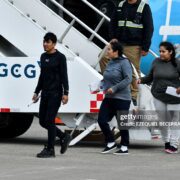
During her visit there, Noem met with President Rodrigo Chaves, President-elect Laura Fernández, and senior officials to advance cooperation on migration enforcement and counter-narcotics efforts. Notably, she was involved in signing a migration cooperation agreement designed to facilitate the transfer of third-country nationals deported from the United States – part of a broader strategy to manage migration flows beyond U.S. borders.

Costa Rica has also joined initiatives aimed at strengthening regional security coordination, including efforts to dismantle criminal networks and enhance border control mechanisms. U.S. officials have framed these partnerships as critical to ensuring stability throughout the hemisphere.

Taken together, the visits to Guyana and Costa Rica point to a coordinated regional push.

GUYANA

Guyana, with its rapidly expanding oil sector and growing geopolitical importance, has become an increasingly strategic partner for the United States. Engagement with U.S. energy companies during Noem’s visit highlights the economic dimension of the relationship, particularly as global energy dynamics continue to shift.

At the same time, Costa Rica represents a key node in migration management efforts, serving as both a transit country and a partner in implementing U.S.-backed deportation and security initiatives.

For analysts, the broader picture is becoming clearer. It is not just about individual country visits but reflects a wider effort by the U.S. to strengthen its influence across the Caribbean and Central America, particularly in areas tied to migration, security, and economic interests.”

The dual-country visit also comes at a time when international scrutiny of U.S. immigration policies remains high. Human rights organizations have raised concerns about deportation practices and the use of third countries to manage migration flows, adding another layer of complexity to these agreements.

For Guyana and Costa Rica, the benefits of closer cooperation with the United States may include enhanced security support, economic partnerships, and increased global visibility. However, these relationships also bring challenges, particularly as governments balance domestic priorities with international commitments.

As Noem continues her regional engagements, one thing is clear: her role – and the policies she represents – remain central to the United States’ evolving strategy in the hemisphere.

What began as a personnel change in Washington is now playing out as a broader geopolitical signal. And for the Caribbean and Central America, the implications are only beginning to unfold.

RELATED: Caribbean Ingenuity In Pictures: How Haiti & Cuba Are Adapting Through Crisis

Caribbean Ingenuity In Pictures: How Haiti & Cuba Are Adapting Through Crisis

News Americas, NY, NY, Tues. March 24, 2026: Across parts of the Caribbean, where economic hardship, blackouts, and instability remain daily realities, something else is also visible. Here’s Caribbean ingenuity in pictures.

From the streets of Haiti, where children fashion football goals from scrap metal and discarded tires, to neighborhoods in Cuba where communities gather in dim light during ongoing power outages, life continues – creatively, defiantly.

In Delmas, Port-au-Prince, Haiti, young boys play football in the street using makeshift equipment, turning limited resources into moments of joy. In Havana, Cuba, residents navigate fuel shortages and blackouts, improvising solutions to move, cook, and survive while playing dominoes in the dark.

These images reflect more than struggle. They reveal ingenuity.

Across the region, communities are adapting in real time – building, repurposing, and finding ways forward despite mounting challenges tied to economic strain, infrastructure gaps, and political uncertainty.

For many, this is not new. It is a continuation of a long Caribbean tradition: making something out of nothing.

Even amid crisis, the region’s spirit remains unmistakable – resilient, resourceful, and unbroken.

People play football in Delmas, Port-au-Prince, Haiti, on March 22, 2026. (Photo by Clarens SIFFROY / AFP via Getty Images)

Fishermen return from fishing on a makeshift raft in Havana during a national blackout on March 22, 2026. Cuban authorities scrambled on March 22 to restore power to the island after the second nationwide blackout in less than a week, as the grid struggles due to an aging infrastructure and a US oil blockade. (Photo by YAMIL LAGE / AFP via Getty Images)

A woman pushes her cart after filling her water containers in Havana during a national blackout on March 22, 2026. Cuban authorities scrambled on March 22 to restore power to the island after the second nationwide blackout in less than a week, as the grid struggles due to an aging infrastructure and a US oil blockade. (Photo by YAMIL LAGE / AFP via Getty Images)

People transit on a street without power during a nation wide blackout in Havana on March 21, 2026. A power outage struck the entire island of Cuba on March 21, 2026, the energy ministry said, in the second nationwide blackout in less than a week as its grid struggles under a US oil blockade. (Photo by Yamil LAGE / AFP via Getty Images)

Guyana: Extradition Case Of Opposition Leader Could Reshape Political Power

News Americas, NEW YORK, NY, Tues. Mar. 24, 2026: A high-stakes legal battle now unfolding in Guyana could have far-reaching implications not only for the country’s justice system but also for its political future.

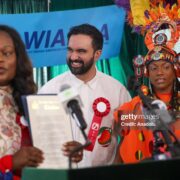
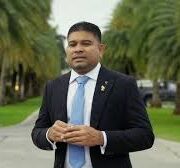
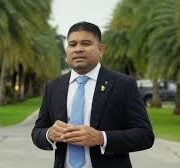
Guyana opposition leader, MP Azruddin Mohamed, the US sanctioned and now indicted businessman and founder of the WIN party.

Businessman and the oil-rich CARICOM South American nation’s new opposition leader, Azruddin Mohamed of the We Invest In Nationhood party, has moved to take his fight against possible extradition to the United States to the Caribbean Court of Justice, (CCJ), following a setback in Guyana’s local courts. The development marks a significant escalation in a case that is rapidly evolving into one of the most closely watched legal and political showdowns in the Caribbean.

Mohamed recently lost his bid at the Guyana Court of Appeal to block the extradition process, clearing the way for the matter to advance further. His legal team has now turned to the CCJ – the region’s highest appellate court – in a last attempt to halt the proceedings.

At the center of the case are serious allegations brought by U.S. authorities, including fraud, bribery, and money laundering. While Mohamed has denied wrongdoing, the charges and the potential for extradition have placed him at the center of intense public and political scrutiny.

The case is not just about legal technicalities. It raises broader questions about the relationship between Caribbean nations and the United States when it comes to law enforcement cooperation, extradition treaties, and judicial sovereignty. For Guyana, a country experiencing rapid economic transformation driven by its oil sector, the outcome could carry added significance.

Mohamed is widely known in Guyana’s business and political circles, and his involvement in the case has heightened public interest. His move to the CCJ signals that the legal battle is far from over and underscores the high stakes involved.

Legal experts note that while the CCJ has the authority to hear appeals on constitutional and legal grounds, it typically does not intervene lightly in extradition matters unless there are compelling issues related to due process or fundamental rights. This means Mohamed’s case will likely hinge on whether his attorneys can convincingly argue that his rights could be compromised if extradition proceeds.

Beyond the courtroom, the political implications are already being discussed. Some analysts suggest that the case could influence public perception of governance, accountability, and the rule of law in Guyana. Others see it as a test of how Caribbean jurisdictions balance domestic legal processes with international obligations.

The timing is also notable. As Guyana continues to attract global attention due to its rapidly expanding oil industry, issues related to transparency, governance, and institutional strength are increasingly under the spotlight. High-profile cases such as this one only add to that scrutiny.

For many observers, the central question is no longer simply whether Mohamed will be extradited, but what the case represents for Guyana’s evolving political and legal landscape.

With the matter now heading to the Caribbean Court of Justice, all eyes will be on how the region’s top court handles what could become a defining case – not just for one individual, but for the broader intersection of law, politics, and power in Guyana.

Guyana: The Theatre Of Populism: How Performance Is Reshaping Guyana’s Politics

By Ron Cheong

News Americas, TORONTO, Canada, Mon. March 23, 2026: A bizarre theatre unfolded at Guyana’s Attorney General’s office last Thursday, when the Leader of the Official Opposition arrived with wheelbarrows of small notes and coins to satisfy court-ordered costs of G$4.5 million. The payment stemmed from a failed legal attempt to block extradition to the United States, where he faces charges tied to an alleged US$50 million gold smuggling and money laundering scheme.

The spectacle was deliberate. It was political theatre designed not merely to pay a debt, but to project defiance, grievance, and identification with “the people.”

But it raises a more fundamental question: is this the movement that has displaced APNU as Guyana’s official opposition? How does such a transformation occur?

To understand this moment, one must first understand the myth, and the method, of the populist “champion of the people.”

The Myth Of The “Champion”

The self-styled “champion of the people” presents himself as instinctive and unfiltered – a voice rising organically from the frustrations of ordinary citizens. Supporters reinforce this image: he “speaks his mind,” “says what others are afraid to say,” and “cannot be coached.”

This is a myth. What appears spontaneous is often carefully constructed. The language of grievance, the division of society into “pure people” and “corrupt elites,” and the ritual denunciation of institutions are not improvisations. They are elements of a well-worn political script; refined across countries and decades because they reliably produce results.

The resemblance among such figures is no coincidence. The pattern repeats with striking consistency: simplify complex realities into moral binaries, personalize power, and discredit institutions that might challenge the narrative.

Donald Trump exemplifies this model – reducing complexity into stark moral conflict while positioning himself as both victim and champion.

Privilege And Performance

In Guyana’s current political moment, the leader of the We Invest in Nationhood, (WIN) movement has cultivated precisely this posture – presenting himself as a corrective to injustice, a voice for the overlooked, and a disruptor of the established order.

Yet this raises an inconvenient question: how does one become a “champion of the people” from a position of considerable privilege?

It is not a contradiction. It is a pattern.

Many of the most effective populists emerge not from deprivation, but from advantage. Their distance from everyday struggle becomes an asset. It allows them to construct grievance selectively, dramatize injustice without constraint, and perform identification with “the people” while remaining insulated from their realities.

Again, the example of Donald Trump is instructive – a billionaire who successfully cast himself as the tribune of the forgotten.

What matters is not biography, but the construction.

The Script Beneath The Performance

Human beings are predisposed to respond to narratives of threat, belonging, and betrayal – a dynamic long established in Social Psychology.

Effective populists do not invent these instincts; they exploit them.

The method is consistent:

simplify complexity into moral conflict

elevate the individual above institutions

transform criticism into persecution

dominate the narrative space, particularly through social media

What feels authentic is often rehearsed. What feels instinctive is often engineered.

Champion Vs. Manager: The Test That Matters

If the “champion” is constructed, then the public must be brought to change how it evaluates him – not as a champion, but as a manager.

A champion thrives on emotion, symbolism, and defiance. A manager must deliver outcomes: competence, stability, institutional respect, and measurable progress.

This distinction explains a broader political reality. Consider Donald Trump and J. D. Vance. Vance can replicate arguments and mirror grievances, but he cannot replace Trump as the focal point of that movement.

Why? Because he presents as a manager attempting to perform a champion.

Trump, by contrast, is perceived, however controversially, as the authentic article. His appeal lies not in administrative precision but in emotional command. The contrast exposes a hard truth: populism is not merely a set of ideas. It is a performance not all can sustain.

Guyana’s Political Earthquake

The implications for Guyana are no longer abstract.

The rise of the We Invest in Nationhood, (WIN), movement has upended the country’s political architecture. In a stunning electoral breakthrough, a newly formed party captured 16 parliamentary seats, displacing APNU/PNC as the official opposition and fracturing what once appeared to be an entrenched political order.

This was not an incremental change.

It was a political earthquake – one that cannibalized the traditional opposition base and revealed a deep appetite for disruption over continuity.

Law, Legitimacy, And The Risk Ahead

That disruption now faces its most serious test.

Mohamed’s political rise has unfolded alongside an ongoing extradition battle tied to U.S. indictments alleging large-scale gold smuggling and related financial crimes. The case is not incidental to his political identity – it is central to it.

To supporters, it reinforces a narrative of persecution.
To critics, it raises fundamental questions about credibility and governance.

If extradition proceeds, WIN faces an existential challenge. Movements built around a singular figure rarely outlive his absence. Without Mohamed at the center, the party risks fragmentation, internal rivalry, or gradual absorption into the system it sought to disrupt.

If extradition does not proceed, the challenge shifts to his opponents.

For APNU/PNC, the lesson is stark: its base has been breached. Mimicking populist rhetoric will likely accelerate decline rather than reverse it. Renewal must come through credibility, organization, and a demonstrable capacity to govern.

For the governing PPP/C, the risk lies in miscalculation. If legal pressure is perceived as political containment, the “champion” narrative may deepen rather than diminish. A figure cast as embattled can become more potent, not less.

The more effective response is not theatrical opposition, but competent governance – delivering results, strengthening institutions, and addressing the grievances on which populism feeds.

Beyond The Man: Confronting The Method

Guyana is no longer confronting a personality alone. It is confronting a method.

A method that can rapidly redraw political loyalties. A method that thrives on distrust, feeds on division, and presents performance as authenticity.

And methods, unlike men, do not disappear when one individual exits the stage.

They wait – until the conditions allow them to return.

EDITOR’S NOTE: Ron Cheong is a frequent political commentator and columnist whose recent work focuses on international relations, economic resilience, and Caribbean-American affairs. He is a community activist and dedicated volunteer with extensive international banking experience. Now residing in Toronto, Canada, he is a fellow of the Institute of Canadian Bankers and holds a Bachelor of Science degree from the University of Toronto.

RELATED: The Long Siege Of Cuba & Caribbean Geopolitics: The Prequel To King Kong And The Island

Oil, Food And Geopolitics: How Guyana Could Decide CARICOM’s Future

Cuba – Cuba’s Fuel Crisis Deepens As Castro Grandson Highlights Growing Issue

News Americas, New York, NY, Mon. March 23, 2026: Cuba’s deepening fuel and economic crisis is now being spotlighted in an unexpected way – through viral social media posts by a member of the country’s most powerful political family – Fidel Castro grandson.

Fidel Castro’s Grandson r, and a fake Donald Trump, l.

Sandro Castro, the grandson of the late Cuban revolutionary leader, has drawn widespread attention online after posting videos that appear to mock – and at the same time expose – the worsening shortages facing ordinary Cubans.

In one widely shared clip, Castro, 33, is seen stroking an empty gas pump, highlighting the island’s severe fuel shortages. The moment, framed as satire, has resonated across social media as long lines, blackouts, and energy scarcity continue to disrupt daily life across Cuba.

The videos come amid one of the most difficult periods for the island in decades, with persistent power outages, limited access to basic goods, and mounting pressure on the country’s healthcare and infrastructure systems. Analysts say the crisis has been fueled by a combination of internal economic challenges, reduced fuel imports, and tightening U.S. sanctions.

But Castro’s posts have also ignited debate over inequality in Cuba.

While many Cubans struggle to access essentials such as food, fuel, and medicine, Castro’s social media presence often showcases a markedly different lifestyle – including nightlife, consumer goods, and private business ownership – underscoring what critics describe as a widening gap between elites and everyday citizens.

Observers say his content has become a flashpoint for broader questions about the country’s future. The posts have triggered mixed reactions across the island and among the Cuban diaspora. Some view Castro’s videos as subtle criticism of the system, while others see them as tone-deaf displays of privilege during a time of national hardship.

In another recent video, he rejected a (fake) call from U.S. Secretary of State Marco Rubio to continue his domino game with friends, and in another, he posted a skit of an orange-faced President Trump knocking on his door. The U.S. president implores him to negotiate a deal with Washington, saying, “I want to buy Cuba.”

Mr. Castro tells him he is crazy, then takes him on a tour of Cuba as Mr. Trump says he wants to build mansions on the Havana waterfront.

The situation is unfolding as tensions between the United States and Cuba continue to escalate, with ongoing restrictions on fuel supplies further straining the island’s already fragile energy sector.

For many, the imagery is striking: even a member of the Castro family – long associated with Cuba’s leadership – is now publicly engaging with the very shortages affecting the population.

Whether intended as satire or social commentary, the videos have added a new dimension to the conversation about Cuba’s economic crisis – one that blends politics, performance, and the lived realities of millions.

As conditions on the island continue to deteriorate, the moment underscores a broader truth: Cuba’s challenges are no longer confined to policy debates – they are playing out in real time, in public, and increasingly, online.

Castro is the son of Alexis Castro Soto del Valle and Rebecca Arteaga. His father, Alexis, is one of the five children of Fidel Castro and his second wife, Dalia Soto del Valle. He has over 150,000 followers on Instagram and has attracted public attention for owning a nightclub (EFE Bar) and for showing off luxury items, such as a Mercedes-Benz, which is rare in Cuba.

SECOND BLACKOUT

Castro’s post comes amid a second nationwide blackout in less than a week and as Cuba said it is prepared for any potential US attack as authorities worked to restore power across the island.

Power was gradually restored on Sunday, with two-thirds of Havana regaining electricity by yesterday afternoon, according to the city’s power company. The national grid was reconnected across most of the country, from Pinar del Rio in the west to Santiago de Cuba in the east, with two provinces still pending, the state-run Electric Union said. US President Trump has told reporters in the U.S. that his administration will be “taking Cuba” in some form after implementing a weeks-long oil blockade against Havana. 

Citizens have complained of power outages, and hospitals have reported dire circumstances amid the embargo.

RELATED: Guyana To Repay Billions In Exxon Costs, But Profit Share Still Unclear

International Water Day – Modernizing Caribbean Water Systems For Jobs, Resilience And Growth

By Lilia Burunciuc

News Americas, NEW YORK, NY, Sun. Mar. 22, 2026: It is International Water Day today, March 22nd. Across the Caribbean, tourism, agriculture, and fisheries shape the rhythm of economic life. They support millions of livelihoods in the region. Tourism alone sustains more than 2.75 million jobs. Agriculture and fisheries provide employment for roughly 3 percent of the population and remain critical for food security, rural incomes, and coastal economies. All of this economic activity depends on a fundamental resource: water. Hotels need it to serve guests, farmers rely on it for irrigation and livestock, and fisheries depend on clean coastal waters.

Yet, across much of the Caribbean, water – and the systems that deliver it -are increasingly under pressure. Water utilities face aging infrastructure, growing demand, and intensifying climate change impacts. Strengthening water security is therefore essential for protecting jobs, supporting businesses, and sustaining economic growth.

Despite decades of investment and the fact that about 90 percent of households in the Caribbean are connected to piped water systems, reliable service remains a challenge in many countries. Droughts can lead to water rationing, water pressure is often inconsistent, and utilities frequently struggle to maintain aging infrastructure.

One of the biggest challenges is the scale of water losses. Across the region, utilities lose, on average, about half of the water they produce to leaks and aging pipes. This represents a major economic cost. Caribbean utilities already face some of the highest electricity prices in the world, and pumping and treating water can account for roughly 40 percent of operating costs. When large volumes of water are lost before reaching customers, both energy and financial resources are also lost.

Weak wastewater management also carries economic consequences. In the Caribbean, around 85 percent of wastewater is discharged untreated, polluting coastal ecosystems and marine environments. These waters sustain coral reefs, fisheries, and beaches that are central to tourism and coastal livelihoods. When pollution damages these ecosystems, the impacts extend directly to employment, income, and food security in coastal communities.

Natural disasters are exacerbating these challenges. Heavy rainfall and hurricanes have caused flooding in several Caribbean countries, damaging infrastructure and disrupting water systems and transport networks.

Addressing these challenges requires continued efforts to strengthen the management, financing, and maintenance of water systems across the region.

Several priorities stand out.

First, the region needs to adjust its operational approach. To move more toward reliability, countries should foster a culture of performance. This means running water utilities like modern, data-driven businesses. When a utility uses digital tools to reduce energy waste and find leaks, it stops losing money and gains the financial independence required to reinvest in its own resilience. 

Regional Integration

Second, countries should prioritize stronger regional integration. In an archipelago of small states, technical silos lead to inefficiencies. The goal is to ensure that a breakthrough in one island becomes a shared blueprint for its neighbors. By pooling resources and expertise, the region can implement standardized solutions for leak detection and disaster recovery that would be too costly for any single island to develop alone.

Third, modernizing the water sector requires investing in people. As utilities adopt more advanced technologies and data-driven systems, the workforce must evolve as well. Strengthening education and training in environmental engineering, water resource management, and digital technologies can help prepare Caribbean workers for the skilled jobs emerging in a modern water sector.

Finally, mobilizing investment will be essential. Across Latin America and the Caribbean, achieving universal and climate-resilient water services will require an annual investment of around 3 percent of GDP through 2030, far above current spending levels. Public resources alone will not be enough to close this gap. Strengthening utility governance, improving financial sustainability, and preparing investment-ready projects can help attract greater private investment into the sector.

Transformation

The World Bank is committed to supporting this transformation. We are already supporting promising examples led by national governments, such as Barbados adopting a program-for-results financial instrument to shift the focus from infrastructure delivery to efficient service delivery, and Saint Lucia and Grenada’s commitment to water and sanitation policy reforms, which strengthen the sector’s financing, sustainability, and efficiency.

Building on these national efforts and leveraging Caribbean regional synergies, the World Bank is preparing a new regional water security program which will support countries in improving utility performance and strengthening cooperation across the region.

With governments, utilities, and regional partners already advancing practical solutions, the Caribbean is well-positioned to build stronger water and sanitation systems that support businesses, protect coastal resources, and create and secure jobs across sectors such as tourism, agriculture, and water services.

As the world marks International Water Day today, March 22, the importance of strengthening water systems that sustain Caribbean jobs and industries has never been clearer.

EDITOR’S NOTE: Lilia Burunciuc is the World Bank Director for Caribbean countries. Ms. Burunciuc, a Moldovan national, is
responsible for maintaining the partnership with the countries to address their development challenges. She has extensive experience on leading policy dialogue with governments on various aspects of development.

RELATED: Closing The Skills Gap To Create More Jobs In The Caribbean

When The Quiet Decide: Reading The Votes, Voices, And The Spaces Between In St. Philip’s North, Antigua

By Dr. Isaac Newton

News Americas, NEW YORK, NY, Fri. March 20, 2026: In the St. Philip’s North constituency in Antigua, the recent by-election yielded a decisive yet nuanced result. Randy Baltimore of the Antigua and Barbuda Labour Party received 924 votes, representing 69.42% of ballots cast. Alex Browne of the United Progressive Party secured 407 votes, 30.5%, creating a margin of 517 votes. Voter turnout reached sixty-seven point two seven percent of registered voters.

Antigua & Barbuda Prime Minister Gaston Browne has extended heartfelt congratulations to Randy Baltimore on his resounding victory in the 2026 St. Philip’s North by-election held on Monday, March 16, 2026.

The numbers suggest control and organizational strength. Yet in a single constituency, each act of engagement or disengagement carries amplified meaning. Victory captures preference. Turnout measures commitment. Authority expanded, but connection contracted.

“Margins can measure dominance. Turnout measures belief.”

The Engagement Deficit Effect

This byelection illustrates the Engagement Deficit Effect, a phenomenon in which political power consolidates while meaningful participation declines. Authority grows faster than engagement, creating a widening gap between control and legitimacy.

Nearly one-third of registered voters withheld their participation. Their silence is not indifference. It is unclaimed attention. In a small constituency, every non-vote carries disproportionate influence. Absence signals judgment rather than rejection and forces parties to reassess how they engage citizens at a personal and practical level.

“The quietest constituents often hold the loudest power.”

Momentum and Microcosms of Power

Political momentum behaves like inertia. The opposition’s near-success in a previous election created expectations of breakthrough. The five hundred and seventeen vote deficit illustrates the reversal of that momentum. Choosing not to vote communicates judgment. Available choices failed to inspire sufficient confidence to act.

The governing party’s machinery performed effectively. Baltimore’s victory reflects coordination, discipline, and message alignment. Yet in microcosms of power, authority without engagement carries fragility. Every non-voter represents an opportunity lost to reinforce legitimacy.

“Winning the vote does not guarantee winning the belief.”

A Strategic Lens for Leadership

Even within a single constituency, broader lessons emerge. The Power Engagement Matrix provides clarity. It categorizes outcomes by the alignment of political authority and citizen participation. High power with high engagement produces enduring legitimacy. High power with low engagement creates fragile dominance. Low power with high engagement signals imminent disruption. Low power with low engagement results in system drift.

St. Philip’s North falls into the high power, low engagement quadrant. Operational strength is clear. Engagement remains conditional. Recognizing this gap allows leaders to act with foresight rather than reaction.

Actions for Leaders

Leaders must treat disengaged voters as a primary constituency. Their eventual return will determine durability. Operational efficiency must translate into visible and measurable outcomes. Legitimacy should be reinforced through listening and responsiveness rather than electoral victory alone. Internal mechanisms for critique and accountability must be institutionalized to maintain performance when external pressure is low.

“Leadership is strongest when it earns attention, not when it commands it.”

Silence as Strategic Insight

In small constituencies, each vote matters, and every non-vote carries a message. Silence is not absence. It is latent influence. Those who withheld participation in St. Philip’s North left a signal. Authority alone cannot sustain commitment. Connection is essential.

Leaders who recognize this, and act to translate quiet attention into engagement, do more than win elections. They shape the conditions for enduring influence. The next shift will not be decided at the ballot box. It will emerge in the quiet deliberation of citizens who weigh whether their participation carries meaning.

“The next election is already underway in the minds of those who stayed home.”

“The leader who listens to silence will shape the future more than the one who shouts the loudest.”

Editor’s Note: Dr. Isaac Newton is a leadership strategist, educator, and public speaker specializing in governance, institutional transformation, and ethical leadership. Trained at Harvard, Princeton, and Columbia, Dr. Newton brings a multidisciplinary perspective to leadership development across the public, private, academic, and faith-informed sectors. He is the coauthor of Steps to Good Governance, a work exploring practical frameworks for accountability, transparency, and institutional effectiveness. Dr. Newton has designed and delivered seminars for corporate boards, educators, public officials, and community leaders throughout the Caribbean and internationally. His work integrates insights from leadership research, psychology, public policy, and ethics to equip leaders to guide institutions through uncertainty with clarity, courage, and measurable impact.

RELATED: The Cuba Dilemma: The Caribbean Thriving Beyond Diplomatic Trauma

The Hidden Power of Leadership: Delegating Tasks and Aligning Talent in an Age of Uncertainty

By Dr. Isaac Newton

News Americas, NEW YORK, NY, Thurs. March 19, 2026: A senior manager gathers her team on a Monday morning. Markets have shifted again. Energy prices have climbed. Supply chains remain fragile, and emerging technologies are altering the nature of work faster than organizations can redesign their roles. She assigns responsibilities, distributes projects, and calls for urgency. The meeting ends efficiently. Yet three months later, momentum fades. Teams remain busy, but progress stalls. The difficulty is not effort. It is understanding. Employees completed their assignments, yet never grasped the meaning behind them.

This quiet failure reveals a central truth about modern leadership. Delegation without alignment produces motion without progress. When leaders distribute tasks without cultivating purpose, authority, clarity, and stewardship, organizations become industrious yet directionless. Transformational leadership restores alignment. It converts delegation from administrative convenience into a disciplined strategy that awakens talent and preserves institutional direction.

Purpose: The Meaning That Animates Work

Purpose answers the most consequential question in any organization. Why does this work matter.

Many leaders assign responsibilities while leaving the larger mission unspoken. Work then becomes procedural rather than meaningful. People perform tasks yet rarely contribute their full imagination or judgment. Transformational leadership begins by illuminating the significance of the task before requesting its execution.

A mid sized technology firm confronted this challenge during a global semiconductor shortage that threatened production. Procurement officers were initially asked to locate alternative suppliers. The instruction was technically sound but uninspiring. The chief executive reframed the responsibility. The team was reminded that securing reliable suppliers would protect the livelihoods of hundreds of employees and preserve affordable products for thousands of customers. The task remained identical. Its meaning expanded.

Within weeks procurement specialists proposed partnerships across multiple regions and introduced new supplier resilience protocols. Once the purpose became visible, the work attracted creativity rather than mere compliance.

Purpose transforms routine work into shared responsibility.

Authority: The Oxygen of Talent

Responsibility without authority gradually erodes initiative. Talented individuals rarely abandon organizations because they lack ability. They withdraw when their judgment has no influence.

Transformational leadership distributes authority within clear boundaries. When professionals are trusted with meaningful decision space, their intelligence enters the organization more fully.

A university department experiencing declining enrollment provided a revealing example. Instead of enforcing a centrally designed curriculum, the department invited faculty members to develop interdisciplinary courses addressing emerging social and economic challenges. Professors received freedom within academic standards that preserved quality and coherence.

Enrollment increased because the program began reflecting the curiosity and expertise of the scholars themselves. Authority released intellectual energy that administrative design alone could never produce.

Authority does not dilute leadership. It multiplies the intelligence available to it.

Clarity: The Currency of Trust

Uncertainty tests the communication habits of leaders. Silence often appears prudent during volatile periods, yet ambiguity breeds anxiety more quickly than difficult truth.

Transformational leaders practice deliberate clarity. They explain the circumstances shaping their decisions and articulate the strategic direction that follows. Clarity does not eliminate challenges. It removes confusion about them.

A city administration confronted rising fuel and infrastructure costs that placed severe pressure on its budget. Rather than announcing abrupt spending reductions, municipal leaders convened open forums with community organizations and residents. Officials described the fiscal realities with precision and invited proposals before final policies were implemented.

The public response surprised many observers. Instead of protest, the city experienced collaboration. Citizens supported temporary adjustments because they understood the reasoning behind them.

Clarity stabilizes institutions because understanding replaces speculation.

Stewardship: The Presence of the Leader

Delegation does not diminish leadership responsibility. It deepens it. Assigning work without guidance resembles abandonment rather than empowerment.

Transformational leaders remain present as teams navigate the complexity they have been entrusted to manage. Their presence signals commitment to the shared mission.

A faith based humanitarian organization coordinating food distribution during a regional shortage entrusted volunteers with logistics across several communities. Senior leaders maintained daily briefings and visited distribution sites throughout the operation. Volunteers encountered encouragement, advice, and visible gratitude for their service.

The effort succeeded not because the volunteers were managed tightly but because they were supported consistently. Stewardship communicates that responsibility is shared rather than transferred.

Authority can be delegated. Accountability remains with the leader.

The Transformational Discipline of Delegation

The institutions that flourish in the coming decades will not simply possess advanced technology or larger resources. They will cultivate leadership that understands the deeper power of alignment.

Purpose gives work meaning. Authority releases talent. Clarity builds trust. Stewardship sustains direction.

When these elements converge, delegation becomes transformational. Tasks are no longer isolated assignments but contributions to a visible mission. Professionals no longer function merely as employees but as participants in the success of the whole.

This principle extends beyond corporate organizations. A university dean guiding academic renewal, a public official stewarding public resources, a community leader mobilizing neighbors, a pastor nurturing a congregation, or a parent shaping the discipline of a child all confront the same responsibility. They must help others see the significance of the work before them.

Once people recognize that significance, their energy changes. Effort becomes conviction. Routine becomes purpose.

Tasks organize work. Purpose awakens people. Leaders who understand this distinction do more than coordinate activity. They cultivate institutions capable of enduring uncertainty with intelligence, boldness, and collaboration.

EDITOR’S NOTE: Dr. Isaac Newton is a leadership strategist, educator, and public speaker specializing in governance, institutional transformation, and ethical leadership. Trained at Harvard University, Princeton University, and Columbia University, Dr. Newton brings a multidisciplinary perspective to leadership development across the public, private, academic, and faith based sectors. He is the coauthor of Steps to Good Governance, exploring practical frameworks for accountability, transparency, and institutional effectiveness. Dr. Newton has designed and delivered seminars for corporate boards, educators, public officials, and community leaders throughout the Caribbean and internationally. His work integrates insights from leadership research, psychology, public policy, and faith informed ethics to equip leaders to guide organizations through uncertainty with clarity, courage, and measurable impact.

RELATED: Bad Mindedness And Brain Gain In The Caribbean

The Cuba Dilemma: The Caribbean Thriving Beyond Diplomatic Trauma

By Dr. Isaac Newton

There are moments in history when power no longer feels compelled to explain itself. Cuba has entered such a moment. An entire society is being strained through the steady constriction of the systems that sustain ordinary life. Electricity fails, water access weakens, and hospitals operate under mounting pressure. The process is controlled, yet its consequences are expansive and deeply human.

For the Caribbean, this is not a distant concern. It is a revealing episode unfolding within the region’s immediate environment. It shows how influence is exercised when restraint is optional and when consequence is unevenly distributed.

A man pushes a cart on a street in Havana on March 17, 2026. Cuba scrambled on March 17, 2026, to restore power after a nationwide blackout that hit the communist-run island just as US President Donald Trump proclaimed he will “take” it over. (Photo by YAMIL LAGE / AFP via Getty Images)

The question facing Caribbean leadership is no longer abstract. What secures the position of small states when power proceeds without justification?

Diplomatic Trauma and the Limits of Assumption

Caribbean diplomacy has long been shaped by a disciplined belief that international order offers protection. Institutions such as the United Nations and the commitments expressed in the UN Charter were intended to ensure that sovereignty would not depend on size.

Cuba reveals the limits of that assumption.

The United Nations General Assembly has expressed its position with clarity and consistency. The language is firm. The outcome remains unchanged.

International law continues to define legitimacy with precision. It no longer guarantees restraint with certainty.

This moment exposes what may be described as diplomatic trauma. It is the inherited expectation that fairness, once articulated, will eventually shape outcomes. That expectation was formed in a different era. It now operates in a system that no longer consistently responds to it.

The Emotional Climate of Decision Making

Leaders across the Caribbean are making decisions within a climate shaped by competing internal pressures.

Fear reflects the real possibility of economic disruption. Anger arises from the visible erosion of sovereign respect. Anxiety emerges from structural exposure. Hope persists, even as evidence becomes more complex.

These forces influence judgment. When left unexamined, they narrow strategic options. When understood, they can be ordered into disciplined thinking.

Leadership in this moment requires composure. It calls for decisions that are informed by reality rather than driven by reaction.

Beyond Simplified Alignment

Public discourse often reduces the present situation to a limited set of choices. One path emphasizes alignment in order to preserve stability. Another emphasizes resistance in order to defend principle.

Each carries consequence. Alignment can gradually weaken independent positioning. Resistance can invite concentrated pressure within an uneven system.

A more effective posture requires movement across contexts. It allows leaders to engage differently depending on circumstance while remaining anchored in a clear sense of purpose.

Power no longer requires consensus to act. It requires only capacity. Small states must therefore respond with flexibility rather than rigidity.

Strategic Dispersion as Regional Practice

The Caribbean has traditionally sought strength through a unified voice. In the current environment, resilience depends on a more adaptive approach.

Strategic dispersion offers such an approach. It allows states to act with coordinated intent while avoiding uniform exposure.

Some governments may maintain close operational relationships with major powers. Others may assert principled positions within multilateral forums. Others may continue practical engagement with Cuba in areas that support essential systems.

This pattern reflects deliberate variation guided by shared awareness. It distributes risk while preserving agency. It allows the region to act without concentrating vulnerability.

Small states are not ignored because they lack voice. They are often overlooked because they remain interruptible. Strategic dispersion reduces that exposure.

Reframing the Field of Action

The way a problem is defined determines how it can be addressed.

When Cuba is approached primarily as a political issue, responses are shaped by alignment and opposition. That setting limits the scope for practical engagement.

When the situation is understood as a disruption of the systems that sustain civilian life, a different set of responses becomes available. Attention shifts to hospitals, water access, and the continuity of essential services.

Engagement through organizations such as the International Committee of the Red Cross enables action within this frame. It centers human need while allowing for measured response.

This shift does not resolve the underlying conflict. It expands the range of what can be done within it.

Structural Exposure and Strategic Response

Cuba’s experience highlights a broader regional condition. Caribbean economies remain deeply dependent on external sources for energy, food, and trade. These dependencies are structural. They create points of sensitivity that can be influenced with precision.

Dependence is no longer only an economic condition. It has become a strategic liability.

Reducing this exposure requires sustained investment in energy diversification, regional food systems, and advanced human capital. It requires partnerships that expand options rather than reinforce concentration.

Engagement with countries such as Brazil and Mexico can support this process. The objective is not separation from the global system. It is the ability to function when that system applies pressure.

From Advocacy to Capability

The Caribbean has established a strong record of principled advocacy. Its voice on issues of sovereignty and fairness remains clear.

In the present environment, advocacy must be matched by capability.

This requires the design of systems that can absorb disruption, the cultivation of relationships that do not depend on a single axis, and the development of policies that anticipate constraint.

Principle retains its importance. It must now be reinforced by execution.

Leadership Without Illusion

This moment places a demanding responsibility on leadership.

Leaders must interpret the system as it operates, not as it is described. They must communicate with clarity while preserving room to act. They must guide institutions through uncertainty without allowing uncertainty to define outcomes.

Silence carries consequence. It signals acceptance, whether intended or not.

Clarity creates space for agency.

Reading the Signal

Cuba is not an isolated disruption. It is a signal of how the current order behaves under strain.

The Caribbean now faces a defining task. It must align its principles with practical capacity. It must act with precision within a system that does not always reward fairness.

Small states are not defined solely by their constraints. They are defined by how they organize within them.

Power has changed its language.

The Caribbean must now change its strategy.

Editor’s Note: Dr. Isaac Newton is a leadership strategist, educator, and public speaker specializing in governance, institutional transformation, and ethical leadership. Trained at Harvard, Princeton, and Columbia, Dr. Newton brings a multidisciplinary perspective to leadership development across the public, private, academic, and faith-informed sectors. He is the coauthor of Steps to Good Governance, a work exploring practical frameworks for accountability, transparency, and institutional effectiveness. Dr. Newton has designed and delivered seminars for corporate boards, educators, public officials, and community leaders throughout the Caribbean and internationally. His work integrates insights from leadership research, psychology, public policy, and ethics to equip leaders to guide institutions through uncertainty with clarity, courage, and measurable impact.

RELATED: Cuba Says It Regrets Jamaica’s Decision To End Medical Cooperation Amid U.S. Pressure