Posts

The Guyana Elections Commission Hasn’t Met In A Year – And Still Doesn’t Reflect Who Actually Won

By NAN Staff Writer, NewsAmericas Now

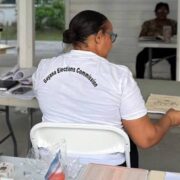
News Americas, GEORGETOWN, Guyana, Weds. August 12, 2026: The Guyana Elections Commission has not held a single meeting since last September’s general elections, and when it does eventually reconvene, its composition still won’t reflect who Guyanese voters actually elected to Parliament.

WIN, the party led by Opposition Leader Azruddin Mohamed, holds 16 seats in the National Assembly following the 2025 elections, the largest opposition bloc by a wide margin. It holds zero seats on GECOM. APNU, which won 12 National Assembly seats, less than WIN, holds three GECOM seats. The mismatch stems from GECOM’s structure, which allocates opposition-nominated commissioners based on party configurations that predate the 2025 vote and have never been updated to reflect it.

The Carter Center’s warning

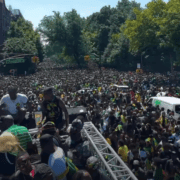
FLASHBACK – Supporters of Guyana’s presidential candidate Azruddin Mohamed from the WIN party take part in a campaign rally in Georgetown on August 30, 2025. Guyana will hold presidential elections on September 1, 2025. (Photo by Joaquin Sarmiento / AFP) (Photo by JOAQUIN SARMIENTO/AFP via Getty Images)

The Carter Center, the U.S.-based election monitoring organization that has observed more Guyanese elections than any other country, issued a formal statement this week calling the impasse a matter of “considerable concern.” Following stakeholder meetings held in Georgetown in June, where the organization’s delegation met with President Irfaan Ali, Opposition Leader Mohamed, GECOM, and a broad range of civil society and political stakeholders, the Center warned that without a fully functioning commission, GECOM will be unable to organize local government elections by this year’s statutory deadline, and will run out of time to implement reforms before Guyana’s next general election.

“The Carter Center notes with considerable concern the current impasse surrounding the composition of the Guyana Elections Commission,” the organization said, calling on officials to amend the 2022 Constitutional Reform Act to reflect the country’s current parliamentary makeup. The Center noted it welcomed Attorney General Anil Nandlall’s earlier acknowledgment, made in May, that the Act requires updating, but the amendment still hasn’t happened.

Nandlall has previously said the government is committed to implementing most of the Carter Center’s recommendations, but cautioned the process would proceed “in stages,” particularly where constitutional amendments are required. Opposition Leader Mohamed has separately called on GECOM’s current opposition-nominated commissioners, appointed under a previous Opposition Leader before WIN’s 2025 breakthrough, to resign.

A pattern of institutions under strain

The GECOM standoff lands in the same stretch of weeks Guyana’s Commission of Inquiry into the MV Barima disaster has faced protests over alleged conflicts of interest among its members, and just days after revelations that the Caribbean Court of Justice’s own president stands accused by a majority of his fellow judges of attempting to influence the ruling in Mohamed’s own extradition case. Three separate Guyanese and regional institutions, an elections body, a disaster inquiry, and the region’s highest court, are now facing public questions about whether they can be trusted to function independently, all within the same month.

For a country navigating record oil wealth, a rebuilt international profile, and a fast-approaching local government election deadline it may not be able to meet, the Carter Center’s warning is a reminder that institutional credibility, once eroded on multiple fronts at once, becomes far harder to rebuild than any single crisis alone.

NewsAmericasNow will continue tracking GECOM’s status and Guyana’s electoral reform process.

RELATED: A Sitting CCJ Judge Says The Court’s President Tried To Influence The Ruling Against Guyana’s Opposition Leader.

Message To The USA – DO NOT COMPETE FOR THE CARIBBEAN. BUILD WITH IT.

By Dr. Isaac Newton

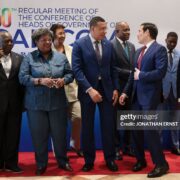
News Americas, NEW YORK, NY, Weds. August 12, 2026: The USA’s security and the Caribbean’s sovereignty need not be opposing interests. They can become the foundation of a new hemispheric bargain.

The United States and the Caribbean are approaching a defining moment. Washington sees a strategic corridor through which drugs, human trafficking, illicit finance, weapons and irregular migration can reach American shores. Caribbean governments see a different danger: policies that can constrict their economies, limit legitimate mobility and erode the sovereignty that small nations have defended for generations. Neither concern should be dismissed. America has a legitimate interest in the security of its southern neighborhood. The Caribbean has an equally legitimate interest in its sovereignty, prosperity and peace. The mistake is treating these interests as competing claims. They are connected. A secure Caribbean is in America’s interest. A prosperous and sovereign Caribbean is part of that security. The relationship therefore needs more than another round of diplomatic statements. It needs a new design, built on a proposition both sides can understand: America should help build the conditions for Caribbean security, while the Caribbean assumes greater responsibility for the security it seeks.

FLASHBACK – US President Donald Trump signs a proclamation at the “Shield of the Americas” Summit at Trump National Doral in Miami, Florida, March 7, 2026. President Trump is hosting a dozen right-wing leaders from Latin America and the Caribbean to discuss issues facing the region, from organized crime to illegal immigration. The summit also aims to serve Washington by boosting US interests in the region and curbing those from foreign powers like China. (Photo by SAUL LOEB / AFP via Getty Images)

That proposition begins with reciprocity. Caribbean governments should strengthen regional cooperation against trafficking, organized crime, financial crime, weapons and irregular migration through stronger border systems, better intelligence and coordinated enforcement. Washington should match that commitment with predictable visa policies, lawful migration channels, technology partnerships, expanded economic opportunity, development finance and infrastructure investment. Citizenship by investment programs should receive serious scrutiny, rigorous due diligence and transparent enforcement where weaknesses exist, but legitimate economic activity should not be swept aside with broad restrictions. Security policy is strongest when it distinguishes genuine risk from collective suspicion. The principle should be simple: if the Caribbean is asked to provide greater security, it should receive greater opportunity. That is not a concession from Washington or a favor to the islands. It is the price of a durable partnership.

The second shift is economic. If Washington is concerned about China’s expanding presence across the Caribbean, it should compete with better choices, not narrower choices. Build the port. Modernize the airport. Strengthen the power grid. Expand digital infrastructure. Protect water systems. Finance climate resilient communities. Support industries that allow Caribbean citizens to find opportunity without leaving home. Caribbean governments, for their part, should welcome investment from America, China and elsewhere under rules that protect transparency, national interest, environmental responsibility and sovereignty. A small country should not have to choose its investor before it chooses its project. America should ask not, “How do we prevent China from building here?” but, “What can we build here that the Caribbean will choose?” That is a more confident form of competition. It does not demand loyalty before delivering value. It earns partnership by delivering value.

The third shift is diplomatic. Cuba and Venezuela should not turn the Caribbean into another arena for great power confrontation. The region possesses something Washington and Beijing cannot purchase: proximity, history, relationships and regional legitimacy. Those assets give Caribbean governments a distinctive role in humanitarian assistance, economic reconstruction, institutional renewal and peaceful democratic development. But there is a crucial difference between helping a country find a better future and deciding that future for it. The Caribbean should support democracy without becoming an instrument of regime change. It should support humanitarian relief without becoming a proxy. It should encourage stability without accepting actions that destabilize its own neighborhood. The Zone of Peace should mean more than the absence of war. It should mean the presence of diplomacy strong enough to prevent confrontation from becoming conflict. The Caribbean’s greatest power may be its ability to create a room where powerful countries that disagree can still sit together.

The fourth shift is regional. Washington is right that seventeen Caribbean states negotiating separately can weaken their collective influence. But regional unity must not become political uniformity. The formula should be one regional strategy, many sovereign states. CARICOM and other regional institutions should develop common positions on security, migration, investment, energy, disaster resilience and trade, while preserving each nation’s right to make its own decisions. The United States should engage that regional strategy at a serious strategic table rather than rely primarily on bilateral leverage. A five year Caribbean American Compact should establish specific commitments, deadlines and public measures of performance. Security cooperation should have measurable targets. Investment should produce measurable results. Visa policy should have benchmarks. Migration arrangements should have accountability. Development should show evidence. Diplomacy should be judged by what changes after the meeting, not by how polished the communiqué looks.

The deeper opportunity is to replace an old question with a better one. For generations, the question has too often been, Who has influence over the Caribbean? That is a question shaped by the politics of another century. The question now should be: What can America and the Caribbean build together that neither can build alone? America needs a stable, secure southern neighborhood. Caribbean nations need access to American markets, capital, technology, education and security cooperation. Neither side benefits from a Caribbean weakened by poverty, insecurity, climate shocks or political instability. Neither side benefits from sovereignty being treated as an inconvenience. The objective should be security without subordination, investment without dependency, mobility with dignity, democratic development without destabilization and prosperity designed to outlast political cycles. The Caribbean should not be America’s backyard. It should not be China’s playground. It should be a sovereign partner and a hemispheric bridge. And that is the strategic idea worth remembering: Do not compete for the Caribbean. Build with it.

EDITOR’S NOTE: Dr. Isaac Newton is a leadership strategist, governance scholar, ordained minister, author, and President of Paramount Communication & Marketing, LLC. Educated at the University of Southern Caribbean, Oakwood University, Princeton, Columbia, and Harvard, he advises leaders across government, higher education, nonprofit organizations, and the private sector on ethical leadership, governance, institutional renewal, and organizational excellence. He is the author of several books and coauthor of Steps to Good Governance, When Nations Kneel, Daring to Hope, and the forthcoming The Belief Code.

RELATED: The Ledger Never Closed: The Lasting Business of Slavery and the Unfinished Work of Freedom

THE SILENCE TAX – What An Organization Pays When Its Leader Stops Hearing The Truth

By Dr. Isaac Newton

News Americas, NEW YORK, NY, Mon. Aug. 10, 2026: At 8:17 on Monday morning, the president walked into the executive conference room. The atmosphere changed. One executive had troubling news and decided to wait. Another had a better idea but kept it to herself. There was silence. A third had learned that challenging the president brought public correction, so he nodded, took notes, and said nothing. The president left believing the meeting had gone well. It had been orderly. There had been agreement. Yet the organization had just paid another installment of the silence tax. Later, the executives spoke freely among themselves. They discussed the risks, the flawed decision, and the alternative that might have worked. The truth had not disappeared. It had simply learned to travel around power.

That is how a toxic executive culture can take root. Rarely in one dramatic moment. More often through hundreds of small adaptations. A president may believe he is demanding excellence, protecting standards, moving quickly, or staying close to important work. His people may experience arrogance, excessive control, public correction, and distrust of their judgment. Intent matters, but impact determines what people learn. If candor repeatedly produces embarrassment, dismissal, or retaliation, people adapt. They speak less. They wait longer. They take fewer risks. They protect themselves. Problems reach the top after they have grown expensive. The institution has not lost its intelligence. It has lost access to it. That is the real cost of a toxic executive culture.

The first repair must therefore begin with the person holding the greatest authority. The president must confront the distance between the leader he intends to be and the leader others experience. Reassurance will not reveal that distance. Evidence will. A confidential 360-degree assessment can expose patterns that loyalty and fear conceal. So can five questions asked privately and answered without interruption: What should I stop doing? What should I start doing? Where do I make your work harder? What do you hesitate to tell me? What would you change if you had my authority? Then comes the discipline that separates mature leadership from protected leadership: do not defend yourself while people are telling you what they experience. Every explanation offered too early teaches the listener that your need to be understood matters more than their need to be heard. A leader who can receive difficult truth without retaliation gives the institution something invaluable: permission to remain honest.

The second repair is to return judgment to the people entrusted with it. The president should define the outcome, set the standard, grant appropriate authority, clarify the limits, and identify the circumstances that require presidential intervention. Then he should let people work. Micromanagement often feels like diligence to the person doing it. To the person receiving it, repeated intervention can communicate a steady message: Your judgment is not trusted. The answer is not less accountability. It is better accountability. Ask: What are you responsible for? What authority do you need? What obstacle requires my involvement? Then resist taking the work back. An institution cannot grow leaders while teaching everyone to wait for one leader. The president’s task is not to become the most involved person in every decision. It is to know which decisions belong to him and which must belong to others.

The third repair is deeply human. Systems can clarify responsibility, but relationships determine how people experience power. The president should meet privately with each member of his immediate team and acknowledge that his leadership may have created distance, frustration, or hesitation. He should ask what needs to change and listen without explaining his intentions. In executive meetings, disagreement should be invited before it becomes necessary: What are we missing? Who sees another path? What could make this decision fail? The goal is not comfort. It is candor. Psychological safety means people can raise concerns, admit mistakes, question assumptions, and deliver unwelcome news without fear of humiliation or retaliation. Trust cannot be ordered into existence. People decide to trust after they watch what happens when they tell the truth. The president must therefore make every honest conversation a test of the culture he says he wants.

The final test is remarkably simple: What happens to the organization when the president is not in the room? If decisions stall, people wait for permission, bad news stays buried, and capable executives become cautious, the office has accumulated authority but not leadership. If people think clearly, challenge assumptions, make sound decisions, raise problems early, and accept responsibility, the president has accomplished something far more significant than being obeyed. He has strengthened the institution. That is the higher purpose of executive power. Authority can make people comply. Leadership makes people capable. The silence tax disappears when truth no longer has to travel around power to reach the person who needs it. And perhaps that is the clearest measure of a president’s legacy: not how quiet the room became when he entered it, but how much truth became possible because he was there.

EDITOR’S NOTE: Dr. Isaac Newton is a leadership strategist, governance scholar, and author specializing in institutional excellence, ethical leadership, and human development. Educated at the University of the Southern Caribbean, Oakwood University, Princeton, Columbia, and Harvard, he writes on leadership, governance, diplomacy, economics, the development of people and institutions. He is the author of Fix It Preacher, Face Life Squarely, and Intimate Intimacy; coauthor of Steps to Good Governance and Daring to Hope; and author of the forthcoming When Nations Kneel and The Belief Code.

RELATED: When The Law Stands Taller Than Power: The CCJ’s Defining Moment For Caribbean Democracy

CARICOM Wants Reparations From The Crown. Eight Of Its Members Still Answer To The King.

By NAN Staff Writer, NewsAmericas Now

News Americas, NEW YORK, NY, Sun. August 9, 2026: CARICOM or the Caribbean Community has spent this year pressing its case for reparations with real momentum. Every CARICOM member state backed a United Nations resolution in March recognizing the transatlantic slave trade and racialized chattel enslavement of Africans as humanity’s gravest crime. In July, regional leaders approved a revised Ten-Point Plan for Reparatory Justice, renewing demands that European nations formally account for slavery, colonialism and Indigenous genocide.

There is just one detail complicating the moral clarity of that demand: eight of CARICOM’s own member states still have the British monarch as their head of state.

Who still answers to the Crown

A man holds a flag calling for reparations in Windrush square during the commemoration.. Fifth anniversary of remembering those who have been impacted by the Windrush scandal which saw people from the Caribbean treated like illegal immigrants by the Home Office despite arriving in Britain legally. (Photo by Thabo Jaiyesimi/SOPA Images/LightRocket via Getty Images)

Antigua and Barbuda, The Bahamas, Belize, Grenada, Jamaica, St. Kitts and Nevis, St. Lucia, and St. Vincent and the Grenadines remain Commonwealth realms, meaning King Charles III, not a president or a citizen of their own nations, sits constitutionally atop their governments. Guyana, Trinidad and Tobago, and Dominica removed the monarch decades ago, in the 1970s. Barbados was the most recent to go, becoming a republic in November 2021.

The contradiction is sharpest in the two countries that have been loudest on reparations. Jamaica’s government has said publicly, repeatedly, that it intends to remove the King as head of state. Foreign Minister Alando Terrelonge told reporters the country remained “hopeful” it would complete the constitutional reforms and referendum needed to do so, a target that has already slipped past its original 2025 deadline. Antigua and Barbuda’s Prime Minister Gaston Browne has likewise pledged a referendum on becoming a republic, calling it “the final step to complete that circle of independence.”

Neither has happened yet.

Two different kinds of accounting

To be clear, retaining a constitutional monarch is not the same as excusing colonialism, and removing the King as head of state carries no guarantee of reparations, accountability, or justice on its own. Many of the same governments pushing hardest for European accountability, including Jamaica’s, argue their monarchy question and their reparations case are separate matters entirely: one a constitutional and legal process requiring supermajorities and referenda, the other a demand rooted in a historical injustice that predates any of the sitting monarchs.

But the optics remain difficult to ignore. A regional bloc that spent 2026 demanding the Crown’s institutions reckon with the wealth extracted from enslaved Africans is, in eight of its own member states, still constitutionally headed by that same Crown. It is one thing to ask a king to answer for the sins of his ancestors. It is another to keep him as your own head of state while you do it.

What would actually change

None of this means CARICOM’s reparations case is wrong, or that the region’s demands on Europe should wait until every member state becomes a republic first. But full sovereignty and moral consistency are not unrelated projects. If the region wants its case for reparatory justice to carry the weight of complete independence, rather than a demand made with one hand while the other still swears allegiance to the Crown, finishing the work Jamaica, Antigua and Barbuda, and the six other remaining realms have already promised to do would remove the one contradiction critics can point to first.

NewsAmericasNow will continue tracking CARICOM’s reparations push and the region’s ongoing relationship with the monarchy.

RELATED: The Ledger Never Closed: The Lasting Business of Slavery and the Unfinished Work of Freedom

A Sitting CCJ Judge Says The Court’s President Tried To Influence The Ruling Against Guyana’s Opposition Leader.
By NAN Staff Writer, NewsAmericas Now

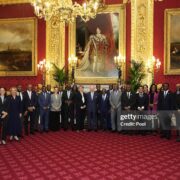
News Americas, NEW YORK, NY, Mon. August 10, 2026: Five of the CCJ – Caribbean Court of Justice’s six sitting judges have accused the court’s president, Justice Winston Anderson, of running the region’s highest court in an “authoritarian” and “dictatorial” manner, according to internal correspondence obtained by the Trinidad Express in a bombshell report. Among the specific allegations: that Anderson attempted to improperly influence the outcome of the case that dismissed Guyana Opposition Leader Azruddin Mohamed’s final appeal against U.S. extradition proceedings.

Justice Peter Jamadar, in a detailed email to fellow judges, wrote that he experienced “an attempt to influence the opinions of colleagues that differed from yours in an authoritative manner” specifically in “the Mohamed vs MOHA, AG, and Magistrate extradition matter.” Justice Chile Eboe-Osuji went further, alleging Anderson “tried single-handedly to override judicial independence and long-standing CCJ conventions” in a separate case, and said Jamadar’s experience “was not unique.”

Mohamed’s office responds

Mohamed’s own office has now formally weighed in. In a statement issued Sunday, the Office of the Guyana Leader of the Opposition called the revelations “deeply disturbing” and demanded “full transparency and an appropriate independent examination” of what occurred during deliberations in his case. The statement emphasized that the concerns come from a majority, not a lone dissenting judge, and posed a direct set of questions it says “demand credible answers”: Were attempts made to influence judges who disagreed with the president? Why did a clear majority of judicial colleagues reportedly object to the timing and manner in which the decision was announced? Were established conventions departed from? And did any of this affect the integrity or perceived fairness of the process?

“This is bigger than any individual litigant, judge, government or political party,” the statement reads. “A court that demands accountability, independence and adherence to the rule of law from governments must hold itself to those same standards.”

The CCJ unanimously dismissed Mohamed’s appeal on July 29, clearing the way for U.S. extradition proceedings against him and his father, businessman Nazar Mohamed, to resume before Chief Magistrate Judy Latchman on September 3. The ruling, delivered by Justice Denys Barrow “on behalf of himself and CCJ President Justice Winston Anderson,” was presented publicly as a clean, unanimous decision.

Jamadar’s email suggests the reality inside the court’s deliberations may have been considerably less settled. Justice Eboe-Osuji, in correspondence cited directly in the opposition’s statement, described being told the court’s president intended to announce the Mohamed decision “at a time and in a manner in which a clear majority of his colleagues had very strongly communicated to him as inappropriate.” If a sitting judge is alleging the court’s president attempted to pressure colleagues who disagreed with him specifically on this case, it raises a legitimate question the ruling’s public unanimity was never meant to answer: how much genuine disagreement existed among the judges before that unanimity was reached, and did it reflect independent judicial reasoning or institutional pressure.

A crisis two decades in the making

The allegations land at a particularly difficult moment for an institution that has spent more than 20 years trying to convince the wider Caribbean it deserves full trust. The CCJ was established by agreement in February 2001 and inaugurated in April 2005, created explicitly to replace the British Privy Council as the region’s final court of appeal and complete a long-delayed step toward full judicial independence.

Yet more than two decades later, only five of CARICOM’s 14 full member states, Barbados, Belize, Dominica, Guyana, and St. Lucia, have actually made the CCJ their court of last resort. The rest, including Jamaica, Trinidad and Tobago, and the OECS states, continue to send their final appeals to London. Jamaica’s House of Representatives voted to adopt the CCJ back in 2015 and still hasn’t finished the process. Antigua and Barbuda held a referendum on the question in 2018; voters rejected it.

Proponents of the CCJ have long argued that lingering attachment to the Privy Council reflects colonial habit more than genuine concern, a reluctance to fully trust a court of the region’s own making. This week’s revelations, and now Mohamed’s own formal demand for an independent examination, complicate that argument considerably.

Justice Eboe-Osuji, in his email, captured the irony directly: “There is, of course, a surreal problem in all this. It is that an apex court who decides questions as the final arbiter of the rule of law and democracy according to the rule of law would labour so badly under a leader that does not believe in the ethos of democracy in his own leadership.”

Neither the CCJ nor Justice Anderson has publicly responded to the allegations.

NewsAmericasNow will continue following developments at the CCJ and their impact on the Mohamed extradition case.

RELATED: CCJ Issues Stay In High-Profile Extradition Case

Thousands Turn Out For Brooklyn’s Inaugural Jamaica Rising Day Parade

By NAN Staff Writer, NewsAmericas Now

News Americas, BROOKLYN, NY, Sat. Aug. 8, 2026: Jamaican pride took over the streets of Brooklyn, New York, on Saturday as thousands turned out for the inaugural Jamaica Rising Day Parade, which organizers say is not only New York City’s first Jamaica-dedicated parade, but the first of its kind anywhere in the United States.

The celebration came as Jamaica marks 64 years of independence from British colonial rule, just days after the island’s official Independence Day on August 6. The parade stepped off at 11 a.m. from Church and Ocean avenues in Flatbush, continuing north along Ocean Avenue to Lincoln Road near Empire Boulevard, under the theme “Jamaica Rising: One People. One Legacy. One Future.” Attendees were mostly kept behind steel barricades under the watchful eye of the NYPD.

A parade born from a question

Founder and Chairman Bill Tinglin told NPR’s “All Things Considered” the idea began after attending a different community’s celebration in Manhattan. “I went to the Israeli parade in Manhattan… and I asked myself: How come we don’t have a Jamaican Day parade and Jamaica has such a strong brand? Its food, its athletes, its culture, its music, just a very strong brand,” Tinglin said. “Yes, Jamaica is raising its flag, and here we are, the first of its kind in the United States, and let’s just enjoy the joy.”

DJ Danglez, a Brooklyn-born member of Federation Sound, served as the parade’s star DJ while Steelie Bashment and Richie Stephens were also in the house as the route filled with reggae, dancehall, soca and R&B, including Vybz Kartel’s “Brooklyn Anthem” and classics from Buju Banton. Reggae veteran Nadine Sutherland served as Grand Marshal, joined by Public Advocate Jumaane D. Williams, former US Ambassador to Jamaica, Nick Perry and New York School’s Chancellor, Jamaican Kamar Samuels.

“You see all the Jamaican flags out there. You see different cultures coming out to celebrate one culture,” Williams said.

“I had the privilege to attend the inaugural Jamaica Rising Day Parade in Brooklyn this morning,” stated Samuels on Instagram. “It was an honor to celebrate my heritage alongside students, educators, families, community members, elected officials, and visitors. The energy was incredible. As Chancellor, I believe it is critical that our young people develop a sense of self and identity rooted in cultural pride. That’s why I am expanding our efforts to foster culturally responsive instruction in our classrooms. When our students are celebrated for their histories and cultures, they will feel empowered for years to come. I am proud to be a Jamaican New Yorker – and to live and lead in a city with such rich diversity.”

Brooklyn’s deep Jamaican roots

The parade’s Brooklyn setting is no accident. An estimated 315,000 to 416,000 people of Jamaican descent live in New York, with the largest concentration in Brooklyn neighborhoods including Flatbush, Canarsie, and Crown Heights, alongside significant communities in southeast Queens and the Bronx.

Organizers, who worked closely with city officials and public safety agencies to manage what became a larger-than-expected crowd, say the parade is intended to become an annual tradition, timed each year to Jamaica’s “Emancipendence” season between Emancipation Day and Independence Day.

RELATED: Meet Lauren Austin, The Designer Behind Rihanna And Spice’s Show-Stopping Crop Over Looks

Who Could Salvage The Guyana MV Barima? These Are Some Of The Companies With The Experience To Qualify

By NAN Staff Writer, NewsAmericas Now

News Americas, GEORGETOWN, Guyana, Fri. August 7, 2026: Guyana’s Maritime Administration Department is seeking a marine salvage contractor capable of recovering the MV Barima from 13 to 15 meters of water, some 28 nautical miles off the Essequibo coast, while preserving forensic evidence for the international Commission of Inquiry. While no company has publicly confirmed submitting a bid, several established marine salvage operators around the world have exactly the kind of regional and technical experience MARAD’s Expression of Interest is asking for.

Companies with relevant Caribbean and regional experience

Resolve Marine Group, headquartered in Fort Lauderdale, is one of the largest marine salvage operators globally, with roughly $220-260 million in annual revenue and 40 years of heavy-lift salvage and refloating experience. Its proximity to Guyana and extensive Caribbean operating history make it a natural fit for MARAD’s requirements.

Titan Salvage specializes specifically in North Atlantic and Caribbean shallow-water refloating and environmental protection, conditions that closely match the Barima’s location, lying on its side in soft mud in relatively shallow coastal waters.

Ardent has secured an operating license specifically for the Caribbean region, one of the few salvage companies to do so, a credential that could matter given MARAD’s emphasis on companies experienced in Guyanese and wider Caribbean waters.

Svitzer Salvage Americas, a 175-year-old company with its Americas headquarters in Miami, has responded to salvage needs across North America and the Caribbean since 2009.

InterTug, based in Cartagena, Colombia, offers Caribbean-wide towing and salvage services, giving it direct regional and South American proximity to Guyana.

T&T Salvage brings global heavy-lift and large-scale maritime disaster response experience, including work as a contractor for the U.S. Navy’s SUPSALV program, relevant given the scale and forensic sensitivity MARAD is requesting.

What MARAD is actually asking for

Interested companies must submit Expressions of Interest limited to ten pages, detailing their corporate profile, salvage experience over the past five to ten years, technical approach, environmental protection measures, personnel and equipment, project timeline, and insurance and safety arrangements. Contractors must also explain how they will protect and document forensic evidence during the salvage process, and demonstrate the ability to stow the recovered vessel upright on a barge for several weeks.

Submissions are due electronically to MARAD no later than close of business on Friday, August 14, 2026. Shortlisted firms will then be invited to submit detailed technical and financial proposals before a contractor is selected.

NewsAmericasNow will continue tracking the salvage process as the deadline approaches.

RELATED: Guyana Case Against MV Barima Captain And Crew Adjourned To September 7th

The Ledger Never Closed: The Lasting Business of Slavery and the Unfinished Work of Freedom

By Dr. Isaac Newton

News Americas, NEW YORK, NY, Weds. Aug. 5, 2026: Professor C. Justin Robinson’s The Business of Slavery: From Africa to the New World is much more than a history of the Atlantic slave trade. It explains how slavery became one of the world’s most organized and profitable economic systems. Governments, banks, businesses, courts, churches, merchants, and investors all helped create a system that treated human beings as property instead of people. The numbers tell a heartbreaking story. About 12.5 million Africans were forced onto slave ships. Only about 10.7 million survived the journey across the Atlantic. Millions of others died before ever reaching the coast. When slavery ended in the British Empire, the British government paid £20 million to compensate slave owners. The people who had endured generations of forced labor received nothing. These facts show how institutions can lose sight of human dignity when financial gain becomes the highest priority. Behind every contract, insurance policy, ledger, and legal document stood a man, woman, or child whose freedom had been stolen.

One of the pamphlet’s greatest contributions is that it shifts our attention from individual wrongdoing to institutional responsibility. Slavery lasted for centuries because responsibility was spread across many people and organizations. Merchants transported captives. Banks financed voyages. Insurance companies protected investments. Courts enforced ownership. Governments passed laws. Churches often remained silent or offered religious support. Each group performed what seemed like an ordinary task, yet together they sustained one of history’s greatest injustices. That lesson still matters today. Forced labor, human trafficking, unfair supply chains, environmental injustice, and some uses of artificial intelligence remind us that modern systems can still place efficiency and profit ahead of people. These problems are not slavery, but they reveal the same danger. When people become invisible inside a system, injustice can slowly become accepted as normal.

Emancipation Day is more than a celebration of the end of slavery. It is also a reminder that freedom must be protected, strengthened, and expanded. The true story of emancipation is not found only in government records but in the lives of formerly enslaved people who built families, schools, churches, businesses, farms, and communities after receiving neither land nor financial support. Their achievements remain one of history’s greatest examples of courage, resilience, and determination. Their story also challenges every generation to ask difficult questions. What forms of human worth are becoming invisible in today’s economy? What evidence are we leaving behind that future generations will examine with the same honesty that we now bring to plantation records? If entire societies once accepted slavery as ordinary business, what practices today deserve closer moral scrutiny before they become tomorrow’s regret?

The way forward calls for more than annual ceremonies. It requires informed citizens, ethical leaders, and strong institutions. Schools should teach the economic and moral history of slavery so young people understand both the cost of injustice and the value of freedom. Governments should strengthen transparency and accountability. Businesses should ensure that their supply chains respect human dignity. Universities should expand research on economic justice and social mobility. Faith communities should continue shaping moral character and public responsibility. Caribbean nations should invest boldly in entrepreneurship, financial literacy, innovation, and opportunities that help every citizen flourish. Emancipation is not simply a date on the calendar. It is a continuing responsibility to build societies where human dignity is protected, opportunity is widely shared, and justice is visible in everyday life. Reparations give moral expression to historical truth. They acknowledge that wealth accumulated through the denial of humanity leaves obligations that time alone cannot erase, and that justice reaches its fullest meaning when memory is matched by repair.

EDITOR’S NOTE: Dr. Isaac Newton is a leadership strategist, governance scholar, and author specializing in institutional excellence, ethical leadership, and human development. Educated at the University of the Southern Caribbean, Oakwood University, Princeton, Columbia, and Harvard, he writes on leadership, governance, and the development of people and institutions. He is the author of Fix It Preacher, Face Life Squarely, and Intimate Intimacy; coauthor of Steps to Good Governance and Daring to Hope; and coauthor of the forthcoming works When Nations Kneel and The Belief Code.

RELATED: When The Law Stands Taller Than Power: The CCJ’s Defining Moment For Caribbean Democracy

Guyana Case Against MV Barima Captain And Crew Adjourned To September 7th

By NAN Staff Writer, NewsAmericas Now

News Americas, GEORGETOWN, Guyana, Mon. Aug. 3, 2026: The murder case against the captain and two crew members of the MV Barima has been adjourned to September 7th, after a Guyanese magistrate ruled the Charity Magistrate’s Court’s limited sitting schedule left no earlier date available for the prosecution to complete disclosure to the defense.

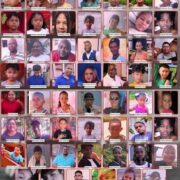
Captain Kevin “KP” Price, 40, Chief Mate Rondell Dwayne Roberts, 42, and Goods Superintendent Delon Granderson, 33, appeared by Zoom before Magistrate Ravindra Mohabir at the Charity Magistrate’s Court. The three are jointly charged with 72 counts of murder in connection with the July 18 sinking that killed at least 72 people, with more than 30 others still missing and presumed dead.

Prosecutor Mandel Moore told the court he now holds a fiat, the formal written authorization required to prosecute the matter, and confirmed partial disclosure had already been provided to the defense. Moore requested an adjournment to August 31 to complete full disclosure, but the magistrate noted the Charity Magistrate’s Court only sits on Mondays, pushing the next available date to September 7.

Price and Granderson are represented by attorney Dexter Smartt, alongside a legal team that includes Dexter Todd. Attorney Everton Lammy-Singh represents Roberts.

A charge that continues to draw criticism

Defense lawyers, legal commentators, and the political opposition have criticized the decision to file murder charges before the search for the missing has concluded and before the international Commission of Inquiry has begun its work. Police have maintained the charges followed legal advice from Director of Public Prosecutions Shalimar Ali-Hack, who has said her recommendation was based on the evidence presented, relevant principles of law, and case law authorities drawn from the United Kingdom, Commonwealth jurisdictions, and the European Court of Human Rights, along with public policy considerations.

Protesters rally for the accused

On Sunday night, family members, friends, and residents gathered outside Roberts’ home in Grove, East Bank Demerara, in a solidarity protest arguing the murder charges were used to shield senior government officials from accountability. Demonstrators carried placards reading “Transparency and accountability,” “Free Rondell, Dellon and Kevin,” and “Justice for these three men. Families need closure.”

One protester voiced support for the government’s decision to proceed with salvaging the MV Barima rather than converting the wreck site, roughly nine miles offshore, into a memorial, arguing physical evidence from the vessel itself is needed before the case, and the broader investigation, can move forward.

The opposition WIN party has called for a protest on Tuesday, August 4, at 9:00 a.m. in front of Watooka House, Linden.

NewsAmericasNow will continue following the case as it proceeds toward its September 7 hearing.

RELATED: Could MV Barima Victims Sue The Guyana Government For Negligence? Here’s What The Law Says

When The Church Speaks: The Transformational Power Of Communications

By Dr. Isaac Newton

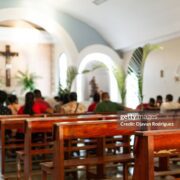
News Americas, NEW YORK, NY, Sun. August 2, 2026: When the Church speaks, people listen. Do they encounter clarity or confusion, hope or hesitation, Christ or merely activity through that voice? In Scripture, the herald did not create the message. The herald prepared people to recognize the arrival of the King. That sacred responsibility remains essential today and speaks directly to the work of the Communications Director. The role extends far beyond announcing events, recording worship services, managing digital platforms, or producing publications. Christian communication is part of the Church’s witness. “Faith comes by hearing” (Romans 10:17), reminding us that words have the power to shape belief, strengthen trust, and awaken transformation. Every message leaves a mark. It teaches people what matters, reveals what the Church values, and influences how communities understand God’s mission.

The Communications Director stands at one of the most influential intersections in the life of the Church: the place where mission becomes message, vision becomes understanding, and truth becomes lived experience. Research in leadership, journalism, and organizational communication demonstrates that trust grows through accuracy, transparency, consistency, and genuine listening. The Church operates within the same human reality. Every sermon summary, testimony, photograph, interview, podcast, website update, crisis response, and digital message contributes to the public witness of God’s people. Success cannot be reduced to engagement numbers, audience size, or online visibility. The deeper measure is transformation. Faith grows stronger. Families discover hope. Young people find belonging. Communities encounter the character of Christ through a Church that communicates with wisdom, humility, and conviction.

Across the Caribbean, where churches have historically been woven into the social and spiritual fabric of communities, communication has unique significance. The Church is not speaking into an empty space. It is speaking into homes, villages, cities, schools, workplaces, and a global Caribbean diaspora connected across continents. A generation shaped by digital culture is searching for authenticity, meaning, and belonging. This moment requires Communications Directors who understand that communication is not simply the delivery of information. It shapes identity, builds trust, and forms community. They must discover stories that reveal God’s activity rather than simply report programmes. They must listen carefully to members, visitors, young adults, and communities because listening often reveals what statistics cannot see. They must embrace artificial intelligence, emerging technologies, and digital innovation with wisdom, ensuring that tools serve the mission and never replace the message.

The herald’s responsibility was never merely to announce that a King was coming. The herald prepared people to recognize the King when He arrived. That is the sacred calling of Christian communication. The Communications Director helps the Church speak with a voice that reflects the character of Christ: truthful enough to build trust, compassionate enough to heal, courageous enough to stand for conviction, and hopeful enough to inspire faith. A Church’s enduring witness is not measured by the announcements it publishes, the magazines it prints, the videos it uploads, or the size of its online following. Its true measure is found in the lives drawn closer to Christ, the confidence strengthened in God’s Word, and the hope awakened in human hearts. The Church does not communicate because it merely has something to say. The Church communicates because it has Someone to reveal. When its voice reflects God’s character, communication becomes more than a ministry tool. It becomes an instrument of transformation.

EDITOR’S NOTE: Dr. Isaac Newton is a leadership strategist, governance scholar, and author specializing in institutional excellence, ethical leadership, and human development. Educated at the University of the Southern Caribbean, Oakwood University, Princeton, Columbia, and Harvard, he writes on leadership, governance, and the development of people and institutions. He is the author of Fix It Preacher, Face Life Squarely, and Intimate Intimacy; coauthor of Steps to Good Governance and Daring to Hope; and coauthor of the forthcoming works When Nations Kneel and The Belief Code.

RELATED: The Caribbean And The Law of Multiplication