
Posts

Brooch Diplomacy And Strained Unity: How U.S. Pressure Is Seeding Fractures In CARICOM

By Ron Cheong

News Americas, TORONTO, Canada, Weds. April 29, 2026: CARICOM’s founding promise can be characterized as: One Region, One People, One Future – something it would be helpful to refocus on in moments like this.

The bloc began as a regional integration project grounded in shared history, collective resilience, and a unified diplomatic voice – that is now being tested by a sharper, more transactional global order. At the center of that strain lies a consequential shift: The United States has moved away from partnership toward influence through pressure. That shift is no longer abstract – it is playing out in symbols, alliances, and fractures across the globe including the Caribbean, which is our focus.

Few episodes capture this better than the recent “brooch diplomacy” controversy involving Delcy Rodríguez. Her decision to wear a brooch depicting Venezuela’s claim over Guyana’s Essequibo region during engagements with CARICOM leaders in Barbados and Grenada was more than a symbolic gesture – it was a calculated assertion of territorial ambition in a regional diplomatic space that is supposed to prioritize neutrality and cohesion.

For Guyana, the implications are stark. In the midst of navigating a volatile border controversy with Venezuela, this uncomfortable foray raises the possibility that elements within the CARICOM community could be somewhat open, directly or indirectly, to Venezuelan influence.

But to understand how CARICOM arrived at this moment, one must look beyond the region to Washington.

Pressure Over Partnership

For decades, U.S. – Caribbean relations were built on a mix of development assistance, trade access, and institutional cooperation. While never perfectly balanced, the relationship carried some sense of predictability. That is no longer the case.

Today, U.S. policy toward the Caribbean increasingly emphasizes sanctions, geopolitical alignment, and strategic compliance. Whether through its hardline stance on Cuba, military action in Venezuela, or sweeping tariff regimes, Washington’s posture has become more conditional and less collaborative.

The consequences are cumulative.

The long-running embargo on Cuba, now intensified into a de facto oil blockade, has forced Caribbean states into agonising choices between principle and survival. Cuban medical missions, long a backbone of regional healthcare systems, are now being unwound or restructured under pressure. Even Guyana, once deeply aligned with Havana, had been forced by imperatives of its security and survival to recalibrate this alignment and historical friendship.

In addition, rather than contributing to Guyana’s security, the recent U.S. military intervention in Venezuela, and arrest of Nicolas Maduro, culminated in an unstable paradox. Instead of ushering in a democratic transition led by opposition figures – and greater regional stability, the US chose to let power effectively remain within the existing governing structure, now fronted more prominently by Rodríguez herself.

If anything, this outcome has strengthened a figure who is arguably more diplomatically agile and legally sophisticated than Maduro, enabling Venezuela to engage the region with renewed effectiveness.

Oil, Influence, And Divergence

Energy politics further complicate the picture.

Venezuela’s oil industry remains state-controlled, giving Caracas a powerful tool of foreign policy: the ability to cultivate alliances through preferential energy arrangements. Historically, initiatives like Petrocaribe allowed Venezuela to build goodwill across the Caribbean by supplying oil on concessional terms.

Guyana, by contrast, sits on vast high quality oil reserves but operates within a very different model. Its sector is dominated by foreign firms, most notably ExxonMobil. While this has accelerated production and revenues, it limits Georgetown’s ability to deploy oil as a direct instrument of regional diplomacy. This divergence matters.

Where Venezuela can translate energy into influence, Guyana must rely more heavily on formal alliances – chief among them, its alignment with the United States for security backing against Venezuelan territorial claims. That alignment, however, comes at a cost.

A Hornet’s Nest of Contradictions

Guyana faces tough strategic options. There was little choice other than leaning toward Washington for protection in the face of the Venezuelan threat. But the U.S. influence in the region has not lead to more stabilization as would have been hoped.  Their approach, marked by coercion rather than consensus, has heightened tensions, disrupted economic flows, and placed CARICOM states under competing pressures. It also undermined the ties between some longstanding regional and ideological partners, and Cuba in particular.  

This weakens the very CARICOM unity that Guyana seeks to champion. The “broochgate” episode underscores the dilemma. Georgetown has protested that CARICOM members should not entertain Venezuelan symbolism which challenges its sovereignty.  But even as it did so – the political opposition in Guyana chimed in that: Guyana itself has shown selective solidarity in its actions.

The claim was that Although Cuba is not a CARICOM member it has long had ties with its members.  When Cuba faced intensified U.S. pressure, Guyana’s response was measured, even muted. And when regional states were forced to reconsider Cuban medical cooperation, Georgetown adjusted its position rather than seeking a unified defense. Notwithstanding Guyana has since sent humanitarian rice shipments to Cuba, the point was that these the actions are not consistent with mutual support.

CARICOM At A Crossroads

The deeper issue is not any single incident, but the fragmentation of strategic alignment within CARICOM.

External powers are no longer offering partnership frameworks – they are presenting choices, often framed as zero-sum. The United States demands alignment on security and geopolitics. China offers targeted economic engagement. Venezuela leverages energy diplomacy and regional familiarity. Cuba, despite its constraints, remains a vital social partner.

Each relationship pulls CARICOM states in different directions. Without a coordinated regional strategy, these pressures risk turning CARICOM from a unified bloc into a collection of individually managed relationships – precisely the kind of fragmentation its founders sought to avoid.

The Path Forward

For Guyana, the immediate priority is clear: defend its territorial integrity. But doing so effectively requires more than bilateral security guarantees – it requires regional legitimacy.

That, in turn, demands consistency. Guyana’s call for unwavering CARICOM support on Essequibo, should be supported by the same level of commitment on issues that matter to its community, whether related to Cuba, economic sovereignty, or external pressure.

More broadly, CARICOM must confront a hard truth: the era of comfortable alignment is over. The region is operating in a fluid, contested geopolitical space where influence is increasingly exercised through leverage rather than loyalty.

In that environment, unity is not just an aspiration – it is a necessity. Because if the Caribbean cannot hold a coherent center, others will define it from the outside.

EDITOR’S NOTE: Ron Cheong is a frequent political commentator and columnist whose recent work focuses on international relations, economic resilience, and Caribbean-American affairs. He is a community activist and dedicated volunteer with extensive international banking experience. Now residing in Toronto, Canada, he is a fellow of the Institute of Canadian Bankers and holds a Bachelor of Science degree from the University of Toronto.

RELATED:

CARICOM News: How U.S. And China Are Shaping Caribbean Energy

The Long Siege Of Cuba: CARICOM At Last Begins Pooling Cash For Cuba Relief Supplies

The Long Siege Of Cuba & Caribbean Geopolitics: The Prequel To King Kong And The Island

King Kong And The Island: America’s Moral Collapse And Cuba

Guyana Protests Delcy Rodríguez Brooch Showing Claim To Essequibo

News Americas, GEORGETOWN, Guyana, Tues. April 28, 2026: Guyana’s President, Irfaan Ali, has expressed “grave concern” over what he described as a provocative display by Venezuela during recent engagements with Caribbean leaders, as tensions continue over the long-running Essequibo territorial dispute.

In a letter to Caribbean Community (CARICOM) Chairman Terrance Drew, Ali criticized the public display of a brooch worn by Acting President of Venezuela, Delcy Rodríguez, that depicted a map of Venezuela, including Guyana’s Essequibo region. The Guyanese president said that while Georgetown respects the right of CARICOM member states to engage with Venezuela, it was “deeply regrettable” that such meetings were accompanied by symbols asserting a territorial claim against Guyana.

Rodríguez recently met with Grenada’s Prime Minister Dickon Mitchell and Barbados Prime Minister Mia Mottley during visits aimed at strengthening Venezuela’s ties with the Caribbean.

Ali warned that the use of regional platforms to promote claims currently before the International Court of Justice could be interpreted as tolerance or acquiescence. “This is not a matter of symbolism alone,” Ali said, describing the display as a “calculated and provocative assertion” of Venezuela’s claim to the resource-rich Essequibo region.

The dispute between the two South American nations dates back more than a century and is currently before the ICJ, which is set to begin oral hearings in early May. Guyana is seeking affirmation of the 1899 Arbitral Award that established the boundary between the two countries.

The court has already ruled that it has jurisdiction over the matter, paving the way for a full hearing on the merits. Ali reiterated that Guyana remains committed to a peaceful resolution under international law but expects all parties to respect the judicial process and refrain from actions that could escalate tensions.

“Guyana expects all states… to act consistently with the principles of the United Nations Charter, refrain from provocation, and respect the ongoing judicial process,” he said.

Rodríguez arrived in Barbados late Sunday, marking her second official visit to a Caribbean island in recent weeks after visiting Grenada on April 9.

Mottley and Rodríguez met in the capital of Bridgetown for bilateral talks that centered on topics including energy sector cooperation, according to the two leaders who held a joint press conference but did not take questions. Venezuela invited Barbados to invest in oil and gas exploration, Rodríguez said, adding via a translator: “To join strengths, to increase the production of hydrocarbons in Venezuela.”

The partnership also would help Venezuela provide energy security for the people of Barbados, Rodríguez asserted. She has been acting as Venezuela’s president after the U.S. military captured and removed former President Nicolás Maduro in early January.

FLASHBACK: US Reaffirms Land Boundary Between Venezuela And Guyana Should Be Respected Amid Meeting Between Ally, Maduro

IShowSpeed Hits Barbados As Caribbean Tour Continues

News Americas, NEW YORK, NY, Mon. April 27, 2026: YouTube sensation IShowSpeed, one of the world’s most popular online streamers, is continuing his high-energy Caribbean tour, with his latest stop bringing him to Barbados Monday, after earlier visits to Trinidad and Tobago and Grenada.

Speed, whose real name is Darren Jason Watkins Jr., is an American influencer and live-streamer known globally for his dramatic, fast-paced broadcasts and real-life travel streams that attract millions of viewers. He has emerged as a major digital figure, often acting as a cultural ambassador by showcasing countries and local experiences to global audiences in real time.

The global livestream star, known for his unpredictable and viral content, has been drawing attention across the region as he moves from island to island, blending entertainment with cultural immersion. After kicking off in Trinidad and Tobago, Speed traveled to Grenada, where he explored local culture, including scuba diving and participating in traditional Jab Jab celebrations. He then arrived in Barbados, where he made a stop at a local school, further fueling excitement among fans and even received a rock as a gift.

Barbados is often referred to as a “rock” due to its unique geological formation: a coral limestone island formed by tectonic plate collision, unlike many of its neighbors. The island, particularly on the east coast, features dramatic rock formations, including the famous Bathsheba Rock and Mushroom Rock, carved by Atlantic erosion.

While his exact next stop has not been officially confirmed, the broader Caribbean tour is expected to include Antigua and Barbuda, the Bahamas, Dominica, the Dominican Republic, Guadeloupe, Jamaica, Puerto Rico, Sint Maarten, St. Kitts and Nevis, St. Lucia, St. Vincent and the Grenadines, and the United States Virgin Islands.

Speed is widely regarded as one of the internet’s most-watched travel streamers, known for turning everyday interactions into viral moments through live broadcasts that attract massive global audiences.

His Caribbean run follows a series of global tours that have taken him across Africa, Europe, Asia, South America, and Australia/New Zealand. During a recent Africa tour spanning 20 countries in under a month, he gained more than 3.7 million YouTube subscribers and surpassed 50 million total subscribers, highlighting his growing global influence.

With streams often showcasing local culture, landmarks, and spontaneous fan interactions, Speed’s visits have proven to significantly boost online visibility for destinations featured.

This Caribbean leg also includes a personal touch. Speed has his younger brother Jamal joining him on the tour, adding to the energy and unpredictability that define his content.

Known for his high-energy personality and real-time engagement with fans, Speed’s presence is already generating buzz across the region, with crowds gathering and social media lighting up at each stop. As the tour continues, Caribbean audiences – and millions watching online – are tuning in to see where he lands next.

RELATED: No Caribbean Beaches In World’s Top 10 – But Here Are The Top 10 Best Caribbean Beaches For 2026

One Wallet Across The Caribbean: Rethinking Payments For Growth And Connection

By Dr. Isaac Newton 

News Americas, NEW YORK, NY, Mon. April 27, 2026: Imagine stepping off a plane in Port of Spain, paying for a taxi with your Jamaican wallet, grabbing lunch in Barbados, and settling a hotel bill in Guyana, all instantly, securely, and in your own currency – one wallet. No delays, no conversions, no uncertainty. This is not a dream. Ghana has already made it real by transforming its national ID into a full-featured payment tool. Citizens can link bank accounts, send and receive money, and pay for goods through a single platform. It works alongside global networks such as Visa and Mastercard while providing a faster, simpler, and more affordable way to move money. Systems must serve the people who use them first and connect seamlessly to the wider world.

Other countries provide valuable lessons. In Nigeria, mobile transfers and instant bank payments make moving money fast and accessible for everyone. In India, the Unified Payments Interface allows anyone to send money instantly using a phone number or a QR code, whether paying a street vendor or a utility company. In China, applications such as Alipay and WeChat Pay integrate payments into daily life, from ordering food to taking public transportation. These systems succeed because they prioritize the user experience, eliminate friction, and make transactions predictable and reliable.

The Caribbean faces a similar challenge. Countries including Guyana, Trinidad and Tobago, Jamaica, Barbados, Suriname, and the members of the Eastern Caribbean Currency Union operate across multiple currencies and fragmented systems. Travel and trade are slowed by delays, inconsistent acceptance, and unnecessary complexity. Citizens and visitors face obstacles that make simple transactions frustrating and time-consuming.

The solution is a regional digital payments layer that works across local currencies. Citizens and visitors could pay anywhere in the Caribbean while the system converts automatically. Transactions would be immediate, transparent, and consistent, whether in Nassau, Castries, or Georgetown. The region could function as a single connected marketplace while each country retains its own currency.

Achieving this requires three strategic steps. Governments must establish secure digital identity systems that authenticate users across borders. Central banks and regulators must build a real-time network connecting banks, mobile wallets, and fintech platforms. Global providers such as Visa and Mastercard should integrate as gateways for international transactions rather than as the foundation of the system. These steps create a structure that is robust, inclusive, and adaptable.

The impact would be profound. A vendor in Kingston could receive payment from a visitor in Port of Spain instantly. A supplier in Bridgetown could receive funds from Georgetown without delay. Commerce, tourism, and daily transactions would become faster, simpler, and more reliable. The Caribbean could strengthen financial independence, expand inclusion, and operate efficiently within the global economy.

This is more than a payment system. It is a foundation for growth, opportunity, and trust. By designing solutions that serve local people first and connect to the world, the Caribbean can become a leader in digital finance while making life easier and more predictable for every citizen and visitor.

Editor’s Note: Dr. Isaac Newton is a leadership strategist and change management expert specializing in governance and ethical leadership. Educated at Harvard, Princeton, and Columbia, he is co-author of Steps to Good Governance and has advised boards, educators, and public leaders across the Caribbean and internationally, integrating policy, psychology, and ethics to strengthen institutional performance.

RELATED: When Loyalty Becomes A Leadership Risk In Small States

The Data Tells A Different Story About Black Immigrants

By Felicia J. Persaud

News Americas, NEW YORK, NY, Fri. April 24, 2026: At a time when immigration rhetoric in the United States has reached a fever pitch, a new report from the Pew Research Center offers a powerful reminder: the story being told about immigrants – particularly Black immigrants – is often not the truth.

The data tells a very different story. According to Pew’s latest analysis, there are now 5.6 million Black immigrants living in the United States, making up roughly one in ten Black people in the country.

That alone should shift the conversation. Because Black immigrants are not a small or marginal group. They are a significant and growing part of the American story.

And yet, they are rarely at the center of the national immigration debate. Even more telling is their legal status.

Despite narratives that often conflate immigration with illegality, the Pew data shows that 79% of Black immigrants are in the United States legally, while a majority – 61% – are naturalized U.S. citizens.

That means most Black immigrants are not only here lawfully, but they are also Americans who can vote.

Fully. Legally. Permanently.

And still, they are often treated as outsiders, with xenophobic talk about “eating cats and dogs,” committing crimes, or worse of all, being from “S-Hole” countries.

The data also challenges assumptions about education and contribution.

Today, 35% of Black immigrants hold a bachelor’s degree or higher, a rate that exceeds that of U.S.-born Black Americans. Among African-born immigrants, that number is even higher, with some of the most highly educated immigrant populations in the country coming from nations like Nigeria.

These are not communities on the margins. They are doctors, nurses, entrepreneurs, educators, and caregivers. They are part of the infrastructure of American life.

And their numbers are growing.

African-born immigrants, according to the data, are now the fastest-growing segment of the Black immigrant population, increasing fourfold since 2000. At the same time, Caribbean immigrants remain a dominant force, making up a similarly large share of the Black immigrant population.

Together, African and Caribbean immigrants account for the overwhelming majority of Black immigrants in the United States. That is not incidental.

It reflects a deep and ongoing relationship between the United States and the Black diaspora – one that has shaped culture, labor, politics, and identity for generations.

And yet, despite these contributions, the policy environment is moving in the opposite direction.

Immigration crackdowns are intensifying. Temporary protection is being challenged. Legal pathways are becoming more uncertain. Huge bonds are being tacked on to simple visitors and business visas.

And Black immigrants – like other immigrant groups – are increasingly caught in that shift. This disconnect between reality and rhetoric is where the real story lies. Because the data makes one thing clear: Black immigrants are not a burden on the United States. They are part of its growth. Part of its workforce. Part of its future.

And yet, the question of belonging continues to linger. Who gets to be seen as American? Who gets to be protected?, Who gets to stay? These are not new questions. But they take on new urgency in a moment where facts are often overshadowed by fear.

Because when a group that is largely legal, highly educated, and deeply embedded in the fabric of the country is still viewed through the lens of suspicion, it suggests that the issue is no longer just immigration. It is perception. And perhaps something deeper. Because the data tells a story.

The question is whether America is willing to listen.

Felicia J. Persaud is the founder and publisher of  NewsAmericasNow.com, the only daily syndicated newswire and digital platform dedicated exclusively to Caribbean Diaspora and Black immigrant news across the Americas.

RELATED: 11 Immigrants Now Dead In ICE Custody In 2026 As Questions Mount Over Care and Release Practices

Dominica Revokes ‘Golden Passport’ Of Iranian After Sanctions Probe

News Americas, ROSEAU, Dominica, Thurs. April 23, 2026: Dominica has revoked the citizenship of an Iranian national linked to a widening international sanctions probe, in a move that underscores growing scrutiny of the Caribbean’s Citizenship by Investment, (CBI), programs.

The decision follows an investigation by the Organized Crime and Corruption Reporting Project (OCCRP), which found that Abolfazl Shamkhani and his brother, sanctioned oil trader Hossein Shamkhani, used Dominican-issued identities to quietly build a luxury real estate portfolio in Dubai valued at approximately $29 million.

According to documents obtained by OCCRP, Dominica revoked Abolfazl Shamkhani’s citizenship – which had been granted under the name “Sami Hayek” – citing the concealment of key information during the application process. Officials said Shamkhani failed to disclose his connection to his father, Ali Shamkhani, a senior Iranian political figure, when applying for citizenship in 2020.

The revocation letter also cited actions deemed incompatible with loyalty to Dominica, and gave Shamkhani 25 days to request a formal review of the decision. The move mirrors a similar action taken in 2025 against his brother, Hossein Shamkhani, who has been sanctioned by the United States, European Union, and United Kingdom for his alleged role in a large-scale oil smuggling network tied to Iran and Russia.

Authorities allege that the network used offshore companies, global shipping operations, and foreign passports to evade sanctions and move funds across borders.

U.S. officials have further claimed that the Shamkhani network funneled millions into international real estate holdings and shell companies to conceal the origins of its wealth. While Abolfazl Shamkhani has not been criminally charged, U.S. prosecutors have linked him to companies associated with the broader network and are currently pursuing the seizure of millions in assets connected to those operations.

The case is also drawing renewed attention to the use of Caribbean citizenship programs by high-net-worth individuals seeking global mobility, and the risks of such programs being exploited.

In response, Dominica has begun tightening its CBI program, including restricting new applications from Iranian nationals unless strict residency and financial disclosure conditions are met. The government says the changes are aimed at protecting the integrity of the program and ensuring compliance with international standards.

The developments highlight the increasing pressure on Caribbean nations to strengthen due diligence frameworks, as global scrutiny intensifies around the intersection of citizenship programs, financial networks, and geopolitical risk.

RELATED: The Top 10 Caribbean Passports For 2026

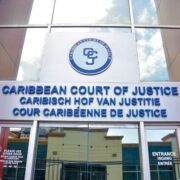
CCJ Ruling Could Decide Fate Of High-Profile Guyana Extradition Case

News Americas, NEW YORK, NY, Weds. April 22, 2026: A high-profile extradition case involving Guyana opposition leader and Azruddin Mohamed and his father, remains in legal limbo as the Caribbean Court of Justice, (CCJ), prepares to deliver a ruling that could determine whether proceedings against them can move forward.

The region’s highest court on Tuesday confirmed that an interim stay on the extradition of the Guyana opposition leader and his father, businessman Nasar Mohamed, will remain in place until a final judgment is handed down, effectively halting proceedings before the Georgetown Magistrates’ Courts for now.

At the heart of the case is a legal dispute over whether the extradition process was compromised at its earliest stage, raising broader questions about fairness, due process, and the limits of executive authority in such matters.

Attorneys representing the Mohameds argued before the seven-member CCJ panel that the issuance of the Authority to Proceed, (ATP), by the Minister of Home Affairs was tainted by bias, potentially undermining the legitimacy of the entire extradition process. Senior Counsel Fyard Hosein, appearing for the appellants, maintained that the minister’s decision must meet established standards of procedural fairness. He argued that if bias exists at this preliminary stage, it could invalidate all subsequent steps in the process.

However, members of the CCJ bench, led by President Justice Winston Anderson, repeatedly challenged that position during the hearing, questioning whether concerns about bias could be addressed at later stages, including during committal proceedings or through habeas corpus applications.

Under sustained questioning, the defense acknowledged that no specific unlawful act had been identified beyond the allegation of bias, a point that appeared to weigh on the court’s consideration of the arguments presented.

Adding another dimension to the case, Senior Counsel Roysdale Forde suggested that even if bias were proven, the law allows for the delegation of ministerial authority. He indicated that the process could continue under a different decision-maker rather than being brought to a complete halt.

Attorneys representing the state strongly rejected the claims of unfairness, arguing that the minister’s role in issuing the ATP is administrative in nature and limited to determining whether any obvious legal barriers exist.

Trinidadian Senior Counsel Douglas Mendes, appearing on behalf of Minister of Home Affairs Oneidge Walrond, told the court that the applicants had effectively engaged with the minister’s office prior to the issuance of the ATP, suggesting acceptance of her role in the process. Mendes emphasized that the minister does not assess the merits of the case at this stage but instead performs a threshold function to determine whether the extradition request can proceed.

Guyana Attorney General, Anil Nandlall, supported that position, describing extradition as a “sui generis” process governed by international obligations and distinct from ordinary domestic legal proceedings. He also dismissed concerns about his public commentary on the matter, telling the court that his statements had been taken out of context.

The case has already moved through Guyana’s domestic legal system, with earlier challenges by the Mohameds dismissed in both the High Court and the Court of Appeal.

Now before the CCJ, the outcome is expected to carry significant implications not only for the parties involved but also for how extradition cases are handled across the Caribbean, particularly in relation to procedural fairness and the role of government officials.

With the interim stay still in effect, the proceedings remain stalled – placing increased focus on the court’s pending ruling, which is likely to clarify key legal questions surrounding the balance between executive authority and judicial oversight. As the region awaits the CCJ’s decision, the case continues to highlight the complexities of extradition law and the high stakes involved when legal, political, and procedural issues intersect.

RELATED: Azruddin Mohamed Sworn In As Guyana MP Despite U.S. Sanctions, Indictment And Extradition Case

Leadership Insights: The Power Of Relationships In Decision-Making

By Dr. Isaac Newton

News Americas, NEW YORK, NY, Mon. April 20, 2026: After years of absence, a mentor posed a question that resisted an immediate answer: How do we engage with each other and the wider world if not through relationships? It did not feel like a request for information. It felt diagnostic. Beneath its simplicity lies an unsettling implication: much of what we call engagement may, in fact, be performance, transaction, or control, each imitating relationship while quietly replacing it.

Relationships are not merely part of how we engage the world. They are the only way we do. Every decision, every exchange, and every system we build is carried along invisible currents of trust, perception, and shared meaning. Even in the most technical domains, strategy moves through conversation, authority rests on belief, and execution depends on alignment that cannot be forced into being. Remove relationship, and what remains is not efficiency but resistance, not progress but strain.

The evidence is not argued; it is lived. The longest running longitudinal study on human flourishing found that the clearest predictor of life satisfaction is not wealth, intelligence, or achievement, but the quality of close relationships. Neuroscience arrives at the same conclusion from another direction. The human brain is organized for connection. It registers safety through belonging and threat through isolation. Even judgment, often described as rational, is shaped by networks of trust and social context. Where trust is present, complexity becomes navigable. Where it is absent, even simple coordination begins to unravel.

Yet, the modern world is increasingly structured against the very medium on which it depends. We have built systems that scale productivity but not presence, and networks that expand reach but dilute depth. Communication is constant, while understanding is sporadic. In organizations, relational work is treated as secondary to measurable output, even though it is the condition that makes meaningful output possible. The result is a quiet fragility. Performance holds until pressure reveals what connection was never built to sustain.

RELATIONSHIPS

Relationships do not glide toward strength; they recede without attention. They require presence that cannot be automated, attention that cannot be outsourced, and a willingness to remain when convenience suggests withdrawal. This is why they are universal, yet uncommon in their maturity. Everyone participates in them, yet few cultivate them with the discipline they demand. The cost is cumulative: trust thins, misalignment grows, and the capacity for shared progress weakens.

For leaders, this reframes the work entirely. The task is not only to decide, but to create the conditions in which decisions can be understood, trusted, and carried forward. Influence does not move through authority alone; it moves through relationship. This requires a shift from control to connection, from communication as delivery to communication as shared understanding. It calls for environments in which people are seen clearly enough to contribute and engaged deeply enough to grow. Such environments are not accidental; they are formed through consistent acts of attention, clarity, and integrity.

If relationships are the medium of all engagement, then their quality becomes the measure of both leadership and life. Every interaction carries weight. Every exchange shapes what becomes possible next. The question is no longer whether relationships matter. It is whether we recognize, before it is too late, that nothing meaningful in our lives has ever happened outside of one.

Editor’s Note: Dr. Isaac Newton is a leadership strategist and change management expert specializing in governance and ethical leadership. Educated at Harvard, Princeton, and Columbia, he is co-author of Steps to Good Governance and has advised boards, educators, and public leaders across the Caribbean and internationally, integrating policy, psychology, and ethics to strengthen institutional performance.

RELATED: CARICOM Governance Under Scrutiny: Why Process and Legitimacy Matter In Regional Leadership

US Travel Warning Issued For Trinidad and Tobago

News Americas, PORT OF SPAIN, Trinidad, Mon. April 20, 2026: The United States has renewed its travel advisory for Trinidad and Tobago, urging travelers to reconsider travel due to ongoing concerns about crime and public safety.

The updated advisory, issued April 13th, comes amid heightened security measures in the twin-island nation following recent violent incidents, including the killing of a municipal police officer in San Fernando.

In response, the Ministry of Defence confirmed that the Trinidad and Tobago Defence Force has moved to an “elevated operational posture” to support ongoing investigations and national security efforts.

The US State Department advisory also follows the government’s declaration of a nationwide State of Emergency on March 2nd, aimed at addressing a spike in violent criminal activity that authorities say could threaten public safety. Under the State of Emergency, law enforcement agencies have been granted expanded powers, including the ability to arrest individuals on suspicion, conduct searches of properties, and suspend bail for certain offenses.

While officials note that crime levels have declined compared to previous years, concerns remain, particularly in parts of Trinidad. Tobago continues to experience lower crime rates. As of early April 2026, Trinidad and Tobago is experiencing a high-stakes struggle with violent crime, including a reported 92 murders by April 4th, prompting a State of Emergency declared on March 2nd to combat escalating violence. Despite initial reports claiming a sharp decrease in the number, and conflicting reports suggesting a surge in January, the country faced 11 deaths in the first 24 hours of 2026

The U.S. advisory highlights specific areas in Port of Spain where government personnel are restricted from traveling, including Laventille, parts of Charlotte Street, Piccadilly Street, Besson Street, and communities such as Beetham and Sea Lots. Additional restrictions apply at night in areas including downtown Port of Spain, beaches, Fort George, and the Queen’s Park Savannah.

The advisory also warns of a potential risk of terrorist activity, as well as limited access to healthcare services in rural areas across both islands. Travelers are being urged to exercise increased caution, remain aware of their surroundings, avoid displaying signs of wealth, and take additional safety precautions, particularly at night.

Authorities in Trinidad and Tobago have emphasized that security operations remain ongoing, and the situation continues to be monitored closely, with the potential for changes to restrictions under the State of Emergency.

The renewed advisory underscores ongoing concerns about safety and security in the Caribbean nation, even as officials continue efforts to stabilize conditions and reduce crime.

The travel advisory comes also on the heels of Trinidad and Tobago Prime Minister Kamla Persad-Bissessar close alignment with U.S. President Donald Trump on security and anti-drug trafficking initiatives. She has supported U.S. military actions in the Caribbean and Venezuela, resulting in meetings, such as at the Shield of the Americas Summit.

3.3 Million Cases Later – What Justice Looks Like in America’s Immigration Courts

By Felicia J. Persaud

News Americas, NEW YORK, NY, Sun. 19, 2026: America’s immigration system is often described as “broken.” But that word does not quite capture what is happening inside U.S. immigration courts right now. Because what we are witnessing is not just dysfunction. It is delay – on a scale so large that it is quietly reshaping what justice even means.

According to new data from the Transactional Records Access Clearinghouse (TRAC), there are now more than 3.3 million cases pending in U.S. immigration courts as of February 2026.

Let that number sit for a moment.

More than three million people – families, workers, asylum seekers – are waiting for a decision that will determine whether they can stay in the United States or be forced to leave. And many of them will wait not months, but years. In fact, more than 2.3 million of those cases involve asylum seekers, people who have come to the United States seeking protection from violence, persecution, or instability in their home countries.

Yet, the narrative around immigration continues to focus on crime. But the data tells a very different story. Only 1.64% of new immigration court cases involve any alleged criminal activity, beyond possible illegal entry.

That means the overwhelming majority of people caught in this system are not criminals. They are waiting. Waiting for a hearing. Waiting for a decision. Waiting for a future that remains indefinitely on hold. And that waiting comes at a cost.

It means children growing up in uncertainty. Parents unable to plan their lives. Workers unsure if they will be allowed to remain in the country they are helping to sustain.

This is not just a legal backlog. It is a human one. Because justice delayed, as we have long been told, is justice denied.

But in immigration courts, delay has become the system itself. As TRAC noted: “The latest case-by-case Immigration Court records show that at the end of February 2026, the Immigration Court backlog stands at 3,318,099 active cases, a decrease from the 3,377,998 cases pending at the end of December 2025. The court has closed 333,957 cases so far in fiscal year 2026 as of February 2026, while receiving 201,878 new cases during the same period. This represents a case completion rate of approximately 1.65 times the rate of new case intake.”

And the consequences are not evenly felt.

Black and brown immigrants – including those from the Caribbean and across the African diaspora – are disproportionately caught in this limbo, navigating a process that is often complex, under-resourced, and increasingly politicized.

At the same time, enforcement continues. New cases are filed. Detentions increase. Deportation efforts expand. But the system tasked with deciding these cases cannot keep up.

The result is a growing gap between enforcement and resolution – a space where people exist not as citizens or non-citizens, but as something in between.

Waiting. Uncertain. Unresolved. And that raises a deeper question. What does justice look like when it takes years to arrive?

Because immigration policy is often framed around who should be allowed to stay and who should be removed. But far less attention is paid to what happens in between.

What happens when millions of people are left in legal limbo, neither accepted nor rejected?

What happens when a system meant to deliver decisions becomes a system defined by delay?

The answer is already unfolding. A generation of immigrants living in uncertainty. A court system under strain. And a definition of justice that is slowly being stretched beyond recognition.

Because when more than three million cases are waiting to be heard, the issue is no longer just immigration.

It is whether the system designed to deliver justice can still do so at all.

Felicia J. Persaud is the founder and publisher of  NewsAmericasNow.com, the only daily syndicated newswire and digital platform dedicated exclusively to Caribbean Diaspora and Black immigrant news across the Americas.

RELATED: Caribbean Immigrants Helped Build America Too