Posts

The Mirror – America At 250

By Dr. Isaac Newton

News Americas, NEW YORK, NY, Weds. July 8, 2026: A mirror never raises its voice. It never takes sides. It never rewrites yesterday. It simply tells the truth. America at 250 does not need another celebration first. It needs a solitary moment before the mirror. Birthdays count years; mirrors reveal character.

The mirror shows a nation that declared human equality, shaped constitutional democracy, expanded scientific discovery, welcomed generations seeking freedom, and proved that ordinary people can build extraordinary lives. The same mirror also reveals slavery, the displacement of Indigenous peoples, racial injustice, exclusion, and moments when power moved faster than principle. Neither image cancels the other. Both remain in the same reflection. Wisdom begins when a people refuse to edit what they see.

The mirror shows every great nation leaving two footprints. One marks where it lifted humanity. The other marks where humanity stumbled. America carries both. Its highest moments have strengthened hope across the world. Its lowest moments remind us that freedom survives only when it is practiced, not proclaimed. A republic is not measured by the purity of its words, but by the persistence of its commitments.

The mirror shows that America was never written by one people alone. It was shaped by many hands across many shores. Caribbean immigrants stand among its unseen builders. They healed the sick, taught the young, defended communities, created businesses, served in uniform, enriched music, literature, science, sports, and public life, and strengthened neighborhoods through discipline, faith, and resilience. They did not simply arrive in America. They expanded it. Their presence reminds us that a nation grows stronger every time it makes room for another person’s contribution.

The mirror shows that families survive because they keep two records. One preserves joy. The other preserves pain and recovery. Families that honor both remain honest. Nations are no different. Celebration without truth becomes illusion. Truth without hope becomes exhaustion. Strength emerges where honesty and hope refuse to separate.

The mirror offers no verdict. It offers an invitation. It asks every generation one enduring question: what will your reflection add? Justice or division? Courage or fear? Compassion or indifference? A nation cannot change what it has been, but it can shape what it becomes. Every child inherits not only a country, but its reflection.

The mirror at 250 does not mark an ending. It marks the beginning of a harder honesty. The reflection is unfinished. So is the story The most faithful nations are not those that avoid looking. They are those that refuse to look away.

And this is the question the mirror never stops asking: the future will not ask how brightly America celebrated its 250th birthday. It will ask what America had the courage to see when it stood before the mirror.

EDITOR’S NOTE: Dr. Isaac Newton is an international leadership strategist, governance consultant, theologian, and author of Face Life Squarely, Fix It Preacher, and Intimate Intimacy. He is coauthor of Steps to Good Governance and Daring to Hope, and author of the forthcoming When Nations Kneel and The Belief Code. His work equips leaders to unite truth, integrity, and hope in service of stronger institutions and a more just world.

RELATED: One Wallet Across The Caribbean: Rethinking Payments For Growth And Connection

CARICOM And The EU Face The Same Global Paradigm Shift

By Keith Bernard

News Americas, NEW YORK, NY, Tues. July 7, 2026: Two regional blocs – CARICOM and the EU – an ocean apart and vastly different in scale, are wrestling with the same underlying force this year: disruptive change born of a genuine paradigm shift in the global order.

In Europe, officials at the European Central Bank have openly described the emergence of a new global paradigm – one in which the rule of law is increasingly challenged by the rule of power. The old assumptions no longer hold. Trade shocks that once would have triggered predictable retaliation instead produce unexpected outcomes, as seen when the euro appreciated against the dollar following US tariff hikes rather than depreciating as models forecast. Europe’s dependence on the United States, China and Russia is narrowing its room to maneuver, even as it tries to build strategic autonomy in energy, defense and digital payments. The EU is not simply facing a rough patch; it is being asked to rewire the assumptions on which sixty years of integration were built.

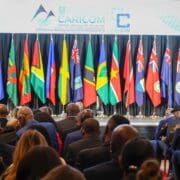
CARICOM faces its own version of the same storm. At the recent 51st Meeting of the Conference of Heads of Government in St. Lucia, the Secretary-General urged member states to treat the current volatility not as a barrier but as an opportunity to recommit to regional integration. Earlier this year, the outgoing Chairman put it plainly: climate shocks are arriving faster than financing mechanisms can respond, criminal networks are adapting faster than regional institutions, and technological disruption is reshaping economies faster than regulatory frameworks can keep pace. That is not a description of a temporary setback. It is a description of a paradigm shift – the ground itself moving beneath the region’s feet.

What ties these two stories together is this: disruptive change of this kind cannot be managed with yesterday’s playbook. Incremental adjustment, more meetings, and more communiqués will not suffice when the underlying rules of trade, security and cooperation have genuinely changed. Both the EU and CARICOM are, to their credit, beginning to recognise this. Europe is talking about strategic autonomy and a savings and investments union. CARICOM is talking about deepening the Single Market and Economy, welcoming new associate members, and giving ordinary citizens a stronger voice in regional decisions.

But recognition is not the same as transformation. The real test for both blocs in the months ahead will be whether they can move from language about resilience to structural change that matches the scale of the shift they are living through. History does not reward institutions that mistake a paradigm shift for a passing storm.

EDITOR’S NOTE: Keith Bernard is a Guyanese-born, NYC-based analyst and a frequent contributor to News Americas.

RELATED: Can Massy’s US$75M Guyana Hub Succeed Without Reliable Power?

Should Folarin Balogun Have Stood Down For America?

Commentary By Felicia J. Persaud

News Americas, NEW YORK, NY, Tues. July 7, 2026: Folarin Balogun had every legal right to take the field for the United States against Belgium. The harder question is whether he should have.

Days before the United States’ World Cup Round of 16 match, President Donald Trump personally called FIFA President Gianni Infantino and asked for a review of the red card that threatened to keep Balogun out of the match. FIFA later lifted the one-match suspension, placing Balogun on probation and allowing him to face Belgium. Trump said he sought a review but did not dictate the outcome; FIFA has maintained that its judicial bodies operate independently. The reversal nevertheless triggered international criticism and questions about political influence over the sport’s disciplinary process.

Then came an uglier intervention from Trump’s own political universe. Former Trump adviser Steve Bannon called Balogun an “anchor baby,” questioned whether he was truly an American citizen and asked whether the U.S. national team genuinely represented the United States.

“I’m not sure that he’s an American citizen,” Bannon said during the July 6 edition of War Room, before broadening his attack to question the racial and immigrant composition of both the American and French national teams. The remarks were not merely offensive noise from the sidelines. They went directly to the constitutional contradiction surrounding Balogun’s presence in an American jersey.

A Birthright Citizen Playing For America

Rudi Garcia manager of Belgium talks to Folarin Balogun of the United States after the FIFA World Cup 2026 Round of 16 match between USA and Belgium at Seattle Stadium on July 6, 2026 in Seattle, Washington. (Photo by MB Media/Getty Images)

Balogun was born in New York City to Nigerian parents and raised largely in England. His birth on American soil made him a U.S. citizen, and he later chose to represent the United States internationally. That fact became especially significant during this World Cup because the Trump administration had been fighting to restrict birthright citizenship for some children born in the United States to parents who are unlawfully or temporarily present.

On June 30, the U.S. Supreme Court rejected that effort in Trump v. Barbara, preserving the constitutional guarantee at the center of the national debate. The Court’s ruling came just days before Trump intervened with FIFA on behalf of a U.S. soccer star whose own American story begins with birthright citizenship.

The irony is difficult to miss. The President who sought to narrow birthright citizenship personally intervened to help a birthright citizen return to the field for America. Then one of the most influential voices in the MAGA movement used a slur to question whether that same player was American enough to represent the country.

So perhaps the question is larger than whether Balogun deserved to play against Belgium. Perhaps the question is whether he should have chosen not to.

Should Balogun Have Stood Down?

Imagine the statement Balogun could have made if he stood down. He could have said that while he welcomed a fair review of the red card, he would not accept extraordinary political intervention on his behalf while the citizenship principle underlying his own American identity remained under attack.

He could have said that if his American birth was good enough when the country needed goals, it should be good enough when the country writes its laws. He could have said that no politician gets to celebrate the usefulness of a birthright citizen on Monday while political allies question that citizen’s legitimacy on Tuesday.

And then he could have stood down. Not because Belgium demanded it; not because FIFA ordered it; not because he was admitting the red card was correct. But because sometimes the most powerful act available to an athlete is refusing to allow his body, talent and identity to be used as a convenient symbol by people unwilling to defend the principle that made his American story possible.

He did not.

But Are We Asking Too Much Of Balogun?

This is where the argument becomes uncomfortable. Of course, Balogun did not create America’s immigration crisis. He did not write Trump’s executive order. He did not ask Bannon to attack his citizenship. He did not call the FIFA president. And no Black and immigrant heritage athlete should automatically be required to become a civil-rights spokesman simply because powerful men decide to politicize his existence.

There is a long and troubling history of expecting Black athletes to carry moral burdens that institutions, politicians and governing bodies refuse to carry themselves. Muhammad Ali paid dearly for refusing induction into the U.S. military during the Vietnam War. Tommie Smith and John Carlos were vilified after raising gloved fists at the 1968 Olympics. Colin Kaepernick became a national target after kneeling during the anthem to protest racial injustice.

History often celebrates courage long after punishing the people who displayed it. So it may be unfair to sit comfortably outside Balogun’s locker room and declare what sacrifice he should have made in the middle of the biggest tournament of his life. He is a footballer.; he had trained for this moment; his teammates needed him; his country expected him to play.

And yet the question remains.

America Wanted His Goals

The United States wanted Balogun on that field. Trump wanted the red card reviewed. American fans wanted their striker restored. The national team wanted one of its most dangerous attacking players available against Belgium.

FIFA’s decision made that possible, though the reversal drew criticism from European football authorities and Belgium, and Belgium later defeated the United States 4-1. But while America debated whether Balogun could help it win, Bannon was debating whether Balogun belonged to America at all. That is the contradiction.

America wanted his speed; America wanted his goals; America wanted his body in the national jersey. But when a prominent political figure reduced him to an “anchor baby” and questioned his citizenship, where was the equally forceful national defense of his right to belong?

Where were the voices saying that Balogun was not an accidental inconvenience to America, but an American citizen?; Where was the outrage from those who were so eager to get him back onto the field?

Maybe The Failure Was Not Balogun’s

Perhaps Balogun should not have stood down or perhaps America should have stood up. Perhaps the greater failure belongs to a political culture that can treat immigrants and their children as threats in one context and national assets in another.

The country cannot celebrate a birthright citizen when he scores and then remain silent when his citizenship is demeaned. It cannot ask him to wear the crest, sing the anthem, absorb the tackles, carry the expectations of millions and represent the nation before the world – while influential voices question whether someone with his biography is authentically American.

And it cannot ignore the timing. Just days before Balogun took the field against Belgium, the nation’s highest court had ruled on a direct challenge to the meaning of citizenship by birth in America. The same constitutional debate that can seem abstract in a courtroom was suddenly standing in boots on a World Cup field.

Balogun was not merely a striker. Whether he wanted the role or not, he had become a living illustration of the argument.

The Stand That Was Missed

There would have been extraordinary power in Balogun saying no. Not no to America but no to hypocrisy. No to being useful when goals were needed and suspect when immigration politics demanded a target.

No to presidential intervention without presidential consistency; no to the idea that citizenship can be celebrated selectively depending on whether the citizen is helping the country win.

But there is also something deeply unfair about demanding that a 25-year-old athlete solve a contradiction created by presidents, courts, political operatives, and a nation still fighting over who belongs. So I will not call Balogun a coward for playing. I will not blame him for taking the field; I will not join those mocking him or the rest of the U.S. team after the loss to Belgium.

Instead, I will ask the question America should be asking itself: why was Folarin Balogun expected to prove his value to America on a soccer field when America still struggles to prove that it values people whose citizenship stories look like his?

Maybe Balogun should have stood down. Maybe he should have seized the moment and said something history would remember long after the scoreboard faded. But perhaps the more damning truth is this: America – and Donald Trump – wanted Balogun to stand up for the national team even as his own American identity was attacked and questioned. That is the issue that survives the final whistle.

EDITOR’S NOTE: Felicia J. Persaud is a Guyana-born media entrepreneur, founder of News Americas NowHard Beat CommunicationsInvest CaribbeanCaribPR Wire, and AI Capital Exchange.

Guyana’s Oil Boom, The President’s Farm And The Case For Transparency

Commentary By Felicia J. Persaud

News Americas, NEW YORK, NY, Mon. July 6, 2026: A country can post spectacular GDP growth while ordinary households still struggle to make the numbers work. It can export billions of dollars in oil while wages lag behind the cost of food, housing, transport and daily survival. It can celebrate billion-dollar infrastructure while families quietly recalculate what they can afford each month. That is the contradiction at the heart of Guyana today. It is why the explosive claims now swirling around its president, Irfaan Ali, and his private agricultural operation cannot be dismissed as merely another political quarrel between the government and the opposition.

In a country where citizens are being asked to celebrate historic national prosperity while many households remain under intense financial pressure, questions about wealth, access and transparency at the highest levels of power inevitably carry greater weight. But this story demands care – because it cuts in more than one direction.

What Is Alleged

On Sunday, July 5, Opposition Leader Azruddin Mohamed released a 24-minute video on his Team Mohamed Facebook page claiming President Ali owns a GY$2.2 billion “ranch” investment off the Soesdyke-Linden Highway – a 150-acre estate he claims was developed in just three years and could “never” be substantiated by a presidential salary of roughly GY$3.7 million per month, according to reporting by both the Demerara Waves and Kaieteur News.

Mohamed’s video described poultry tunnel houses feeding 80,000 chickens, Brazilian cattle, black belly sheep, aquaculture, a two-storey concrete ranch house, a swimming pool, a GY$75 million road and a GY$55 million electricity network. He contrasted it pointedly with the nearby village of St. Cuthbert’s Mission, which he said has for decades received electricity only a few hours a day.

What The President Says

President Ali then firmly denied any wrongdoing but confirmed he owns the farm. According to the Guyana Chronicle and News Room, Ali says the property was acquired long before he assumed office in 2020 – a claim he states is verifiable through banking records and official documentation – that it was properly declared to the Integrity Commission, and that it has never received state funds, public resources, or preferential government treatment.

The President has gone further, alleging that the accusations are themselves the product of an attempted shakedown. He says he holds text messages from Nazar “Shell” Mohamed – the Opposition Leader’s father – as recently as last week, indicating that recordings about his farm would be released unless “amends” were made between him and the Mohamed family. Ali has said he is willing to make those communications public.

It is a critical piece of context that Azruddin and Nazar Mohamed have themselves been sanctioned and criminally charged by the United States for alleged wire fraud, mail fraud, and money laundering tied to their gold-trading business. Nazar Mohamed has rejected the blackmail allegation outright, telling Kaieteur News: “I categorically reject the president’s claim that I attempted to blackmail him,” and challenging Ali to release the full communication.

In other words, the opposing sides are accusing each other. Both insist they have nothing to hide. Both are inviting the public to judge.

Where The Answer Should Live

The President’s own defense points to exactly where the truth can be found. Ali says the farm predates his 2020 presidency – that he acquired it before assuming office, financed it in part through loans, and declared it to the Integrity Commission as the law requires. He has said the acquisition and the source of funds are “capable of verification through the relevant financial and regulatory records.”

If that is so, then the central question ordinary Guyanese are asking – how a private estate of this scale was financed – already has a documented answer sitting in official files. Making the relevant evidence available for credible independent verification would be the fastest way to answer the central questions.

The Integrity Commission is the body legally responsible for holding and verifying public officials’ asset declarations. At the time of writing, however, the Commission’s public website (integritycommission.gov.gy) was returning a server error and could not be accessed – a small but telling illustration of how difficult independent verification can be for an ordinary citizen who simply wants to check the record for themselves.

That is the deeper issue beneath the political theatre. In a nation newly awash in oil money, transparency cannot be a matter of competing Facebook videos. It has to be a matter of accessible, verifiable public record. Both the President and his accusers say they welcome scrutiny. The documents – loan records, the declaration on file, the paper trail Ali says is robust – are how that scrutiny is satisfied.

The Bigger Question

Here is why this matters beyond the political theatre.

The President’s accusers have made serious claims that remain allegations and must be tested against evidence – not accepted because they are loud, nor dismissed because their source is compromised. Equally, the President’s denials are detailed and specific, and if the paper trail is as robust as he says, it should be a straightforward matter to place it before credible, independent eyes.

Public office in an oil-rich nation demands a higher standard of transparency than a Facebook video on one side and a Facebook rebuttal on the other.

Guyana is one of the world’s most extraordinary economic growth stories. Offshore oil production from the Stabroek Block has transformed the country’s fiscal position, accelerated public investment and produced growth rates that have made Guyana the envy of much of the hemisphere. ExxonMobil is on track to fully recover its entire $55 billion investment program before this year is over. But GDP is not a household budget.

The more revealing comparison is between what people earn and what it costs them to live. Wage.is estimates Guyana’s minimum wage at approximately GY$347 an hour, or about US$1.66, with average gross monthly earnings of roughly GY$100,000 and median monthly income estimated at about GY$50,000. These figures should be read as estimates rather than a complete official portrait of household income across the country.

Against that, Numbeo’s latest cost-of-living data estimates monthly expenses for a single person at approximately GY$192,000, excluding rent. Its rental data places a one-bedroom apartment at roughly GY$183,571 per month in a city center and GY$128,282 outside the center. Numbeo is crowdsourced, so the figures should be treated as indicators rather than official measures. Even with that caveat, the affordability question is difficult to avoid: how does a worker earning GY$50,000, GY$100,000 or even somewhat more absorb the combined cost of housing, food, transport, utilities and basic necessities?

That is the arithmetic many Guyanese are doing every month. And it is against that backdrop that they are now reading allegations about a private agricultural estate, said by an opposition leader to be worth GY$2.2 billion – an estimate the President disputes through his broader denial of wrongdoing and his account of prior ownership, financing, and lawful declaration.

The contrast does not prove corruption. It proves why transparency matters. When citizens experience a widening distance between spectacular national wealth and their own household purchasing power, questions about asset accumulation at the highest levels of public office become inevitable. Those questions should not be treated as evidence of guilt. But neither should they be dismissed as impertinence.

Whether the farm was acquired before the presidency, financed through legitimate loans or private investors, expanded through lawful private investment, and properly declared are questions capable of documentary answers. The President says those records exist. If so, credible independent verification would serve both the public interest and his own defense.

This is not about resenting private success. Nor is it about pretending that a presidential salary is necessarily the only lawful source of wealth available to a public official. It is about recognizing the political reality of an oil-boom economy in which many citizens still feel that their wages cannot keep pace with the cost of living.

A nation can become richer on paper while its people feel poorer at the checkout counter. That gap – between macroeconomic triumph and household reality – is where distrust grows. That is the context in which Guyanese are now weighing competing claims about the President’s farm. Whether the explanation is prior ownership, bank financing, lawful private enterprise, or something else entirely, the public should not be asked to choose between accusation and denial when documentary evidence can answer the central questions.

A nation cannot ask its people to celebrate world-leading growth while household incomes struggle to keep pace with the cost of basic living, and then suggest that questions about wealth at the highest levels of power are out of bounds. Nor should serious allegations be accepted uncritically simply because they are politically explosive – particularly when those making them face significant legal controversies of their own.

The way out is the same for everyone involved: disclosure, documentation and independent verification. Let the lenders, the Integrity Commission and the records speak. Guyanese citizens should not be forced to choose between competing political narratives when evidence can establish the facts.

The truth, whatever it is, should survive the daylight.

EDITOR’S NOTE: Felicia J. Persaud is a Guyana-born media entrepreneur, founder of News Americas NowHard Beat CommunicationsInvest CaribbeanCaribPR Wire, and AI Capital Exchange.

RELATED: Guyana At 60: The Oil Is Flowing. So Why Are Guyanese Buying Tennis Rolls On Credit?

Guyana – Transforming Challenges into Opportunity – A Self-Reinforcing Strategy Shaped by Geography

By Ron Cheong

News Americas, TORONTO, Canada, Mon. July 6, 2026: This article was prompted by Guyana’s eastern neighbor, Suriname, and what appears to be its increasingly assertive posture. First came new charges on Guyanese vessels plying the Corentyne River. Then came uncertainty surrounding the long-discussed bridge across the river. Suriname continues to assert jurisdiction over the entire Corentyne rather than the internationally accepted thalweg principle, under which river boundaries generally follow the deepest navigable channel.

More recently, statements from Paramaribo suggest that Suriname may be moving away from the previously agreed joint bridge project in favor of financing, constructing and operating the bridge independently – an ambition that raises practical as well as financial questions.

To the west lies a different challenge. Venezuela recently suffered a devastating double earthquake. Guyana responded as a good neighbor should, expressing sympathy and dispatching rice and other relief supplies. Venezuela’s acting president publicly acknowledged Guyana’s solidarity.

Yet, this welcome humanitarian cooperation exists against the backdrop of a decades-long territorial controversy in which Venezuela continues to claim approximately two-thirds of Guyana’s territory. The earthquake has understandably shifted immediate attention, but it would be unwise to assume that the underlying dispute has disappeared.

At first glance, these appear to be two unrelated problems requiring two separate responses. But what if they are not?

What if both are manifestations of a broader strategic reality created by Guyana’s geography? More importantly, what if the most effective response is not a series of isolated policies but a single, layered national strategy in which diplomacy, infrastructure, economic development and geography reinforce one another?

It is often said that the Chinese word for “crisis” combines the ideas of danger and opportunity. Linguists dispute that literal interpretation, but the metaphor remains compelling because it captures an enduring truth: moments of uncertainty can become turning points from which different futures emerge.

Guyana today stands at such a moment.

Looking North And South

Before returning to Guyana’s eastern and western challenges, it is worth looking north and south. For centuries, Guyanese have lived by reshaping geography. Much of the populated coastal plain lies at or below high-tide level, protected by an intricate system of sea defenses, canals, kokers and drainage works first developed by the Dutch and refined over generations.

To the south lies the country’s vast interior of forests and savannahs. Historically, much of this region has been difficult to access except by air or river. For decades there has been discussion of an all-weather highway linking Guyana to Brazil, opening the interior while providing northern Brazil with another route to the Atlantic.

These are not merely geographic challenges. They are opportunities waiting to be realized. Guyana’s geography also provides exceptional advantages.

It is the only English-speaking nation on the South American mainland. It occupies a strategic location just north of the Equator that is increasingly attractive for modern communications infrastructure. It sits upon the ancient Guiana Shield – one of the world’s most stable geological formations – well removed from major earthquake zones and south of the Atlantic hurricane belt.

Its extensive forests have allowed Guyana to pioneer a Low Carbon Development Strategy and become one of the first countries to monetize the preservation of its forests through carbon credits. At the same time, centuries of experience managing a vulnerable coastline have given Guyana valuable expertise in climate adaptation and coastal engineering – knowledge that can strengthen cooperation with Caribbean neighbors facing many of the same challenges from rising sea levels.

In short, Guyana’s geography presents both constraints and advantages. The challenge is to transform one into the other.

Strategic Development Rather Than Tit-for-Tat

The change of government in Suriname has undoubtedly brought a more nationalistic tone to relations with Guyana. Nevertheless, it would be premature to conclude that Suriname has adopted a permanently hostile posture. These developments may reflect a different negotiating style, domestic political priorities, or concerns about Guyana’s rapid economic ascent.

Whatever the explanation, Guyana should resist the temptation to respond emotionally or reciprocate every unfriendly gesture. The larger objective should be to make Guyana so economically valuable, regionally connected and internationally respected that cooperation becomes the rational choice for all its neighbors.

One project that illustrates this philosophy is the proposed all-weather road to Brazil. This is not an anti-Suriname initiative. Nor is it directed against Venezuela. It is an investment in Guyana’s own strategic resilience.

Such a corridor would improve access to hinterland communities, diversify trade routes, strengthen links between the Caribbean and northern South America, encourage logistics and manufacturing, and provide Guyana with greater flexibility in responding to future regional developments.

In short, it increases options, and nations with more options generally negotiate from positions of greater confidence.

One Strategy, Many Benefits

The central idea is simple. Each response to an individual challenge should strengthen every other national objective. Better roads improve security; improved security encourages investment; investment supports ports and logistics; logistics diversify the economy; economic diversification strengthens diplomacy, and strong diplomacy reinforces sovereignty.

Rather than treating foreign policy, infrastructure, climate resilience, and economic development as separate agendas, Guyana should pursue them as mutually reinforcing elements of a single coherent national strategy. That is how small states convert limited resources into lasting strategic advantage.

The Vision

Imagine Guyana fifteen years from now – a peaceful, prosperous and united country. A respected defender of international law and the rules-based international order; a nation with strong friendships throughout the Caribbean, constructive relations across South America and growing partnerships around the world; an economy no longer defined solely by oil, but strengthened by agriculture, manufacturing, technology, logistics, transportation, tourism and environmental services.

A gateway between the Caribbean and South America; a leader in climate resilience and sustainable development. History suggests that challenges do not automatically create opportunities. They create the necessity for choices.

Guyana cannot choose its geography; it cannot choose its neighbors. But it can choose how to respond to both. The measure of Guyana’s future will not be determined by the pressures it faces from the east or the west. It will be determined by whether those pressures inspire the investments, institutions and partnerships that transform geography from a constraint into one of the country’s greatest strategic advantages.

EDITOR’S NOTE: Ron Cheong is a frequent political commentator and columnist whose recent work focuses on international relations, economic resilience, and Caribbean-American affairs. He is a community activist and dedicated volunteer with extensive international banking experience. Now residing in Toronto, Canada, he is a fellow of the Institute of Canadian Bankers and holds a Bachelor of Science degree from the University of Toronto.


RELATED: Is A Broader Guyanese Identity Emerging -New Social Realities & Old Political Patterns

Growing Old: My Secret Weapon Against The Robot Apocalypse

From Flatbush To The Backdam: The Reality Check Of Moving “Back Home”

America Turns 250 – Its Financial System Was Built By A Caribbean Immigrant. Now The US Is Arresting Hundreds Of Immigrants A Day

By Staff Reporter | NewsAmericasNow.com

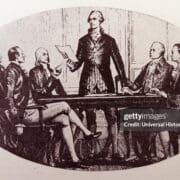
News Americas, WASHINGTON, D.C., Thurs. July 2, 2026: On July 4, 2026, America turns 250 – 250 years of independence from Britain. Across the country, fireworks will light up the sky, speeches will celebrate the American founding, and the names of the Founding Fathers will be invoked with reverence. One of those Founding Fathers was born in the Caribbean.

Alexander Hamilton was born in 1755 on the island of Nevis in the British West Indies – the son of a Scottish merchant father who abandoned his family and a mother who died when Hamilton was thirteen. He grew up poor, orphaned, and Caribbean. He arrived in America as a teenager with nothing but his intellect and his ambition. He left behind the architecture of the American financial system.

Hamilton founded the United States Treasury. He created the national bank. He designed the customs and tax collection system that funded the new republic. He negotiated the assumption of state debts that unified the nation economically after the Revolution. He wrote 51 of the 85 Federalist Papers that explained and defended the Constitution to a skeptical public.

250 Years Later

A statue of the first United States Secretary of the Treasury, Caribbean born Alexander Hamilton, stands in front of the U.S. Treasury September 19, 2008 in Washington, DC. (Photo by Chip Somodevilla/Getty Images)

On the same week that America prepares to celebrate its 250th birthday, federal immigration authorities detained more than 10,000 people in five days – the largest enforcement surge in recent memory, according to a New York Times report, citing internal documents and federal officials.

ICE officers arrested over 2,400 people in a single day last Saturday, June 27th, according to the Times. The detention population inside ICE facilities has jumped nearly 4,000 in recent days, to more than 63,000 people in agency custody. Agency leaders were told to put 80 percent of their officers on arrest operations, seven days a week, the paper reported.

In South Florida – home to one of the largest Caribbean diaspora communities in the United States – immigration attorneys report clients being arrested at routine check-ins, during traffic stops, and on their way to work. A Nigerian nun was arrested on her way to church in South Texas before being released after congressional intervention. A Mexican father of two was arrested on his way to a soccer game in Salt Lake City.

“People don’t want to leave their houses,” Utah immigration attorney Ysabel Lonazco told the Times. “They are afraid to drive to do their grocery shopping. They are just terrified.”

What Hamilton Actually Said

Alexander Hamilton did not leave behind speculation about what he thought of immigration. He left behind his actual words. In Federalist No. 11, Hamilton wrote about America’s potential as a global economic power – built on industry, commerce, and the talent of people who came to its shores from elsewhere. He argued directly that restricting the flow of people and commerce weakened rather than strengthened the nation.

He wrote that the influx of people from abroad tended to produce favorable effects on labor, industry, and economic growth. He believed, as a matter of economic principle, that a nation’s strength came from the diversity and energy of its population – not from restricting who could contribute to it.

Hamilton knew this not only as a theorist but as a lived reality. He was the Caribbean immigrant who arrived with nothing. He was the proof of his own argument.

The Caribbean Contribution To American History

Hamilton’s story is not unique in the arc of Caribbean contribution to American life – it is simply the most celebrated. The Caribbean diaspora has built communities, businesses, institutions, and careers across the United States for generations. Caribbean immigrants and their children have served in every branch of the American military, founded companies, led universities, practiced medicine, argued cases before the courts, and yes – built the financial systems that power the American economy.

As ICE arrests surge to 2,400 a day and Caribbean families across South Florida, New York, Boston, and Atlanta navigate an immigration enforcement environment of unprecedented intensity – the 250th anniversary of American independence is a moment worth pausing over. The man whose face appears on the $10 bill was a Caribbean immigrant who arrived with nothing. What he built is what America is celebrating this July 4th.

RELATED: US Supreme Court Preserves Birthright Citizenship: What Caribbean Immigrants Need To Know

Can Massy’s US$75M Guyana Hub Succeed Without Reliable Power?

By Keith Bernard

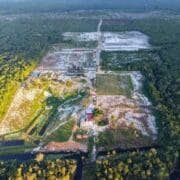
News Americas, NEW YORK, NY, Tues. June 30, 2026: The recent groundbreaking ceremony for Massy Holdings’ US$75 million Massy Hub at Houston, East Bank Demerara, in Guyana was celebrated with considerable fanfare – ministers, executives, and the kind of optimism that oil-boom Guyana has grown accustomed to projecting. But amidst the ribbon-cutting, shareholders of this publicly listed company – on both the Trinidad and Tobago and Jamaica Stock Exchanges – would be prudent to ask a question that went conspicuously unaddressed: who will reliably power this facility?

The Massy Hub, as announced, is a 190,000-square-foot state-of-the-art warehouse featuring advanced automation, an Automated Storage and Retrieval System (ASRS), temperature-controlled storage, 15 container receiving bays, and 28 dispatch bays – technology that is entirely dependent on a stable, uninterrupted electricity supply. The facility is scheduled for completion by 2028, an 18-month construction window. Yet the energy infrastructure needed to sustain such a facility does not yet exist in Guyana in any reliable form, and by even the most optimistic official projections, it will not for some time to come.

Guyana’s power supply remains among the most expensive and least reliable in the Caribbean region. The country currently pays electricity costs approaching US$0.32 per kilowatt-hour – among the highest in the region – and has been forced to rent two Turkish power ships from Karpowership International at a reported combined daily cost of approximately US$235,000, simply to prevent routine blackouts. As recently as March 2026, Guyana extended that power ship contract, with the Minister responsible acknowledging plainly: “If we don’t, you would get blackout.” That is not the energy backdrop one would choose for a facility dependent on warehouse automation, climate control, and precision logistics.

The government’s solution to this crisis – the US$1.9 billion Gas-to-Energy (GtE) project at Wales on the West Bank of Demerara – has been the subject of repeated, compounding delays since its original completion target of end-2024. A contractor dispute requiring adjudication, on-site soil complications, and transmission infrastructure challenges have repeatedly pushed the timeline forward. The government’s Finance Minister, Dr. Ashni Singh, has acknowledged that the timeline has shifted to end-2026 for a “simple cycle” of approximately 228 megawatts – not the full 300 megawatts of combined-cycle generation originally promised. Full operational capacity, requiring the two steam turbines, is not projected until mid-2027 at the earliest. Phase II of the project – needed to fully meet Guyana’s surging electricity demand – remains in the proposal stage, with gas volumes from the Hammerhead project not expected until 2029. Meanwhile, the Amaila Falls Hydropower Project has only recently gone back out to Request for Proposals.

Put plainly: by the time Massy’s Houston Hub is completed and operational in 2028, Guyana’s electricity grid may only just be stabilizing at the Phase I level – a single cycle plant that, if history holds, will face transmission and distribution constraints of its own. Full energy sufficiency remains years away.

Massy’s Q2 FY2026 results, covering the six months to 31 March 2026, show the Guyana segment contributing approximately 27% of Group profit before tax – a significant and growing share. Third-party revenue from continuing operations grew 7.4% year-on-year to TT$8.51 billion, and Guyana specifically recorded 16% revenue growth within the Integrated Retail Portfolio. The Board has rightly identified Guyana as a strategic growth market. But the same results also show that working capital absorbed cash during the period, with the Board intensifying focus on cash conversion and balance sheet discipline. Total equity stands at TT$8.58 billion, and cash and short-term funds from continuing operations increased to TT$2.0 billion – a resilient position, but one that leaves less margin for capital allocation errors.

A US$75 million commitment – approximately TT$510 million at current rates – is not a trivial line item. This is roughly equivalent to the Group’s entire Financial Services profit before tax for the six-month period, more than six times the capital allocated to previous Guyana warehousing ventures, and it sits on top of the Group’s own TT$210.2 million in dividends paid during the half-year and its ongoing investment in the Orange Grove automation project in Trinidad. The question of how this investment is being financed – equity, debt, or a combination – has not been disclosed in the financial highlights released to the market.

This brings us to a question shareholders deserve a direct answer to: will the Guyana government be acting as any form of backstop, co-guarantor, or credit support for debt financing associated with this investment?

The context matters. Guyana’s government is simultaneously managing a US$1.9 billion Gas-to-Energy project that has gone materially over budget and timeline, extended costly power ship contracts, entered a second gas-to-shore planning cycle, and made commitments toward Amaila Falls – all while managing the fiscal architecture of one of the world’s fastest-growing oil economies. GO-Invest, Guyana’s investment promotion agency, was represented at the Massy groundbreaking, as was the Minister of Public Utilities and Aviation. The presence of senior government figures at a private-sector sod-turning is not unusual in the Caribbean. But it raises a legitimate question about whether preferential arrangements – land, utilities commitments, fiscal incentives, or financing support – form part of this investment’s underpinnings. If government support is part of the structure, shareholders should know. If it is not, shareholders should equally understand that this US$75 million commitment will be serviced entirely by the Group’s own balance sheet in an environment where the electricity supply serving the facility may be unreliable for years.

Modern, automated distribution warehousing is not simply inconvenienced by power outages – it is operationally compromised by them. The ASRS technology Massy has deployed at Orange Grove in Trinidad, and proposes to replicate in Houston, Guyana, is sophisticated robotics and machine-learning infrastructure designed for seamless, continuous throughput. Temperature-controlled storage for food and pharmaceutical products is not a feature that tolerates intermittent supply. The business case for the Houston Hub is built on operational efficiency, inventory precision, and supply chain reliability. All of these are directly contingent on an energy supply that Guyana does not yet reliably have.

Diesel generators can serve as backup, but at a cost that materially erodes the efficiency gains the facility is designed to deliver, and which would need to be factored into every financial projection presented to the Board. Has it been?

Massy Holdings’ management has earned credibility through disciplined execution, and the Group’s track record in Guyana spans almost 60 years. This letter is not a counsel against investment in Guyana – it is a call for transparency proportionate to the scale and the risk of this specific commitment. Shareholders, in their quarterly dividend framework, deserve clarity on:

            1.         The financing structure of the US$75 million investment and whether any government facilitation forms part of it;

            2.         The contingency provisions for power supply during the period between facility completion (2028) and grid stabilisation;

            3.         The sensitivity of projected returns to electricity cost assumptions, including the cost of backup generation;

            4.         Whether independent energy risk due diligence was conducted prior to the investment decision.

Guyana’s economic ascent is real. So is its electricity problem. A company of Massy’s standing owes its shareholders a frank account of how it intends to navigate the gap between the two.

EDITOR’S NOTE: Keith Bernard is a Guyanese-born, NYC-based analyst and a frequent contributor to News Americas.

RELATED: The Growing Influence Of Guyana In The Caribbean: From The Dominican Republic To Haiti

As Africa And The Caribbean Demand Reparations, A New Book Shows The British Crown Was The Architect – Not Just A Bystander

By NAN Staff Reporter | NewsAmericasNow.com

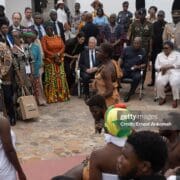
News Americas, NEW YORK, NY, Fri. June 26, 2026: On Juneteenth – June 19, 2026 – young Ghanaian students marched through the “Door of No Return” at Christiansborg Castle in Accra in an emotional reenactment of the transatlantic slave trade, staged before African and Caribbean heads of state and delegates from more than 80 countries, gathered for the most significant global reparations conference in history.

The NEXTISTEPS High-Level Consultative Conference adopted a sweeping 19-point framework for reparatory justice – backed by both the African Union and CARICOM – calling for formal apologies, financial compensation, debt cancellation, a Global Reparations Fund, the return of looted cultural artifacts, and a right of return for descendants of enslaved Africans. The proposal is expected to be presented at the next UN General Assembly.

“History does not ask us to inherit guilt, but it asks us to inherit responsibility,” Ghanaian President John Dramani Mahama told delegates at Christiansborg Castle, as quoted by reporting on the conference.

The timing could not have been more significant. Because as African and Caribbean nations intensify their demands for reparatory justice, a landmark new book has arrived to fundamentally shift the legal and moral ground beneath those demands – and to eliminate one of the arguments Britain has historically relied upon to resist accountability.

The Book That Changes Everything

The Crown’s Silence: The Hidden History of the British Monarchy and Slavery in the Americas – authored by acclaimed US historian Brooke N. Newman and published by HarperCollins – presents what its press materials describe as undeniable archival proof, drawn from newly examined royal archives and manuscripts, that the British monarchy was not merely a passive beneficiary of the transatlantic slave trade. It was an active architect, investor, and financial beneficiary.

Drawing on records from the Royal African Company, the South Sea Company, the Royal Navy, and colonial officials, Newman demolishes Britain’s long-standing defense that colonial slavery was strictly the work of private enterprises – establishing instead that the Crown designed, funded, enforced, and profited from the Caribbean slave system across multiple monarchies spanning nearly 250 years.

“It is time to place the British Crown at the center of our analysis of the transatlantic slave trade, its legacies, and the pursuit of reparatory justice for slavery – where it belongs,” Newman writes, as quoted in the book’s notes.

The Royal Archives Tell The Story

The evidence Newman presents from the royal archives is extensive and specific. In 1564, Queen Elizabeth I became the first English monarch to invest directly in the transatlantic slave trade – fully aware of the aim of the venture – loaning the 700-ton warship Jesus of Lübeck from her Royal Navy to slaver John Hawkins in exchange for a one-sixth share of the anticipated profits from capturing and selling Africans in the Spanish Caribbean, according to the book.

By 1666, records of the Royal Adventurers – the Crown-backed trading company – show that 8,778 Africans had been disembarked in Barbados, 4,445 in Jamaica, and 1,250 in St. Kitts, Suriname, and Nevis, according to Newman’s research. Another 5,107 individuals had perished during the Atlantic crossing.

In 1672, King Charles II issued a new patent to The Royal African Company of England, granting it sole control over all English trade in African “commodities” – including, as the charter specified, “Negro Slaves” – for one thousand years, as the book documents. Under that charter, the African Company shipped more enslaved African women, men, and children to the Americas than any other single institution during the entire period of the transatlantic slave trade, according to historian William Pettigrew, as cited by Newman.

From 1672 to 1688 alone – during the reigns of Charles II and James II – nearly 100,000 Africans fell victim to the Royal African Company’s slave-trading activities across some 330 recorded transatlantic voyages, with approximately 76,000 surviving the Atlantic crossing to disembark in the English Caribbean colonies, predominantly in Barbados and Jamaica, according to Newman’s research.

The Duke of York – later King James II – was the African Company’s largest individual shareholder, subscribing £3,000 and holding regular company meetings in his own royal apartments, the book documents. He remained governor of the company and issued a proclamation defending its royal monopoly two months after ascending the throne as king.

The Royal Navy was deployed to enforce the Crown’s slave-trading monopoly – patrolling African and Caribbean waters, seizing interlopers, and convoying transatlantic deliveries of captives, according to Newman’s research. And the money flowed directly into royal coffers. By 1687, sugar and tobacco customs revenue – produced entirely by enslaved labor in the Caribbean colonies – comprised a significant share of the Crown’s income, the book documents. In the 1690s alone, customs revenue from tobacco and sugar totaled nearly £1 million, an average of £100,000 per year, according to Newman.

The Branding Of Caribbean Enslaved People

Performers reenact the branding of slaves at Christiansborg Castle in Ghana on June 19, 2026. (Photo by Ernest Ankomah/Getty Images)

Among the most disturbing revelations in the book is the Royal African Company’s systematic branding of enslaved Africans – including children – with marks denoting Crown ownership.

The company branded enslaved individuals with the acronym RACE – for the Royal African Company of England – seared into their flesh with burning irons. In instructions issued in 1699, company directors specified that enslaved individuals purchased by the company, both adults and children, were to be “mark[ed] on the right breast RACE,” and that “the children of them at three years of age” were to be similarly branded, as Newman documents.

Later, the South Sea Company – to which Queen Anne transferred the asiento contract giving Britain the exclusive right to supply enslaved Africans to Spanish America – branded enslaved individuals passing through Jamaica and Barbados with its own mark: the SSC seal topped with King George I’s state crown. The brand featuring a royal crown was a deliberate choice. The company touted its intimacy with the British monarchy as a badge of honor, as Newman’s research shows.

Jamaica served as the central Caribbean base of operations for this transatlantic trafficking system. By 1714, enslaved people made up 90 percent of the island’s total population.

The King Charles III Connection

Perhaps the most striking personal connection Newman establishes is between the current British monarchy and the Caribbean slave system. Through his maternal line, King Charles III is a direct descendant of Virginia planters who exercised ownership over African men, women, and children and profited from their coerced labor, according to Newman’s research. The lineage runs through Frances Smith, a direct descendant of Virginia planter Robert Porteus, who married Claude Bowes-Lyon – whose granddaughter was Elizabeth Bowes-Lyon, wife of King George VI and mother of Queen Elizabeth II.

Over the course of her 70-year reign, Queen Elizabeth II never addressed the foundational role of the monarchy in Britain’s transatlantic slave trade and mass enslavement of Africans, according to Newman. Her reticence, the book argues, was strategic.

“The queen’s silence did not go unnoticed,” Newman writes, as quoted in the book’s notes. “Preserving her policy of silence until the bitter end, the queen went to her grave with her lips permanently sealed on the subject of the monarchy’s historic links to slavery. But silence, however seemingly effective in the moment, cannot erase the past or expunge its enduring impacts.”

What The Book Means For Reparations

The significance of Newman’s archival findings for the Caribbean reparations movement is direct and profound. Britain has long shielded itself from financial accountability for the transatlantic slave trade by arguing that colonial slavery was a private enterprise – the work of merchants, planters, and trading companies operating with minimal Crown direction. If slavery was primarily a private commercial affair, the argument runs, the modern British state bears limited direct responsibility and the monarchy even less.

Newman’s royal archives dismantle that argument entirely. The Crown was not a bystander to the Caribbean slave system. It was the architect. It granted the monopoly charters. It deployed the Royal Navy. It enforced compliance. It collected the customs revenue. It personally invested in the slave-trading companies. It branded enslaved people with royal marks. And it profited – substantially, directly, and over generations – from the labor of hundreds of thousands of enslaved Africans in the Caribbean.

As Newman demonstrates, four centuries of royal silence have only deferred an inevitable reckoning. The Crown’s Silence proves that contemporary demands for reparations are not new claims, but long-overdue accounts waiting to be settled.

The Caribbean’s Moment

The confluence of the Accra conference, the AU’s launch of its Decade on Reparations – 2026 to 2036 – and the publication of The Crown’s Silence arrives at a moment of unprecedented global momentum for the reparatory justice movement. CARICOM’s 10-Point Plan for Reparatory Justice – including formal apologies, the erasure of the unjust debt burden, and financial compensation – carries renewed urgency alongside the archival evidence Newman has now placed in the public record.

Multiple Caribbean nations are actively reassessing their constitutional relationships with the British monarchy and moving toward becoming republics. The question of what Britain owes the Caribbean is no longer merely academic or political. It is, thanks to the royal archives Brooke Newman has examined and published, now undeniably documented. The 19-point framework adopted in Accra calls on all state and non-state institutions that have not yet provided justice for the transatlantic slave trade to offer “full, formal and unconditional apologies as a foundational step towards reconciliation, trust-building and reparatory justice.”

The British monarchy is a state institution. And thanks to The Crown’s Silence, the receipts are now in the public record.

RELATED: The Untold Story Of The Deacons For Defense: The Hidden Guardians Of The Civil Rights Movement

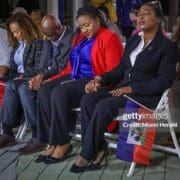
Supreme Court’s Liberal Justices Say Trump’s Haiti TPS Decision Was Racially Motivated – But It Stands 6-3

By Staff Reporter | NewsAmericasNow.com

News Americas, WASHINGTON, D.C, Thurs. June 25, 2206: The United States Supreme Court today, June 25th, cleared the path for the potential deportation of 350,000 Haitians and 6,100 Syrians – ruling 6-3 along ideological lines that the Trump administration has the legal authority to end Temporary Protected Status for both groups in the highly watched Haiti TPS case.

The decision comes as the Trump administration has moved to terminate TPS for nationals of 13 out of 17 countries that held the designation when President Biden left office – part of what the administration describes as a broader crackdown on immigration.

For the Haitian diaspora – and particularly for the hundreds of thousands of Haitian Americans who have built lives, careers, and families in the United States under TPS protections – the ruling represents one of the most consequential legal setbacks in recent memory.

The Ruling

Writing for the 6-3 majority, Justice Samuel A. Alito Jr. held that federal law prohibits courts from second-guessing an administration’s determination to strip TPS protections. “This text is clear, and its plain meaning is very broad,” Alito wrote, as quoted in the ruling.

The court also rejected claims that the administration’s decision to end TPS for Haitians was driven by racial hostility – a finding that drew a blistering response from the court’s three liberal justices.

“The Statements Fairly Shout”

Justice Elena Kagan, writing for the three dissenting justices, quoted extensively from President Trump’s own public statements about Haitian immigrants in making the case that race had entered into the administration’s decision.

The dissent cited Trump’s false accusations during the 2024 campaign that Haitians in Springfield, Ohio, ate their neighbors’ pets – a claim that was widely debunked – and his December comments describing Haitian immigrants as undesirable because they come from a “filthy, dirty, disgusting” country.

“The statements fairly shout, in their racial undertones and overtones alike, that race entered into the president’s resolve to remove Haitians from this country,” Kagan wrote, as quoted in the ruling.

The administration’s solicitor general D. John Sauer argued during oral arguments that Trump’s statements were “unilluminating” and referenced poverty and crime rather than race – and that federal law makes clear courts cannot second-guess the government’s TPS decisions regardless of the motivation behind them.

The majority agreed. The dissent did not.

What Temporary Protected Status Is

Viles Dorsainvil (R), Executive Director of the Haitian Support Center, and Associate Pastor Brandon Peterson (C) of Greater Grace Temple in Springfield, Ohio, listen to a prayer outside the US Supreme Court in Washington, DC, on March 17, 2026. The US Supreme Court agreed on March 16 to consider the Trump administration’s bid to strip Haitians and Syrians of temporary deportation protections. The Department of Homeland Security (DHS) has announced plans to end so-called Temporary Protected Status (TPS) for some 350,000 Haitians and 6,000 Syrians. (Photo by ROBERTO SCHMIDT / AFP via Getty Images)

Temporary Protected Status was created by Congress with bipartisan support in 1990 to provide temporary legal status to people whose home countries were deemed unsafe because of war, natural disasters, or other crises. The program allows TPS holders to live and work legally in the United States for periods of six to 18 months, with no limit on how many times a country’s designation can be renewed.

For Haiti – a country that has faced a devastating earthquake, political instability, and now widespread gang violence that has rendered parts of the country ungovernable – TPS had been repeatedly extended, becoming effectively permanent for hundreds of thousands of Haitian nationals living in the United States.

The program had similarly been extended repeatedly for Syrians, whose country has been consumed by civil war for over a decade.

CAIR REACTS

The Council on American-Islamic Relations (CAIR), the nation’s largest Muslim civil rights and advocacy organization, today said a U.S. Supreme Court ruling allowing the Trump administration to terminate Temporary Protected Status (TPS) protections for hundreds of thousands of Haitian and Syrian immigrants without any judicial review will harm families, destabilize communities, and place vulnerable individuals at risk.

CAIR also expressed disagreement with a conclusion by non-binding plurality of judges that there was likely insufficient evidence to conclude that racism motivated the TPS termination in violation of the Equal Protection Clause.

The ruling clears the way for the administration to end TPS protections for approximately 350,000 Haitians and more than 6,000 Syrians who have been living and working legally in the United States. TPS was created by Congress to protect people from deportation to countries facing war, natural disasters, or other extraordinary conditions. Haitians first received TPS after the devastating 2010 earthquake, while Syrians were granted TPS in 2012 because of the civil war in their homeland.

Last year, CAIR welcomed a federal court order delaying the Trump administration’s termination of TPS for Syria and warned that forcing Syrians to return prematurely could expose them to danger and family separation.

In a statement, CAIR National Executive Director Nihad Awad said: Temporary Protected Status was established to ensure that people are not forced to return to countries facing extraordinary and dangerous conditions. Ending these protections for hundreds of thousands of Haitians and thousands of Syrians will tear families apart, disrupt workplaces and communities, and place vulnerable individuals at risk.

“Many TPS holders have lived in our nation for years, raised American children, built businesses, contributed to our economy, and become integral members of their communities. Policies that target these families for deportation because of their race and ethnicity are contrary to our nation’s values.

“Congress should pursue legislative solutions to make clear that courts do indeed have the authority to review TPS termination decisions, to recognize the contributions of TPS recipients, and to protect families from unnecessary hardship and separation.”

What Happens Now

The Supreme Court’s ruling clears a legal path for deportations – but the timeline and process remain complex.

The ability of the government to quickly expel TPS holders will depend significantly on whether individuals already have deportation orders pending. In many instances TPS holders have not received such orders – which will allow them some ability to contest their removal from the country through the immigration court system.

Class action lawsuits had been filed by TPS holders – including engineers, students, doctors, and caregivers – who argued they could be killed if forced to return to Syria or Haiti. Lower court judges had sided with the Haitians and Syrians, finding that the homeland security secretary’s process was subject to court review and that her decisions had been preordained rather than based on meaningful analysis of country conditions.

The Supreme Court overruled those findings Thursday. The ruling is also likely to have significant implications for TPS holders from approximately a dozen other countries beyond Haiti and Syria.

The Broader Context

Thursday’s ruling arrives as part of a sweeping transformation of American immigration policy under the Trump administration – one that has fallen with particular force on Caribbean communities.

The administration has separately halted the resettlement of refugees and dramatically slowed the consideration of asylum claims. It has proposed tougher rules making work permits harder for immigrants to obtain. It has filed denaturalization cases against naturalized American citizens at an unprecedented pace – targeting 200 cases per month. And it has moved to end TPS for nationals of 13 countries.

The Supreme Court’s ruling Thursday – combined with its separate ruling last year allowing the administration to lift protections for more than 300,000 Venezuelans – signals that the legal architecture supporting humanitarian immigration protections is being dismantled with the blessing of the nation’s highest court.

For the 350,000 Haitians who have lived and worked legally in the United States under TPS – many of whom have been here for years, raised children who are American citizens, built businesses, and contributed to their communities – the ruling poses an existential threat to the lives they have built.

What Haitian TPS Holders Should Do Now

Immigration attorneys are urging Haitian TPS holders to take immediate action:

Consult a licensed immigration attorney – not a notario – about your specific situation and any alternative pathways to legal status.

Do not assume you must leave immediately – the process for actual deportation is complex and TPS holders without pending deportation orders retain some ability to contest removal.

Check whether you or your children qualify for other forms of relief – including US-born children, marriage to US citizens, or other visa categories.

Stay informed – the legal situation is evolving rapidly.

Could New Royal Archive Evidence Strengthen CARICOM’s Reparations Case?

By Senior Staff Writer

NEW YORK, NY, Thurs. June 25, 2026: As Barbados Prime Minister Mia Mottley pushes a new reparations manifesto and the African Union launches its Decade of Reparations, newly examined historical records are raising fresh questions about Britain’s role in Caribbean slavery and whether the region’s case for reparatory justice may be entering a new phase.

For more than a decade, CARICOM governments have argued that the legacy of slavery continues to shape economic inequality, underdevelopment and social challenges across the Caribbean. Now, a new book by historian Brooke N. Newman, The Crown’s Silence, is adding fresh evidence to that conversation.

Drawing on records from the Royal Archives, the Royal African Company, the South Sea Company and other historical sources, Newman argues that the British monarchy was not merely aware of the transatlantic slave trade but actively invested in, financed and profited from it for generations.

The timing is significant. Last week in Ghana, on Juneteenth in the US, June 19th, Barbados Prime Minister Mia Mottley unveiled an updated reparations manifesto at a conference in Ghana, strengthening CARICOM’s long-standing calls for reparatory justice and introducing new provisions addressing the impact of slavery on women and families.

The manifesto follows growing international attention to reparations after the African Union formally launched its Decade of Reparations (2026-2036), a global initiative aimed at advancing recognition, accountability and repair for the transatlantic trafficking of enslaved Africans.

For supporters of reparatory justice, the significance of Newman’s research lies in its challenge to one of Britain’s long-standing defenses: that slavery was largely the work of private merchants and corporations rather than the state itself. According to Newman, archival records show that successive monarchs invested in and benefited financially from institutions central to the slave trade, potentially strengthening arguments that responsibility extended beyond individual traders to the Crown itself.  Newman, reveals that from the 1560s to 1807, the British monarchy didn’t merely permit the transatlantic slave trade – they directly invested in it, designed it, and amassed vast royal wealth from the labor of millions of enslaved Africans.

Whether the findings ultimately alter legal arguments remains to be seen. However, they arrive at a moment when Caribbean governments are increasingly connecting reparations to broader discussions about economic development, climate justice, historical accountability and post-colonial sovereignty.

As several Caribbean nations continue to reassess constitutional ties to the British monarchy and calls for reparatory justice grow louder globally, the debate over history, accountability and repair appears far from over.

The June 19th event took place near a fortress in Accra, Ghana. The site was one of the locations connected to the transatlantic slave trade and served as a backdrop for the commemoration. African and Caribbean leaders are demanding financial compensation, debt cancellation and formal apologies from countries that benefited from the transatlantic slave trade after adopting a sweeping reparations plan at a conference in Ghana.

The 19-point framework calls for financial compensation, debt relief, a Global Reparations Fund and the return of looted cultural artifacts and ancestral remains. It also seeks reforms to international financial institutions that supporters say disadvantage Third World countries. The plan also urges African countries to preserve former slave forts and castles as memorial sites.

The proposal is expected to be presented at the next UN General Assembly as African and Caribbean nations step up a coordinated push for slavery reparations. “We recognize and honor the extensive efforts undertaken over generations by several governments, intergovernmental organizations, our forebearers, individuals and civil society partners across Africa, the Caribbean, the Americas, as well as in Europe and Asia in shaping the global reparations agenda,” the document states. “We adopt this document as a basis for global collaboration and commit to engaging in transparent, constructive and good faith dialogue in advancing reparations and reparatory justice among all state and non-state actors.”

According to advocates, at least 12.5 million Africans were kidnapped and transported aboard European ships between the 15th and 19th centuries. Supporters of reparations argue the effects of slavery continue to be felt across Africa and the Caribbean generations later.