
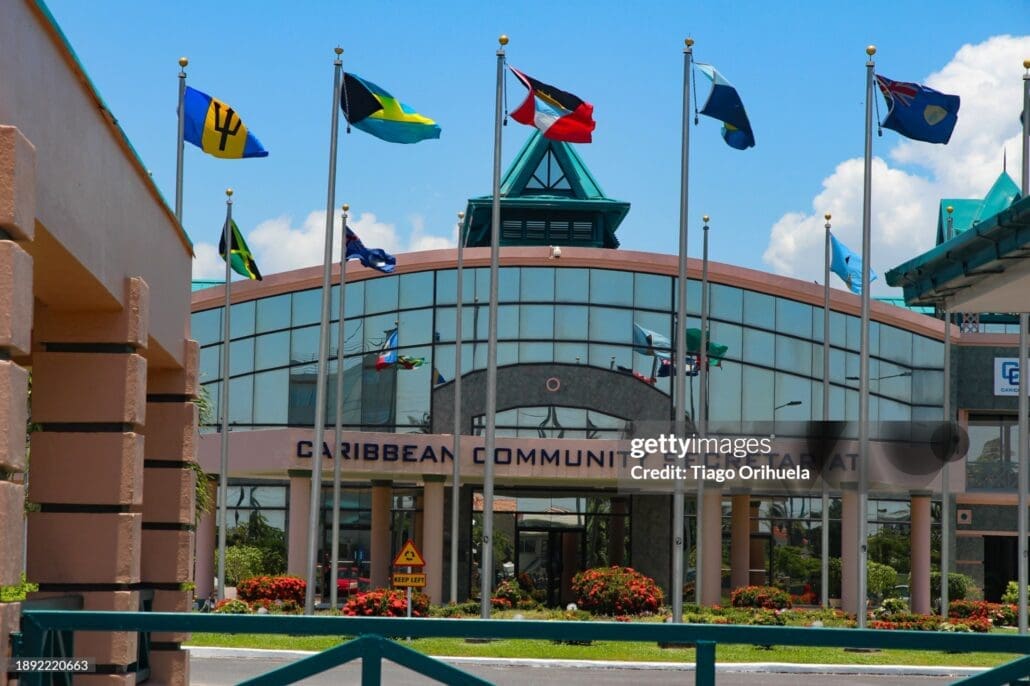
CARICOM Governance Under Scrutiny: Why Process and Legitimacy Matter In Regional Leadership
By Dr. Isaac Newton
News Americas, NEW YORK, NY, Tues. April 7, 2026: The Caribbean Community is facing a defining test of its institutional character. What began as a procedural dispute over the reappointment of Dr. Carla Barnett has become a deeper inquiry into whether CARICOM’s rules function as binding commitments or adjustable conveniences. This distinction matters. In any rules-based system, legitimacy does not arise from decisions alone; it is anchored in the integrity of the path taken to reach them. Outcomes may convince, but it is the process that confers authority.
The concerns raised by Prime Minister Kamla Persad-Bissessar, and formalized by her government, draw attention to the authority of the Revised Treaty of Chaguaramas. Questions regarding adherence to Articles 24 and 28 are not procedural footnotes; they are structural protections designed to ensure that decisions emerge from genuine collective participation rather than selective engagement. Reports that key delegations were absent during decisive deliberations suggest that the process may have been compressed in ways that strain institutional credibility.
CARICOM
At this level, leadership is measured less by the ability to secure agreement and more by the discipline required to safeguard legitimacy. As Chairman of CARICOM, Dr. Terrance Drew carries the responsibility of clarifying the procedural pathway that produced the outcome. Other Caribbean Prime Ministers, Premiers, and Presidents must also address perceptions that threaten confidence in impartial decision-making. In moments such as this, explanation is not optional; it is a duty. Silence does not steady uncertainty, it deepens it.
The effects are already extending beyond the immediate decision. Trinidad and Tobago’s indication that it may reconsider its financial contributions signals tension within the cooperative framework of the Community. Trust rarely collapses in a single moment. It diminishes incrementally, revealed through hesitation, guarded commitments, and shifting expectations. In multilateral institutions, fragmentation often begins not with ideological conflict but with doubts about process.
This moment reaches far beyond a single reappointment. It tests whether institutional rules retain their authority in practice. A credible response must move past reassurance toward reconstruction. CARICOM should establish an independent procedural account to restore a shared understanding of events. It must reaffirm the role of the Community Council in appointments and remove uncertainty surrounding participation, quorum, and voting procedures. These are not merely administrative refinements; they are strategic necessities that preserve institutional continuity.
CARICOM now stands at a consequential juncture. It may treat this episode as a contained disagreement and risk entrenching procedural ambiguity, or it may use it to reinforce the discipline that sustains collective governance. Institutions are not weakened by challenge; they are weakened when challenges to their rules remain unresolved. The central question is no longer whether a decision was made, but whether the process that produced it still commands confidence.





Leave a Reply
Want to join the discussion?Feel free to contribute!