
Cuba Mourns 32 Soldiers As U.S.–Caribbean Tensions Deepen
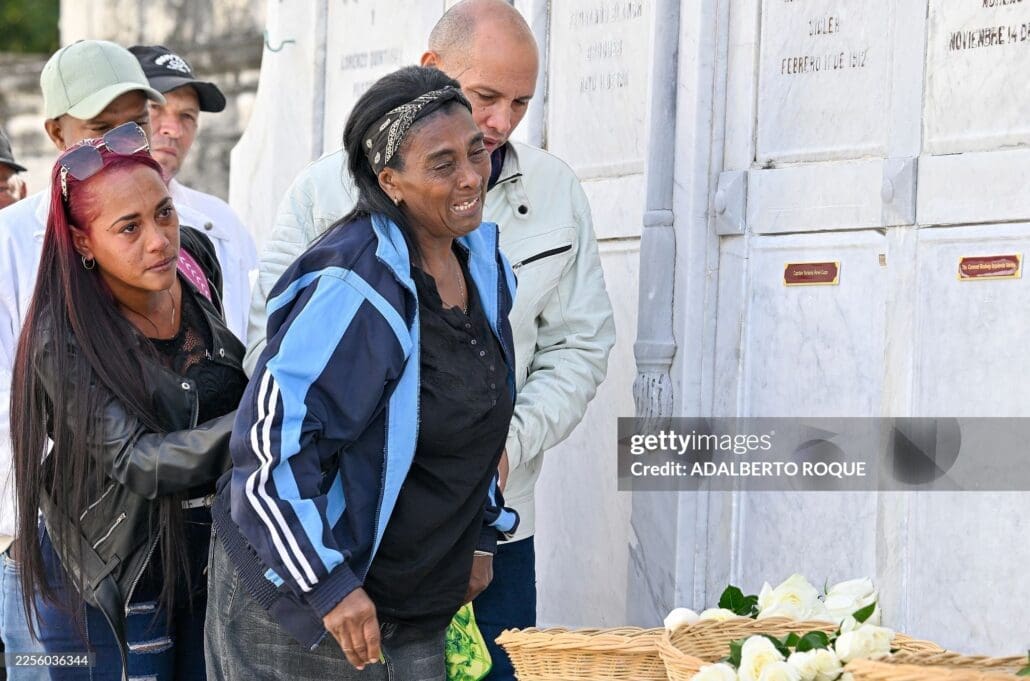
News Americas, NEW YORK, NY, Mon. Jan. 19, 2026: Relatives wept openly last Thursday at Havana’s mass burial of 32 Cuban soldiers killed during the U.S. operation in Venezuela. The killing is being widely interpreted not only as a moment of national mourning, but as a signal of escalating geopolitical tension with potential ripple effects across the Caribbean.
Relatives of some of the 32 Cuban soldiers killed during the US incursion in Venezuela pay respects at their graves during their funeral at Colon cemetery in Havana on January 16, 2026. The capture by US forces of Venezuelan leader Nicolas Maduro on January 3, 2026, and the killing in the operation of 32 Cubans assigned to protect him represent a major blow for the island’s revered intelligence services, experts say. (Photo by ADALBERTO ROQUE / AFP via Getty Images)
The soldiers’ bodies were returned to Cuba in small boxes. They were assigned to Venezuelan President Nicolás Maduro’s security detail under bilateral protection agreements and were killed during the January 3rd U.S. raid that resulted in Maduro’s capture. Their deaths mark one of the most serious direct losses for Cuba’s security apparatus in decades and underscore the expanding regional footprint of U.S. enforcement actions in Latin America.
Relatives of the 32 Cuban soldiers killed during the US incursion in Venezuela attend their funeral at Colon cemetery in Havana on January 16, 2026. The capture by US forces of Venezuelan leader Nicolas Maduro on January 3, 2026, and the killing in the operation of 32 Cubans assigned to protect him represent a major blow for the island’s revered intelligence services, experts say. (Photo by ADALBERTO ROQUE / AFP via Getty Images)
While Cuban authorities framed the funeral as an act of honor and resistance, analysts say the scale of the ceremony reflects broader concern in Havana over Cuba’s vulnerability amid renewed U.S. pressure. The presence of President Miguel Díaz-Canel, former leader Raúl Castro, and senior military officials highlighted the political weight attached to the losses.
Relatives of some of the 32 Cuban soldiers killed during the US incursion in Venezuela pay respects at their graves during their funeral at Colon cemetery in Havana on January 16, 2026. The capture by US forces of Venezuelan leader Nicolas Maduro on January 3, 2026, and the killing in the operation of 32 Cubans assigned to protect him represent a major blow for the island’s revered intelligence services, experts say. (Photo by ADALBERTO ROQUE / AFP via Getty Images)
The episode has also reignited debate over the role of Caribbean and Latin American states in U.S. security operations, particularly as Washington intensifies efforts against governments it deems hostile. The deaths of Cuban personnel operating outside their borders raise questions about how far regional alliances can stretch before becoming flashpoints for wider conflict.
At the same time, the timing of the funerals – coming just as Washington announced humanitarian aid to Cuba following Hurricane Melissa – has fueled diplomatic friction. Cuban officials accused the U.S. of using aid as leverage, while U.S. officials rejected claims of politicization, insisting assistance would be delivered through independent channels.
Cuban soldiers carry the remains of some of the 32 Cuban soldiers killed during the US incursion in Venezuela during their funeral at Colon cemetery in Havana on January 16, 2026. The capture by US forces of Venezuelan leader Nicolas Maduro on January 3, 2026, and the killing in the operation of 32 Cubans assigned to protect him represent a major blow for the island’s revered intelligence services, experts say. (Photo by ADALBERTO ROQUE / AFP via Getty Images)
For many observers, the juxtaposition of military confrontation and humanitarian outreach illustrates a contradictory U.S. posture that is reshaping relations across the Caribbean basin. As public demonstrations unfold in Havana and rhetoric hardens on both sides, regional governments are watching closely, aware that today’s Venezuela operation could set precedents affecting security, sovereignty, and diplomacy throughout the Caribbean.




Leave a Reply
Want to join the discussion?Feel free to contribute!