
Does This Caribbean Resort Expansion Signal A Shift From Tourism Destination To Global Wealth Hub?
By NAN Business Editor
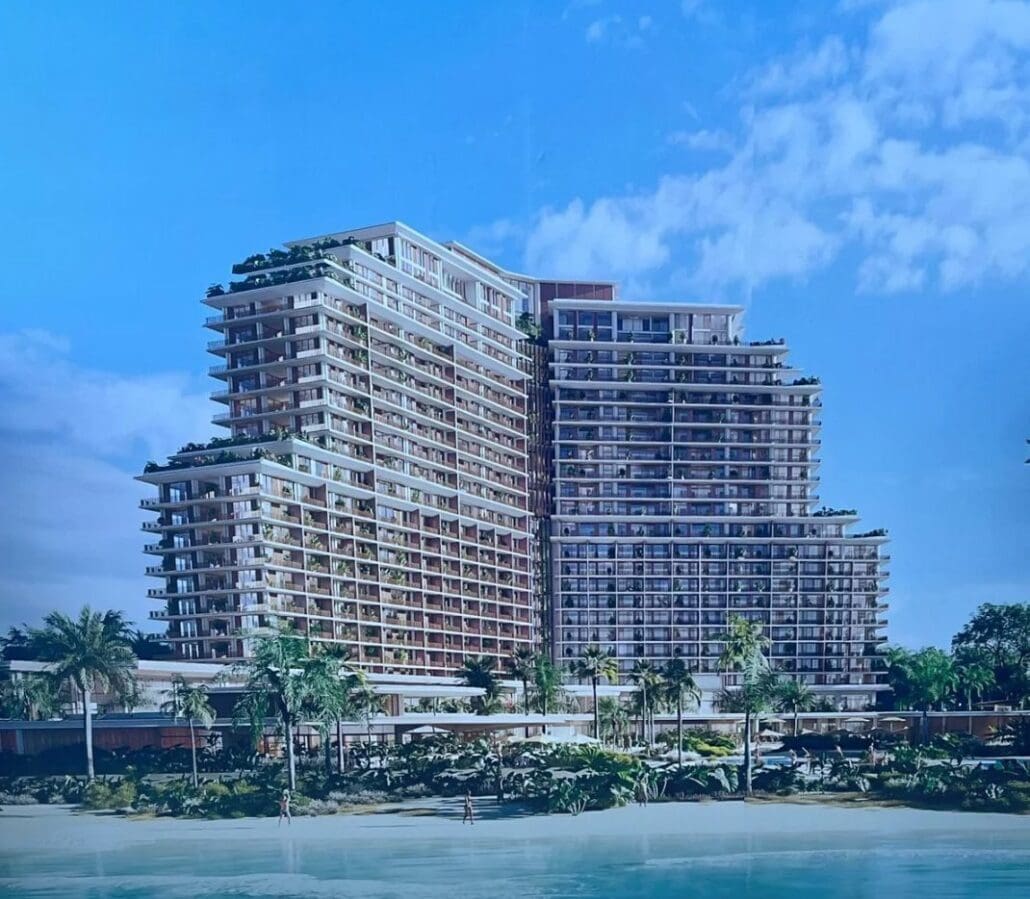
News Americas, NASSAU, Bahamas, Tues. Feb. 17, 2026: When Baha Mar broke ground on its more than $700 million beachfront expansion on Nassau’s Cable Beach recently, the announcement was framed as a tourism milestone. The project will add 345 guest rooms, 77 branded luxury residences, and thousands of jobs. But beneath the ceremonial shovels and economic optimism lies a deeper question: Is the Caribbean quietly evolving from a tourism destination into a global wealth hub?
Baha Mar has officially broken ground on a new beachfront resort and branded residences on Cable Beach, marking a more than $700 million expansion that will add 345 guest rooms and 77 luxury residences to the country’s premier integrated resort destination.
For decades, the Caribbean’s economic identity has been anchored in hospitality. Resorts brought visitors, jobs, and foreign exchange. Yet today’s mega-developments increasingly reflect something more complex. The inclusion of branded luxury residences alongside hotel rooms signals a structural shift. These are not merely places to visit. They are places to own, invest, and store wealth.
This distinction matters.
Branded residences have become one of the fastest-growing segments of global real estate. Buyers are typically ultra-high-net-worth individuals seeking lifestyle, security, and jurisdictional diversification. By integrating residences into resort ecosystems, developers are transforming Caribbean properties into hybrid assets – part hotel, part private enclave, part global wealth infrastructure.
The Baha Mar expansion fits squarely within this model. Designed by internationally renowned architectural firm Foster + Partners, the project is positioned not just as a hotel, but as a premium residential and investment destination. Owners gain access to an established ecosystem that includes the Caribbean’s largest casino, luxury retail, championship golf, and more than 45 restaurants and lounges.
This model aligns with a broader global trend: the migration of capital into lifestyle jurisdictions.
In an era defined by geopolitical uncertainty, rising taxes in traditional wealth centers, and increasing interest in residency and citizenship mobility, wealthy individuals are diversifying geographically. The Caribbean, with its political stability, proximity to North America, and established financial frameworks, has emerged as a preferred destination.
The Bahamas, in particular, has strengthened its position through infrastructure investment, financial services sophistication, and its appeal as both a tourism and financial jurisdiction.
Bahamas Prime Minister Philip Davis underscored the significance of the expansion, describing the investment as a signal of confidence in the country’s economic future. “It is a signal to the world that our economy is steady, our tourism sector is growing, and our country is moving in the right direction,” he said.
Yet, the implications extend beyond tourism metrics.
Luxury developments increasingly function as anchors for broader economic ecosystems. They generate construction employment, permanent hospitality jobs, and demand for local suppliers—from farmers and fishermen to logistics providers and professional services. Baha Mar alone already employs more than 5,300 Bahamians, with an additional 1,400 positions expected once the new expansion is complete.
But perhaps more importantly, such developments reshape how the Caribbean is perceived globally.
Historically marketed primarily as a leisure destination, the region is now also being positioned as a place of long-term presence. Ownership, not just visitation, is becoming central. This transition enhances economic resilience by diversifying revenue streams beyond seasonal tourism cycles.
It also reflects the Caribbean’s integration into global capital flows.
Wealth today is increasingly mobile. Investors seek jurisdictions that offer quality of life, asset protection, and global accessibility. High-end resort developments provide precisely that intersection. They offer physical assets tied to globally recognized brands, located in politically stable environments, and embedded within service ecosystems designed for international clientele.
The Caribbean’s appeal is reinforced by geography itself. Located between North and South America, and accessible from major global financial centers, the region occupies a strategic position that combines lifestyle with connectivity.
Critically, this evolution does not eliminate tourism. Rather, it elevates it.
Tourism remains the foundation. But layered atop it is a new economic dimension—one centered on ownership, capital preservation, and global residency patterns. The resort becomes not just a destination, but a node within the architecture of global wealth.
For countries like The Bahamas, this shift offers opportunity – but also responsibility. Managing growth sustainably, ensuring local participation, and balancing foreign investment with national interests will determine how fully the region benefits.
What is clear is that the Caribbean’s economic narrative is expanding.
As cranes rise above Cable Beach and branded residences take shape alongside hotel towers, the message extends beyond Nassau. The Caribbean is no longer simply a place the world visits.
It is increasingly a place the world invests in, lives in, and anchors wealth within.






Leave a Reply
Want to join the discussion?Feel free to contribute!