
Caribbean American Lawmakers Back Continued U.S. Military Aid To Israel; Both Received AIPAC Donations
By Staff Writer, NewsAmericas Now
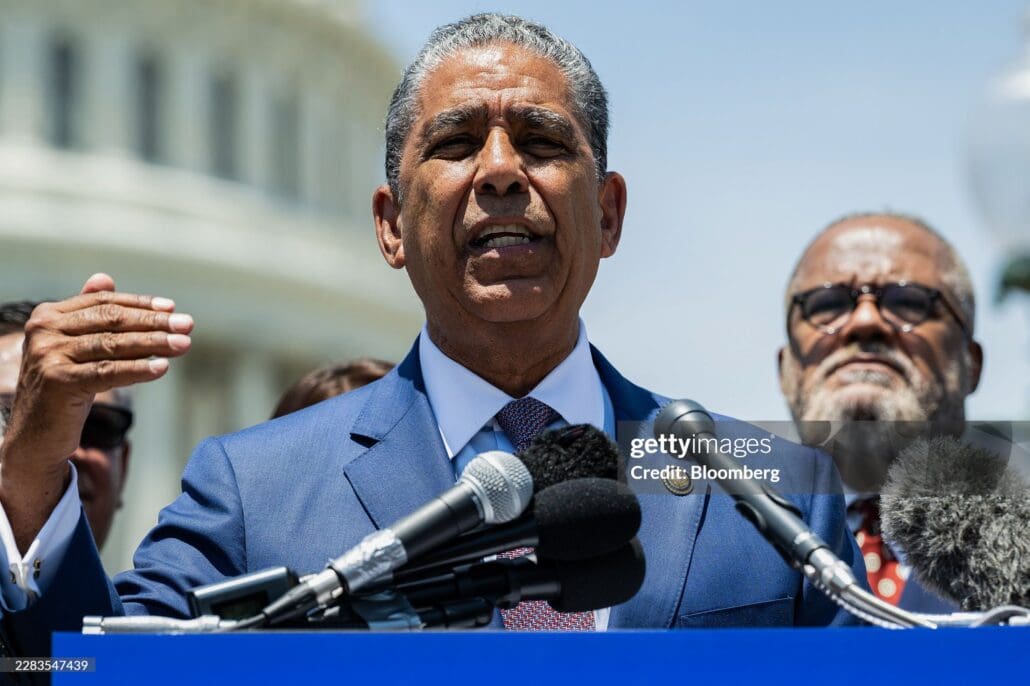
News Americas, NEW YORK, NY, Thurs. July 16, 2026: Caribbean American Rep. Yvette Clarke, a Brooklyn Democrat representing one of the largest Caribbean communities in the country, and Rep. Adriano Espaillat, a Dominican-born Democrat whose district covers parts of Manhattan and the Bronx, both voted on Wednesday, July 15th, to preserve U.S. military assistance to Israel, siding with a narrow majority of House Democrats against a push from the party’s left flank to cut off the funding.
The vote came Wednesday on an amendment from Kentucky Republican Rep. Thomas Massie that would have eliminated $3.3 billion in annual U.S. military assistance to Israel from the fiscal 2027 State, Foreign Operations and Related Programs appropriations bill. The amendment failed 104-314, with 10 members voting present. Massie was the only Republican to support his own measure.
The overall tally masked a sharp divide inside the Democratic caucus. Of the roughly 211 Democrats who cast a vote, 103 voted to strip the aid, while 98 – including Clarke and Espaillat – voted no, and 10 voted present. The split reached into party leadership: House Minority Leader Hakeem Jeffries opposed the amendment, while Minority Whip Katherine Clark broke with him and voted yes.
Caribbean American Representative Yvette Clarke, a Democrat from New York, center, seen here at a rally at Brooklyn Borough Hall in the Brooklyn borough of New York, US, on Thursday, July 9, 2026, also voted against the measure to end military aid to Israel. (Photographer: Michael Nagle/Bloomberg via Getty Images)
Both Clarke and Espaillat are listed among New York’s congressional delegation on Track AIPAC, a donor-tracking site run by the advocacy group Citizens Against AIPAC Corruption, as recipients of donations linked to the American Israel Public Affairs Committee and affiliated pro-Israel groups. The group claims Clarke received over $131,000 while Espaillat, who lost his primary election to Avila Chevalier, a democratic socialist and community organizer, received over $3 million. NewsAmericas Now is continuing to confirm the specific dollar figures attributed to each lawmaker against Federal Election Commission records and will update this story once those figures are verified.
In her own statement Wednesday, Clark agreed the amendment was “overly broad” and an attempt by Republicans to “score cheap political points.”
But she came to a far different conclusion on her ultimate vote. “However, it is clear that the status quo is not tenable. We should not provide a blank check for military aid to any country that does not comply with U.S. law, interests, and values,” Clark said. “The Netanyahu government has failed to meet that standard. I will be voting yes, not because I agree with the entirety of the amendment, or the GOP’s cynical motivations for its consideration, but because I believe we must change course.”
A caucus divided
Jeffries told colleagues in a letter ahead of the vote that he considered the amendment “overly broad,” warning it would also limit funding for refugee resettlement and humanitarian programs. Rep. Greg Casar of Texas, chair of the Congressional Progressive Caucus, said after the vote that opposing the billions in military funding is what matters most, even as he acknowledged the amendment’s broader flaws. Former House Speaker Nancy Pelosi also voted for the cut, saying she wanted her vote to send a message despite viewing the amendment itself as flawed.
The vote is widely seen as an early test of where House Democrats stand on Israel heading into the November midterms, following a string of primary losses this year by incumbents seen as too closely aligned with the Netanyahu government’s conduct of the war in Gaza. Israel’s standing with Democrats will be tested again on August 4, when Michigan voters nominate candidates running for U.S. Senate, the U.S. House and governor as the state debates U.S. relations with Israel.
Why it matters for Caribbean communities
Clarke and Espaillat represent two of the most heavily Caribbean and Caribbean-immigrant congressional districts in the country – NY-09 in Brooklyn and NY-13 in upper Manhattan and the Bronx. Both lawmakers have built political careers partly on advocacy for Caribbean and Latin American immigrant constituencies, making their votes on a matter this polarizing among the Democratic base a point of scrutiny within the communities they represent.
RELATED: U.S. Says ‘Do Not Travel’ To Haiti – Then Prepares to Send 330,000 Haitians There Anyway






Leave a Reply
Want to join the discussion?Feel free to contribute!