
Lindsay says detailed court rules needed for election challenges | Loop Cayman Islands
Black Immigrant Daily News
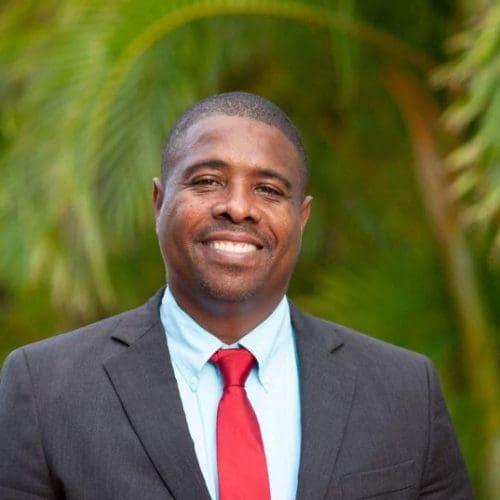
During the general elections of 2017, the Supervisor of Elections applied to the Grand Court of the Cayman Islands for a declaration that Alric Lindsay could not run as a political candidate because he had purportedly travelled to and from the Cayman Islands for a period, allegedly resulting in his absence from the Cayman Islands for more than 400 days during the 7-year period immediately preceding nomination day. In that case, the Chief Justice, Anthony Smellie, found that there was not “sufficient evidence” to justify the engagement of the process of the court as to the qualification or disqualification of Alric Lindsay. Since that time, Lindsay said he has liaised with the courts to encourage the implementation of detailed rules, including the procedure and forms to be used for the admission of evidence and for fees to be paid on future applications by the Supervisor of Elections to declare any candidate as ineligible for election. In Lindsay’s view, such rules “would discourage frivolous claims being made against candidates that could damage public perceptions of their candidacy for elections.”
Lindsay’s case
In Alric Lindsay’s case, Chief Justice Smellie found that “an unduly rigid approach which would involve the Supervisor of Elections calling for the travel history of every declared candidate… for an arithmetic tabulation of every day of absence from the Islands over the course of the 7 years preceding a nomination day, would be both an impracticable and unreasonable application of the broad language of the Constitution.”
The Chief Justice also acknowledged that “it is a matter of common knowledge that Caymanians regularly travel to and from the Islands for work, business or leisure such that many days or even weeks or months of absences for such reasons will often occur without any discontinuity of one’s ties or commitment to the Islands.”
Even though all such absences may not be expressly exempted by subsection 61(3) of the Constitution, it would in my view, be absurd and inconsistent with the purposive aim of the Constitution as discussed above, to construe section 61(f) as regarding such absences for such reasons totalling more than 400 days, as automatically or invariably disqualifying.
The Chief Justice added.
Lindsay agrees with the Chief Justice’s judgment and says that “voters should consider whether they want to initiate a referendum to amend the constitution to remove the 400 day rule, along with other changes to give Caymanians more security as to their entitlement to vote and avoid them from being removed from voter registration lists simply because they are working overseas.”
As the Chief Justice said, going to and from Cayman regularly in the ordinary course of one’s life for beneficial or necessary purposes such as work, leisure or business abroad, should not be automatically regarded as amounting to the kind of “absence” regarded by the Constitution as disqualifying. In my view, either more exemptions should be added to the constitution to reflect the reality of Caymanians working overseas or this part of the constitution needs to be clarified.
Lindsay added.
Missing court rules
Since the Chief Justice found that there was not “sufficient evidence” from the Supervisor of Elections to justify the engagement of the process of the court and that the court application should not have been brought at all, resulting in significant legal costs for Lindsay, Lindsay continues to stress the importance of having proper court rules to prevent such an event from reoccurring.
It is a travesty when detailed court procedures are absent to speak to the relevant forms or evidence required in elections related proceedings, yet an innocent party can still be dragged to court and have their eligibility questioned, casting doubts in the minds of members of the public. Luckily, one of my former lawyers is currently working on improving this situation and may make an announcement regarding proposed court rules soon.
Lindsay continued.
Curiously, Lindsay is now involved in another, upcoming constitutional matter against the government, in connection with which he has retained constitutional expert, Dr. The Hon. Lloyd Barnett, who has appeared in several important cases in public, commercial and property law in the superior courts of Jamaica and several Caribbean countries as well as the Privy Council and the Caribbean Court of Justice.
NewsAmericasNow.com





Leave a Reply
Want to join the discussion?Feel free to contribute!