
Could New Royal Archive Evidence Strengthen CARICOM’s Reparations Case?
By Senior Staff Writer
NEW YORK, NY, Thurs. June 25, 2026: As Barbados Prime Minister Mia Mottley pushes a new reparations manifesto and the African Union launches its Decade of Reparations, newly examined historical records are raising fresh questions about Britain’s role in Caribbean slavery and whether the region’s case for reparatory justice may be entering a new phase.
For more than a decade, CARICOM governments have argued that the legacy of slavery continues to shape economic inequality, underdevelopment and social challenges across the Caribbean. Now, a new book by historian Brooke N. Newman, The Crown’s Silence, is adding fresh evidence to that conversation.
Drawing on records from the Royal Archives, the Royal African Company, the South Sea Company and other historical sources, Newman argues that the British monarchy was not merely aware of the transatlantic slave trade but actively invested in, financed and profited from it for generations.
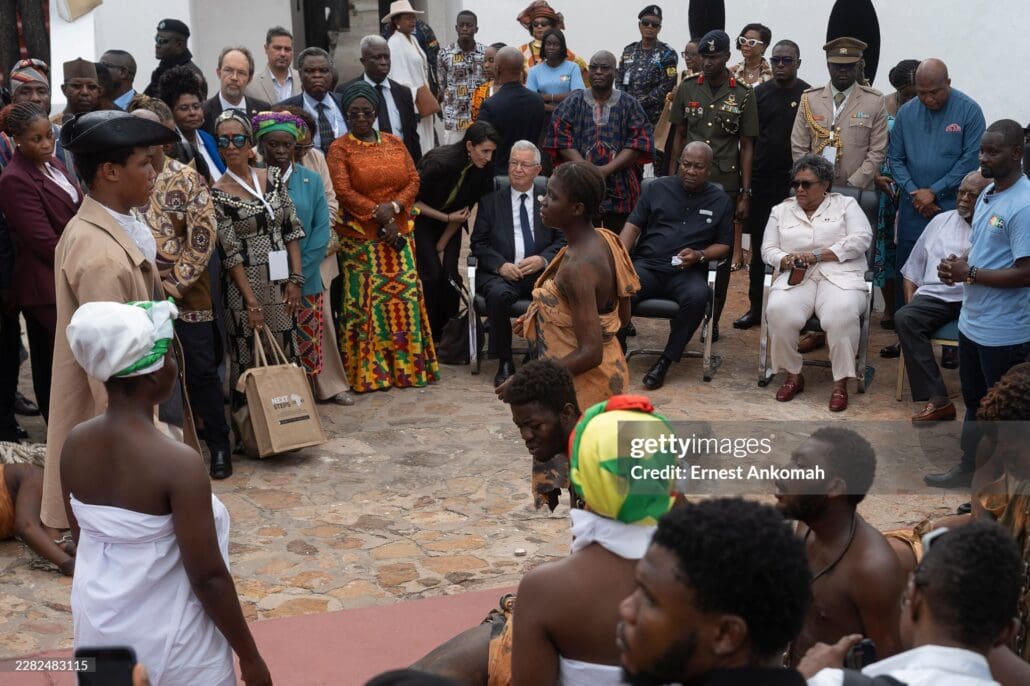
The timing is significant. Last week in Ghana, on Juneteenth in the US, June 19th, Barbados Prime Minister Mia Mottley unveiled an updated reparations manifesto at a conference in Ghana, strengthening CARICOM’s long-standing calls for reparatory justice and introducing new provisions addressing the impact of slavery on women and families.
The manifesto follows growing international attention to reparations after the African Union formally launched its Decade of Reparations (2026-2036), a global initiative aimed at advancing recognition, accountability and repair for the transatlantic trafficking of enslaved Africans.
For supporters of reparatory justice, the significance of Newman’s research lies in its challenge to one of Britain’s long-standing defenses: that slavery was largely the work of private merchants and corporations rather than the state itself. According to Newman, archival records show that successive monarchs invested in and benefited financially from institutions central to the slave trade, potentially strengthening arguments that responsibility extended beyond individual traders to the Crown itself. Newman, reveals that from the 1560s to 1807, the British monarchy didn’t merely permit the transatlantic slave trade – they directly invested in it, designed it, and amassed vast royal wealth from the labor of millions of enslaved Africans.
Whether the findings ultimately alter legal arguments remains to be seen. However, they arrive at a moment when Caribbean governments are increasingly connecting reparations to broader discussions about economic development, climate justice, historical accountability and post-colonial sovereignty.
As several Caribbean nations continue to reassess constitutional ties to the British monarchy and calls for reparatory justice grow louder globally, the debate over history, accountability and repair appears far from over.
The June 19th event took place near a fortress in Accra, Ghana. The site was one of the locations connected to the transatlantic slave trade and served as a backdrop for the commemoration. African and Caribbean leaders are demanding financial compensation, debt cancellation and formal apologies from countries that benefited from the transatlantic slave trade after adopting a sweeping reparations plan at a conference in Ghana.
The 19-point framework calls for financial compensation, debt relief, a Global Reparations Fund and the return of looted cultural artifacts and ancestral remains. It also seeks reforms to international financial institutions that supporters say disadvantage Third World countries. The plan also urges African countries to preserve former slave forts and castles as memorial sites.
The proposal is expected to be presented at the next UN General Assembly as African and Caribbean nations step up a coordinated push for slavery reparations. “We recognize and honor the extensive efforts undertaken over generations by several governments, intergovernmental organizations, our forebearers, individuals and civil society partners across Africa, the Caribbean, the Americas, as well as in Europe and Asia in shaping the global reparations agenda,” the document states. “We adopt this document as a basis for global collaboration and commit to engaging in transparent, constructive and good faith dialogue in advancing reparations and reparatory justice among all state and non-state actors.”
According to advocates, at least 12.5 million Africans were kidnapped and transported aboard European ships between the 15th and 19th centuries. Supporters of reparations argue the effects of slavery continue to be felt across Africa and the Caribbean generations later.





Leave a Reply
Want to join the discussion?Feel free to contribute!