
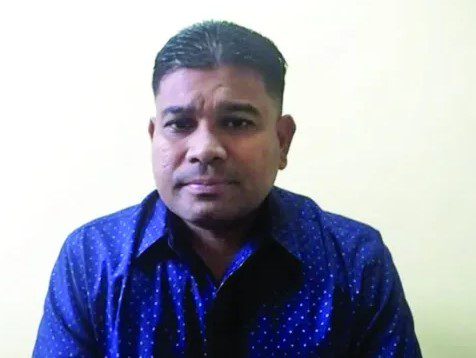
Almost A Month Behind Bars: Pressure Mounts Over Detention Of Guyana Opposition Leader


By News Americas Now Staff Writer
News Americas Now, GEORGETOWN, Guyana, Sat. Nov. 28, 2026: Guyana Opposition Leader Azruddin Mohamed is approaching one month behind bars as multiple criminal proceedings, bail challenges, extradition hearings and allegations over his treatment in prison continue to converge around one of the country’s most prominent political figures.
Mohamed has been held at Lusignan Prison since October 30 on separate cybercrime-related and misconduct charges, even though he remains on bail in the U.S. extradition proceedings and has also been granted bail in a separate firearm, ammunition and obstruction case. As of Friday, November 27, his incarceration is nearing the one-month mark.
The continued detention is now drawing scrutiny not only from Mohamed’s lawyers and supporters, but also from the Guyana Human Rights Association, which has accused state prosecutors of misusing the legal process and called for his release, compensation and an inquiry into the Office of the Director of Public Prosecutions.
The concerns come as Mohamed’s legal battles stretch deeper into December.
Fresh High Court Bail Bid
Mohamed has now approached the High Court seeking reasonable bail on the charges keeping him imprisoned, while also asking the court to declare that the conditions of his detention violate his constitutional rights. In an application filed this week, Mohamed alleged that he has been held alone on his floor at Lusignan Prison since October 30 and confined to his cell for approximately 23 hours and 50 minutes each day.
His lawyers say he has had limited access to sunlight, human contact and reading material and describe his cell as windowless, excessively hot, poorly ventilated and continuously lit. They also allege that smoke and fumes inside the prison caused him to experience wheezing, headaches, nausea and other discomfort. One incident cited in the filing reportedly occurred on November 19, when Mohamed complained of difficulty breathing and, according to his lawyers, received only a blood-pressure check through the cell door.
Those allegations have not been established as findings of the court, and Guyana prison authorities have previously disputed claims that Mohamed is being held in punitive solitary confinement. The High Court application names the Attorney General and Director of Prisons as respondents and seeks both bail and declarations that Mohamed’s continued detention violates constitutional protections against inhumane or degrading treatment.
Co-Accused Gets Bail
The legal challenge follows the November 24 refusal of Mohamed’s renewed bail application in the Magistrates’ Court. Police Constable Ryan Greene, who is charged alongside Mohamed and Police Constable Ashton Chappelle, was granted a total of GY$300,000 bail after prosecutors indicated they would not oppose his release because he is cooperating with investigators and is expected to testify against Mohamed.
Greene was ordered to surrender his passport and report regularly to the Major Crime Unit. Mohamed and Chappelle remain on remand.
Prosecutors allege that Greene and Chappelle were involved in obtaining and transferring CCTV footage from the Guyana Police Force’s Safe Country surveillance system to Mohamed, who allegedly agreed to pay Greene GY$800,000 for a flash drive containing the footage. Mohamed denies paying for or unlawfully obtaining the footage.
His lawyers have argued that there are no sufficient grounds to conclude that he would interfere with witnesses, tamper with evidence, obstruct justice or commit another offence if released.
Human Rights Group Raises Alarm
The Guyana Human Rights Association has now added its voice to the growing controversy. In a November 25 statement, the group accused state prosecutors of using the legal system as an instrument of oppression and called for Mohamed’s immediate release.
The association also called for compensation and an inquiry into the Office of the Director of Public Prosecutions and argued that inconsistencies in the prosecution’s account of the underlying shooting incident raise serious questions about the case. Among the issues highlighted by the group was an alleged change in the location connected to the shooting allegations, from Barr Street, Kitty, to the intersection of Vlissengen Road and Sandy Babb Street.
The association argues that the shift undermines the basis on which Mohamed was originally detained. Those claims remain contested and have not been adopted as findings by a court.
Defence Says Disclosure Still Incomplete
A separate criminal case involving Mohamed and two employees of the Office of the Leader of the Opposition also returned to court Friday. Mohamed, Eugene Thorne and Mario Mohamed face charges of unlawful firearm possession, unlawful ammunition possession and attempting to obstruct the course of justice arising from the October shooting incident involving Head of Special Branch Senior Superintendent Prem Narine.
All three were previously granted bail on those charges. At a November 6 hearing, prosecutors told Magistrate Faith McGusty that statements, photographs and four discs had been disclosed, while indicating that additional material remained outstanding. The matter was adjourned specifically to November 27, for further disclosure.
But when the case returned to court yesterday morning, Mohamed’s defence alleged that the prosecution still had not completed disclosure and that some of the discs provided contained no material. Defence attorney Siand Dhurjon reportedly offered to provide a flash drive to facilitate transfer of the outstanding evidence.
The matter has now been adjourned to December 2nd for further disclosure, a status report and the fixing of trial dates. Mohamed’s defence now alleges that prosecutors returned to court Friday without completing disclosure and that some of the discs supplied were empty.
Defence attorney Siand Dhurjon reportedly offered to provide a flash drive to facilitate transfer of the material. The defence has characterised the delay as unacceptable after the prosecution was given three weeks to provide the outstanding evidence.
Those allegations are the defence’s account of Friday’s proceedings and have not yet been independently confirmed by the prosecution. The matter has reportedly been adjourned to December 2 for further disclosure, a status report and the fixing of trial dates.
Extradition Case Drags On
At the same time, the U.S. extradition proceedings against Mohamed and his father, businessman Nazar Mohamed, have now been adjourned to December 17. The proceedings have been before the Guyana courts for almost 13 months, following the father and son’s October 31, 2025 arrests.
The substantive committal hearing began January 6, 2026, but only two prosecution witnesses have testified so far. Senior Superintendent Prem Narine, head of the Police Special Branch, first entered the witness box on September 3 and remains under cross-examination. The extradition hearing is not intended to determine whether the Mohameds are guilty or innocent. Its purpose is to determine whether the statutory and treaty requirements for surrender to the United States have been met.
The United States is seeking to extradite the men to face an 11-count federal indictment in Florida involving allegations of wire fraud, mail fraud, money laundering, conspiracy and customs-related offences linked to an alleged gold-export and tax-evasion scheme.
The Mohameds deny wrongdoing.
Questions Over Evidence And Record-Keeping
Narine’s testimony has itself become a significant focus of the defence. Under cross-examination, he reportedly acknowledged that his written statement did not expressly state that another officer, Rodwell Sarabo, accompanied him to the Attorney General’s Chambers to collect documents on the day the Mohameds were arrested.
Narine told the court he had telephoned Sarabo and instructed him to accompany him, and said he believed the officer’s presence was implied in his statement. Defence attorneys have also questioned Narine over a pocketbook and personal diary he previously testified he destroyed.
Narine has said the notes contained sensitive information that could endanger informants if mishandled and that official records required for the extradition proceedings had been preserved. The defence continues to test the handling and documentation of evidence as the cross-examination proceeds.
Bail In One Case, Remand In Another
The overlapping cases have produced an unusual legal situation. Mohamed remains on GY$150,000 bail in the extradition proceedings. He is also on bail in the firearm, ammunition and obstruction case. Yet he remains imprisoned because bail has been denied on the separate cybercrime and misconduct-related charges.
The Director of Public Prosecutions is separately attempting to overturn Mohamed’s extradition bail. That High Court hearing is scheduled for December 21 before acting Chief Justice Navindra Singh, just four days after the extradition proceedings are due to resume. Chief Magistrate Judy Latchman has defended her decision to maintain Mohamed’s extradition bail, saying pending charges without convictions were not, by themselves, sufficient to justify taking away his liberty.
The DPP is asking the High Court to overturn that ruling.
New U.S. Legal Team
The Mohameds have also announced that they have retained U.S. criminal defence attorney Marc S. Nurik as part of a new legal team challenging the federal indictment and extradition proceedings. The family says it has also engaged Florida-based investigative firm Concorde Associates to assist with reviewing financial evidence and investigative procedures.
News Americas Now has contacted Nurik’s office directly seeking confirmation of the representation and details about his role in the case but have not received any response at press time. The family’s decision signals that the legal battle is now expanding on both sides of the U.S.–Guyana proceedings.
A Growing Test For Guyana’s Justice System
The allegations against Mohamed are serious and remain subject to determination in court. Holding political office does not shield an opposition leader from prosecution, nor does it diminish the State’s responsibility to investigate alleged crimes. But neither does an accusation erase constitutional protections, the presumption of innocence or the obligation to justify prolonged detention. That tension has become increasingly difficult to ignore as Mohamed approaches a full month behind bars.
His lawyers are challenging the conditions of his confinement. A human-rights organisation is demanding his release. One co-accused has been granted bail and is expected to testify against him. The extradition proceeding has stretched for almost 13 months.
A key prosecution witness remains under cross-examination. Further evidence in another domestic case is still being disputed. And the courts now face multiple overlapping applications over whether Mohamed should remain free or incarcerated.
The central question is therefore becoming larger than any single charge. As Guyana’s sitting Opposition Leader approaches one month in prison, the country’s justice system is increasingly being asked to demonstrate that the process surrounding his continued detention is timely, proportionate, transparent and insulated from political considerations. The next several weeks may determine whether those questions are answered.



Leave a Reply
Want to join the discussion?Feel free to contribute!