
Who Gets To Belong? Birthright Citizenship Case Could Redefine Who Belongs In America
By Felicia J. Persaud
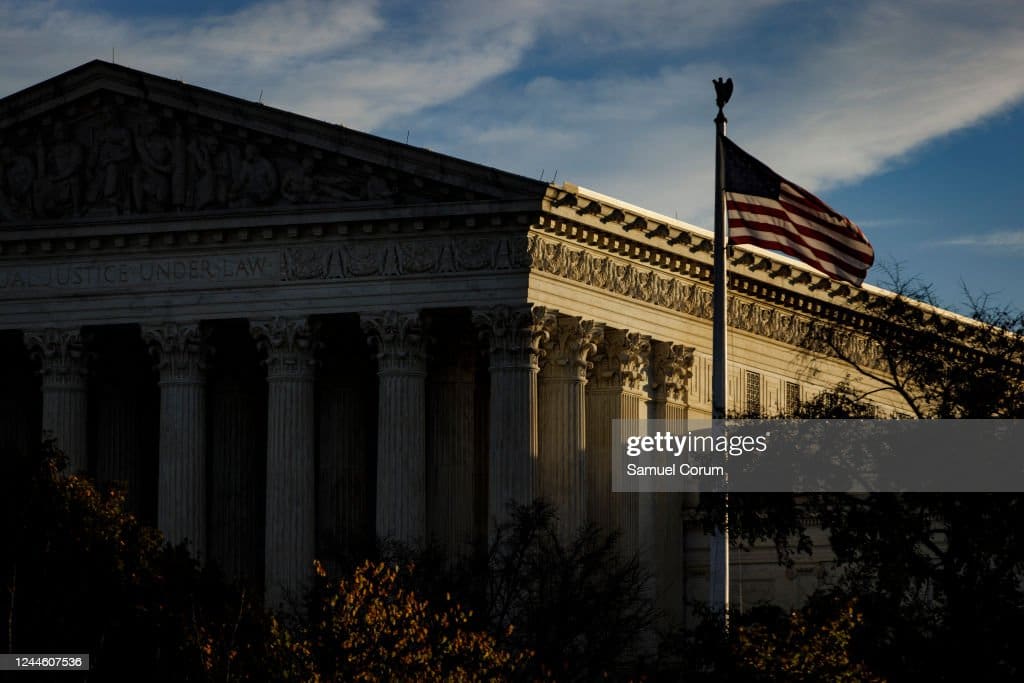
News Americas, NEW YORK, NY, Thurs. April 16, 2026: The U.S. Supreme Court is now hearing a case that could redefine one of the most fundamental truths about America: who gets to belong in what is being dubbed the birthright citizenship case. At stake is birthright citizenship – the constitutional guarantee that if you are born in the United States, you are American. But this is not just a legal debate. It is a test of whether history is repeating itself.
Last week, the Court heard arguments in a case challenging an executive order signed in 2025 that seeks to deny citizenship to children born in the United States to undocumented immigrants or those on temporary visas. The order, already blocked by multiple lower courts, attempts to reinterpret the 14th Amendment – a move legal experts widely argue cannot be done by executive action alone.
Because birthright citizenship is not a policy. It is a constitutional guarantee.
Enshrined in the 14th Amendment in 1868, birthright citizenship was designed to settle a question the nation had once answered disastrously wrong: whether Black people born in the United States were citizens at all.
The amendment overturned the infamous Dred Scott decision of 1857, which declared that Black people “had no rights which the white man was bound to respect.” It was a direct response to exclusion – a deliberate effort to ensure that citizenship could not be denied based on race, origin, or parentage.
But Black Americans were not the only people denied belonging. Native Americans – the first people of this land – were also excluded from citizenship for decades. It was not until the Indian Citizenship Act of 1924 that Indigenous people were formally recognized as U.S. citizens – long after the country had been built on their land.
In other words, birthright citizenship was never just about immigration. It was about equality – and who gets to decide who belongs. And yet, here we are again.
At the center of this case is not just a constitutional argument, but a human story. The lead plaintiff, identified only as “Barbara,” is a Honduran asylum seeker living in New Hampshire. She fled gang violence with her family and is now fighting to ensure that her unborn child – a baby who would be born on U.S. soil — is recognized as American.
Her case raises a profound question: if a child is born here but denied citizenship, what are they? The implications are far-reaching.
If the executive order were allowed to take effect, babies born in the United States to non-citizen parents – including those here legally on work visas or under temporary protections – could be denied citizenship at birth. These children would exist in legal limbo, creating what many legal experts warn would become a permanent, multi-generational subclass of people born in America but not recognized as belonging to it.
The American Civil Liberties Union, representing the plaintiffs, has made it clear: the Constitution does not allow the government to pick and choose which children born on U.S. soil are citizens.
That is not just a legal shift. That is a structural one.
For more than a century, the Supreme Court has affirmed birthright citizenship, including in the landmark case United States v. Wong Kim Ark, which confirmed that children born on U.S. soil are citizens regardless of their parents’ immigration status.
That precedent has held – through wars, waves of immigration, and political change. Until now.
Supporters of the executive order argue that the Constitution’s phrase “subject to the jurisdiction thereof” should be interpreted more narrowly – excluding children of undocumented immigrants and temporary visa holders.
But critics warn that such an interpretation is not only historically unsupported, but dangerous. Because once a government begins deciding which children qualify for citizenship and which do not, it opens the door to redefining belonging itself.
And that has never ended well.
From slavery to Reconstruction to the civil rights era – and even in the delayed recognition of Native Americans – the United States has repeatedly struggled with the question of who counts as fully American.
Each time, the answer has shaped the nation’s moral and legal foundation. This moment is no different.
Because once a nation starts deciding which children are worthy of citizenship, it is no longer debating immigration – it is redefining equality itself.
Felicia J. Persaud is the founder and publisher of NewsAmericasNow.com, the only daily syndicated newswire and digital platform dedicated exclusively to Caribbean Diaspora and Black immigrant news across the Americas.






Leave a Reply
Want to join the discussion?Feel free to contribute!